Lisbon makes a brilliant base for exploring Portugal. Some of the country’s best sights sit just outside the capital, and the range is what surprises people – you can stand at Europe’s westernmost point in the morning, wander a UNESCO World Heritage Site by lunch, and be eating fresh seafood in a coastal town by dinner.
The best part? Most of these day trips are easy to reach. Direct trains run from central Lisbon to several destinations in under an hour. Others need a car or an organised tour, though even the drives are scenic.
The best day trips from Lisbon are Sintra (fairytale palaces, the essential one), Cascais and Cabo da Roca (coast and Europe’s western edge), Óbidos (a walled medieval town), Évora (Roman ruins and Alentejo wine) and Nazaré (record-breaking waves). You’ll find the full list below, with transport and costs for each.
Quick overview: Planning your day trips from Lisbon
Location matters. Sintra and Cascais lie west of Lisbon. Óbidos and the monastery circuit (Batalha, Alcobaça, Tomar) sit north. Évora sprawls in the Alentejo region to the east. Coastal beaches scatter south.
Transport varies by destination. Some places have excellent train connections. Others need a car or tour. I’ve included specific transport details for each destination below.
Time commitment differs. Half-day trips work for nearby beaches and Cascais. Full days suit Sintra, Óbidos and Évora. The monastery circuit needs an overnight stay or a very long day.
Combine strategically. Cascais and Cabo da Roca pair perfectly. Sintra demands a full day alone – there’s too much to see. The three monasteries form a natural circuit if you have a car.
Sintra: Fairytale palaces and mystical gardens
Distance from Lisbon: 28km (40 minutes by train)
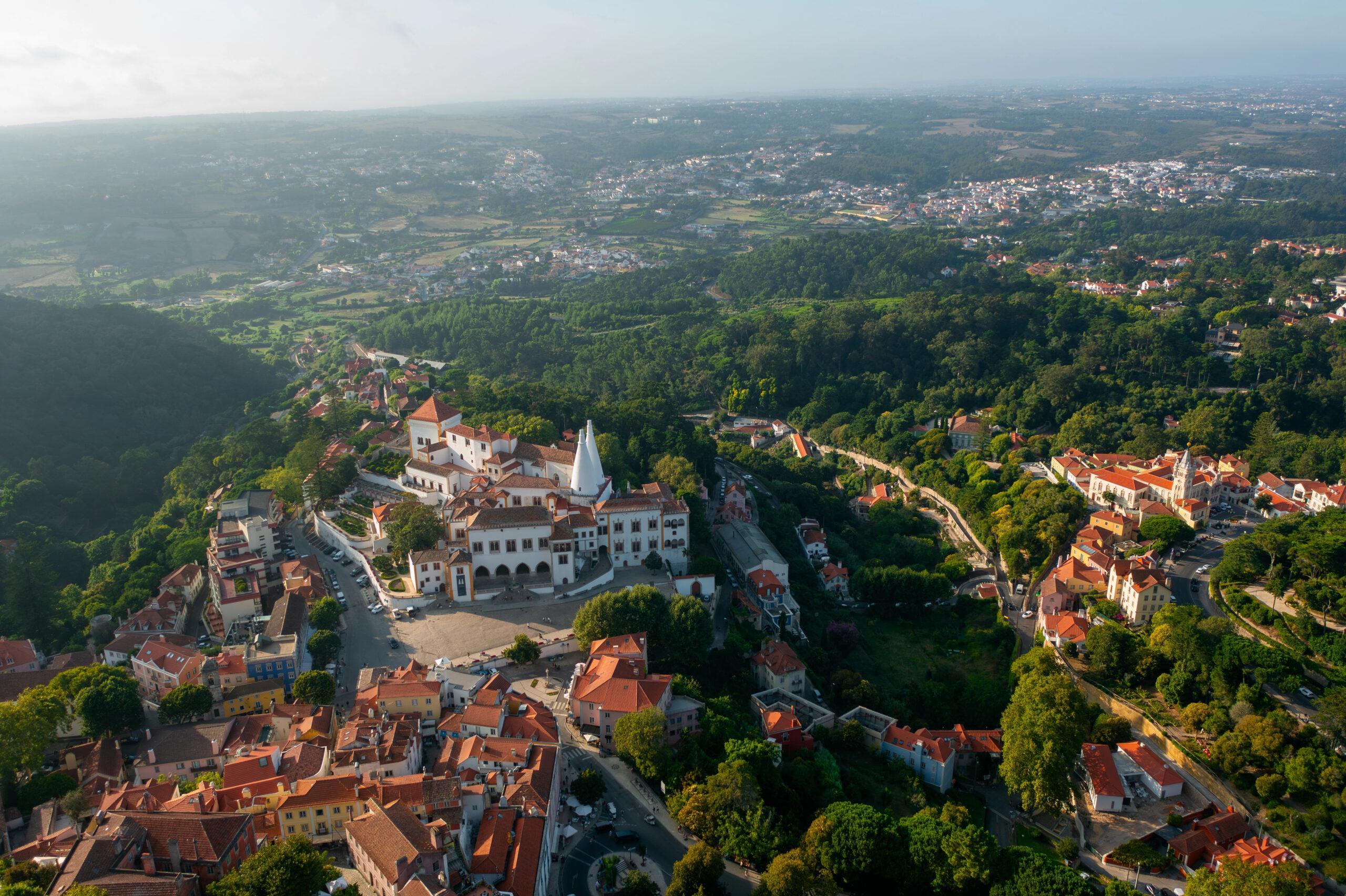
Sintra deserves its reputation as Portugal’s most magical day trip. This UNESCO World Heritage Site layers colourful palaces, ancient castles and mysterious gardens across misty hillsides that feel lifted from a Gothic novel.
There’s too much to see in one visit. The mountain microclimate creates constant fog and cooler temperatures – bring a jacket even in summer.
What to see in Sintra
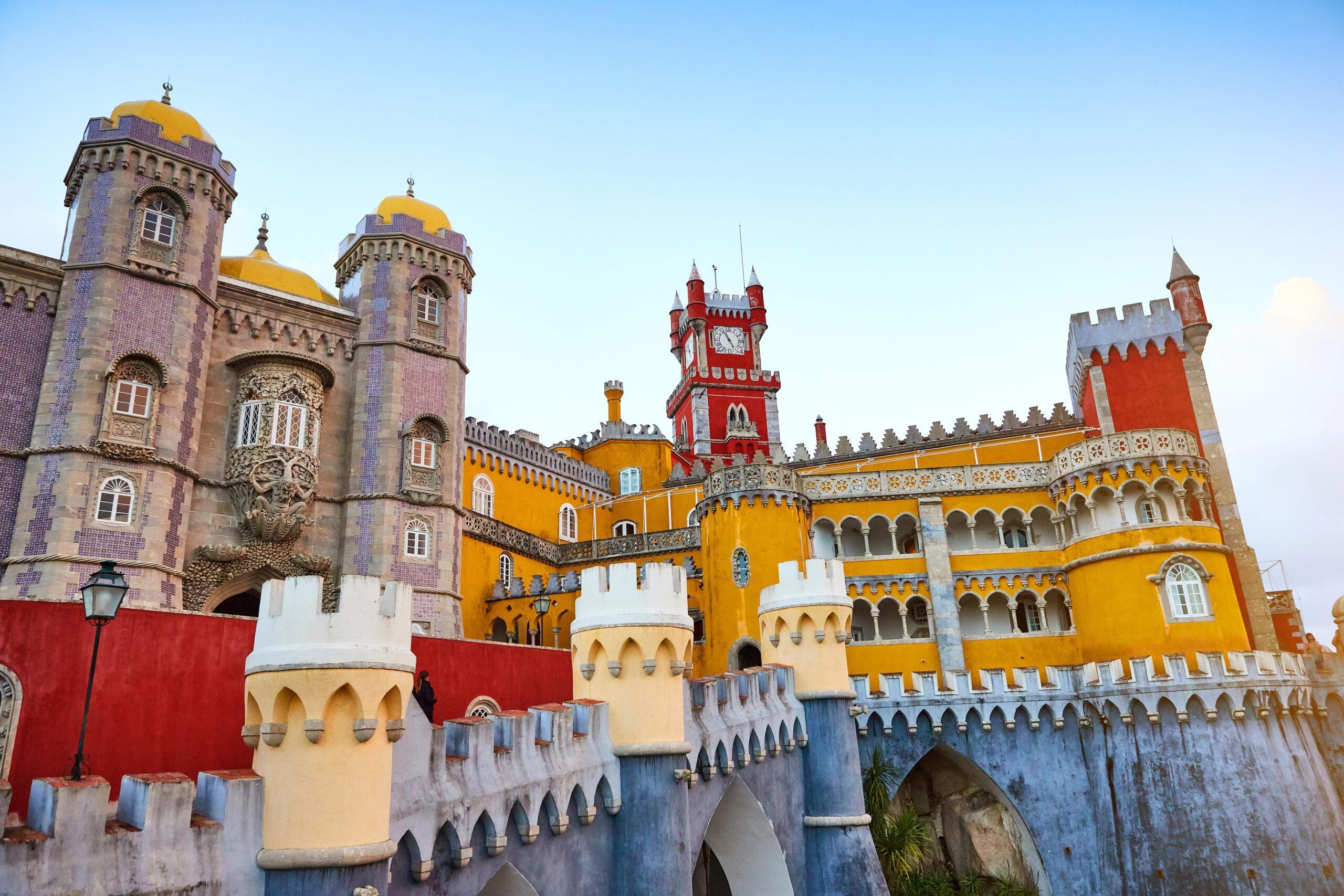
Pena Palace dominates the skyline with its candy-coloured towers and Moorish domes. The palace itself looks like Disney designed a Portuguese castle – bright yellows, deep reds, ornate tilework everywhere. But it’s the terrace views that stay with you. On clear days, you can see all the way to Lisbon and the Atlantic Ocean.
The walk up takes 20 minutes through forest paths, or you can catch the bus from the entrance (€4 return).
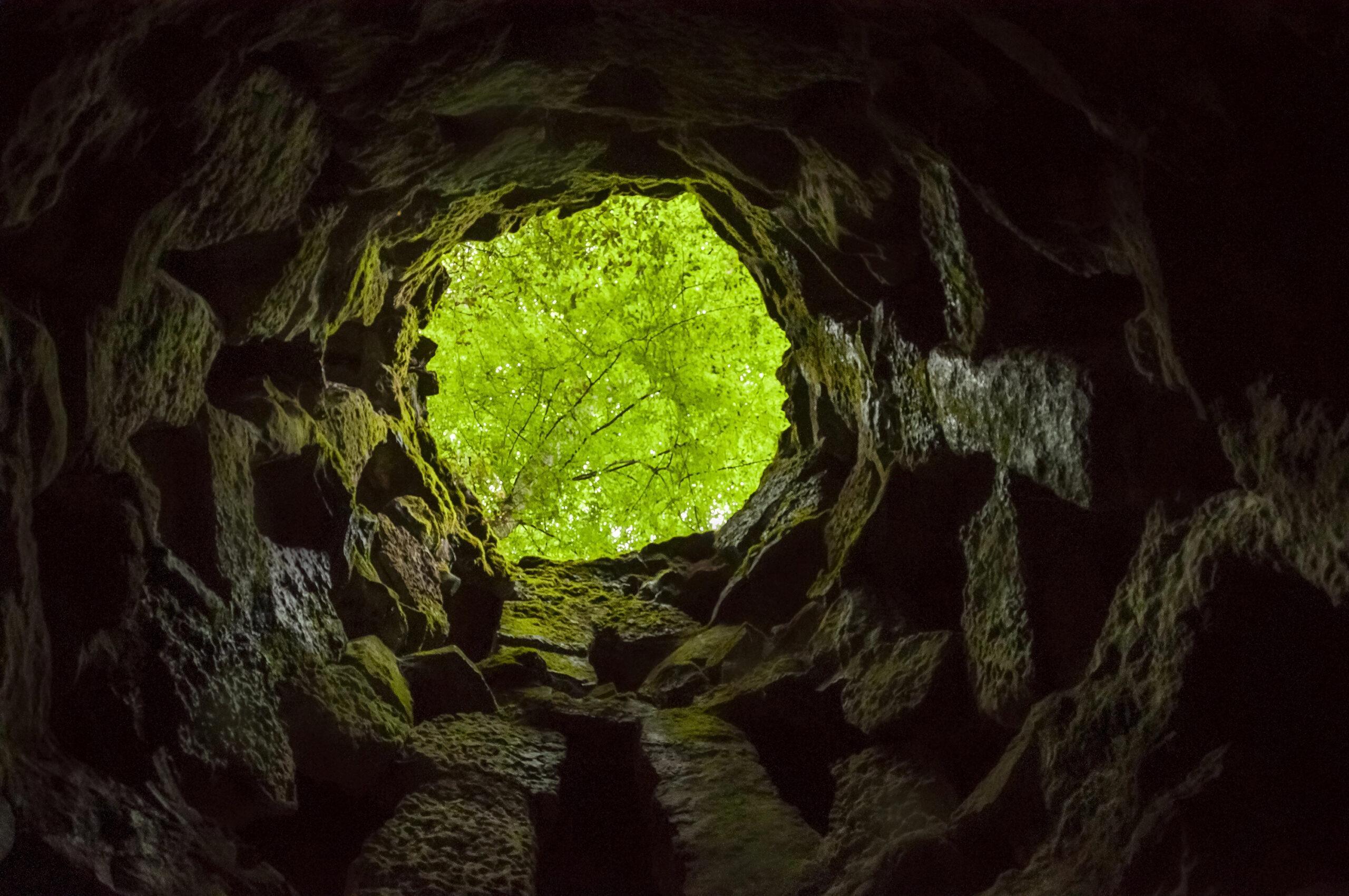
Quinta da Regaleira often becomes visitors’ favourite. This Gothic palace hides secret tunnels, mystical symbols and the famous Initiation Well – a moss-covered spiral staircase descending 27 metres underground. The grounds are extensive, with hidden grottos and passages around every corner. Entry costs €15, and you’ll want at least 2-3 hours to do it justice.
The Moorish Castle offers the best views in Sintra without the palace crowds. These 10th-century walls snake across the mountaintop, and climbing them feels like walking a medieval version of the Great Wall of China. Go early morning when the mist clings to the fortifications. Entry is €10.
Monserrate Palace sits further from town but is worth the trip out. The Romantic architecture blends Gothic, Indian and Moorish styles, while the botanical gardens hold exotic plants from around the world. It’s quieter than Pena Palace and just as striking. Entry is €8.
Getting to and around Sintra
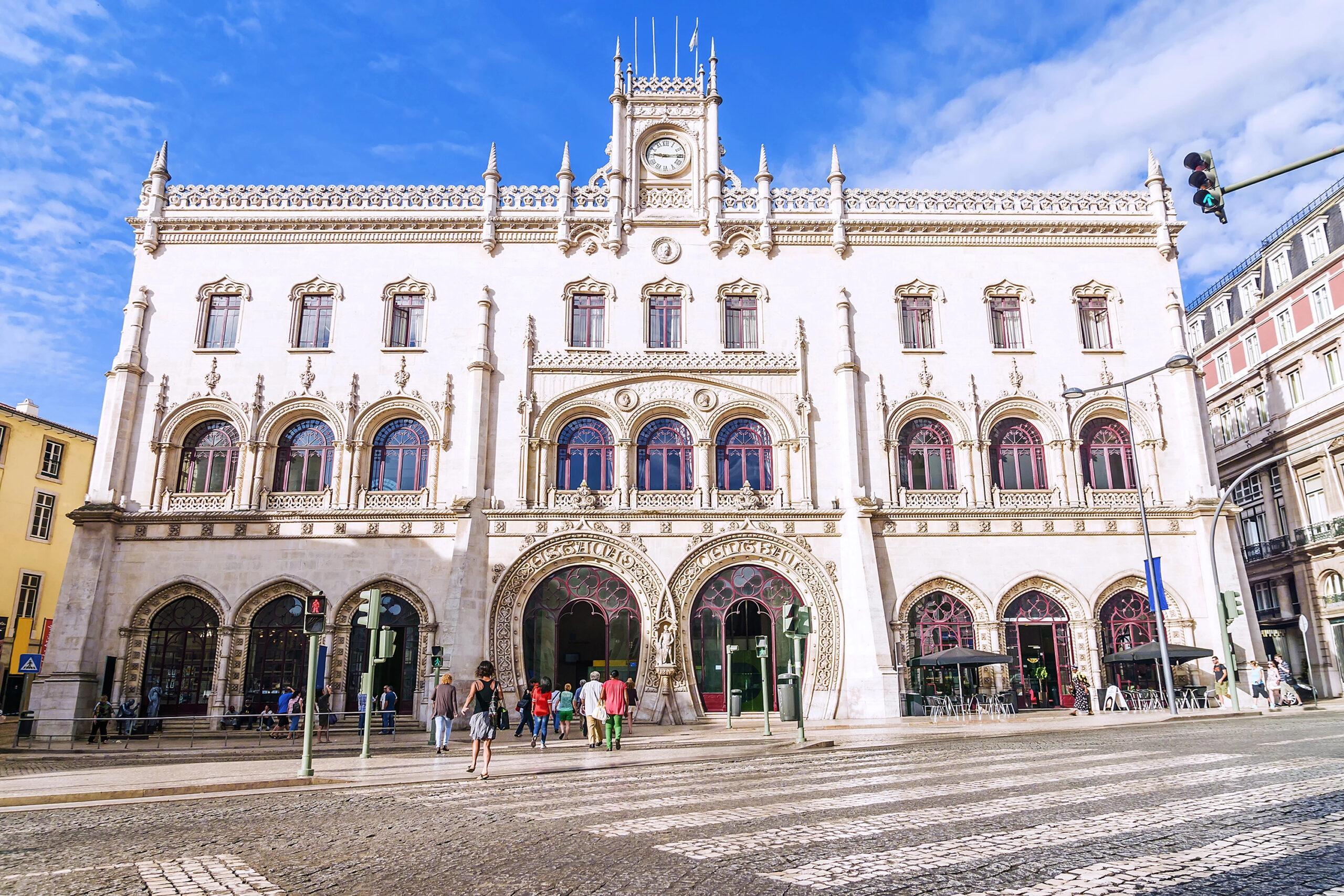
Direct trains run from Rossio station in central Lisbon every 15-20 minutes. The journey takes 40 minutes and costs €2.45 each way. Buy a rechargeable Viva Viagem card (€0.50) and load it with train credit.
Once in Sintra, the 434 bus circuit connects all major sites (€13.50 for unlimited day travel). Walking between attractions looks tempting on maps, but involves serious uphill hiking on steep paths.
Start early. Pena Palace opens at 9:30am and queues form by 10am in summer. Book tickets online the day before to skip the entrance line.

How much time do you need?
A full day, minimum. Most people visit 2-3 main attractions. If you want to see everything, consider staying overnight in Sintra – some palaces close at 6pm, and rushing ruins the experience. Don’t try combining Sintra with other day trips. There’s too much here.
Cascais and Cabo da Roca: Beaches and Europe’s edge
Distance from Lisbon: 35km to Cascais (40 minutes by train)
Cascais went from fishing village to royal summer retreat in the 1800s, and you can still see why Portuguese royalty chose it. The seaside town combines elegant architecture, several beaches and excellent seafood restaurants, all linked by a coastal promenade made for sunset walks.
But the real draw sits 18km north. Cabo da Roca marks the westernmost point of mainland Europe. Standing on the clifftop with the Atlantic crashing 140 metres below feels suitably dramatic.
What to do in Cascais
The town itself is made for wandering. The historic centre clusters around Praça 5 de Outubro, a lively square where locals gather at outdoor cafés and restaurants spill onto pedestrianised streets. The small harbour still sees traditional fishermen mending nets, while cafés serve fresh fish grilled simply with olive oil and lemon.

Praia da Rainha (Queen’s Beach) tucks between rock formations in the town centre – small, sheltered and rarely crowded even in August. For better swimming, head to Praia da Conceição or Praia Grande.
Walk the coastal promenade from Cascais to Estoril (3km, about 40 minutes). It hugs the coastline past villas and viewpoints, eventually reaching Estoril’s grand casino and Belle Époque architecture.
Visiting Cabo da Roca
This clifftop viewpoint is worth the journey. A lighthouse perches on the point, with the grey-blue Atlantic stretching to the horizon. The Portuguese poet Luís de Camões described it as “where the land ends and the sea begins”, and standing there, you understand why.
The cliffs drop sharply to rocky shores below. Bring a windbreaker – it’s breezy here even when Lisbon is still.
Bus 1253 runs from Sintra train station to Cabo da Roca (40 minutes, €2.60 each way). Services run every 20-30 minutes. Pay the driver directly – Viva Viagem cards aren’t accepted, as it’s a different bus company.
For visiting Cabo da Roca from Cascais, or continuing from Cabo da Roca to Cascais, take bus 1624 (20-25 minutes, €4.50). This bus connects Cascais and Cabo da Roca but departs from near Portela de Sintra station rather than the main Sintra station.
Allow 45 minutes at the cape – enough time to walk the clifftop paths, take photos and visit the small visitor centre.
Getting to Cascais
Trains from Cais do Sodré station in Lisbon run every 20 minutes to Cascais, taking 40 minutes (€2.45 each way with your Viva Viagem card). The line hugs the coast, with Tagus River views throughout the journey.

For Cabo da Roca, either catch bus 1253 from Sintra train station (if coming from that direction) or bus 1624 from Cascais, join an organised tour, or rent a car. I’d avoid cycling unless you’re fit – it’s 18km with significant hills.
Combining with Sintra
It’s geographically possible but exhausting. The bus from Sintra to Cabo da Roca takes 40 minutes, then another journey to Cascais. If you want to visit both, either dedicate separate days or join a guided tour that covers Sintra-Cabo da Roca-Cascais in one go.
Óbidos: Portugal’s most beautiful medieval town
Distance from Lisbon: 85km (1 hour by bus, 50 minutes by car)
Óbidos looks like someone designed the perfect medieval Portuguese town, then wrapped it in 14th-century walls that have barely changed in 600 years. Whitewashed houses with colourful trim line narrow cobbled streets. Bougainvillaea cascades from balconies. The castle crowns the hilltop.
It’s impossibly pretty, and yes, it gets crowded in summer – but arrive early or late and you’ll have the streets mostly to yourself.

Walking the medieval walls
The walls encircle the entire old town, and you can walk most of the circuit (free access). The narrow walkways give rooftop views across terracotta tiles and church spires, with countryside stretching beyond the fortifications.
Some sections feel precarious – there are no barriers, and it’s a long drop to the streets below. Wear sensible shoes and skip it if you have mobility issues or a fear of heights.
Start at the main gate and walk clockwise. The full circuit takes 30-40 minutes, longer if you stop for photos (you will).

What else to see
Castelo de Óbidos dominates the town from its hilltop position. The castle now operates as a pousada (luxury hotel), but you can wander the exterior and picture medieval life inside these stone walls. The views from the main square below are just as impressive.
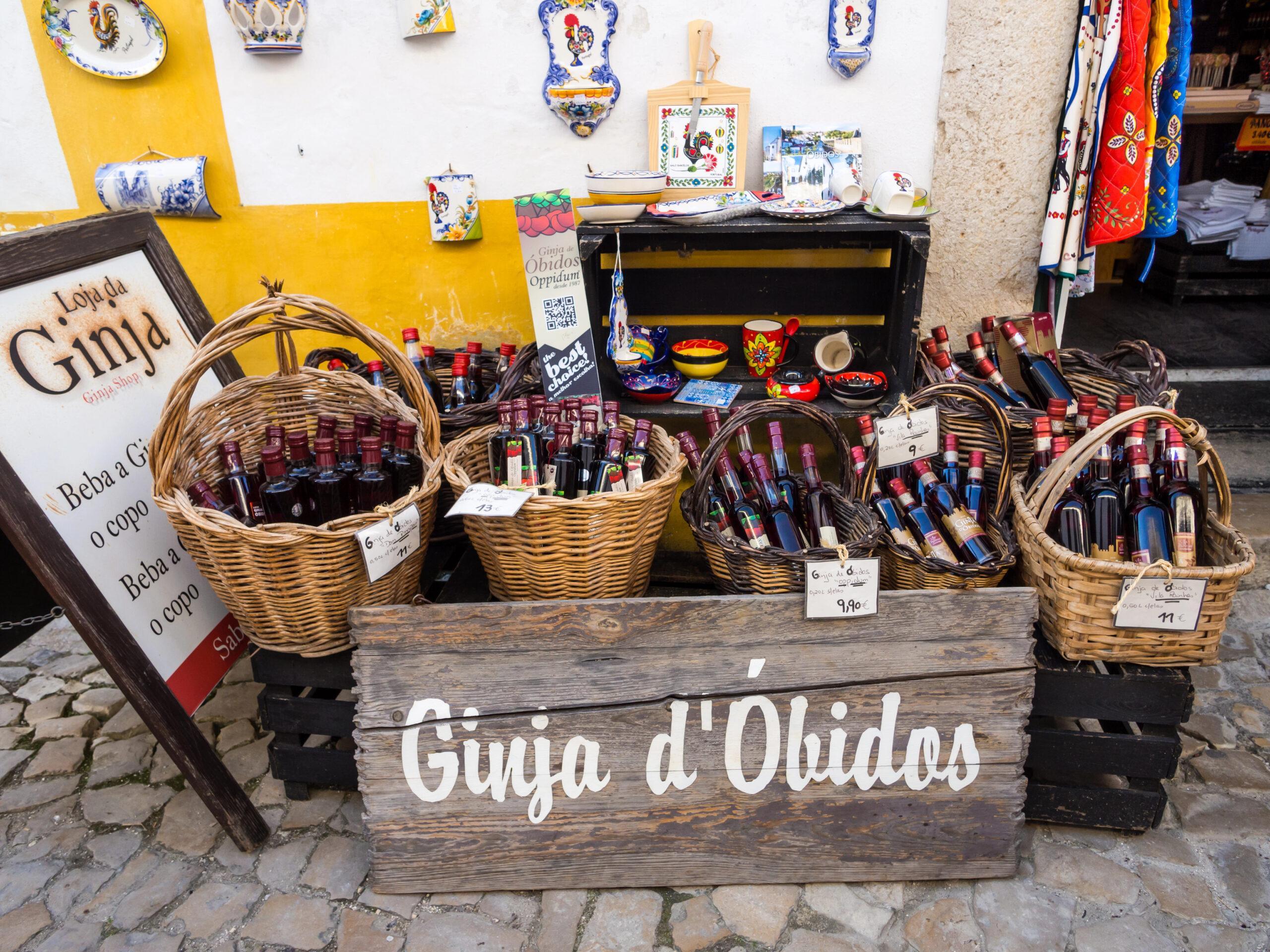
Rua Direita forms the main street, lined with shops selling local crafts, ceramics and ginjinha – Óbidos’ famous cherry liqueur, traditionally served in chocolate cups. It’s touristy, but the liqueur does taste good.
The Igreja de Santa Maria sits in the main square, its interior covered in blue-and-white azulejo tiles. Entry is free and worth 10 minutes for the tilework alone.
Walk beyond the main gate to escape the crowds. The streets outside the walls see far fewer visitors but offer equally charming architecture and local cafés where you can sit with a coffee and a pastry.
Food in Óbidos
Skip the overpriced restaurants on Rua Direita. Instead, head to Petrarum Domus just outside the main gate for Portuguese home cooking at fair prices, usually with locals at the next table, always a good sign.
Or pack a picnic. There are plenty of quiet spots along the walls or in small squares where you can sit and eat with castle views.
Getting there
No direct trains run to Óbidos. The bus from Campo Grande station takes just over an hour and costs €8-10 each way. Services run 5-6 times daily, but timetables change seasonally and are less frequent at weekends – check the Rede Expressos website before travelling.
Alternatively, rent a car (50 minutes from Lisbon) or join a tour that combines Óbidos with nearby Nazaré or the monastery circuit.
How long you need
Two to three hours covers the main sights comfortably. That’s enough time to walk the walls, explore the streets and have lunch. If you want to add nearby destinations the same day, a morning arrival works best to beat the crowds.
Évora: Roman ruins and authentic Alentejo culture
Distance from Lisbon: 135km (1.5 hours by bus, 1 hour 20 minutes by car)
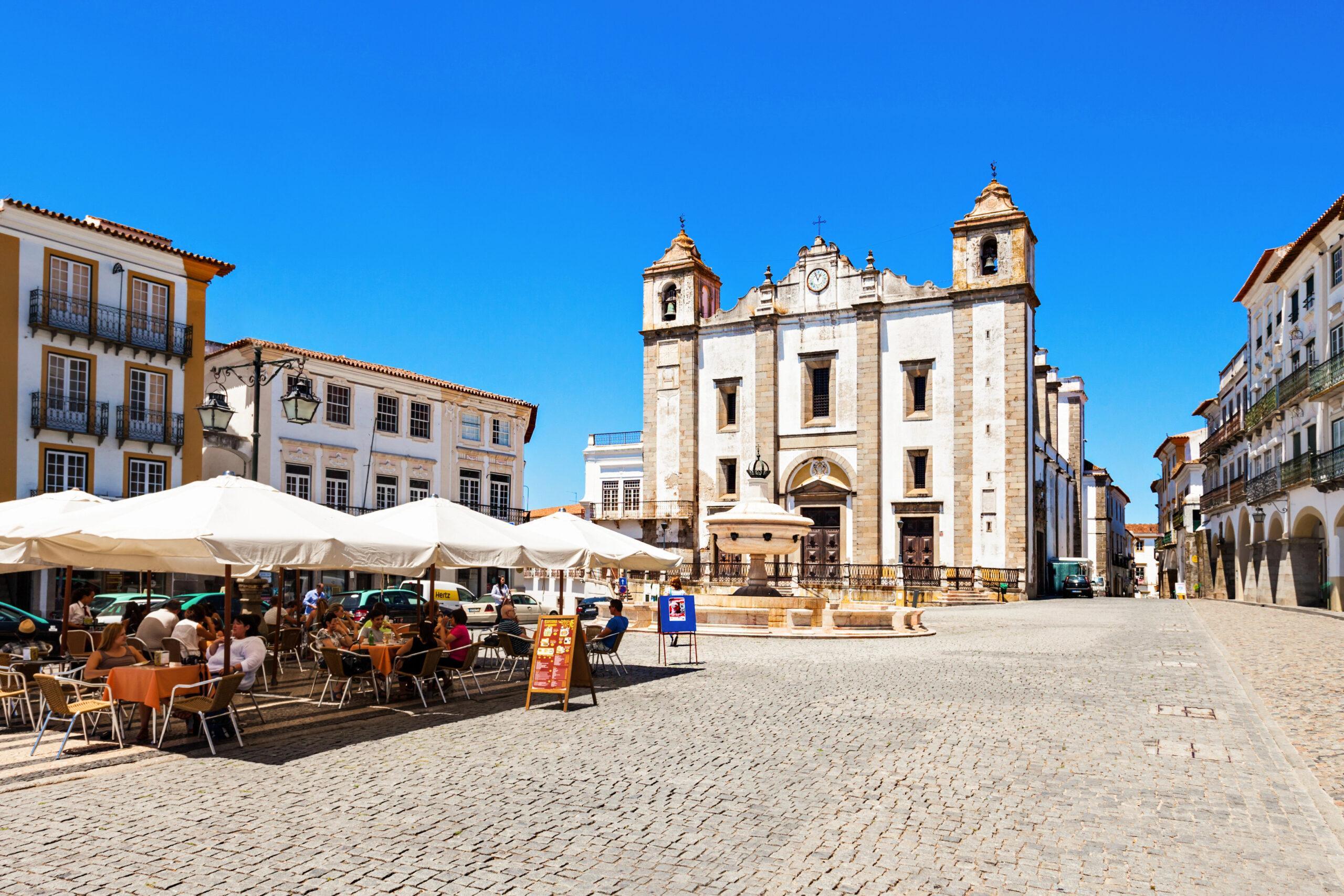
Évora sprawls across the Alentejo plains, a working city rather than a tourist village. It’s also a UNESCO World Heritage Site, holding some of Portugal’s best-preserved Roman and medieval architecture.
Évora feels Portuguese rather than packaged for visitors. Yes, there’s a macabre chapel made of human bones, but there are also locals chatting in neighbourhood cafés, everyday grocery shops and life carrying on beyond tourism.
Must-see attractions
The Roman Temple (Temple of Diana) stands remarkably intact in the city centre, with 14 Corinthian columns still supporting ancient architraves. Built in the early 1st century CE and one of the best-preserved Roman structures in Portugal, it’s at its most atmospheric at sunset when golden light hits the stone. Entry to the square is free – you can’t go inside but can walk around the entire structure.

Capela dos Ossos (Chapel of Bones) is the macabre highlight most visitors come for. The interior is lined with the bones and skulls of around 5,000 people, arranged in geometric patterns across walls and pillars. The entrance inscription reads “We bones here are waiting for yours.” It’s unsettling and fascinating in equal measure.
Entry costs €6, which covers the chapel and the small museum rooms. The main church is free to enter.
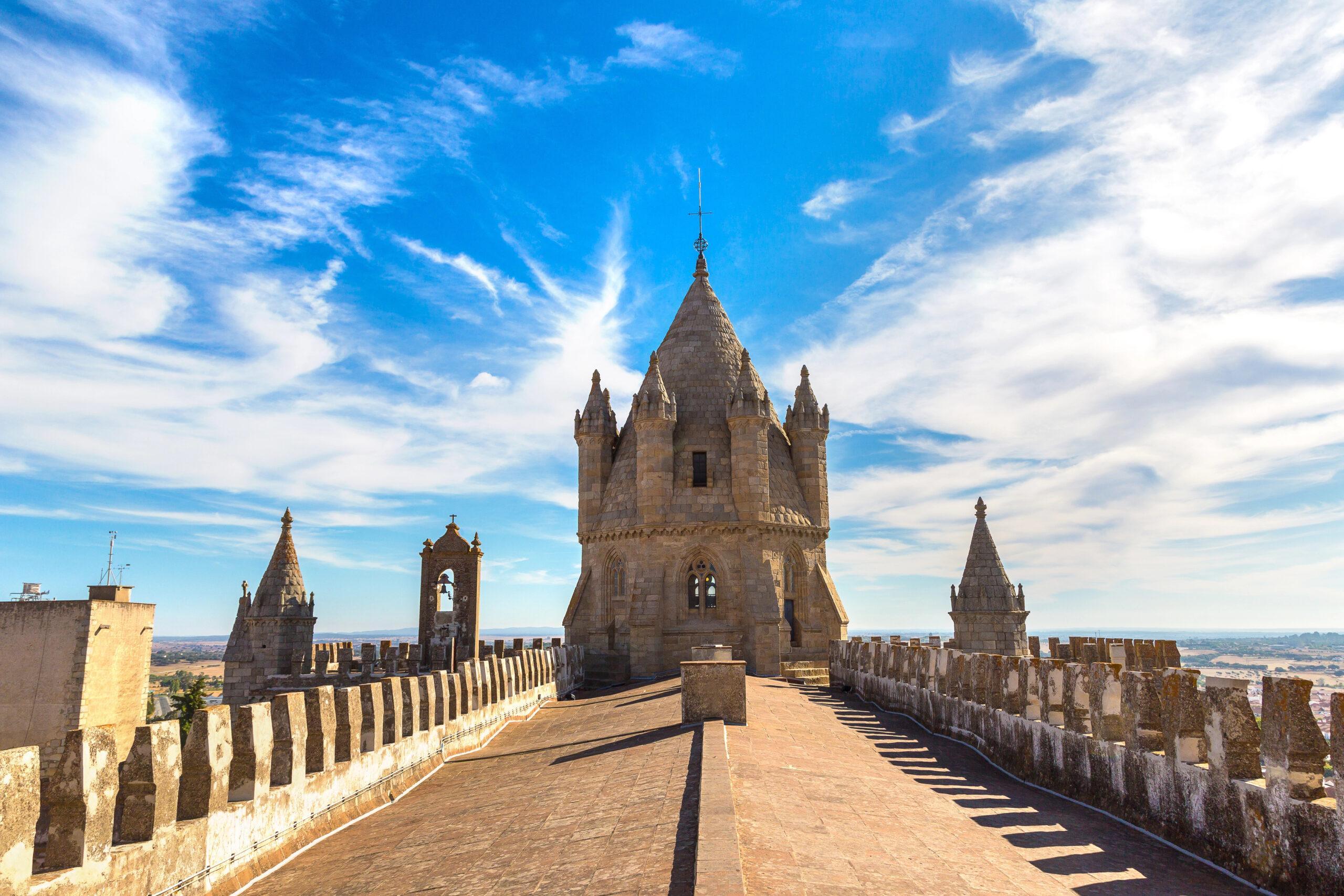
Évora Cathedral dominates the skyline as one of Portugal’s most important medieval churches. The fortress-like exterior gives way to a Gothic interior with impressive cloisters. Climb the tower for panoramic views across the city and the Alentejo plains (included in the €4 entry fee, or €5 with the museum).
The historic centre deserves hours of wandering. Narrow streets lined with whitewashed houses open onto hidden squares and neighbourhood churches. The old city walls date from Roman times, rebuilt by Moors and later modified by Portuguese kings.
Exploring the Alentejo region
Évora makes an excellent base for the wider Alentejo. The surrounding region produces some of Portugal’s best wines, with several vineyards offering tastings within a 30-minute drive.
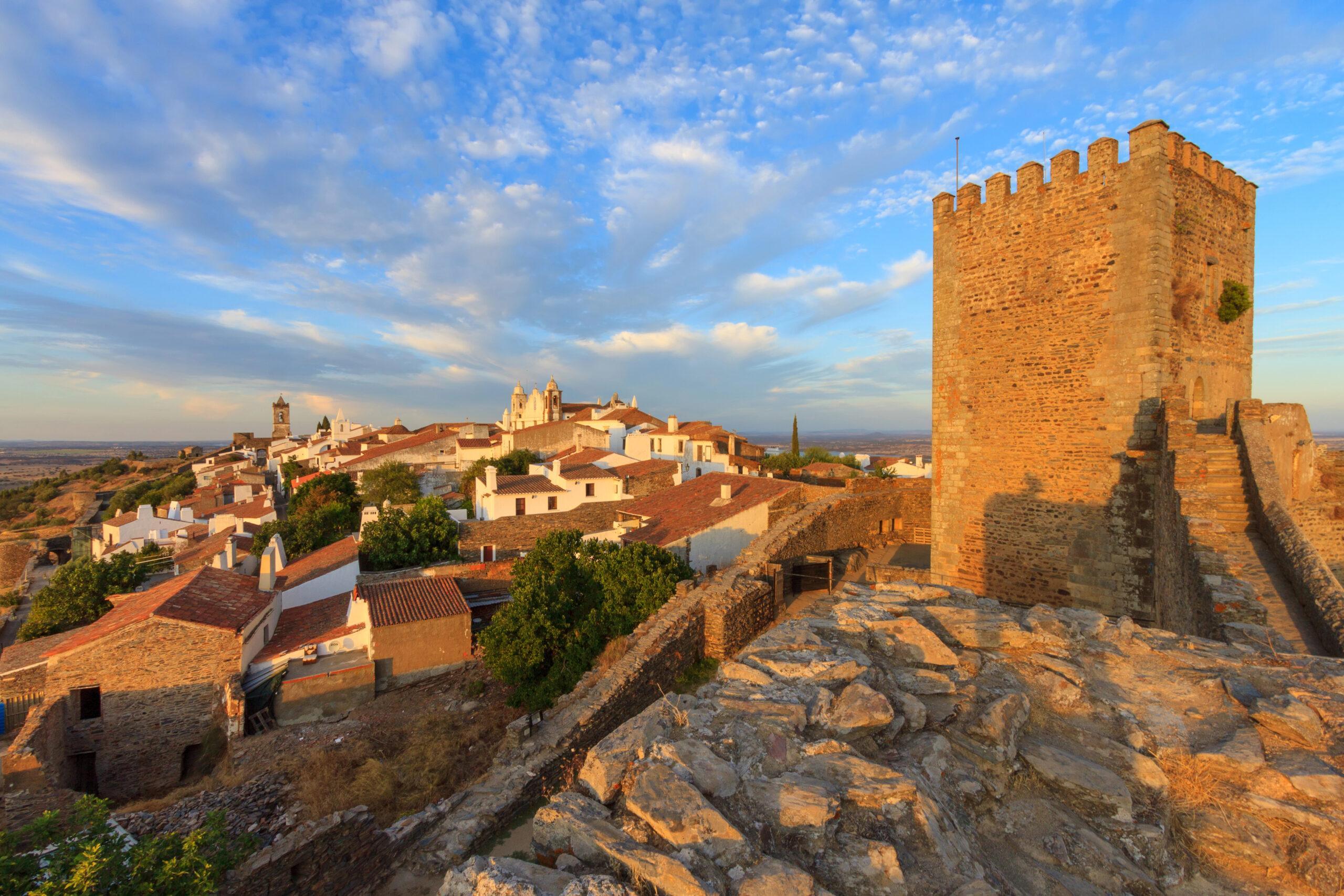
Monsaraz, a medieval hilltop village, sits 50km east (1 hour by car). The tiny walled village offers stunning views across the Alqueva reservoir and feels even more atmospheric than Óbidos, with far fewer visitors.
If you have time, drive through the cork oak forests and olive groves between destinations – the landscape itself tells the Alentejo story.
Getting there
Direct trains run from Lisbon’s Oriente station to Évora, taking about 1 hour 30 minutes and costing €12.50 each way (five departures on weekdays, three at weekends). Book through Comboios de Portugal.
Buses from Sete Rios run more frequently, also around 1.5 hours and €12-15 each way, through Rede Expressos.
Driving takes 1 hour 20 minutes via the A6 motorway. A car makes sense if you want to explore the surrounding Alentejo and visit vineyards or Monsaraz.
Time needed
A full day works well for Évora’s main attractions. Arrive mid-morning, see the key sights over 4-5 hours, have lunch, and catch an evening bus back. The city is compact enough to cover on foot.
Consider staying overnight if you want to explore the wider region or enjoy Évora’s restaurant scene – the city is known for excellent Alentejo cuisine.
The monastery circuit: Batalha, Alcobaça, and Tomar
Distance from Lisbon: 100-150km (1.5-2 hours by car)
Three magnificent monasteries – all UNESCO World Heritage Sites – form a circuit north of Lisbon. Each represents a different architectural style and period, and together they tell the story of medieval Portugal’s power and ambition.
This really needs a car or an organised tour. Public transport exists but involves multiple connections and limited schedules. I’d recommend either renting a car for a long day trip or, better still, staying overnight in the region to see all three properly.
Batalha Monastery
The Monastery of Batalha celebrates Portugal’s victory over Castile at the Battle of Aljubarrota in 1385. The Gothic architecture reaches extraordinary heights – literally. The nave soars overhead, light streams through stained glass, and the Founder’s Chapel holds the tombs of King João I and his English wife, Philippa of Lancaster.
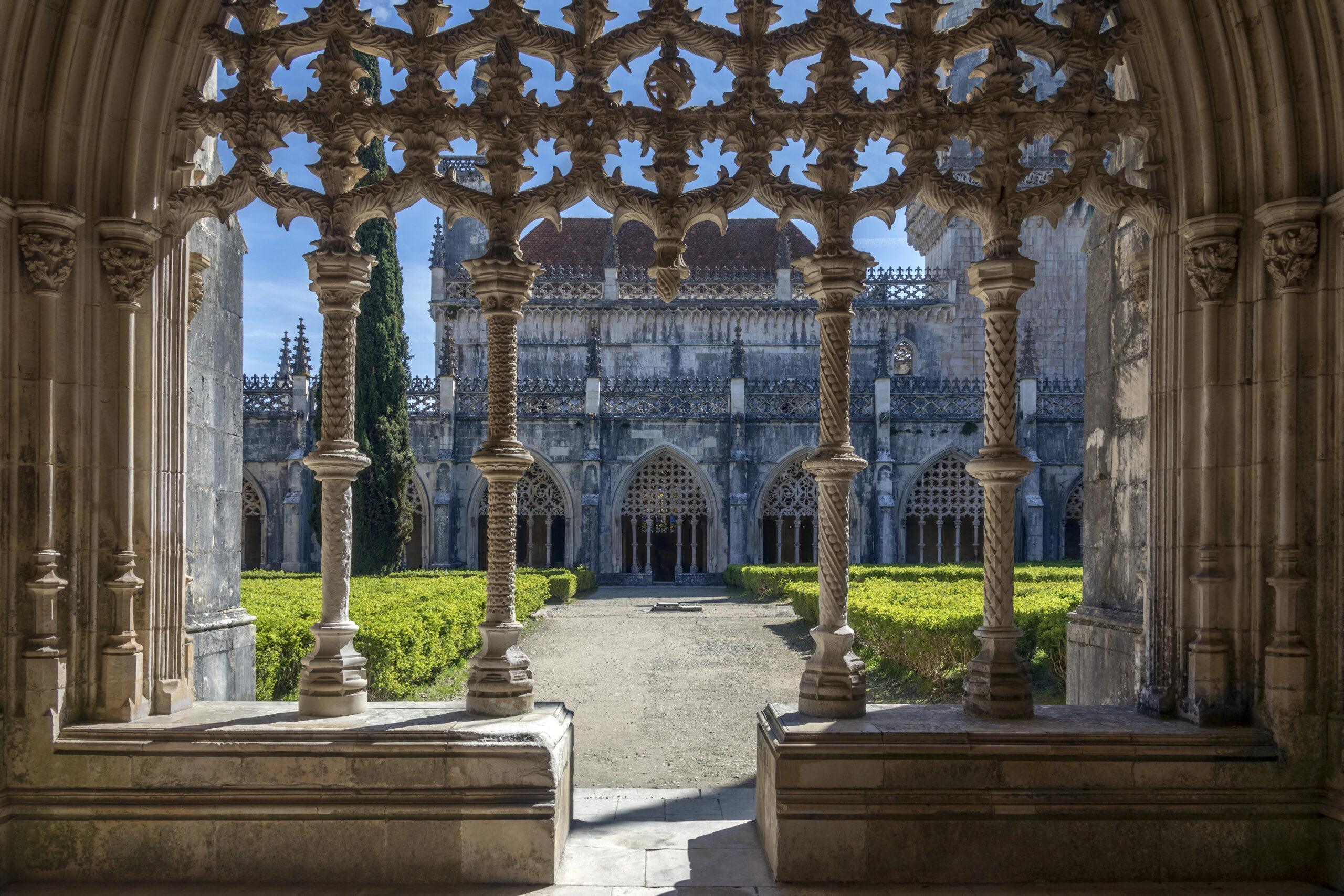
The Unfinished Chapels are the most dramatic sight: seven massive chapels reaching towards the sky, deliberately left incomplete. Standing beneath them, looking up at empty arches and open sky, is close to a spiritual moment. Entry costs €6.
Allow 1-2 hours to see the church, cloisters and Unfinished Chapels. Go early to avoid tour groups.
Alcobaça Monastery
Alcobaça Monastery might be the most beautiful of the three. This Cistercian abbey, founded in 1153, showcases pure Gothic architecture with minimal decoration – the restraint makes it even more powerful.
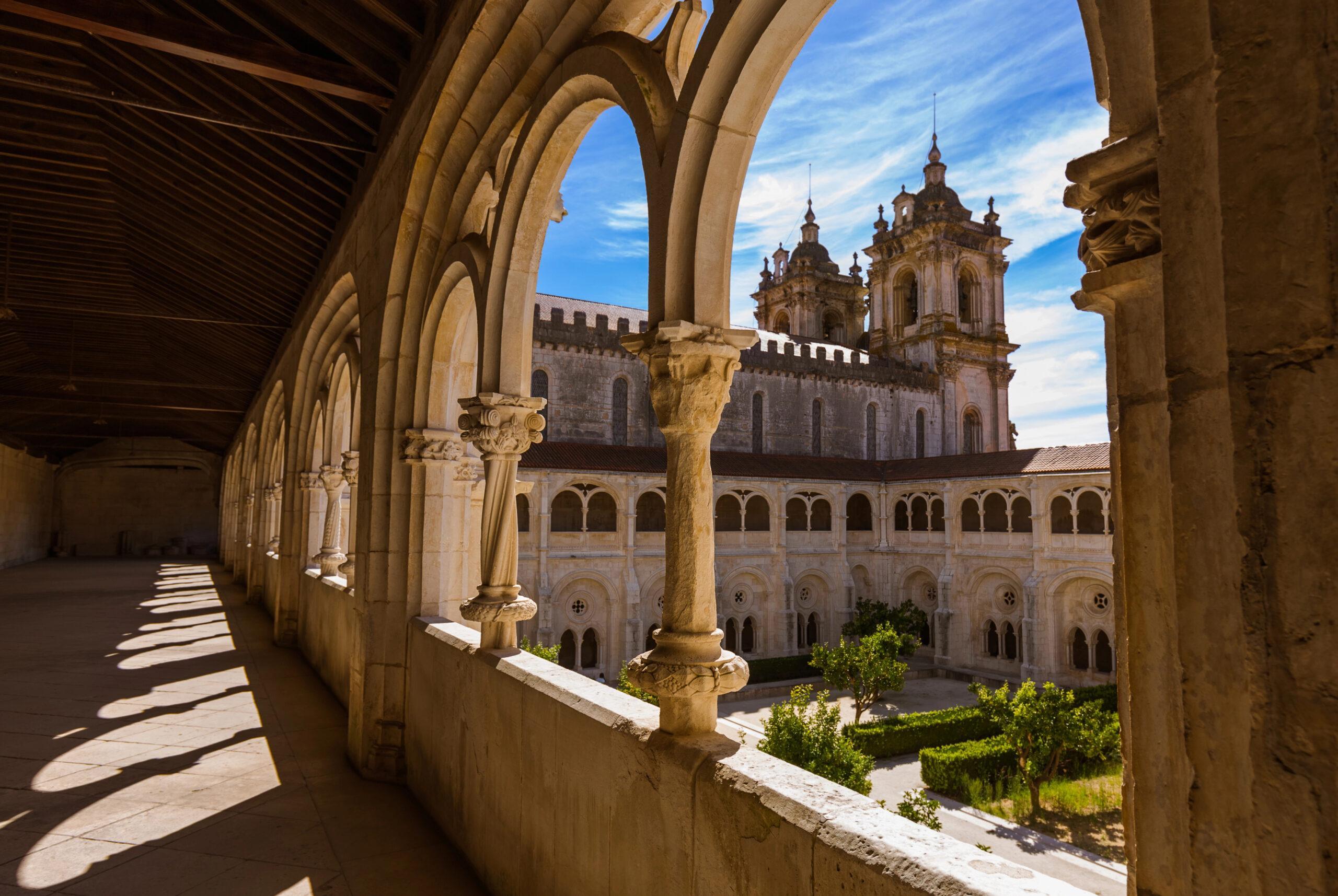
The church contains the tombs of King Pedro I and Inês de Castro, whose tragic medieval love story (she was murdered on his father’s orders) still captivates visitors. The tombs face each other so, according to legend, they’ll see each other first when they rise on Judgement Day.
The kitchen – yes, really – deserves a mention. A stream runs directly through it, providing fresh water and carrying waste away. Medieval monks clearly understood practical engineering. Entry costs €6.
Tomar and the Convent of Christ
Tomar offers the most impressive monastery of the three. The Convent of Christ began as a Knights Templar fortress in 1160, later becoming the headquarters of the Order of Christ, the Templars’ successor.

The complex spans multiple architectural periods. The original Templar church follows an unusual 16-sided design. Renaissance cloisters surround peaceful gardens. Manueline details – Portugal’s own architectural style – cover windows and doorways with maritime motifs and exotic symbolism.
The famous Manueline Window is one of Portugal’s most photographed architectural details, though the whole complex deserves more attention than that one window gets. Entry costs €6.
The town of Tomar itself is worth exploring. The old quarter along the river has excellent restaurants serving regional cuisine, and it’s far less touristy than most Portuguese heritage sites.
Planning the monastery circuit
By car: Batalha to Alcobaça takes 20 minutes. Alcobaça to Tomar takes 45 minutes. You can see all three in one long day (8-10 hours, including travel from Lisbon), but it’s rushed.
Recommended approach: Stay overnight in Tomar or Batalha. See two monasteries one day, the third the next morning, then return to Lisbon by early afternoon. This allows proper time at each site without wearing yourself out.
Guided tours: Several companies offer day trips covering all three monasteries plus Nazaré (see below). Long days (10-12 hours), but transport and timing are handled for you.
Combining with other destinations
Nazaré sits 20 minutes from Batalha, making it an easy addition if you have a car. Fátima, Portugal’s major Catholic pilgrimage site, lies 20 minutes from Batalha in the other direction. Either extends the day, but both combine naturally with the monastery circuit.
Nazaré: big waves and beachfront charm
Distance from Lisbon: 120km (1 hour 45 minutes by car)
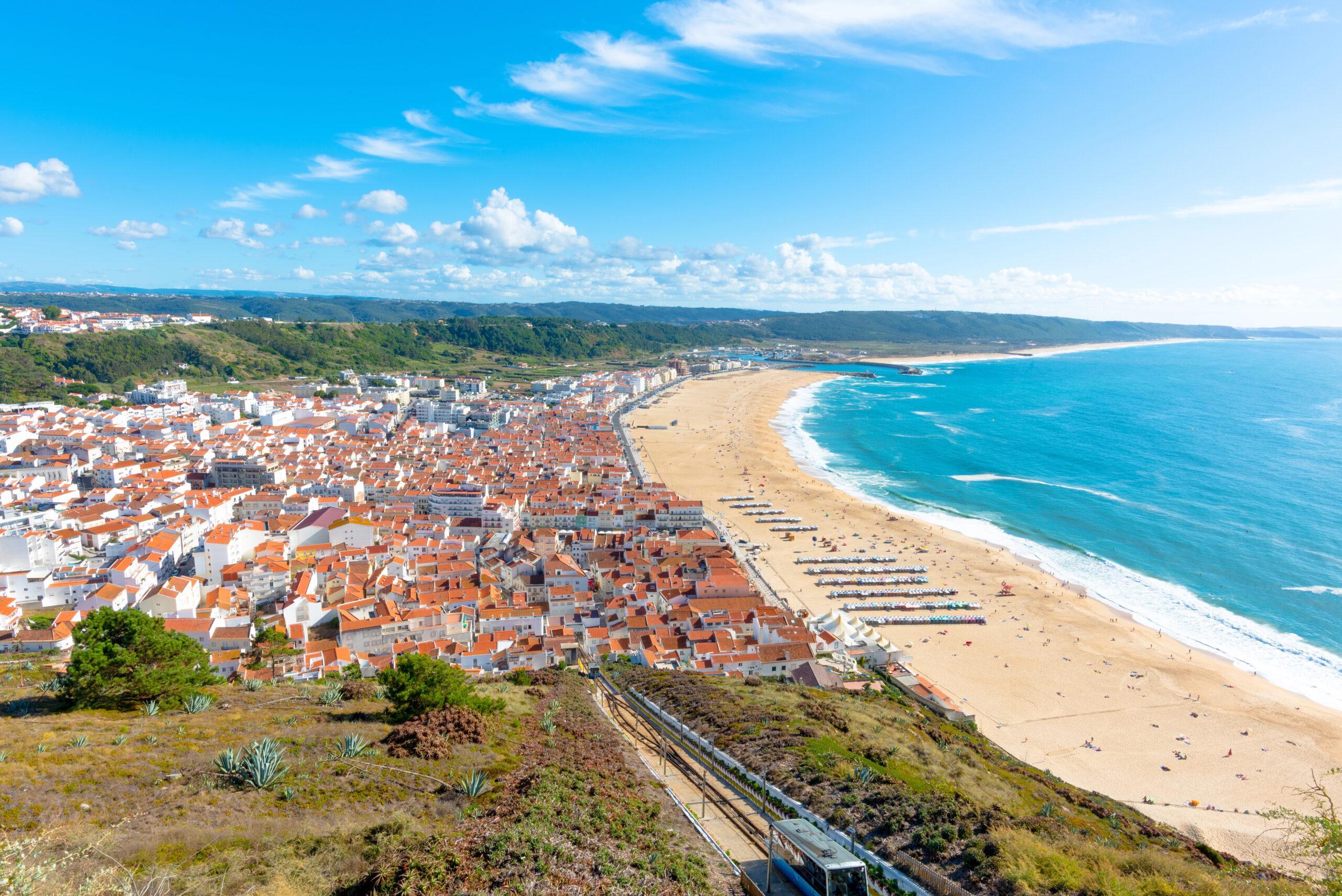
Nazaré is famous for two separate reasons: waves that regularly break world records, and a charming fishing town that tourism hasn’t swallowed whole.
The big-wave surfing happens at Praia do Norte, where the underwater canyon funnels swell into waves reaching 20-30 metres in winter. It’s a spectacle. The beach break holds the record for the largest wave ever surfed – 26.21 metres (86 feet), ridden by Sebastian Steudtner off Praia do Norte in October 2020. Steudtner surfed an even bigger wave here in 2024, measured at 28.57 metres, which would break his own record if it’s ratified.
But even without the waves, Nazaré holds its own. The beachfront promenade stretches for kilometres. Traditional fishing boats still line the sand. Women in traditional seven-petticoat skirts (yes, really) sell dried fish in the market. It feels authentically Portuguese despite the tourist presence.
What to see
Sítio, the clifftop neighbourhood, has the best views. Take the funicular (€1.20 each way) from the beach up to the promontory. The Forte de São Miguel Arcanjo sits at the end of the headland, where big-wave surfers launch from and spectators gather during winter swells. Entry to the fort is €2 and includes a small surfing museum.
Walk the clifftop path between town and fort for dramatic ocean views. On clear days, you can see the Berlengas Islands offshore.
The main beach is wide and sandy, protected from the largest waves. It gets packed in summer, but swimming is safe and the water reasonably warm by Portuguese standards.
Best time to visit
October to March for big-wave surfing. Peak swell season runs from November to February, when professional surfers arrive for the massive waves. The fort viewing area gets crowded on big swell days – locals watch the forecasts and show up when conditions are right.
June to September for beach weather and swimming. The town is busier but livelier, with seafood restaurants full and promenade cafés packed until late evening.
Getting there
No direct train. Buses from Lisbon’s Sete Rios station take about 2 hours (€12-15 each way). Services run 3-4 times daily.
By car: 1 hour 45 minutes from Lisbon. Combines easily with the monastery circuit – Nazaré to Batalha takes just 20 minutes.
Tours: Most monastery circuit tours include a Nazaré stop, usually for lunch and 1-2 hours of exploring.
Fátima: Pilgrimage site and religious history
Distance from Lisbon: 125km (1 hour 30 minutes by car)
Fátima ranks as one of Catholicism’s most important pilgrimage sites, drawing millions of visitors a year to the spot where three shepherd children reported visions of the Virgin Mary in 1917.

Even for non-religious visitors, the scale and devotion leave a mark. The Sanctuary of Fátima sprawls across a plaza twice the size of St Peter’s Square in Vatican City. Pilgrims walk on their knees across the marble towards the Chapel of Apparitions, marking the exact spot where the visions occurred.
The site includes multiple churches and chapels. The Basilica of Our Lady of the Rosary holds the tombs of two of the shepherd children. The modern Basilica of the Holy Trinity, completed in 2007, seats 9,000 people and features contemporary religious art.
Entry to all churches and chapels is free. Dress codes apply – no shorts or bare shoulders.
Planning a visit
Pilgrimage dates (the 13th of each month, especially 13 May and 13 October) see enormous crowds, hundreds of thousands of pilgrims. The atmosphere becomes intensely spiritual but also intensely crowded. Book accommodation months in advance if visiting on these dates.
Regular days offer a much quieter experience while still conveying the site’s significance and scale.
Allow 2-3 hours to see the main attractions, walk the plaza and visit the basilicas. The town itself holds little interest beyond the religious site.
Getting there
Buses from Lisbon’s Sete Rios station run regularly, taking 1.5-2 hours (€11-14 each way). Book through Rede Expressos.
By car: 1 hour 30 minutes from Lisbon. Fátima sits 20 minutes from Batalha, making it a natural addition to the monastery circuit if you’re driving.
Costa da Caparica: Lisbon’s best beaches
Distance from Lisbon: 15km (30-40 minutes by bus)

When Lisbon locals want a beach day, many head to Costa da Caparica. This long stretch of Atlantic coastline offers wide sandy beaches, decent surf and beachfront restaurants, all far less built-up than Cascais.
The beaches run for 15km, connected by a narrow-gauge railway in summer (€3 return) that stops at different stretches. Beaches nearer the town see more families. Walk or ride south and you’ll find quieter stretches popular with surfers.
Praia da Saúde and Praia do Norte sit closest to town with full facilities. Further south, Praia da Morena is good for surfing. The beaches at the far end become more rugged and natural, backed by dunes rather than buildings.
Water temperature stays cool even in summer (17-20°C), but the beaches are sandy, swimming is safe, and the Atlantic surf is fun for bodyboarders.
Getting there
Bus 153 runs from Praça de Espanha in Lisbon to Costa da Caparica, taking 30-40 minutes (€4 each way). Services run frequently through summer, less often in winter.
By car: 30 minutes from central Lisbon via the 25 de Abril Bridge. Parking can be difficult in summer – arrive early.
When to visit
June to September for the warmest weather and water. The narrow-gauge beach train only operates in summer (typically June-September).
May and October bring pleasant beach weather with far fewer crowds, though the water stays cold and some beach facilities close.
Setúbal and Arrábida Natural Park: Dolphins and pristine beaches
Distance from Lisbon: 50km (40 minutes by car)
Setúbal doesn’t feature on many day trip lists, which means you’ve probably got it mostly to yourself. This working fishing port has excellent seafood, dolphin-watching tours and access to some of Portugal’s most beautiful beaches in the nearby Arrábida Natural Park.
The Sado Estuary is home to a resident population of bottlenose dolphins. Several operators run dolphin-watching tours (€35-45 for 2-3 hours). Sightings are common thanks to the resident pod, though as with any wildlife, never guaranteed.
Arrábida Natural Park protects the Serra da Arrábida mountains and the coastline south of Setúbal. The beaches here – particularly Praia da Figueirinha and Praia dos Galapinhos – have turquoise water more reminiscent of the Mediterranean than the Atlantic, backed by forested hillsides.
The coast road through the park (N379-1) ranks among Portugal’s most scenic drives, winding between mountains and sea with viewpoints every few kilometres.
Getting there
Buses and ferries connect Lisbon to Setúbal but take 1.5 hours. Driving is simpler: 40 minutes from Lisbon across the 25 de Abril Bridge, then following the A2.
The beaches and park are much easier with a car, though local buses do run from Setúbal to some of them in summer.
Time needed
Half-day minimum for Setúbal and a dolphin tour. Full day if adding the Arrábida beaches and coastal drives.
Berlengas Islands: Remote nature reserve
Distance from Lisbon: 90km to Peniche, then 10km by boat
The Berlengas archipelago sits 10km offshore from Peniche, a group of rocky islands that form a protected nature reserve. It’s Portugal’s most remote day trip option, and it feels like the edge of the world.
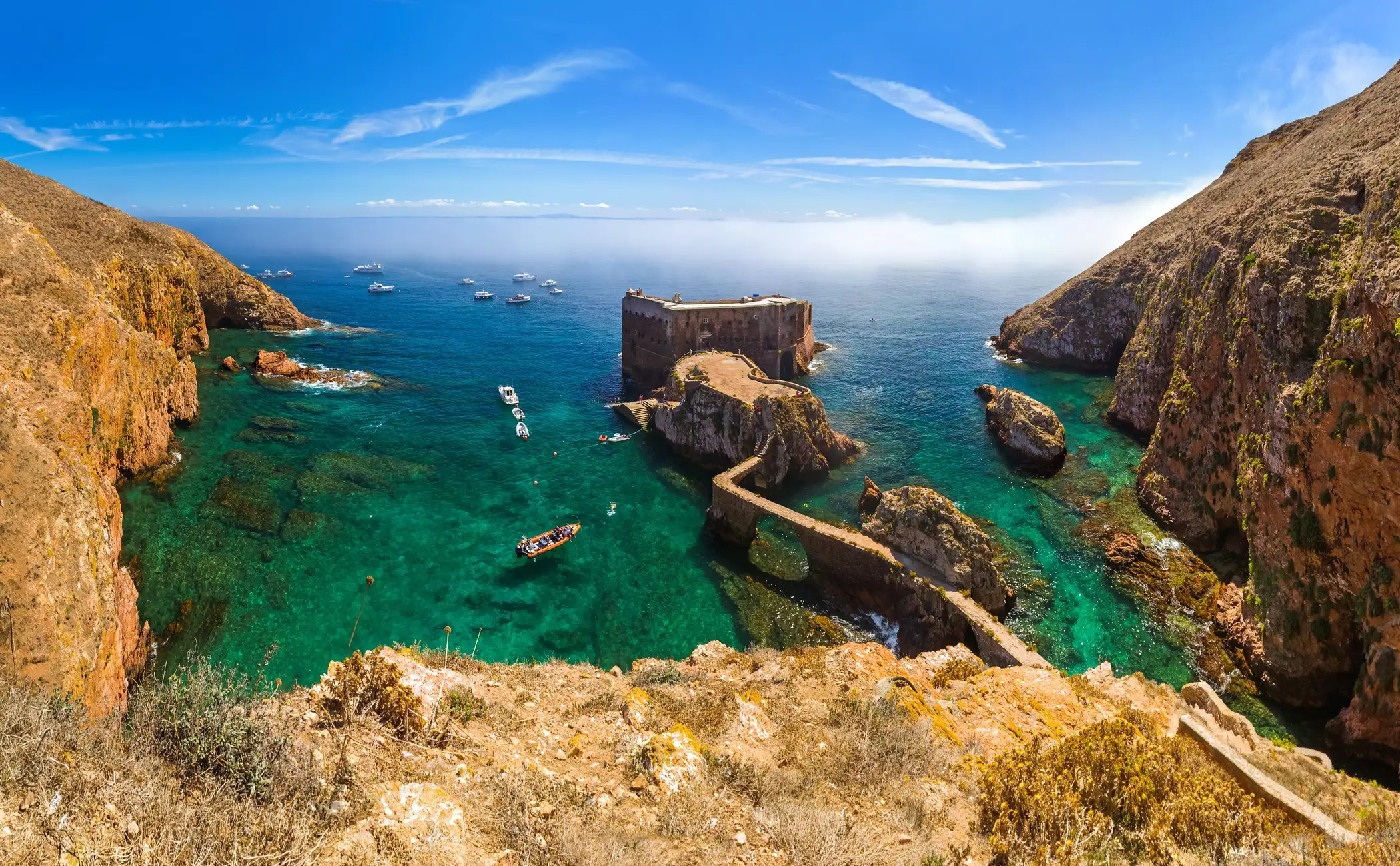
São João Baptista Fort, a 17th-century fortress connected to the main island by a narrow stone bridge, is the iconic sight. The fort now operates as a hostel (book months ahead if you want to stay overnight in one of the most unusual locations imaginable).
The island draws mainly birdwatchers, divers and people after dramatic coastal scenery. Walking paths circle the island (allow 2-3 hours to explore). Clear water and abundant marine life make it excellent for snorkelling.
Boat trips from Peniche run mainly from mid-May to September, taking 30-40 minutes (around €23-29 return). Sailings either side of the season are limited and weather-dependent. Seas can be rough – take seasickness medication if you’re prone to motion sickness.
The island has one café-restaurant, no shops and limited facilities. Bring water, snacks and sun protection. Only 350 visitors are allowed on the island daily, so book ferry tickets in advance through Berlenga.eu or a similar operator.
Getting there
Take a bus from Lisbon to Peniche (1 hour 30 minutes, €10-12), then catch the morning ferry to Berlengas. Return ferries typically depart mid-afternoon, giving you 4-5 hours on the island.
By car: 1 hour 15 minutes to Peniche, where you leave the car and catch the ferry.
This takes a full day, including travel time. Reliable sailings run roughly mid-May to September. Worth it for the scenery and remoteness, but not a casual or last-minute day trip.
How to get around: Transport options for day trips from Lisbon
Trains from Lisbon
Portuguese trains (CP – Comboios de Portugal) serve several destinations directly from Lisbon.
Sintra: Direct trains from Rossio station every 15-20 minutes (40 minutes, €2.45)
Cascais: Direct trains from Cais do Sodré every 20 minutes (40 minutes, €2.45)
Évora: Direct trains from Oriente station (about 1 hour 30 minutes, €12.50)
Use a Viva Viagem card (€0.50 to buy, reloadable) for all train and Lisbon metro/bus travel. Much cheaper than buying individual tickets.
Buses from Lisbon
Rede Expressos operates most long-distance buses from Lisbon.
Óbidos: From Campo Grande (1 hour, €8-10)
Évora: From Sete Rios (1.5 hours, €12-15)
Nazaré: From Sete Rios (2 hours, €12-15)
Fátima: From Sete Rios (1.5-2 hours, €11-14)
Book buses online through the Rede Expressos website, especially in summer when services fill up.
Costa da Caparica: Bus 153 from Praça de Espanha (30-40 minutes, €4)
Renting a car
A car makes sense for:
- The monastery circuit (Batalha, Alcobaça, Tomar)
- Setúbal and Arrábida Natural Park
- Combining multiple destinations in one day
- Visiting less accessible places like Berlengas (drive to Peniche)
Daily rental costs €25-40 depending on season and car type. International drivers need an International Driving Permit (IDP) alongside their regular licence.
Portuguese motorways (marked with ‘A’ numbers) charge tolls. The A1 from Lisbon to the north costs roughly €10-15, depending on your exit.
Parking: Free in most small towns (Óbidos, Nazaré). Paid parking in Cascais and Sintra (€1-2 per hour). Évora has a mix of paid and free zones.
Organised tours
Day tours from Lisbon cover most destinations.
Sintra/Cascais/Cabo da Roca: €50-80 per person, 8-9 hours
Óbidos/Nazaré/Fátima: €60-90 per person, 9-10 hours
Monastery circuit: €70-95 per person, 10-12 hours
Évora: €65-85 per person, 8-9 hours
Guided tours handle transport and timing but follow fixed schedules. Good for destinations like the monastery circuit, where public transport is difficult. Less useful for Sintra or Cascais, where trains work perfectly well.
Book through GetYourGuide or directly with local operators like We Hate Tourism Tours.
Practical tips for day trips from Lisbon
Start early. Most destinations get busier after 11am, especially in summer. Taking the first train or arriving by 9am means you’ll see major sights before the crowds.
Check timetables before travelling. Portuguese bus and train schedules change seasonally. The last bus back from Óbidos or Nazaré might leave at 6pm or 7pm – miss it and you’re stuck.
Buy tickets in advance for popular attractions. Pena Palace, Quinta da Regaleira and Batalha Monastery all offer online booking, which lets you skip entrance queues that can be 30 minutes or more in peak season.
Pack appropriately. Coastal destinations get windy – bring layers even in summer. Sintra can be 5-10°C cooler than Lisbon thanks to its microclimate. Comfortable walking shoes matter for cobbled towns and castle walls.
Lunch timing matters. Portuguese restaurants serve lunch roughly 12:30pm-3pm, dinner from 7:30pm onwards. Arriving at 4pm for lunch means closed kitchens. In smaller towns like Óbidos, some restaurants close entirely between services.
ATMs exist but aren’t always obvious. Carry some cash, especially in smaller towns. Cards are widely accepted, but some smaller cafés and restaurants remain cash-only.
Language: English is widely spoken in tourist areas (Sintra, Cascais, major attractions) but less common in smaller towns and with older residents. Learn a few basic Portuguese phrases – locals appreciate the effort.
FAQs for day trips from Lisbon
How many day trips should I plan from Lisbon?
It depends on your total time in Portugal. Spending 4-5 days in Lisbon? Add 1-2 day trips. A week or longer? You can easily fill 3-4 days with excursions and still have time to explore Lisbon.
I’d prioritise Sintra (essential) and one coastal option (Cascais or Costa da Caparica) as a minimum. Add Óbidos or Évora if you have a third day.
Which day trip is the best from Lisbon?
Sintra, without question. The combination of palaces, castles and gardens is something you won’t find elsewhere in Portugal. It’s the most-visited attraction outside Lisbon for good reason.
That said, Évora offers the most authentic Portuguese experience if you want to escape tourist areas entirely.
Can you do multiple day trips in one day?
Cascais and Cabo da Roca combine naturally in one day. So do Óbidos and Nazaré if you have a car.
Don’t try combining Sintra with anything else – there’s too much to see, and you’ll just rush both. The monastery circuit (Batalha, Alcobaça, Tomar) technically fits one very long day, but works much better with an overnight stay.
Do I need a car for day trips from Lisbon?
Not essential, but helpful for some destinations. Sintra, Cascais and Costa da Caparica have excellent train and bus connections. Óbidos, Évora, Nazaré and Fátima have regular buses but more limited schedules.
The monastery circuit, Arrábida Natural Park and Berlengas (drive to Peniche) are much easier with a car. So is combining multiple destinations in one day.
How much do day trips from Lisbon cost?
Budget varies a fair bit.
Train trips (Sintra, Cascais): €5-10 return transport plus attraction costs
Bus trips (Óbidos, Évora): €15-30 return transport plus meals and attractions
Monastery entries: €6 each
Organised tours: €50-95 per person, including transport and guide
Figure on €30-50 per person for most day trips, including transport, entrance fees and a meal. Add more for tours or if renting a car (€25-40 daily rental plus fuel and tolls).
What’s the best time of year for day trips from Lisbon?
April-June and September-October offer ideal conditions: warm weather, smaller crowds and everything fully operational. Spring brings wildflowers and green landscapes. Autumn has grape harvests and warmer water.
July-August get very busy and hot (30-35°C inland), but the beaches are at their best. Book accommodation and tours well ahead.
November-March means fewer crowds and lower prices, but colder weather and some reduced services (Berlengas doesn’t run at all, beach facilities close, monastery hours shorten).
Can you visit Sintra and Cascais in one day?
Technically yes, but I wouldn’t recommend it. You’ll rush both places and miss what makes them special.
If you insist on combining them: start in Sintra at 9am, see 1-2 attractions (Pena Palace and either Quinta da Regaleira or the Moorish Castle), take the bus to Cabo da Roca (book the 434 bus that goes there), then continue to Cascais for late afternoon and evening. Long day, lots of transport, very rushed.
Better approach: dedicate a full day to Sintra, then visit Cascais and Cabo da Roca on a separate day at a more relaxed pace.
Is Fátima worth visiting if you’re not religious?
It depends on your interests. The scale and devotion leave a mark even on non-religious visitors, and understanding Fátima’s importance helps you understand Portuguese culture more broadly.
That said, if you have limited time, I’d prioritise Sintra, Óbidos or Évora over Fátima unless you’re specifically interested in religious sites or pilgrimage culture.
More Lisbon guides
Where to eat in Lisbon – the best restaurants and must-try dishes
The best things to do in Lisbon – key sights and experiences not to be missed
Where to stay in Lisbon – family-friendly accommodation