Last Updated on 29/09/2026 by Ting Dalton
Worried about flying with a toddler? Don’t be. A long-haul flight with a two-year-old isn’t a walk in the park, but it doesn’t have to be the horror story you’re bracing for either. Whether it’s your first time or you’ve done the airport dash a dozen times, I’ve flown with my two boys many times, on short domestic hops and long-haul, and the trips that went well all had one thing in common: preparation.
Gone are the days of gin, back-to-back films and forty winks. These days it’s snacks, sticker books and a carefully packed bag of tricks. Here’s what has actually worked for us, from booking the right flight to surviving take-off, landing and the long stretch in between. For the baby years, I’ve got a separate guide to flying with a baby.

At a glance: flying with a toddler
- Book smart: a night flight and a pre-ordered children’s meal do half the work before you board.
- Pack a bag of tricks: snacks, small unwrapped new toys, sticker books and a loaded iPad with your own child-sized headphones.
- Plan for their ears: something to suck or sip on the way up and down saves a lot of tears.
- Help them sleep: keep the bedtime routine, bring a comfort toy, and think about a travel pillow or seat cushion.
- Lower your expectations: you’ll never see these passengers again, and most are far kinder than you fear.
Get your mindset right first
A big trip with a toddler is as much a mental game as a packing one, and a lot of surviving a long flight comes down to how you go in. Picture the worst-case scenario, and anything better feels like a win. However long the flight, you will get off the plane eventually, and you’ll never see the other passengers again.
In my experience, people are kind, helpful and understanding. There’s the odd exception, but if someone tuts or sighs, ignore, ignore, ignore. That mindset is half the battle.
Before you fly, get the booking right
Book a night flight
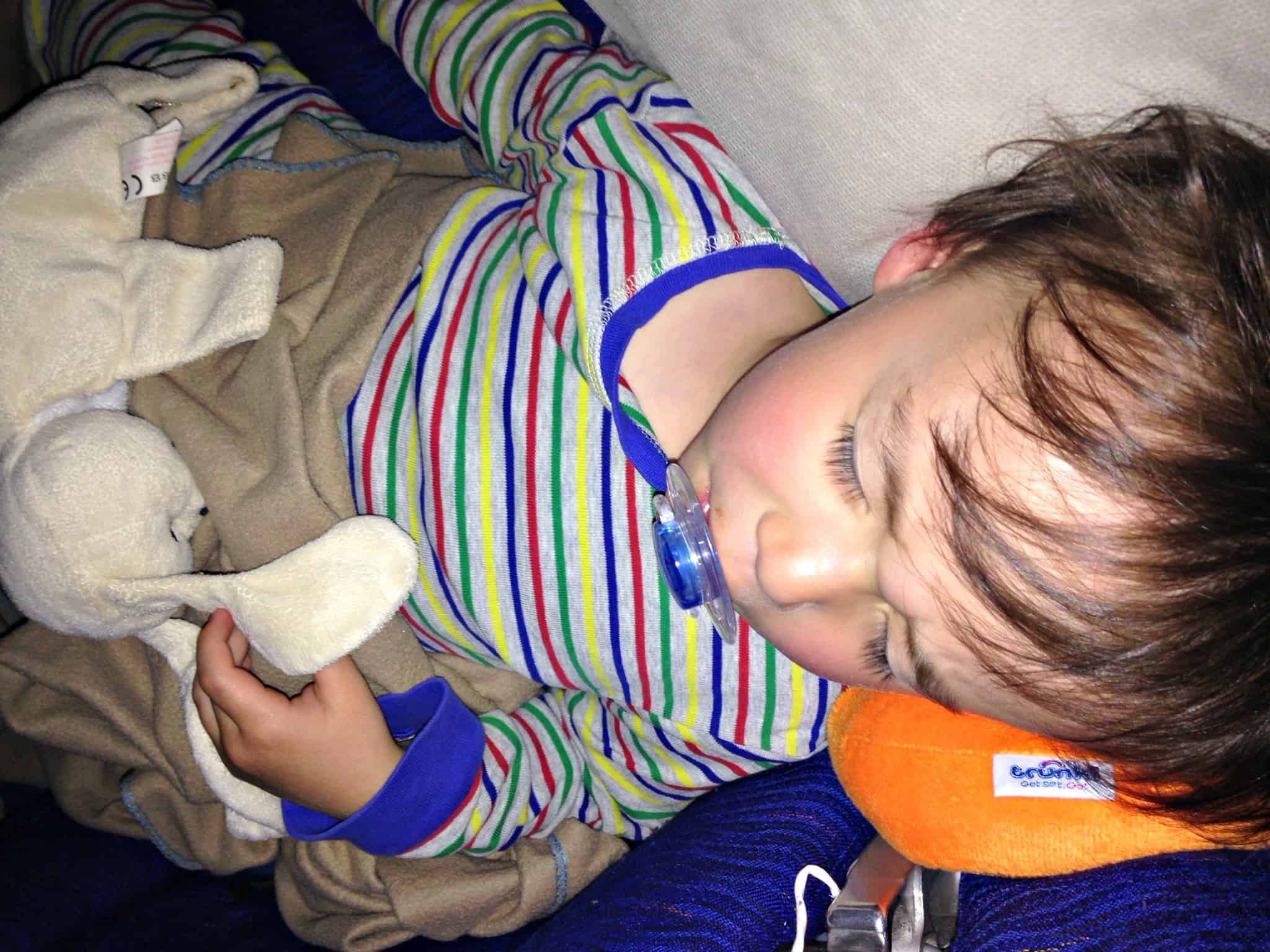
If you can, fly overnight. A night flight is almost always the better option long-haul, because it lines up with your toddler’s own bedtime. Change them into pyjamas, run through a mini bedtime routine, and with the cabin lights down and darkness outside, it all helps reinforce that it’s time to sleep. Keeping their routine as close to normal as possible is the way to go, and it’s what we did with my eldest, right down to the favourite cuddly bunny and his dummy.
Order a children’s meal
It’s a small thing, but I didn’t realise until a friend told me that airlines cater specifically for young children. Plane food can be hit and miss, and for small people who are famously fussy, a children’s meal can make all the difference. Food is much more catered to kids’ tastes, and we’ve had fruit salad, breaded chicken, mash and peas, a yoghurt, a cheddar slice and a few chocolate buttons. Our boys usually ate most of it without much of a fight. You usually have to request it when you book or up to 24 hours before you fly, so don’t leave it to the travel day itself.
Think about your seats
Once your child turns two, they need their own seat rather than a lap, so it’s worth choosing where you sit. A window seat gives a curious toddler something to look at and keeps them away from the aisle, hot drinks and passing trolleys. If there are three of you, putting your toddler in the middle seat between you works well. A bulkhead row buys a little extra legroom and space for a cushion, though the armrests are usually fixed. If your child naps happily in their car seat, many airlines let you fit an approved one onto their booked seat, which keeps them secure and belted for sleep. Whatever you do, an aisle seat with a wriggler is the one I’d avoid.
Packing your hand luggage
Load up on snacks
Bring plenty of their favourite snacks, and pack more than you think you’ll need. At some point they will get bored and peckish, and having enough snacks to outlast the flight can be the difference between calm and a meltdown. We use a Bento Yumbox, which our sons adored, partly because it holds a bit of variety and partly because it’s their special box. They’re light, durable and easy to pack, which helps when you’re already loaded down. A refillable water bottle is a must too, as cabin air is drying and the crew will happily top it up.
Bring unwrapped surprise gifts
Kids love a present. Head to a toy shop or a pound shop, pick up a handful of small toys, and keep them hidden in a goody bag to hand out when the itchy feet set in. Save a few new toys for the return leg too. One tip from experience: don’t wrap them. I did once, and airport security made me unwrap the lot.
Pack activities that actually hold their attention
My kids aren’t especially crafty, but I still filled our carry-on with things to do, and made a game of handing them over like little gifts. He loved the sticker mosaics, and we spent ages working through them together. Sticker books, a colouring book and simple activity pads all earn their space, and it’s worth keeping a couple back for the way home.
Load up the iPad and bring your own headphones
Don’t count on the in-flight entertainment. On one British Airways flight, there was nothing my eldest hadn’t already seen, so once the novelty of the seat screen wore off, he asked for the iPad. This is the one journey where I happily relax our usual screen-time rules. Load it with favourite cartoons and games before you go, and bring your own child-sized headphones, as the airline’s set rarely fits small heads.

Pack spare clothes and an extra layer
Bring a full change of clothes for your toddler, and one for yourself if you’ve room, because spills and accidents happen. Cabins also run cold, so pack an extra layer or two in case the blanket isn’t enough.
Take pull-ups, even mid-potty training
If you’re potty training, don’t be afraid to reach for a pull-up. We still used them at night and popped one on for sleep without a second thought. If you’re in the early stages, don’t stress about sticking rigidly to the plan. Accidents mid-flight are more stressful for everyone, and it’s only a few hours. Most long-haul aircraft have a fold-down changing table in one of the toilets, so nappy changes are manageable, if snug.
Helping a toddler sleep on a plane
Use a child’s travel pillow
There’s nothing worse than watching your toddler doze off and their head roll to the side like a little contortionist. We went for a Trunki Yondi neck pillow, which supported my son’s head while he slept and watched his films. It’s less bulky than most, and it clips together under the chin with a magnetic clasp. I didn’t think he’d keep it on, but he did, possibly because it was a monkey.

Try a seat cushion like the Travel Snug
Our boys carry their Travel Snugs through the airport themselves on its straps. I wasn’t sure a fleecy cushion seat and blanket would make much difference, and I was wrong. They were cocooned and comfy, and it helped keep them asleep for a good stretch on our night flight home. It suits children from around 15 months to six years.
Consider an inflatable leg rest, but check the rules
An inflatable cushion like the Fly Tot fills the gap between your seat and the one in front, giving a child a flatter space to stretch out. Ours took about five minutes to inflate with a foot pump, and my son liked having his legs raised and even lay down for a sleep. One caveat worth knowing: airline policies on these vary, and some no longer allow them, so check with your airline before you fly rather than being turned away at the gate.
Lean on the cabin crew
Flight attendants have seen every kind of toddler meltdown, and most are only too happy to help. They’ll warm a bottle or a pouch, refill your water bottle, point you to the quietest loo with a changing table, and sometimes rustle up a small distraction for a fractious child. Don’t be shy about asking. A friendly word with the cabin crew as you board can make the whole flight run more smoothly.
Sleep when they sleep
As much as you’ll want to work through the film list, try to rest when your toddler does. I’m useless at sleeping on planes, so while my son slept I closed my eyes, gave up, and watched a film anyway, then spent the next day exhausted. Learn from my mistake and grab the shut-eye while you can.
Take-off and landing, and those little ears
The bit no one warns you about is ear pain. As the plane climbs and descends, the pressure change can hurt a toddler who doesn’t know how to pop their ears, and it’s a common cause of mid-flight tears.
The trick is to get them swallowing. Offer a sippy cup, a snack, a dummy or a drink during take-off and again on the descent, as swallowing helps equalise the pressure. If your little one has fallen asleep before landing, it’s worth gently waking them for the last stretch down. Keep them belted whenever the seatbelt sign is on, even while they sleep, and the crew will usually ask for the belt to sit over the blanket so they can see it.
Getting through the airport
Gate-check your buggy or travel stroller so you can wheel your toddler right up to the plane door, then collect it again as you step off. Many larger airports have a small play area past security, which is gold for burning off energy before you board. If you have access to an airport lounge, even better, as the space, quieter corners and free snacks buy you a calmer hour before the gate.
On boarding, weigh up the family pre-board against getting on last. Boarding early means a calmer settle-in, but it also means longer strapped in a seat, so on a long-haul I often let my other half board with the bags while I keep the kids moving until the final call.
A word on sleep aids and medicines
You’ll see parents online suggesting antihistamines such as Phenergan to make a toddler drowsy on a flight. I’d steer clear. These medicines aren’t designed for sedating healthy children; the effect is unpredictable, and regulators in several countries now advise against giving promethazine to children under six at all, partly over the risk of breathing problems. Some children have the opposite reaction and end up wired.
If your little one really struggles to settle, or you’re weighing up anything medical for the flight, speak to your GP or pharmacist first. That’s a conversation for a professional who knows your child, not a tip from a blog.
Common mistakes to avoid
- Wrapping the surprise gifts: security will make you unwrap them, so use gift bags instead.
- Relying on the plane’s screen and headphones: bring your own films and child-sized headphones.
- Forgetting the ears: have something for them to suck or sip ready for take-off and landing.
- Trying new gadgets for the first time on board: test the travel pillow or cushion at home so it’s familiar.
- Being rigid about potty training: a pull-up for the flight is not a step backwards.
- Over-scheduling day one: expect a rough first night after a long-haul and keep arrival plans gentle.

Flying with a toddler FAQs
Can a toddler fly on your lap?
Once your child turns two, they need their own seat and their own ticket, so lap travel is out. Under two they can fly as a lap baby, though a booked seat with a suitable car seat is safer if you can stretch to it.
What is the best seat when flying with a toddler?
A window seat is usually the winner. It gives your toddler something to look at, keeps them clear of the aisle and passing trolleys, and stops the constant wriggling towards the walkway. With three of you, the middle seat between two adults works well, and a bulkhead row is worth considering for the extra legroom.
Can I use a car seat on the plane?
Often, yes. Many airlines allow an approved hard-backed car seat to be fitted to your toddler’s own booked seat, which keeps them secure and belted and can help them settle if it’s what they nap in at home. Check your airline’s rules and that your seat is certified for air travel before you fly.
How do I stop my toddler’s ears hurting on the plane?
Encourage them to swallow during take-off and landing, which helps equalise the pressure. A sippy cup, a snack, a dummy or a drink all work. If they’re asleep as the plane starts to descend, wake them gently for the last stretch.
Can I give my toddler something to help them sleep on a flight?
I wouldn’t reach for sedating medicines. They aren’t made for healthy children, the effect is hit and miss, and several countries advise against promethazine for under-sixes. If sleep is a real worry, ask your GP or pharmacist rather than following a tip online.
Should I book a night flight with a toddler?
If the option is there, yes. A night flight lines up with their bedtime, so a familiar routine, pyjamas and a comfort toy give you a real chance of a long sleep.
What should I pack in my carry-on for a long-haul flight with a toddler?
Snacks, a refillable water bottle, a few unwrapped new toys, sticker books and a colouring book, a loaded iPad with child-sized headphones, a full change of clothes, an extra layer, and pull-ups if you need them. A sippy cup for their ears earns its place too.
How do I handle jet lag with a toddler?
Shift them onto local time as fast as you can, get outside in daylight on arrival, and accept that the change in time zone may make the first night or two broken. It’s worth thinking about arrival times when you book, as landing in the early evening lets you go almost straight to bed, while a morning arrival means gently pushing through to local bedtime. Keep day one relaxed rather than filling it with plans.
Comments are closed.