Madrid has a pulsing energy that never quiets. Having been to Madrid many times over the years, I’ve been lucky enough to experience staying close to the action and away from the tourist crowds. My two favourite areas are Malasaña and Chueca if you’re with friends. Travelling to Madrid with family and kids, I would recommend Retiro and beyond for more open spaces.
Madrid is compact and walkable, so almost anywhere central works. But central covers a lot of ground in the Spanish capital, from the tourists gathering around Sol to the quiet, tree-lined streets of Salamanca. This guide breaks down the best areas and best neighbourhoods to stay in Madrid, who each one suits, and where to look for a room in every price bracket.

Where to stay in Madrid: the quick answer
Short on time? Here’s who each area suits, so you can skip to the one that fits your trip.
- Sol and Los Austrias – best for first-time visitors who want everything on their doorstep
- Barrio de las Letras – best for art and history lovers who still want to be central
- La Latina – best for tapas, Sunday markets and a local feel
- Malasaña and Chueca – best for nightlife, independent shops and a younger buzz
- Salamanca – best for luxury, quiet streets and longer stays
- Retiro and the Prado edge – best for families and museum fans who want green space
Still not sure? For a first trip, base yourself in Barrio de las Letras. It’s central and walkable to the big sights, the food is excellent, and it’s calmer at night than Sol.
How to choose the right area in Madrid
The city centre is small enough that you can walk between most neighbourhoods in 15 to 20 minutes, and the metro fills in the rest. So the decision isn’t really about being close to the major attractions, because almost everywhere central is within easy reach of them. It’s about the atmosphere you want when you step out of your hotel, whether that’s the narrow streets of the old town or a calm residential block.
Ask yourself two things. Do you want to be in the thick of it, or somewhere you can actually sleep? And what’s the trip for, sightseeing, eating, shopping, or a bit of everything? The areas below are ordered roughly from most central and busy to quieter and more residential.

Sol and Los Austrias: best for first-time visitors
Sol is the dead centre of Madrid, and of Spain, technically. The Kilometre Zero plaque outside the old post office is the point all the country’s roads are measured from. Stay here, and you’re a short walk from Plaza Mayor, the Royal Palace, Mercado de San Miguel and Gran Vía, with Plaza de España and its rooftop views just beyond. Los Austrias, the Habsburg old town just west of Sol, sometimes called Barrio de los Austrias, has the same central location with prettier, quieter streets.
The trade-off is noise and crowds. This is the busiest, most tourist-heavy pocket of the city, and it doesn’t fully wind down at night. If you’re a light sleeper, look for a room facing an interior courtyard, or shift a couple of streets into Los Austrias.
Where to look: the smart classic hotels sit around Gran Vía, while the streets of Los Austrias and Calle Mayor hide plenty of hostal-style guesthouses where a private room comes in well under the big names.
Best for: first-timers, short stays, anyone who wants to walk out of the door into the action.
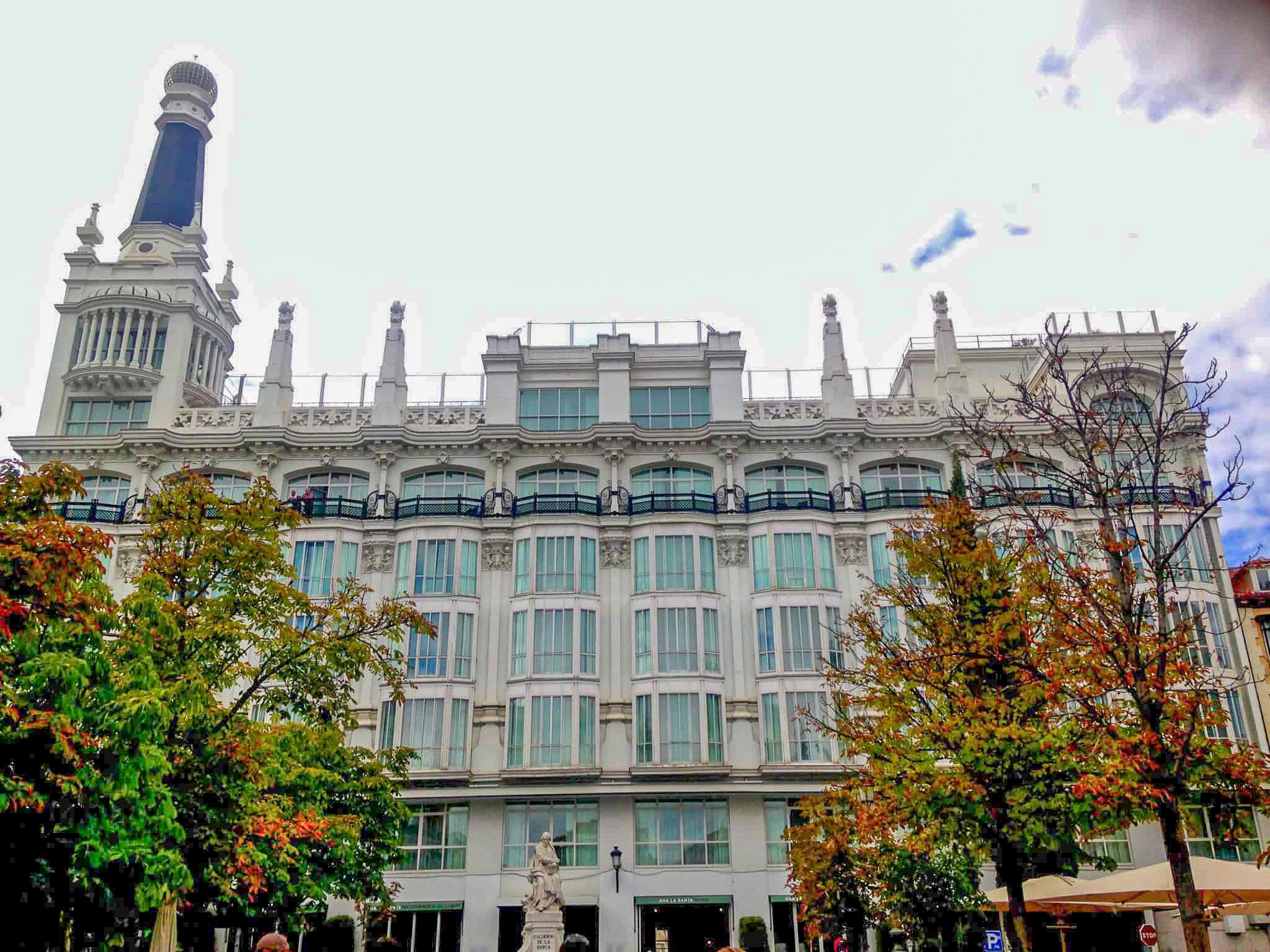
Barrio de las Letras: best for art and history lovers
For a first trip, this is a strong choice. The literary quarter, named for the writers who lived here in Spain’s golden age, sits between Sol and the Prado. Miguel de Cervantes, the author of Don Quixote and the most famous name in Spanish literature, is buried in the convent here, and you can visit the Casa Museo Lope de Vega, the preserved home of the playwright, on a quiet cobbled street. Quotes from famous works are set into the pavements underfoot, an easy detail to miss and a lovely one to spot.
The heart of it is Plaza de Santa Ana (one of my favourite places in Madrid), ringed with tapas bars and terraces that are perfect for an early evening drink. You’re a short walk from the Golden Triangle of Art, which is the Prado Museum, the Reina Sofía and the Thyssen-Bornemisza all within a few hundred metres of each other. Central, walkable, full of good food, and calmer after dark than Sol. It ticks every box.
Where to look: some lovely boutique hotels occupy restored period buildings on the quiet streets here, and Calle de las Huertas has smaller, central guesthouses a step down in price.
La Latina: best for tapas and a local feel
If you came to Madrid to eat, stay in La Latina. This is the city’s tapas heartland, and Calle de la Cava Baja is one long run of bars where you go from door to door, glass in hand, grazing as you go. On Sundays, the streets fill with El Rastro, the sprawling flea market that’s been running here for centuries. Turn up, browse, then collapse into a bar with a vermouth like everyone else.
It’s central, about a 15-minute walk to Sol, but it has a local vibe you won’t find in the streets around the main square. The atmosphere is social rather than club-loud, so it’s lively without being sleepless. Prices tend to be a little gentler here too.
Where to look: a handful of small boutique hotels sit right on Cava Baja in the thick of the tapas run, while the streets towards neighbouring Lavapiés come in cheaper.
Best for: foodies, weekend visitors, anyone who wants a neighbourhood that feels lived-in.
Malasaña and Chueca: best for nightlife and shopping
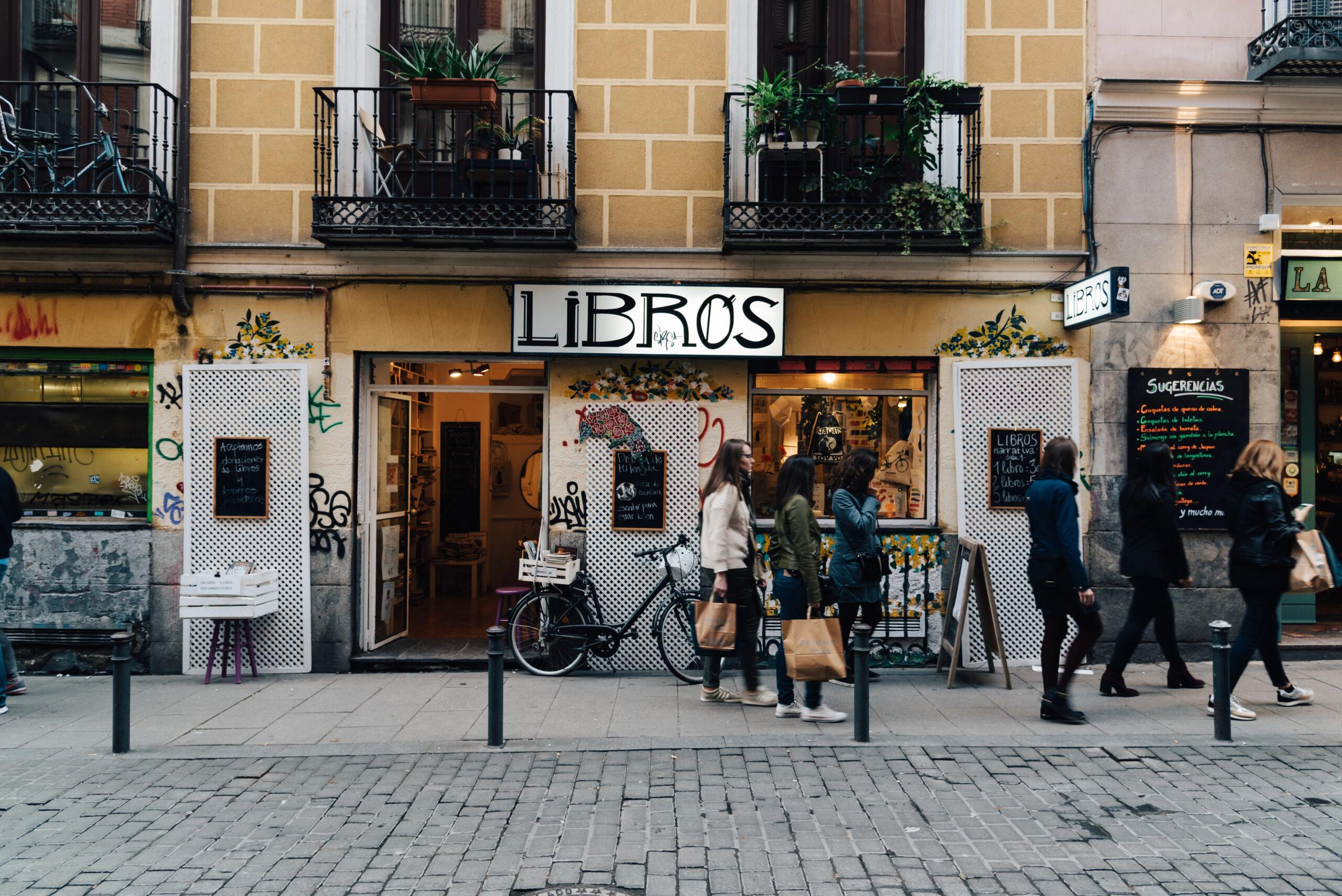
These two neighbours, just north of Gran Vía, are where Madrid comes to play. Malasaña is the bohemian one, all vintage shops, record stores, street art and cafés that fill up for late brunch. Chueca, the city’s LGBTQ+ heart, is polished and social, with strong dining and a party that runs late. Both are very central, and the metro stops at Tribunal and Chueca, put the rest of the city within easy reach.
The obvious catch is noise. Bars here don’t get going until late and don’t stop early. That’s the whole appeal if you’re here to go out, and a problem if you’re not. Book a room away from the main square, and you’ll be fine. A short walk west, beyond Plaza de España, the Templo de Debod, a real Egyptian temple gifted to Spain, is the spot everyone walks to for sunset.
Where to look: both areas are full of design-led boutique hotels, with the buzziest around Chueca’s main square, and there are well-priced hostel-style rooms along Calle Fuencarral if you’d rather spend your money on the bars.
Best for: nightlife, independent shopping, solo travellers, a younger crowd.
Salamanca: best for luxury and longer stays
Salamanca is Madrid’s most elegant address. Built in the late 19th century on a neat grid of wide boulevards, it’s where you’ll find the designer flagships along Calle de Serrano, the smart restaurants, and the quiet, leafy residential streets. Madrileños call the well-heeled crowd here pijo or ‘preppy’. It’s a short metro hop or a 20-minute walk into the centre.
You give up a little atmosphere for the calm and the polish, so it’s not the best base for a two-night break. But for a longer stay, or if you want to sleep well and shop hard, it’s a lovely choice. It also borders El Retiro, so the park is close.
Where to look: this is where Madrid’s grandest five-star hotels cluster, along the Paseo de la Castellana and facing the Retiro gate. It’s also good ground for a serviced apartment off Calle de Goya if you’re settling in for a week or more.
Best for: luxury travellers, shoppers, longer stays, anyone who prizes a quiet night.

Retiro and the Prado edge: best for families
For families, this is the area to look at. The streets bordering El Retiro park and the Paseo del Prado are greener, calmer and better for a night’s sleep than the centre, while still being walkable to the museums. Retiro itself is a huge, gorgeous park with a boating lake, playgrounds and space to let kids run off steam, which after a morning of art is worth its weight in gold.
You’re right by the Golden Triangle of Art here, with the Reina Sofía and the National Archaeological Museum both within easy reach, and Atocha station is close if you’re arriving by train or planning a day trip to Toledo. It’s a touch removed from the nightlife, which for families is the point.
Where to look: the grand old hotels face the Prado, but for families the practical picks are the mid-range hotels along Calle de Atocha or a two-bedroom apartment near the park gates, so everyone gets their own space.
Best for: families, museum enthusiasts, anyone who wants green space and a quieter base.
Airbnb and apartment rentals in Madrid
Hotels aren’t always the answer. If you’re travelling as a group of friends, or as a family who’d rather not be split across separate rooms, an apartment usually works out cheaper per head and gives you a kitchen and a sofa to sprawl on at the end of a long day. Madrid has a big rental market, and the central neighbourhoods are well covered.
For a first trip with friends, Malasaña and Chueca are the obvious picks. You’re in the middle of the nightlife, and coming home to your own flat beats stumbling back to a hotel lobby. La Latina suits a group that’s here to eat, with the tapas bars on your doorstep. If you want space and quiet, look at Salamanca or the streets near El Retiro, where you’ll find larger apartments on residential blocks.
A few things worth knowing before you book. Madrid has tightened its rules on short-term lets, so stick to listings with solid recent reviews. Many older buildings have no lift, which matters after a night out or with a suitcase, so check before you commit. And read the small print on the cleaning fee, which can make a cheap-looking flat less of a bargain once it’s added.
How to get from the airport to central Madrid
Madrid-Barajas airport sits about 12km northeast of the centre, and getting in is quick and cheap. Here are your options, in order of value.
- Cercanías train (line C-1): the bargain. Around €2.60 and roughly 25 minutes direct to Atocha and Sol, from Terminal 4 only. From T1 to T3, hop on the free shuttle to T4 first.
- Metro (line 8): from any terminal to Nuevos Ministerios, then change for the centre. About €4.50 to €5 including the €3 airport supplement, and 35 to 40 minutes to Sol with a transfer.
- Exprés Aeropuerto bus (line 203): a flat €5, runs 24 hours, and takes 30 to 40 minutes to Atocha and Cibeles. The one to pick for a late arrival with heavy bags.
- Taxi: a fixed €30-€33 fare to anywhere in the central zone, 25 to 35 minutes. Easiest with kids and luggage, and you’re not counting the meter.
Getting around Madrid
The metro is clean, cheap and easy, and it covers the whole city, so every central neighbourhood is well-connected. But honestly, for most trips you’ll walk. The central neighbourhoods above are all within 15 to 20 minutes of each other on foot, and wandering is half the pleasure of Madrid, from the smell of churros near Plaza Mayor to the jasmine spilling over balconies in La Latina.
When you do need it, public transport is cheap and simple. One thing worth knowing: many smaller metro stations only have stairs, with lifts limited to the bigger interchanges. If you’re travelling with a pram, check your route before you set off.
Best time to visit Madrid
Aim for late spring (May to June) or early autumn (September to October). The weather is warm but not brutal, the days are long, and the city’s terraces and parks are at their best. Avoid July and August if you can, when temperatures regularly push past 35°C and locals largely clear out.
Winter is one of the best times to book a city break here. The days are chilly but bright and blue, the museums are blissfully uncrowded, and hotel prices drop from their spring and autumn highs. It’s a good-value stretch to visit, which is exactly why so many people plan their trips over the winter months. If that’s you, book your area early, because the central neighbourhoods still fill up fast around Christmas and New Year.
Frequently asked questions
What is the best area to stay in Madrid for first-time visitors?
Barrio de las Letras or Sol. Both are central and walkable to the major sights. Barrio de las Letras is my pick for its food and slightly calmer evenings, while Sol puts you in the absolute middle of everything if you don’t mind the noise.
Where should I stay in Madrid for nightlife?
Malasaña or Chueca. Both are packed with bars and clubs that run late, and both are central. Book a room off the main square if you also want to sleep.
Where is best to stay in Madrid with family?
The streets around El Retiro and the Paseo del Prado. You get green space, playgrounds and a boating lake on your doorstep, quieter nights, and the museums within walking distance. For more, read my guide to Madrid with kids.
Where should a group of friends stay in Madrid?
Rent an apartment rather than booking separate hotel rooms. It’s usually cheaper per person and gives you shared space. Malasaña and Chueca put you in the middle of the nightlife, while La Latina is the pick if the trip is really about the food and tapas.
Is Madrid expensive to stay in?
It’s more affordable than many European capitals. Luxury does exist, especially in Salamanca and along the Prado, but you’ll find good mid-range hotels and private rooms across the centre. La Latina and the streets towards Lavapiés tend to be gentler on the wallet.
How many days do you need in Madrid?
Three days covers the main sights at a comfortable pace, with time to wander the neighbourhoods. Add a fourth for a day trip to Toledo. See my 3-day Madrid itinerary for a full plan.
Which area of Madrid is safest?
Madrid is one of the safer big cities in Europe, and all the central neighbourhoods above are fine, day and night. Salamanca, Retiro and Barrio de las Letras feel the most residential and calm. As anywhere, keep an eye on your pockets on busy metro lines and around Puerta del Sol.