Last Updated on 24/04/2026 by Ting Dalton
Tuscany is one of my favourite regions of Italy – and a destination I’ve been lucky enough to explore on many occasions. I’ve driven through the Chianti hills with the windows down, wandered the cobbled streets of Siena with gelato dripping down my wrist, and stood in the Piazzale Michelangelo watching the sun set over Florence’s famous skyline. I love Italy so much that I got married in Ravello on the Amalfi Coast – and Tuscany is one of the biggest reasons why this country keeps pulling me back. Every trip has been different, and every corner of the region has its own draw.

But deciding where to stay in Tuscany can be tricky. The region is large, and your base will shape your entire trip – from the day trips you can take to the food and wine on your doorstep. Whether you want Renaissance art in Florence, wine tastings in Chianti, a quiet villa surrounded by olive groves and cypress trees, or a base among Tuscany’s famous hilltop towns, this guide breaks down the best places to stay in Tuscany so you can find the right spot for your trip.
Quick answer: the best areas to stay in Tuscany
Short on time? Here’s a summary of the best places to stay in Tuscany:
- Florence – Best for first-time visitors, art lovers and easy access to the rest of Tuscany by train
- Siena – Best for medieval architecture, the Palio and a central base for day trips
- Chianti region – Best for wine lovers, rolling hills and the classic Tuscan countryside experience
- Val d’Orcia – Best for scenery, smaller towns and a slower pace
- San Gimignano – Best for a charming small-town base with easy access to Volterra and Chianti
- Lucca – Best for families, cycling and a relaxed walled-city feel
- Cortona – Best for panoramic views, Etruscan history and an Under the Tuscan Sun vibe
- Volterra – Best for a quieter, off-the-beaten-path Tuscan experience
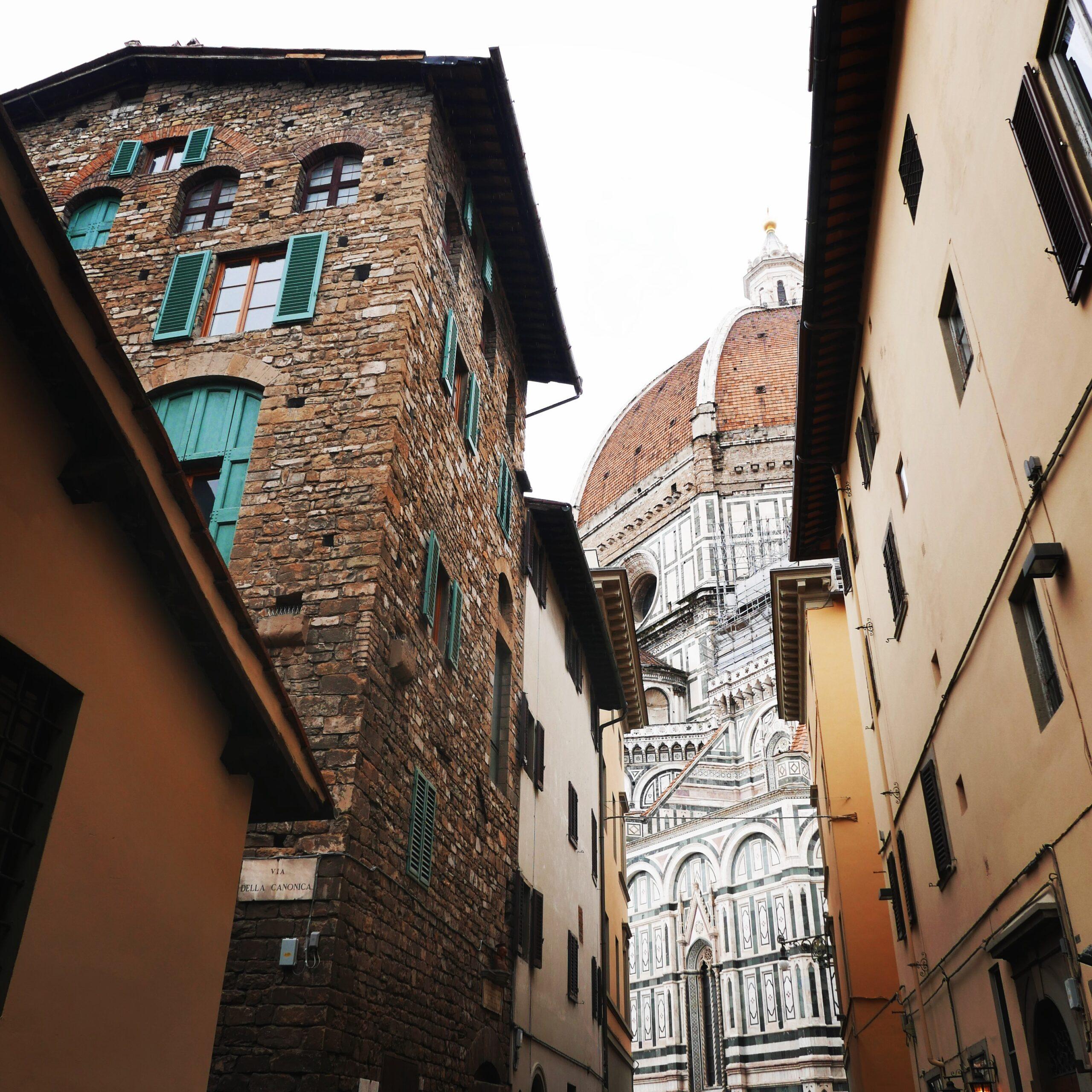
Florence – best for first-time visitors
If this is your first trip to Tuscany, Florence is the obvious starting point. The capital of the region, it’s home to the Uffizi Gallery, Florence Cathedral (the Duomo) with Brunelleschi’s iconic dome, the Ponte Vecchio and some of the finest Renaissance architecture in the world. I’ve now visited Florence twice, and both times I’ve been struck by how much you can see on foot – the historic centre is compact, and most major sights are within a 15–20 minute walk of each other.
Florence also works well as a base for day trips. From the Santa Maria Novella train station, fast trains connect you to Rome (1.5 hours), Pisa (1 hour) and Lucca (1 hour 20 minutes), and you can reach Siena by bus in just over an hour. If you don’t want to hire a rental car, Florence is probably the most practical base in Tuscany.
It’s worth knowing that Florence can be hot and busy in July and August. If you’re visiting in peak summer, stay near the Oltrarno (south bank of the Arno) for a slightly quieter neighbourhood feel, with artisan workshops, independent cafes and the Boboli Gardens on your doorstep.
For more on what to see and do, read my complete guide to the best things to do in Florence.
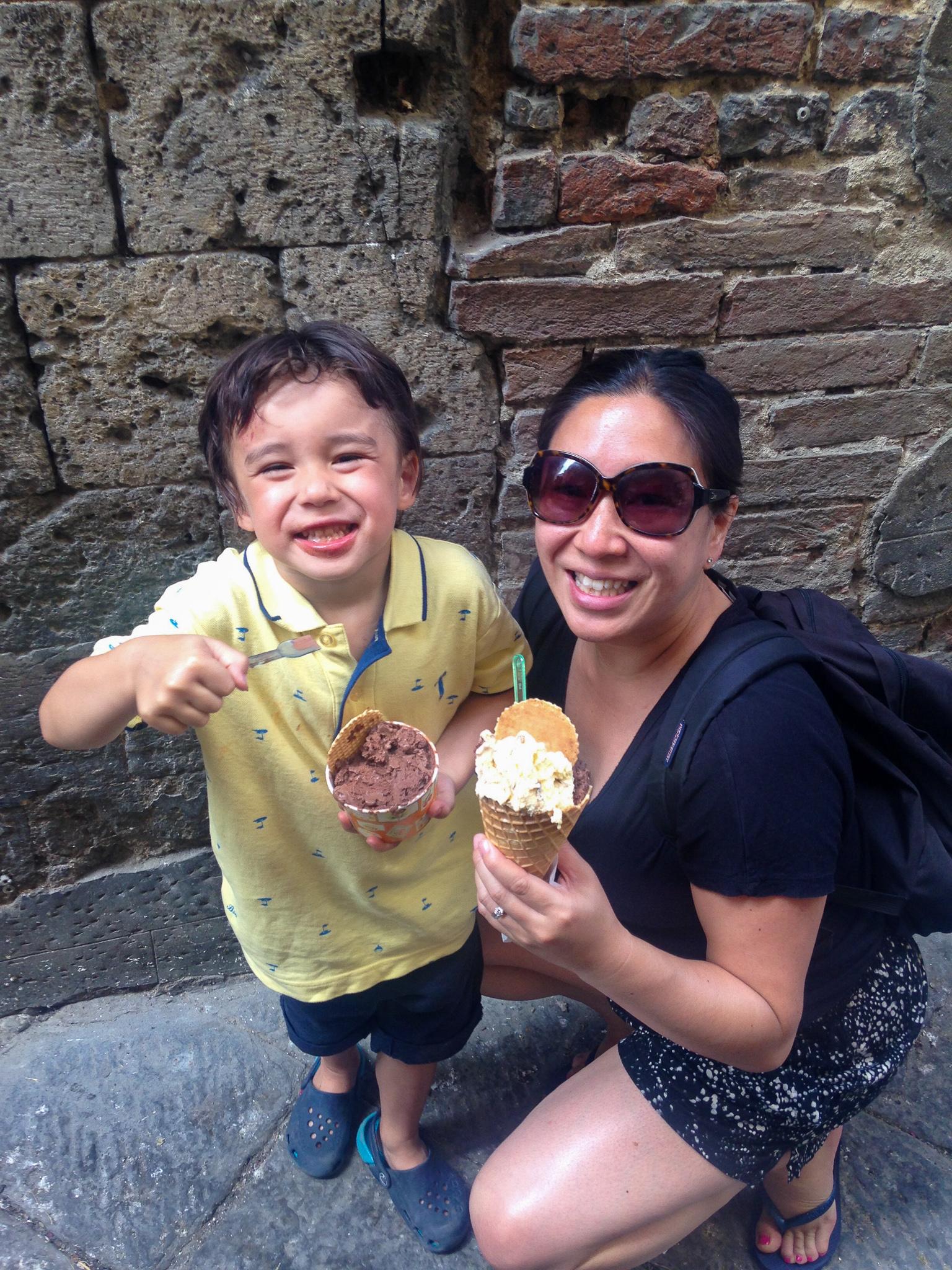
Siena – best for medieval charm and a central location
Siena stole my heart the first time I visited. While much more compact than Florence, it’s a masterpiece in its own right – a UNESCO World Heritage Site filled with Gothic architecture, narrow passageways and the magnificent Piazza del Campo, where the famous Palio horse race thunders around the shell-shaped square twice a year.
Siena’s cathedral is extraordinary – a towering confection of black-and-white marble with gold mosaics and ornate sculptures. Inside, the inlaid marble floors (uncovered at certain times of year) are worth the visit alone. And climbing the 400 steps to the top of the Torre del Mangia rewards you with panoramic views across the city and the Tuscan countryside beyond.

The beauty of staying in Siena is its central location. You’re within easy reach of Chianti, San Gimignano, Monteriggioni and the Val d’Orcia, making it a great base for exploring the region – especially if you have a rental car. The historic centre is car-free, so park on the outskirts and walk in.
Planning a day trip? Read my guide to the best things to do in Siena.

Chianti – best for wine, countryside and la dolce vita
If your idea of Tuscany involves winding roads through vineyards, long lunches under pergolas and wine tastings at family-run estates, then the Chianti region is where you want to be. Stretching between Florence and Siena, Chianti is the heart of Tuscan wine country – and it looks exactly like the postcards. Rolling hills striped with vines, olive groves catching the light, and stone farmhouses dotted across the landscape.
The main towns along the Chiantigiana road – Greve, Castellina, Radda and Gaiole in Chianti – each have their own character, from Saturday markets to medieval towers. This is also a brilliant area for cooking classes, with many agriturismos (farm stays) offering hands-on Tuscan cooking experiences alongside their wine tastings.
You will need a car to stay in Chianti. Public transport between the smaller towns is limited, and half the joy is the drive itself – pulling over at a roadside vineyard or stumbling across a village you hadn’t planned to visit. The Chiantigiana (the SR222 road connecting Florence to Siena) is one of the most scenic drives in Italy, winding through vineyards, past stone farmhouses and through charming villages where you can stop for lunch or a tasting.

Val d’Orcia – best for scenery and smaller towns
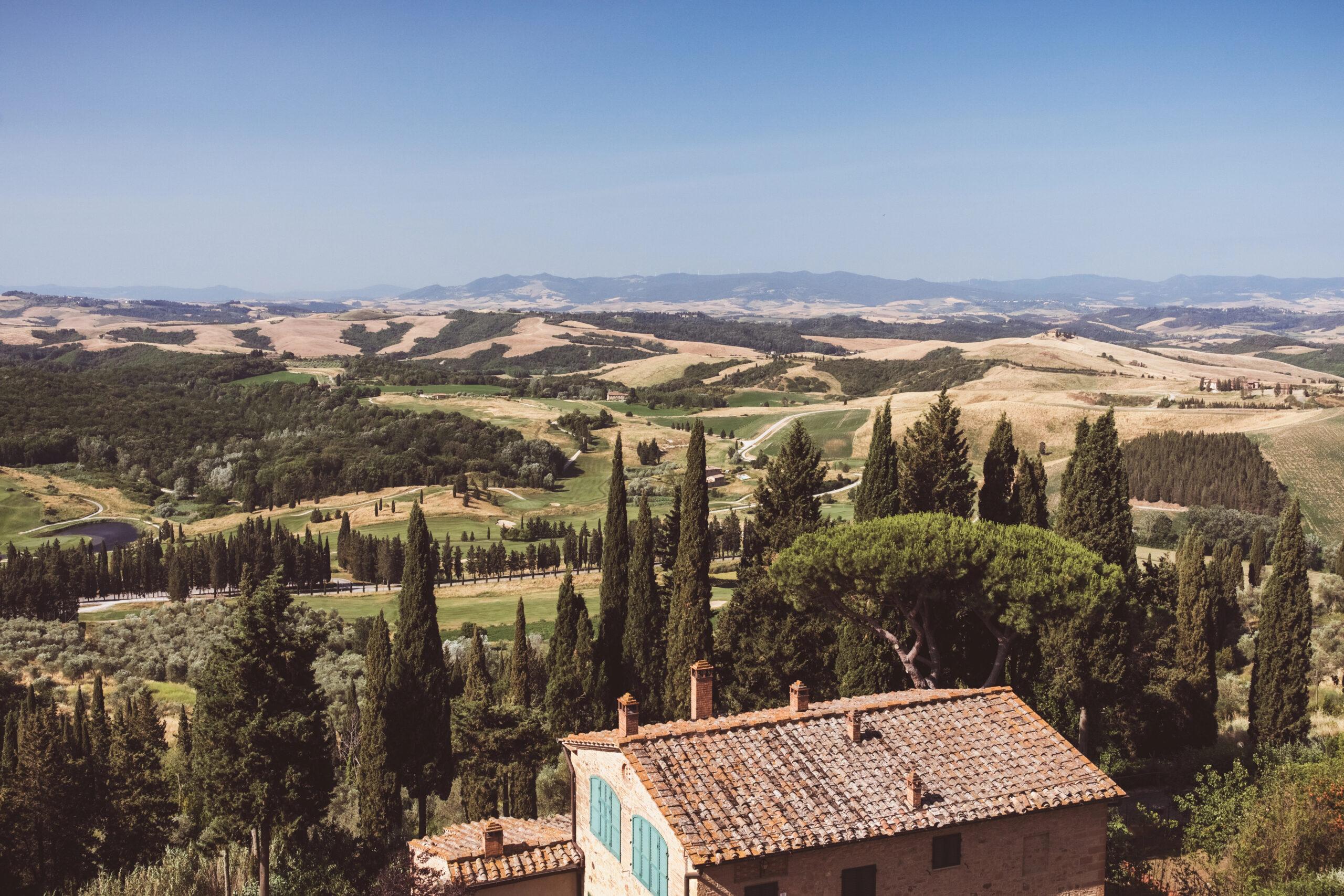
South of Siena, the Val d’Orcia is a UNESCO World Heritage Site and, for many, the most beautiful landscape in Tuscany. This is the Tuscany of calendars and desktop wallpapers – gently undulating hills, lone cypress trees, golden light and a sense of space that’s hard to find elsewhere in the region.
The valley is home to a string of historic towns that are well worth exploring. Pienza, with its perfectly proportioned Renaissance piazza and famous pecorino cheese. Montepulciano, where underground wine cellars are carved into the hillside, and you can taste Vino Nobile straight from the barrel. Montalcino, home to the legendary Brunello wines. And Bagno Vignoni, a tiny village built around a natural thermal pool – one of the most unusual piazzas you’ll ever see. The thermal baths here have drawn visitors since Roman times, and the nearby towns of San Quirico d’Orcia and Castiglione d’Orcia are perfect places to stop for lunch.
Staying in the Val d’Orcia is best suited to travellers who want a slower pace. Days here tend to revolve around scenic drives, long lunches, wine tastings and exploring the charming villages. A car is essential.
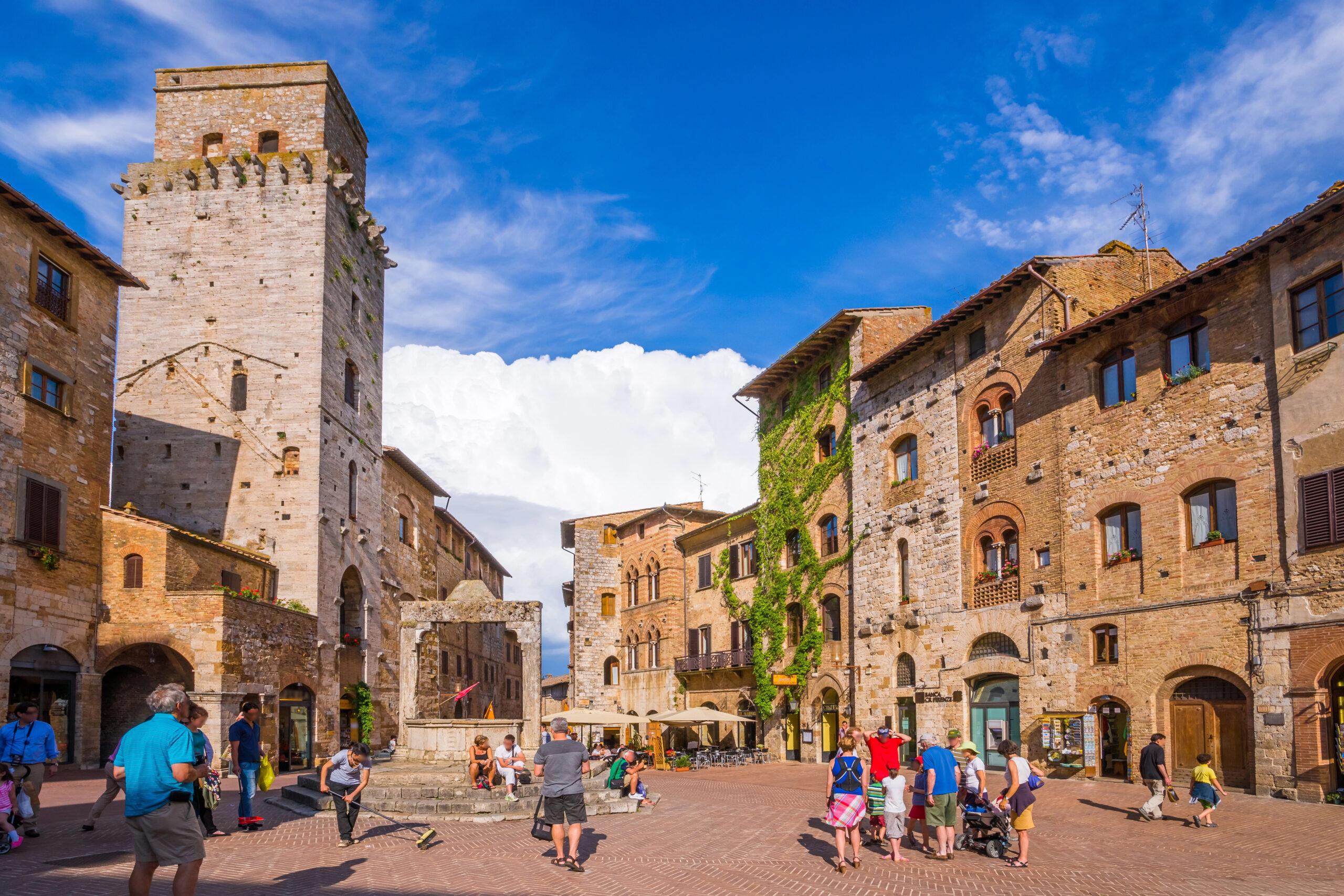
San Gimignano – best for a charming small-town base
Known for its medieval towers – 14 of the original 72 still stand – San Gimignano is one of Tuscany’s most recognisable small towns. The skyline is extraordinary, and the old town is a lovely place to wander, with narrow streets, artisan shops and gelaterias vying for your attention (the award-winning Gelateria Dondoli on the main piazza is worth the queue).
San Gimignano is also a smart choice as a base. It’s well positioned for day trips to Volterra (30 minutes), Siena (45 minutes) and the Chianti wine region, and there are some excellent accommodation options in the surrounding countryside – from agriturismos with pools to converted stone farmhouses with views over the towers. I’d recommend staying just outside the town walls rather than in the centre – you’ll get better value, more space and those classic Tuscan views.
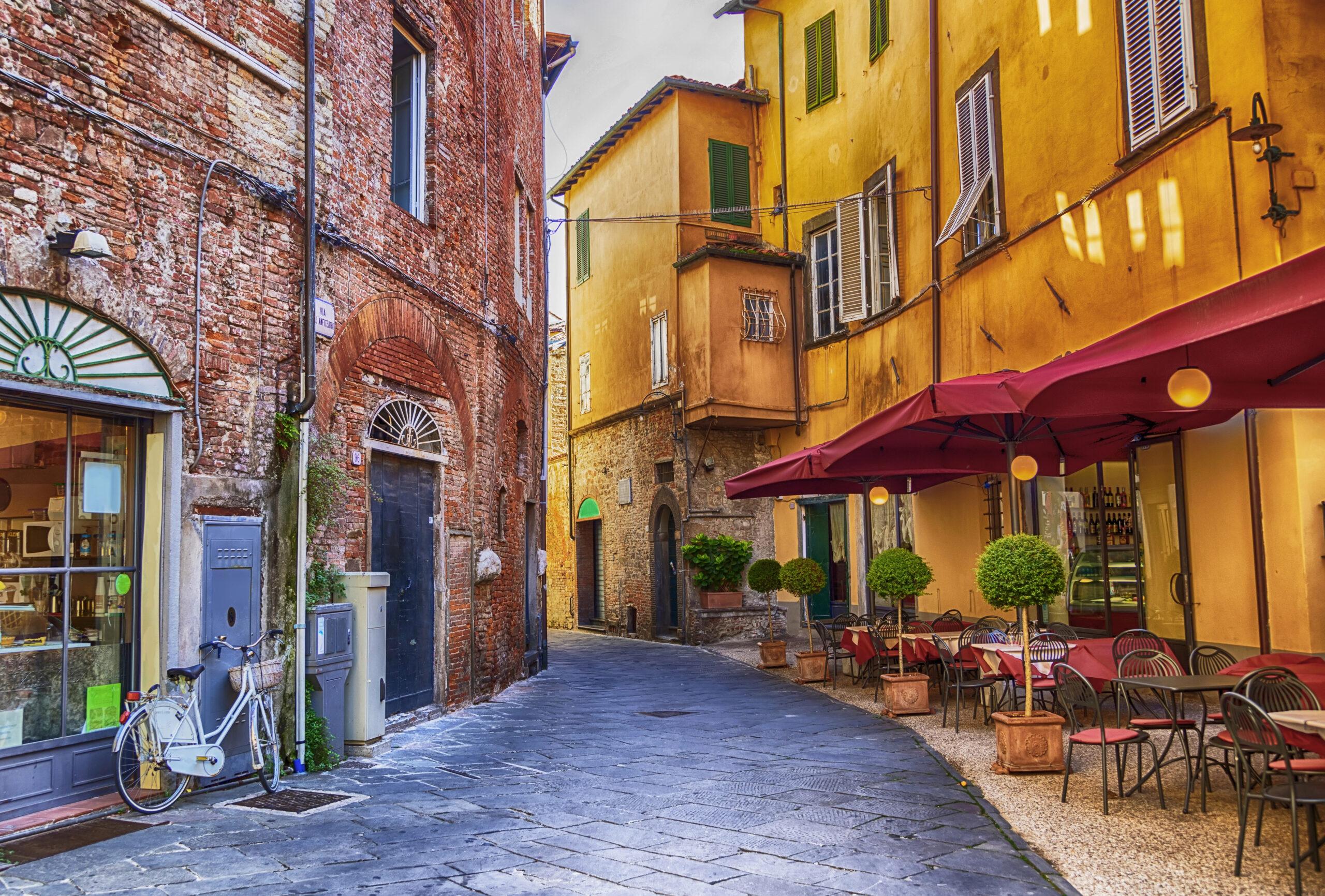
Lucca – best for families and a relaxed pace
Lucca is one of Tuscany’s most underrated towns, and one of the most family-friendly. Enclosed by broad Renaissance walls that have been converted into a tree-lined promenade, you can walk or cycle the full 4km circuit with views over terracotta rooftops and the surrounding countryside.
Inside the walls, the town is largely flat and pedestrianised – a relief if you’re pushing a buggy or travelling with smaller children. There are playgrounds, piazzas to sit in, and plenty of pizzerias and gelaterias. Lucca also has a lovely, lived-in feel that some of Tuscany’s more touristy towns lack.
From Lucca, you’re well placed to visit Pisa (30 minutes by train) to see the Leaning Tower of Pisa, the coast around Viareggio and Forte dei Marmi, and the marble mountains of the Apuan Alps. Florence is around 1 hour 20 minutes by train. The nearby towns of Montecatini Terme (known for its historic thermal spas) and Pistoia are also within easy reach and make for excellent half-day trips.
Cortona – best for views and Etruscan history
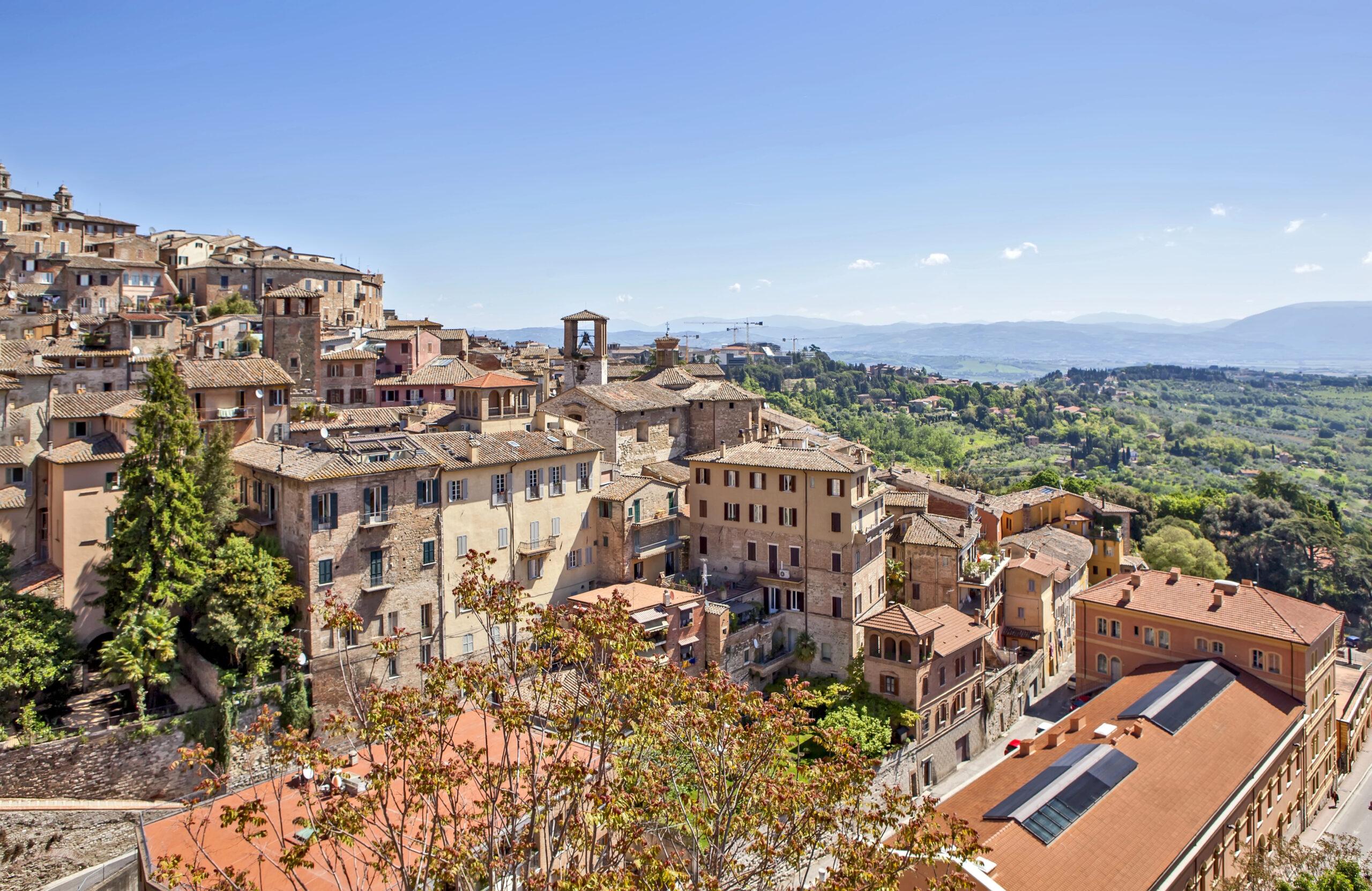
Perched high on a hill in eastern Tuscany, Cortona is the town that inspired Frances Mayes’ Under the Tuscan Sun – and you can see why. The views from pretty much every vantage point stretch across the Chiana Valley to Lake Trasimeno, Montepulciano and beyond. Wander through its winding streets, enjoy first-class antipasti in one of the trattorias, and visit the Etruscan Academy, which has a fascinating collection of Etruscan artefacts.
Cortona is quieter and less polished than Florence or Siena, and that’s part of its appeal. It’s also close to the Tuscany–Umbria border, making it a good base if you want to combine both regions. Lake Trasimeno is just a short drive away for a change of scenery, and the town’s small size means you can see the highlights in a day while still having time for a long lunch in one of the piazzas.
Volterra – best for a quieter Tuscan escape
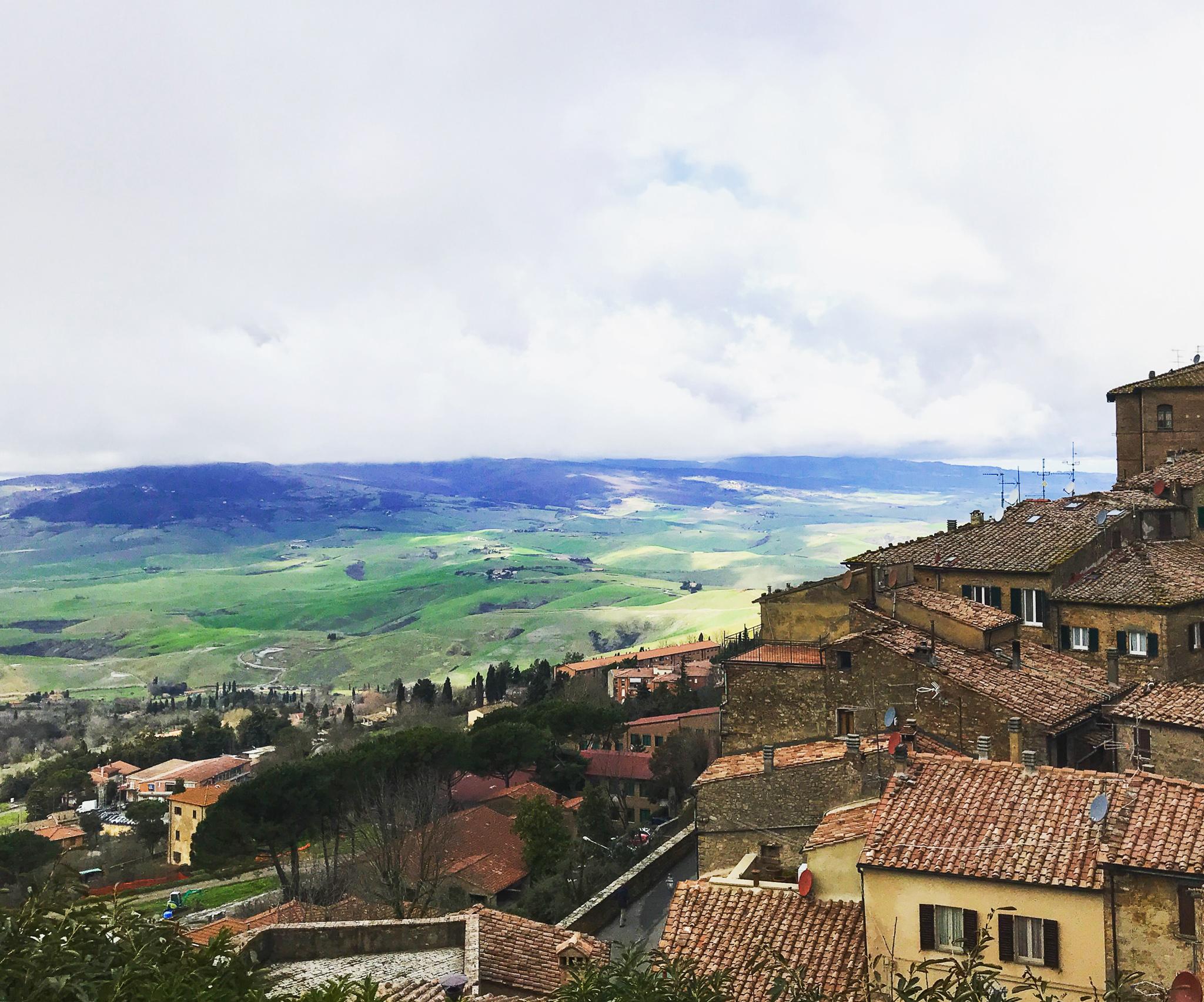
Volterra doesn’t get the same attention as San Gimignano or Montepulciano, but that’s precisely what makes it appealing. This ancient hilltop town – with its Etruscan walls, Roman ruins and alabaster workshops – has a quieter, more authentic atmosphere. Film fans may recognise it as the setting for the Volturi scenes in the Twilight Saga (I’m a big fan) – and while the films were actually shot elsewhere, Volterra fully embraces the connection with themed shops and tours. Beyond the Twilight link, it’s the landscape around the town that really stands out – wilder and more dramatic than much of Tuscany, with views stretching for miles.
I’ve stayed near Volterra and loved its unhurried pace. The town itself is small enough to explore in a morning – wander through the old town, browse the alabaster artisan shops and take in the views from the medieval fortress. Volterra is also an excellent base for visiting San Gimignano (30 minutes by car) and the surrounding Tuscan countryside, without the crowds you’ll find in more popular towns.
Types of accommodation in Tuscany
Where you stay is one thing. How you stay is another – and Tuscany has more variety than most regions in Italy. The type of accommodation you choose can shape your trip just as much as the location, so it’s worth thinking about what suits the way you travel.
Hotels
Tuscany’s hotels range from simple family-run guesthouses in medieval town centres to luxury hotels set on wine estates with private terraces, spas and Michelin-starred restaurants. In cities like Florence and Siena, hotels put you right in the action – within walking distance of museums, restaurants and the main sights. Many of Tuscany’s best hotels are housed in historic buildings – converted palazzi, former monasteries, Renaissance villas – so even a mid-range option can feel special.
If you’re visiting in peak season (June to September), book well in advance. The most popular properties fill up months ahead, particularly in Florence and the Chianti region.
Self-catering villas and apartments
For families and groups, renting a villa or apartment is often the smartest move. You get more space, a kitchen to prepare your own meals (handy after a morning at a local market), and – in the countryside – usually a private outdoor pool and garden. It’s also more cost-effective than booking multiple hotel rooms, especially for longer stays.
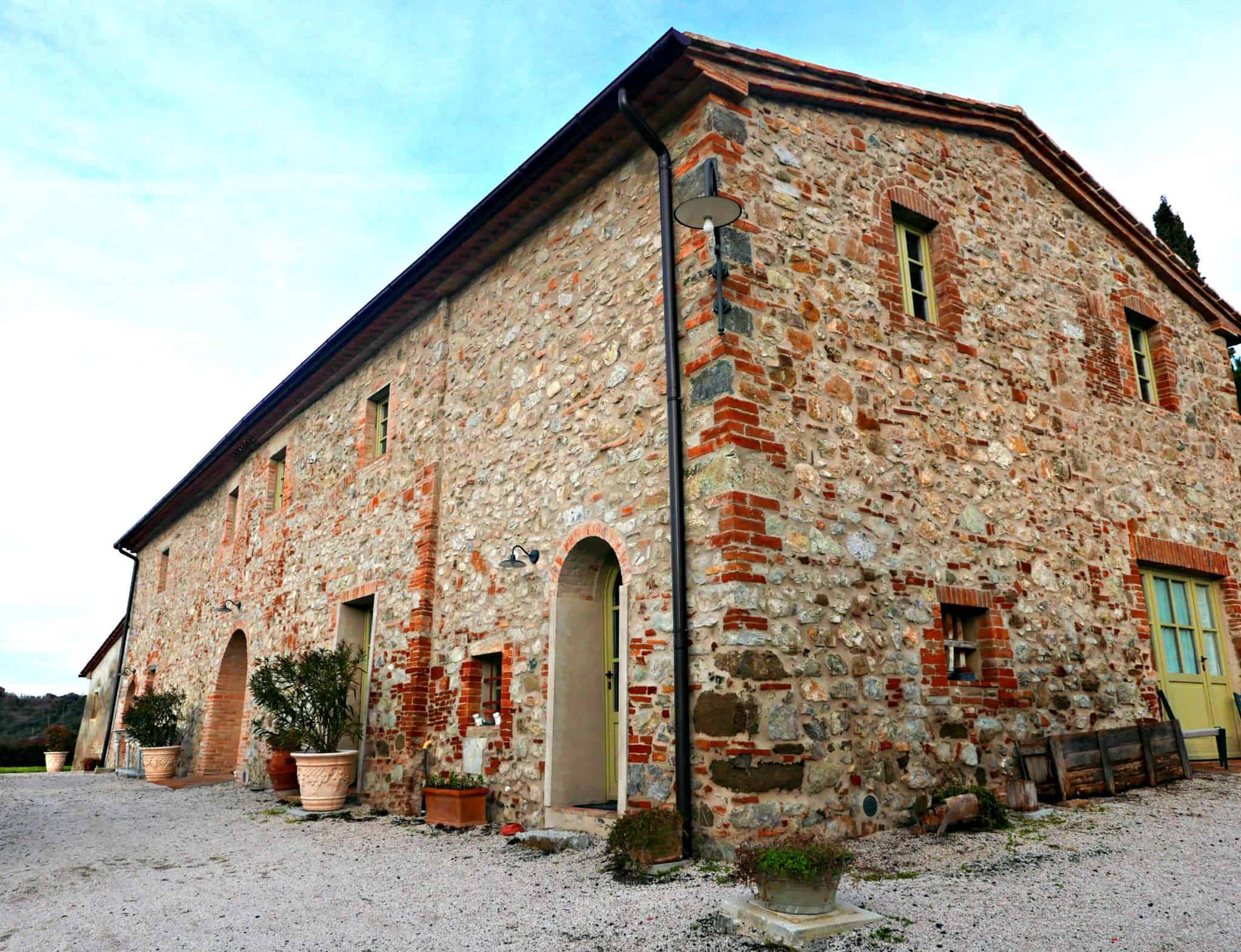
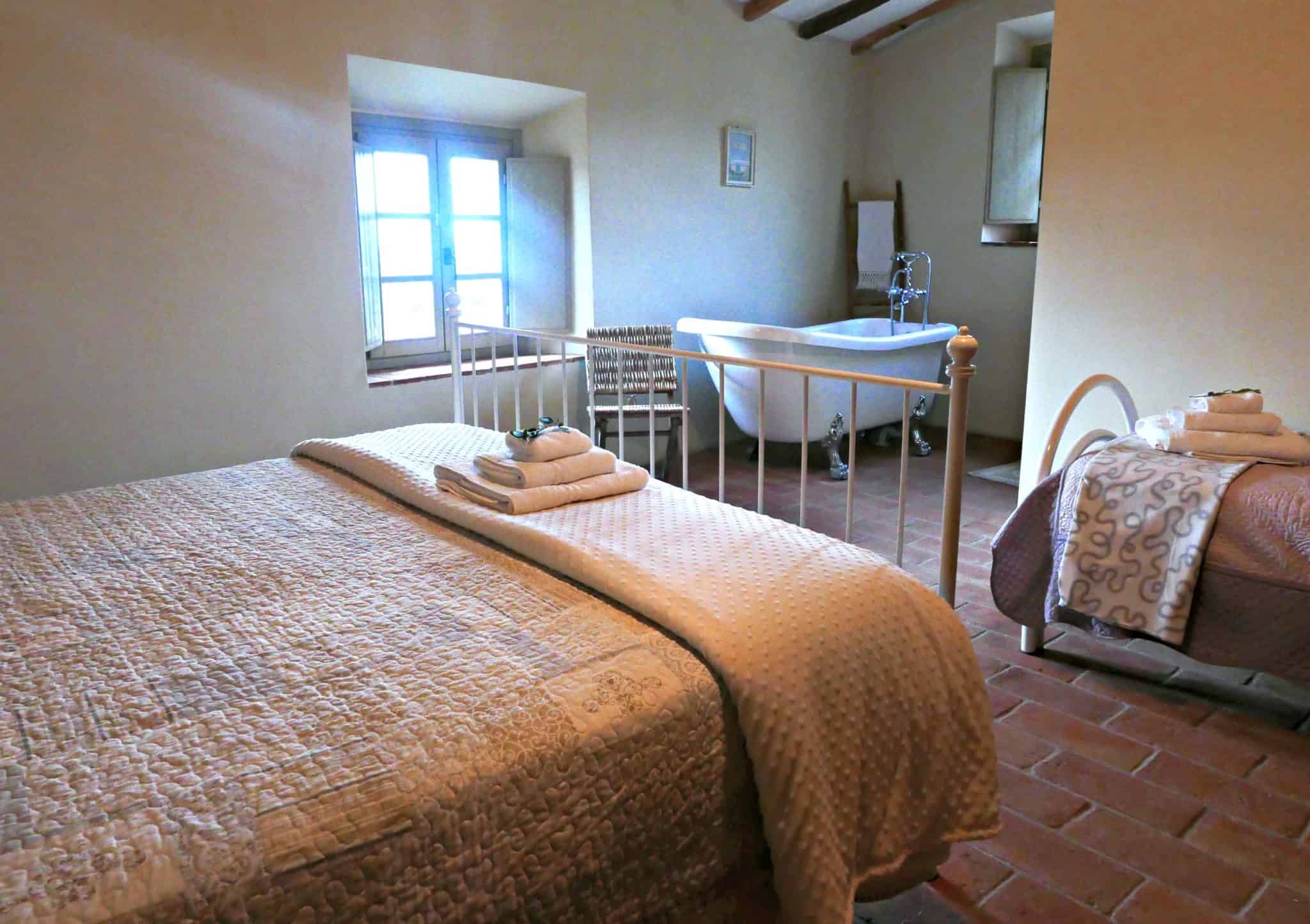
Tuscany is full of beautifully converted farmhouses and stone villas available for weekly rental. The best locations tend to be in the Chianti hills, around San Gimignano and Volterra, or in the Val d’Orcia. I stayed in a converted farmhouse called Villa le Capanne near Volterra with a group of friends, and it was memorable – panoramic views stretching for miles, evenings spent around a long table eating Pappa al Pomodoro (a thick Tuscan bread and tomato soup with olive oil and garlic – I went back for thirds) and wild boar with black olives. That trip captured everything I love about Tuscany: the food, the company and the sense that every meal is an occasion.
The main trade-off with self-catering is that you’ll almost certainly need a rental car, and you’re further from restaurants and shops. But for many travellers, the peace and privacy are worth it.
Agriturismos
An agriturismo is a working farm that offers guest accommodation – and it’s one of the most authentically Tuscan ways to stay. You might be on a wine estate surrounded by olive groves in one of Tuscany’s famous wine regions, or a small organic farm with chickens wandering the courtyard. Many serve meals made from their own produce, and some offer cooking classes, wine tastings and guided tours of the estate.
Agriturismos are brilliant for families. Children can run free, there’s usually a pool, and the atmosphere is relaxed and social. They range from simple and rustic to surprisingly polished, so there’s something for every budget. The highest concentration of agriturismos is in the Chianti hills and around the Val d’Orcia, though you’ll find them across the region.
All-inclusive family retreats
If you’re travelling with young children and want a holiday where you can actually relax, it’s worth looking at all-inclusive options. We stayed at Villa Pia, a family-run retreat in Lippiano on the border of Tuscany and Umbria, and it was one of the most restful holidays we’ve had. The all-inclusive model (meals, drinks, activities) meant we could switch off completely, while the boys roamed free between the playgrounds, pool and trampolines. It’s the kind of place where you arrive as strangers and leave swapping numbers. Read my full Villa Pia review for more.

Choosing between town and countryside
As a general rule, staying in a town (Florence, Siena, Lucca) gives you easy access to restaurants, sights and public transport – ideal if you don’t want to drive. Staying in the countryside gives you space, quiet and those classic Tuscan views – but you’ll need a car and will be further from evening dining options (unless your property serves dinner).
If you’re looking at a countryside stay, the best locations tend to be in the triangle between Florence, Siena and the Val d’Orcia. This puts you within a short drive of the region’s main attractions while giving you the peace and natural beauty of the Tuscan countryside every evening.
How to get around Tuscany
The best way to explore Tuscany is by car. While Florence, Pisa and Lucca are well connected by train, the smaller towns and countryside areas – Chianti, Val d’Orcia, San Gimignano, Volterra – are much easier to reach with your own wheels. Rental cars are widely available from Florence, Pisa and Perugia airports.
A few things worth knowing: roads between towns tend to be scenic and winding, so journeys can take longer than you’d expect. Allow extra time. Parking in historic centres is usually restricted (look for car parks just outside the city walls). And if you’re driving in the Tuscan countryside in summer, those rolling hills look glorious – but air conditioning in the car is non-negotiable.
If you’d rather not drive, Florence and Siena both work as car-free bases with good bus and train connections to the main sights. Public transportation to the more rural areas is limited, though, so you’ll need to plan carefully or consider organised day trips.
Best time to visit Tuscany
April to June and September to October are the sweet spots – pleasant weather, manageable crowds and the countryside at its most beautiful. Spring brings wildflowers and green rolling hills; autumn brings harvest season, wine festivals and golden light that makes everything look like a painting.
July and August are hot, busy and more expensive, particularly in Florence. If you’re visiting in high summer, consider staying in the countryside where you’ll have a pool and space to escape the heat.
Winter (November to March) is quieter and cooler. Some attractions have reduced hours, but cities like Florence and Siena are lovely without the crowds. It’s also truffle season in the Tuscan hills – reason enough to visit.
FAQs about where to stay in Tuscany
What is the best area to stay in Tuscany for a first visit?
Florence is the best base for first-time visitors. It’s the capital of Tuscany, home to world-class art and Renaissance architecture, and has excellent train connections to the rest of the region. You can easily take day trips to Pisa, Lucca, Siena and the Chianti wine region from here.
Do I need a car to explore Tuscany?
It depends on where you’re staying. Florence, Lucca and Pisa are easily explored without a car, and Siena is manageable on foot once you’re there. But if you want to explore the Chianti region, Val d’Orcia, San Gimignano or the Tuscan countryside, a rental car is essential. Public transport between smaller towns is limited.
Where should I stay in Tuscany for wine?
The Chianti region between Florence and Siena is the classic wine area, with vineyards, wine tastings and agriturismos on every hillside. For Brunello wines, head to Montalcino in the Val d’Orcia. Montepulciano is the place for Vino Nobile. All three areas have excellent accommodation options, from luxury wine resorts to simple farm stays.
Is Tuscany good for families?
Very much so. The countryside is ideal for children – many agriturismos and villas have pools, gardens and outdoor space. Lucca is particularly family-friendly thanks to its flat, pedestrianised centre and the cycling route along the city walls. Florence and Siena both have plenty to keep kids engaged, from gelato hunts to climbing towers. For a dedicated family stay, Villa Pia on the Tuscany–Umbria border is hard to beat.
How many days do you need in Tuscany?
A week is ideal if you want to explore properly. This gives you time for a couple of nights in Florence, a few nights in a countryside base (Chianti or Val d’Orcia), and day trips to smaller towns like Siena, San Gimignano and Volterra. If you have less time, three to four days based in Florence with a day trip or two is still a great introduction.
Where is the best place to stay in Tuscany without a car?
Florence is the most practical base without a car, followed by Lucca. Both have good train connections and walkable centres. From Florence, you can reach Siena, Pisa and several Chianti towns by bus. Organised wine tours and day trips are also widely available from Florence if you want to see the countryside without driving.
What is the best town to stay in between Florence and Siena?
The Chianti region sits right between the two cities. Greve in Chianti is a popular choice – it has good restaurants, a weekly market and is within easy driving distance of both Florence and Siena. Alternatively, staying in the countryside near Castellina in Chianti or Radda in Chianti puts you in the heart of the vineyards, with both cities accessible for day trips.
If you’re planning a wider trip to Italy, you might also enjoy my guides to the best things to do in Siena, the best things to do in Florence, Rome with kids and the best things to do in Ravello on the Amalfi Coast.