Last Updated on 01/05/2026 by Ting Dalton
Quick facts about Ravello
- Founded: 5th century (over 1,500 years old)
- Location: 365 metres above sea level, between Amalfi and Minori
- Getting there: 10-minute bus from Amalfi (€1.50)
- Best time: April-October (avoid July-August crowds)
- Must-see: Villa Cimbrone’s Terrace of Infinity, Villa Rufolo, walking trails
- Famous for: Music, medieval history, breathtaking views
Perched 365m above the sparkling Mediterranean, Ravello is the Amalfi Coast’s best-kept secret. While crowds jostle for space on Positano’s beaches and Amalfi’s cathedral steps, this clifftop town remains (relatively) peaceful – a medieval jewel wrapped in gardens that have inspired everyone from Wagner to Gore Vidal.
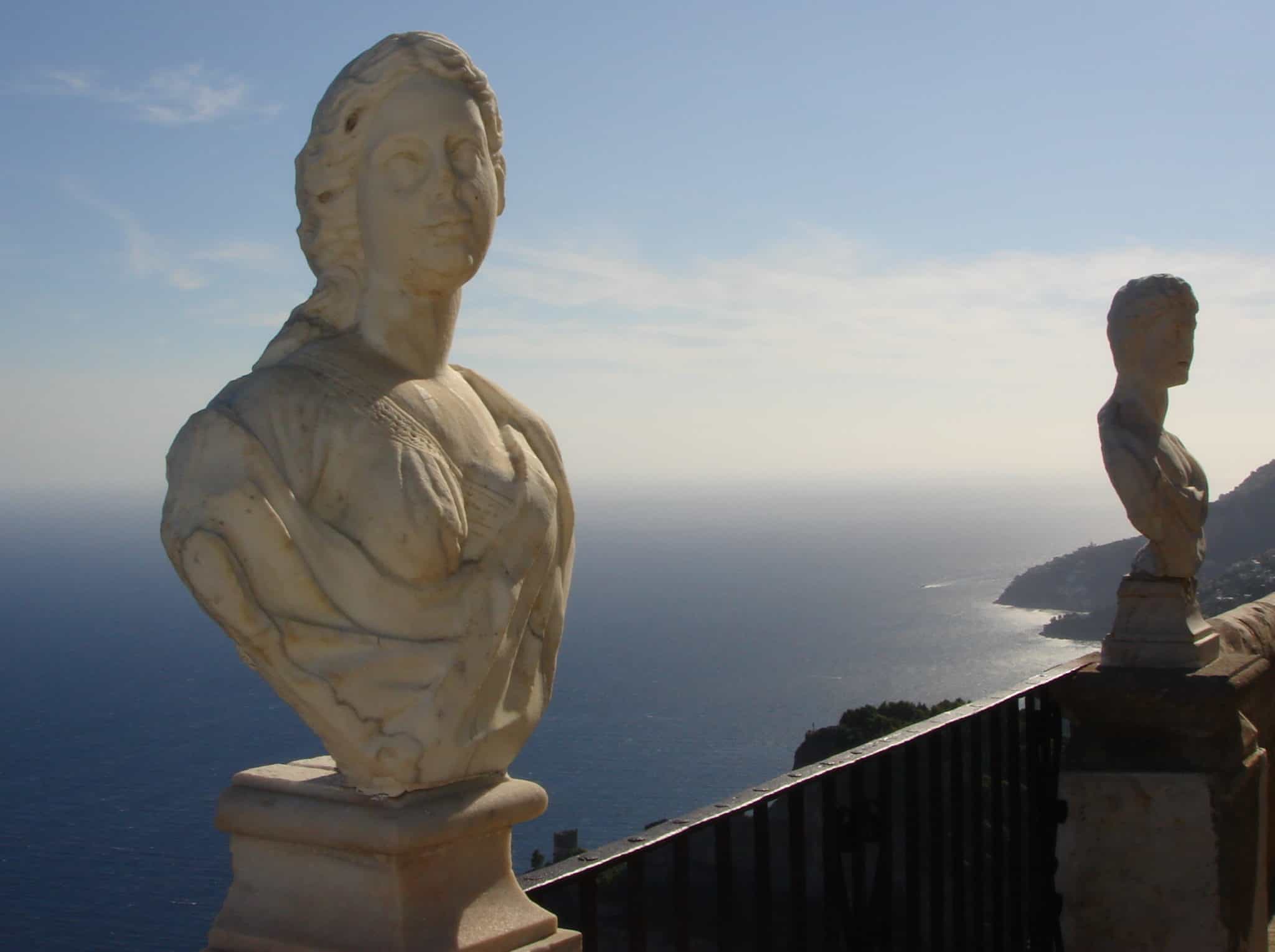
The town’s history is as dramatic as its setting. Founded in the 5th century as a refuge from barbarian invasions, Ravello grew rich through wool trading during the 9th to 12th centuries, its merchant families building palazzi that still command the skyline. At its peak around 1086, this small town had 25,000 inhabitants – 10 times today’s population.
But it’s not just history that makes Ravello special. Known as the City of Music since composer Richard Wagner found inspiration here for his opera Parsifal in 1880, Ravello pulses with culture. The annual Ravello Festival transforms Villa Rufolo’s terraced gardens into an open-air concert hall each summer, continuing a musical tradition that has drawn artists, writers, and musicians for centuries.
And yes, this stunning hilltop paradise is also where I got married – but more on that later.
Is Ravello worth visiting?
Absolutely. While Positano and Amalfi are overwhelmed with crowds, Ravello offers something increasingly rare on the Amalfi Coast: relative peace. The views are extraordinary, the historic villas rival anything in Italy, and the atmosphere remains calmer than the coastal towns below.
Be realistic about crowds: Ravello is no longer an undiscovered gem. Day-trippers arrive by the busload, especially during peak season (July-August) when cruise ships dock in Salerno and Amalfi. The villas can get busy mid-morning to mid-afternoon. However, Ravello is still noticeably less frantic than Positano or Amalfi, and early mornings or late afternoons offer tranquillity. Particularly if you stay in Ravello, rather than opting for just a day visit.
What makes Ravello special isn’t just the beauty – it’s the authenticity. This is a working town where locals still outnumber tourists, where restaurants serve genuine Campanian cooking rather than tourist-trap pasta, and where the pace remains refreshingly unhurried – at least compared to the chaos below.

Our Ravello wedding story
We chose to get married in Ravello, having spent a week there previously. It stole our hearts – and after seeing a couple walking through Ravello’s main square, we knew straight away we wanted to experience the same.
It would be fitting at this point to mention Mario at Wagner Tours. He was our wedding planner and did an amazing job of organising everything from the big day, from flowers to the food, to the transfers and accommodation for all our wedding guests. He’s the font of all Ravello knowledge, knows everyone in the area, and can cater for all types of budgets. So do reach out to him if you need any Ravello recommendations.
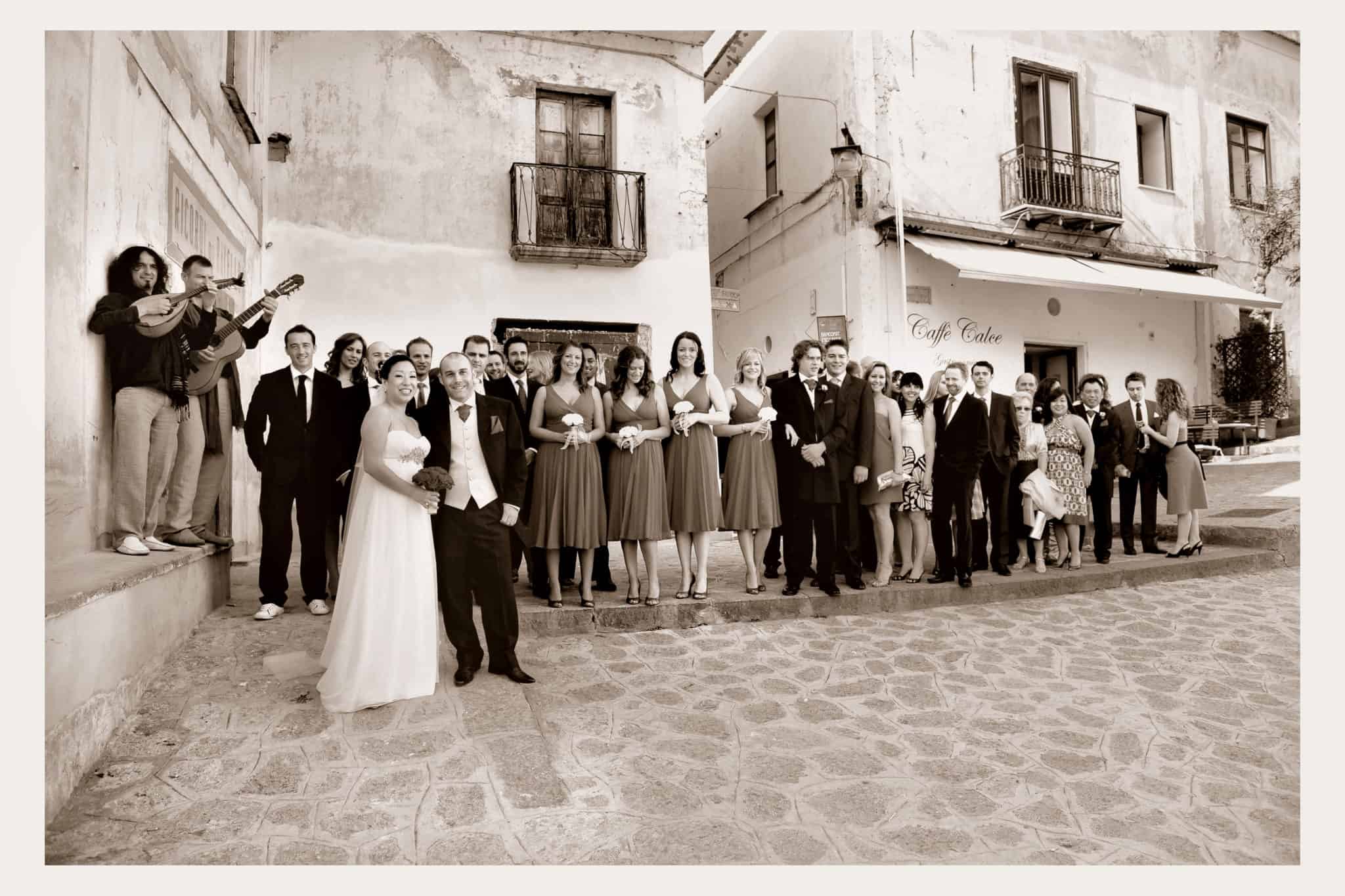
Ravello: Where history meets the heavens
We went to Ravello on a recommendation, and it was an easy decision as we’ve always been big fans of Italy. What’s not to love? The landscape, history, food and wine are a massive draw.
After flying into Naples and a hair-raising journey on the country’s infamous hairpin roads via private taxi transfer (it takes around two hours by car from Naples to Ravello), we were blown away when we reached this charming hilltop resort.
A rebel town with a musical soul
The town became wealthy through wool production and Mediterranean trade, reaching its peak around 1086 when it became an Episcopal seat. Ravello’s merchant families – the Rufolo, d’Aflitto, Confalone, and Della Marra – built the magnificent palazzi that still grace the town today. The name “Ravello” may even derive from “Rebello” (rebel), as the town fiercely opposed the power of neighbouring Amalfi.
Today, Ravello is known as the City of Music. This reputation dates back to 1880, when composer Richard Wagner visited Villa Rufolo and found inspiration for the second act of his opera Parsifal, writing in the guestbook: “At last I found Klingsor’s enchanted garden.” The annual Ravello Festival, established in 1953 in Wagner’s honour, continues this musical tradition every summer.
Over the centuries, Ravello has attracted an extraordinary list of creative minds: Virginia Woolf, Greta Garbo, Gore Vidal, Tennessee Williams, D.H. Lawrence, Jacqueline Kennedy, and countless others who sought inspiration in these lofty heights.

Why Ravello makes the perfect Amalfi Coast base
This hilltop has the most stunning views of the Mediterranean below, is less crowded than other towns along the coast (though still busy during peak season), and makes a fantastic base to explore the region. There are excellent SITA buses linking each coastal town (€1.50-€2.80 per journey, or €10 for unlimited 24-hour travel), making Ravello travel easy.
Ravello doesn’t have beaches – it sits high above the coast – but this is precisely what gives it that tranquil, unhurried atmosphere that’s increasingly rare on the Amalfi Coast. You’re above the coastal chaos, literally and figuratively. While day-trippers flood in during peak hours, they mostly leave by late afternoon, returning the town to a calmer rhythm. The coastal towns below are only a short bus ride away when you want beaches or nightlife.
Getting to and around Ravello
From Naples
Private transfer takes around 2 hours and costs €100-150. Alternatively, take the Circumvesuviana train to Sorrento, then SITA bus to Amalfi, then another bus up to Ravello (budget 3-4 hours total but much cheaper).
SITA bus routes:
- Naples to Sorrento: Circumvesuviana train (1 hour 10 mins, €4)
- Sorrento to Amalfi: SITA bus (1 hour 30 mins, €2.60)
- Amalfi to Ravello: SITA bus (10 mins, €1.50)
Money-saving tip: The COSTIERASITA 24-hour ticket (€10) gives unlimited bus travel between all Amalfi Coast towns, including Sorrento, Positano, Amalfi, Ravello, Minori, Maiori, Praiano, and more. This is excellent value if you’re visiting multiple towns in a day. Buy at any tabacchi shop.
Single journey tickets range from €1.50-€2.80 depending on distance, so the 24-hour pass pays for itself after 4-5 journeys.
Peak season warning: During July and August, SITA buses can be extremely crowded. Buses often leave Sorrento and Amalfi already at capacity, meaning passengers waiting at intermediate stops (like Positano) may not be able to board. Expect long queues, standing room only, and potential delays. If travelling in peak season, consider boarding buses at their starting points (Sorrento or Salerno), taking earlier/later buses to avoid the worst crowds, or using ferries as an alternative.
Can you walk from Amalfi to Ravello?
You absolutely can walk from Ravello down to Amalfi, and I highly recommend it. The descent takes 1-2 hours through ancient villages and lemon groves with stunning coastal views. Starting in Ravello, you’ll pass through the medieval hamlet of Scala, then Minuta and Pontone, before emerging in Amalfi.
Walking up from Amalfi to Ravello, however, involves climbing around 1,400 steps and can be brutal in summer heat. Save your energy and catch the €1.50 bus up, then enjoy the glorious walk down.
Ravello to Positano
The bus journey takes around 40 minutes with a change in Amalfi. You’ll need two single tickets (Ravello-Amalfi €1.50 + Amalfi-Positano €2.60 = €4.10 total), or use the €10 COSTIERASITA 24-hour pass. Private transfers cost €60-80.
Getting around Ravello
Ravello’s historic centre is tiny and entirely walkable. From Piazza Duomo, you can reach Villa Rufolo in 2 minutes and Villa Cimbrone in 10 minutes. Bring comfortable shoes – there are steps and uneven cobbles everywhere.
Should you hire a car? Think carefully before hiring a car on the Amalfi Coast. The roads are narrow, winding, and nerve-wracking for inexperienced drivers. More importantly, parking in Ravello is extremely limited and expensive. Most hotels have no parking (Villa Maria, for instance, is accessed only on foot). The few public car parks fill up quickly and charge premium rates. If you do hire a car, book accommodation with guaranteed parking (like Hotel Giordano) or be prepared to park at the bottom of the hill and walk up with your luggage.
For exploring the coast, the SITA bus network or summer ferries are far less stressful than driving.
Best time to visit Ravello
April to June and September to October offer the sweet spot: warm weather, fewer crowds, and reasonable-ish hotel prices. The gardens are particularly beautiful in late April and May when wisteria and roses are in full bloom.
July and August bring peak season chaos. The entire Amalfi Coast is absolutely rammed – expect crowds everywhere, from Ravello’s villas to Positano’s beaches. Hotels fill up months ahead, prices soar, buses are overcrowded (see SITA bus warnings above), restaurants have long waits, and even the walking trails get busy.
The Ravello Festival means the town gets busier than usual in the evenings, though the concerts are spectacular if you’re a music lover. If you must visit in high summer, book everything well ahead, start your days early (7am at the villas beats the coach tours), and accept that nowhere will feel peaceful mid-day.
November to March sees many hotels and restaurants close. It’s peaceful but can feel too quiet.

Piazza Duomo: Ravello’s beating heart
The main square in Ravello buzzes with the most action. As the town is so small, you’re able to explore everything on foot.
Piazza Duomo is home to the Duomo di Ravello (Cathedral), built in the 11th century and dedicated to San Pantaleone. The cathedral’s bronze doors, crafted in 1179 in Constantinople, are masterpieces featuring 54 panels depicting biblical scenes. Inside, you’ll find ornate pulpits perched on twisted columns – stunning examples of medieval Romanesque art.
The cathedral houses relics of Saint Pantaleone, whose blood supposedly liquefies once a year on his feast day (27 July). The attached museum displays Roman sculptures and medieval religious artefacts.
Entry: Free for the cathedral, €3 for the museum
The piazza is surrounded by cafés and restaurants – perfect for a morning cappuccino while watching local life unfold. This is where we saw that couple strolling through, the moment that made us want our own Ravello wedding.
Things to do in Ravello
Villa Rufolo
This castle-like villa inspired Wagner to write Klingsor’s Garden in Parsifal. Its breathtaking panoramic views are the main attraction, as are its enchanting terraced gardens.
Built in the 13th century by wealthy merchant Nicola Rufolo, the villa was designed following Arabic-Norman architecture. Over centuries, it hosted several popes and King Robert of Anjou. The villa was even mentioned in Boccaccio’s Decameron.
The gardens cascade down the hillside in a riot of exotic plants, fountains, and those famous viewpoints over the coast. On a clear day, you can see all the way to Salerno.
Entry: €8 (€6 reduced)
Opening hours: 9am-8pm (summer), 9am-5pm (winter)

Ravello Festival
Running from June to September, the Ravello Festival transforms Villa Rufolo’s gardens into an open-air concert hall. The festival celebrates Wagner’s connection to Ravello and features orchestral performances, jazz, ballet, and contemporary music.
Watching a concert as the sun sets over the Mediterranean, with music floating across the terraced gardens, is genuinely magical. The highlight is typically the Wagner Festival during the first week of July, when world-famous artists perform.
Tickets: €25-100 depending on performance
Booking: Essential – book well ahead via ravellofestival.com
Villa Cimbrone and the Terrace of Infinity
This was actually our first choice wedding venue, but because it’s now a hotel and restaurant, it was impossible for us to have the whole place to ourselves – the cost would have been astronomical.
Villa Cimbrone’s history dates back to the 11th century. Originally built in medieval times, it was extensively renovated in the early 1900s by English nobleman Ernest William Beckett, who created the magnificent gardens we see today.
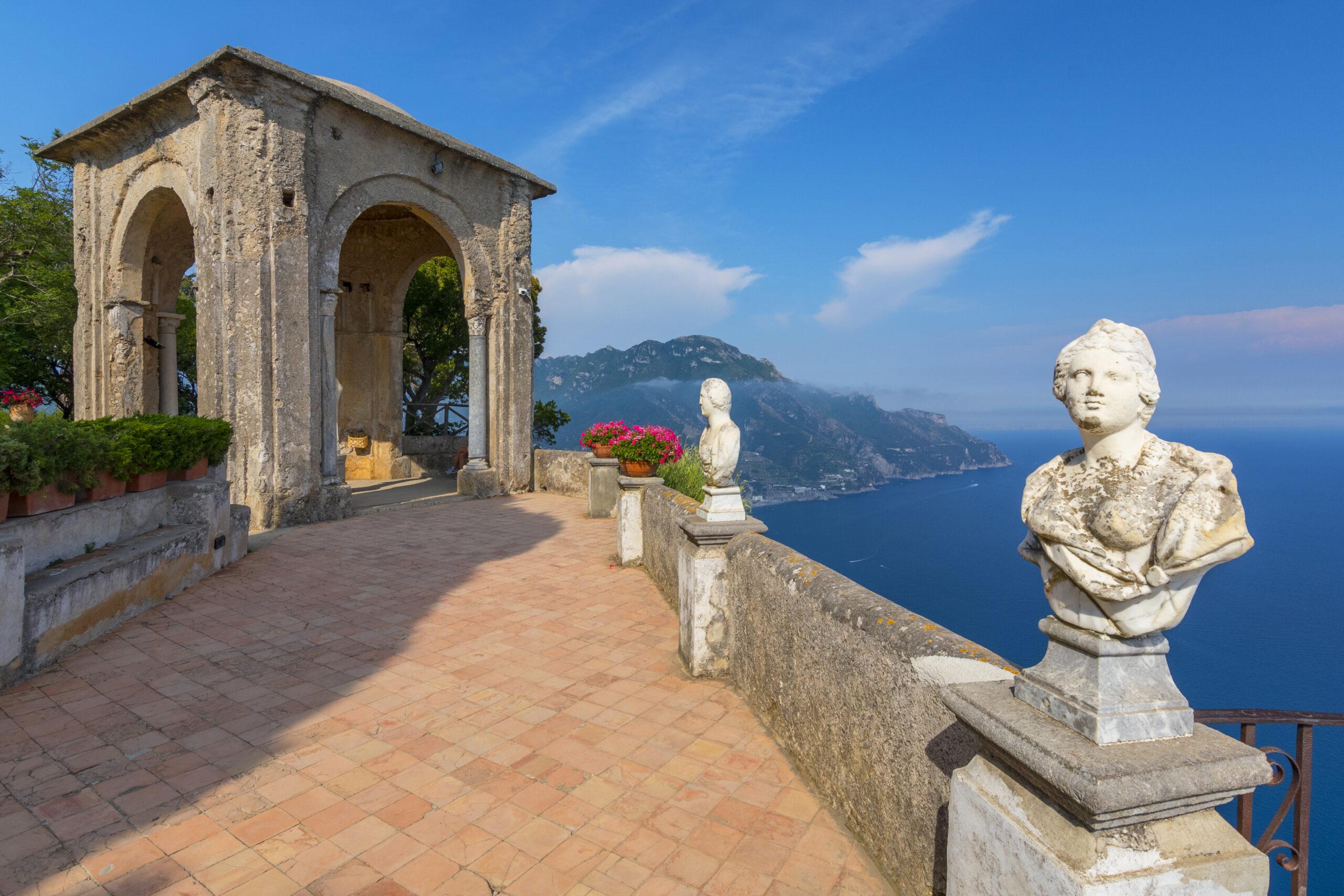
The Belvedere or Terrace of Infinity is an absolute must-see. This dramatic viewing platform, lined with marble busts, offers 360-degree views over the Amalfi Coast. When Gore Vidal was asked, “What’s the most beautiful place you’ve ever seen?” he replied: “The view from Villa Cimbrone’s Belvedere, on a bright winter day.”
When we looked out from the Terrace of Infinity on our first visit, the sea stretched endlessly blue beneath us, fishing boats looked like toys, and Ravello’s famous gardens tumbled down the cliff face. It’s the kind of view that stops you mid-sentence. I could spend hours here.
The gardens themselves are extraordinary – a blend of Gothic and neoclassical elements woven through with rare plant species, hidden grottoes, and scenic terraces.
Entry: €10
Opening hours: 9am-sunset
Tip: Visit early morning (before 10am) or late afternoon (after 4pm) to avoid cruise ship day-trippers who descend mid-morning and dominate the terraces until mid-afternoon. Early morning offers the best light for photos and tranquillity.
Villa La Rondinaia or Swallow’s Nest
When we got married in 2009, we were extremely lucky to be invited by local hotelier Vincenzo Palumbo (who also owns Villa Eva, our wedding venue) for a private tour of Villa La Rondinaia – the former home of prolific American writer Gore Vidal, who had hosted the likes of Greta Garbo, Tennessee Williams, Princess Margaret, and Hillary Clinton at his Italian refuge.
Built in the 1930s on a cliff face, it sits on the same headland as Villa Cimbrone. Mr Palumbo had purchased the villa from Gore Vidal in 2006, and at the time of our tour in 2009, he was preserving Vidal’s study exactly as the writer had left it – books, possessions, everything still in place, the room a bit dusty but frozen in time. It was a real privilege to walk around the house and its extraordinary clifftop grounds.
Today, Villa La Rondinaia operates as a luxury rental property available for weddings, events, and exclusive stays. You can also dine at the restaurant. Gore Vidal’s study has been maintained as a museum that guests can visit. The six-bedroom villa, surrounded by 25,000 square metres of terraced gardens, offers the same breathtaking views that inspired Vidal’s writing for over three decades. While you can no longer pop round for an impromptu viewing, you can rent the entire property or visit the museum as part of a stay.
Walking the ancient paths
One of Ravello’s greatest pleasures is walking the ancient footpaths that connect it to coastal towns below. These aren’t touristy trails – they’re the actual routes locals used for centuries, carved into the mountainside and lined with lemon groves.
Ravello to Amalfi via Scala (1-2 hours, downhill): Start from Piazza Duomo and follow signs to Scala, a charming medieval hamlet directly below Ravello. Continue through Minuta and Pontone, two tiny villages frozen in time, before descending the final stretch into Amalfi. The views are spectacular, and you’ll pass through lemon terraces where you can buy fresh limoncello directly from producers.
Path of the Lemons (Ravello to Minori/Maiori, 2.5 hours, downhill): This beautiful trail winds through terraced lemon groves from Ravello down to the coastal towns of Minori and Maiori. It’s less crowded than the walk to Amalfi and offers a real glimpse into rural Amalfi Coast life. Some sections pass right through working farms where lemons hang overhead.
These walks are best done downhill from Ravello – trust me on this. The descent is gentle enough to enjoy the views without destroying your knees, and you can catch the bus back up when you’re done.
What to bring: Comfortable walking shoes (the paths can be uneven), water, sun protection, and a few euros for fresh lemonade from grove owners along the way.
Best restaurants in Ravello
The food in Ravello is outstanding. While there are high-end restaurants, you can also grab hearty meals for reasonable prices.
Palazzo Avino and Rossellinis
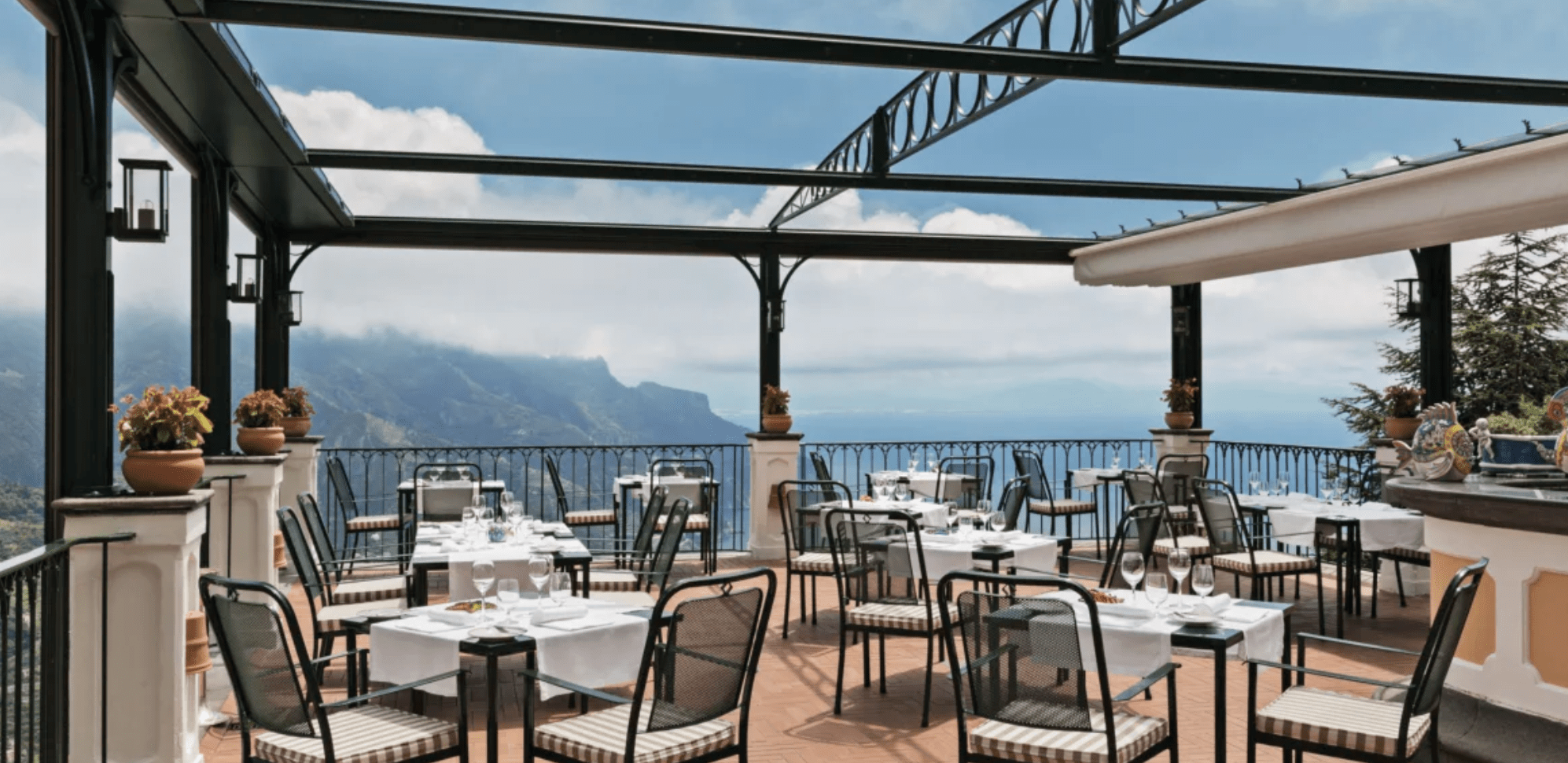
The Palazzo Avino (formerly Palazzo Sasso) is one of those buildings that exudes glamour, tradition, and sophistication. Built in the 12th century as a noble palazzo, it’s now one of the coast’s most prestigious five-star hotels with uninterrupted views and an amazing rooftop pool.
We haven’t yet had the pleasure of staying here, but we’ve had dinner at their one-Michelin-starred restaurant Rossellinis. No, it isn’t cheap, and yes, the food was divine – attentive service in the most romantic setting, overlooking the village of Minori and the coastline beyond.
Chef Giovanni Vanacore creates light, balanced dishes showcasing the best of Campanian cuisine. Each course is a work of art – we’re still talking about the butter carved into roses.
Expect to pay: €200+ per person for the tasting menu
Dress code: Smart (gentlemen require long trousers)
Reservations: Essential
Cumpa’ Cosimo
If you want authentic Italian cooking – pizzas and pasta – look no further than Cumpa’ Cosimo. This family-run trattoria has been serving locals and visitors for over 70 years, and it’s as beloved now as ever.
The restaurant is run by Netta Bottone, everyone’s favourite Italian nonna. The walls are covered with photos of celebrity guests – from Humphrey Bogart and Jacqueline Kennedy to Gore Vidal and, more recently, John Legend.
We’ve been here quite a few times and always enjoyed ourselves. The star attraction is Netta, who runs the restaurant with an iron fist and wears a plethora of colourful aprons. There’s always drama when you ask for the bill because, depending on what mood she’s in, she’ll just add it up in her head and write it down on a napkin! I’m sure there’s a method to her madness, although I don’t think we’ve ever paid the same price.
Try the piatto misto della casa – a sampler of seven different pasta dishes, each better than the last. The gnocchi alla sorrentina and maccheroni al forno are outstanding.
Expect to pay: €15-25 per person
Via Roma 44-46
Note: Reservations recommended; sometimes closed Mondays
Mimi Bar Pizzeria
Tucked away with a terrace overlooking the coast, Mimi serves what many consider the best pizza in Ravello. The pesto gnocchi with clams is also exceptional, as is the grilled octopus with polenta.
From 6pm, the venue transforms into a lobster and martini bar beneath a grapevine pergola – very Italian cinema, very romantic.
Expect to pay: €12-20 per person
Bar Il Panino
Located in Ravello’s main square, this little place serves the best paninis. Try the bresaola and mozzarella toasties. They are out of this world!
Expect to pay: €6-8 per panini
Mamma Agata’s cooking school
If any of you are MasterChef fans, this is one of the places the finalists visited back in 2013. Mamma Agata’s traditional Italian cooking is revered across Italy and beyond.
The cooking school was founded by the legendary Mamma Agata, who cooked for celebrities like Humphrey Bogart, Jackie Kennedy, and Fred Astaire. While Mamma Agata (now in her 80s) is sometimes present, the classes are now run by her daughter Chiara Lima, who welcomes guests into their family home perched on the cliffs.
The experience is intimate and genuine – you’ll learn family recipes passed down through generations, then eat everything on their stunning terrace overlooking the coast, paired with wine from their own groves.
I still haven’t done this, but it’s top of my list for when I return to Ravello.
Classes: €180-220 per person
Booking: Essential – they book 6-12 months ahead
Where to stay in Ravello
Is Ravello a good place to stay on the Amalfi Coast?
Absolutely. Ravello offers the best of both worlds: stunning coastal views without staying in the overcrowded coastal towns, easy bus access to beaches and other destinations, and a more peaceful atmosphere perfect for couples or anyone seeking culture over beach clubs.
Yes, Ravello gets busy with day-trippers, especially mid-morning to mid-afternoon in peak season. But unlike Positano or Amalfi, where the crowds are relentless from dawn to midnight, Ravello quietens down significantly in early mornings and evenings, when you’ll have the atmospheric streets largely to yourself.
The drawback? Ravello doesn’t have beaches. You’ll need to take the bus down to Amalfi, Minori, or Maiori for swimming. But the tranquillity, those extraordinary views, and the cultural richness more than compensate.
Our hotel recommendations
Apartments La Caserella – We stayed here on our first trip to Ravello. It offered decent, clean accommodation, a private pool, and close proximity to all the action with fantastic views.
Villa Maria Hotel – A quaint villa-liberty style hotel with traditional décor. There’s a lovely terrace that overlooks the sea, comfortable rooms, and a central location. Our wedding party stayed here, and we all loved it.
Palazzo Avino – If you’re really splashing out, this is where to do it. The former 12th-century palazzo offers luxury rooms, Michelin-starred dining, a rooftop infinity pool, and a private beach club in Marmorata (15 minutes away with a complimentary shuttle). Opens April 3rd, 2026, for the season. We dined here, and it was exceptional.
Hotel Villa Cimbrone – Stay where Gore Vidal entertained and wake up with access to those famous gardens before day-trippers arrive. High-end and high prices, too – but think of those views…
By no means is this an exhaustive list – there are many accommodation options to choose from
Beyond Ravello: Exploring the Amalfi Coast
Ravello’s elevated position makes it a perfect base for exploring the entire Amalfi Coast. Whether you’re using the SITA bus network, hiring a car, or taking summer ferries, the coast’s most famous towns are within easy reach.
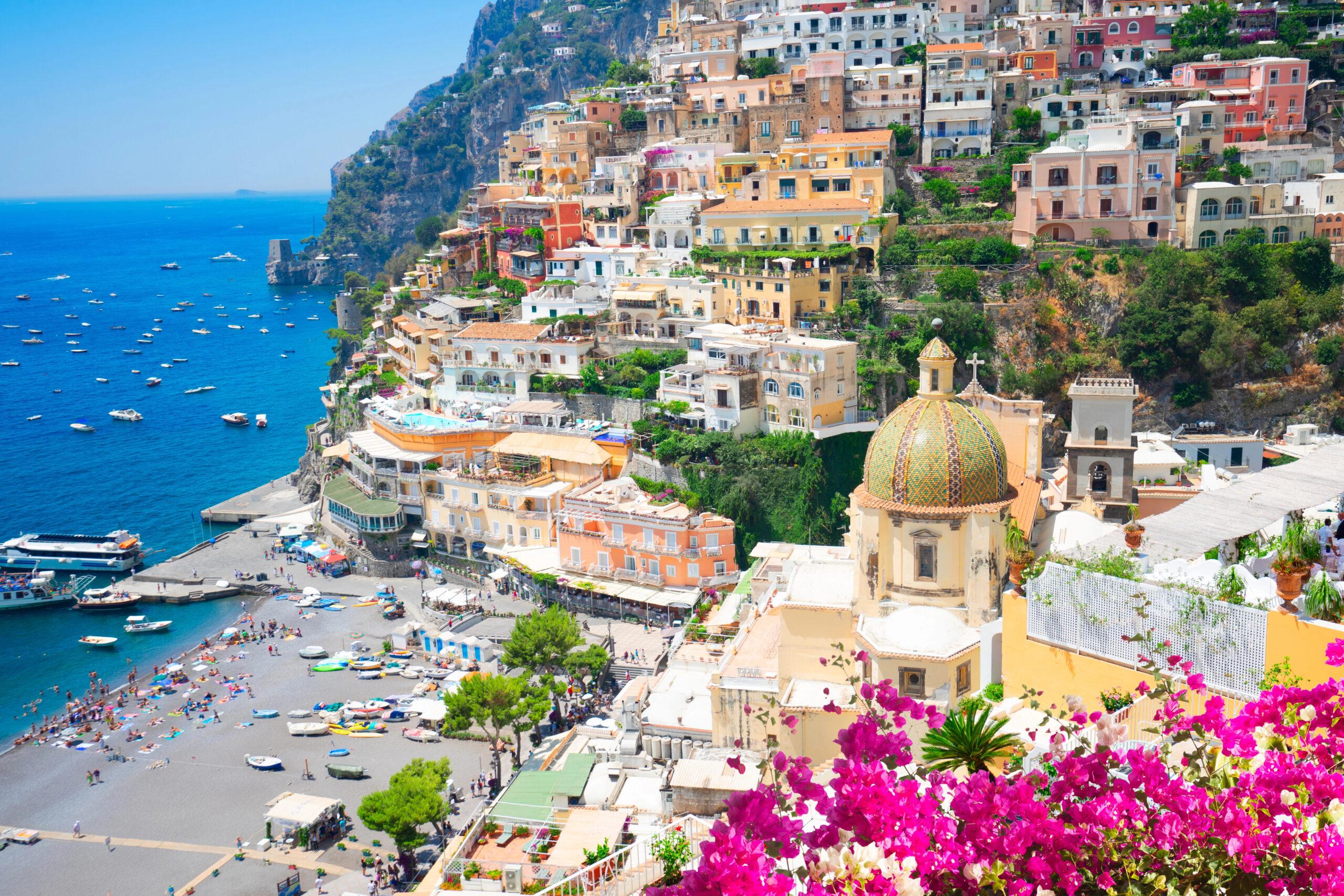
Positano: The vertical village
Travel time from Ravello: 40 minutes by bus (change in Amalfi), 30 minutes by car
The Amalfi Coast’s most photographed town cascades down the cliffside in a tumble of pastel houses, bougainvillaea, and ceramic-tiled domes. Positano is glamorous, expensive, and utterly gorgeous.
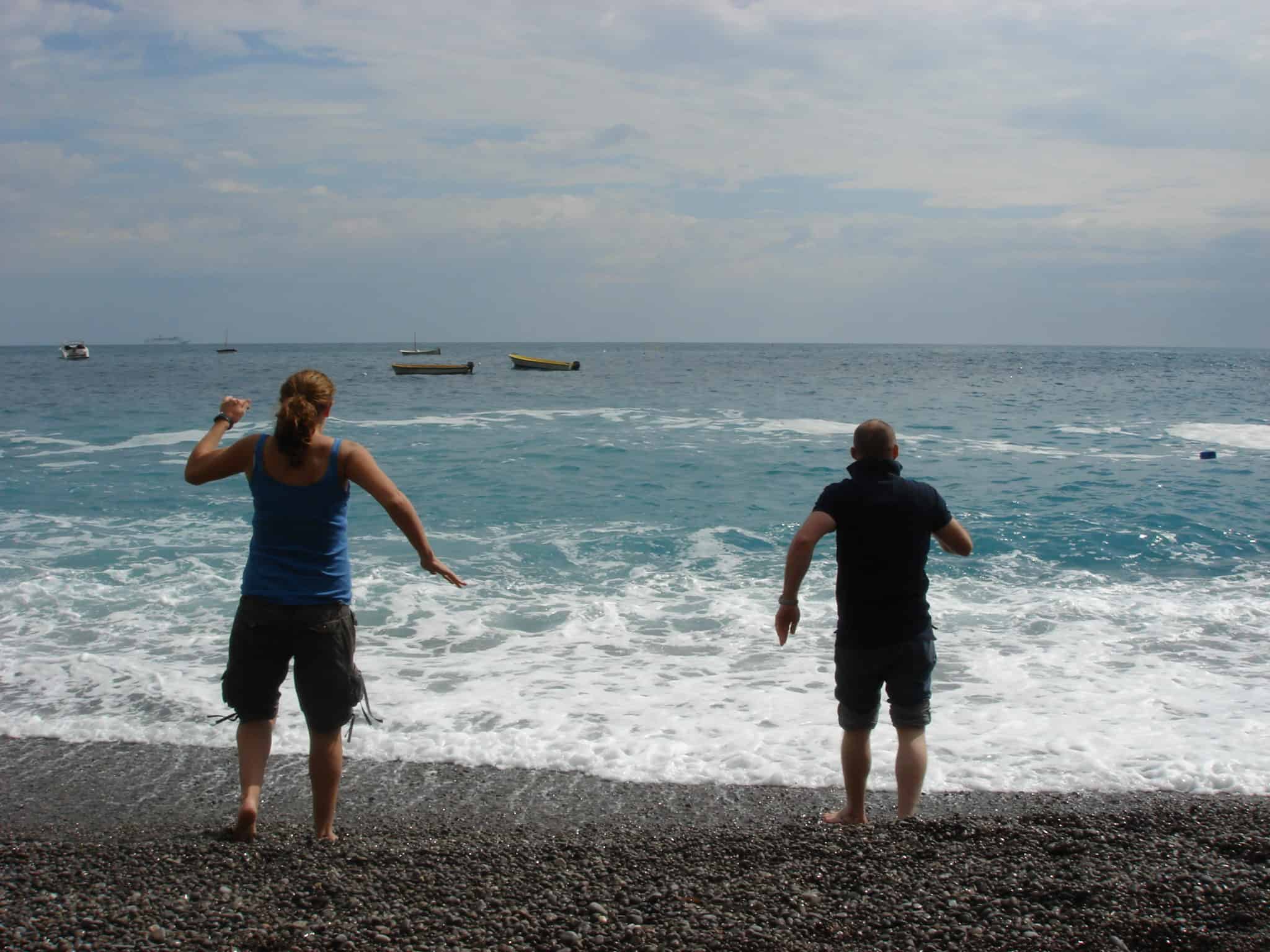
The town is built almost vertically, connected by hundreds of steps. The main beach, Spiaggia Grande, is pebbly but atmospheric, lined with beach clubs and restaurants. For a quieter experience, walk (or take the boat) to Fornillo Beach on the western side.
What to do: Wander the boutique-lined streets, lunch at a beachfront restaurant, take the boat to Capri, or hike the famous Path of the Gods trail (starting from nearby Bomerano).
Travel tip: Buses from Amalfi to Positano can be packed in summer. Consider taking the ferry (runs May-October) for spectacular coastal views.
Amalfi: The historic powerhouse
Travel time from Ravello: 10 minutes by bus, 1-2 hours on foot downhill
The town that gives the coast its name was once a powerful maritime republic rivalling Venice and Genoa. Today, Amalfi is the coast’s main transport hub and a beautiful town in its own right.
The stunning Cathedral of Sant’Andrea, with its Arab-Norman bell tower and maiolica-tiled facade, dominates Piazza del Duomo. Don’t miss climbing the steps to the cathedral’s bronze doors, or visiting the atmospheric Cloister of Paradise.
What to do: Explore the cathedral and cloister, wander the tiny lanes of the historic centre, visit the Paper Museum (Amalfi was famous for paper-making), or relax at Marina Grande beach.
Sorrento: The elegant gateway
Travel time from Ravello: 1.5 hours by bus (via Amalfi), 1 hour by car
Perched on clifftops overlooking the Bay of Naples, Sorrento is larger and more developed than other coastal towns. It’s less dramatic than Positano or Ravello but offers excellent restaurants, shopping, and transport connections.
Sorrento is famous for limoncello – those giant lemons you see everywhere are the sfusato amalfitano variety. Visit a limoncello factory, explore the clifftop gardens of Villa Comunale, or catch the ferry to Capri.
What to do: Stroll the main square, Piazza Tasso, shop for inlaid woodwork (Sorrento’s speciality), take the lift down to Marina Grande fishing village, or use Sorrento as a base for day trips to Pompeii and Capri.
Travel tip: Sorrento has the train connection (Circumvesuviana) to Naples and Pompeii, making it useful for wider exploration.
Praiano: The peaceful alternative
Travel time from Ravello: 30 minutes by bus (via Amalfi), 25 minutes by car
Wedged between Positano and Amalfi, Praiano is where locals go to avoid the crowds. This small fishing village sprawls across two valleys and offers a more authentic, low-key Amalfi Coast experience.
The beaches – Marina di Praia and Gavitella – are tiny but beautiful. Praiano also has the coast’s best sunset views, as it faces west towards Capri.
What to do: Swim at Marina di Praia (a tiny cove with a few restaurants), hike to the Furore Fjord, watch sunset from a clifftop bar, or simply enjoy the peace.
Minori and Maiori: The local favourites
Travel time from Ravello: 15-20 minutes by bus downhill
These twin towns sit directly below Ravello and offer something rare on the Amalfi Coast: actual sandy beaches and reasonable prices.
Minori is charming and small, with excellent restaurants and a Roman villa you can visit. Maiori has the coast’s longest beach (nearly 1km) and a less touristy atmosphere. Both towns are where Italians holiday, rather than international visitors.
What to do: Walk down from Ravello via the Path of the Lemons, swim at proper beaches, eat at family-run restaurants where locals dine, and explore the Roman Villa Marittima in Minori.
Atrani: The hidden gem
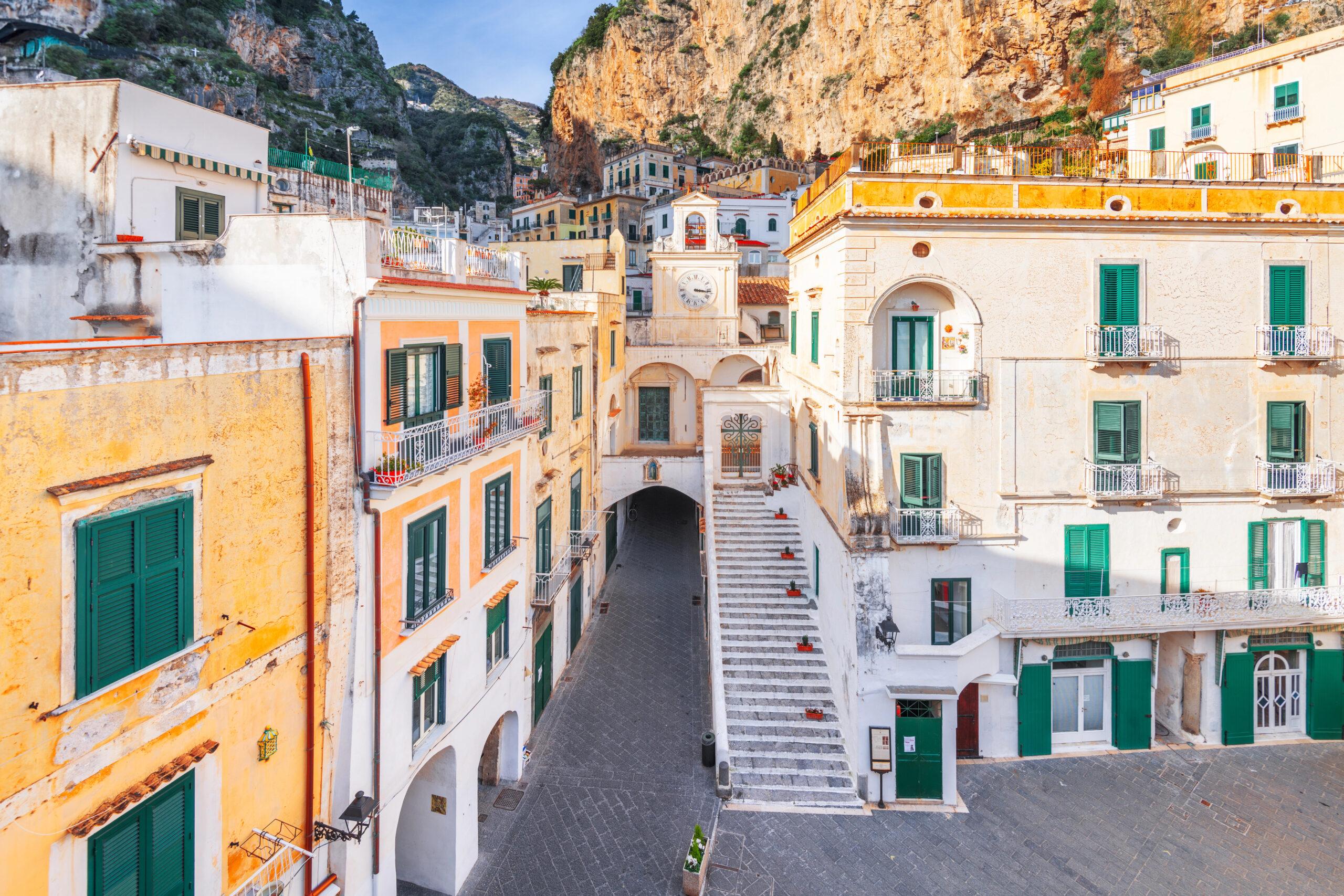
Travel time from Ravello: 15 minutes by bus (via Amalfi), 1.5 hours walking
Right next to Amalfi but separated by a headland, tiny Atrani is one of Italy’s most beautiful villages. With just 800 residents, it’s the smallest comune in Italy by area.
The white houses cluster around a small square and beach, connected by narrow covered passageways. It’s achingly picturesque and refreshingly untouristy.
What to do: Walk through the pedestrian tunnel from Amalfi, have lunch in the tiny piazza, visit the 10th-century Church of San Salvatore de’ Birecto (where Amalfi’s doges were crowned).
Furore: The village that disappeared
Travel time from Ravello: 35 minutes by bus, 30 minutes by car
Furore calls itself “the town that doesn’t exist” because its houses are scattered across the hillside rather than clustered in a central piazza. The main attraction is the Furore Fjord – a dramatic cleft in the limestone cliffs bridged by a road high above.
In July, the fjord hosts a spectacular high-diving competition. The tiny beach below is reached by steep steps.
What to do: Photograph the fjord from the bridge, hike the coastal trails, and visit in summer for the diving competition.
Capri: The island of dreams
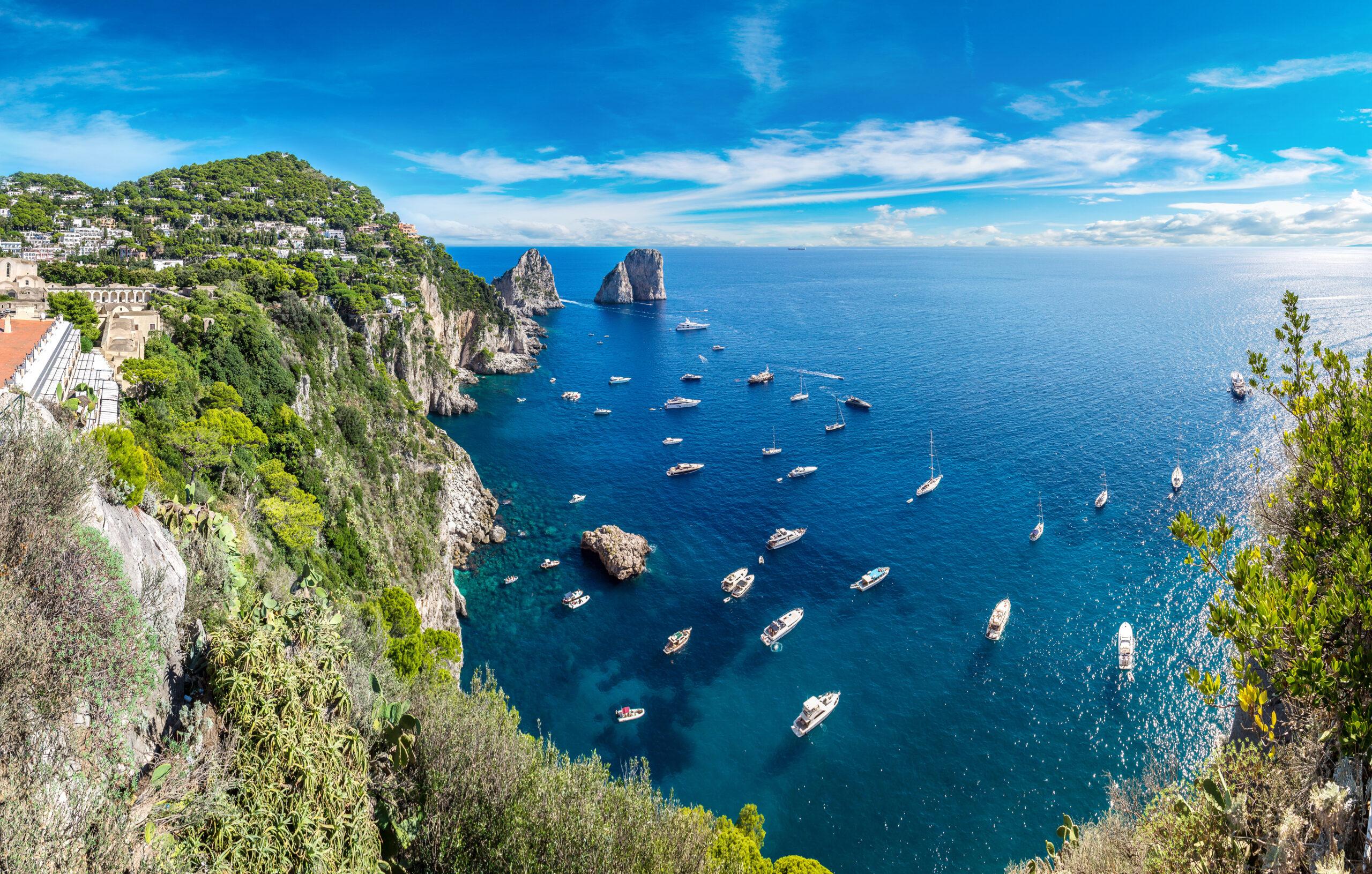
Travel time from Ravello: Ferry from Amalfi (40 minutes in summer) or Sorrento (25 minutes)
The legendary island of Capri sits just off the coast. Once the pleasure palace of Roman Emperor Tiberius, today it’s a playground for the wealthy – but still worth visiting.
The Blue Grotto is famous but often disappointing (long queues, choppy seas). Instead, take the chairlift to Monte Solaro, explore the Gardens of Augustus, visit Villa San Michele, or simply wander the chic streets of Capri town.
What to do: Take the boat around the Faraglioni sea stacks to spot the rare blue lizards, hike to Villa Jovis (Tiberius’s palace ruins), lunch in beautiful Anacapri, shop in Capri town.
Travel tip: Ferries run May-October only. Book day trips in advance during peak summer.
Day trip suggestions by car
If you have a car (or hire a driver for the day), these routes offer the most spectacular coastal scenery:
The Classic Coast Road (Ravello-Positano-Sorrento): Takes 1.5 hours, but allow 3-4 hours with photo stops. The hairpin bends and cliff-edge driving are thrilling (or terrifying, depending on your perspective). Stop at viewpoints above Positano, the Emerald Grotto near Conca dei Marini, and Sorrento’s Villa Comunale.
The Eastern Coast (Ravello-Vietri sul Mare-Salerno): Less touristy but equally beautiful. Vietri sul Mare is famous for ceramics – stop to browse the workshops. Salerno has an elegant waterfront and a medieval quarter.
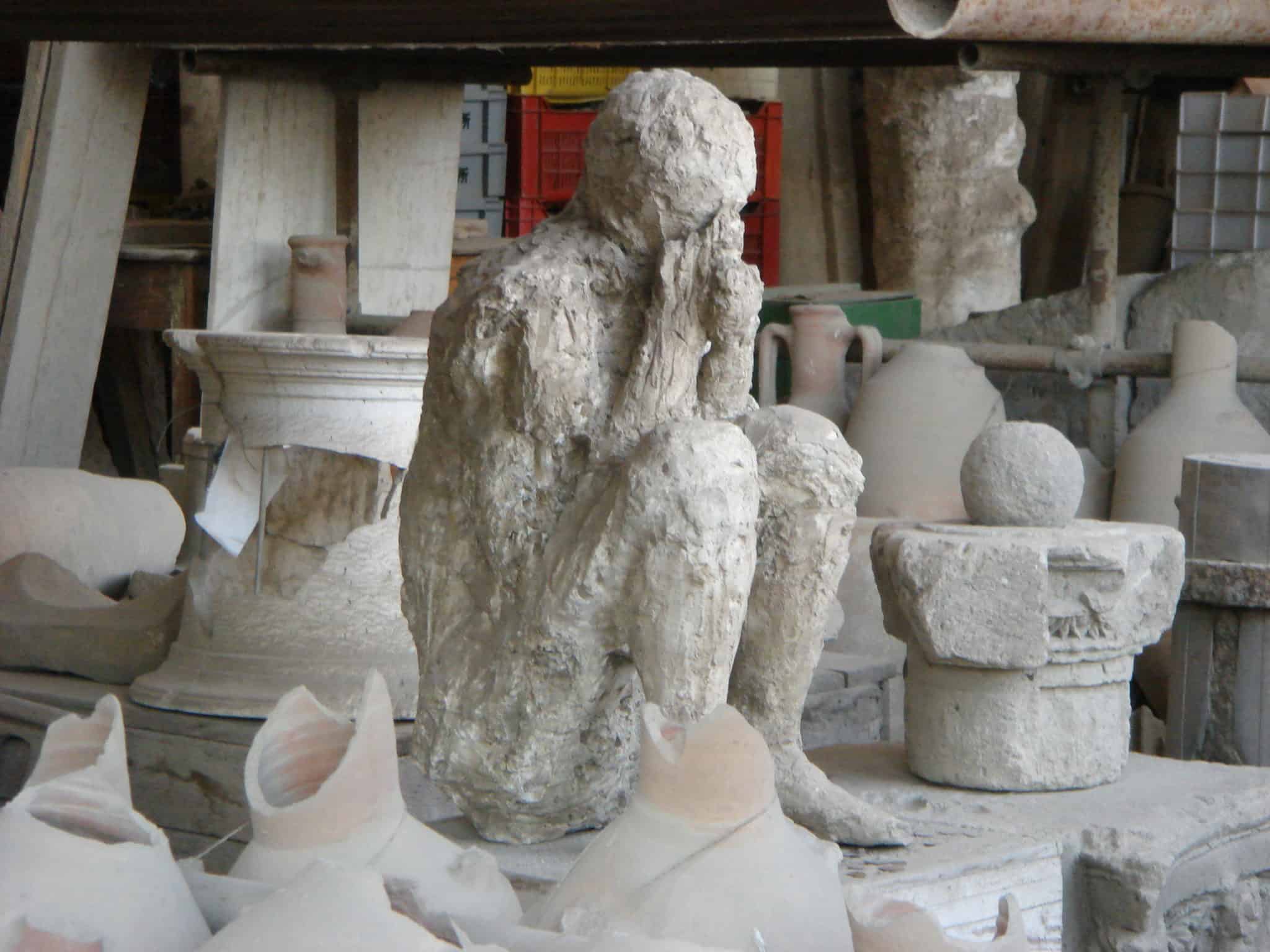
Pompeii and Mount Vesuvius: Both are 1-1.5 hours from Ravello via Sorrento. Combine them for a full day exploring the volcano that destroyed the Roman city in 79 AD. You can book tours and tickets in advance.
Summer ferries: The scenic option
From May to October, regular ferries connect the coastal towns, offering a completely different perspective. The boats are more comfortable than buses (no hairpin bends!), and the views are spectacular.
Main routes:
- Sorrento-Positano-Amalfi: Multiple daily departures (€20-25)
- Amalfi-Positano-Capri: Popular day trip route
- Salerno-Amalfi-Positano: Eastern coast connection
Tip: Book ferry tickets a day ahead in peak summer. They’re more expensive than buses but far more pleasant.
Oscar Niemeyer’s Auditorium
A modern masterpiece sits incongruously among Ravello’s medieval splendour: the Oscar Niemeyer Auditorium, designed by the famous Brazilian architect and opened in 2010. Love it or hate it, this striking white building hosts concerts and cultural events year-round.
Frequently asked questions about Ravello
How long should I spend in Ravello?
2-3 days is ideal. This gives you time to explore both villas, enjoy the restaurants, walk down to Amalfi or Minori, and soak up the peaceful atmosphere without rushing.
Is Ravello better than Positano?
They’re different. Positano offers beaches, shopping, and buzz. Ravello offers tranquillity, history, music, and extraordinary views. If you want peace, culture, and some of the coast’s best views, choose Ravello. If you want beach life and nightlife, choose Positano. Better still, visit both.
Are there beaches in Ravello?
No. Ravello sits 365 metres above the coast. The nearest beaches are in Amalfi (10 minutes by bus), Minori (15 minutes), or Castiglione (Ravello’s small beach hamlet, 20 minutes).
What is Ravello famous for?
Its historic villas (Villa Rufolo and Villa Cimbrone), the Ravello Festival, its connection to Wagner and countless artists and writers, medieval history as a wealthy wool-trading centre, and those incredible coastal views.
When is the Ravello Festival?
June to September, with the Wagner Festival typically in early July.
How do I get around the Amalfi Coast from Ravello?
The SITA bus network connects all coastal towns (€1.50 per journey or €10 for 24-hour unlimited travel). Be aware that buses can be very crowded in the peak summer season. Summer ferries offer a scenic alternative. Hiring a car gives flexibility, but driving the narrow coastal roads requires confidence.

Until we meet again, Ravello
Ravello doesn’t have much in the way of nightlife compared to its neighbour, Amalfi (only a 10-minute bus journey), but don’t let that put you off. The Amalfi Coast offers so much beyond Ravello’s boundaries – from Positano’s glamorous beaches to Sorrento’s elegant gardens, from hidden Atrani to legendary Capri.
With low-cost airlines flying daily to Naples, the coast is easily accessible. Although I’m not going to lie, once you’re out there, it isn’t the cheapest of destinations. But it’s well worth it.
I haven’t been back to Ravello since our wedding, though not a month goes by that I don’t think about returning. There’s something about that clifftop perch – the way the light falls across the gardens, the scent of lemon blossoms on warm evenings, the views that stretch to infinity – that stays with you.
Ravello has a way of getting under your skin. And once it does, you’re always planning your return.
Comments are closed.