There is nowhere else on earth quite like Istanbul. Not even close.
This is a city that sits across two continents, one foot in Europe, the other in Asia, and you feel that duality everywhere. In the skyline, where Byzantine domes and Ottoman minarets rise together above the Bosphorus. In the streets, where the call to prayer drifts over rooftop bars, and fishermen cast lines from a bridge between two worlds. In the food, the architecture, the neighbourhoods, the sheer layered weight of centuries pressing up through the cobblestones.
Stand on the Galata Bridge at dusk and look in either direction. Behind you, the minarets of the Süleymaniye Mosque catch the last of the light. Ahead, ferries cross the strait in both directions, threading between two continents as casually as a bus changing lanes. It’s one of those views that takes a moment to fully land, and then doesn’t quite leave you.
Three days here won’t cover everything. Nothing would. But three well-planned days will give you the historic heart of the city, the neighbourhoods that locals actually love, a crossing to the Asian side, and enough meals and moments in between to understand why people come back to Istanbul again and again.
This itinerary is about getting the order right. Which sights to pair together, when to arrive, where to eat without losing an hour to indecision. For the full details on each attraction, head to my complete guide to the best things to do in Istanbul. Here, it’s all about the plan. Read on for my perfect 3 day Istanbul itinerary.
Is a 3 day Istanbul itinerary enough?
Three days is the sweet spot for a first visit. You won’t see everything, nobody does, but you’ll cover the main attractions in Sultanahmet, explore the neighbourhoods of Beyoğlu and Galata, cross to the Asian side of Istanbul, and still have time for a Bosphorus cruise and a hammam. That’s a real experience of the city, not just a highlight reel.
With a fourth day, slow things down. A longer wander through Balat and Fener, a half-day trip to the Princes’ Islands, or an afternoon in Nişantaşı. But three days? You’ll leave satisfied.
A note on timing. This itinerary works year-round, but late spring (April to May) and early autumn (September to October) give you the best conditions, with mild temperatures, manageable crowds and long daylight hours. Summer is hot and busy. Winter is quieter, cheaper and often underrated.
Quick facts before you go
- Currency. Turkish lira (TRY). Pay in lira wherever possible for the best rate
- Getting there. Istanbul Airport (IST) is the main hub, served by Turkish Airlines and direct flights from across Europe
- Getting around. Trams, metro and ferries are easy to navigate, and the Istanbulkart travel card works across all of them
- Language. Turkish, though English is widely spoken in tourist areas
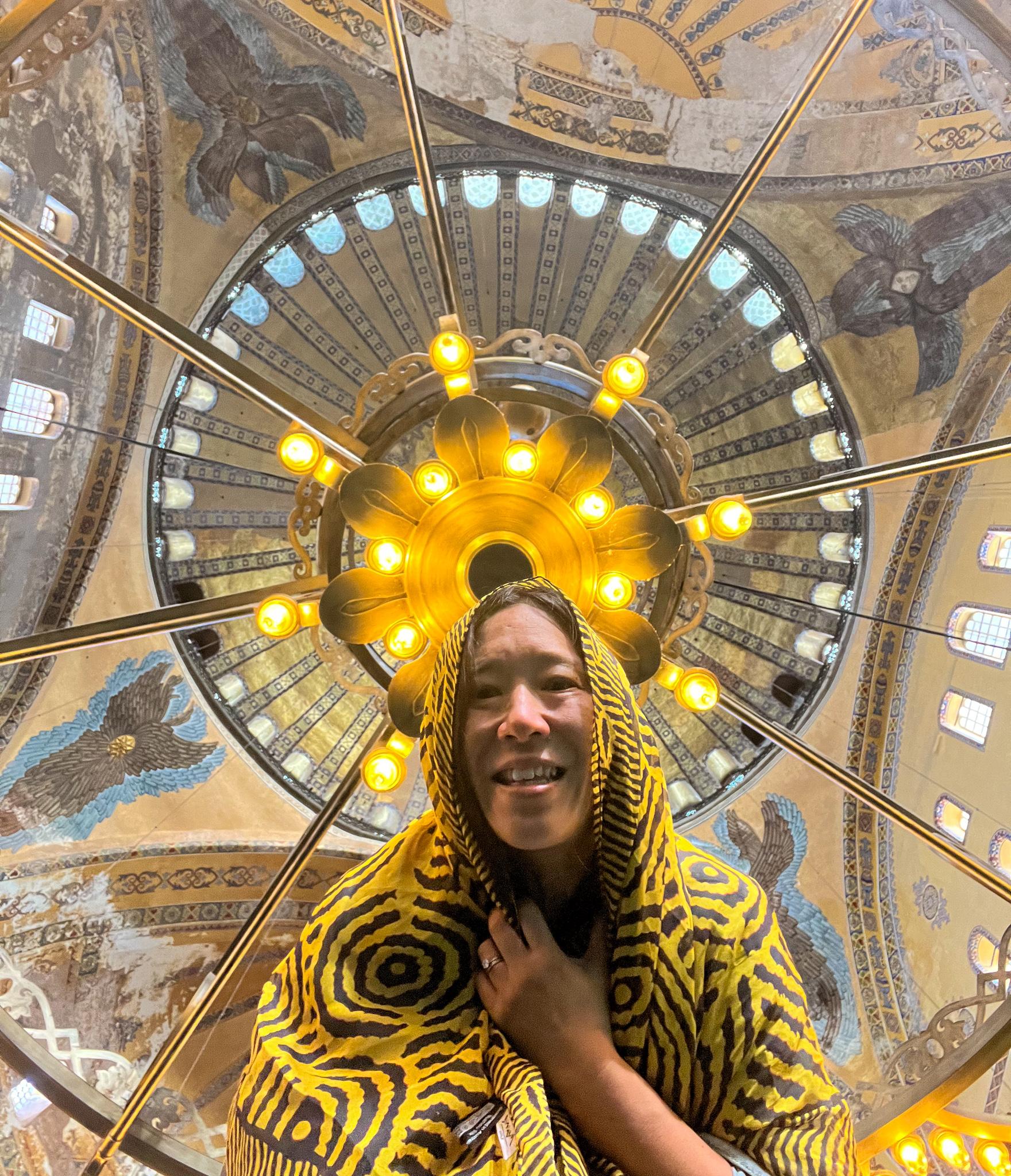
- Dress code. Cover arms and legs for mosque visits. Women need a headscarf, and you can usually borrow one at the entrance
- Credit cards. Widely accepted in hotels, restaurants and shops, though cash is best at bazaars and street food stalls
Getting from Istanbul Airport to the city centre
The M11 metro line connects Istanbul Airport to Gayrettepe, where you can transfer to other metro lines or the tram network. Trains run every 15 to 20 minutes, the journey takes under an hour, and it costs a fraction of a taxi. It’s the easiest and most reliable option.
Havaist airport shuttle buses run 24/7 to major hubs, including Taksim Square. For Sultanahmet, the coach drops you at Aksaray, from where the T1 tram runs a couple of stops into the old town. Direct Sultanahmet services have come and gone, so check the Havaist app for current routes before you travel. Buy tickets online, in the app, or at the terminal.
Taxis are available, but Istanbul traffic is something else. On more than one occasion, I found it quicker to walk than sit in a cab going nowhere. If you do take one, always insist on the meter.
Day 1: Sultanahmet, the historic heart
The first day belongs entirely to Sultanahmet, Istanbul’s old town and historic core. Most of the major tourist attractions here sit within easy walking distance of each other, which makes it the most logical place to start and the easiest.
Morning: Hagia Sophia and the Blue Mosque
Start as early as you can. Both Hagia Sophia and the Blue Mosque close to visitors during prayer times, and queues build quickly after 9am. Getting there first thing makes a real difference.
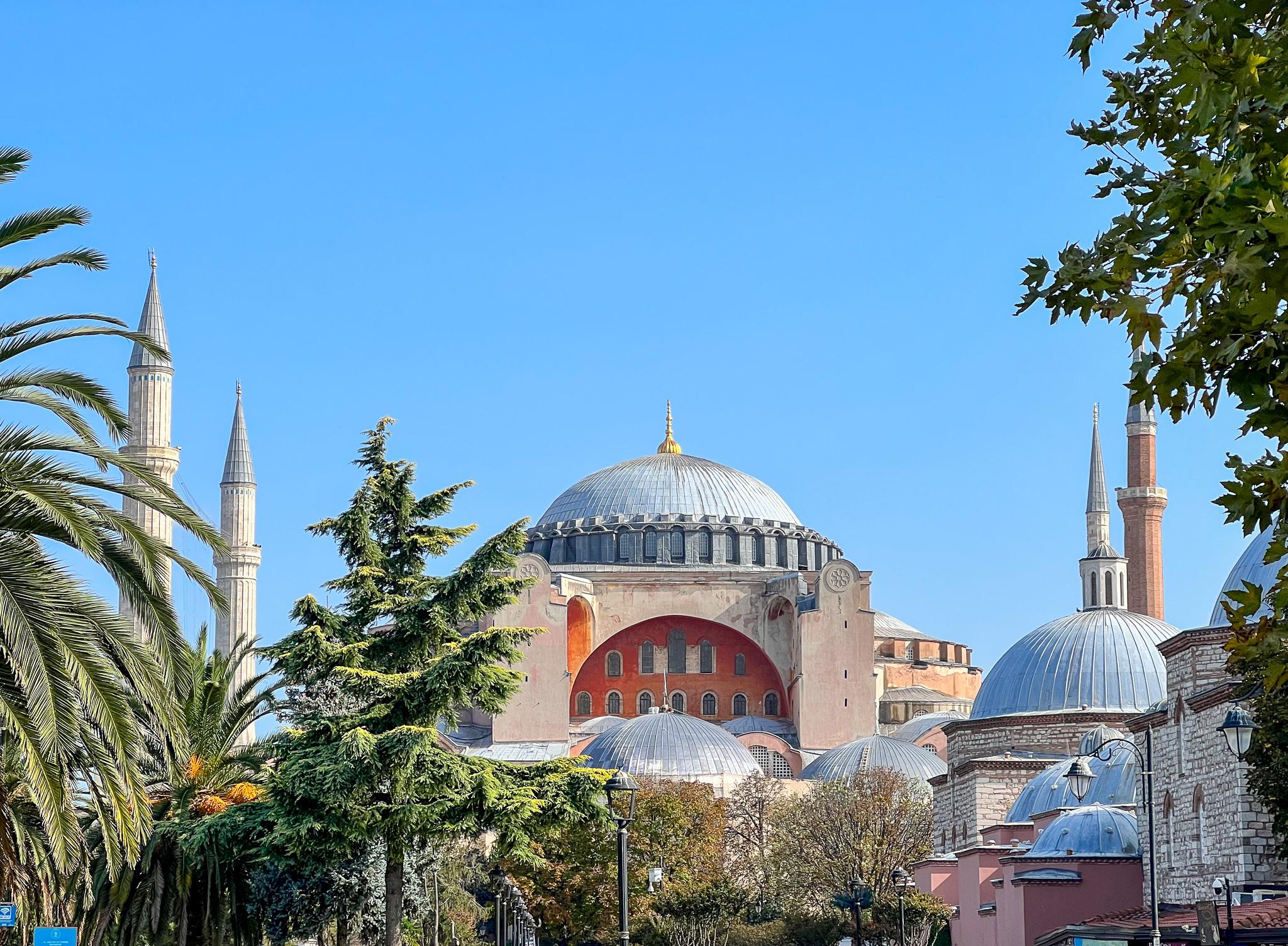
Hagia Sophia first. This UNESCO World Heritage Site, built in 537 AD under Emperor Justinian, is one of the great buildings of the world. A Byzantine cathedral for nearly a thousand years, then an Ottoman mosque, it functions as a mosque once again, with tourists admitted to the upper galleries between prayer times. The soaring dome, the traces of Byzantine gold, the vast calligraphic medallions, it’s the kind of place that stops you in your tracks.
I’d recommend booking a guided tour. Our guide Metin was first in the queue, which meant I got inside before almost anyone else, and for a few minutes the space was nearly mine. Worth every early alarm. Book a skip-the-line ticket with an audio guide in advance.
Entrance is €25 for the upper gallery, under-8s free, open daily 9am to 7pm. Note that Hagia Sophia is closed to visitors on Fridays between 12pm and 2:30pm for congregational prayers, so plan your morning around it.
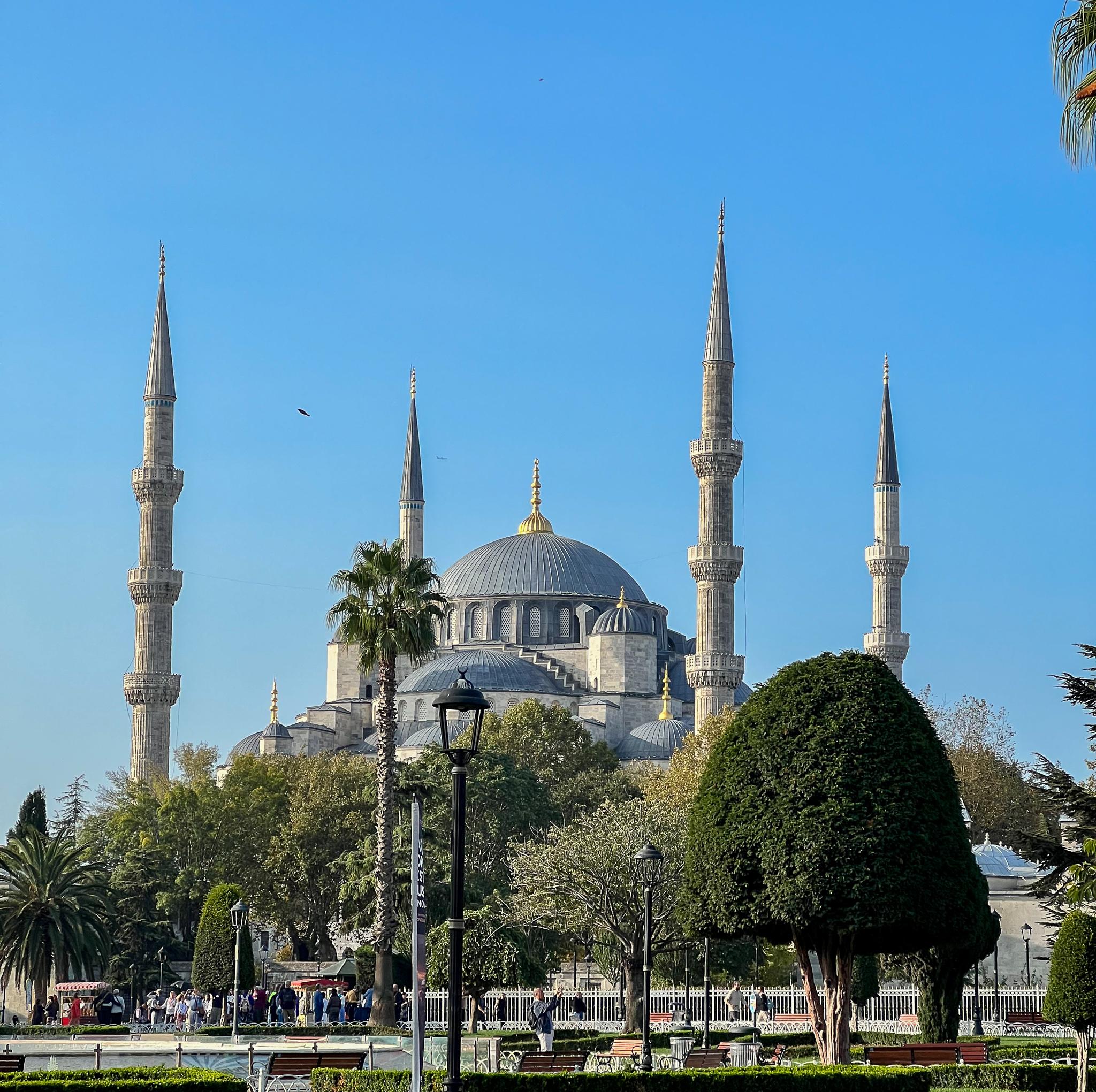
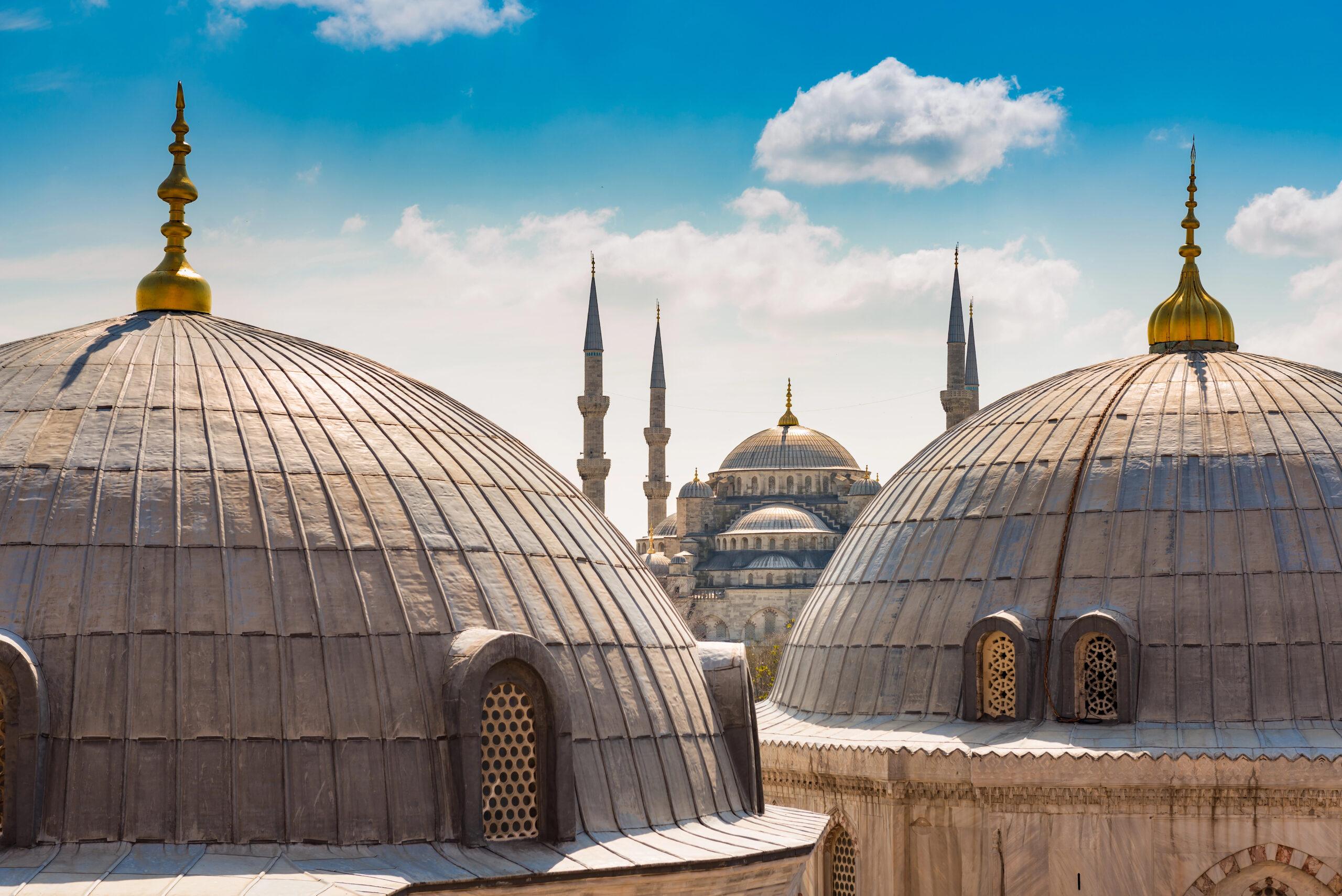
From Hagia Sophia, the Blue Mosque (Sultan Ahmed Mosque) is a walk of less than five minutes across Sultanahmet Square. It’s immediately recognisable by its six minarets rising above the skyline. Inside, more than 20,000 hand-painted Iznik tiles line the walls and domes, glowing in light filtered through 260 windows. Entry is free, but it closes for each of the five daily prayer times, so check the schedule before you head out.
Pro tip. If the Blue Mosque is closed when you arrive, wait in the exterior courtyard. The ablution fountains and colonnaded walkways are worth time in themselves, and the wait is usually no more than 30 minutes.
Mid-morning: Basilica Cistern and Topkapı Palace
A 10-minute walk from the Blue Mosque brings you to the Basilica Cistern, the underground chamber that once supplied water to the Byzantine Great Palace. Drop down the stairs, and you’re in a vaulted space held up by more than 300 marble columns, with shallow water reflecting everything above. At the far end, two Roman-era Medusa heads form the bases of two columns, both set at odd angles that have puzzled historians for centuries. It’s cool, quiet and unlike anywhere else in the city.
Open daily 9am to 10pm, entrance around 1,500 TRY in the daytime.
From there, head uphill to Topkapı Palace, about a five-minute walk. Allow at least two hours for the complex. This was home to the Ottoman sultans and their court for nearly four centuries. The Treasury and the Harem are the highlights, and a guided tour at the entrance brings the stories of palace life to the fore.
Open daily 9am to 6pm, closed Tuesdays. Don’t miss the views from the palace terrace, looking out over the Bosphorus Strait and the Golden Horn at once.
Lunch
By now you’ve earned a sit-down. For an everyday lokanta, I’d point you to Aslan Restaurant. It’s been going since 1986, up a narrow staircase off one of Sultanahmet’s main streets, with a view across to the domes of the Nuruosmaniye Mosque. There’s no menu. You just look at the day’s trays and choose what you fancy, then trust the cooks if you’re unsure. Order some meze, a stew or a kebab, and a glass of Turkish tea to finish.
If you’d rather something smarter, Lokanta 1741 sits inside the Cağaloğlu Hamam near Hagia Sophia, serving lighter, modern takes on old Ottoman recipes in a calm, low-lit room. It costs more, but it’s a lovely break from the crowds.
Afternoon: Grand Bazaar and Spice Bazaar
Two of Istanbul’s most famous markets sit within easy reach of Sultanahmet, and both are best in the afternoon once the morning rush at the sights has eased.
The Grand Bazaar is a covered market that has been drawing traders and visitors since the Ottoman era. Over 4,000 shops line its labyrinthine corridors, selling carpets, copper lamps, Turkish delight, embroidered slippers, jewellery and ceramics. Don’t try to navigate it strategically. Get lost. There’s always a café to duck into for an apple tea when you need a moment. Haggling is expected and part of the fun, so start at around half the asking price and negotiate with good humour.
Open Monday to Saturday, 9am to 7pm.
From the Grand Bazaar, it’s about a 15-minute walk down to the Spice Bazaar (also called the Egyptian Bazaar) near Eminönü. This is where you stock up on foodie souvenirs, from vivid piles of spices to dried fruit, nuts, Turkish honey, teas and herbs. Go hungry and graze your way around. The candied fruit and baklava stalls near the entrance are hard to walk past. The building itself is one of the most beautiful in Istanbul.
Open daily, roughly 9am to 7pm, with hours varying slightly by season and closures on religious holidays.

Evening: the Eminönü waterfront and a night Bosphorus cruise
After the Spice Bazaar, walk down to the Eminönü waterfront and the Galata Bridge, lined with fishermen casting into the Golden Horn below and cafes and restaurants along its lower deck. It’s a lively spot at dusk and worth a wander before dinner.
If you book one thing for your first evening in Istanbul, make it a night Bosphorus cruise. Seeing the city from the water after dark is a completely different experience, with the mosques and bridges lit against the sky and both continents glowing on either side of you. We took an evening boat trip, and I’d put it among the highlights of the whole visit. Dinner cruises with Whirling Dervish performances are available, or a straightforward sightseeing cruise with dinner ashore works just as well.

Day 2: Galata, Beyoğlu and Dolmabahçe Palace
Day two takes you north of the Golden Horn into Galata and Beyoğlu, a completely different side of Istanbul to Sultanahmet, with steep cobbled streets, independent cafes and some of the city’s best restaurants.
Morning: Galata Tower and İstiklal Street
Start at Galata Tower, the medieval stone tower built by the Genoese in 1348. It stands at around 67m, tall enough to give you a sweeping view across the Golden Horn, the Bosphorus Strait and the old city skyline. Open daily 8:30am to 11pm, last entry 10pm, entrance around €30. Book online in advance to skip the queue.
The lanes around the tower’s base are some of the most enjoyable in Istanbul to explore on foot. Independent cafes, vintage shops and small galleries fill the steep streets leading down towards Karaköy, with street art on the walls as you go.
From Galata Tower, walk up to Taksim Square, about 20 minutes on foot or a short metro ride to Taksim station. From there, İstiklal Street is lined with shops, cafes, historic churches and the occasional red tram trundling through the crowds. Duck into the side streets branching off it. This is where you’ll find the independent bars, small bakeries and quiet courtyards that make Beyoğlu one of the most rewarding parts of the city to wander.
Lunch: Zübeyir Ocakbaşı
For one of the best meals of your trip, book ahead at Zübeyir Ocakbaşı in Beyoğlu. It’s a classic ocakbaşı, where you sit around an open charcoal grill and watch the meat being cooked in front of you. For a first visit, order the Urfa kebab and the tarak kebabı.
Address: İstiklal Caddesi, Bekar Sokak No.28, Beyoğlu. Open daily from around 11am to midnight. Book ahead for weekends.
Afternoon: Süleymaniye Mosque and Dolmabahçe Palace
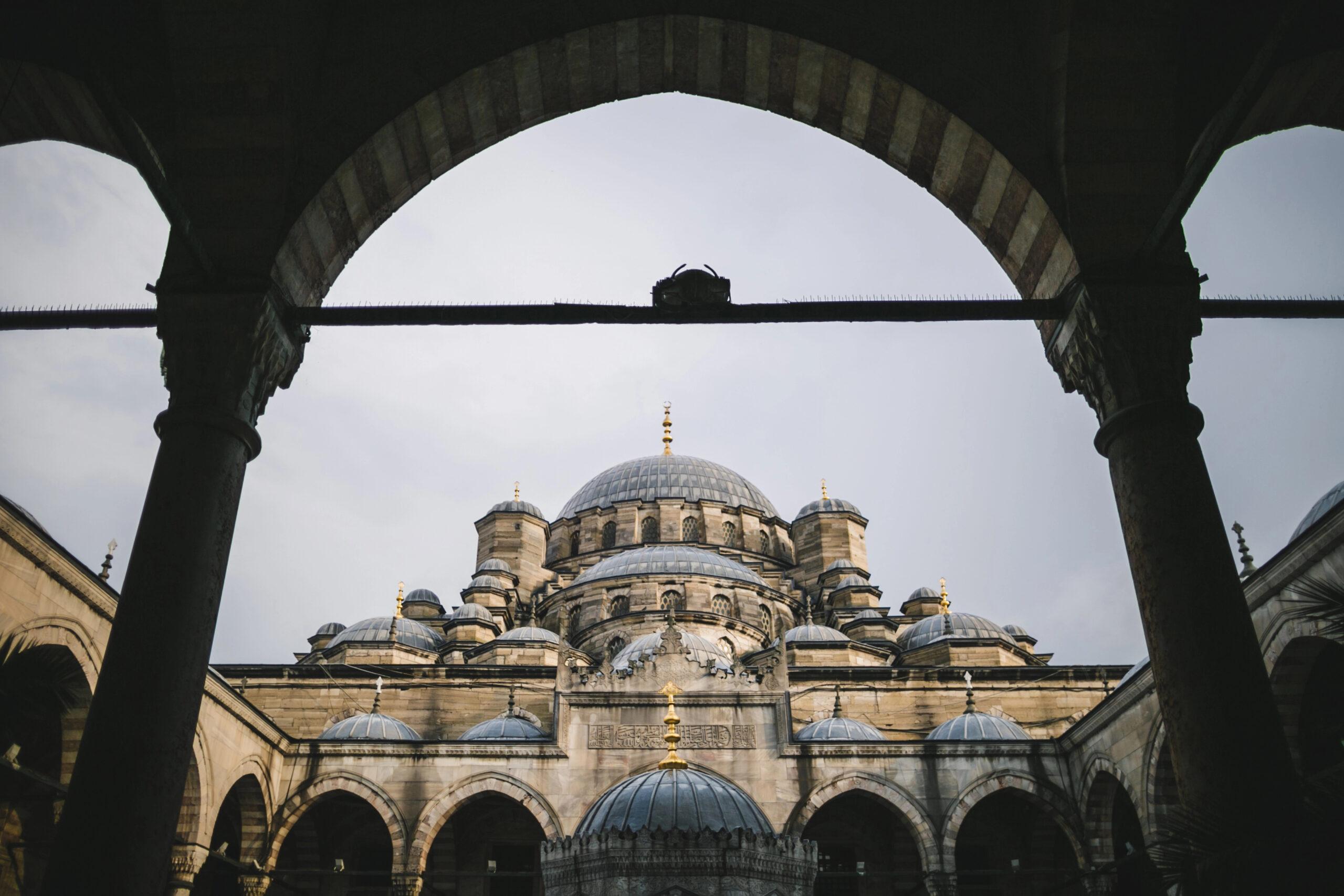
Walk down towards the Golden Horn to the Süleymaniye Mosque, one of Istanbul’s most rewarding sights and far quieter than the Blue Mosque. Built in the 16th century under Suleiman the Magnificent, it sits on one of Istanbul’s seven hills, with sweeping views out over the water towards the Asian side. Inside, it’s calm and beautifully proportioned, with stained glass, fine tilework and a sense of space that lets you take it all in. Entry is free. Dress modestly and remove your shoes at the entrance.
From there, pick up the T1 tram at Eminönü towards Kabataş, then continue along the Bosphorus to Dolmabahçe Palace, built in the 19th century when the Ottoman sultans wanted something closer in style to the great European courts. The scale of it hits you the moment you step inside. A vast ceremonial hall, a crystal staircase, and a chandelier so large the ceiling around it seems to shrink. From the waterfront outside, the facade stretches along the Bosphorus in an unbroken line of columns and gilded gates.
This is also where Mustafa Kemal Atatürk, the founder of modern Turkey, spent his final days. Every clock in the building is stopped at 9.05am, the moment he died on 10 November 1938. Photography is not permitted inside, and entry is by audio guide, included in the ticket.
Book in advance. Open Tuesday to Sunday, 9am to 5pm, closed Mondays, with tickets around 1,800 to 2,000 TRY.
Evening: dinner and a Turkish bath
For dinner, head back into Beyoğlu. Pano on Hamalbaşı Caddesi, Istanbul’s oldest wine bar, is a lovely spot for a long, unhurried meal, with an extensive wine list, local cheeses and Italian-inspired sharing plates. The kind of dinner that stretches well beyond what you planned. Open Tuesday to Sunday from noon.
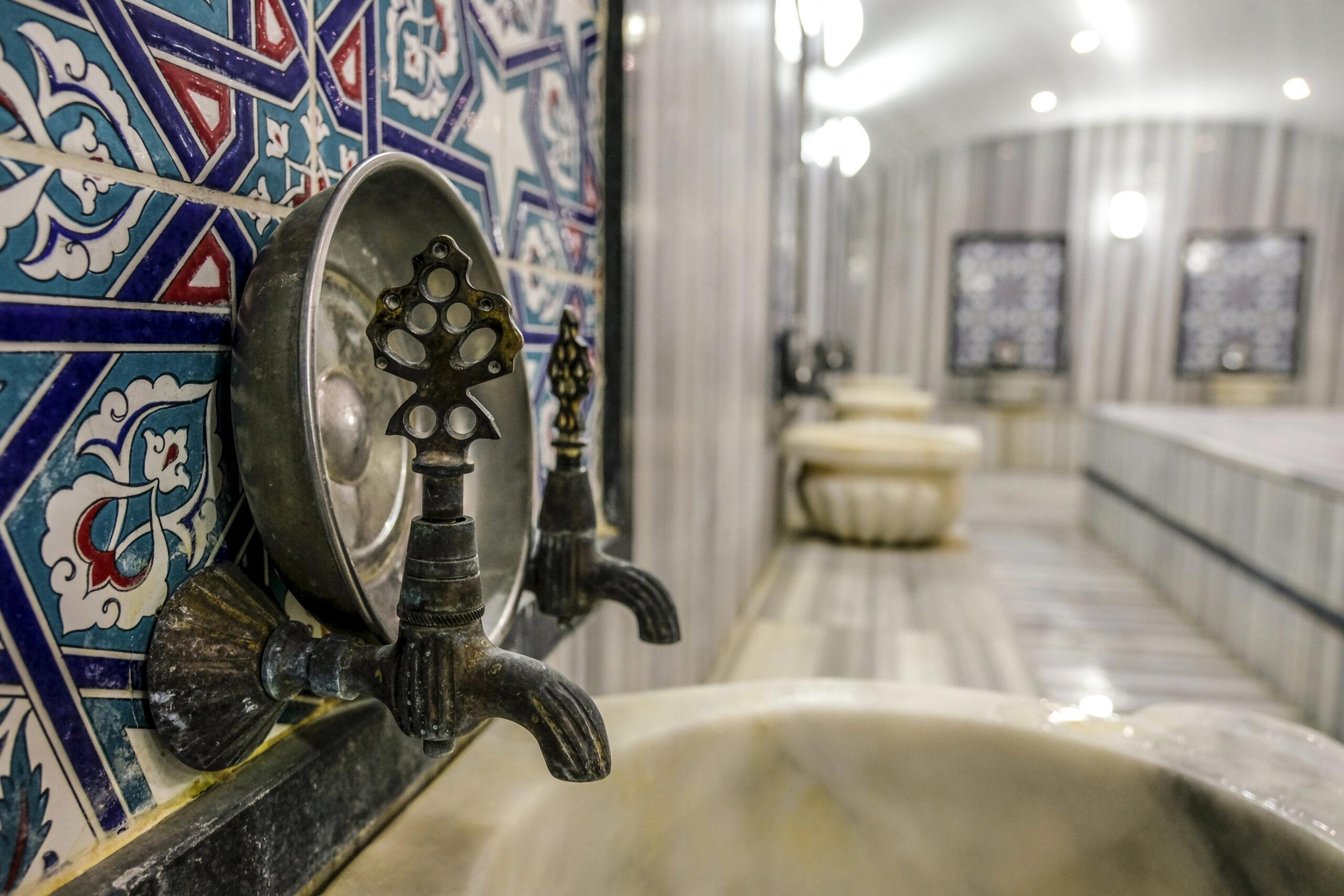
Round off the evening with a hammam. A classic Turkish bath means a steam, a firm body scrub on a heated marble slab and a soapy massage. It sounds indulgent, and it is. Well-regarded options include Cağaloğlu Hammam, Hürrem Sultan Hammam and Kılıç Ali Paşa Hamamı. Book ahead, as these fill up.
Day 3: the Asian side of Istanbul
This is the day most first-time visitors skip, and the one that tends to stick most in the memory. Taking the ferry across the Bosphorus to the Asian side is one of the city’s great small pleasures, and a completely different pace waits on the other shore.
Morning: ferry to Kadıköy
The ferry from Eminönü or Karaköy to Kadıköy takes around 20 minutes and costs just a few lira with your Istanbulkart. Ferries run frequently through the day, and the morning crossing, with the old city skyline slipping away behind you, is worth the early start.
Kadıköy is a lively, residential neighbourhood popular with locals rather than tourists. Start at the Kadıköy produce market, one of the best food markets in the city. Seek out kumpir (loaded jacket potatoes), lahmacun (thin flatbread topped with spiced mince), midye dolma (stuffed mussels from a street cart) and Turkish pastries you won’t easily find across the water. A guided food tour here is one of the best ways to navigate the stalls, and a good local guide will take you to things you’d never have found alone.
Late morning: Üsküdar and the Bosphorus views
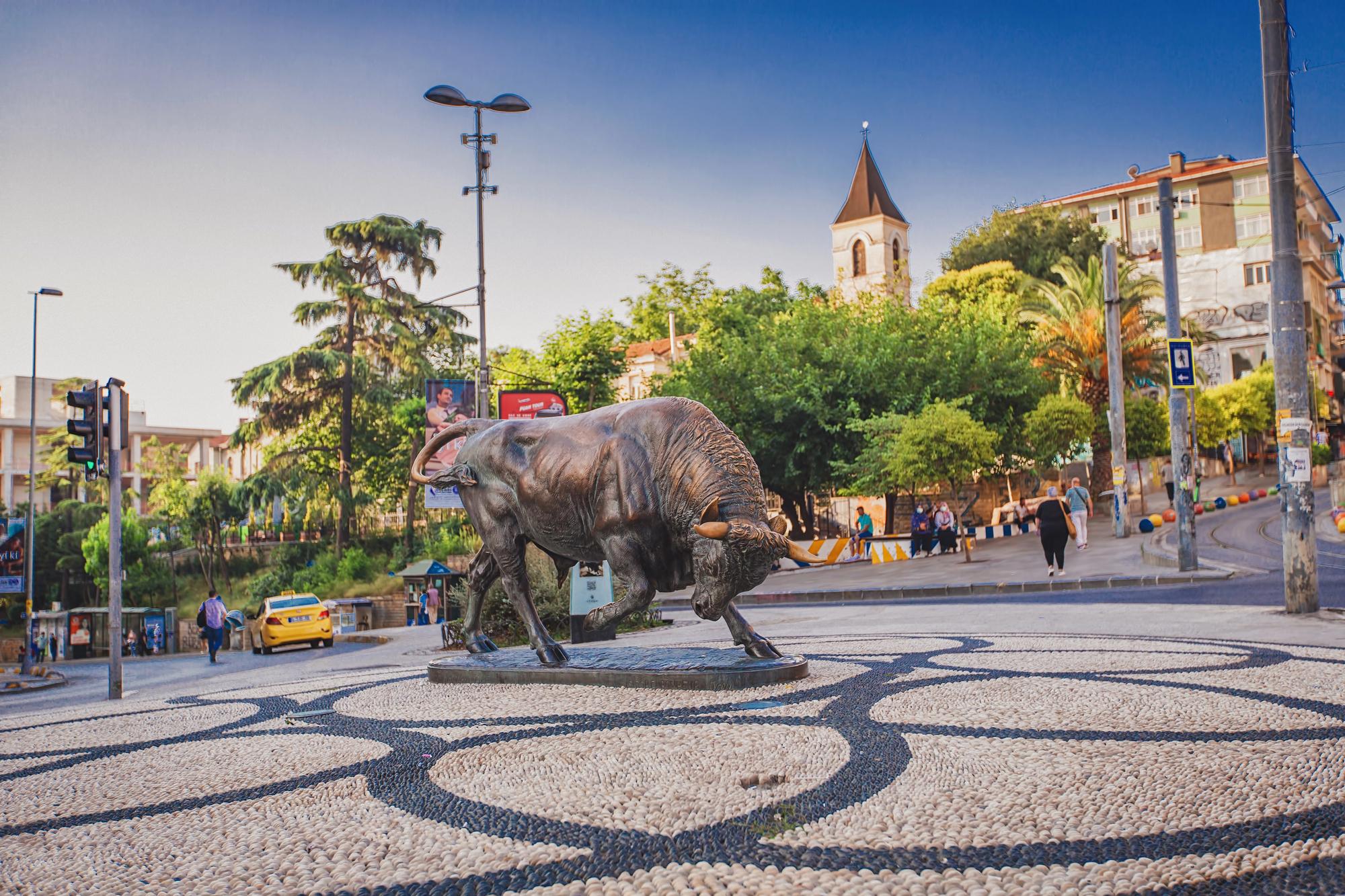
From Kadıköy, take a short taxi or bus north along the Asian shore to Üsküdar, a quieter, more traditional neighbourhood with some of the finest Bosphorus views in the city. The waterfront here looks straight across to the European side, with Topkapı Palace and the old city filling the horizon. It’s one of the most photogenic spots in Istanbul, and unlike the busy viewpoints across the water, you’ll mostly share it with locals out for a morning stroll.
Afternoon: back to the European side
Ferry back across and make your way to Kariye Mosque, better known as the Chora Church, one of Istanbul’s most beautiful and least-visited Byzantine monuments. Reopened in 2024 after a long restoration, it now functions as a working mosque, but the medieval mosaics and frescoes inside remain among the finest surviving examples of Byzantine art anywhere in the world. A few in the prayer hall are screened off, but most are still on view. Entry is €20 for visitors, open Saturday to Thursday, 9am to 6pm, closed all day Friday and during prayer times. Modest dress is required, and women need a headscarf. It sits out near the ancient city walls, the Byzantine fortifications that still run for several kilometres along the western edge of the old town.
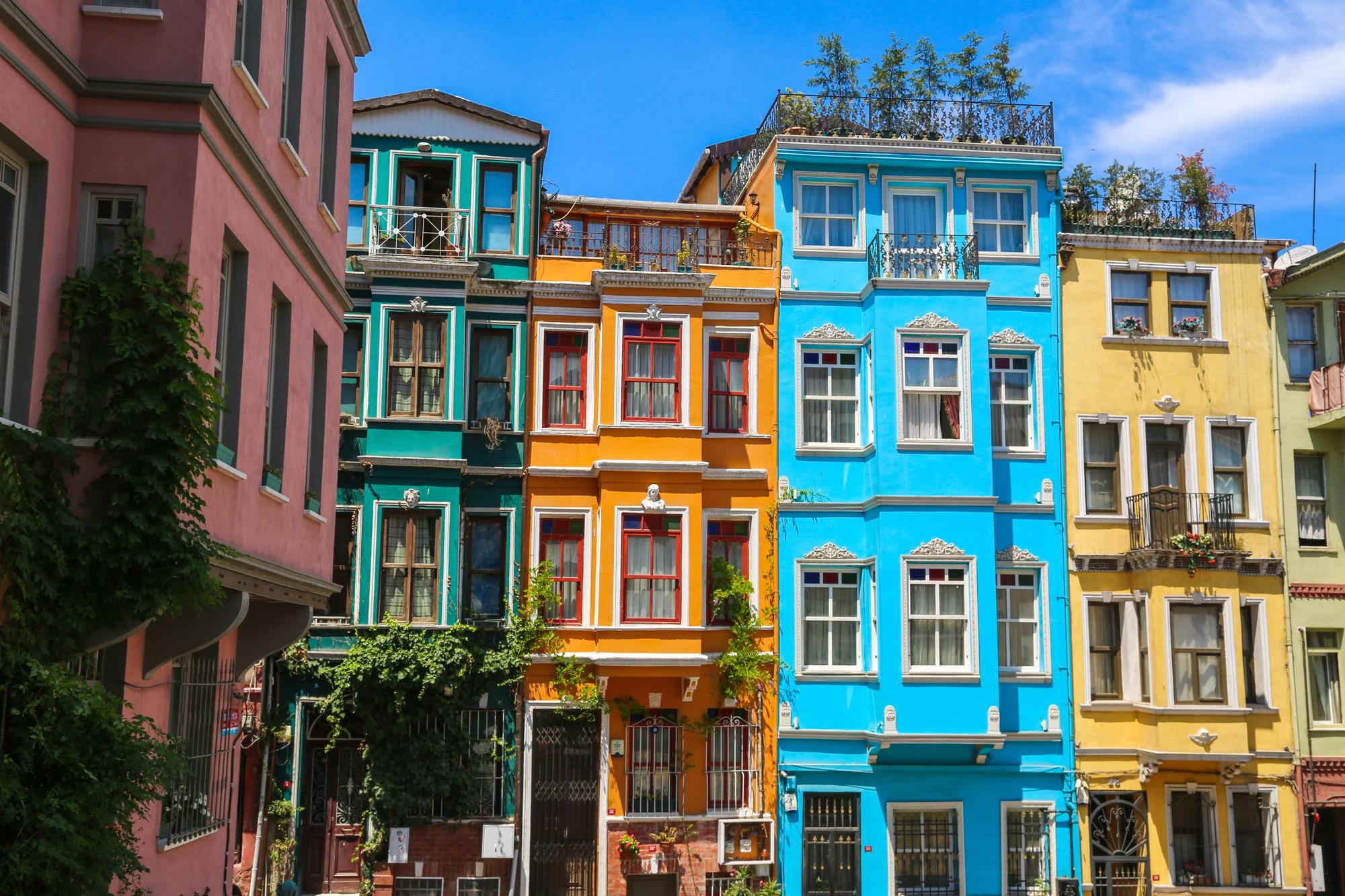
If you’d rather take the afternoon slowly, there’s plenty else to fill it. A coffee in Karaköy, a wander through the backstreets of Balat with its rainbow of painted houses, or an hour in the Istanbul Archaeological Museum near Topkapı.
Evening: a final dinner at Pandeli
For a last meal, Pandeli has been going since 1901, tucked above the entrance to the Spice Bazaar. It holds a Michelin Bib Gourmand and has hosted royalty and film stars over the decades. The blue-tiled dining room is beautiful, and the traditional Turkish cooking, especially the Hünkar Beğendi (slow-cooked lamb over smoky aubergine purée), is the reason to come. Note that no alcohol is served, and it’s lunch only, closing in the late afternoon, so plan an earlier sitting rather than dinner.
Open daily 11am to around 6pm, though hours can vary, so check ahead. Aim for a window seat and the view over Eminönü and the Galata Bridge.
And if you haven’t yet tried the baklava here, do it tonight. I spent years dismissing it as too sweet. What you get in Istanbul is a different thing altogether, rich and layered and not at all cloying. I wasn’t too proud to ask for a second piece.
Extending your trip: a 3 day Istanbul and Cappadocia itinerary
How to split your time
The format that works best is three days in Istanbul, following the plan above, then three days in Cappadocia, with a short domestic flight between them. That’s roughly a week once you add travel days at either end. You could trim Cappadocia to two nights, but three lets you build in a second morning for the balloons in case the first is cancelled, which happens more often than you’d think.
Getting from Istanbul to Cappadocia
Fly. It’s the only sensible option unless you have days to spare. The flight takes about an hour and 20 minutes, and Turkish Airlines, Pegasus and AJet run frequent services. Fares booked a few weeks ahead often come in under £40 one way.
Two airports serve the region. Nevşehir (NAV) is closer to the main towns, around 40 minutes from Göreme, but has fewer flights. Kayseri (ASR) is about an hour out but has far more departures and usually cheaper fares. Flights leave from both Istanbul Airport (IST) and Sabiha Gökçen (SAW), so check which suits your Istanbul base. Most cave hotels arrange airport transfers, so confirm this when you book.
Day 4: arrival and the valleys
Take an early flight so you land with the afternoon ahead of you. Drop your bags at your cave hotel, most of which are carved into the rock in Göreme, Ürgüp or Uçhisar, and head out to get your bearings.
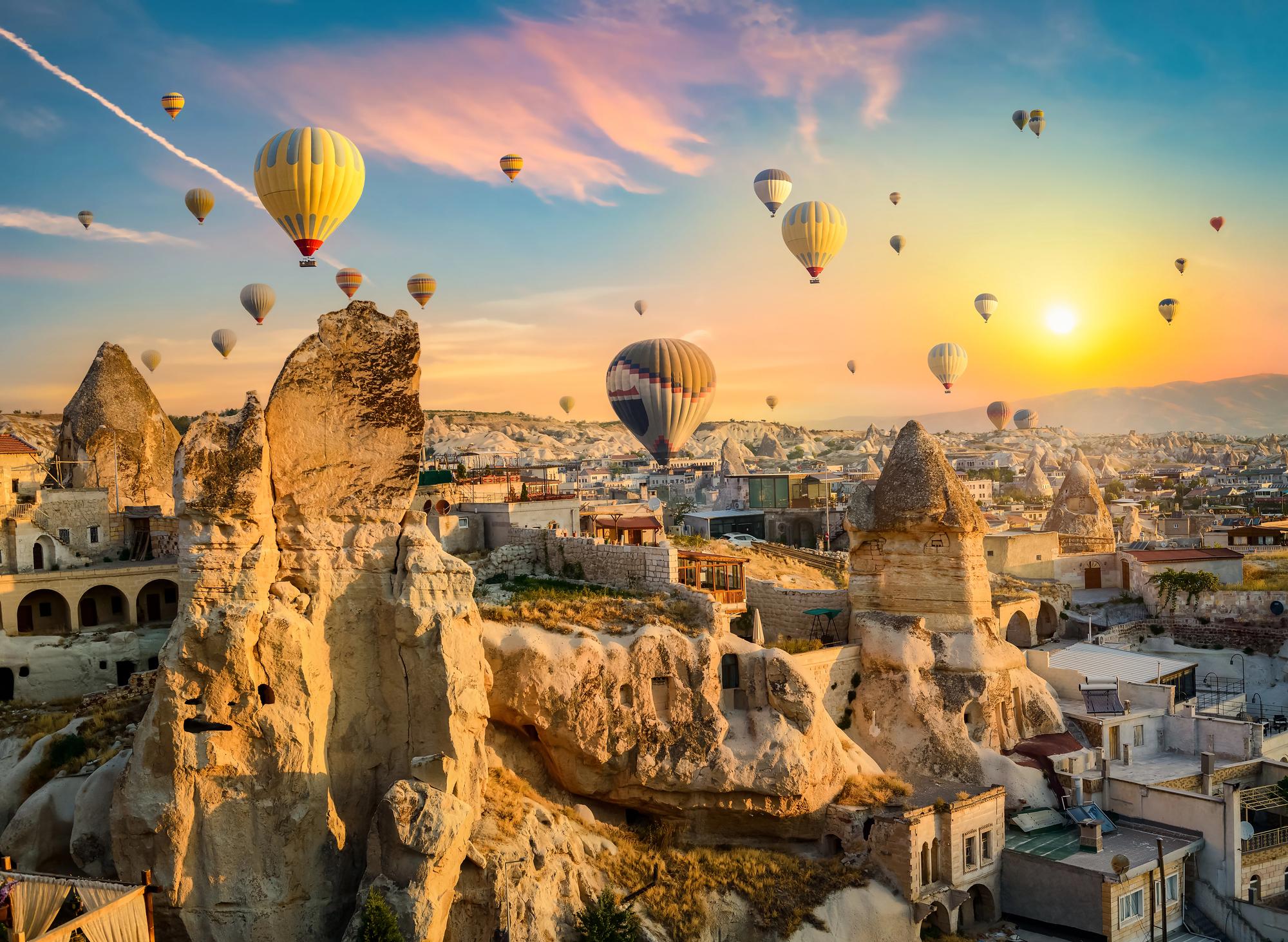
Uçhisar Castle is the highest point in Cappadocia, a great rock riddled with tunnels and rooms. Climb it for a view across the whole region and a first look at the fairy chimneys, the tall, slender rock pillars the area is known for. From there, walk out to Pigeon Valley and Love Valley as the light softens. This is the moment the landscape earns its reputation, all shadow and rippled stone.
Day 5: sunrise balloons and the open-air museum
The balloon flight is why most people come, and it’s worth the early alarm. Pickup is before dawn, and you lift off just as the sun does, with hundreds of other balloons rising around you over the valleys. Flights last around an hour and cost from roughly £150 to £200. Book ahead, and treat your first morning as the target with the second held in reserve, since flights are grounded whenever the wind is wrong.
Spend the rest of the day at the Göreme Open-Air Museum, a UNESCO World Heritage Site and the historic heart of the region. It’s a cluster of rock-cut churches and chapels carved by early Christian monks, their interiors still covered in Byzantine frescoes. Entry is €20, with a little extra for the Dark Church, whose colours are the best preserved of the lot. Allow two to three hours.
Day 6: underground cities and a slower afternoon
Go underground. The cities of Derinkuyu and Kaymaklı burrow several storeys into the earth, complete with stables, kitchens, wineries and ventilation shafts, built as refuges when raiders swept through. Derinkuyu is the deeper of the two, dropping through eight levels. It’s not for the claustrophobic, but it’s unforgettable.
Local operators bundle the main sights into two routes: the Red Tour for the northern valleys and museums, and the Green Tour for the underground cities and the Ihlara Valley walk. Either takes the logistics off your hands. Round off your last afternoon with a pottery workshop in Avanos, or a testi kebab, slow-cooked in a sealed clay pot that’s cracked open at the table. From Cappadocia, fly back to Istanbul for your onward connection, or straight home if the timings work.
Where to stay in Istanbul
The short answer for first-timers is Sultanahmet or Beyoğlu. Both work well, and the choice comes down to the kind of trip you want. Check out my full essential guide on the best areas and neighbourhoods to stay in Istanbul.
Getting around Istanbul
- Buy an Istanbulkart at the airport or any major metro station when you arrive. It’s a reloadable card that covers the tram, metro, buses and ferries. Tap in, tap out, no fuss with tickets each time.
- For this itinerary, the T1 tram does most of the work on Days 1 and 2, running from Kabataş through Sultanahmet and over Galata Bridge to Eminönü. It stops directly outside most of the main sights.
- The ferry is how you reach the Asian side on Day 3, and it’s worth doing for the crossing alone. Twenty minutes on the water with the old city skyline behind you is one of the best free views in Istanbul.
- One note on taxis. The traffic in this city is in a different league. There were moments on my visit where walking a kilometre beat sitting in a cab covering the same distance. Factor that into your timings, and always check the meter is running if you do take one.
Essential tips for visiting Istanbul
Dress code for mosques. Cover arms and legs. Women need a headscarf, and while you can usually borrow one at the entrance, it’s easier to bring your own. Everyone removes their shoes at the threshold.
Prayer times. Both the Blue Mosque and Hagia Sophia close to tourists during the five daily prayers. Check the schedule before you head out each morning. It takes 30 seconds and saves real frustration. Hagia Sophia is also closed to visitors on Fridays between 12pm and 2:30pm.
Turkish lira. Pay in lira wherever possible. Exchange rates at the airport are poor, so wait until you reach the city and use official exchange offices (döviz) or an ATM. Dollars and euros are accepted at some tourist spots, but you’ll get a better deal in lira.
Turkish coffee and Turkish tea. Turkish coffee is worth having once, strong, unfiltered and served with a small sweet. Turkish tea (çay) is what everyone actually drinks all day, in small tulip-shaped glasses. Accept every offer of it.
Street food. Don’t pass a simit cart without stopping. These sesame-crusted bread rings are the city’s snack of choice and cost next to nothing. Try balık ekmek (fish sandwiches) at the Eminönü waterfront, and don’t leave without a midye dolma from a street cart, stuffed mussels with a squeeze of lemon.
Book ahead. Topkapı Palace, the Basilica Cistern and Galata Tower all get busy. Booking online saves time and, in peak season, can be the difference between walking straight in and waiting an hour.
Guided tours. At least one is worth the money, whether a walking tour of Sultanahmet, a food tour of Kadıköy, or a private guide for Hagia Sophia. A good guide changes the experience completely.
Frequently asked questions about a 3 day Istanbul itinerary
Is 3 days enough to see Istanbul?
Three days covers the highlights well. The main attractions in Sultanahmet, the neighbourhoods of Beyoğlu and Galata, the Asian side of Istanbul and a Bosphorus cruise. You won’t see everything, but you’ll leave with a real feel for the city. A fourth or fifth day lets you go deeper, into Balat, Fener, the Princes’ Islands or Rumeli Fortress.
What is the best time of year to visit Istanbul?
Late spring (April to May) and early autumn (September to October) are ideal, with mild temperatures, long days and manageable crowds. Summer is hot, busy and peak season for prices. Winter is quieter and often underrated, with cheaper hotels, shorter queues and misty mornings over the Bosphorus.
What is the best area to stay in Istanbul for first-time visitors?
Sultanahmet puts you within walking distance of the main attractions and is the most convenient base. Beyoğlu and Galata offer a more local feel with excellent restaurants and nightlife, plus good tram links to the sights. Both work well for a first visit.
How do I get between the European and Asian sides of Istanbul?
The best way is the ferry. Boats run frequently from Eminönü and Karaköy on the European side to Kadıköy and Üsküdar on the Asian side. The crossing takes around 20 minutes and costs just a few lira with an Istanbulkart. It’s also one of the most scenic things you can do in the city.
Do I need to book Istanbul attractions in advance?
For Hagia Sophia, Topkapı Palace, the Basilica Cistern and Galata Tower, yes, especially in summer. Online booking saves queuing time and is often slightly cheaper than buying at the door. For mosques, entry is free, and no booking is needed, but factor in prayer-time closures.
What should I not miss in Istanbul in 3 days?
The essentials on a first visit are Hagia Sophia (go early), the Blue Mosque, Topkapı Palace, the Basilica Cistern, the Grand Bazaar and Spice Bazaar, Galata Tower, a Bosphorus cruise (especially at night), the Asian side, and a traditional Turkish bath. For food, baklava, midye dolma, a good kebab, and Turkish tea at a bazaar café.
How much does 3 days in Istanbul cost?
Istanbul is good value by European standards. Budget travellers can manage comfortably on £50 to £70 a day, including accommodation, food and entry fees. A mid-range trip, with a boutique hotel, restaurant meals and a guided tour or two, runs to around £100 to £150 a day. Pay in Turkish lira wherever possible for the best rate.
Is Istanbul safe for tourists?
Istanbul welcomes millions of international visitors each year and is generally very safe. As in any large city, keep an eye on your belongings in crowded spots like the Grand Bazaar and use licensed taxis or rideshare apps. The main tourist areas of Sultanahmet, Beyoğlu and Karaköy are fine to walk around at night.
Can you combine Istanbul and Cappadocia in one trip?
Yes, and it’s one of the most popular ways to see Turkey. A domestic flight of about an hour and 20 minutes links the two, so a week gives you three days in Istanbul and three in Cappadocia comfortably. Fly into Nevşehir (NAV) for proximity to Göreme, or Kayseri (ASR) for more flight choice and lower fares. Give Cappadocia at least two nights, so you have a backup morning for the balloons, which are often grounded by wind.
Other Istanbul guides