With more than 200 inhabited islands scattered like jewels across its waters, Greece is the perfect place for an island-hopping holiday.
And while planning the perfect Greek Island holiday can seem overwhelming at first – the flights, the ferries, the timings – it’s easier than you might think. Once you’ve worked out the basics of where (and when) you want to go, it’s a case of piecing together all the parts of your trip in a way that works for you.
Read on for our easy guide to planning your Greece island-hopping holiday, from ferry booking tips to suggested routes.
Quick Greek island hopping facts
Best time to visit: April to October
Peak season: Mid-July to the end of August
Average daily budget: €70-150 per person
Ferry booking: Book 1-7 days ahead in summer
Choose where to go
Before you can get started booking any flights, ferries or hotels, you need to decide where you want to go. Greece’s islands are grouped together geographically into six clusters, and it makes life a lot easier if you stick to a single cluster (you can mix and match, but you’re likely looking at long travel times and possibly some back-and-forth to the mainland).
 The Cyclades Islands
The Cyclades are probably the most popular islands. This is where you’ll find big-hitters Santorini and Mykonos, plus trending destinations such as Milos and Paros.
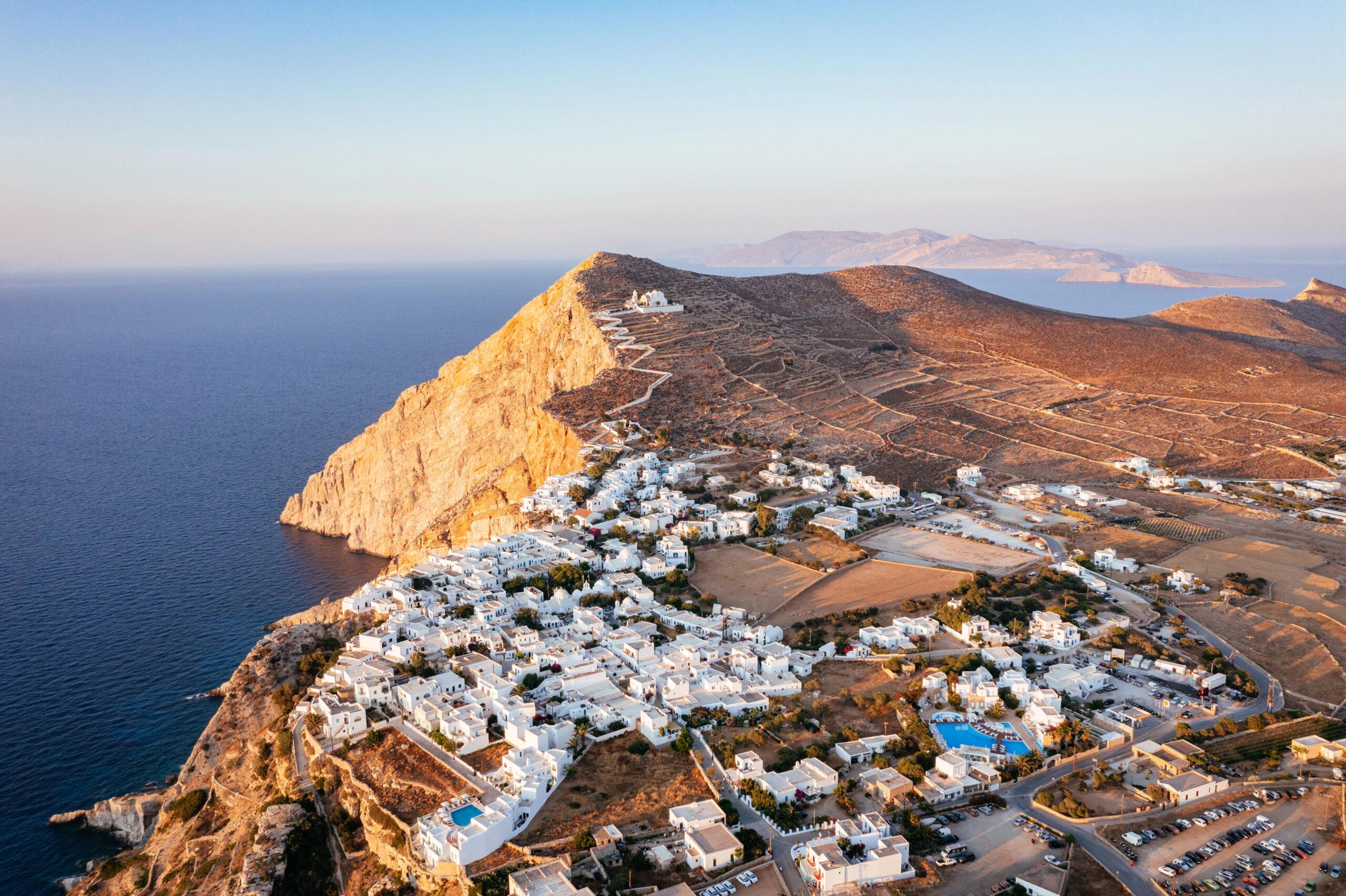
It’s not all tourist crowds, though – there are also some lovely smaller islands to add to your itinerary (including my personal favourite, Folegandros).
If you’re looking for those sugarcube villages and blue-domed churches, choose the Cyclades for your island-hopping holiday.
The Sporades
The four inhabited islands of the Sporades – Skiathos, Skopelos, Alonissos and Skyros – nestle in the north-east of the Aegean Sea, not too far from the Greek mainland.
These islands are much greener than the Cyclades. Instead of dramatic rocky landscapes, you’ll find pine forests and cypress woods leading down to picturesque coves and bays (some you might recognise from the film Mamma Mia, which was shot on Skopelos and Skiathos).
Skiathos is busy and cosmopolitan, while the other three move at a slower pace.

The Ionian Islands
The Ionians are also very green and offer some fantastic hiking through hilly interiors. Beaches here are glorious, often backed by sheer cliffs or lush greenery.
There’s a lot of Italian influence in the architecture here, so you’ll often find Venetian mansions and townhouses, rather than the whitewashed boxes of the Cyclades.
International flights land on Corfu, Zakynthos and Kefalonia; hop on a ferry for lovely, lesser-visited locations such as the small islands of Paxos and Ithaca.
The Saronic Islands
These islands, also known as the Argo-Saronic Islands, are the easiest to reach from Athens and therefore popular with Greeks.
Spetses is very chic (you’ll notice plenty of fancy yachts and spectacular Venetian-style mansions); Hydra is a car-free idyll that’s drawn in artists and poets for decades (including, most famously, Leonard Cohen); Poros is green with some fantastic sandy beaches; Aegina is home to the ancient Temple of Aphaia; and little Agistri is a relatively undiscovered gem offering great value and an authentic Greek atmosphere.
The Dodecanese
These islands are scattered along the Turkish coast (you can even day trip to Turkey from some islands).
History lovers are in for a treat here – highlights include UNESCO-listed Rhodes Town, the Acropolis of Lindos, Leros’ Crusader castles and Patmos, where St John was said to have written the Book of Revelation.
Rhodes and Kos are busy package-holiday destinations, but it’s relatively easy to set sail from either of them and discover far-flung gems like Astypalea and Kastellorizo.
The North Aegean Islands
These islands don’t get anywhere near as much attention as the Cyclades or Dodecanese, so they’re perfect if you’re looking for a quieter, more authentic Greece.
There’s hiking, history, sandy beaches, characterful towns with traditional tavernas – what more could you want?!
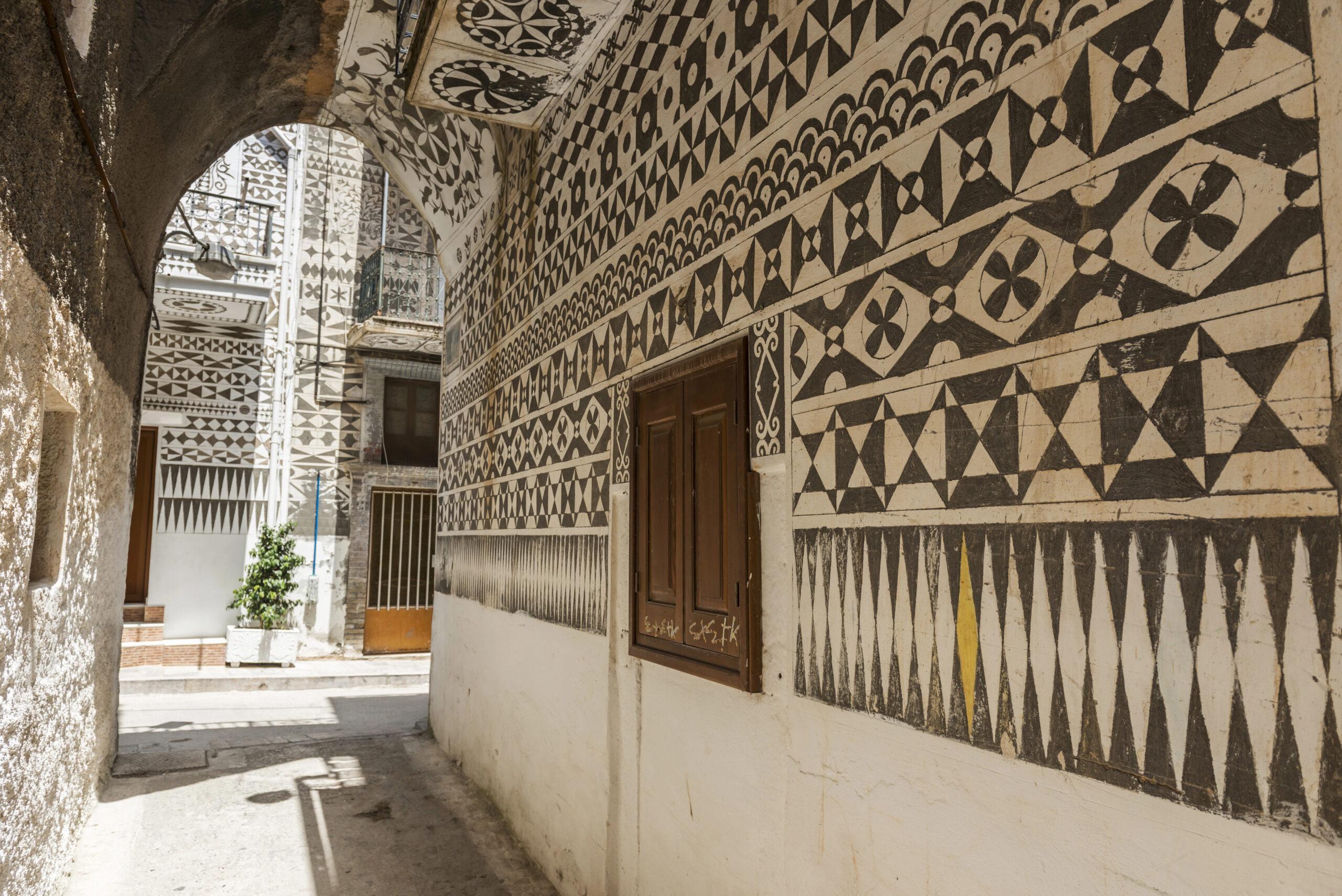
The best-known islands in this group include Chios (try mastic sweets, made from sticky local tree resin, and don’t miss a visit to the black-and-white village of Pyrgi, where houses are painted in intricate monochrome designs), Ikaria (a designated ‘blue zone’ and rich in Greek mythology) and Samos, birthplace of Pythagoras.
When to go to the Greek Islands
The best time of year to visit the Greek Islands is between Easter and October. While the winter months can be blissfully crowd-free, many tourist resorts close down, and ferries routes are reduced.
April, May and October are lovely for sightseeing and hiking, but can be a bit chilly for beach days. June and September are ideal – warm but not too hot, less crowded than high season summer and the meltemi winds aren’t as strong as they are in July/August. The peak summer season (mid-July until the end of August) is busy, but a great time to explore some of the lesser-known islands, which will have a pleasant buzz rather than being unbearably chaotic (looking at you, Santorini).
A note on those meltemi winds: they can be incredibly strong. Strong enough to cancel ferries, strong enough to prevent you sitting on the beach or on taverna terraces – it doesn’t tend to blow super-strong for too long, but when it does it can be a bit of a shock if you’re not prepared.
Getting to Greece and between islands
Most travellers arrive through Athens International Airport, which has direct flights from major cities worldwide. During the summer months (May-October), you’ll also find direct flights to several Greek islands, including Santorini, Mykonos, Rhodes, Kos, Corfu and Crete.
Domestic flights connect Athens with most major islands and are the best way to travel between distant island groups. Popular routes include Athens to Santorini (45 minutes), Mykonos (35 minutes) and Rhodes (1 hour).
The extensive ferry network remains the best way to experience island hopping. Main mainland ferry ports include Piraeus (serving most island groups), Rafina (Cyclades), Volos (Sporades) and Patras (Ionian Islands). Arrive at least 30 minutes before departure, as boarding can be chaotic during the summer months.
Island highlights by group
Cyclades: The best things to do include exploring ancient ruins, lounging on beautiful beaches with crystal-clear waters, and watching Santorini’s famous sunsets. The most popular islands offer vibrant nightlife, while smaller islands have charming cobblestone streets and traditional tavernas serving fresh fish.
Sporades: Pine forests meet beautiful beaches and turquoise waters. The best places include quiet coves for swimming and Mamma Mia filming locations. Fewer tourists means more authentic experiences and better prices.
Ionian: The best way to explore is by boat between green islands with dramatic cliffs. Beautiful beaches, Venetian towns with cobblestone streets, excellent hiking and some of Greece’s finest fresh fish restaurants.
Saronic: Easy Athens day trips featuring ancient ruins, car-free islands, beautiful beaches and authentic tavernas. The best places for weekend breaks from Athens, you’ll discover turquoise waters and traditional island life.
Organise your ferry tickets
When it comes to island-hopping in Greece, travelling between each island is half the adventure. The extensive ferry network here makes things remarkably straightforward once you know the basics.
How (and where) to book tickets
While you can organise ferries as you go, you need to have a very flexible approach, especially during the summer months when many services along the more popular routes sell out in advance. Quieter routes and shoulder season travel offer more flexibility.
Booking online is so easy to do (I’ve booked several multi-island journeys online), or you can book tickets at ferry operator kiosks – usually at or close to ports – a couple of days ahead. There are a number of websites you can use, which will easily tell you details of timings, sailing durations and prices. I’d recommend Ferries.gr, FerryHopper or Ferry Scanner.
Which ferry to choose
Not all ferries are created equal – before you book, decide if you want to go for a large ferry or a high-speed option (usually a catamaran or hydrofoil).
Conventional ferries
Conventional ferries are large vessels carrying both passengers and vehicles. They’re slower, cheaper and (in my opinion) offer a much more pleasant experience.
There are comfy seating areas, often TVs, cafes and – best of all – you can go and sit up on deck. Feeling the sea breeze as you sit in the sun and watch islands pass by is one of the loveliest parts of island-hopping in Greece. For overnight crossings, private cabins are available.
The bigger ferries are much sturdier than the high-speed boats (ideal if you’re prone to seasickness) and less likely to be disrupted by high winds or bad weather.
High-speed ferries
High-speed options tend to be more expensive, but they’ll cut your journey time significantly. Be prepared for delays or cancellations in high summer (I’ve taken a fair few high-speed ferries and not one has been on time), and bring seasickness remedies if you think you’ll need it (I’ve used acupressure bands before, which have been pretty effective). Seating on these ships tends to be rows of seats, airline-style, so there’s not really much chance to wander around – and not much chance to go up on deck.
How early do I get to the ferry port
Give yourself plenty of time, as you’ll need to be ready to board as soon as the ferries arrives – often they’ll have a very tight turnaround. In Santorini, the road down to the port can get very congested, so give yourself more time than you think you’ll need – there are plenty of cafes down at the port to grab a coffee at while you wait.
Be prepared for some chaos once your ferry comes in; there’ll be a lot of people trying to get on at once, and with suitcases, cargo and shouting staff, it can all feel a bit overwhelming. Make sure you’ve got your tickets to hand or download e-tickets in advance.
Should I book a ferry for the same day as my flight?
If you can avoid doing this, I would – you just never know if you’re going to end up on a delayed flight (therefore missing your ferry) or a delayed ferry (therefore missing your flight). If you do plan on booking both for the same day, give yourself as much time as possible just in case.
How many islands should I visit?
Less is often more. It’s tempting to cram in as many islands as possible, but you’ll have a far better time if you slow down and really explore two or three rather than rushing through five. A week comfortably allows for two islands; ten days to two weeks opens up three or four. Factor in travel time between islands (some crossings take several hours) and leave space for spontaneity. You can always come back! Below you’ll find a handful of suggested Greek island-hopping routes to inspire your trip.
Suggested itineraries and durations
Although half the fun of island-hopping is choosing your islands, sometimes it’s nice to have a bit of steer beforehand. So with that in mind, we’ve picked out a selection of island combinations that’ll show you some of the best Greece has to offer.
 Santorini – Milos – Folegandros – Santorini
I’ve travelled this exact route and would 100% recommend it as a first-time Greek island hopping itinerary. 14 days is a great length, but you could shorten it if time is tight. It’s the perfect balance of busy and quiet, traditional and touristy – and it’s really easy to do.
You begin and end in Santorini, so there are plenty of international flight options. Staying a few nights at either end of the trip gives you the opportunity to spend time in two different parts of the island.
I’d recommend a few nights in one of the resorts along the caldera, such as Fira, Firostefani or Oia. They’re busy but beautiful – you can’t beat the views over the water, especially at sunset. Then you can spend your second stay here in one of the quieter villages (Pyrgos is lovely) or one of the beach resorts.
From Santorini, it’s a couple of hours on the fast ferry to your next destination: Milos. Here, you’ve got the amazing lunar-like landscape of Sarakiniko Beach, lots of gorgeous hidden coves and caves to explore, and a handful of incredibly photogenic fishing villages (Klima at sunset was a particular favourite of mine; also Mandrakia, which is an easy walk along the cliffs from Sarakiniko).
Finally, it’s on to Folegandros. I wrote a guide to this underrated Greek island here – as you’ll be able to tell, I absolutely loved it. Warm evenings dining al fresco in Chora (the main town), days spent on quiet beaches, incredible sunsets from the bar at Anemomilos… heaven.
Suggested duration: 14 nights
3 nights Santorini; 4 nights Milos; 4 nights Folegandros; 3 nights Santorini
 Mykonos – Paros (+ Antiparos) – Naxos
If you’re looking for a family holiday that pleases parents as well as little ones, this route is ideal.
In Mykonos, enjoy an early-morning stroll around the cobbled streets of Mykonos Town and Little Venice (chaotic later in the day, but blissfully quiet when the partygoers are still sleeping), and an afternoon at one of the island’s lovely sandy beaches.
I first visited Paros almost 10 years ago and loved it – it’s one of my favourite islands. It’s changed a lot since then, and since being named the World’s Best Island by Travel + Leisure in 2025, it’s seen a huge influx of visitors. It doesn’t change the fact that it’s a beautiful place to visit – you’ll just see a few more pricey boutiques and high-end restaurants than before.
Naoussa is a must-visit, with its picturesque port and buzzing al fresco restaurants serving up fresh fish. And if you can hire a car, head into the hills to some of the quieter villages. A day trip to Antiparos is easy, too – the sandy beaches will please spade-toting little ones.
Finish up on Naxos island, where you’ll find some of the most gorgeous beaches in the Cyclades (plus a lovely island capital). Again, save time to explore the sleepier inland villages for a taste of a more authentic Greece. You can book domestic flights to Athens from Naxos or ferry back to Mykonos for more international options.
Suggested duration: 8 nights
2 nights Mykonos; 3 nights Paros; 3 nights Naxos
 Skiathos – Skopelos (+ Alonissos)
These three Sporades islands complement each other perfectly. Skiathos is lively, with plenty of shops, bars and restaurants in its capital, Skiathos Town; Alonissos is quiet and slow-paced; Skopelos sits somewhere in the middle.
I’ve suggested staying only on Skiathos and Skopelos, as Alonissos is an easy day trip from Skopelos. Fly into Skiathos and head straight over to Skopelos. Spend a few days exploring charming Skopelos Town, roaming between pebbled coves and seeking out scene-stealing locations from Mamma Mia.
From here, it’s a short ferry over to Alonissos, where you can spend the day hiking through pine forests or snorkelling around the island (the waters are a designated marine reserve).
End your island-hopping adventure in Skiathos. Stay close to the capital for nightlife and shopping, or along the coast next to one of the pin-up sandy beaches (Koukounaries is the most famous, and rightly so – expect it to be busy, though).
Suggested duration: 10 nights
5 nights Skiathos; 5 nights Skopelos
 Corfu – Paxos – Lefkada
Cultural Corfu makes a great starting point for this one. Admire Corfu Town’s Venetian architecture and Parisian-style arcades, then seek out the villas and beachside spots made famous by author Lawrence Durrell, who wrote a number of books about the island.
An hour or so is all it takes to reach Paxos, a tranquil middle point. Measuring up at just seven miles by three, it’s easy to explore this glorious island’s pebbled coves, waterside villages and pine forests. Don’t miss the picturesque ports of Loggos and Lakka, the dramatic cliffs of Erimitis Beach, or a full day trip to neighbouring Antipaxos (think white-sand beaches and Caribbean-blue waters).
A few hours of sailing brings you to your final island: Lefkada. Here, you’ll find a spectacularly dramatic coastline (the beaches at Porto Katsiki and Egremni are highly recommended), brilliant windsurfing, and a cool café scene in Lefkada Town. A drive across to the mainland takes you to Preveza Airport.
Suggested duration: 9 nights
3 nights Corfu ; 3 nights Paxos; 3 nights Lefkada
Poros – Hydra – Spetses
Just a couple of hours from Athens, these three islands offer an easy-going introduction to Greek island-hopping, with short ferry hops and tons of quintessentially Greek character. I’ve suggested making this Greek island hopping itinerary 10 days, but with so many ferries linking these islands, it’s easy to tailor to suit you.
Start on leafy Poros, separated from the Peloponnese mainland by the narrowest of channels. It’s a gentle, pine-scented island ideal for wandering. Lose yourself in the maze-like streets of Poros Town, swim off quiet pebbly beaches and explore the ruins of the ancient Temple of Poseidon, tucked into the hillside.
A short crossing brings you to Hydra, arguably the most photogenic harbour in the Saronic Gulf. Life moves deliciously slow here – no cars, no motorbikes, no bicycles, just donkeys, water taxis and your own two feet.
Stone mansions rise in an amphitheatre style around the port, a legacy of the wealthy shipowners who once made their home here. Hydra has long been a magnet for the creative set, and that bohemian spirit lingers in the galleries, tavernas and low-lit bars.
Finally, sail on to elegant Spetses, where horse-drawn carriages clip-clop through the car-free town and handsome Venetian mansions line the waterfront. Beyond the town, beautiful beaches (Agia Paraskevi is best known) offer up toffee-coloured sand and turquoise shallows.
Suggested duration: 9 nights
3 nights Poros; 3 nights Hydra; 3 nights Spetses
Only got a week to spare?
If you’re looking for a Greek island hopping itinerary for 7 days, I’d suggest focusing on just two islands. Moving between three over just a week is a lot of packing, unpacking and travelling – sticking to two locations gives you more time to enjoy Greece. Easy pairings include Santorini and Folegandros, Mykonos and Paros (this was actually the very first island-hopping holiday I took!), Corfu and Paxos, and Rhodes and Symi.
Best time to visit: Month by month
April-May: Lovely weather for sightseeing (17-25°C) with the islands in full bloom. Beautiful beaches are quieter and accommodation is affordable, though the sea may be cool for swimming. The best time for exploring ancient ruins and hiking without summer heat. Most facilities open after winter.
June: Summer begins with temperatures of 25-30°C and warm seas (22-24°C). The best time for guaranteed beach weather without peak season crowds. The meltemi winds begin but aren’t yet at their strongest.
July-August: Peak summer months with temperatures of 28-35°C+ and the warmest seas (24-26°C). The most popular islands are very crowded and expensive. Strong meltemi winds can disrupt ferries. Vibrant nightlife is at its peak. Book well ahead.
September-October: One of the best times to visit. Warm weather (20-30°C), the sea at a warm temperature, fewer crowds and lower prices. The best way to enjoy beautiful beaches and crystal-clear waters without the chaos. Ferry services start reducing in late October.
Budget guide
Daily costs:
Budget: €50-80 (hostel, taverna meals, local buses)
Mid-range: €100-180 (comfortable hotel, restaurant meals, occasional taxis)
Luxury: €250+ (boutique hotels, fine dining, private transfers)
Ferry tickets:
€8-25 (short routes), €25-50 (medium), €50-80+ (long routes). High-speed ferries cost 30-50% more
Accommodation:
€30-50 (budget), €80-150 (mid-range), €200+ (luxury) per night. The most popular islands, like Santorini and Mykonos, are significantly more expensive. Book 2-3 months ahead for summer months.
Meals:
Bakery breakfast €3-5, taverna lunch €8-15, dinner with fresh fish €15-30, coffee €2-4. Fresh fish is priced by weight (€40-60/kilo) – ask prices first.
Money-saving tips: Travel in shoulder season (April-May, September-October), book ferries in advance, stay in less popular islands, self-cater some meals, use local buses, and visit ancient ruins early (some offer free entry days).
When to book hotels
During peak season (July and August), booking accommodation a few days to a week ahead is sensible, particularly for popular islands like Santorini and Mykonos. In shoulder season, you’ll have more flexibility and can often find rooms on arrival. That said, I find that booking ahead takes so much of the stress out of the trip and really helps with budgeting.
What to pack for a Greek island-hopping holiday
Travel light and practical – you’re going to need to lug that bag on and off ferries, after all. Bring layers (especially if you’re expecting the meltemi winds, they can be so much colder than you’d think!), a decent sun hat, and plenty of sunscreen. Sturdy sandals or comfortable shoes are great for cobblestone streets and rocky coastal paths; pack trainers if you’re planning to do some hiking.
I always travel with a light jacket (mainly because it tends to be cold when I leave the UK), but it does come in handy for breezy evenings, ferry crossings and air-conditioned airports. Lightweight or quick-dry towels are essential for the beach and don’t take up too much room in your case. And don’t forget to take sea sickness remedies or medication if you think you’ll need it.
Frequently asked questions
How much does Greek island hopping cost?
A Greek island hopping itinerary typically costs €70-150 per person per day for mid-range travel. Budget travellers can manage on €50-80 per day, while luxury travellers should budget €250+. The most popular islands are more expensive. Total costs depend on which islands, season, and your accommodation choices.
What’s the best time for Greek island hopping?
The best time to visit is May-June and September-October for warm weather, pleasant seas, fewer crowds and better prices. July-August offer guaranteed beach weather, but expect crowds and higher costs. April and October are good for sightseeing, but may be too cool for swimming.
How many islands should I visit?
For a week, focus on two islands. For 10 days, visit three islands. For two weeks, explore three to four islands. The best way to enjoy island hopping is to spend several days on each island rather than rushing through many.
Do I need to book ferries in advance?
During the summer months (June-August), book popular routes 1-7 days ahead. The most popular islands, like Santorini and Mykonos, need advance booking. Shoulder season offers more flexibility. Book online through Ferries.gr, FerryHopper or Ferry Scanner.
Which Greek islands are closest together?
The Cyclades islands (Santorini, Paros, Naxos, Mykonos) are within 1-3 hours of each other. The Saronic Islands (Hydra, Poros, Spetses) are 30 minutes to 2 hours apart. The Sporades (Skiathos, Skopelos) are also closely connected.
What’s the best Greek island for first-timers?
Santorini offers iconic villages, beautiful beaches, ancient ruins and spectacular sunsets with excellent infrastructure. However, it’s expensive and crowded during summer months. Alternatives include Paros (more authentic, less crowded) or Naxos (great beaches, diverse landscapes).
Final tips
The best way to maximise your time is to stick to one island group rather than mixing groups. Build buffer days between ferries and flights – the meltemi winds during the summer months can cause delays. Mix the most popular islands with quieter alternatives for the best experience. Download offline maps for each island. Ask locals for recommendations on tavernas serving fresh fish, quieter beautiful beaches, and hidden spots. Embrace flexibility – if you love an island, extend your stay. The most memorable experiences often come from unplanned moments.
This guide covers everything you need for an unforgettable Greek island-hopping itinerary. From the most popular islands of the Cyclades to peaceful Sporades coves, from ancient ruins to beautiful beaches with crystal-clear turquoise waters, Greece offers diverse experiences. Whether planning a 7 day, 10 day or 14 day Greek island hopping itinerary, the best way to experience these islands is moving slowly and leaving room for spontaneity.
From sampling fresh fish at harbourside tavernas to exploring cobblestone streets, from ancient ruins to turquoise waters – your Greek island adventure awaits.