Last Updated on 15/10/2026 by Ting Dalton
Fantastic beaches aren’t the only reason to holiday on the Costa Brava. There are some beautiful towns and villages to explore too. Many have medieval origins, so you can expect plenty in the way of narrow cobbled streets, old stone buildings and shady squares.
On our family holiday to the Costa Brava, we were keen to explore, but mindful that our two-year-old and four-year-old have fairly low boredom thresholds. Luckily, all the places listed here are fairly compact, so you can see the highlights – and stop for lunch/coffee/ice cream – in a morning, then skip off to the coast for the rest of the day (read my best beaches in Costa Brava post for recommendations). Read on to discover the best towns to visit in Costa Brava.
At a glance
The five prettiest towns to visit in Costa Brava are Begur, Peratallada, Pals, Cadaqués and Calella de Palafrugell. All are easy with young kids, and each one pairs with a beach afternoon nearby.
- Good for: families who want medieval towns you can see in a morning, then swap for the coast
- Time needed: around half a day per town, plus a nearby cove
- Getting around: hire a car, and arrive before lunch for the easiest parking
- Best time to go: late June for warm but manageable heat and quieter streets, spring or autumn for exploring
- Where to base yourself: Calella de Palafrugell for beaches, Palafrugell for an inland base, Tossa de Mar for family amenities
Begur

The town of Begur sits on a hilltop just a couple of kilometres from the coast. It’s crowned by a ruined medieval castle, which you can walk up to from the town centre (steep, but manageable with little ones). The panoramic views from the castle ruins at the top are sensational – just be aware that it can be very windy, so keep a firm grip on sunhats.
Back in the town itself, there aren’t loads of sights to see (though I would recommend a peek inside Sant Pere Church on the Plaça de L’Esglesia). Instead, the joy is simply in walking around and ducking into whichever bar or boutique you like the look of. What we loved most is that it felt like a town that’s actually lived in, rather than somewhere completely focused on tourism. Menus were mostly in Spanish (thank God for Google translate), the bakery was chock-full of locals picking up their usual, and kids in their Sunday best ran around the square beneath colourful festival flags.
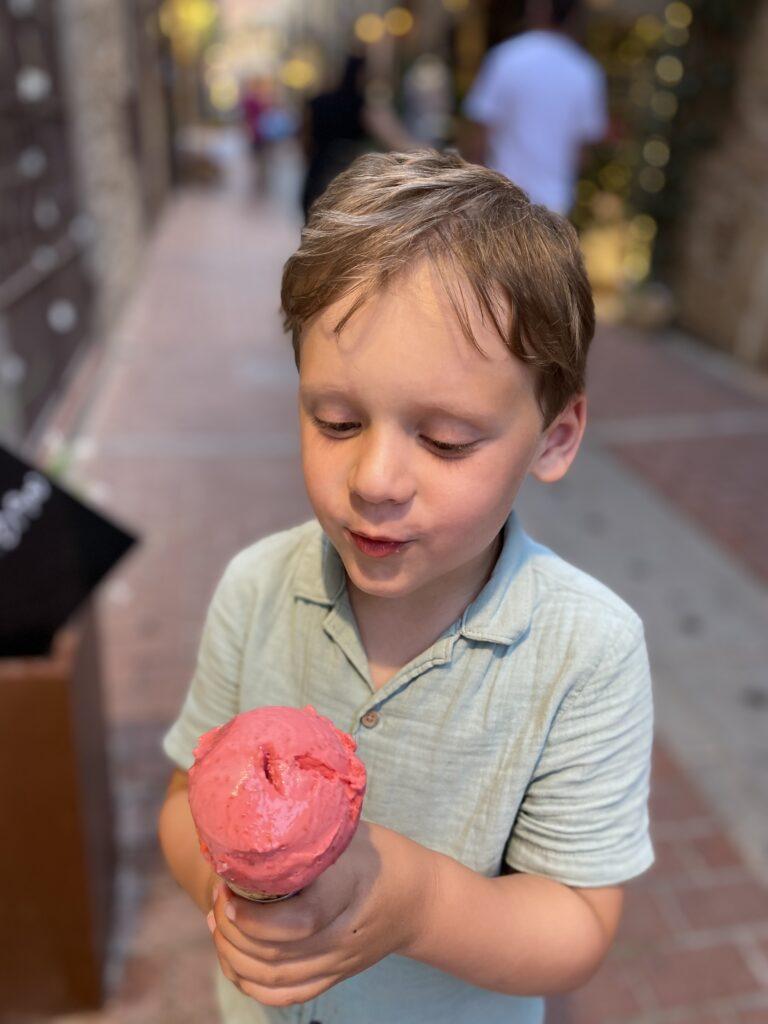
We loved Cal-los for a pre-dinner wine and a few tapas dishes – pull up a bar stool at one of the street-side tables for great people-watching. We also had a brilliant meal at Merci, a quirky restaurant that we stumbled across completely by accident. The entrance on the cobbled Carrer Pi i Rallo is small and unassuming, but once you step downstairs you’re welcomed into a neon-tropical wonderland of funky artwork, Asian-inspired tapas and gorgeous pottery that I was desperate to sneak into my handbag. The kids loved it, and so did we.
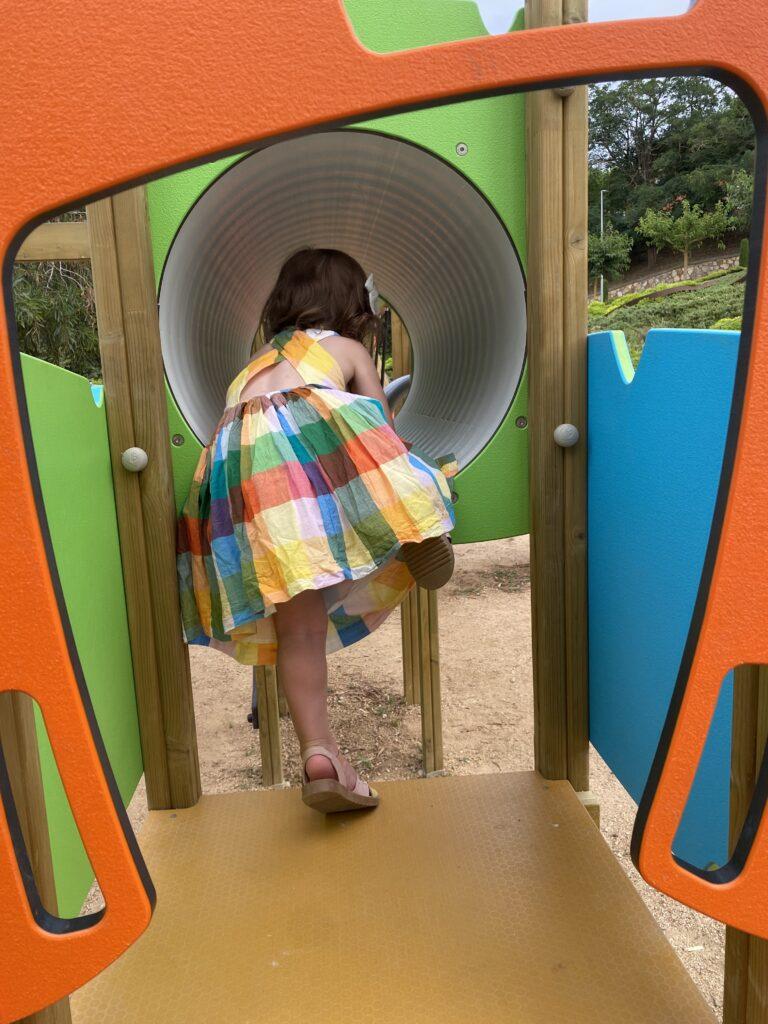
On the edge of the town centre there’s a brilliant park with a playground (climbing frames, slides, sandpit with diggers, zip wire and – most importantly – a cafe for the parents). A great spot to let the kids burn off some energy before dinner.
Peratallada
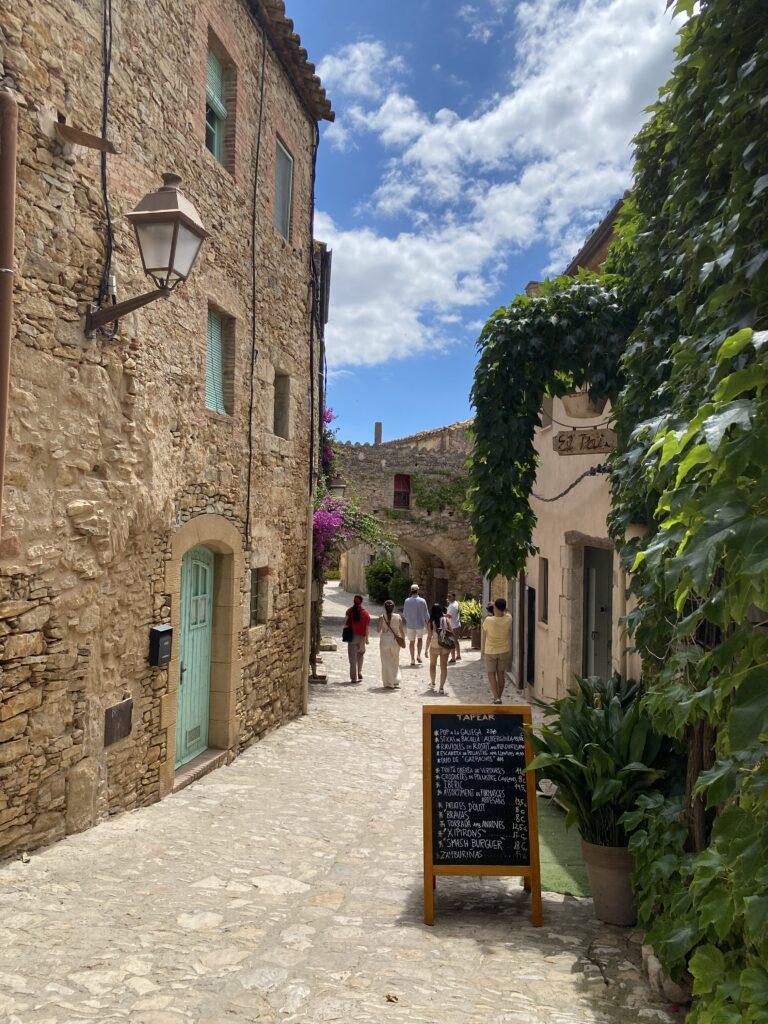
Peratallada is the loveliest little medieval village and possibly my favourite of all the Costa Brava towns we visited on our trip. The village spreads out from a centuries-old castle and tower. It’s enclosed by fortified medieval walls, with plenty of cobblestone alleys and atmospheric squares to discover.
We wandered for a while, enjoying the quiet streets (and swatting the ever-present flies), then pitched up in the main plaza (Placa de les Voltes) – the perfect place for lunch. I loved the traditional style of the buildings here, with their wrought-iron balconies and chunky stone walls (Peratallada is built upon a huge rock, and much of the village was constructed using rock hewn from the moat). Every balcony seemed to be overflowing with flowers, too, which was lovely. All around the edges are numerous restaurants, cafes and an ice-cream parlour – a must for pudding!
As a bonus, just outside the old quarter was a park with a playground – perfect for the kids to run around and let off some steam before we hopped back in the car (a little tip – there’s a beautiful Romanesque church next to the car park on the north side of the village, worth visiting if you have time).
Pals
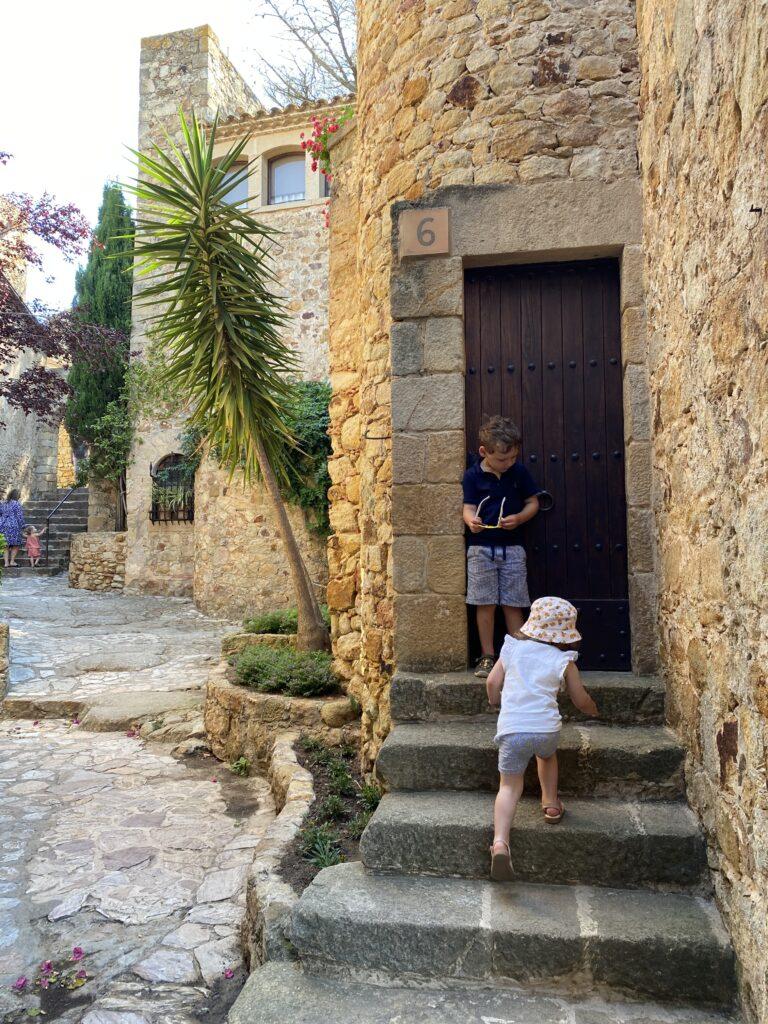
The charming medieval town of Pals sits high on a hill, with spectacular views over the countryside and rice fields where the famous arroz de Pals (Pals rice) is grown. It’s built around the remains of a big castle complex, so you’ll find plenty of arrow-slit windows, labyrinthine alleys and ramparts – the kids loved playing kings, queens and pirates as we walked around.
There are lots of fantastic little boutiques in the town centre selling pottery, basket bags, hand-woven textiles and all the usual postcards and souvenirs. If you’re after something a bit more ‘special’, we did clock a couple of workshops where artists were creating the most beautiful metal sculptures – well worth a look if the doors are open.
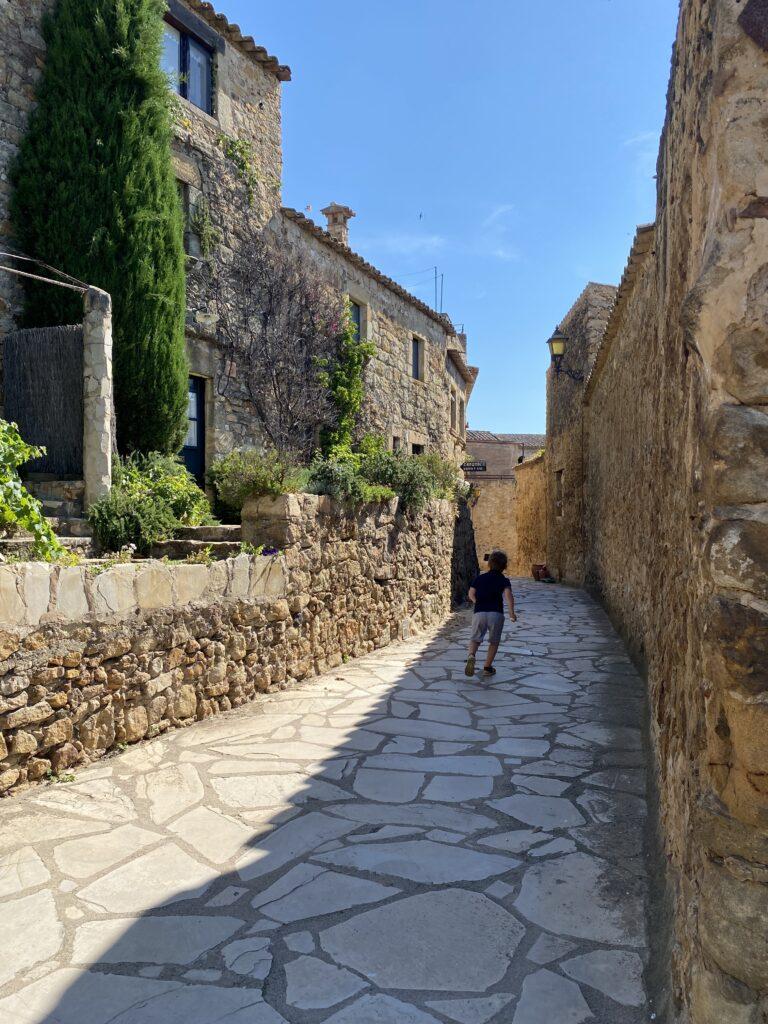
There’s a big open square with a couple of cafes for drinks, lunch or ice-cream, plus a couple of restaurants. It doesn’t take too long to walk around the old quarter, though, so it’s an ideal spot to squeeze into a morning jaunt before you road trip to one of the coastal towns.
There’s a big car park at the bottom of the old town. A little tourist train leaves from here and takes you around the main sights – ideal for tired little legs!
Cadaqués
Spoiler alert: we didn’t actually make it to Cadaqués on our most recent visit to the Costa Brava, but it’s such a lovely place, I couldn’t leave it out. The old quarter is a protected historical area and is bursting with charm – think narrow streets, blindingly whitewashed houses and painted wooden shutters adding a dash of colour.
Mooch through the lanes down to the harbour (also incredibly pretty), then find a spot in the sunshine to sip a sangria/slurp an ice-cream and take in the views. The main beach is a mix of sand and pebbles, with crystal clear waters – it gets busy, but it’s got a nice family-friendly feel to it.
Cadaqués has inspired a whole host of artists, from Picasso to Salvador Dali (who lived just along the coast – his house and studio are now a museum), and once you’re here you’ll understand why!
Calella de Palafrugell
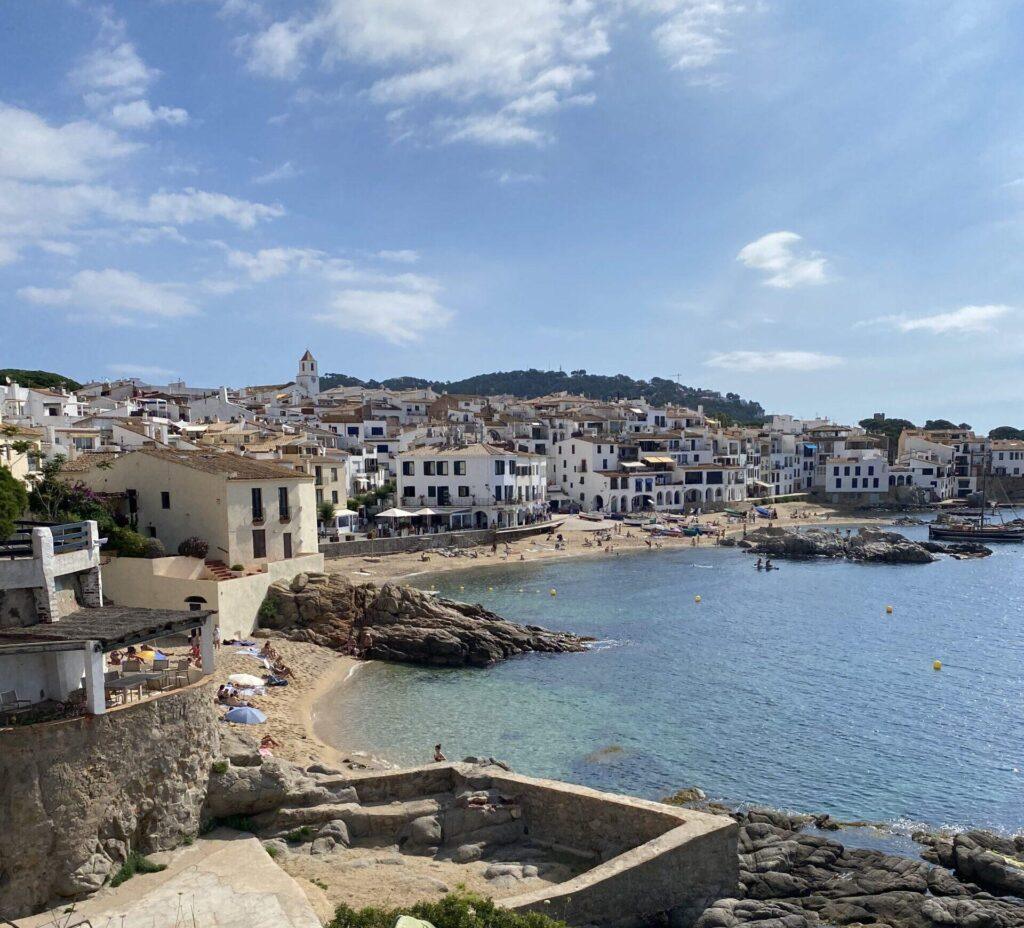
Calella de Palafrugell was one of my favourite beach towns (you can read more in my best Costa Brava beaches post), but there’s a lot more to it than just the beaches.
There’s a lot of traditional charm to it, from the old fisherman’s houses to the grand villas lining the leafy streets further back from the water. The narrow streets do get steep in places, but it’s very do-able with buggies or little ones with easily tired legs. (The numerous ice-cream parlours and cafes also help!)
You have the wonderful walking route north to Llafranc (another of my top beaches), while just to the south is the famous Cap Roig botanical garden, one of the most beautiful gardens I’ve ever visited (and with sea views to die for). The gardens are laid out in different sections, which weave seamlessly into one another, almost feeling like little ‘rooms’. It’s a short drive or you can walk from the town (just be prepared for the hills).
Getting around
We hired a car for our trip and found it incredibly easy to get around. Roads were well signposted and in good condition (with the exception of a single lane dirt track our sat nav mistakenly took us down, but the less said about that the better), and it was easy to find parking in each of the towns (I’d recommend visiting in the mornings, as car parks were often starting to fill up by lunchtime).
A few key questions about visiting the Costa Brava
Do I need a rental car for the Costa Brava?
We found it very helpful to have the flexibility of our own car. Driving was easy and there was usually plenty of parking. There were some buses available, but for ease I’d definitely recommend hiring a car if you want to explore some of the medieval villages and beautiful beaches in the area.
When is the best time to visit the Costa Brava?
For sunshine and sandy beaches, the summer months are best. We visited in late June this time and found it ideal for younger kids – temperatures were in the very manageable mid-20s and the beaches and towns weren’t too crowded (aside from the bank holiday weekend!). We flew from Bournemouth with Ryanair and the flights were a steal compared to other destinations we’d been thinking about (looking at you here, Majorca).
If you’re more into exploring and less into sunbathing, spring or autumn would be lovely.
How can I get to the Costa Brava from the UK?
The Costa Brava is right up in Spain’s north-east corner, near the French border. You could fly to Girona or Barcelona (or Perpignan, a short distance over the border) or take the shuttle/ferry over the Channel and drive down through France. You’ll ideally break up the journey with a night or two in a lovely French town. (If you do drive, just be prepared for tolls, traffic jams and squat toilets at service stations.)
Where to stay in Costa Brava?
For families, Lloret de Mar offers the most amenities and family-friendly hotels, though it can feel touristy. Tossa de Mar provides a perfect balance of facilities and Spanish charm with its medieval old town.
For a more authentic experience, Calella de Palafrugell combines beautiful beaches with a traditional fishing village atmosphere, while Cadaqués is ideal for couples seeking romance and artistic heritage.
Palafrugell makes an excellent inland base – it’s a Spanish market town with great restaurants, yet you’re only minutes from the coast. Girona works well if you want to mix cultural exploration with beach visits.
Other Spain guides
The best Costa Brava beaches
Is Seville worth visiting?
Best things to do in Valencia
Alhambra tips for visiting in Granada