Cork handbags, flamenco beats drifting from open doorways, and an Andalucian warmth that pulls you in the moment you arrive. Seville manages to combine deep tradition with a contemporary, effortlessly cool energy – and yes, if you’re wondering whether it’s worth your time, the answer is an unequivocal yes.
I visited with a group of girlfriends for a long weekend in late October, and it was exactly what we needed. The weather was phenomenal – high 20s, scorching sunshine, perfect for wandering the Old Town and ducking into bars to escape the heat. As a huge fan of Andalucía who has been to neighbouring Granada several times, I already knew how special this part of Spain is. But while Granada has the Alhambra, Seville is a sunbaked city full of culture in its own right. It deserves your time.
Here’s everything you need to know before you go.
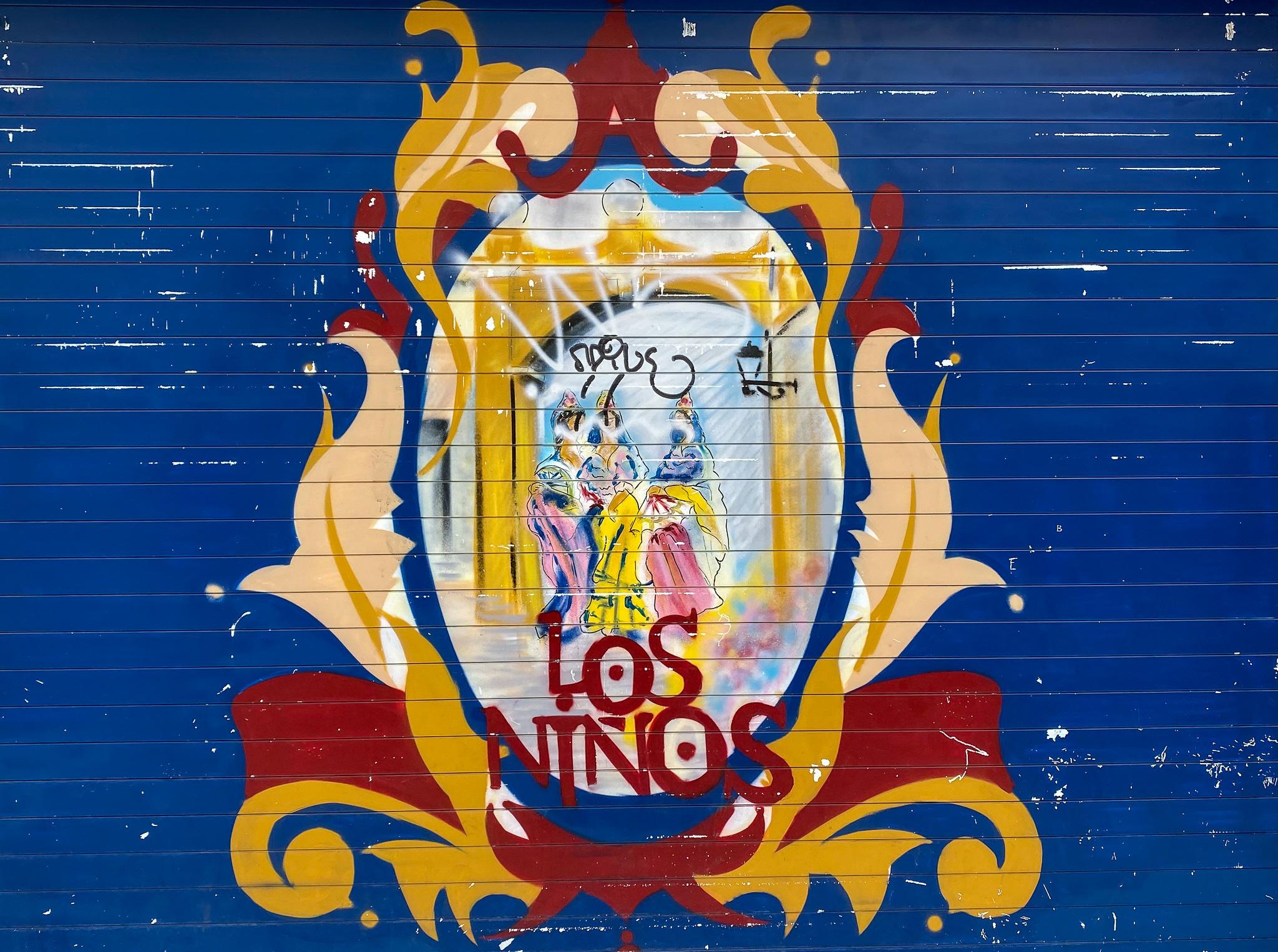
What makes Seville special?
Seville is the capital of Andalucía and the fourth largest city in Spain, but it doesn’t feel like a big city in the overwhelming sense. The historic centre is compact, walkable, and packed with a rich history spanning Moorish, Christian and modern eras – all stacked on top of each other. It has the kind of beauty that sneaks up on you – a tiled courtyard glimpsed through iron gates, a sudden square full of orange trees, a bar that’s been there since 1670.
It’s not just about the sights, either. Seville’s vibrant culture and lively social scene are as much a draw as its historic landmarks. Andalucians are famously warm and sociable, and there’s a sense that life here is meant to be enjoyed at full volume. If you want a city that gets under your skin, this is it.
Seville’s big sights
Seville’s architectural marvels are among the finest in Spain. Whether it’s your first time or a return visit, these are the ones that matter most.
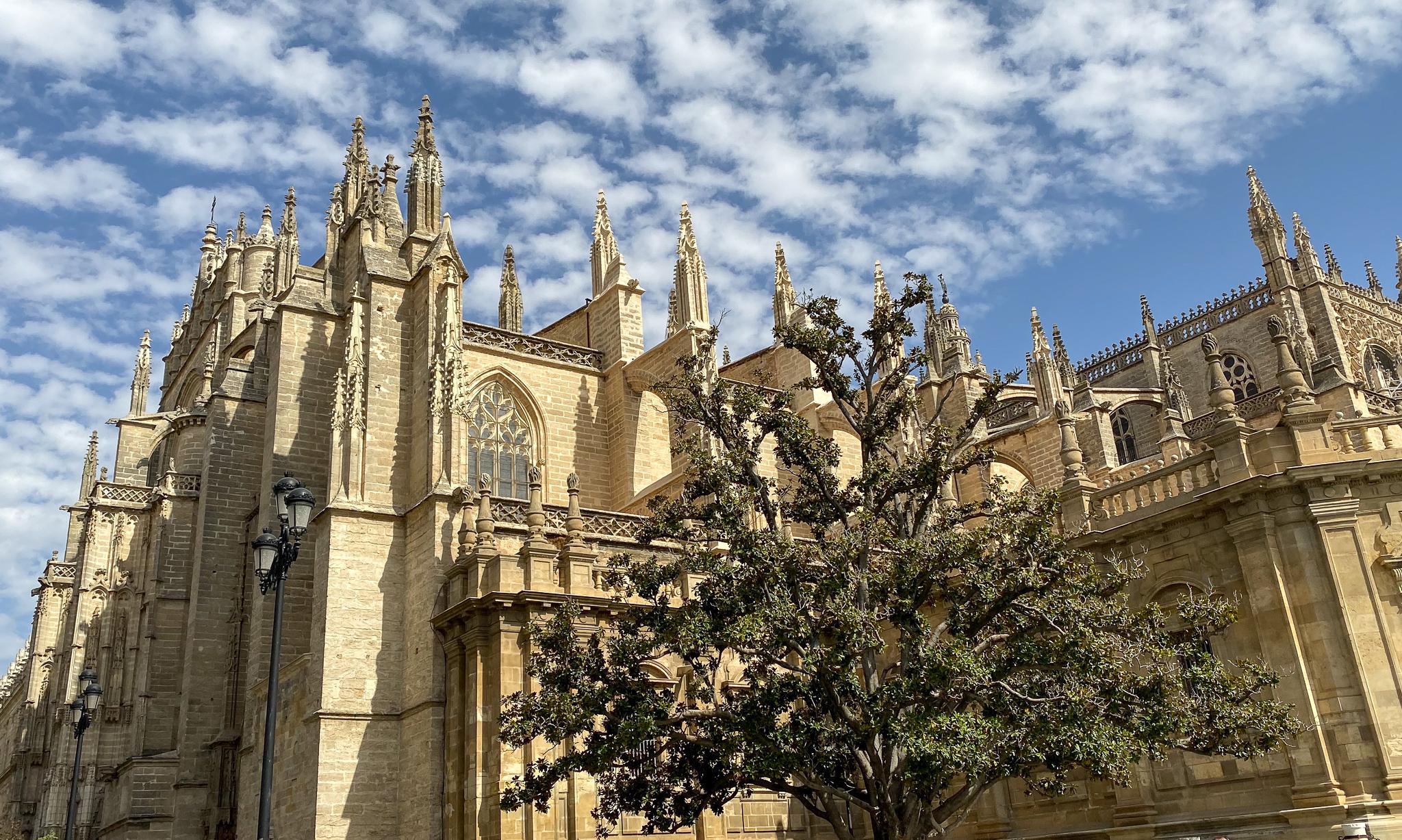
Seville Cathedral and La Giralda
There is no gentle way to prepare you for the scale of Seville Cathedral – the Catedral de Sevilla. It is the largest Gothic cathedral in the world and one of the largest churches on the planet – and was declared a UNESCO World Heritage Site in 1987 alongside the Real Alcázar and the Archivo General de Indias.
Construction began in 1401 on the site of a former Almohad mosque, and the builders were famously ambitious: according to legend, they declared they would build “a church so beautiful and so grand that those who see it finished will take us for mad.” They weren’t wrong. The interior is vast and cathedral-dark, with an altarpiece that stretches 20 metres high, and the tomb of Christopher Columbus resting near the entrance.
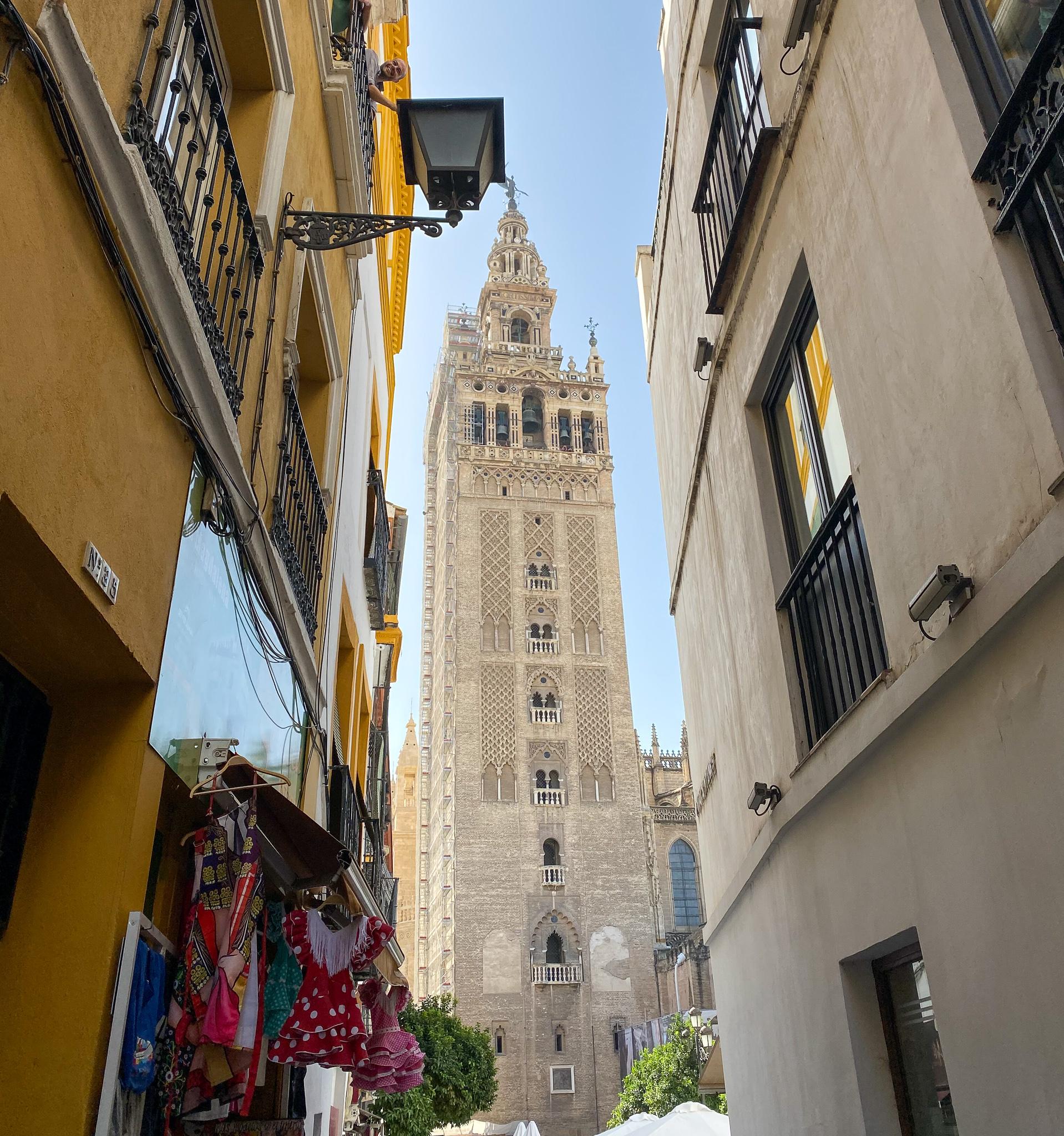
La Giralda – the bell tower that has become the symbol of Seville – was originally the minaret of the mosque that stood on this site, completed in 1198. It now rises to 104 metres, and the ramp to the top (designed for horses) leads to panoramic views over the rooftops of the city. Book tickets in advance – queues can be long, especially in peak season.
Real Alcázar
If the Cathedral is the city’s most impressive sight, the Real Alcázar is arguably its most beautiful. Also part of the UNESCO World Heritage complex, it began as a 10th-century Islamic fortress and has been expanded by successive rulers ever since. The result is a layering of Mudéjar, Gothic, Renaissance and Baroque styles that somehow works perfectly.
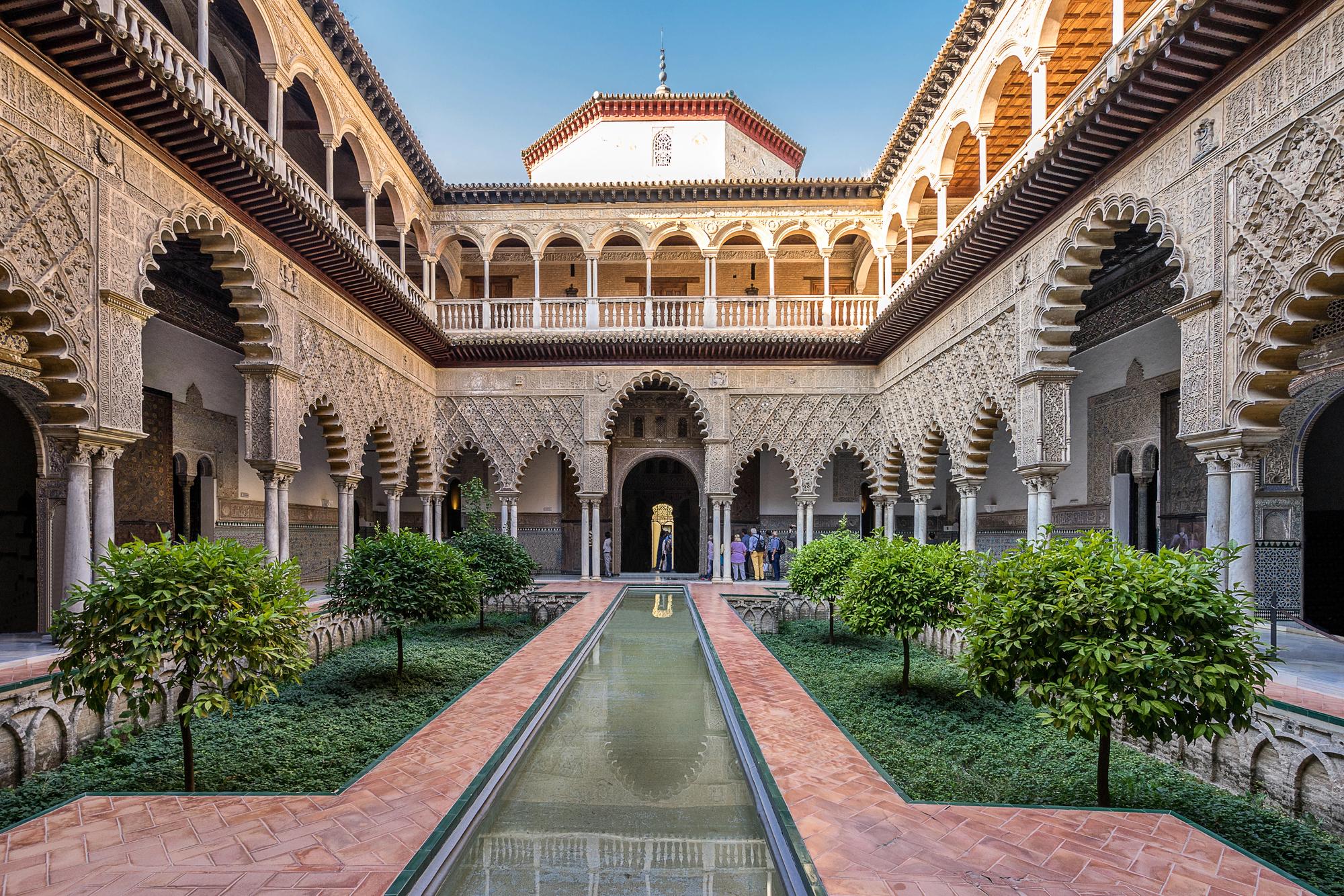
The Mudéjar rooms are the standout – intricate tilework, carved stucco ceilings, and arched doorways that lead from one courtyard to the next. The lush gardens are equally worth exploring: a maze of fountains, hedges and orange trees that seem to go on forever in the afternoon heat. It is said to be the oldest royal palace still in use in Europe, and the Spanish royal family still uses the upper floors as their official Seville residence. Book tickets well ahead – this one sells out. And expect crowds – choose early slots or early evening slots for fewer people.
The third building in the UNESCO complex is the Archivo General de Indias, a beautiful 16th-century merchant exchange that sits directly between the Cathedral and Alcázar and is free to enter. Inside are the original documents of the Spanish Empire’s relationship with the Americas – letters from Columbus, Magellan’s charts, and centuries of colonial records. It’s rarely busy and well worth 20 minutes of your time.
Plaza de España
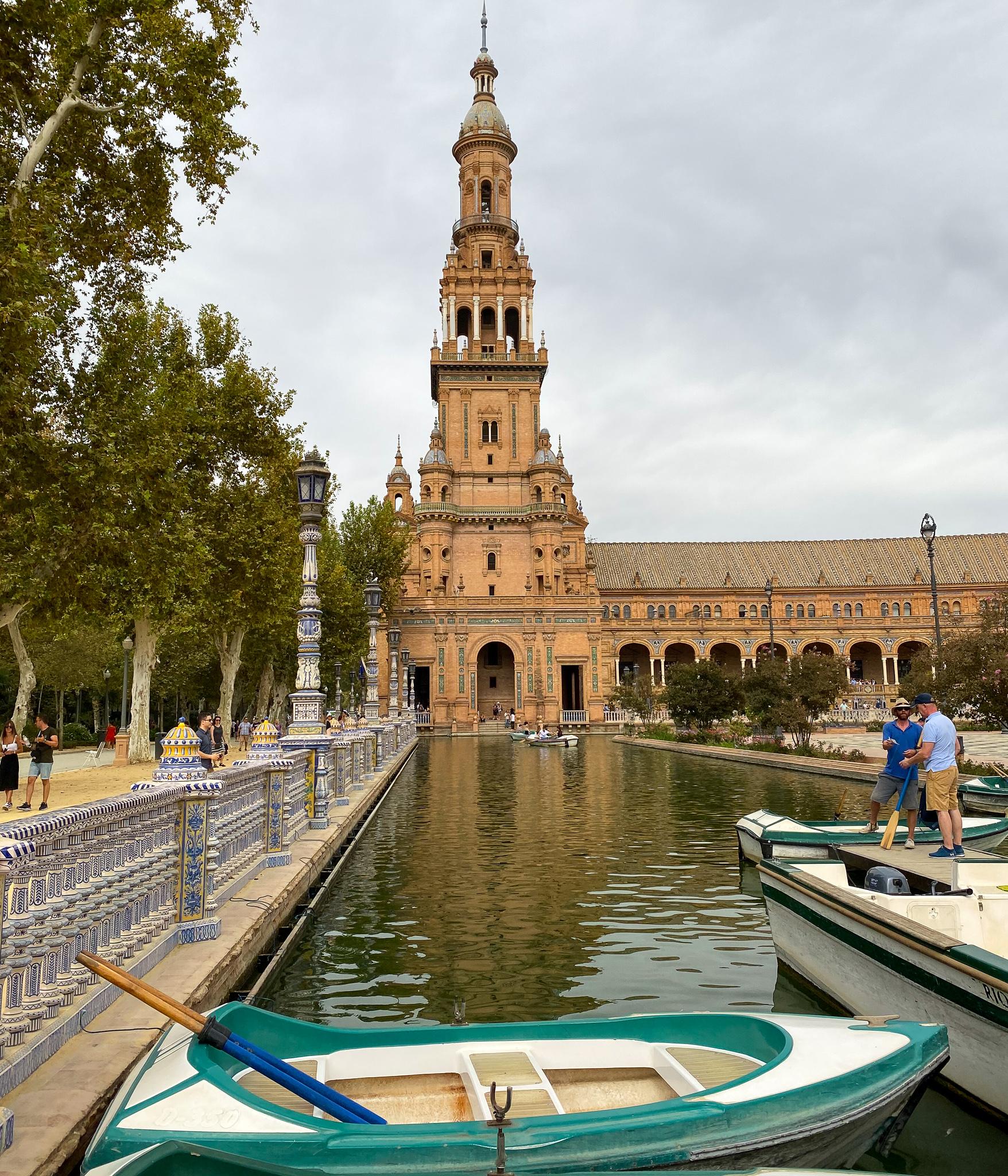
Built for the 1929 Ibero-American Exposition and designed by architect Aníbal González, the Plaza de España sits at the edge of María Luisa Park and is one of the most extraordinary public spaces in Spain. A vast semicircular complex of Renaissance and Moorish Revival architecture wraps around a tiled canal, crossed by four ornate bridges.
Running around the base of the building are 48 alcoves, each dedicated to a different Spanish province and decorated with hand-painted ceramic tiles – the famous azulejos that Seville is known for throughout southern Spain. It sounds like a tourist checklist item, but the reality is that it stops you in your tracks. We spent far longer there than planned, slowly walking the curve of the building and searching for our province tiles. Entry is currently free, though the city council has proposed introducing a tourist fee in the future – worth checking before you visit. You can hire a rowing boat on the canal for a small charge.
Metropol Parasol (Las Setas)
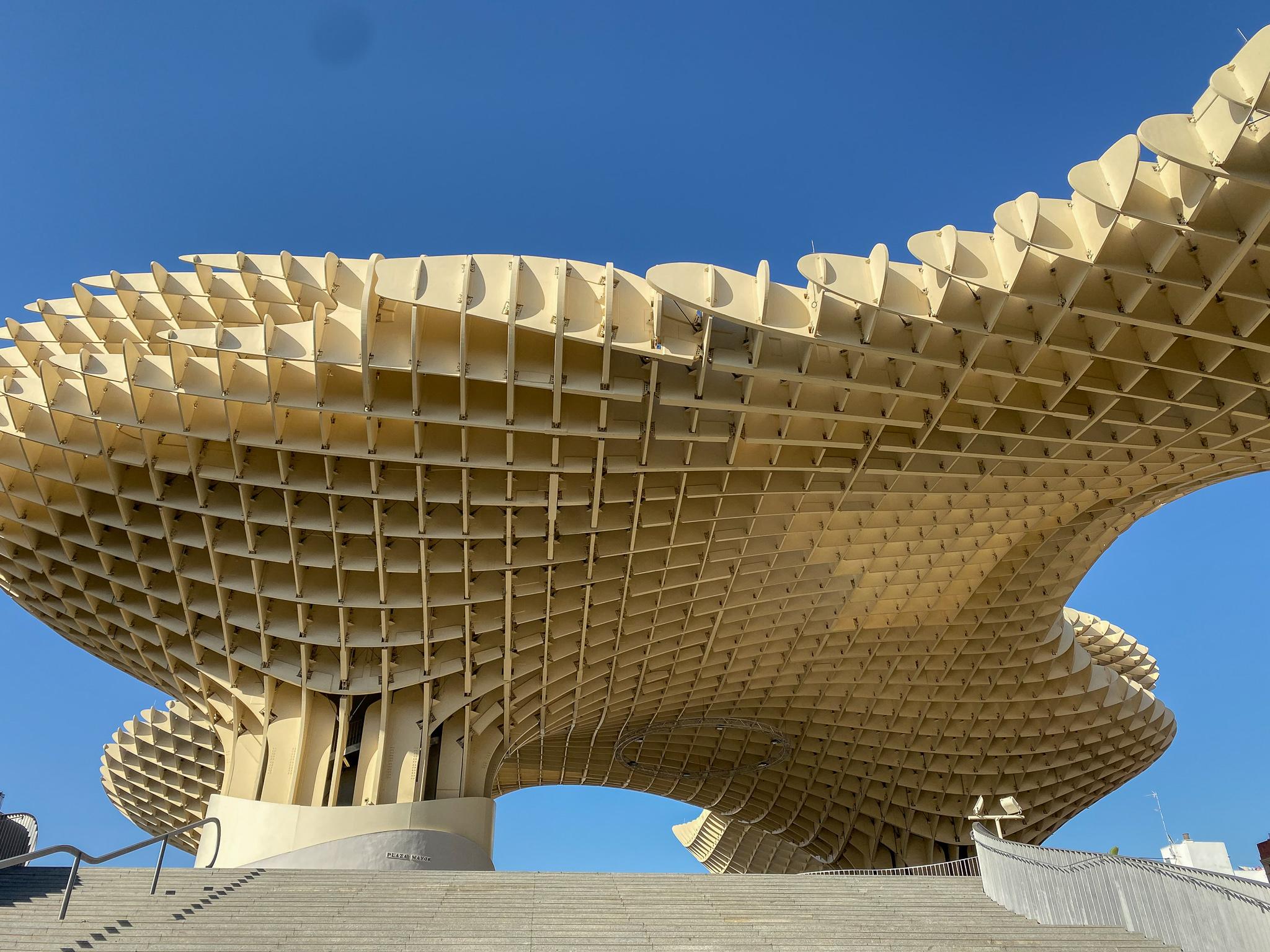
A more recent addition to the Seville skyline is the Metropol Parasol – locally nicknamed Las Setas (the mushrooms) for the six enormous undulating wooden structures that tower over the Plaza de la Encarnación in the Old Town. Completed in 2011, it’s one of the largest wooden structures in the world and a striking piece of modern architecture.
The walkway across the top offers good views over the city rooftops, and there’s a light and music show in the evenings. Underneath, you’ll find a market, bars and a small Roman ruins museum. The rooftop walkway costs around €15–16 – sunset is a good time to go. Book here for tickets.
Real Maestranza bullring
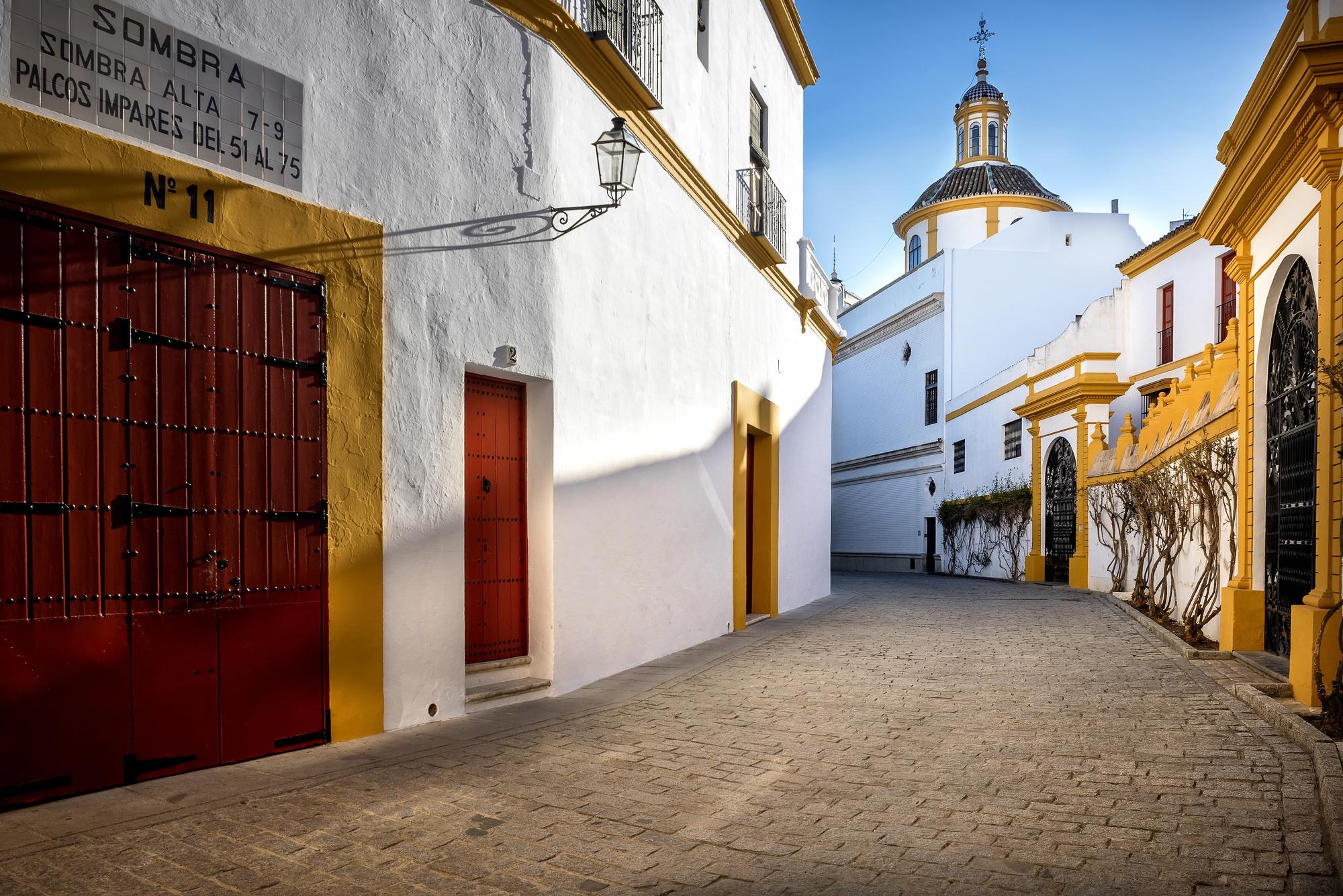
Even if bullfighting isn’t your thing, the Plaza de Toros de la Real Maestranza is worth seeing. Construction began in 1749, making it one of the oldest bullrings in Spain, and its Baroque exterior – cream and ochre, with ornate iron gates – is one of the most elegant buildings in the city. The guided tour takes you through the ring itself, the royal box, the bullfighters’ chapel and the small museum. It sits right on the edge of El Arenal overlooking the Guadalquivir, and the setting alone is worth the short walk from the Cathedral. The season runs from Easter Sunday through to late September; outside those dates, only the tour is available.
The neighbourhoods: Where Seville really happens
Barrio Santa Cruz
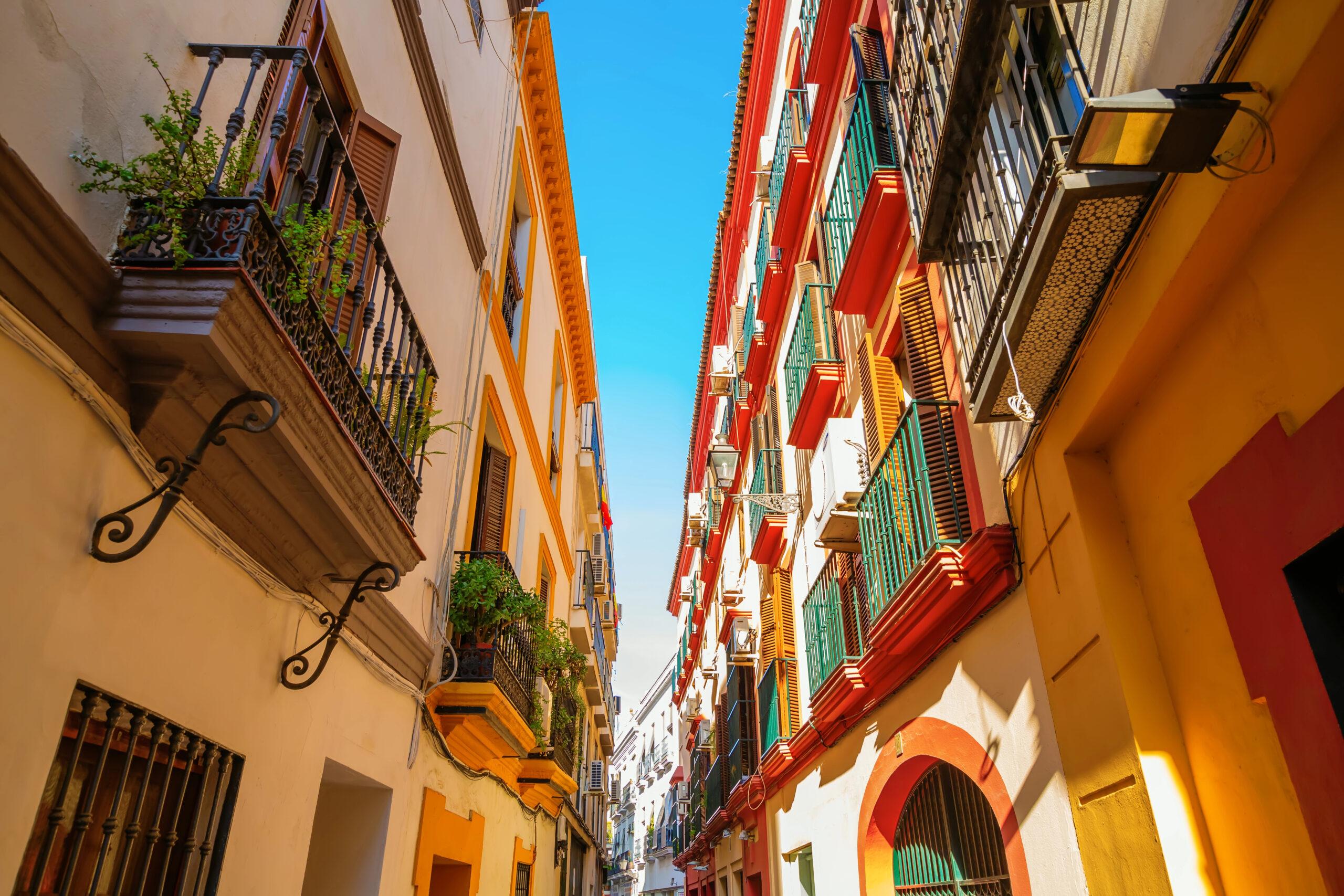
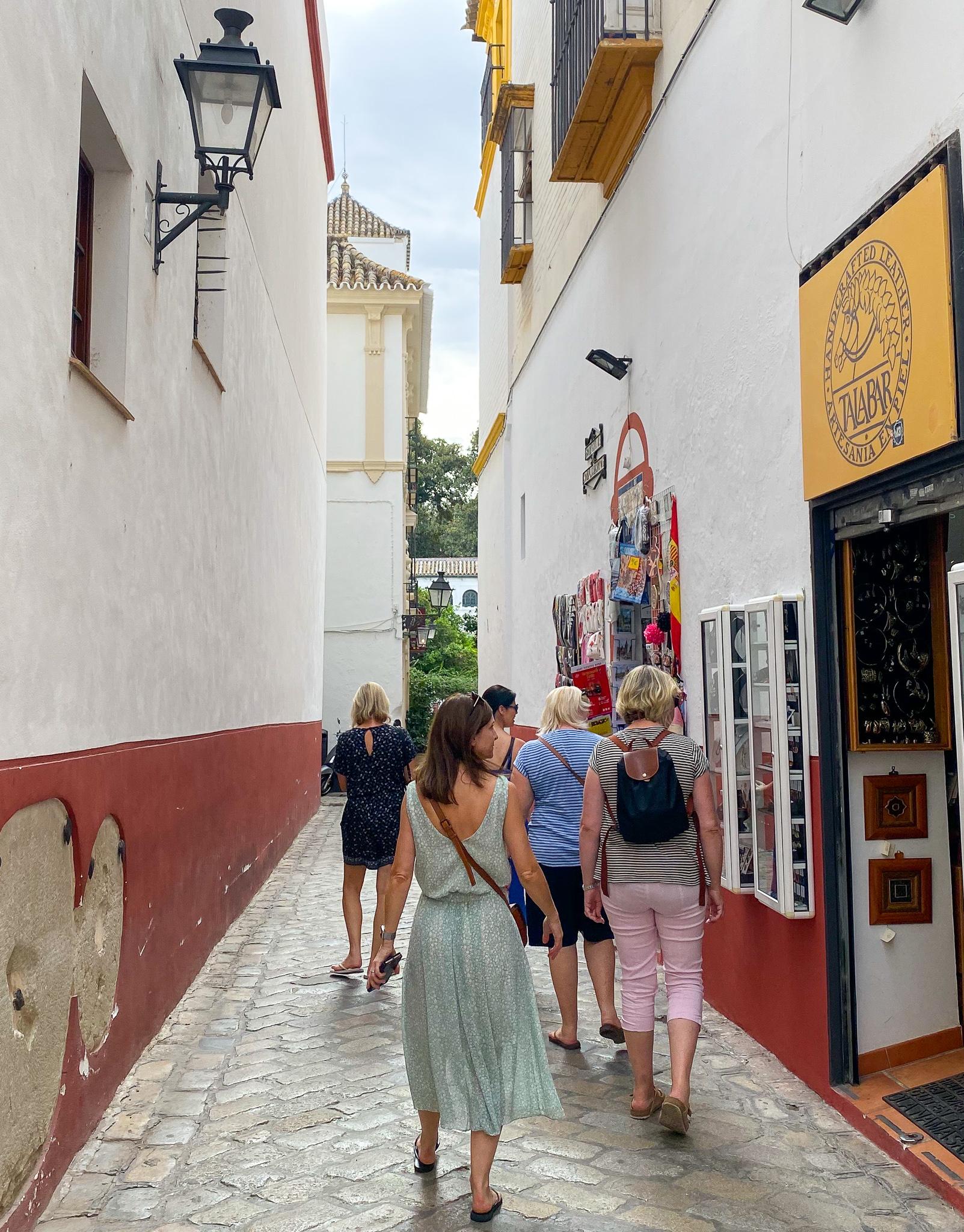
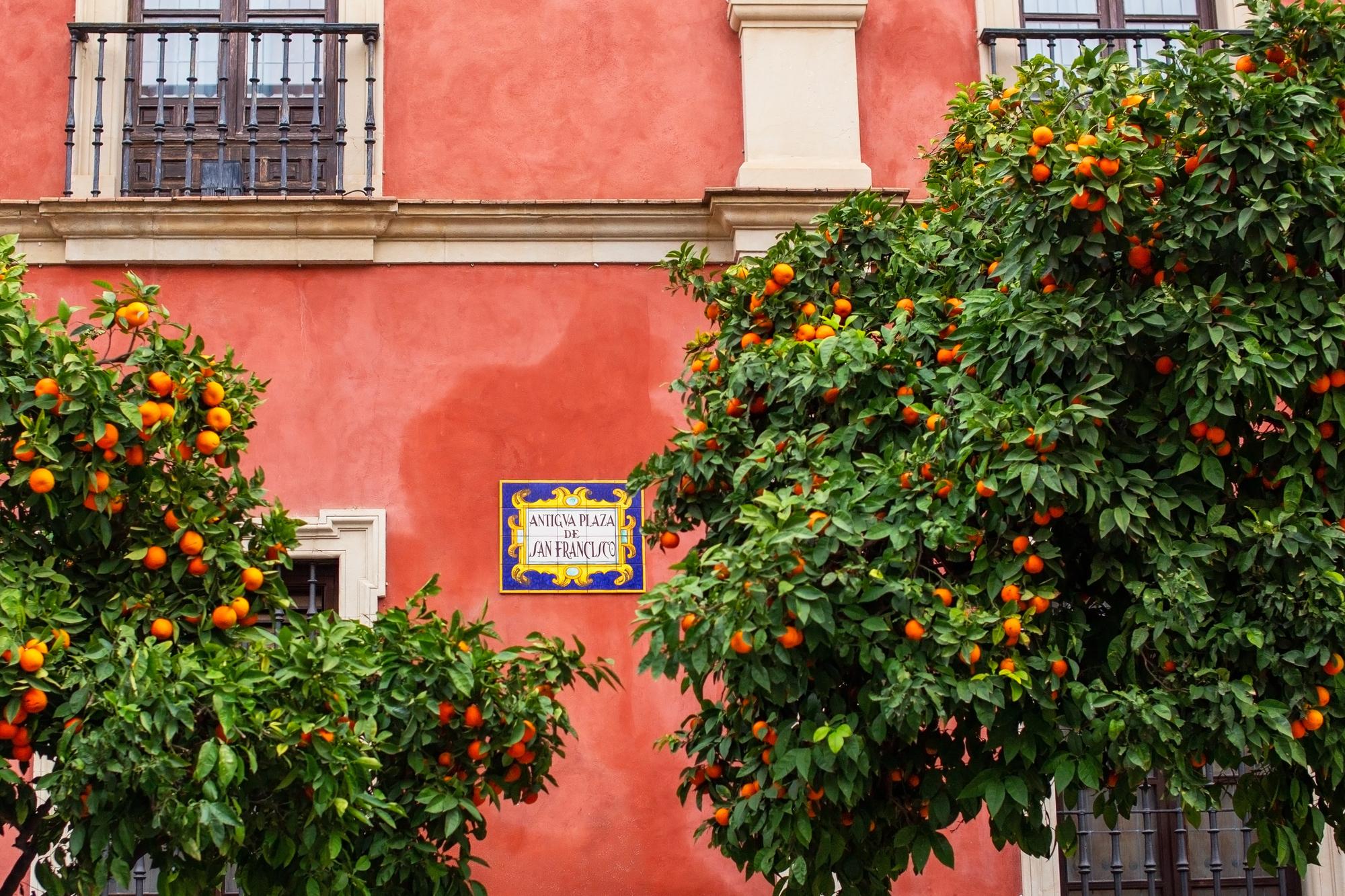
Directly behind the Cathedral lies the old Jewish quarter, Barrio Santa Cruz: a tangle of narrow streets shaded by orange trees, with small squares and hidden courtyards appearing round every corner. Street performers, flower sellers and the smell of jasmine make it feel like a living stage set. It’s the most photographed part of the city for good reason, and yes, it’s touristy. But it’s also lovely – especially in the early morning before the crowds arrive, or in the evening when the heat has dropped, and the bars spill out onto the cobbles.
This is where we got deliberately lost on our first day. We’d decided to skip the phone maps and just wander, which led to us jumping on an open-top sightseeing bus, thinking it would whisk us round the highlights. It took us on a long, winding route through the outskirts of the city before looping back – at which point we realised the Real Alcázar had been about a 10-minute walk from our apartment the entire time. The bus was good fun, but in hindsight, the Old Town is compact enough that you really don’t need it.
Triana
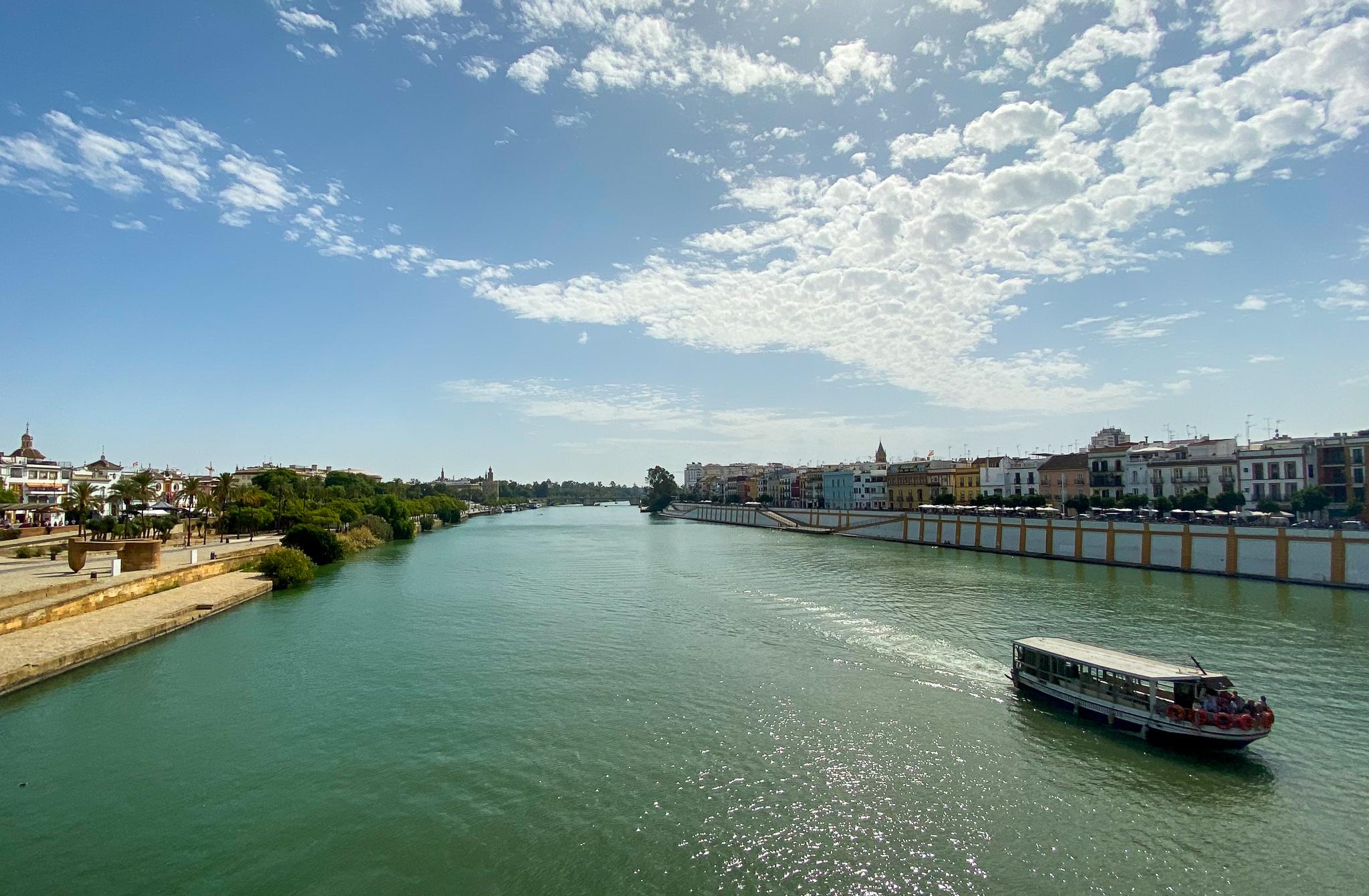
Cross the Guadalquivir River via the Triana Bridge, and you’re in a different Seville entirely. The Triana neighbourhood has a proud, independent character – historically the home of Seville’s gypsy community, flamenco artists and ceramic workers – and a very different feel to the polished streets of Santa Cruz.
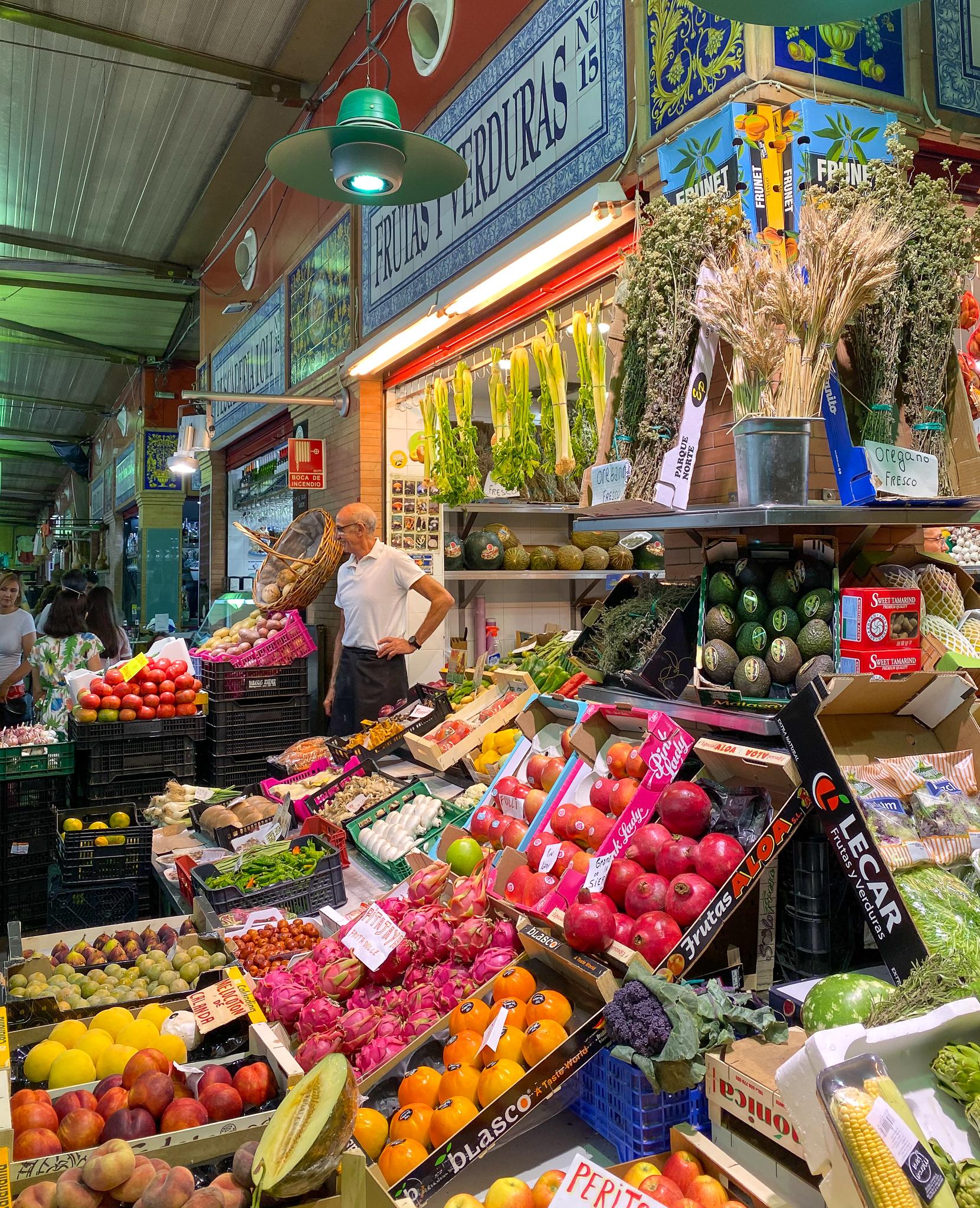
The Mercado de Triana, in a former castle beside the river, is one of the best food markets in the city: stalls of fresh produce, jamón, cheese, seafood and local wines. We loved wandering around it and grazing our way through the morning. Triana is also the place to buy ceramics – the Centro Cerámica Triana on Calle Antillano Campos is worth a visit for anyone interested in the history of the trade, and the surrounding streets are lined with workshops selling hand-painted tiles and pottery in the traditional Andalucian style.
The riverside walk between the two banks is ideal in the early evening when the day’s heat is fading, and the light turns everything gold. If you fancy a boat trip on the Guadalquivir River, several operators run cruises from the riverbank – a good way to see the city from the water.
Where to eat in Seville
Tapas in Seville is not just a way of eating – it’s a way of spending the day. The culture is to move between bars, ordering a small plate with each drink and staying just long enough to feel like a local. Jamón ibérico, espinacas con garbanzos (spinach with chickpeas), puntillitas (tiny fried squid), montaditos (small open sandwiches) – the quality is generally high, and the prices are honest. Sherry (jerez) is very much a thing here too – fino served ice-cold from the barrel costs next to nothing and goes very well with a plate of olives at noon.
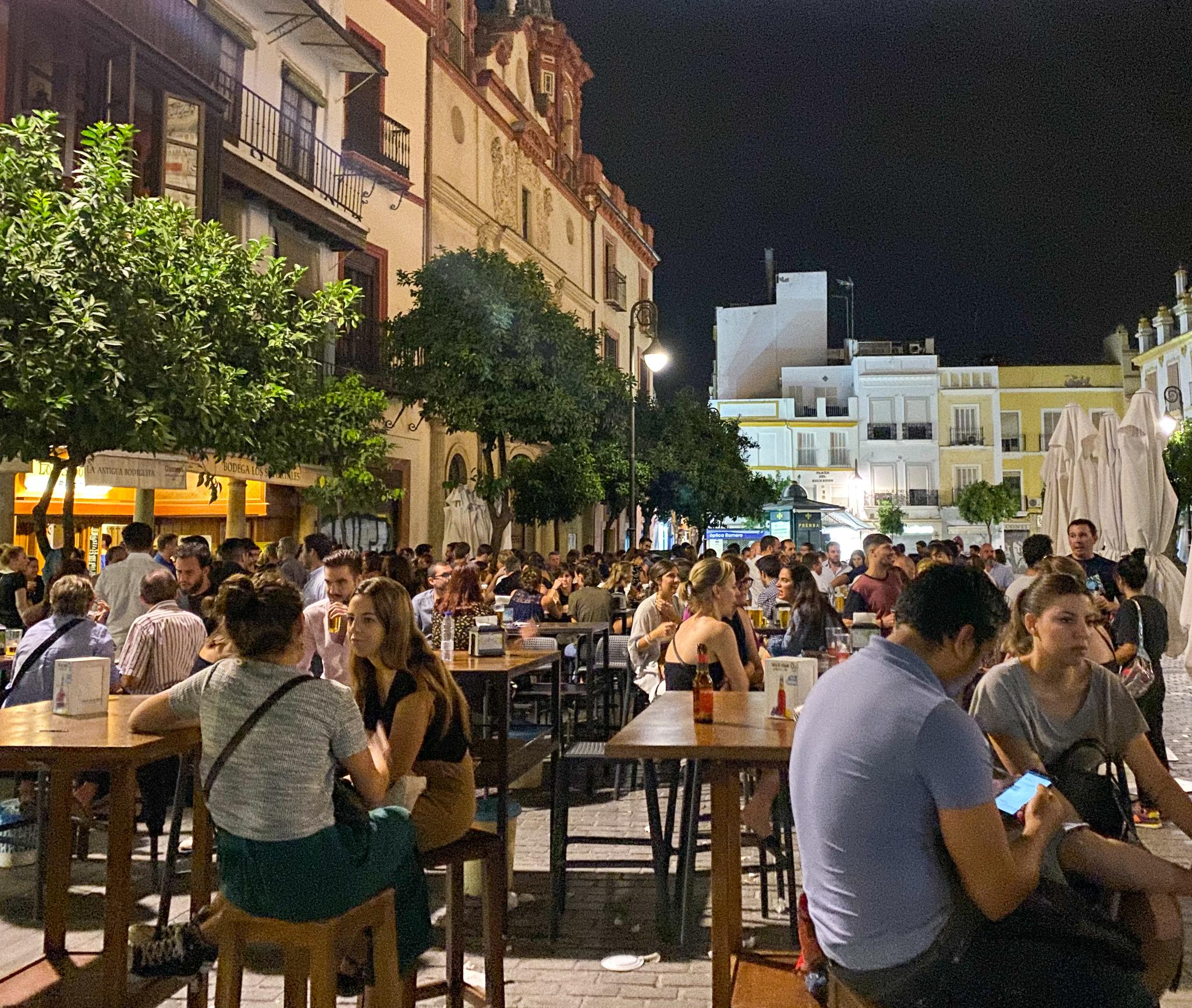
One of my favourite memories of the whole trip was heading back to our apartment late on a Friday night, turning a corner, and finding a buzzing square we hadn’t spotted before – tables and chairs spread across the cobblestones, people laughing over glasses of wine in the warm evening air. No airs and graces. We simply pulled up chairs and joined in. That’s Seville in a nutshell.
For traditional tapas, start with El Rinconcillo (Calle Gerona 40, La Macarena) – the oldest bar in Seville, dating to 1670, where the bill is still chalked on the counter, and the espinacas con garbanzos are exceptional. La Brunilda (Calle Galera 5, El Arenal) is consistently rated among the best in the city – creative takes on Andalucian classics, always busy, arrive just before opening to get a table. We loved it here.
Las Teresas (Calle Santa Teresa 2, Santa Cruz) has been a neighbourhood institution since 1870 – simple, authentic and very fairly priced. Nearby, Bodeguita Romero (Calle Harinas 10, El Arenal) is the place for montaditos de pringa: small rolls stuffed with slow-cooked pork, chorizo and morcilla.
Casa Morales (Calle García de Vinuesa 11, El Arenal), open since 1850, has a back room lined with old ceramic wine vats – order the carrillada and a chilled fino and stay a while. In Triana, Las Golondrinas (Calle Pagés del Corro 76) is a family-run spot with no theatrics, just honest Andalucian cooking at honest prices.
For something more contemporary, El Pintón (Calle Francos 42, Santa Cruz) does modern Andalucian cooking in a beautiful tiled room and keeps the kitchen open all day – useful when your sightseeing doesn’t fit neatly around Spanish mealtimes. We came here for a special birthday dinner, and the staff really looked after us. Highly recommend.
La Barra de Cañabota (Calle Orfila 5, Centro) is a sleek counter bar where the menu changes daily with whatever the fishermen brought in: grilled whole fish, fresh oysters, razor clams. Pricier, but the seafood quality is hard to match.

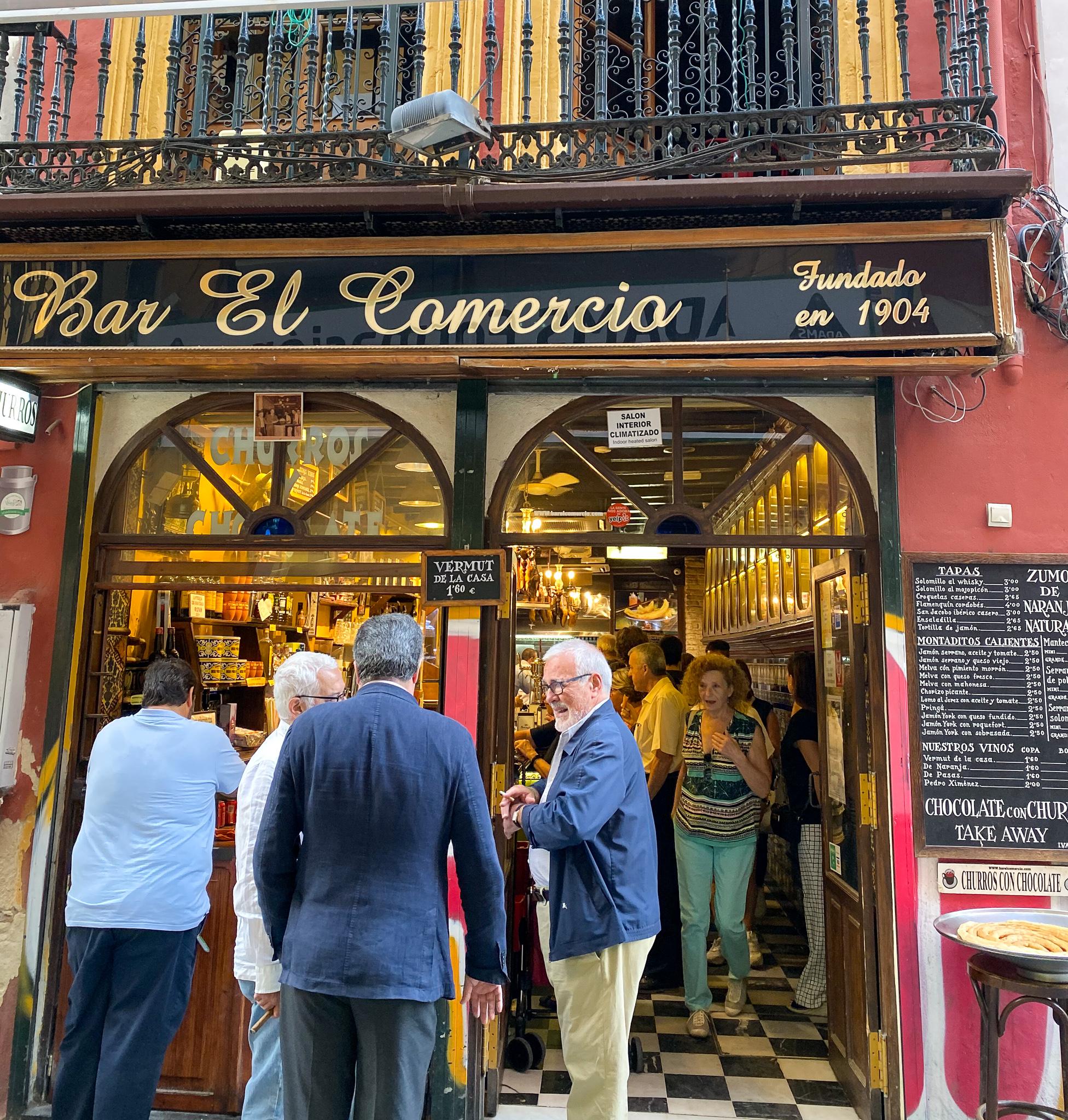
For breakfast, start the day with churros con chocolate at Bar El Comercio (Calle Lineros 9, Santa Cruz) – a Seville institution since the early 1900s, with proper thick dark chocolate and marble-topped tables at the back. We literally had an apartment right opposite – and it was amazing how many people came and went for the churros. It really is worth the hype.
Rooftop bars in Seville
Seville’s warm evenings and beautiful skyline were made for rooftop drinking. The standout for us is La Terraza del EME (Calle Alemanes 27, Santa Cruz) – perched on top of the EME Catedral Mercer Hotel, the terrace looks directly at La Giralda at close enough range that it feels almost absurd. Go at sunset. Book a table in advance at weekends; it fills up fast and is open 365 days a year.
Pura Vida Terraza (Calle Segovias 6, Santa Cruz), on the roof of the boutique Hotel Los Seises, has the same Cathedral views at friendlier prices and a more bohemian feel – live acoustic sessions most evenings, good for a long, lazy drink rather than a quick sundowner.
For something more central and reliably year-round, La Terraza del Hotel Inglaterra (Plaza Nueva, Centro) has a retractable roof, panoramic old-town views and far less chance of being turned away at the door than the Cathedral-side options.
How to get to Seville
Seville has its own international airport, Aeropuerto de Sevilla – San Pablo, around 10km north-east of the city centre. Several European airlines fly direct from the UK, with flight times of around two to two and a half hours. A taxi from the airport to the centre takes around 20–25 minutes; there is also a bus service (the EA Airport Bus) running regularly into the centre.
If you’re combining Seville with other Spanish cities, the high-speed AVE train is fast and comfortable. Madrid to Seville takes around two and a half hours; Barcelona to Seville is closer to five and a half hours with a change in Madrid. The main station, Santa Justa, is about a 20-minute walk or short taxi ride from the historic centre.
Is Seville walkable?
Yes – if you stay in or near the Old Town, Seville is very walkable. The main attractions cluster tightly together: the Cathedral, the Alcázar, Barrio Santa Cruz and the Plaza de España are all within comfortable walking distance of the city centre. Getting to Triana means a short walk across the river, and the Metropol Parasol is a 10–15 minute walk through the historic centre.
In the heat of summer, the logic shifts slightly – the midday hours between around 1pm and 5pm are not ideal for sightseeing on foot, and locals famously avoid them. In late October, we had no such problem: the temperatures were warm but very manageable, and we covered most of the city on foot with ease.
Taxis and the city’s tram are useful for longer journeys; the tram runs through the historic centre and is cheap and easy to use.
When is the best time to visit Seville?
Spring (March to May) and autumn (September to November) are the best times to visit. Average temperatures sit in the comfortable 18-28°C range, the light is beautiful, and the city is lively without being overwhelmed.
Late October – when I visited – was close to ideal. The weather was still warm enough for short sleeves, the main attractions were busy but not heaving, and the evenings were balmy enough for outdoor dining. Highly recommended if you want a city break without the full summer intensity.
Spring also brings two of Seville’s biggest events: Semana Santa (Holy Week, the week before Easter), one of the most spectacular religious processions in the world, with elaborately decorated floats carried through the streets by thousands of participants; and Feria de Abril (the April Fair), two weeks later, when the entire city celebrates with flamenco, horses, sherry and elaborate traditional dress. Both are extraordinary, but make the city extremely busy – book accommodation months in advance if visiting then.
Summer (June to August) brings intense heat, with temperatures regularly exceeding 40°C in July and August. Seville is famous for its summer heat – it’s one of the hottest cities in Europe at this time of year. It’s manageable – many people visit – but plan around it: early mornings, long afternoon rests, air conditioning that actually works.
Winter (December to February) is mild by northern European standards, typically 12-16°C, and the city is noticeably quieter. Good value for flights and accommodation, though some outdoor attractions are less atmospheric in grey weather.
Day trips from Seville
Córdoba – about 45 minutes by high-speed train, Córdoba is home to the Mezquita-Catedral, one of the most extraordinary buildings in Spain: a vast Moorish mosque with a Christian cathedral built into its heart. Combine it with a wander through the old Jewish quarter and the famous Patios Festival if you’re there in May.
Granada – roughly 3 hours by bus or train, Granada is where you go for the Alhambra – the most visited monument in Spain. I’ve been several times and love it. If you’re spending a week in Andalucía, combining Seville and Granada is well worth it. My full guide to Granada is here.
Cádiz – a beautiful, ancient port city on the Atlantic coast, about 1.5 hours by train. The old town sits on a narrow peninsula surrounded by sea, with crumbling baroque architecture, excellent seafood and a very different coastal atmosphere to the rest of Andalucía.
Jerez de la Frontera – just 1 hour by train, Jerez is the home of sherry. The main bodegas offer tours and tastings, and it’s also home to the Real Escuela Andaluza del Arte Ecuestre, where you can watch the famous dancing horses perform.
Ronda – a dramatic hilltop town in the mountains, around 2 hours by bus, built on the edge of a deep gorge. Famous for its 18th-century bullring, vertiginous views and Hemingway connections.
Things to consider before you go
Book the big sights in advance. The Real Alcázar sells out days or weeks ahead in peak season, and Seville Cathedral can have long queues without a pre-booked time slot. Sorting tickets before you arrive saves a lot of frustration. If you want more context as you go, a guided tour of the Alcázar or Cathedral is well worth it – the history layered into both buildings rewards explanation.
Beyond the main attractions, don’t miss Casa de Pilatos. This 16th-century palace, a short walk from Santa Cruz, combines Mudéjar and Renaissance architecture and is far less visited than the Alcázar, which means you can actually breathe. It’s one of the most beautiful buildings in the city.
Seville in summer is extremely hot. If you’re visiting between June and August, build in rest time in the afternoons and stay somewhere with air conditioning. This is not optional.
Flamenco shows vary wildly in quality. The best experiences are at smaller, more intimate tablaos in the Old Town rather than the large tourist productions. Look for venues with a maximum of around 100 seats, and check recent reviews from the last few months before booking. The show itself – live guitar, singing and dancing on a small stage, close enough to feel every stomp – is genuinely moving when it’s done well.
A guided food tour is one of the best ways to get your bearings. Seville’s tapas scene can be overwhelming if you don’t know where to start – a two or three-hour evening tour with a local guide takes you through four or five bars you might not find on your own, explains the culture as you go, and gives you the confidence to explore independently afterwards. Well worth doing on your first night.
Dinner happens late. Locals rarely eat before 9pm. Restaurants are generally welcoming to those arriving earlier, but the atmosphere picks up in the evening.
Where to stay in Seville
Staying in or close to the Old Town puts you in the best position for exploring on foot. The Santa Cruz neighbourhood is the most atmospheric but can be noisy at night; El Arenal and the areas around the Cathedral are also very central. Triana is a good choice if you want somewhere slightly less tourist-heavy with easy access to the river.
For a comprehensive look at where to stay in Seville, including the best areas for every type of traveller, check out my guide.
Frequently asked questions about visiting Seville
Is Seville worth visiting for a long weekend?
Yes – three days is a good amount of time to cover the main sights and get a feel for the city. You can see the Cathedral, the Alcázar, the Plaza de España, explore Santa Cruz and Triana, and still have time for leisurely lunches and evening tapas. Our full 3-day Seville itinerary is here if you need a ready-made plan.
Is Seville worth visiting in summer?
It’s possible, but the heat is intense – temperatures regularly reach 40°C or above in July and August. If summer is your only option, plan early morning and late evening sightseeing, rest in the afternoon, and make sure your accommodation has good air conditioning.
How does Seville compare to other Spanish cities?
Seville is more compact and less frenetic than Madrid or Barcelona, and considerably more atmospheric in terms of its Moorish heritage and Andalucian character. It rewards slow travel – the more time you take wandering its streets, the more you discover. Compared to Granada, Seville is livelier and more of a city in the modern sense, while Granada feels older and more otherworldly.
Is Seville expensive?
By Western European standards, Seville is relatively affordable. Tapas and drinks at local bars are cheap – you can eat and drink very well for €15–25 per person at dinner. The main sights have entry fees (the Alcázar costs €15.50 for adults, the Cathedral €20 online / €21 at the door).
Is Seville family-friendly?
Yes, Seville works well for families. The city is compact, the Plaza de España is a great space for children to run around, and the boat hire on the canal is popular with kids. The main sights are engaging for older children, though the Cathedral and Alcázar involve quite a lot of walking. Dinner tends to happen late in Spain, which can be a challenge with younger children, but restaurants are generally welcoming.
Do I need to speak Spanish in Seville?
English is widely spoken in the tourist areas and at the main sights. That said, a few words of Spanish go a long way – Sevillanos appreciate the effort, and you’ll have a much better time at local bars and markets if you can manage a basic por favor and una copa de fino, gracias.
What’s the best day trip from Seville?
Córdoba is the easiest – fast, cheap and just 45 minutes by train, with the extraordinary Mezquita as the centrepiece. If you have more time, Granada is well worth the longer journey, especially if you can pre-book Alhambra tickets (which sell out weeks in advance).
Is Seville safe for tourists?
Seville is generally a safe city for tourists. As with any busy European destination, take normal precautions with bags and valuables in crowded areas and on public transport. The Old Town is well-lit and lively in the evenings.
Other Seville guides you’ll love
Seville is, without question, worth visiting. It’s a city that delivers on its promise – beautiful architecture, exceptional food, a warm and sociable culture, and enough history to keep you occupied for days. The fact that it’s also enjoyable to just be in, wandering with no particular destination and ending up at a table of strangers in a lit-up square on a Friday night, is what sets it apart from a lot of more polished European city-break destinations.