As we walked under the Great Gates of Saint-Malo, the nearby cathedral bells were chiming, breaking the silence in the early morning air. The old town within the city walls was beginning to come to life. Getting lost in the cobbled streets and trying to find our bearings was amusement enough, while the kids were mesmerised by all the shops selling interesting things through gleaming windows.
Little did we know that this would be the first of many ancient and picture-perfect towns we’d come across on our Brittany holiday. Here are the best things to do in Brittany, from medieval towns and prehistoric standing stones to white sandy beaches and the famous Pink Granite Coast.

Quick answer: The best things to do in Brittany
- Saint-Malo – walk the city walls and get lost in the cobbled streets of this walled port town
- Pink Granite Coast – walk the coastal path past copper-pink boulders sculpted by millennia of wind and sea
- Carnac stones – over 3,000 standing stones predating Stonehenge, now a UNESCO World Heritage Site
- Brittany beaches – over 1,700 miles of coastline, from wild Atlantic shores to sheltered turquoise coves
- Medieval towns – Fougères, Vitré, Dinan and more, with half-timbered houses and castles to explore
- Crêpes and cider – eat your way through Brittany’s national dish, washed down with local cider
Why Brittany?
It has been said that Bretons have more in common with the English than the French. Brittany’s history saw Britons, mainly from Wales and Cornwall, flee across the English Channel to seek refuge from Anglo-Saxon invaders – which is why there are still such strong ties to Celtic heritage and Breton culture here. Truth be told, Brittany still felt extremely French to me regardless of its historic ties to Britain.
After a stress-free crossing from Portsmouth to Saint-Malo via an overnight ferry and a morning exploring Saint-Malo, it gave us a small taster of the next five days as we began our Brittany adventure. It quickly became apparent why holidays here are so popular. Brittany is a region with epic coastlines and seaside resorts, idyllic beaches, striking towns and villages soaked in history, and some of the best food in France. The one thing the whole family agreed on was that we didn’t have enough time. Brittany is huge – and there’s so much to see. We will be back.
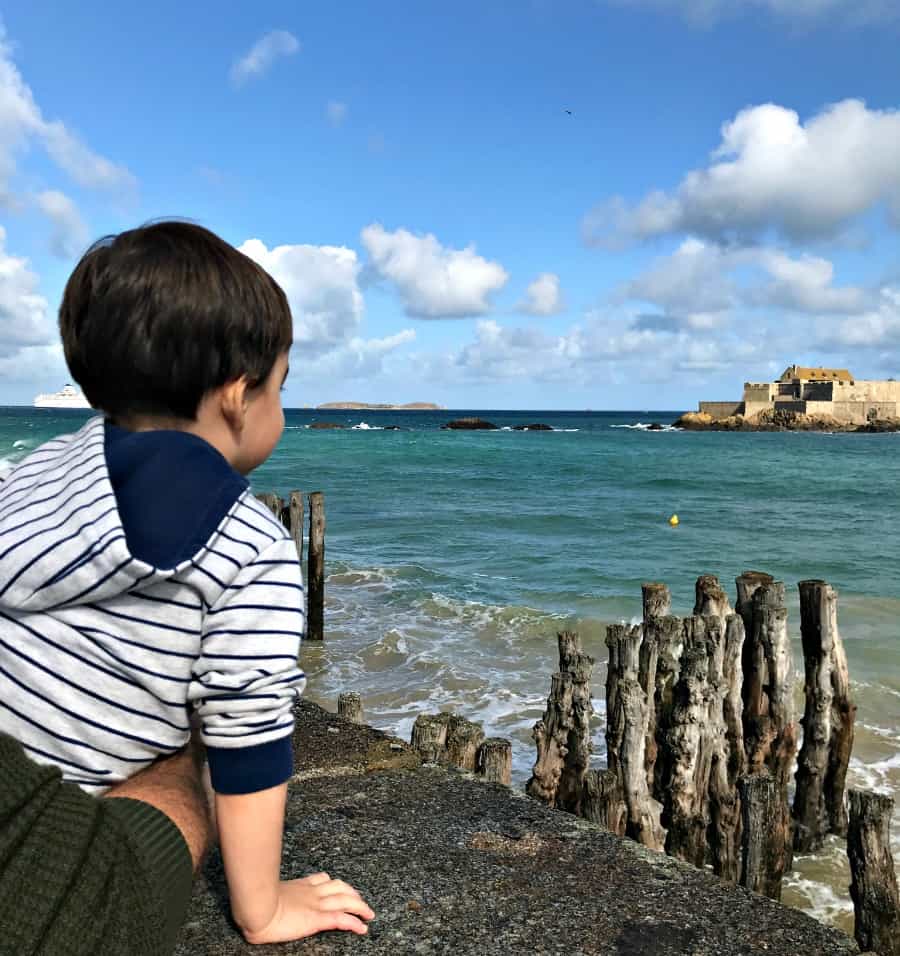
Explore Saint-Malo
The walled port town of Saint-Malo on Brittany’s Emerald Coast is one of the best places to start any trip to the region. The old town sits behind imposing granite ramparts, and walking the city walls gives you views across the rooftops, the harbour and out to the English Channel. At low tide, you can walk across the sand to the small island of Grand Bé, where the writer François-René de Chateaubriand is buried. Check the tide times before you set off – at high tide, you’ll be stranded until the water drops.
Inside the walls, narrow streets are lined with restaurants, crêperies and independent shops. It’s compact enough to wander without a plan, and that’s exactly what we did – ducking down side streets, finding quiet squares, and letting the kids lead the way to the nearest patisserie.
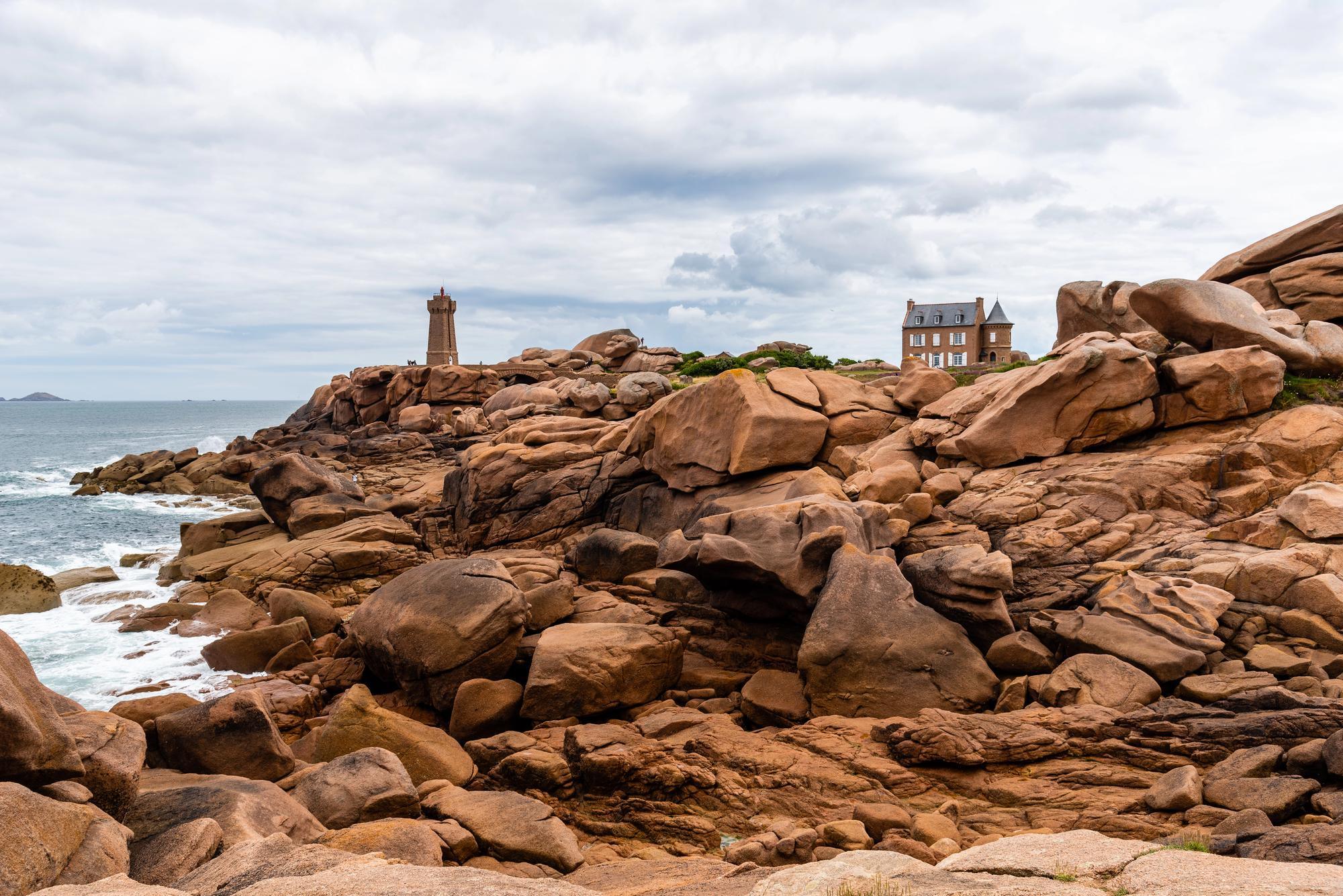
Walk the Pink Granite Coast
The Côte de Granit Rose (Pink Granite Coast) in the Côtes-d’Armor is one of only three places in the world where granite has this distinctive coppery-pink colour – the other two are in Corsica and China. The stretch between Perros-Guirec and Ploumanac’h is where the formations are most dramatic, with enormous boulders sculpted into strange and wonderful shapes by millennia of wind, salt and sea.
The best way to see it is on foot, following the Sentier des Douaniers (the old customs officers’ path, part of the GR34 coastal trail). The walk from Perros-Guirec to the Mean Ruz Lighthouse at Ploumanac’h is around 8km return and takes about 2.5 hours, though you’ll want to stop constantly. The rocks shift colour depending on the light – brownish-pink in the shade, bright rose in the morning sun. Ploumanac’h was voted France’s favourite village, and it’s easy to see why. Tip: arrive early or late afternoon to dodge the crowds, especially in summer.
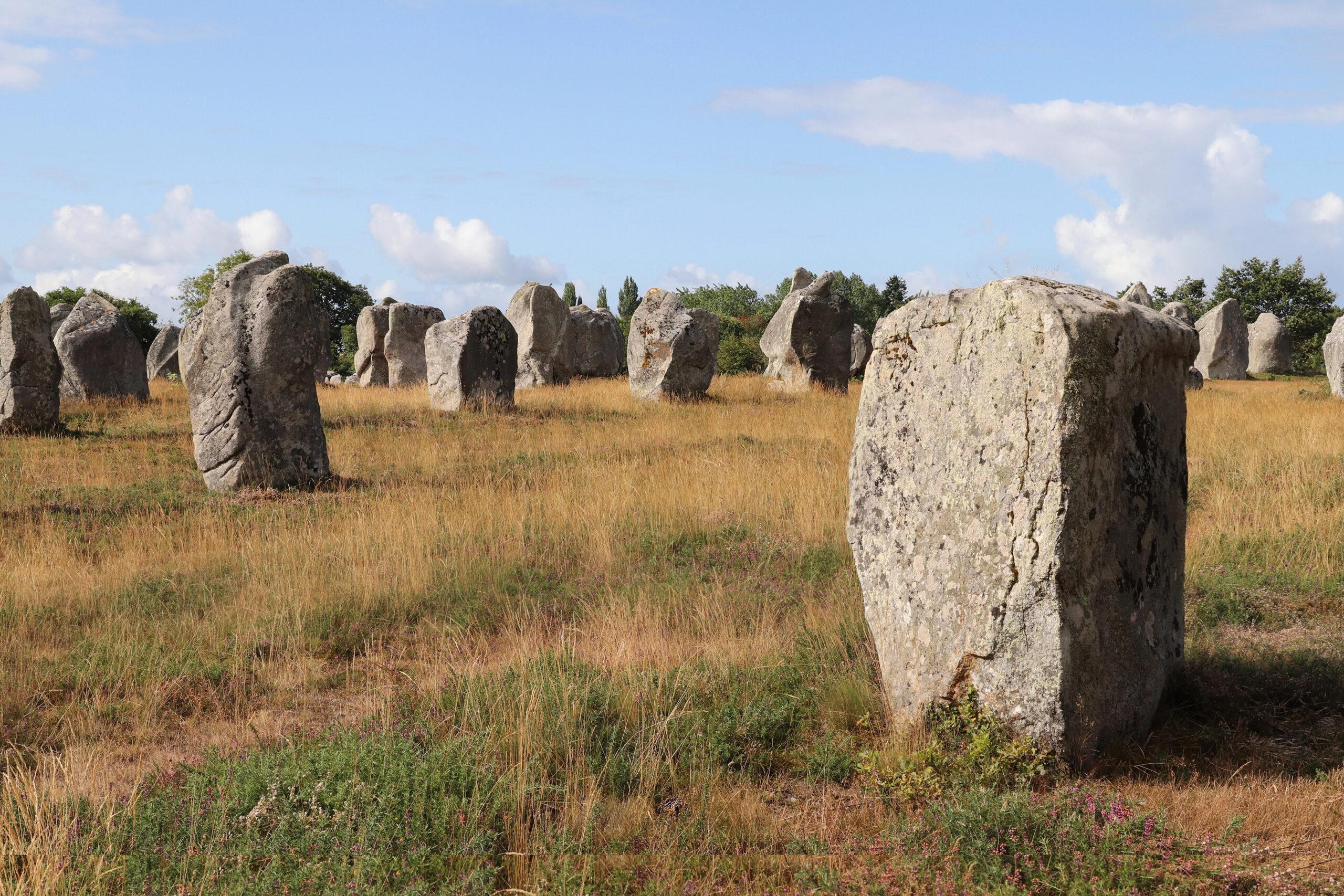
Discover the Carnac stones
In southern Brittany, the Carnac alignments are the world’s largest concentration of megalithic sites – more than 3,000 standing stones erected between roughly 4500 and 3300 BC, predating Stonehenge by over 1,000 years. They were inscribed as a UNESCO World Heritage Site in 2025.
The stones are divided into three main groups – Ménec, Kermario and Kerlescan – stretching over 4km on the edge of town. From October to March the sites are open to walk freely. From April to September, you can only enter via guided tours, though you can still see the alignments from the perimeter paths and from the viewing platform on top of the Maison des Mégalithes visitor centre. Visit in the morning or late afternoon for fewer people and the best light.
Enjoy Brittany’s stunning beaches
Brittany has nearly 1,700 miles of coastline, from wild Atlantic cliffs to sheltered white sandy coves and turquoise seas that wouldn’t look out of place somewhere tropical.
One of my happiest memories of our trip was spending a whole day at the beaches of the Rhuys Peninsula in southern Brittany. We jumped in the car and drove to Kerfontaine and Port Navalo in Arzon – watching the children play in the shallows, crabbing, swimming and finding delightful cafés for oysters and cider. It was blissful, with near-empty sandy stretches and that easy, slow pace that makes a beach day in Brittany so special.
Brittany also has several glorious islands. Houat has sweeping beaches and neolithic sites, while the island of Bréhat off the coast near Paimpol is considered one of Brittany’s loveliest – an island of flowers reachable by a short ferry crossing. In the Gulf of Morbihan, the Île aux Moines is a peaceful spot for a boat trip and an afternoon of exploring on foot or by bike.

Explore Vannes
If you’re heading to southern Brittany, don’t skip Vannes. The old town is one of the most complete medieval centres in the region – enclosed by ramparts, with a tangle of narrow streets lined with half-timbered and stone houses. Place des Lices, the old jousting square, hosts a large and excellent market on Wednesdays and Saturdays, piled with local cheese, cider, oysters and Breton pastries.
The rampart gardens, running along the foot of the old walls, are a peaceful spot to sit and take stock. From the port, you can pick up boat trips to the islands of the Gulf of Morbihan. Vannes makes a good base for exploring Carnac, Suscinio and the Rhuys Peninsula, and it has enough restaurants and life of its own to keep an evening interesting.

Wander medieval towns
Wherever we went – whether it was Saint-Malo, Fougères, Vitré or Carnac – I was struck by the picturesque medieval towns with their cobbled streets, quaint shopfronts and, more often than not, a castle looming above. The best way to see them is on foot. Getting lost and aimlessly walking may not always be fun for kids, but with the promise of ice cream and sweet pastries, you’ll be surprised how much ground you cover.
Fougères
We fell in love with the pretty medieval town of Fougères and its castle. Using audio guides, we were transported to the past and learned how Château de Fougères – one of the largest medieval fortresses in Europe – was identified by the Duchy of Brittany as the perfect spot to defend its lands from the French. Because of its open expanse, the kids enjoyed roaming free and investigating the different towers. We then spent an enjoyable afternoon wandering the old town and discovering Place du Marchix, lined with half-timbered houses dating back to the Middle Ages.
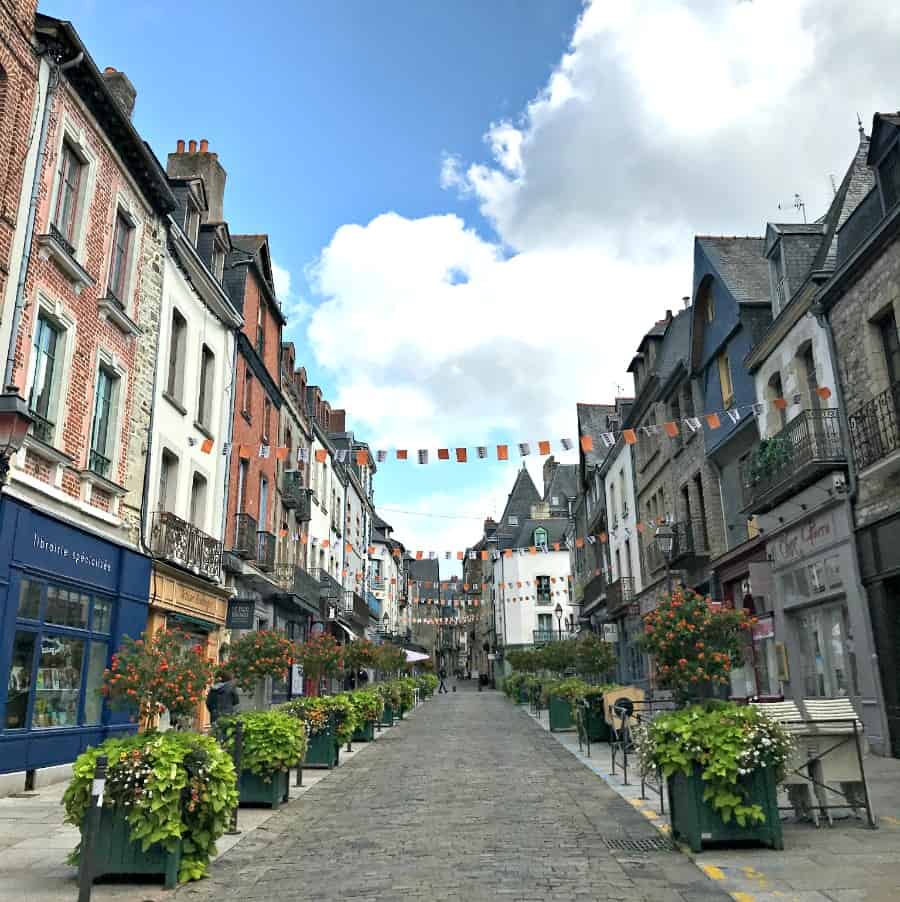
Vitré
Another beauty. Vitré’s medieval old town, with its half-timbered houses and narrow streets, is one of the best-preserved in Brittany. The castle at the top is striking, and the whole place feels like stepping back several centuries.
Dinan
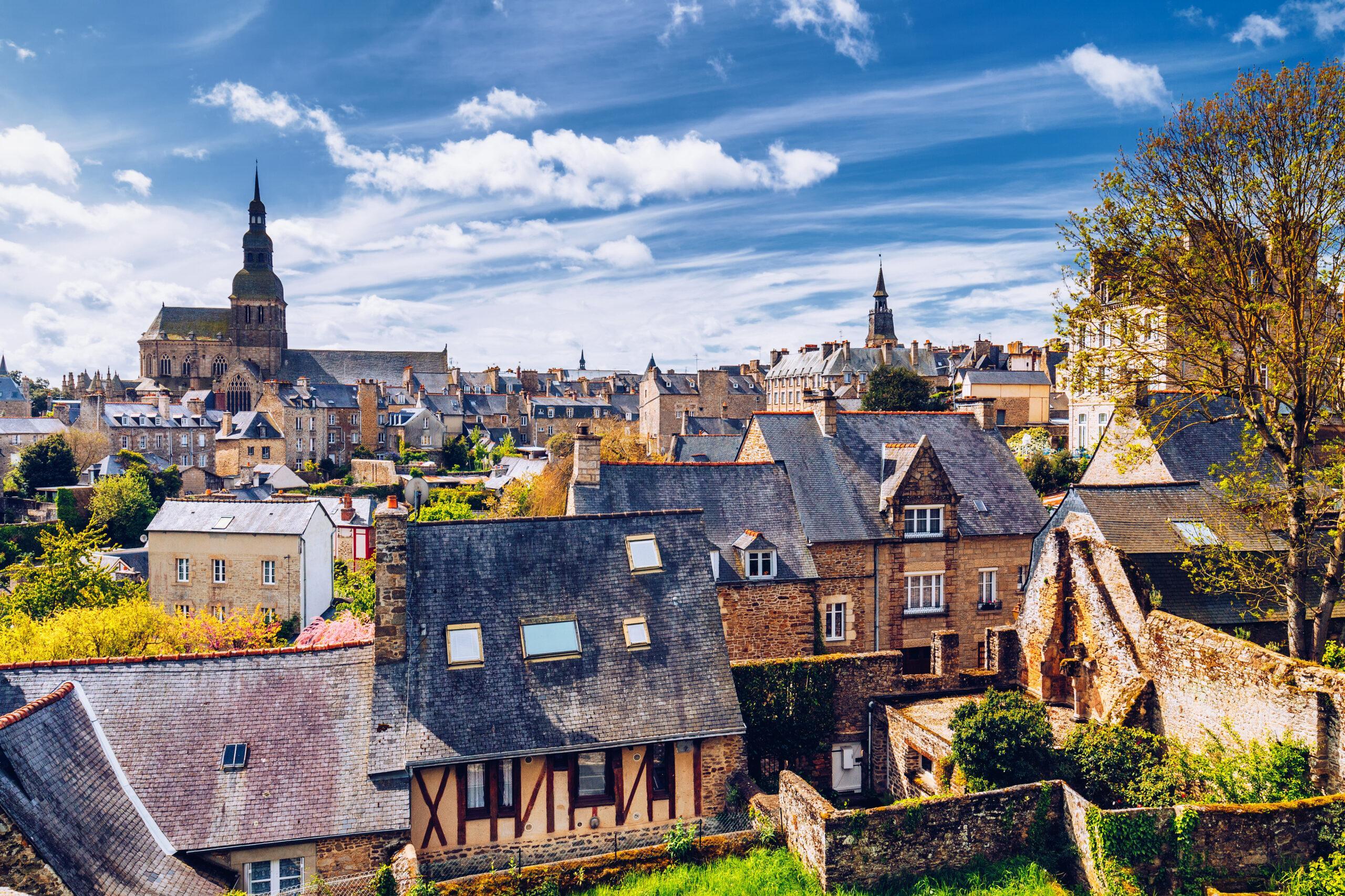
If you’re exploring the Emerald Coast near Saint-Malo, the walled town of Dinan is worth a detour. Perched above the River Rance, it has one of the most complete sets of medieval ramparts in Brittany, half-timbered houses leaning at improbable angles, and a lively old town with independent shops and crêperies.
Visit castles in Brittany
With centuries of conflict between the Duchy of Brittany and France, this region is packed with fortresses, clifftop strongholds and grand châteaux. Here are the ones worth making time for.
Château de Fougères
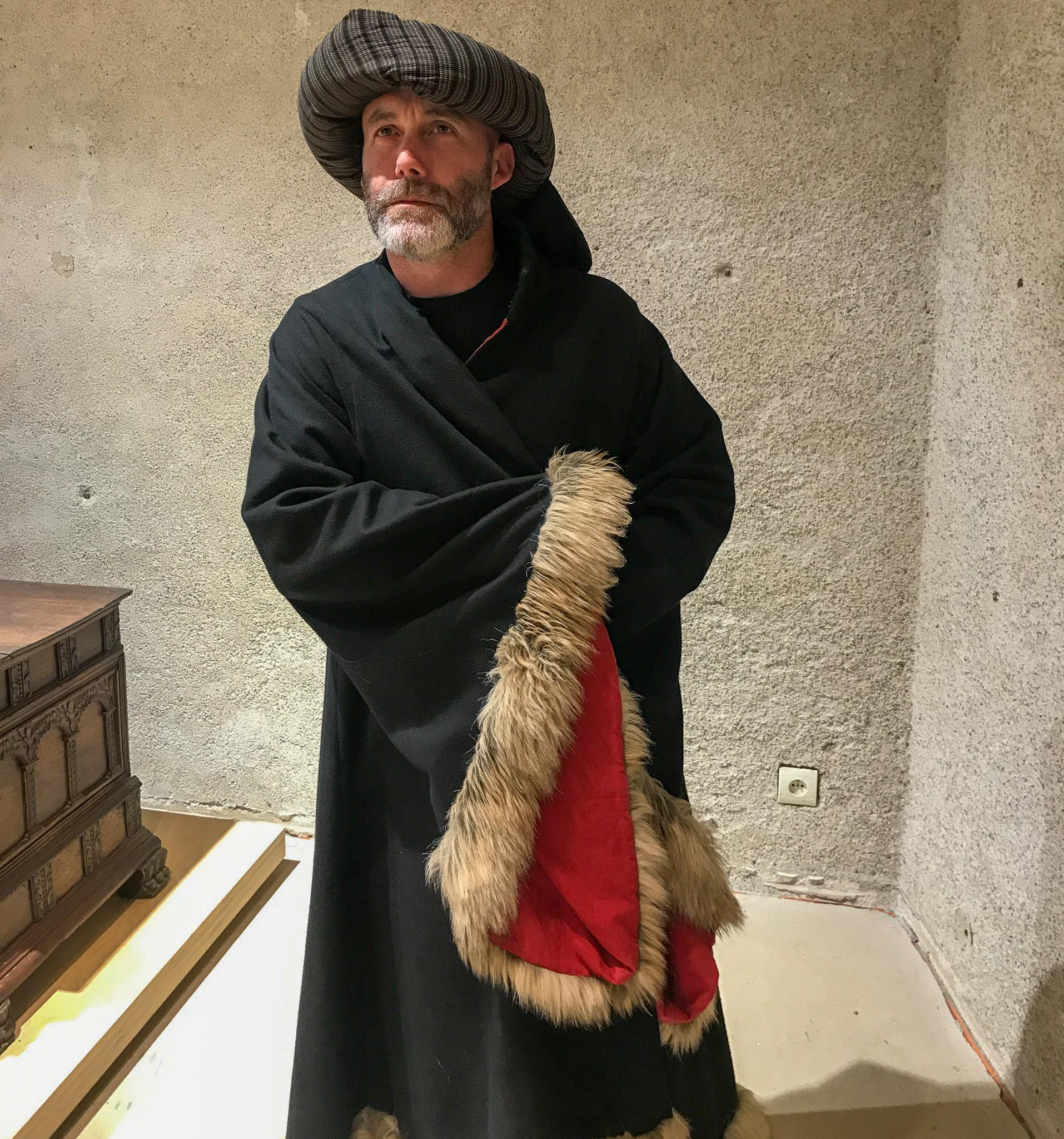
Covered above in the medieval towns section, but worth emphasising here – this 12th-century fortress is one of the largest medieval castles in Europe and was identified by the Duchy of Brittany as the perfect spot to defend its eastern border from the French. The sheer scale of the place means children can roam freely between towers while you take in the views from the ramparts. Audio guides bring the history to life without being dry. It’s a real highlight. Our kids adored it here – and we even got to dress up!
Château de Suscinio
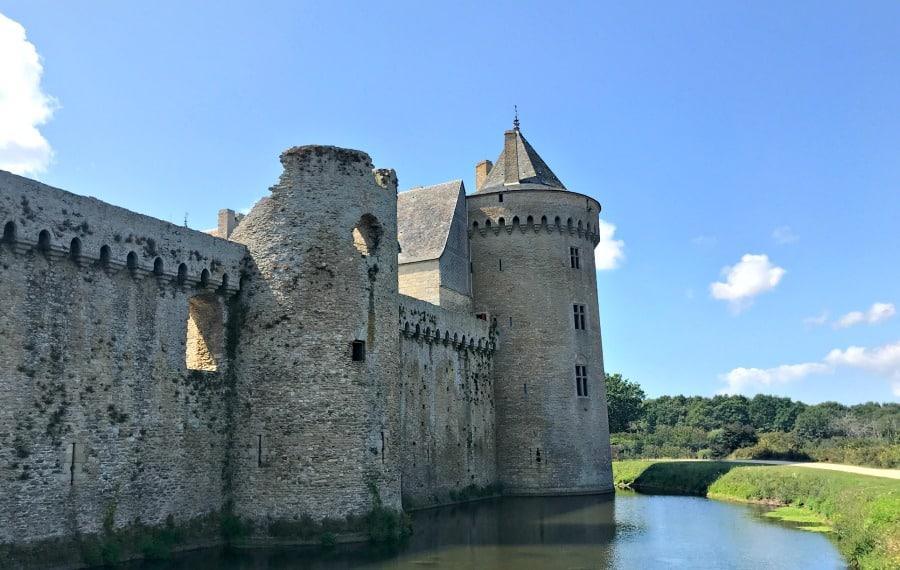
On the Rhuys Peninsula in southern Brittany, the former hunting lodge of the Dukes of Brittany sits surrounded by marshland and forest, with the Atlantic dunes just beyond. It was impossible not to be drawn in by the fairytale setting – a moated medieval fortress rising out of the flat coastal landscape.
The castle has a remarkable history. From 1471, it sheltered the young Henry Tudor – the future King Henry VII of England – along with his uncle Jasper Tudor and around 500 Lancastrian exiles during the Wars of the Roses. For over a decade, Suscinio was effectively an armed camp, with the Duke of Brittany refusing repeated demands from the English crown to hand them over. We dressed up in costumes, the kids discovered secret tunnels and learned about medieval hunting, including crossbow demonstrations. Don’t miss the extraordinary collection of medieval floor tiles recovered from the nearby ruined chapel – over 30,000 pieces of decorative terracotta, some of the finest surviving examples in France.

Château de Josselin
Perched above the River Oust in inland Morbihan, Josselin is one of Brittany’s most striking châteaux – and it’s still a private home. The Rohan family has lived here for over a thousand years. From the river, the castle looks every bit the medieval fortress, all thick towers and defensive walls. Walk around to the courtyard side, and you’re met with an intricate, flamboyant Gothic facade carved in pale granite – a completely different building from a different age.
The guided tour takes you through the furnished ground-floor rooms, which feel more like a lived-in grand house than a museum. The gardens are lovely – a formal French garden, a rose garden with over 40 varieties and an English-style park running down to the river. Children will enjoy the Doll and Toy Museum in the former stables, which holds around 600 dolls from the collection of Duchess Herminie de Rohan. The town of Josselin itself is worth a wander – a quiet, attractive place with half-timbered houses along the canal.
Fort la Latte
If you’re exploring the Emerald Coast near Saint-Malo, make the detour to Fort la Latte. This 14th-century clifftop castle juts out on a rocky headland near Cap Fréhel, connected to the mainland by two drawbridges over deep chasms. The setting alone is worth the visit – the views along the coast from the tower are some of the most dramatic in Brittany. It’s a 10-minute walk from the car park along a coastal path, and the whole site is compact enough to explore in under an hour. Combine it with a walk along the cliffs at Cap Fréhel for a memorable half-day.
Eat crêpes (lots of crêpes)
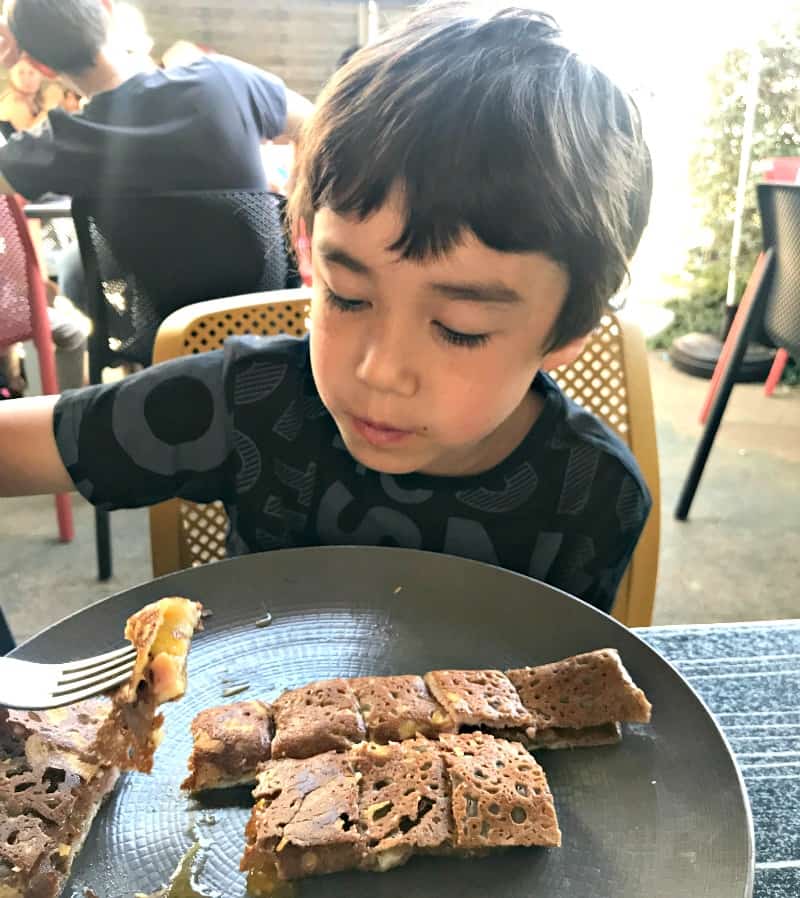
The national dish of Brittany is crêpes, and one of the best things to do here is to devour at least five – savoury and sweet. You won’t struggle to find a crêperie anywhere, but be aware that there are two types. In Lower Brittany, crêpes are made with either wheat flour or buckwheat. In Upper Brittany, they’re made from buckwheat and called galettes. We had them filled with cheese, ham, scallops, chocolate – you name it. They’re filling, delicious and reasonably priced.
Wash them down with local cider – Brittany produces some of France’s best, ranging from dry to sweet. And if you’re near the coast, don’t miss a seafood platter (plateau de fruits de mer). Oysters, langoustines, crab, whelks – eaten at a simple harbourside restaurant with a glass of Muscadet, it’s one of the great pleasures of a Brittany holiday.
Save room for the sweet stuff, too. Kouign-amann is Brittany’s famous buttery, caramelised pastry – layers of dough, salted butter and sugar, baked until crisp and golden on the outside and soft in the middle. You’ll find it in most bakeries, and the best ones are still warm. Far breton is the region’s traditional custard cake, dense and eggy, usually studded with prunes or raisins. And if you see salted butter caramels (caramels au beurre salé) at a market stall, buy a bag – they make the best edible souvenir.
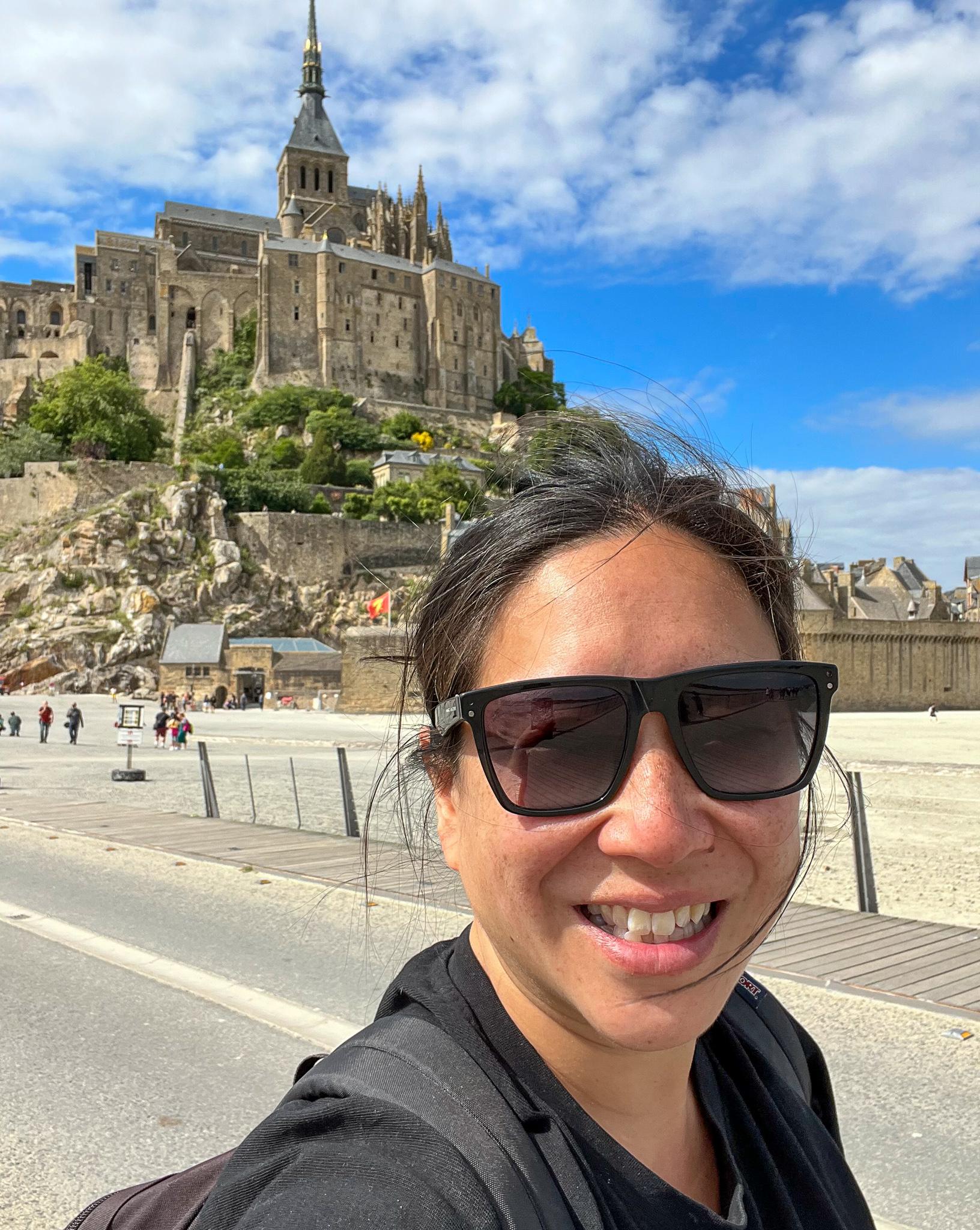
Take a day trip to Mont Saint-Michel
Technically just over the border in Normandy, but under an hour’s drive from Saint-Malo, Mont Saint-Michel is one of those places you have to see at least once. The medieval abbey sits on a rocky tidal island in a vast bay, its spire rising above a cluster of stone buildings that seem to grow straight out of the rock. It’s been a UNESCO World Heritage Site since 1979, and the bay around it experiences some of the most extreme tides in Europe – the water can rise up to 14 metres, briefly turning the mount into a true island.
You can’t drive onto the island. Park on the mainland (about 2.5km away) and either take the free shuttle bus or walk across the causeway – we’d recommend the walk if you can manage it, as the view of the mount growing larger with every step is half the experience. Once there, the village itself is free to wander. Narrow lanes wind uphill past restaurants and shops to the abbey at the summit, where the Gothic cloisters and the views across the bay are extraordinary.
Abbey tickets cost from €11 per adult, and entry is free for under 18s. It’s open daily except 1 January, 1 May and 25 December. From May to August: 9am-7pm. September to April: 9.30am-6pm. Last entry is one hour before closing. Arrive early or late afternoon to avoid the worst of the crowds – in summer, the mount can see upwards of 15,000 visitors a day. If you can, time your visit around a high tide for the full spectacle.
We’ve written a full guide to visiting Mont Saint-Michel if you’re planning a trip.
Take a boat trip in the Gulf of Morbihan
The Gulf of Morbihan in southern Brittany is a vast inland sea dotted with around 40 islands, sheltered from the Atlantic by a narrow channel. Boat trips run from Vannes, Port-Navalo and Locmariaquer, and it’s a lovely way to spend a half-day – spotting seabirds, exploring the islands and taking in views of the coastline from the water. Several boats stop at the Île aux Moines or Île d’Arz for a wander.

Best time to visit Brittany
The summer months (June to September) bring the warmest weather and the longest days, but July and August are busy – especially along the coast. June and September are ideal: warm enough for beaches, quieter, and the light on the coast is beautiful. Spring is good for walking the coastal paths before the crowds arrive. Brittany has a mild coastal climate, but the weather is changeable – pack layers and a waterproof whatever the season.
Getting to Brittany
Brittany is one of the easiest parts of France to reach from the UK. Brittany Ferries runs direct crossings from Portsmouth to Saint-Malo (overnight, around 11 hours) and from Plymouth to Roscoff. You can also take the Eurotunnel or a ferry to Calais and drive – Rennes, the capital of Brittany, is around 5 hours’ drive from Calais. Flying into Rennes, Brest or Nantes airports is another option, then hire a car to explore.
A car is the best way to get around. Public transport exists but is limited outside the main cities, and the best of Brittany – the coastal paths, villages and beaches – is spread across a large area.

Where to stay in Brittany
Brittany covers a large area, so the best base depends on what you want to see. A car is essential, and most visitors find it works well to split their time between two or three bases rather than trying to cover everything from one spot.
Saint-Malo and the Emerald Coast – Best for a first visit
If you’re arriving by ferry from Portsmouth, Saint-Malo is a natural starting point. The walled town has plenty of hotels, restaurants and atmosphere, and from here you can easily reach Dinan, Cap Fréhel, Fort la Latte and the beaches of the northern coast. It’s also within striking distance of Fougères and Vitré for a day trip inland. Stay inside or just outside the walls for the best experience.
Perros-Guirec or Lannion – Best for the Pink Granite Coast
For the Pink Granite Coast, base yourself at Perros-Guirec (a classic seaside resort with good beaches and restaurants) or the nearby town of Lannion, which has a more local feel and is slightly cheaper. Both put you within easy reach of the coastal walks, Ploumanac’h and the Sept-Îles boat trips. Trégastel is another option if you want something quieter.
Vannes or the Gulf of Morbihan – Best for southern Brittany
Vannes is an excellent base for the south. It’s a beautiful medieval town in its own right, with a lively old quarter and easy access to the Gulf of Morbihan boat trips, Carnac, the Rhuys Peninsula and Josselin. If you prefer to be closer to the coast, the area around Arzon or Locmariaquer puts you right on the Gulf with beaches and boat departures on your doorstep.
Inland Brittany – Best for a slower pace
If you want to escape the coast, the area around Josselin and the Brocéliande forest offers a quieter, greener side of Brittany. Gîtes and chambres d’hôtes are plentiful, and you’ll find far fewer tourists. It’s a good option if you’re combining Brittany with a longer road trip through France.
Frequently asked questions
How many days do you need in Brittany?
A week gives you enough time to see the highlights – the Emerald Coast around Saint-Malo, the Pink Granite Coast, the medieval towns and southern Brittany’s beaches and Carnac stones. We had five days and could have stayed longer.
What is Brittany known for?
Brittany is known for its dramatic coastline, Celtic culture and Breton heritage, medieval towns with half-timbered houses, crêpes and cider, the Pink Granite Coast, the Carnac standing stones, and seafood – particularly oysters.
Is Brittany good for families?
Absolutely. The beaches are family-friendly, the castles and caves keep children entertained, and crêperies are an easy win with even the fussiest eaters. We travelled with young children and found it worked brilliantly.
What is the best base for exploring Brittany?
It depends on what you want to see. Saint-Malo is a good base for the Emerald Coast and northern Brittany. Vannes is well placed for southern Brittany, the Gulf of Morbihan and Carnac. For the Pink Granite Coast, look at Perros-Guirec or Lannion.
What food should I try in Brittany?
Crêpes and galettes (savoury buckwheat crêpes), local cider, seafood platters, oysters, far breton (a traditional custard cake), kouign-amann (a buttery pastry), and salted butter caramels.
First time hearing about Brittany. It looks worth visiting and beautiful. Adding to my travel list. Thanks for sharing.
Brittany is totally underrated among family friendly holidays. Yet, there are beautiful things to see such as Carnac or Belle Ile (one the most beautiful islands on that side of France) and of course the cities of St Malo and Dinard. We were there a few years ago with a low cost airline for the weekend and we really loved it!
Gorgeous! So much history here and wandering around castles before eating crepes would go down very well with my daughter too.