I’d always wanted to visit Mont Saint-Michel. Ever since I first saw an image of it – this medieval abbey rising out of a tidal bay, surrounded by nothing but sand and sky – I couldn’t quite believe the place was real. It looked like something conjured from a fantasy novel. So when we finally made it, the answer to the question: ‘Is Mont Saint-Michel worth visiting?’ was settled before we’d even parked the car. The drive across the flat Normandy coastline builds the anticipation, and then there it is – this extraordinary silhouette on the horizon, getting bigger with every turn in the road. It’s every bit as beautiful as it looks in the pictures.
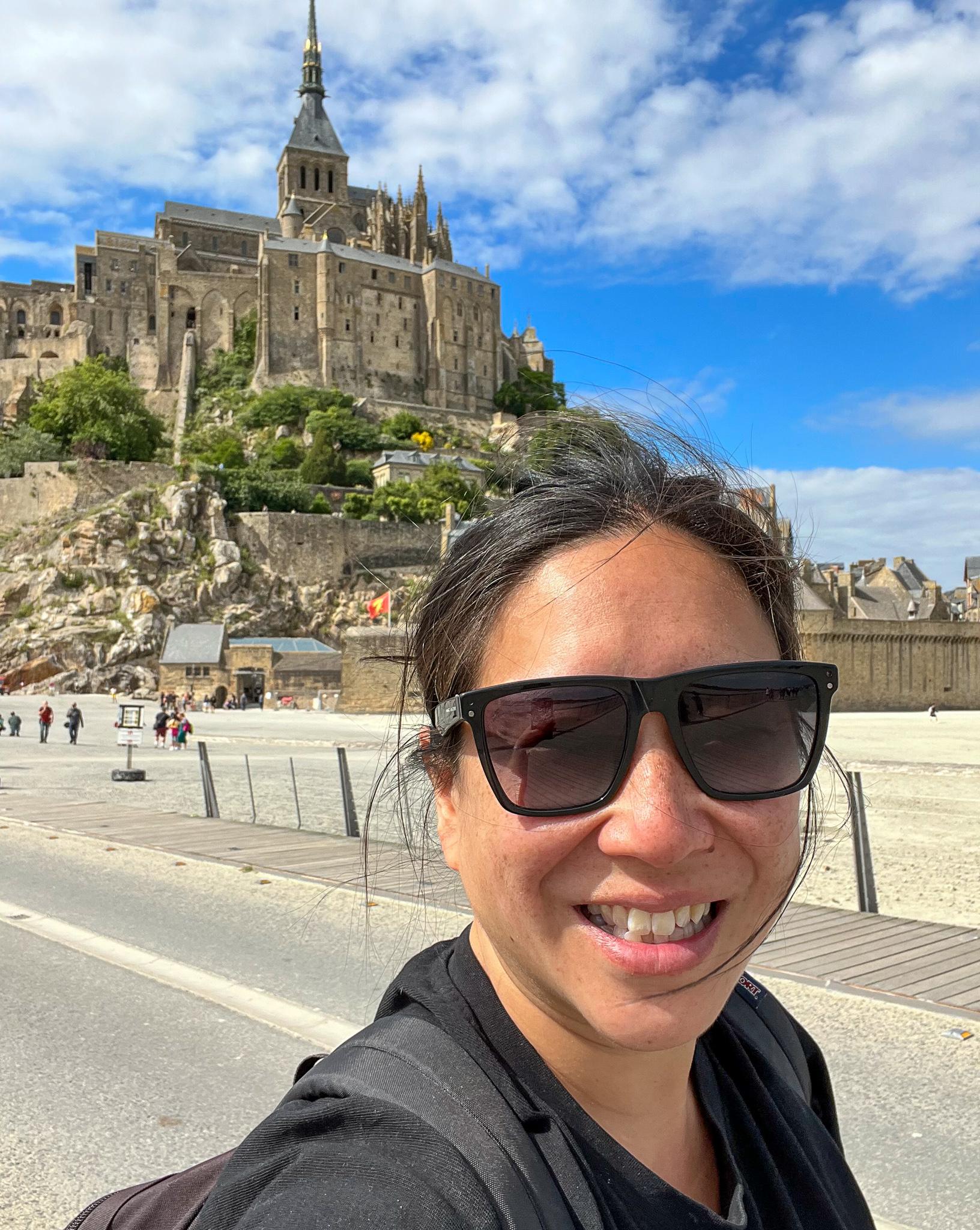
And if you’re a fan of The Walking Dead: Daryl Dixon, you’ll already know Mont Saint-Michel well. In the show, it’s “the Nest” – the headquarters of the Union of Hope community – and the production filmed on location here across both French seasons. We watched it after our visit and loved reliving the streets, the ramparts and the views through Daryl’s post-apocalyptic lens. It made us want to go back.
Quick answer: Is Mont Saint-Michel worth visiting?
Yes, without question. Mont Saint-Michel – or Mont St Michel as it’s also written – is a UNESCO World Heritage Site and historical monument in the Normandy region, one of the most visited places in France (over 3 million visitors a year), and it lives up to the hype. This beautiful place has a rich history stretching back over 1,300 years. The medieval abbey at the summit, the maze of narrow streets, the tidal bay stretching out in every direction – it’s a bucket list destination for good reason. Go in the early morning or in the shoulder season to avoid the worst of the crowds.

What it’s actually like to visit
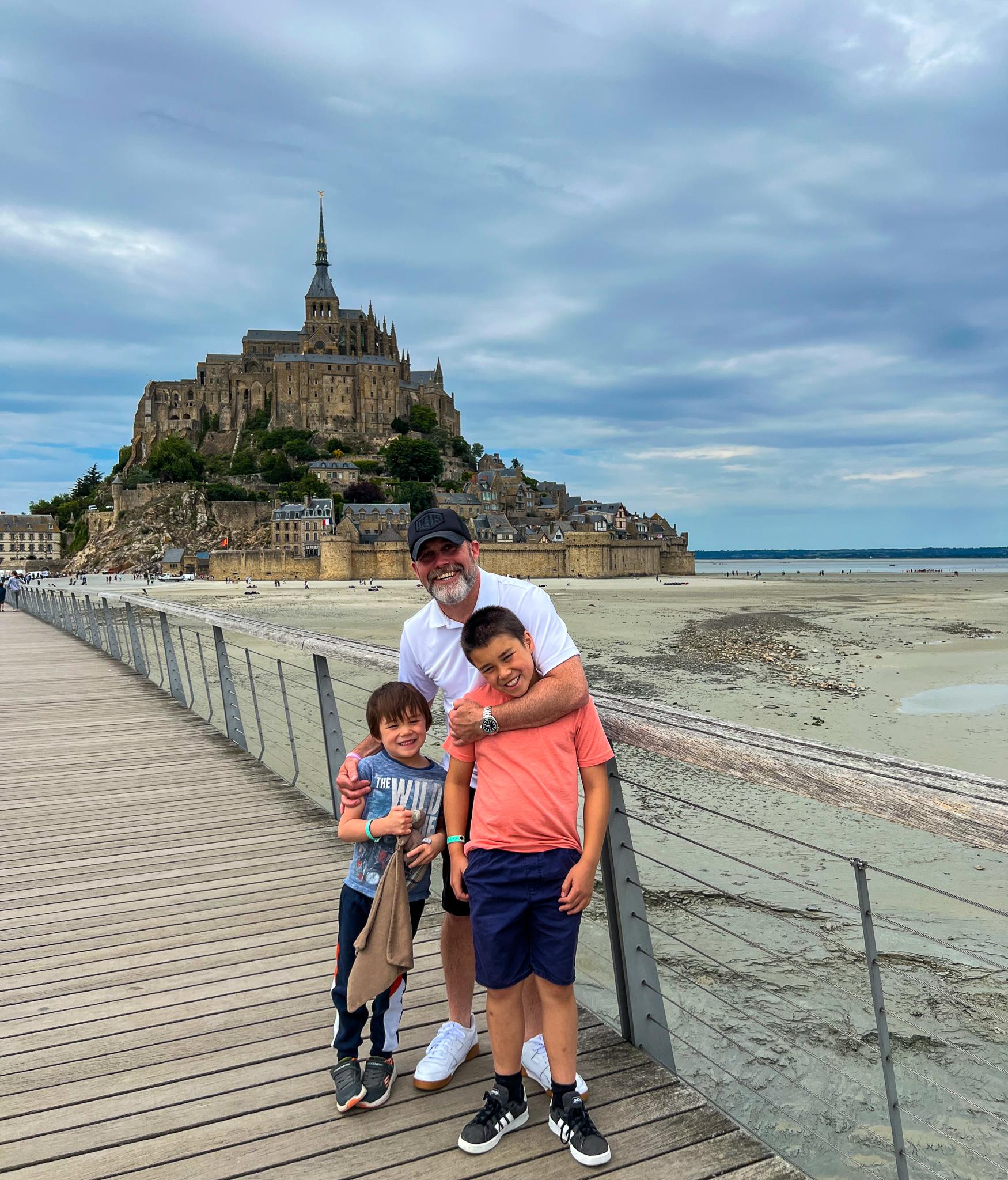
The car park (or parking lot, if you prefer) is located 2.5km from the island, so you leave your car on the mainland and either walk the causeway (about 30 minutes) or take the free shuttle bus, called “Le Passeur”, which runs every few minutes from 7:30am to midnight and drops you around 400 metres from the entrance gate. Walking the causeway is the best way to appreciate the approach – the island grows more dramatic with every step.
Once you’re through the gate, you’re into the medieval village – and the narrow lanes and maze-like streets are half the fun. The main street, Grande Rue, winds upwards through the island and you’ll find everything from hidden cafés and brasseries to souvenir shops selling Normandy figurines and medieval gear. It’s touristy, yes, but it has a genuine character that can’t be faked. The buildings are centuries old, and you can feel it. Walking through these streets is a unique experience – part theme park, part living history.
We went in May, so while it was warm and dry, it wasn’t as crowded as I imagine it gets in summer and peak season. We found space to breathe, and there were moments – especially on the ramparts and in the abbey gardens – where we had a stretch of wall or a viewpoint to ourselves.

Walk the ramparts and city walls
One of the best things we did was walk the city walls and ramparts. High up above the village, the views are exceptional – out across the bay, over the rooftops and down to the endless stretch of sand that seems to go on for miles at low tide. The kids loved it too. There’s something about standing on medieval ramparts that fires up the imagination, especially for children who can picture soldiers and lookouts keeping watch over the bay.
Visit the Mont Saint Michel Abbey
The Abbey of Mont Saint Michel sits at the very top of the island, and getting there involves a fair number of steps (it’s perched 80 metres above sea level), but the climb is well worth it. Dedicated to Saint Michael the Archangel, the architecture is remarkable – a mix of Romanesque and Gothic built over centuries – and the cloisters, refectory and views from the terraces are the kind of thing that stays with you.
Abbey tickets cost around €11-14. Under 18s get in free, as do EU citizens under 26. Audio guides are available for an extra €3 and are well worth it. The abbey is open from 9:30am to 6:30pm in the summer months and 10am to 5pm in the low season. Last entry is one hour before closing. Closed on 1 January, 1 May and 25 December.

Where to eat on the island
Fair warning – eating on Mont Saint-Michel is more expensive than on the mainland, as you’d expect from a tiny island with a captive audience. But there are options worth seeking out beyond the tourist-trap crêperies on Grande Rue.
The most famous restaurant is La Mère Poulard (also written La Mere Poulard), known for its fluffy omelettes whipped up in copper pans since 1888. It’s a bit of an institution, though opinions are divided on whether the omelette justifies the price tag.
For something more relaxed, there are several smaller cafés and brasseries tucked into the side streets off the main drag – we found a spot serving excellent moules-frites with a view over the ramparts, and the kids were happy with crêpes (naturally). If you’re on a budget, bring a picnic and find a spot on the walls or near the entrance – the views are free and arguably better than any restaurant terrace.
A brief history of Mont Saint-Michel
The story of Mont Saint-Michel begins in 708 AD when, according to legend, the Archangel Michael appeared three times to Saint Aubert, Bishop of Avranches, instructing him to build a church on the rocky tidal island then known as Mont Tombe. Aubert apparently ignored the first two visions. The third time, the Archangel supposedly burned a hole in the bishop’s skull with his finger. That got his attention.
What started as a modest oratory grew over the following centuries into the magnificent medieval abbey that dominates the skyline today. In the 10th century, Benedictine monks established a monastery here, and pilgrims began making the dangerous crossing through the quicksands and fast-moving tides of the bay. During the Middle Ages, it became one of the most important pilgrimage sites in the Christian world.
The abbey survived the Hundred Years’ War (the island was never taken by the English, despite repeated attempts), served as a prison during the French Revolution and into the 19th century, and was designated a UNESCO World Heritage Site in 1979. Today, a small community of monks and nuns from the Monastic Fraternities of Jerusalem still live and worship in the abbey. Only around 20-30 people live permanently on the island.

Don’t miss the gardens
The gardens around the abbey are well worth a wander and often overlooked by visitors rushing through. You end up finding little paths to different sections, and we discovered a lovely spot to order some drinks overlooking the bay. The beach below seemed to go on for miles, with tiny figures walking across the sand at low tide. It’s a peaceful contrast to the busier streets lower down.
Staying overnight on the island
I’ll admit – I felt jealous of the people wheeling their suitcases through the gate, clearly staying on the island for a night or two. Once the day-trippers leave in the late afternoon, Mont Saint-Michel transforms into something much quieter and more atmospheric. The medieval streets empty out, the light changes, and you get the place almost to yourself. If the budget allows, it’s meant to be a special experience. Island hotels start from around €280 per night, while mainland hotels in nearby Beauvoir or Pontorson are much more affordable at €65-160 per night.

The tides
Mont Saint-Michel is a tidal island, and the bay has some of the biggest tidal ranges in Europe. At high tide, water can surround the island completely (especially during spring tides around full and new moons). At low tide, the sand stretches out as far as you can see. Both are worth experiencing – though the island is accessible at all times thanks to the raised causeway built in 2014.
If you want to see the dramatic high tide, check the tide tables before your visit and aim for a spring tide day with a coefficient above 100. The water comes in fast – famously described as arriving at the speed of a galloping horse, though the reality is a little calmer. Bay walks at low tide with a certified guide are also popular and give you a completely different perspective on the island.
Best time to visit Mont Saint-Michel
May, June and September are ideal – warm weather, long days, and fewer crowds than the July-August peak when the island can see upwards of 15,000 visitors a day. If you can, arrive early in the morning (before 10am) or in the late afternoon when the day-trippers start to leave. Winter is quieter and cheaper, but daylight hours are short and some restaurants close seasonally.
How to get to Mont Saint-Michel
Mont Saint-Michel sits on the Normandy-Brittany border in northwest France, roughly 360km west of Paris and 55km south of Saint-Malo.
By car: The most flexible option. From Paris, take the A13 towards Caen, then the A84 towards Avranches – around 4 hours. From Saint-Malo, it’s about an hour. The main car park has around 4,000 spaces and is open 24 hours. Parking costs around €15 per day and includes access to the free shuttle.
By public transport: TGV from Paris Gare Montparnasse to Rennes (1.5 hours), then connecting bus (1.5 hours). Direct coach services also run from Rennes train station.
Mont Saint-Michel as a day trip from Paris
Mont Saint-Michel is one of the most popular day trips from Paris, though be prepared – it’s a long day. The drive is around 4 hours each way (roughly 360km via the A13 and A84 motorways), so you’re looking at 8 hours of driving plus your time on the island. It’s doable, but tiring. The best approach is to leave Paris early (by 6am if you can) to arrive before the morning rush, spend 4-5 hours exploring, and drive back in the late afternoon.
If you don’t have a car, several companies run guided bus tours from Paris. These typically take 12-14 hours and include transport, a guided tour and abbey entry. Prices range from around €65 to €150 per person, depending on the operator and group size. Alternatively, take the TGV from Paris Gare Montparnasse to Rennes (1.5 hours), then a connecting bus to Mont Saint-Michel (another 1.5 hours). Bus tours are a good option if you don’t want to worry about driving or navigation.
Is the day trip from Paris worth it? If Mont Saint-Michel is high on your bucket list and you won’t be visiting Normandy or Brittany separately, then yes – it’s a very long day but a rewarding one. If you’re planning a wider road trip through northern France, you’re better off building it into your Brittany or Normandy itinerary. From Saint-Malo, it’s only about an hour’s drive, making it an easy half-day trip.

Tips for visiting Mont Saint-Michel
Wear comfortable shoes. The village is all cobbled streets and steps, and the abbey is at the top of a steep climb. Heels and flip-flops won’t cut it.
Bring water. Especially in summer. Everything on the island is more expensive than the mainland, so filling a bottle before you arrive saves both money and hassle.
Check the tide times. A visit at high tide looks completely different to one at low tide. Both are worth seeing, but knowing what to expect enhances the experience.
Allow at least 3-4 hours. That gives you enough time to explore the village, walk the ramparts, visit the abbey and stop for something to eat. If you’re walking from the car park rather than taking the shuttle, add another 30 minutes each way.
Book abbey tickets online in advance during peak season to skip the queue.
Frequently asked questions
Is Mont Saint-Michel worth visiting?
Absolutely. It’s one of the most extraordinary places in France – the combination of the tidal island setting, the medieval architecture and the sheer scale of the abbey make it unlike anywhere else. Go early or visit in the shoulder season to get the most out of it.
How long do you need at Mont Saint-Michel?
A minimum of 3-4 hours, including the abbey visit. If you want to explore at a relaxed pace, have a meal and walk the ramparts, half a day is more comfortable. Staying overnight lets you experience the island without the crowds.
Is Mont Saint-Michel free to visit?
The village and ramparts are free to enter, day or night. The abbey costs around €11-14 for adults (under 18s free). Parking on the mainland costs around €15 per day and includes the free shuttle to the island.

Can you still walk to Mont Saint-Michel?
Yes. A raised causeway connects the mainland to the island and is accessible at all times, regardless of the tide. You can walk it in about 30 minutes from the car park, or take the free shuttle bus.
Is Mont Saint-Michel in Normandy or Brittany?
Officially, Mont Saint-Michel is in Normandy – just. It sits right on the border between the two regions, and Brittany has long contested the claim. If you’re exploring Brittany, it’s an easy day trip from Saint-Malo.
Where was The Walking Dead: Daryl Dixon filmed?
Mont Saint-Michel features heavily in The Walking Dead: Daryl Dixon as “the Nest”, the main settlement of the Union of Hope community. The show filmed on location at Mont Saint-Michel and across France for its first two seasons.