From my vantage point at the Piazzale Michelangelo, perched on a hill on the left bank of the Arno River, I could see the steaming heat shimmering across the beautiful rooftops of Florence – the iconic Duomo dome standing proud against a backdrop of Chianti hills and valleys. I was with my mum, soaking it all in during my first trip to Italy, and it’s a memory that’s stayed with me for over 25 years.
Fast-forward to my second visit, and it was a wholly different experience. Driving past the same spot, all I could make out through the dark grey skies and pelting rain was a blur of buildings – although that famous Duomo was still easy to spot in the distance. Different weather, different company (this time a group of friends), but Florence had lost none of its magic.
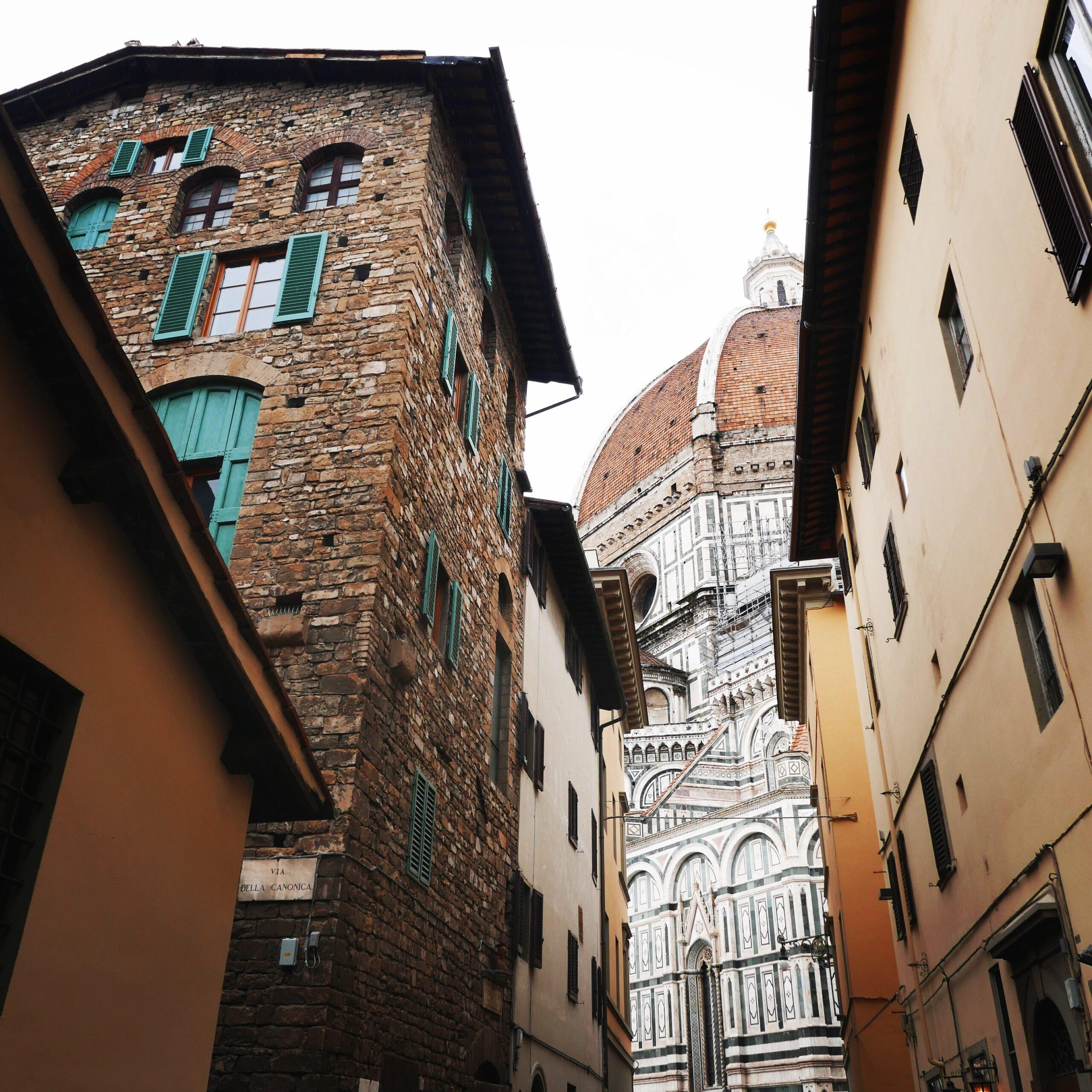
I’ve now visited Florence twice, and both trips left me wanting more. It’s a compact city that rewards wandering – one minute you’re standing face-to-face with a Botticelli masterpiece, the next you’re eating the best pistachio gelato of your life in a backstreet gelateria. Whether you’re visiting for a day trip from Tuscany or settling in for a long weekend, this guide covers the best things to do in Florence, from the must-see sights to the experiences you won’t find in every guidebook.
Florence quick facts
Where: Tuscany, central Italy. Florence (Firenze) is the regional capital.
Getting there: Florence Airport (Peretola/FLR) is 5km from the centre. Pisa Airport (PSA) is about 80 minutes by bus or train. Florence’s Santa Maria Novella station has fast trains from Rome (1.5 hours), Venice (over 2 hours) and Milan (1 hour 40 minutes).
Getting around: The historic centre is compact and walkable – most major sights are within 15–20 minutes on foot from each other.
Currency: Euro (€)
Language: Italian, though English is widely spoken in tourist areas.
Best time to visit: April to June and September to October for pleasant weather and manageable crowds. July and August are hot and busy. Winter is quieter but some attractions have reduced hours.
The best things to do in Florence
Stand beneath the Duomo and climb Brunelleschi’s dome
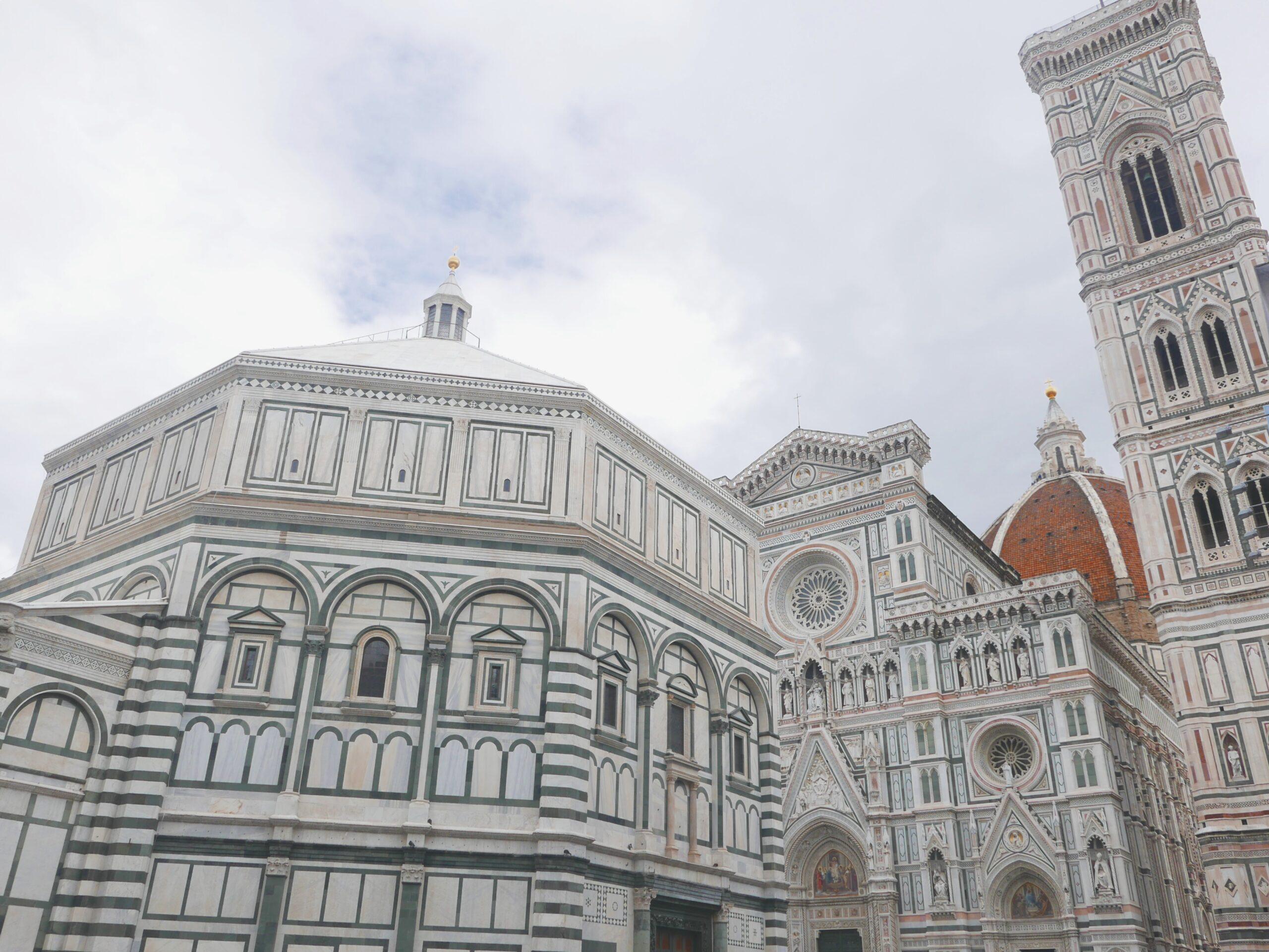
No matter how many photos you’ve seen, nothing prepares you for the sheer scale of Florence’s cathedral – the Cattedrale di Santa Maria del Fiore – when you first walk into Piazza del Duomo. The facade, clad in white, green and pink marble, is extraordinary up close, and the dome designed by Filippo Brunelleschi has dominated the city skyline since the 15th century.
Entering the cathedral itself is free, and worth it for the interior frescoes alone – look up to see Giorgio Vasari and Federico Zuccari’s enormous Last Judgement painted inside the dome. But the real highlight is climbing the dome. It’s 463 steps through narrow, winding passages between the inner and outer shells, and there’s no lift – but the panoramic views from the top are some of the best in Florence.
If the dome climb feels too much, Giotto’s Bell Tower next door offers a similarly spectacular view for 414 steps, with the bonus of being able to photograph the dome itself from above.
Practical details: The cathedral is free to enter (expect queues for security). For the dome, bell tower, baptistery, crypt and museum, you’ll need a combined ticket. The Brunelleschi Pass (all monuments, including the dome) costs €30 and is valid for 72 hours. The Giotto Pass (everything except the dome) is €20. Book dome climb time slots well in advance – they sell out weeks ahead in peak season. Official tickets at duomo.firenze.it.
Opening hours: Cathedral: Mon–Sat roughly 10:15am–3:45pm (closed Sundays for services). Dome: Mon–Fri 8:15am–6:45pm, Sat 8:15am–4:30pm. Hours vary seasonally – always check the official site before visiting.
See Botticelli’s Birth of Venus at the Uffizi Gallery
The Uffizi is one of the most important art museums in the world, and it was one of my personal highlights of Florence. Originally constructed as offices (uffici) for the Florentine magistrates under the Medici dynasty – whose banking empire saw them rise to power and rule Florence for over 300 years – the building now has an extraordinary collection of Renaissance masterpieces.
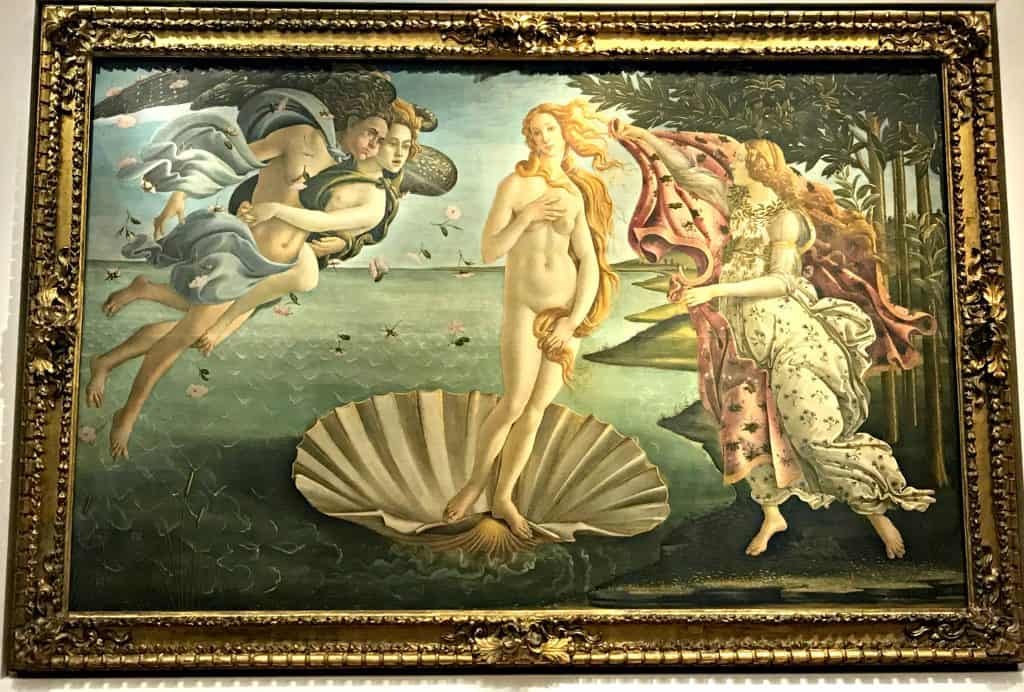
I had no idea we’d come face-to-face with Sandro Botticelli’s Birth of Venus – such was the surprise of seeing it so close that it took my breath away. We learned that it was one of the first major non-biblical female nudes in Italian art since antiquity.
Even better was being able to peek through the crack of a door and catch a glimpse of the stairwell leading to the famous Vasari Corridor – the secret passageway built for the Medici family to travel between their palaces. The corridor has now reopened to the public after eight years of restoration (it closed in 2016), and you can walk its entire 750-metre length from the Uffizi over the Ponte Vecchio to the Boboli Gardens. If you’ve read Dan Brown’s Inferno, you’ll know exactly why this passageway is so fascinating.
Allow at least two to three hours to see the highlights, more if you want to explore in depth. The gallery spans 50 rooms across multiple floors, with works by Leonardo da Vinci, Michelangelo, Caravaggio and Raphael alongside the Botticellis.
Practical details: Standard ticket €25 (on-site) or €29 (advance booking). From 4pm, there’s a discounted afternoon ticket for €16 on-site or €20 online – a smart way to visit if you don’t need the full day. Combined Uffizi + Vasari Corridor ticket €43/€47. The 5-day Passepartout covering Uffizi, Pitti Palace and Boboli Gardens is €40 and great value if you plan to visit all three. Closed Mondays.
Tip: Book at least a month ahead in peak season – this museum regularly sells out. Early morning (8:15am opening) or after 4pm are the quietest times.
Marvel at Michelangelo’s David at the Galleria dell’Accademia
The Galleria dell’Accademia exists essentially to show off one masterpiece, and what a masterpiece it is. Michelangelo carved David from a single block of white Carrara marble between 1501 and 1504, and the statue was originally displayed in Piazza della Signoria before being moved here in 1873 to protect it from the elements.
The gallery is much smaller than the Uffizi, so you won’t need a huge amount of time – most visitors spend one to two hours. While you’re there, don’t miss Michelangelo’s unfinished Prisoners (also called the Slaves), which line the hall leading to David. They appear to be struggling to free themselves from the marble, and they’re a fascinating insight into his sculpting process. There’s also a room of ornate musical instruments from the Medici and Lorraine collections.
Practical details: Full ticket €16. New for March 2026: a combined ticket with the Museo Nazionale del Bargello for €26 (valid 48 hours). Open Tuesday to Sunday, 8:15am–6:50pm. Closed Mondays, 1 January and 25 December. Book in advance – this museum sells out months ahead in summer.
Explore Piazza della Signoria and Palazzo Vecchio
Piazza della Signoria has been Florence’s political heart for centuries, and it still buzzes with energy today. The open-air sculpture gallery under the arches of the Loggia dei Lanzi is free to wander through – look for Benvenuto Cellini’s bronze Perseus with the Head of Medusa and Giambologna’s Rape of the Sabine Women. There’s also a replica of Michelangelo’s David standing in the spot where the original once stood.
Towering over the square is Palazzo Vecchio, the ‘Old Palace’, which has served as Florence’s seat of government since the 13th century and is still the city’s town hall. Inside, the Salone dei Cinquecento (Hall of the Five Hundred) is jaw-dropping – a vast room decorated with enormous frescoes by Giorgio Vasari depicting Florentine military victories. The palace also has secret passages and private Medici apartments to explore.
For views, climb the Arnolfo Tower for a perspective of the Duomo that most visitors miss entirely.
Practical details: Piazza and Loggia dei Lanzi are free. Palazzo Vecchio museum: approximately €19 full price (under 18s free). Arnolfo Tower requires a separate ticket. Book at ticketsmuseums.comune.fi.it. The palace occasionally closes for civic events, so check ahead.

Cross the Ponte Vecchio
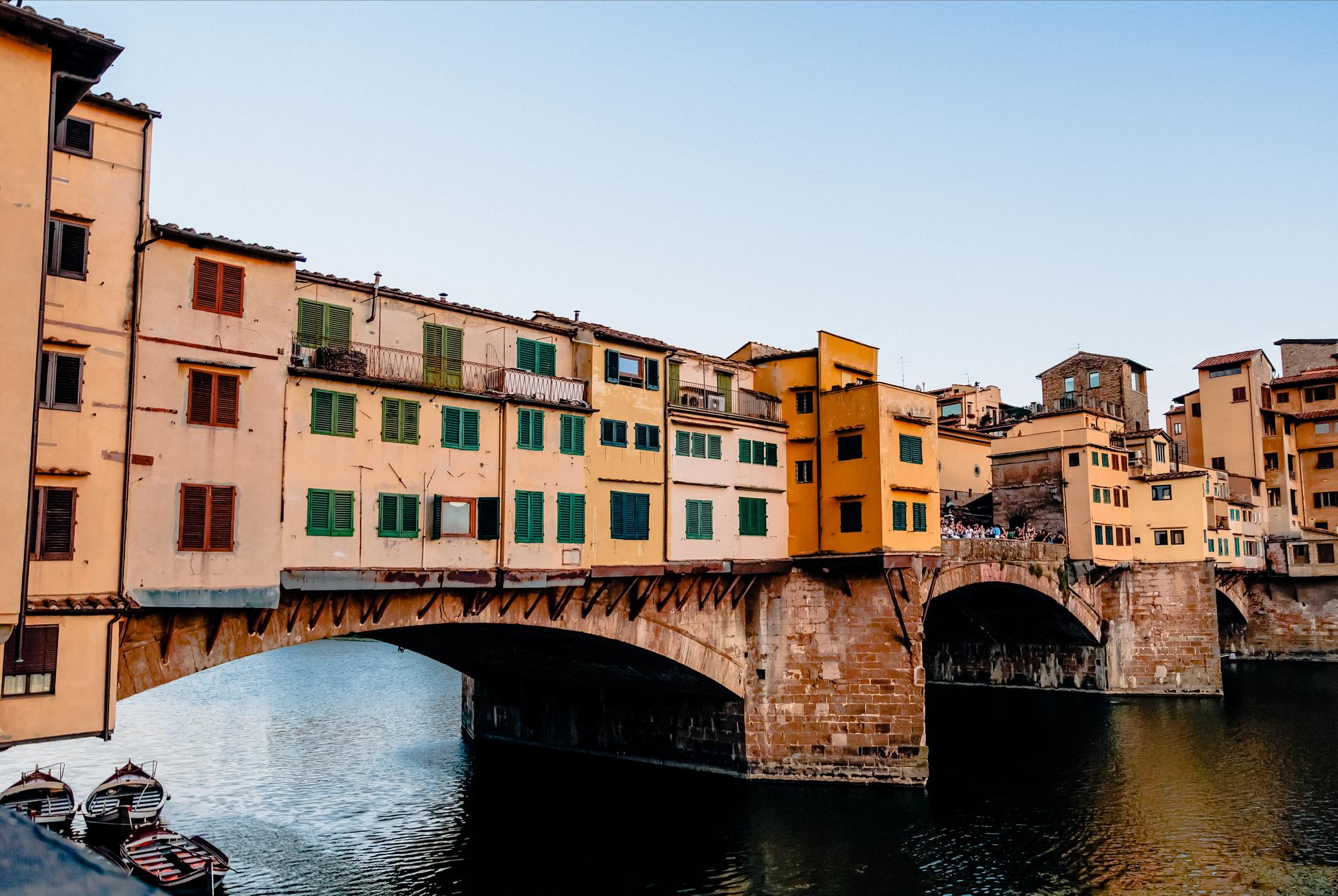
Florence’s most famous bridge – and its oldest – has spanned the Arno River since medieval times. It’s lined with jewellery shops today, but originally had butchers and tanners until the Medici ordered them replaced with goldsmiths and jewellers in the 16th century (apparently the smell was too much for the Vasari Corridor above).
It does get very busy, especially around midday. For the best photographs, I’d recommend viewing the bridge from Ponte Santa Trinita – one bridge along – which is much quieter and gives you that classic postcard angle. Late afternoon light is particularly lovely.
Watch the sunset from Piazzale Michelangelo
This hilltop square on the south bank of the Arno delivers one of the most memorable views in all of Italy. The panorama takes in the Duomo, Palazzo Vecchio, the Ponte Vecchio and the Arno, backed by the rolling Tuscan hills.
It’s about a 20-minute uphill walk from the river, or you can take bus 12 or 13 from the centre. Arrive at least an hour before sunset to get a good spot – it gets crowded, and street vendors and musicians add to the atmosphere. Bring a bottle of wine and something to nibble on; it’s the kind of place where you’ll want to linger.
My first visit here, years ago, with my mum, is one of my most treasured travel memories. I wasn’t able to recreate that moment on my second trip – the rain saw to that – but even through grey skies, the view was still unmistakable.

Eat your way through the Mercato Centrale
Florence’s central market is a food lover’s paradise. The ground floor is a traditional fresh produce market where you’ll find stalls selling cheeses, cured meats, fresh pasta, olive oil and seasonal fruit and vegetables. The upper floor is a more modern food hall with prepared food counters serving everything from lampredotto (tripe sandwiches – a classic Florentine street food) to pizza, pasta, and craft beer.
It’s an ideal spot for a casual lunch, especially if you’re travelling with kids or a group who all fancy different things. Get there earlier in the day for fewer crowds and to see the market at its most authentic.
Location: Piazza del Mercato Centrale, in the San Lorenzo district. Free entry. The ground floor market operates mornings; the upper food hall is open daily until late evening.

Wander the Oltrarno district
Cross the river to Florence’s south bank, and the atmosphere shifts noticeably. The Oltrarno is less touristy, more lived-in, with artisan workshops, independent cafes and a neighbourhood feel that’s a lovely contrast to the busy historic centre.
Santo Spirito square, with its plain-fronted church designed by Brunelleschi, hosts a small morning market and comes alive with aperitivo crowds in the evenings. The surrounding streets are dotted with leather workshops, picture framers and antique restorers – many of them still using traditional techniques passed down through generations.
If you have time, seek out Piazza della Passera, a tiny square with a handful of restaurants that feels like a secret even though it’s only minutes from the Ponte Vecchio.
Visit Pitti Palace and the Boboli Gardens
Palazzo Pitti, the Medici family’s main residence from the mid-16th century, is enormous. The Palatine Gallery contains a major collection of Renaissance paintings, while the Gallery of Modern Art, the Costume and Fashion Museum, and the Treasury of the Grand Dukes occupy other wings.
Behind the palace, the Boboli Gardens stretch up the hillside in a beautiful expanse of formal Italian landscaping – fountains, grottos, terraces and sculptures set among cypress trees and clipped hedges. It’s one of the best places in Florence to escape the crowds and find some green space.
Practical details: Pitti Palace: €16/€19. Boboli Gardens: €10/€13. Combined Pitti + Boboli: €22/€25. Or use the 5-day Passepartout (€40), which includes the Uffizi too. The gardens close an hour before sunset – check seasonal times.
Discover the Basilica di Santa Croce
Often called the ‘Pantheon of Italian Glories’, Santa Croce is the burial place of Michelangelo, Galileo, Machiavelli and the composer Rossini, among others. The interior is full of significant frescoes by Giotto and his followers, and there’s a lovely cloister accessible from inside.
It’s slightly east of the main tourist cluster, so it’s a bit quieter than the Duomo area, and the piazza outside is one of Florence’s largest public squares – a popular gathering spot and the traditional home of the annual calcio storico, a rough-and-tumble historical football match.
Practical details: Entry approximately €8–10. Check santacroceopera.it for current prices and hours.
Take in the Basilica di Santa Maria Novella
If you’re arriving by train, you’ll pass this beautiful church as you walk towards the centre – and it makes a wonderful first impression. The green-and-white marble facade is one of Florence’s most elegant, and inside you’ll find significant frescoes, including Masaccio’s Trinity and Ghirlandaio’s cycle in the Tornabuoni Chapel.

Eat gelato – and learn to make it
Florence is widely considered the birthplace of gelato, and there’s no shortage of places to put that claim to the test. During our foodie tour of the city, we visited Perché No!, the oldest gelateria in Florence, which has been serving artisan gelato since 1939. It’s tucked into a side street off Via dei Calzaiuoli, just north of Piazza della Signoria.
We were lucky enough to go behind the scenes with owner Ciro Cammilli – a gelato and semifreddo master – at his gelato academy around the corner. He told us that it was at the request of Catherine de Medici that semifreddo was first invented – a mixture of snow, honey and fruit. Ciro showed us an old churner that needed to be operated by hand for at least 40 minutes to get the right consistency. Luckily, only high-tech equipment is used now, which does the job in half the time.
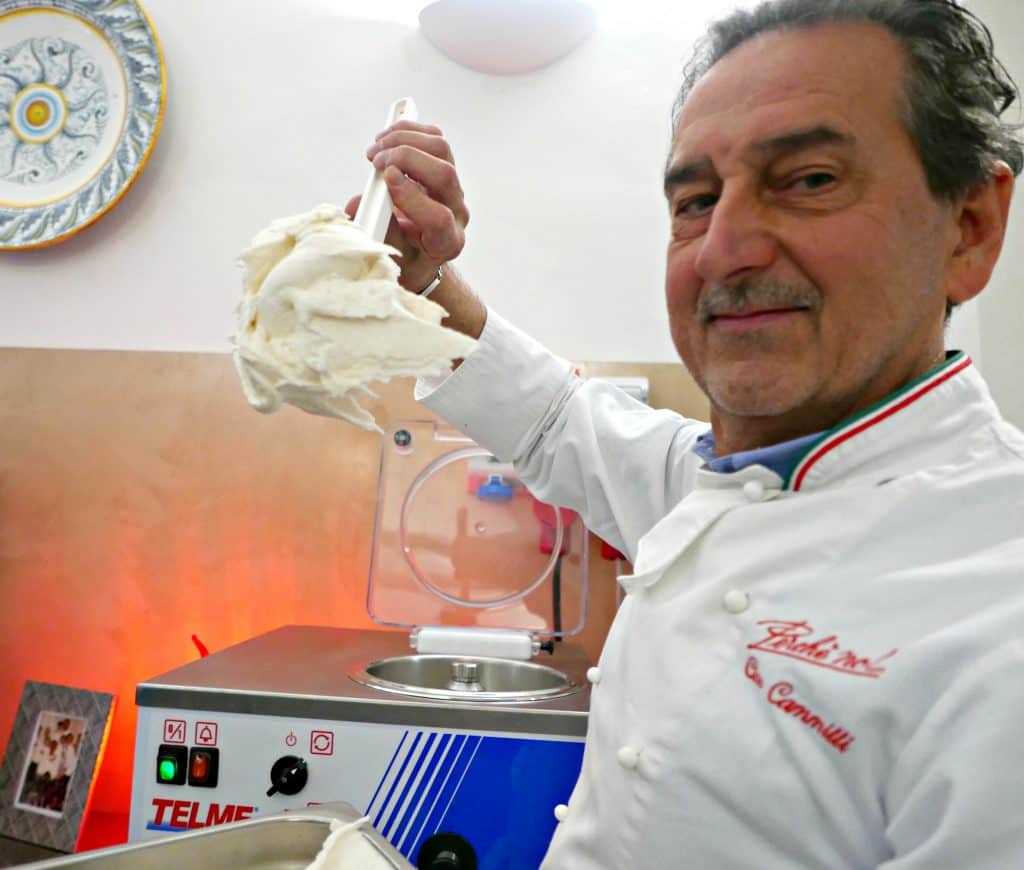
During the class, volunteers set about making banana semifreddo, which turned out to be divine – who knew that cold water, sugar, lemon juice, fruit and a pinch of salt could be mixed to make something so delicious? Even though it was cold and wet outside, it didn’t deter any of us from eating plenty of the treats on offer, including a glass of prosecco and a combination of tomato sorbet, olive oil and basil served on bread. As strange as it sounds, it was really tasty.
The more traditional flavours of lemon, blueberry, pistachio and sesame are still Ciro’s preferred choice, while the shop’s best-seller is chocolate – and I can understand why. It was decadent and creamy. I also discovered that pistachio is my favourite gelato flavour – paired with strawberry, it was scrummy and moreish.
Perché No! is at Via dei Tavolini 19R. Other well-regarded gelaterias include Gelateria de’ Medici, La Sorbettiera (in the Oltrarno) and Gelateria La Carraia near the river. If you want to try making your own, several workshops around the city offer hands-on gelato classes – it’s a brilliant activity for families and foodies alike.
Climb to San Miniato al Monte
If Piazzale Michelangelo is the famous viewpoint, San Miniato al Monte is the one the locals prefer. This Romanesque church sits a few minutes further up the hill from the piazzale and offers equally stunning views with a fraction of the crowds. The church’s facade of geometric green-and-white marble is beautiful, and the interior features an intricate marble floor and Byzantine-style mosaics.
If you time your visit for late afternoon, you may hear the Benedictine monks chanting vespers – an atmospheric experience.
Browse the leather markets of San Lorenzo
The streets around the Basilica di San Lorenzo are filled with outdoor stalls selling leather goods – bags, belts, jackets and wallets. Quality varies wildly, so have a careful look and don’t be afraid to negotiate. For higher-quality leather, head to the workshops in the Oltrarno or the Santa Croce leather school inside the basilica complex.
Visit Palazzo Strozzi for contemporary art
While Florence is synonymous with Renaissance art, Palazzo Strozzi offers something different – major temporary exhibitions of modern and contemporary art inside a grand 15th-century palace. The building itself is one of the finest examples of Renaissance civic architecture, with a beautiful inner courtyard that’s free to enter.
The exhibitions change regularly and are always well-curated, making this a great option if you want a break from frescoes and altarpieces. Check their website for what’s showing during your visit.
Location: Piazza Strozzi, a short walk from Piazza della Repubblica.

Find the secret gardens – Bardini and the Rose Garden
Florence has more green space than most visitors expect, and some of the loveliest spots are slightly off the beaten path.
Giardino Bardini is a beautifully restored terraced garden on the hillside behind the Oltrarno, with wonderful views across the city – especially in spring when the wisteria is in bloom. It’s much quieter than the Boboli Gardens and has a small museum of art and costume inside the villa.
The Giardino delle Rose (Rose Garden) sits just below Piazzale Michelangelo and is free to enter. It’s a peaceful spot with around 350 varieties of rose, plus a handful of sculptures by the Belgian artist Jean-Michel Folon. Visit in May or June when the roses are at their peak, and you’ll have the bonus of that classic Florence panorama as a backdrop.
Take a walking tour of the historic centre
Even if you prefer to explore independently, a guided walking tour on your first day is a smart investment. A good guide will walk you past the key landmarks – the Duomo, Piazza della Signoria, the Ponte Vecchio, Piazza della Repubblica – while filling in the stories behind them: the feuding Medici politics, the bonfires of Savonarola, the reason the streets are paved in the distinctive grey pietra serena stone.
The best walking tours cover the city centre in about two to three hours and give you a mental map of Florence that makes the rest of your trip much easier to navigate. Book a small-group or private tour for a better experience – the large group tours can feel rushed.
Explore Piazza della Repubblica and its historic cafes
This grand square was built in the late 19th century on the site of Florence’s old Roman forum, and later the medieval market. It’s a big, open space dominated by a triumphal arch and surrounded by elegant buildings housing some of Florence’s most famous historic cafes.
Caffè Gilli (established 1733) and Caffè Paszkowski are both beautiful places to stop for a coffee or an aperitivo, though you’ll pay a premium for the setting. The piazza also has a lovely antique carousel that younger children will enjoy, and it comes alive in the evenings with street musicians and performers.
Go on a food tour through the backstreets
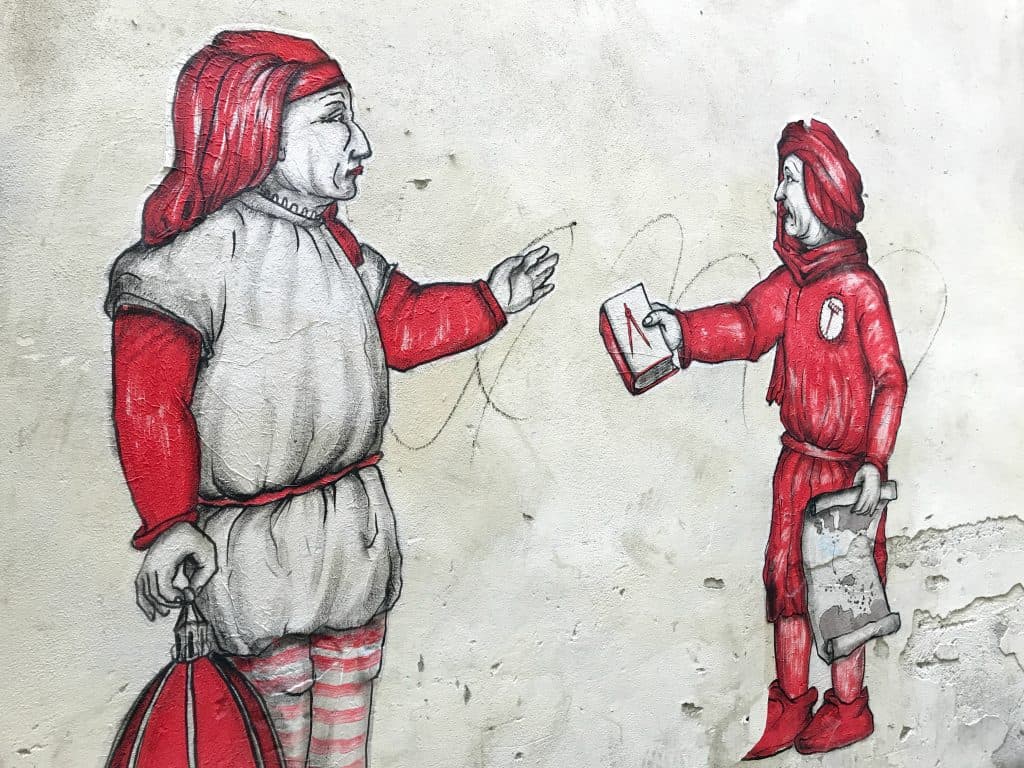
On my second trip, we joined a food tour that took us from the buzzy Piazza della Signoria across the Ponte Vecchio and deeper into the backstreets, where we came across not only fabulous street art and architecture, but a more authentic feel for the city – away from the main tourist hotspots.
We were originally going to visit the Mercato Centrale, but plans changed, and our guide Raffaela took us to a small farmers’ market in a more residential district instead. This meant fewer crowds and a chance to experience a proper Florentine Sunday morning – browsing local stalls and drinking cappuccino in one of Raffaela’s regular hangouts. It was a lovely reminder that some of Florence’s best moments happen away from the headline attractions.
Food tours typically run for two to four hours and include multiple tastings. Look for ones that venture beyond the main tourist areas – those tend to be the most rewarding.
Things to do in Florence with kids
Florence is absolutely doable with children – and I say that as someone who’s spent a lot of time figuring out which European cities work well for families.
On my second trip to Florence, I was part of a group exploring whether the city works for young families, and I was impressed. While really small children may find it tiring walking the Florentine streets (make sure you bring your buggy), there’s plenty to explore with kids. We experienced two family-focused tours, and both were brilliant:
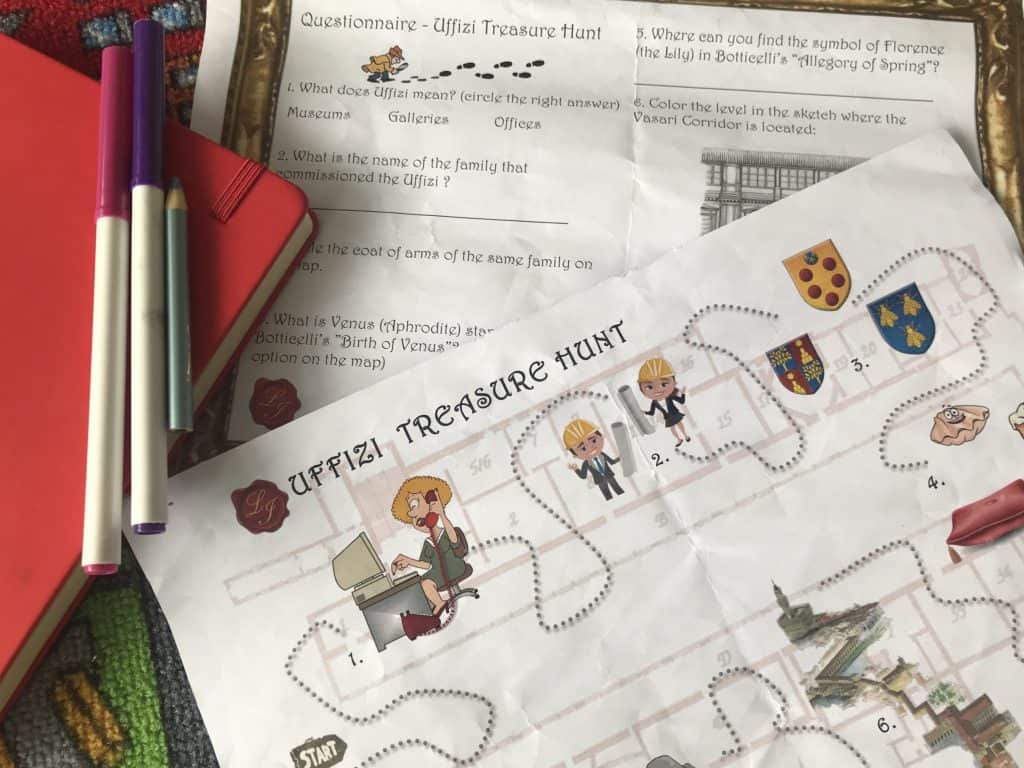
The Uffizi Treasure Hunt: Our guide, Raffaela – a trained artist – handed out a kit containing a treasure hunt map, a questionnaire and colourful pens. She engaged the children first by talking about art in general and then by telling them the fascinating history of the Medici family and specific masterpieces by Botticelli, Michelangelo and Da Vinci. The tour lasts around two hours, and at the end, each child receives a prize for completing the hunt. It was just enough time to discover the most important pieces without anyone losing interest. Raffaela’s stories and insight had me enthralled, too.
The gelato-making class: This is an absolute winner for kids of any age. Learning how gelato is made, getting hands-on with the ingredients and then eating as much as you can manage – it doesn’t get better than that.
More kid-friendly things to do in Florence
The Leonardo da Vinci Interactive Museum is a compact museum in the historic centre, filled with life-size wooden replicas of Leonardo’s inventions – flying machines, gear systems, bridges, optical devices – and children are encouraged to touch and operate them. It’s hands-on in a way that most Florence museums aren’t, and it works well for ages five and up. Entry is around €10 for adults, €8 for children aged 5–17.
Palazzo Vecchio children’s tours are worth looking into if you’re visiting with older kids. The museum runs family-focused programmes (available in English) that bring the Medici story to life – children explore secret passageways and learn how Renaissance children lived. Check the Palazzo Vecchio website for current family programmes.
The Stibbert Museum is a hidden gem slightly outside the centre, housed in a villa surrounded by parkland. It contains an extraordinary collection of armour and weapons from across the centuries and around the world, including a hall of mounted knights in full armour. If your children have any interest in castles, knights or history, this is their place. The park outside is a bonus for letting off steam.
Rub Il Porcellino’s nose at the Mercato Nuovo near the Ponte Vecchio. This bronze boar fountain is a Florence tradition – rub his snout for good luck and put a coin in his mouth, hoping it falls through the grating below. Children love it, and it makes for a great photo stop.

The antique carousel in Piazza della Repubblica is a simple pleasure but a reliable one – younger children will enjoy a ride while you grab a coffee from one of the grand cafes surrounding the square.
Beyond these, Florence has plenty of everyday kid-pleasers: pizza by the slice everywhere you turn, the open-air sculptures in Piazza della Signoria (free), the Boboli Gardens for running around, and gelato stops on every corner. The Museo dell’Opera del Duomo has interactive elements that older children tend to enjoy, and the Il Bargello museum is set inside a small castle, which adds instant appeal.
Tips for visiting Florence with kids: Keep museum visits short and focused – one major museum per day is plenty. Add gelato breaks and piazza time between sights. A food tour is a great way to keep kids engaged while exploring – there’s always the next tasting stop to look forward to. And if the walking gets too much, the Boboli Gardens and the Rose Garden both offer green space where children can run around freely.
Where to eat and drink in Florence
Florence is the capital of Tuscany, and the regional food is straightforward, hearty and based on outstanding ingredients. Florentine cooking doesn’t rely on complicated sauces or fancy presentation – it’s about quality produce prepared simply. A few things to seek out:
Bistecca alla fiorentina – the city’s famous T-bone steak, cut from Chianina cattle, typically served rare and priced by weight (expect to pay €45–60 per kilo). It’s a sharing dish and an experience worth having at least once. Most trattorias will ask how you’d like it cooked, but the traditional answer is al sangue (rare).
Lampredotto – tripe served in a bread roll from street carts dotted around the city. More delicious than it sounds, and very much a local favourite. You’ll find a good cart near the Mercato Centrale.

Ribollita – a thick Tuscan bread and vegetable soup, perfect in cooler months. The name means ‘reboiled’ – it’s traditionally made with leftover bread and cannellini beans. And I couldn’t get enough of it!
Schiacciata – Florentine flatbread, sometimes stuffed with cured meats and cheese. An ideal walking snack.
Pappa al pomodoro – another bread-based soup, this time with tomatoes, garlic and fresh basil. Simple and satisfying.
Pizza – Florence isn’t Naples, but that doesn’t mean you can’t find excellent pizza here. On one of my visits, we stumbled on Pizzeria Renato e Patrizia on Via dei Neri, just around the corner from the Uffizi. The sign outside simply says ‘pizzeria’ – no fanfare, no Instagram-friendly branding – and it’s barely more than an oven behind a counter with a couple of outdoor tables on the street. But the slices were some of the best I’ve eaten in Italy: crunchy, fresh and ridiculously cheap. It’s been a family-run spot since the 1970s, and it hasn’t changed much since. If you’re wandering the backstreets near Piazza Santa Croce and need refuelling, this is the place.
For a sit-down meal, head to the Oltrarno or the streets around Sant’Ambrogio market for more local-feeling restaurants at better prices than the main tourist areas. The Mercato Centrale food hall is ideal for a quick, good-quality lunch. In the evenings, the area around Santo Spirito fills with locals having aperitivo – a pre-dinner drink with complimentary snacks.

Practical information
How long to spend: Two full days is enough to see the major sights. Three to four days lets you explore at a more relaxed pace and add a day trip.
Day trips from Florence: The city is perfectly placed as a base for exploring Tuscany and beyond. Siena is just over an hour by bus (catch it from the terminus near Santa Maria Novella station) and is worth a full day for its medieval architecture and the famous Piazza del Campo. San Gimignano, with its medieval towers, is roughly 1.5 hours by bus. The Chianti wine region is best explored with a car or organised tour, and the hilltop towns of the Val d’Orcia – Pienza, Montepulciano, Montalcino – are within day-trip range. Lucca and even Cinque Terre are also reachable by train.
Money-saving tips: Entry to the cathedral, Piazza della Signoria sculptures, the Loggia dei Lanzi, Ponte Vecchio and many churches is free. The Uffizi’s afternoon discount (from 4pm) saves a decent amount. The 5-day Passepartout ticket is good value if you plan to visit the Uffizi, Pitti Palace and Boboli Gardens. The first Sunday of each month offers free entry to state museums, though expect large crowds.

When to book: Museum tickets (especially the Uffizi, Accademia and Duomo dome climb) should be booked weeks or even months in advance during peak season (April–October). Don’t assume you can walk up.
ZTL zones: Florence’s city centre is a limited traffic zone (ZTL). If you’re driving, park outside the centre and walk or take public transport in. Fines for entering the ZTL without a permit are steep.
Dress code: Shoulders and knees must be covered to enter the Duomo, Santa Croce and other churches. Carry a light scarf or cardigan.
Safety: Florence is generally very safe for visitors, but pickpocketing can be an issue around busy tourist areas, particularly the Duomo, Ponte Vecchio and crowded market areas. Keep valuables secure and be aware of your surroundings in large crowds.
Where to stay in Florence
For a full guide on hotels and the best areas, check out my Where to Stay in Florence post.
Florence is a compact city, and staying within the historic centre puts you within walking distance of virtually everything. But the neighbourhood you choose makes a real difference to the feel of your trip. Here’s a quick overview of the best areas:
Duomo and the historic centre – Right in the thick of it. You’ll be steps from the cathedral, the Uffizi and Piazza della Signoria. It’s the most convenient base, especially for a short trip, but it’s also the busiest and priciest area.
Best for: first-time visitors, short stays.
Santa Maria Novella – The area around the main train station is well-connected and has a good range of mid-range hotels. It’s walkable to all the major sights within 10–15 minutes.
Best for: easy transport links, good value.
Santa Croce – East of the centre, this neighbourhood has a more local feel with excellent restaurants around the Sant’Ambrogio market. The piazza itself is lively, and you’re still only a short walk from the Uffizi.
Best for: foodies, couples.
Oltrarno (south bank) – My personal favourite area. Cross the Ponte Vecchio, and you’re in a quieter, more artisan neighbourhood with independent cafes, craft workshops and a neighbourhood atmosphere. Santo Spirito Square is lovely for an evening aperitivo. You’re still only a 5–10 minute walk from the main sights.
Best for: couples, families wanting a quieter base, repeat visitors.
San Lorenzo – Close to the Mercato Centrale and the leather markets, this is a central and affordable option. It can be a bit noisy and chaotic around the market stalls, but it puts you right in the heart of the action.
Best for: budget travellers, market lovers.
Outside the centre – Areas like Fiesole (a hilltop town just 20 minutes by bus) offer Tuscan countryside views and a more relaxed pace, with easy access to the city.
Best for: longer stays, those with a car.

Frequently asked questions
How many days do you need in Florence?
Two full days cover the main highlights – the Duomo, Uffizi, Accademia, Ponte Vecchio and Piazzale Michelangelo. Three to four days allow you to explore the Oltrarno, visit Pitti Palace and the Boboli Gardens, take a food tour and make a day trip.
Is Florence walkable?
Very. The historic centre is compact and largely pedestrianised. You can walk from the train station to the Ponte Vecchio in about 15 minutes, and most major sights are clustered within a small area.
What is the best time to visit Florence?
April to June and September to October offer the best combination of pleasant weather and manageable crowds. July and August are hot (regularly above 35°C) and very busy. Winter is quieter and cheaper, though some attractions have reduced hours.
Do I need to book museum tickets in advance?
Yes – especially for the Uffizi, the Accademia and the Duomo dome climb. These can sell out weeks ahead during peak season. Book as early as you can and always check the official websites for current availability.
Is Florence good for kids?
Absolutely. The city is walkable, gelato is everywhere, and there are plenty of interactive tours designed for families. The Uffizi offers treasure hunt tours for children, and the Boboli Gardens and piazzas provide space for kids to burn off energy between museum visits.
How much do Florence’s main attractions cost?
As a rough guide for 2026: Uffizi €25–29, Accademia €16, Duomo dome climb €30 (Brunelleschi Pass), Palazzo Vecchio ~€19, Boboli Gardens €10–13. The cathedral itself is free. A 5-day Passepartout covering the Uffizi, Pitti Palace and Boboli Gardens is €40.
Can you do Florence as a day trip?
You can see the highlights in a day, especially if you pre-book your museum tickets and plan your route. But Florence rewards a slower pace, and staying at least one night lets you experience the city in the evening – when the tour groups leave, and the piazzas take on a completely different character.