Last Updated on 29/07/2026 by Ting Dalton
Istanbul doesn’t ease you in. You step outside, and the city is already happening – the smell of simit fresh from a cart, the distant call to prayer competing with taxi horns, the flash of the Bosphorus at the end of every street. It takes about 10 minutes to realise you’re completely hooked.
This is a city that sits across two continents and feels like it. Byzantine cathedrals turned Ottoman mosques. Fishermen on the Galata Bridge. Ancient cisterns beneath your feet. Rooftop bars above it all. With a rich history stretching back thousands of years, the further you dig into Istanbul, the more it gives you.
In this guide, I’ll run through what I personally found to be the best things to do in Istanbul – the sights, the markets, the experiences and the places to eat. At the end, you’ll find a practical section covering everything you need to know before you go.

Istanbul quick facts
- Best ages: All ages; the city’s markets, boat trips and historic sights suit everyone
- Best time to visit: Late spring (April–May) or early autumn (September–October) for mild weather and manageable crowds
- Getting around: Trams and the metro are easy to navigate; ferries are a great way to cross between the European and Asian sides. A word of warning, though – Istanbul traffic is something else. On more than one occasion, we found it quicker to walk than sit in a cab going nowhere
- Days needed: Minimum 3; allow 4–5 if you want to explore beyond Sultanahmet and get over to the Asian side of Istanbul
- Currency: Turkish lira (TRY) – pay in lira wherever possible for the best value
- Language: Turkish; English is widely spoken in tourist areas
- Getting there: Istanbul Airport (IST) is the main hub, served by Turkish Airlines and direct flights from across Europe and beyond

Top attractions in Istanbul
Topkapı Palace
The neighbourhood of Sultanahmet is home to many of Istanbul’s most popular places, making it the natural place to start. Topkapı Palace was home to the wealthy sultans of the Ottoman Empire – along with their courtiers, guards and concubines – for nearly four centuries, and it shows. This is a place built to impress.
It’s a remarkable complex of beautiful buildings set around serene gardens and courtyards, with sweeping views over the Bosphorus on one side and the Golden Horn on the other. Hiring a tour guide at the entrance is a great way to make sense of the sprawling site – the stories about Ottoman palace life are a big part of what makes a first visit here so memorable.
Don’t miss the Treasury, packed with ancient artefacts, extraordinary jewels and ceremonial objects, or the Harem – the private living quarters of the sultan and his family. Both require a separate ticket at an extra cost, but they’re well worth it.
Address: Fatih, Sultanahmet
Open: Wednesday–Monday, 9am–6pm (closed Tuesdays)
Entrance fee: From 2,750 Turkish lira; available online or at the ticket office
Fun fact: At its peak, up to 4,000 people lived and worked within the palace walls
Hagia Sophia
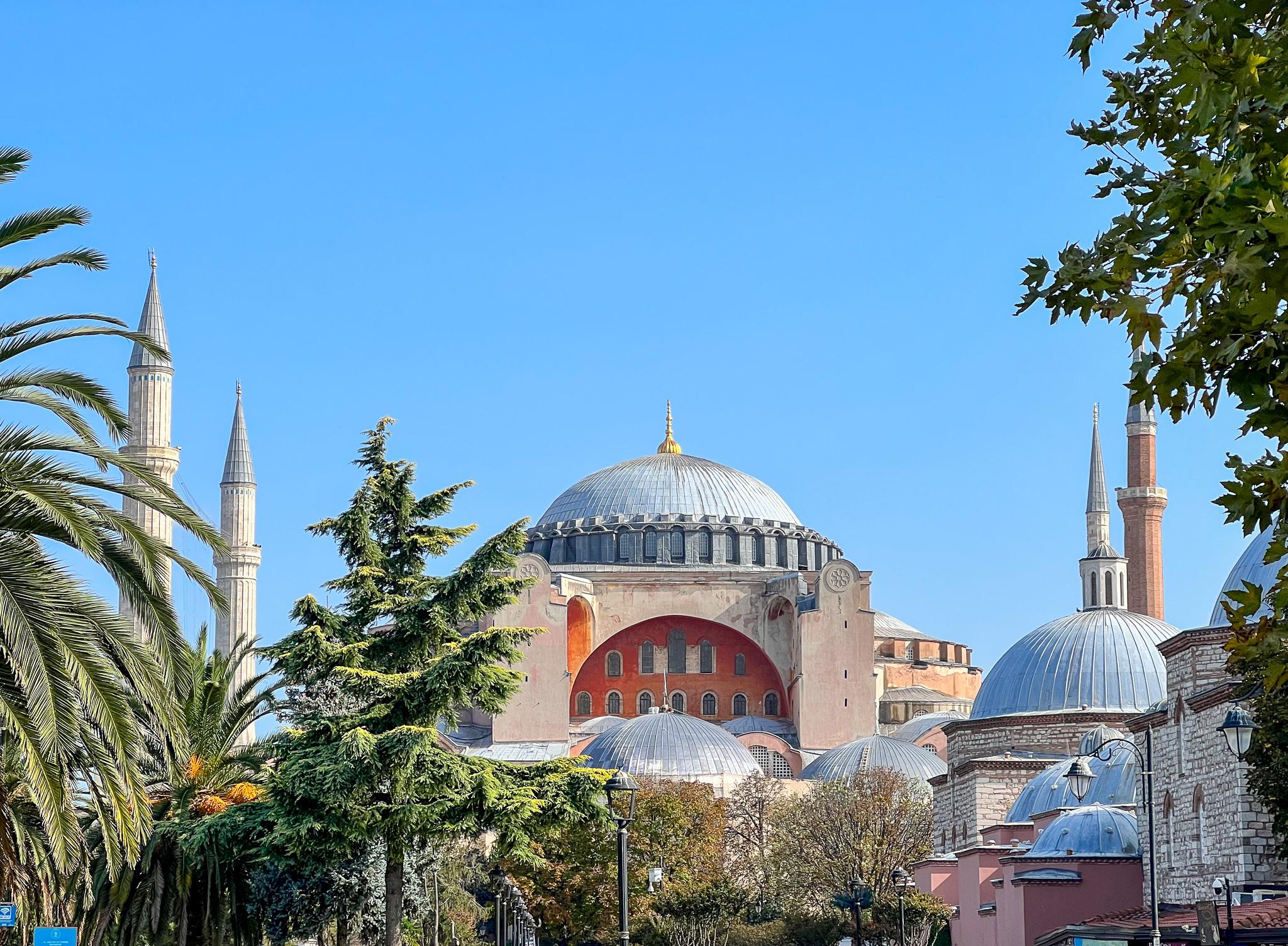
A UNESCO World Heritage Site and one of the great historic buildings of the world, Hagia Sophia – also written as Hagia Sofia – is one of the top attractions in Istanbul and one of the best places in the city to feel its layered history. Istanbul was the capital of both the Byzantine and Ottoman empires, and nowhere captures that better.
Built in the 6th century (537 AD) under Emperor Justinian, it began life as a Christian church – and for nearly a thousand years it was the largest church in the world. When the Ottomans conquered Constantinople some 900 years later, they transformed it into a mosque – adding the minarets, covering the golden mosaics and inscribing the vast calligraphic medallions that still hang in the prayer hall today. It’s a short walk of less than five minutes from Topkapı Palace.

I was lucky enough to be among the very first people through the doors on the morning I visited. For a few minutes, the space was almost entirely mine – and it’s rare, in a city this popular, to stand somewhere so vast in near-silence. I made a point of just stopping and looking up: the soaring dome, the traces of Byzantine gold still glinting through the centuries, the sheer scale of it all. The crowds arrived quickly, but those first few minutes were worth every early alarm.
A guide is absolutely worth paying for. Our guide, Metin, was fascinating, knowledgeable, and we all hung on to his every word. He was also first in the queue, which is why I got in before anyone else!
Though tourists can no longer access the lower level of the mosque (only the upper gallery), it’s still well worth the visit. Dress modestly – arms and legs covered – women will need a headscarf, and everyone removes their shoes at the entrance.
Open: All year, usually 9am–7pm (closed during prayer times – check the official website before visiting)
Entrance fee: From €25; under 8s free
Blue Mosque
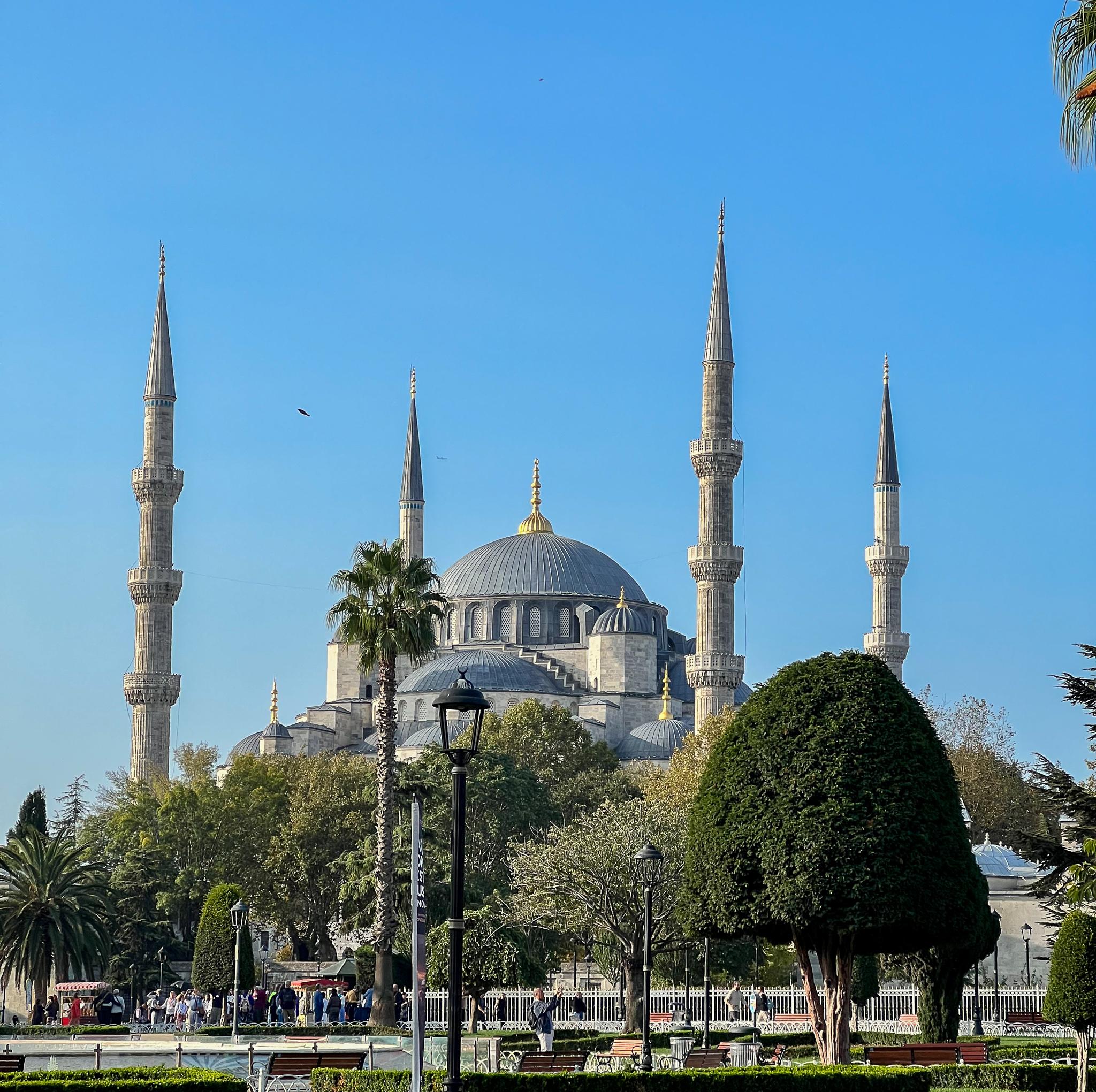
Officially named Sultan Ahmed Mosque, the Blue Mosque gets its nickname from the 20,000-plus hand-painted Iznik tiles that line its interior. It sits directly opposite Hagia Sophia on Sultanahmet Square – positioned deliberately to make a statement about Ottoman architectural ambition.
Outside, six minarets rise above the Istanbul skyline. Inside, a series of domes draw the eye upward, and those blue tiles glow in the light streaming through 260 windows. The exterior courtyard, with its ablution fountains and collonaded walkways, is worth a wander. Time your visit for late afternoon and head to the nearby Hippodrome for the best spot to photograph the sunset.

I should confess: I nearly didn’t make it to Hagia Sophia at all that morning. Jumping out of a taxi with my bearings completely scrambled, I spotted minarets and joined the nearest queue – standing there for a good few minutes before my guide rang to ask where on earth I was. When I sheepishly asked someone nearby for directions, they turned me around 180 degrees – and there was Hagia Sophia, right in front of me the whole time. I’d been queuing for the Blue Mosque. To be fair to myself, the minarets really do look impressive from a distance. Both are absolutely worth visiting – just, perhaps, in the right order.
The Blue Mosque closes to tourists during the five daily prayer times. Dress modestly, remove your shoes, and women will need a headscarf.
Entry: Free; donations welcome
Süleymaniye Mosque
Most visitors on their first trip head straight to the Blue Mosque – and understandably so – but Süleymaniye Mosque is arguably the more rewarding experience. Built in the 16th century under Suleiman the Magnificent, it sits on one of Istanbul’s seven hills with one of the best views in the city, looking out over the Golden Horn towards the Asian side of Istanbul.
The interior is calmer and far less crowded than the main attractions in Sultanahmet, with beautiful stained glass windows, intricate tilework and a sense of space that lets you actually take it all in. The mosque complex includes a cemetery where Suleiman himself is buried. It makes an ideal stop on a walking tour of the old city – about a 20-minute walk from Sultanahmet Square.
Entry: Free (closed to visitors during prayer times; dress modestly and remove shoes)
Basilica Cistern
If you want to escape the summer heat – or just fancy a unique experience – descend beneath the streets of Istanbul into this atmospheric underground chamber. Gaming fans will recognise it from Assassin’s Creed; film buffs from From Russia with Love and Inferno.
These ancient cisterns once supplied water to the Byzantine Great Palace. The space stretches across almost 1,000 square metres, with more than 300 marble columns rising from the water to support the ceiling above. Don’t miss the two Medusa head columns at the far end, positioned sideways and upside-down – nobody is entirely sure why.
Open: 9am–10.00pm daily
Entrance fee: From 1,650 Turkish lira, available online
Gülhane Park
Tucked just below Topkapı Palace, Gülhane Park is one of Istanbul’s oldest public parks – and an ideal place to catch your breath between sightseeing. It’s a genuinely lovely green space in the heart of the city, popular with locals and a good place to sit down after the bustle of Sultanahmet Square.
In spring, the park fills with tulips – Istanbul’s original flower, long predating its association with the Netherlands. In recent years, it has been beautifully restored, and there are great views down towards the Bosphorus from the upper end of the park. Entry is free.
Galata Tower
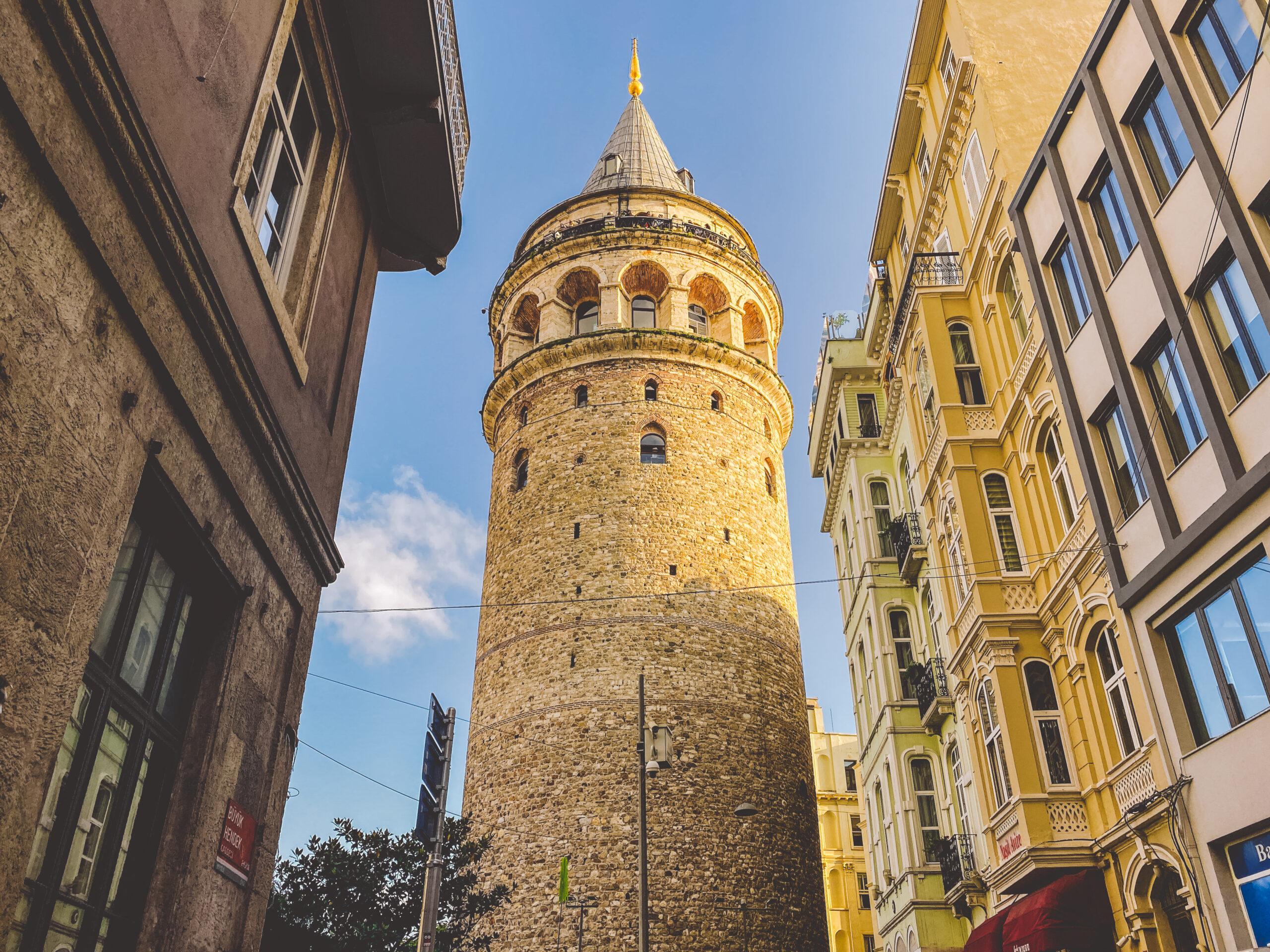
One of Istanbul’s most recognisable landmarks and a great tourist attraction for first-time visitors and return visitors alike, the Galata Tower rises above the Beyoğlu district on the European side of the city. Built in 1348 by the Genoese, it stands at around 67 metres – tall enough to offer the best view in Istanbul, sweeping across the Golden Horn, the Bosphorus and the old city skyline in one go.
The narrow streets around the base of the tower are some of the most enjoyable to explore on foot: independent cafes, vintage shops and small galleries fill the steep cobbled lanes. Look out for street art on the walls as you head down towards Karaköy – this part of the city has become a canvas for some impressive murals in recent years. Go early or book in advance to avoid the longest queues at the top.
Open: Daily, 8.30am–10pm
Entrance fee: From €30 (book online to skip the queue)
Dolmabahçe Palace
While Topkapı is older and more storied, Dolmabahçe Palace is its more flamboyant successor – built in the 19th century as the Ottoman sultans sought a more European-style residence. The result is extraordinary: 285 rooms, 46 halls, and a crystal staircase beneath a Bohemian chandelier said to weigh over 4.5 tonnes.
The palace sits directly on the shores of the Bosphorus, making for some dramatic photographs. It’s also historically significant as the place where Mustafa Kemal Atatürk – the founder of modern Turkey – died in 1938. The clocks throughout are stopped at 9.05am, the time of his death. Entrance is by guided tour only, included in the ticket price – booking ahead is sensible.
Open: Tuesday–Sunday, 9am–5pm (closed Mondays)
Entrance fee: From 1,000 Turkish lira per person
Taksim Square and İstiklal Avenue
Taksim Square is the beating heart of modern Istanbul – a wide, busy plaza in the city centre and the starting point for the city’s famous pedestrianised shopping street, İstiklal Avenue (also called İstiklal Street).
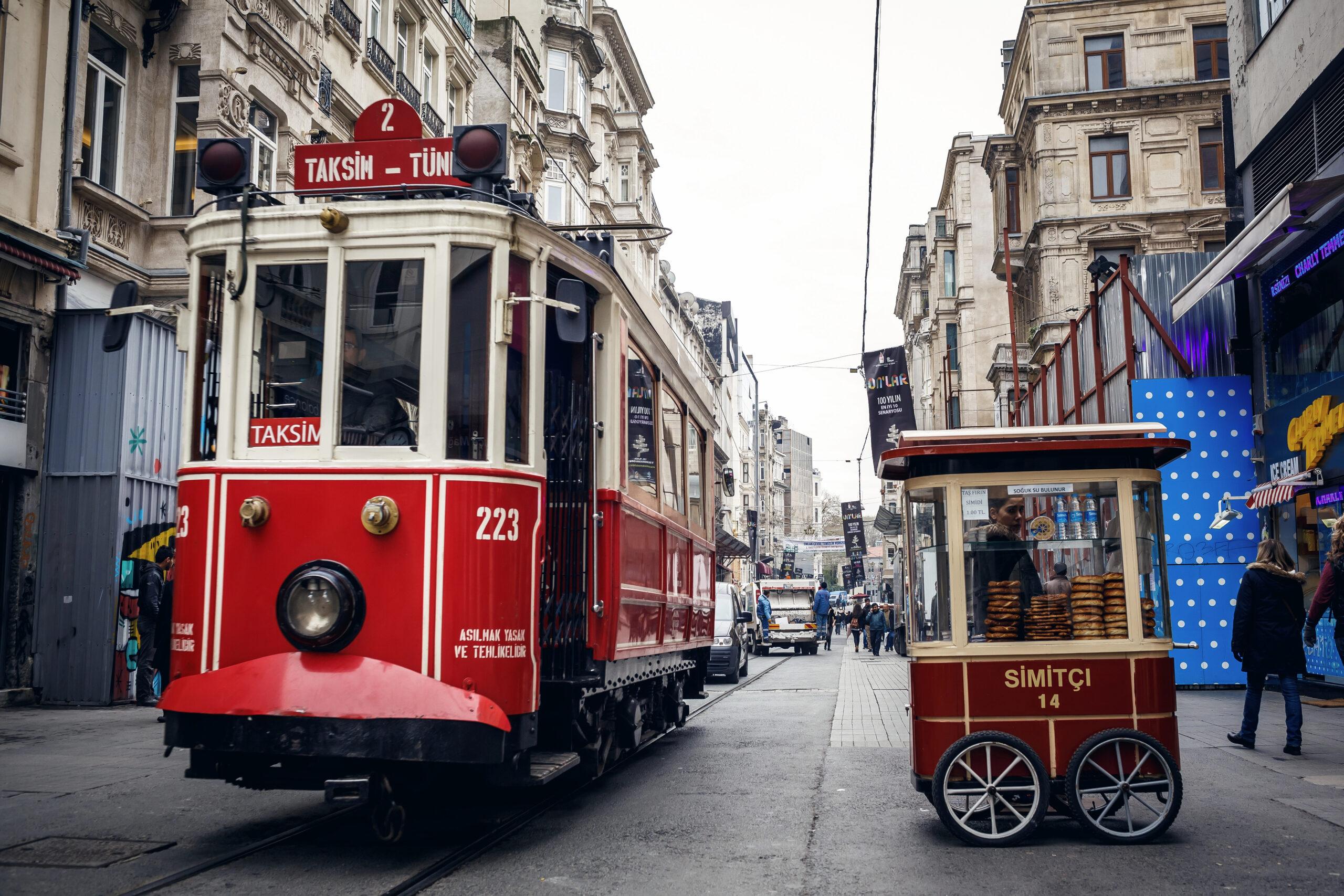
İstiklal stretches for roughly 1.4 kilometres, lined with shops, cafes, restaurants, historic churches and the occasional red tram trundling through the crowds. Street performers set up along the route in the evenings, and the atmosphere is lively at almost any hour. Duck into the narrow streets that branch off it – these are where you’ll find the independent bars, local bakeries and hidden courtyards that make Beyoğlu one of the most enjoyable parts of the streets of Istanbul to wander.
Beyond the main sights
If you have time on a second visit – or you’ve already covered the main attractions – there are a few places worth adding to your list of the best things to see.
Chora Church (Kariye Camii) is one of Istanbul’s most beautiful places and a genuinely good place to visit if you want to see Byzantine art at its finest. Now known as Kariye Mosque, it was formerly a Byzantine church and has some of the most impressive surviving medieval mosaics and frescoes anywhere in the world. Note there is an entrance fee of around €20, dress code applies, and the mosaics are accessible outside prayer time. It sits near the ancient city walls – the Byzantine fortifications that once encircled the entire city and still stretch for several kilometres along the western edge of the old town.
Rumeli Fortress, on the European shore of the Bosphorus, was built in just four months in 1452 by Mehmet II ahead of his conquest of Constantinople. The views up and down the Bosphorus from the towers are exceptional – one of the best spots in Istanbul for photographs of the strait. Combine it with a visit to the fish market near Galata Bridge and the Eminönü waterfront on the way back into the city centre.
And if you have more time, the Princes’ Islands – a short ferry ride from the Asian side of Istanbul – make for a wonderful half-day escape. Cars are banned on the main islands; the best way to get around is by horse-drawn carriage or bicycle, which gives the whole place a pleasantly unhurried pace.
Best Istanbul markets
Grand Bazaar
You can’t come to Istanbul and not visit the Grand Bazaar. This Ottoman-era covered market is a maze of stalls selling everything from carpets and copper lamps to embroidered slippers and sticky lokum (Turkish delight). It’s the perfect place to pick up souvenirs and gifts, and a good place to practise your haggling.
Don’t try to navigate it strategically – just get lost. There’ll always be a café to duck into for an apple tea when you need a moment to regroup. And do haggle; it’s expected and all part of the experience.
Open: 9am–7pm, Monday–Saturday. Closed on public and religious holidays.

Spice Bazaar
Also known as the Egyptian Market or the spice market, this is the place to stock up on foodie souvenirs. Alongside piles of vivid spices, you’ll find dried fruit, nuts, herbs, teas and jars of Turkish honey. Go hungry and graze your way around – candied fruits, baklava, herby olives. It’s one of the more pleasurable ways to spend an hour in Istanbul, and the building itself is one of the most beautiful in the city.
Open: Usually 9am–7pm (hours vary slightly by season). Closed on religious holidays.
Kadıköy Produce Market
Over on the Asian side of Istanbul, this market is one for food lovers. Look out for kumpir (jacket potatoes piled high with toppings), lahmacun (a thin flatbread topped with spiced meat) and midye dolma – stuffed mussels that are seriously good. Booking a guided food tour here is the best way to navigate the stalls and try things you’d never have found on your own.
Open: Daily; additional outdoor market on Tuesdays and Fridays. Most stalls open from around 10am–5pm.
Where to eat in Istanbul
Istanbul has good food everywhere – whether you’re sitting down to a proper meal or eating from a street cart. Here’s where we ate and what stood out.

Zübeyir Ocakbaşı
One of the best meals of my last visit was at Zübeyir Ocakbaşı in Beyoğlu – a classic ocakbaşı restaurant, which means you sit around an open charcoal grill while the meat is cooked right in front of you. The lamb chops were exceptional. There are plenty of great restaurants in this area, but this one was a clear highlight.
Book in advance – it gets busy, especially at weekends. For first-timers, the Urfa kebab and tarak kebabı (lamb cutlets) are the ones to order. Melt-in-your mouth meat with a spicy kick!
Address: İstiklal Caddesi, Bekar Sokak No.28, Beyoğlu
Open: Daily from around 11am–midnight
Pandeli
If you’re visiting the Spice Bazaar, don’t walk past Pandeli – one of Istanbul’s most historic restaurants, tucked above the bazaar’s main entrance and going strong since 1901. It holds a Michelin Bib Gourmand and has hosted everyone from Audrey Hepburn to Sean Connery over the years – a genuinely special place to eat.
The blue-tiled interior is beautiful, and the traditional Turkish dishes are what you come for – particularly the Hünkar Beğendi (lamb stew over smoky aubergine purée) and the stuffed vine leaves. Note that Pandeli serves lunch only, so plan accordingly. Aim for a window seat for views over Eminönü and the Galata Bridge.
Address: Mısır Çarşısı (Spice Bazaar), Eminönü – take the stairs to the first floor above the main entrance
Open: Lunch only; closed Sundays
Pano
For a more relaxed evening meal, we ate at Pano and would happily go back. It’s Istanbul’s oldest wine bar, and the wine list was extensive, and the pairing with local cheeses was a real treat – the kind of dinner that stretches well beyond what you planned. The staff were also super friendly and welcoming. A lovely spot if you fancy sharing plates and Italian-inspired main meals.
Address: Hüseyinağa Mahallesi, Hamalbaşı Caddesi No:12/A, Beyoğlu
Open: Tuesday–Sunday, 12pm–2am. Closed Mondays.
Eylül Cafe
After a long morning of wandering, we stopped for lunch at Eylül Cafe on Macar Kardeşler Caddesi. Great atmosphere, friendly staff and a wide enough menu to keep everyone happy. From brunch and main meals, plus desserts, there’s something for all tastes. The area is worth a wander in itself – cafes and bakeries sit alongside souvenir shops, and there’s a genuinely local, lively feel to the streets here.
Address: Macar Kardeşler Caddesi No:1, Fatih, Istanbul
Open: Daily, 7am–1am
You must try the baklava
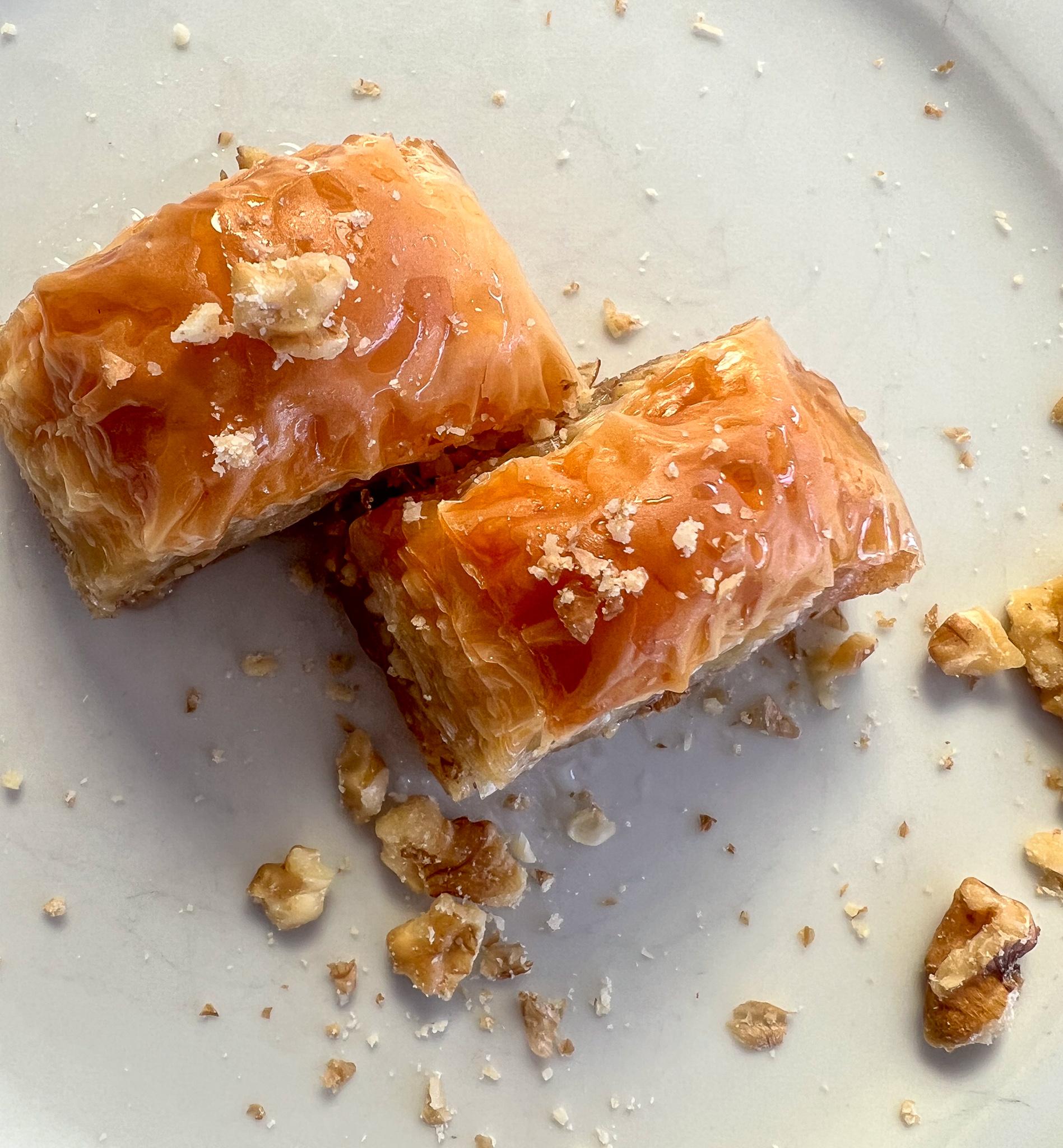
I’ve always written off baklava as too sweet. Then, at a small restaurant during my last visit, I was handed a piece and given absolutely no option to decline. The baklava in Istanbul is something else entirely – sweet, but not cloying, with real depth of flavour and texture. I wasn’t too proud to ask for a second piece. If you’ve dismissed it at home, try it here; it’s a completely different thing.
Exploring Istanbul at night
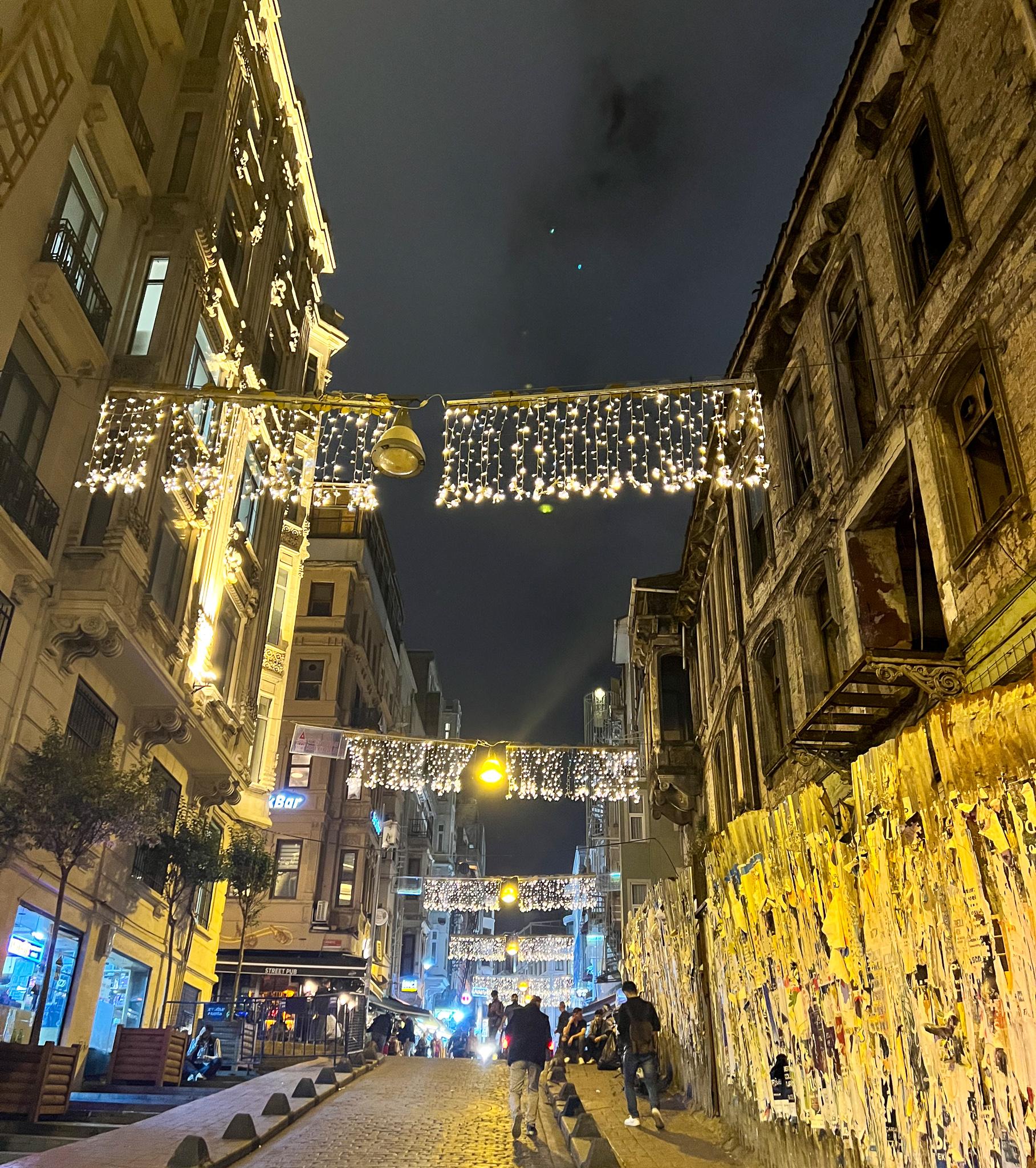
One of my favourite things about Istanbul was how much there is to do after dark. The streets around Sultanahmet and Beyoğlu stay lively well into the evening – shops and cafes spilling out onto the pavements, the smell of barbecued meat drifting through the air, people sitting outside with glasses of çay. I felt completely at ease walking around and would encourage anyone to do the same.
If you get the chance, take a Bosphorus cruise at night. Seeing the city from the water after dark is a different experience entirely – the mosques and bridges lit up against the skyline, both continents glowing on either side of you. We went on an evening boat trip, and I’d rate it as one of the highlights of the whole trip.
Top Istanbul experiences
Turkish bath
A hammam is one of those experiences that sounds indulgent and turns out to be exactly that. Many luxury hotels offer one in their spa, but it’s worth seeking out a traditional bathhouse in the city. A classic Turkish bath involves a steam, a vigorous body scrub and a massage – lying on a heated marble slab while being piled with soapy foam. It sounds chaotic and feels wonderful. I was shocked by how much of my skin was scrubbed off, embarrassingly so…
Men and women are typically separated, unless you book a private couples’ session. Well-regarded options include Cağaloğlu Hammam, Hürrem Sultan Hammam and Kılıç Ali Paşa Hamamı.
Bosphorus cruise
The Bosphorus Strait divides Istanbul’s European and Asian sides, and a cruise is one of the best ways to appreciate the architecture of both – and to give your feet a rest. Options range from cheap public ferries to evening cruises with dinner and Whirling Dervish performances on board.
Check your route before booking, particularly if you want to see the Golden Horn – the inlet where you get great views of the medieval Galata Tower and Galata Bridge. We went at night, and it was one of the best things we did in Istanbul.

Walking tours and food tours
A walking tour or food tour is one of the best ways to get under the skin of Istanbul, particularly on a first visit. A good guide will take you through the narrow streets behind the Grand Bazaar, into small restaurants you’d never have found alone, and across to the Asian side of Istanbul for a completely different perspective on the city. There are plenty of options on GetYourGuide or Viator covering all budgets – from street food tours of Kadıköy to historical walking tours of the old city.
Traditional painting workshop at Les Arts Turcs
We hadn’t planned this one, but it turned out to be one of the most enjoyable things we did in Istanbul. Les Arts Turcs, tucked in the Sultanahmet area, runs traditional Turkish painting workshops for all levels – no artistic experience needed. We did a traditional Ebru painting class and came away with something genuinely personal to take home, which made a nice change from the usual souvenir shop sweep.
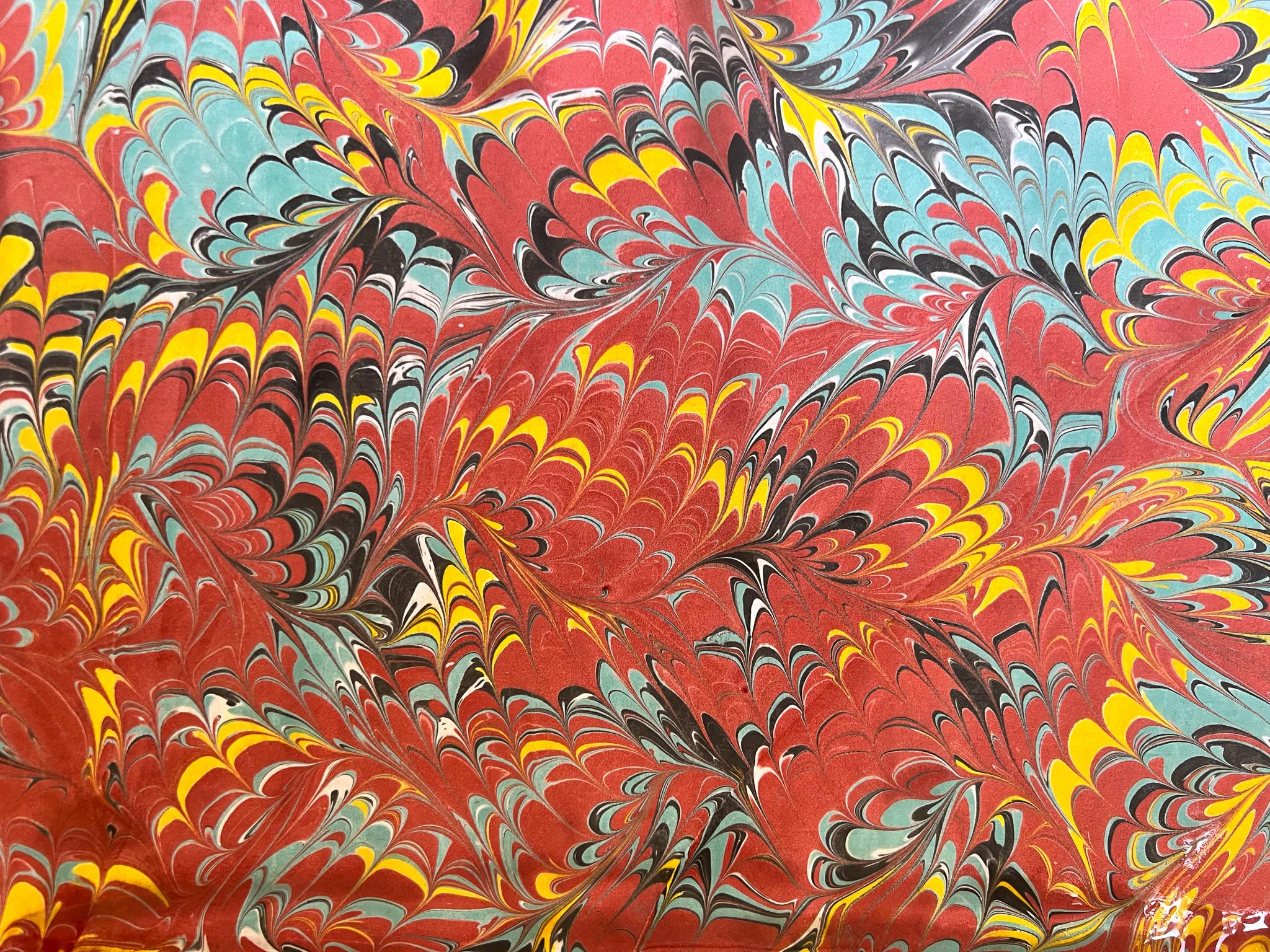
The studio offers a range of workshops – from Ottoman miniature painting and Ebru (marbled paper art) to tile and ceramic painting – so there’s something for different tastes. Sessions typically run around two hours. Book in advance as spaces fill up.
Location: Sultanahmet, Istanbul.
Open: Monday–Saturday, 10am–7pm
Where to stay in Istanbul
Istanbul’s neighbourhoods each have a different feel, and where you base yourself shapes the whole trip. There are options at every budget, from small boutique guesthouses to luxury hotels with Bosphorus views.
For the best areas and neighbourhoods, head over to my where to stay in Istanbul guide.
Frequently asked questions about visiting Istanbul
How many days do you need in Istanbul?
Three to four days gives you enough time to cover the main attractions without feeling rushed – Sultanahmet, the Grand Bazaar, the Bosphorus, Galata Tower and the neighbourhoods of Beyoğlu and Karaköy. A few more days lets you venture to the Princes’ Islands or explore quieter districts like Balat and Fener.
What is the best time to visit Istanbul?
Spring (April to May) and autumn (September to October) are ideal, offering mild temperatures and manageable crowds. Summer is hot and busy, though the Bosphorus breeze helps. Winter is surprisingly good: misty mornings, blue-sky afternoons, cheaper hotels and the big sights without the queues.
What should I pack for Istanbul?
Casual clothes work fine in most areas. For mosque visits, you’ll need to cover arms and legs; women should pack a headscarf or pashmina (you can often borrow one at the entrance if you forget). Comfortable walking shoes are essential – the cobblestone streets and hills take their toll. Bring layers; evenings beside the Bosphorus can be chilly even in summer.
What currency is used in Istanbul, and should I exchange money?
The Turkish lira (TRY) is the official currency. While euros and US dollars are accepted at some tourist spots, you’ll get better value paying in lira. Exchange rates at the airport are typically poor – wait until you reach the city and use official exchange offices (döviz) or withdraw cash from ATMs. Credit cards are widely accepted in hotels, restaurants and shops, though cash is king at bazaars and street vendors.
How do I get from Istanbul Airport to the city centre?
The Havaist airport shuttle buses run 24/7 and connect to major districts, including Taksim and Sultanahmet in about 60–90 minutes, depending on traffic. Buy your ticket in advance online or from the ticket office in the terminal.
You can also travel by metro – the M11 line links the airport to Gayrettepe, from which you can transfer to other metro lines or the tram network. Trains run every 20 minutes or so, and the journey takes under an hour. Taxis charge around 250–350 TL to central areas – always insist on the meter.
Do I need to haggle in Istanbul’s markets?
Absolutely – haggling is expected in places like the Grand Bazaar, spice market and street markets. Start at around 50–60% of the asking price and negotiate with good humour. Don’t be afraid to walk away if the price isn’t right; often, they’ll call you back. Fixed prices apply in modern shops, restaurants and chain stores.
What are the must-try foods in Istanbul?
Start with a proper Turkish breakfast spread: cheese, olives, tomatoes, cucumber, honey and kaymak (a thick, creamy spread). For street food, try simit (sesame bread rings), balık ekmek (fish sandwiches) and midye dolma (stuffed mussels). For kebabs (and you’ll get a very good one in Istanbul), go beyond döner – İskender and Adana are both worth ordering. And be prepared for a spicy hit, too. And do try the baklava. I came in as a sceptic and left completely converted; what you get in Istanbul is a step above anything I’d tried before.
Can you visit both Europe and Asia in one day in Istanbul?
You can – it’s one of Istanbul’s most appealing quirks. The best way is a ferry ride across the Bosphorus Strait, which takes about 20 minutes and costs just a few lira. Ferries between Eminönü or Karaköy (European side) and Kadıköy or Üsküdar (Asian side of Istanbul) run frequently throughout the day.