Last Updated on 10/04/2026 by Ting Dalton
I fondly remember family holidays in Torquay and Paignton – those carefree days of paddling in the sea, playing crazy golf with my parents and breaking my teeth on sticks of rock. Devon’s coastline shaped my love of the seaside, and now I get to share it all with my sons.
With two coastlines to choose from – the wilder, surf-friendly Atlantic in the north and the gentler, golden stretches in the south – Devon has a beach for every kind of family day out. Whether you’re after sandcastle building with young children, rock pooling at low tide or surf schools for older kids, you’ll find it here.
Give us Brits a dose of sunshine, a bucket and spade, an ice cream and a portion of chips, and we’re happy. And Devon delivers on all fronts.
These are the best beaches in Devon for families, split by coast so you can plan your trip around whichever part of the county you’re staying in. I’ve included practical details on parking, facilities and what to expect – so you can spend less time researching and more time digging in the sand.
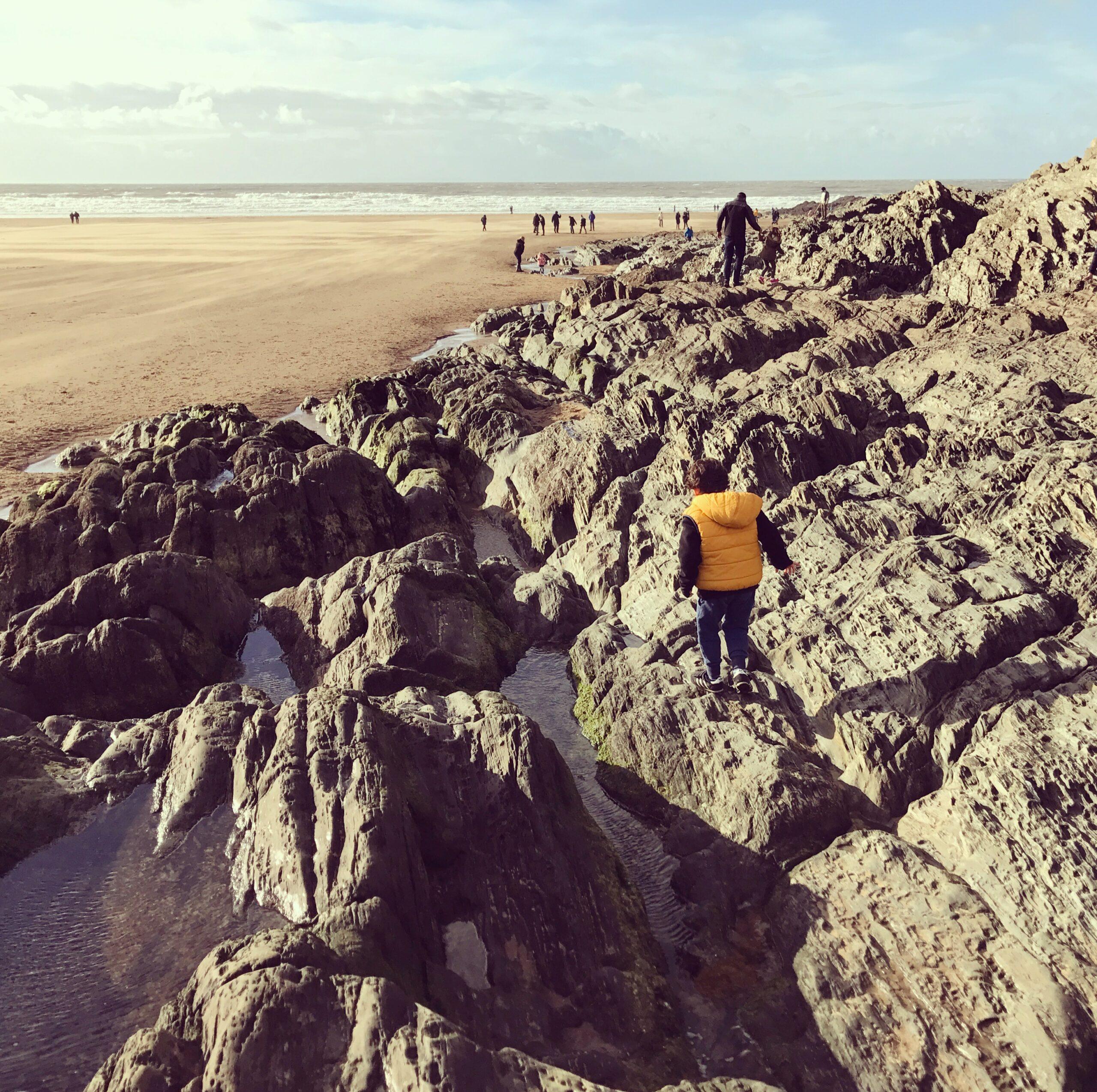
Best family beaches in north Devon
North Devon’s coastline sits within an Area of Outstanding Natural Beauty and is home to some of the county’s most popular stretches of sand. Expect bigger waves, vast golden beaches and plenty of space to spread out – even in the summer months.
Woolacombe Beach
Three miles of golden sand make Woolacombe one of the best family beaches in Devon, and it’s regularly voted among the top beaches in the UK. The beach slopes gently into shallow waters, which is ideal for young children to paddle, while older kids can take lessons at one of the surf schools dotted along the shore.
There’s lifeguard cover during the summer months, and you’ll find toilets, cafés and ice cream shops a short walk from the sand. At low tide, the beach feels enormous – there’s plenty of space for beach games and sandcastle building even on busy days. The South West Coast Path runs behind the beach, and a walk south towards Putsborough gives you gorgeous views over Morte Bay.
Parking: Several car parks near the beach; expect to pay around £5–£10 per day in peak season. Arrive early in summer as spaces fill quickly.
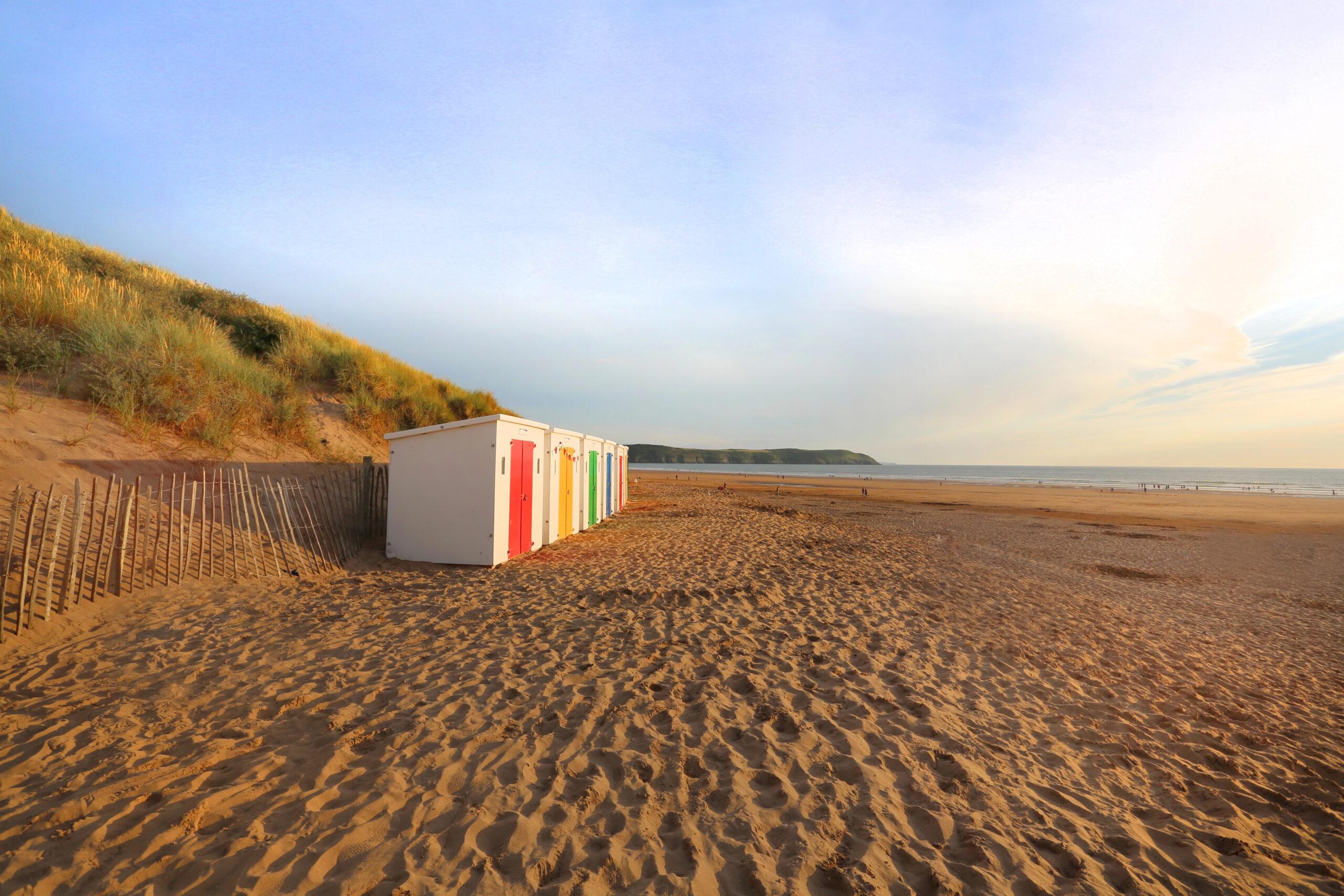
Saunton Sands
Just along the coast from Croyde, Saunton Sands is a vast expanse of golden sand backed by the Braunton Burrows sand dunes – one of the largest dune systems in England. It’s a fantastic beach for families who want room to breathe. Even in August, you can find a quiet spot.
The sand is soft and flat, making it a great place for beach games and kite flying. The dunes behind the beach are brilliant for kids to explore, and the whole area is part of the UNESCO North Devon Biosphere Reserve. Dogs are welcome year-round.
Parking: A large car park sits right behind the beach (pay and display).
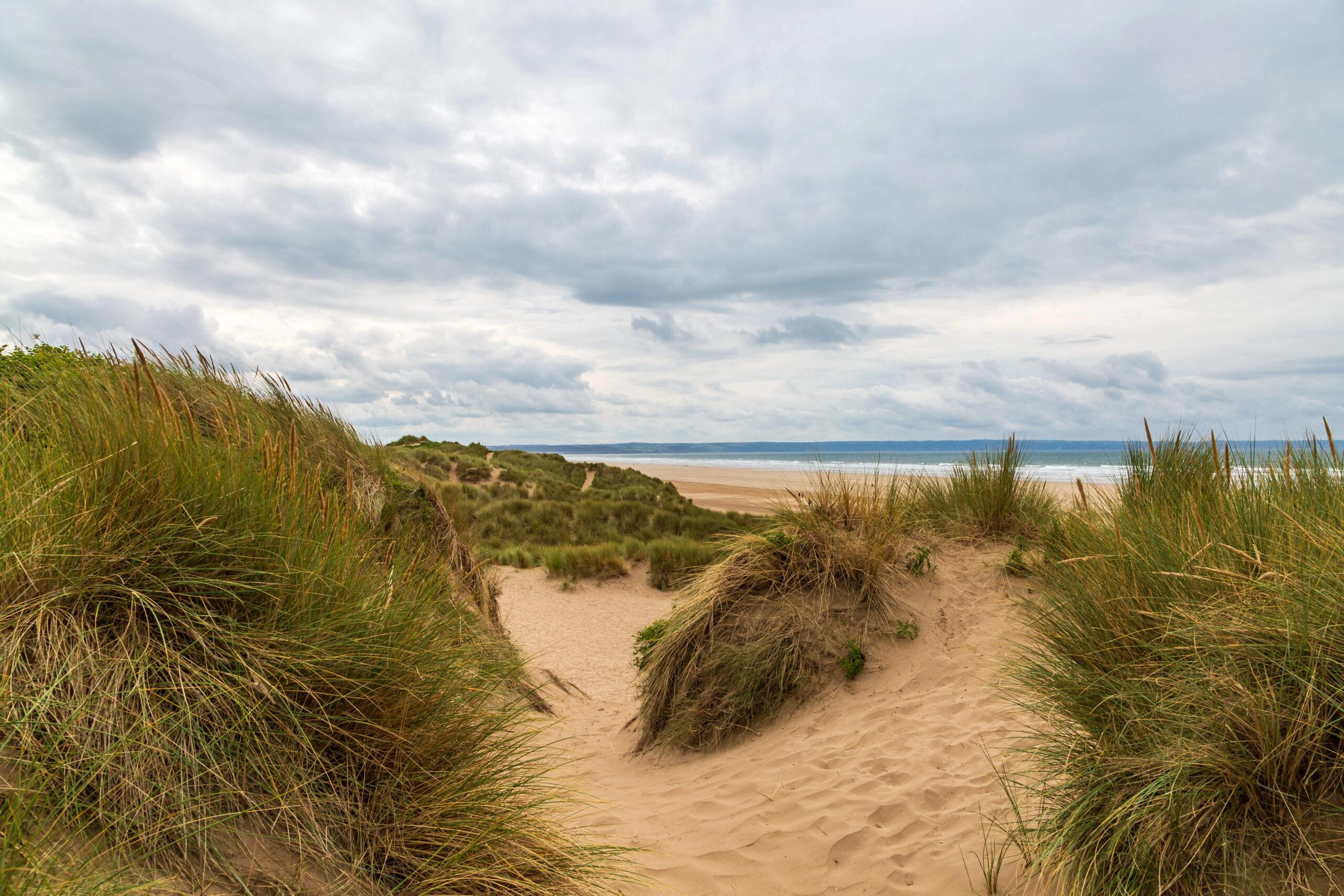
Croyde Bay
Croyde is Devon’s surfing heartland and a brilliant beach for active families. The crescent-shaped bay has consistent Atlantic waves, and there are several surf hire shops and surf schools in the village offering lessons for beginners. Outside the water, the rock pools at the Baggy Point end of the beach are worth exploring at low tide.
The village itself has a good range of food outlets, from beach cafés to local produce shops, and it’s a short walk from the sand. For a coastal walk, follow the path out to Baggy Point – a National Trust headland with views across the bay.
Parking: Limited spaces in the village; a short walk from the main car park to the beach.
Combe Martin Beach
We visited Combe Martin on a long weekend stay and, true to north Devon form, it poured with rain. But that meant we had the beach practically to ourselves – and even in the drizzle, we could see how perfect this little bay would be on a sunny day. The village is quaint, and the pace is slow.
At low tide, the beach opens up into a lovely stretch of sand with some of the best rock pools in the area. The bay is sheltered, the water is calm, and the gentle slope makes it ideal for little feet to paddle safely. There’s a kayak hire available in the village if older kids want something more adventurous.
Combe Martin sits right on the edge of Exmoor National Park, so you can combine a beach day with a coastal walk along the South West Coast Path – the route up to Great Hangman (the highest sea cliff in England) starts right from the village. There are a handful of cafés, a good chip shop and family-friendly pubs within a short walk of the sand.
Parking: Car park above the beach with public toilets and easy access down to the sand. Dogs are not allowed on the beach from May to September.
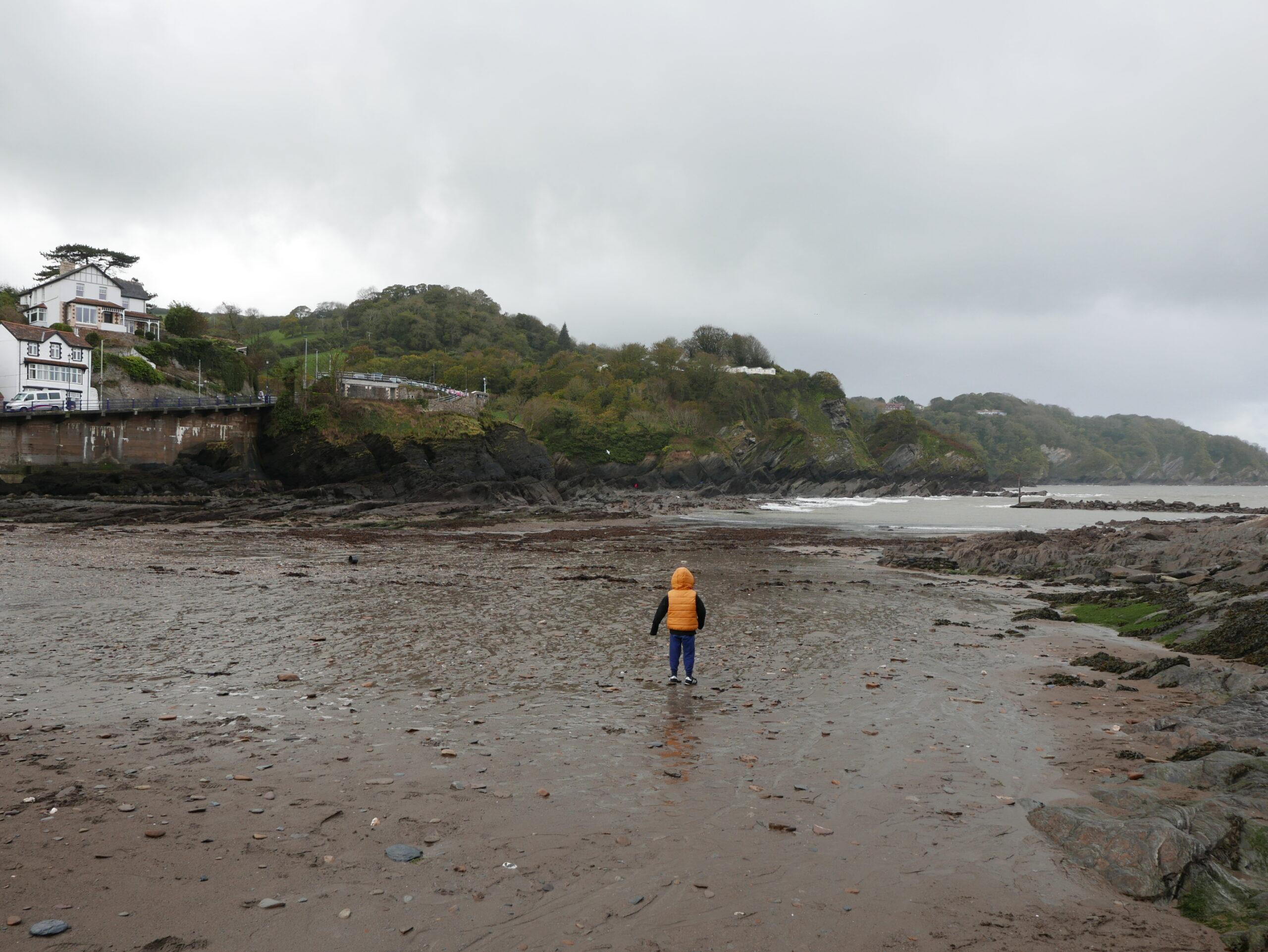
Best family beaches in south Devon
South Devon’s beaches tend to be more sheltered, with calmer waters and clear blue sea. You’ll find sandy beaches and pebble coves, plus some of the best rock pooling spots in the county.
Blackpool Sands
Don’t be fooled by the name – Blackpool Sands is a crescent-shaped beach near Dartmouth, framed by pine trees and rolling green hillside. It’s a pebble beach rather than sand, but the stones are smooth and the water is crystal clear, earning it a Blue Flag award.
Kids love diving off the bathing raft in summer, and there’s water sports hire available for paddleboarding and kayaking. The beachside café and restaurant serves breakfast, lunch and cream teas – a good spot to refuel. The sheltered bay means calm waters for young children to splash in safely. Note that dogs are not permitted from May to September as part of the Blue Flag conditions.
Parking: On-site ANPR car park (card payment on exit). The first hour is free.
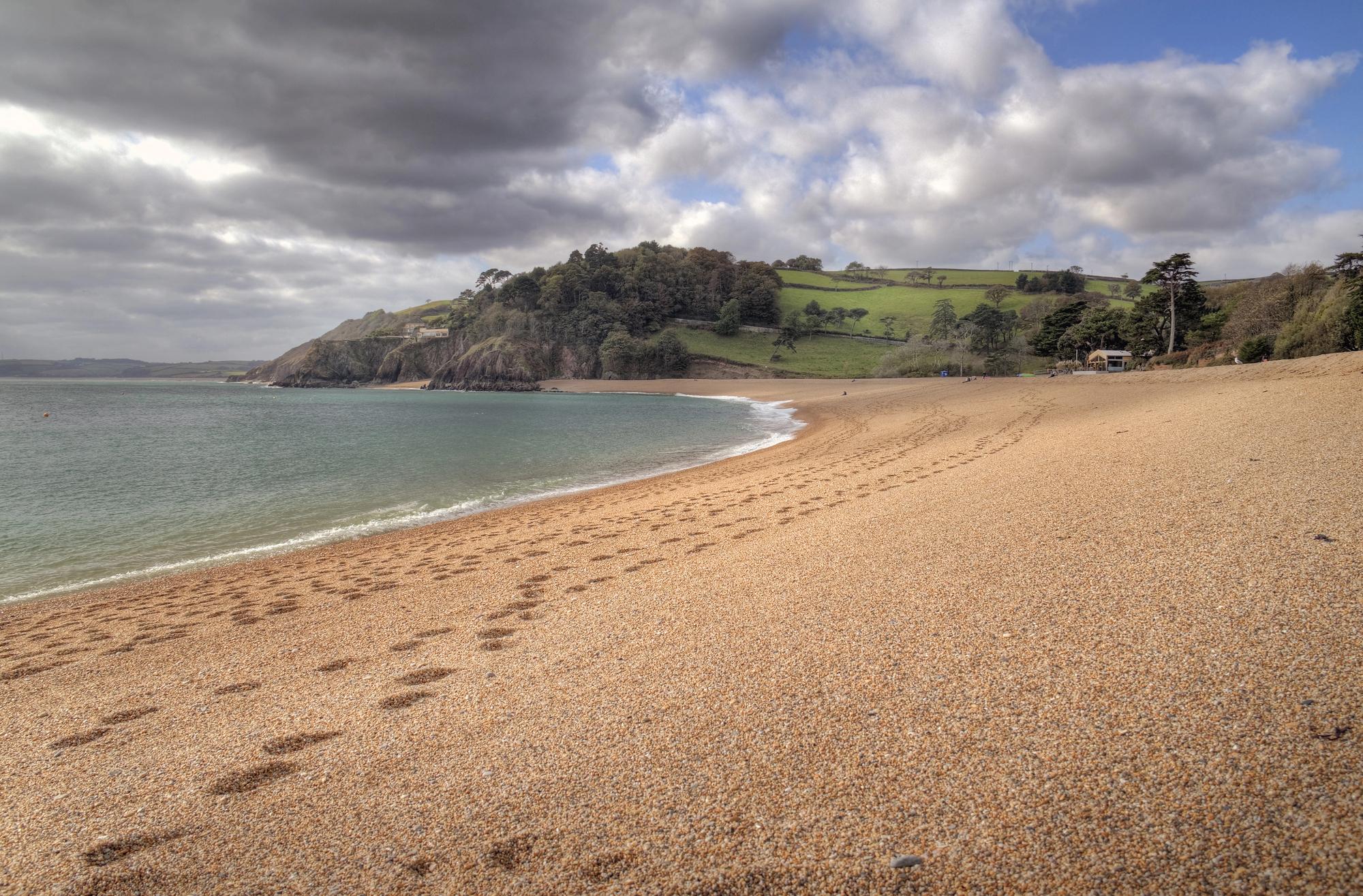
Mill Bay, Salcombe
There are several beautiful beaches around the yachting town of Salcombe, but Mill Bay is a firm favourite for families. The safe, shallow waters and lack of seaweed make it ideal for paddling with young children, and at low tide, rock pools appear along the edges for plenty of exploring.
It’s a small beach, so it can fill up in peak season. The best way to arrive is by the short ferry crossing from Salcombe (runs regularly in summer), which is half the adventure for little ones. Head further along the coastal path for quieter coves if you want more space.
Parking: Very limited at Mill Bay itself – the ferry is by far the easiest option.
Bantham Beach
One of south Devon’s best-kept secrets (though it’s getting busier each year), Bantham sits at the mouth of the River Avon in the South Hams with views across to Burgh Island. It’s a long stretch of golden sand with shallow areas perfect for young children at low tide, plus enough surf for older kids to have a go.
There are rock pools to explore and plenty of space for beach games. Lifeguards patrol during the summer months. The beach has a relaxed, unspoiled feel – no arcades or big facilities, just sand, sea and sky.
Parking: A large field car park above the beach (seasonal charge applies).
Bigbury-on-Sea
Sitting right next to Bantham across the inlet, Bigbury-on-Sea is worth a visit for the views of Burgh Island alone. At low tide, you can walk across the sand to the island – or at high tide, ride the famous sea tractor, which kids absolutely love.
The main beach has soft golden sand, calm waters for paddling, and enough space for a good family day out. It’s a great place to combine a beach visit with island exploring.
Parking: Car park above the beach with easy access.
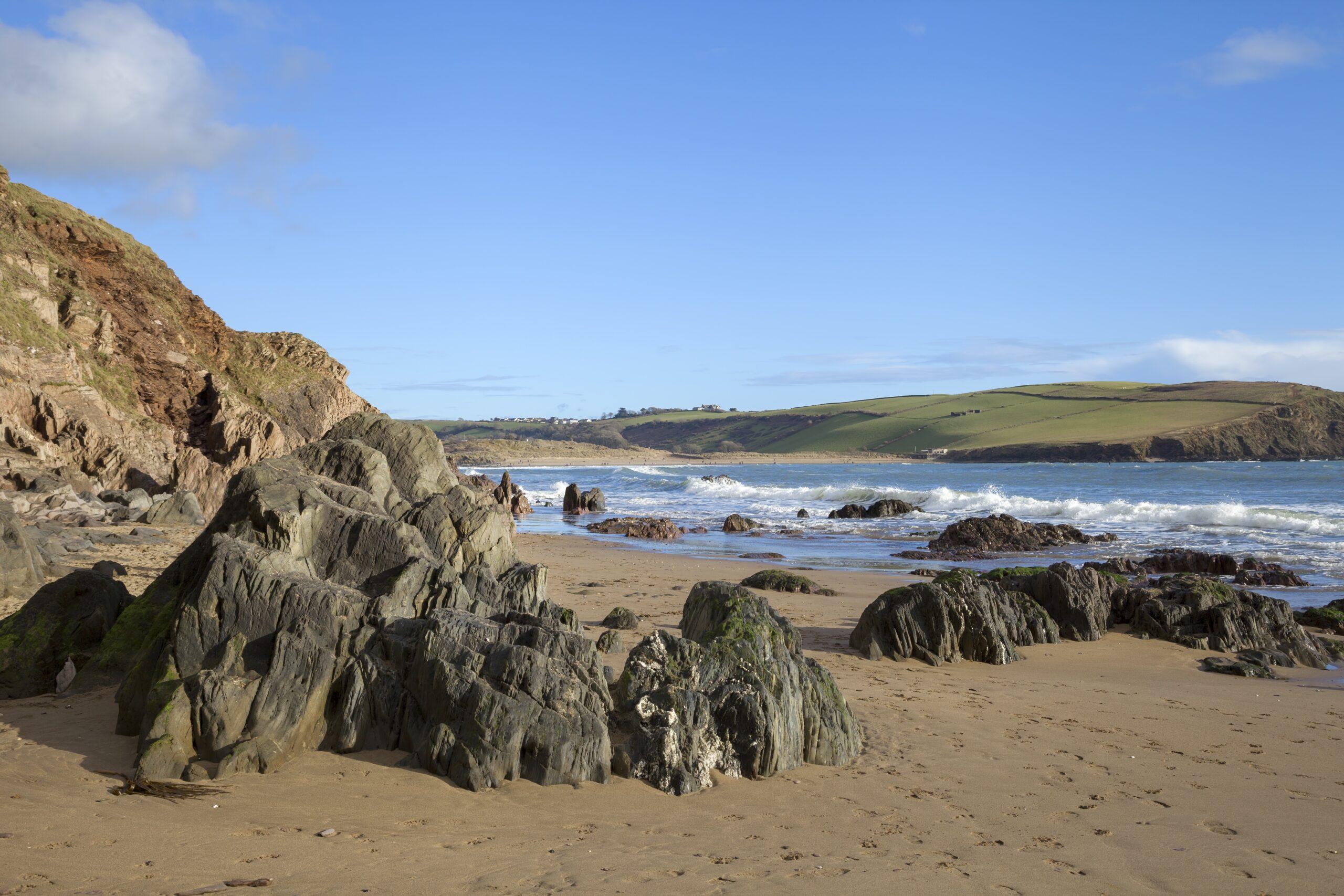
Slapton Sands
Further along the south coast towards Dartmouth, Slapton Sands is a long, quiet pebble beach backed by the freshwater lagoon of Slapton Ley National Nature Reserve. It’s a wonderful spot for nature lovers – the reserve is home to all sorts of birdlife and wildlife, and kids can combine a beach visit with a nature trail.
The beach has a fascinating history too – it was used as a rehearsal site for the D-Day landings in 1943. Dogs are allowed year-round, and there’s free parking along the road.
Exmouth Beach
If you’re staying near Exeter, Exmouth beach is the closest stretch of sand and makes for a great family day out. It’s a two-mile sandy beach with shallow waters, making it popular with families with young children. There are plenty of facilities along the seafront – cafés, toilets, ice cream parlours and water sports hire.
Exmouth is also a good base for exploring the east Devon coast, with the Jurassic Coast starting just around the headland. The beach has lifeguard cover in the summer months.
Parking: Several car parks along the seafront.
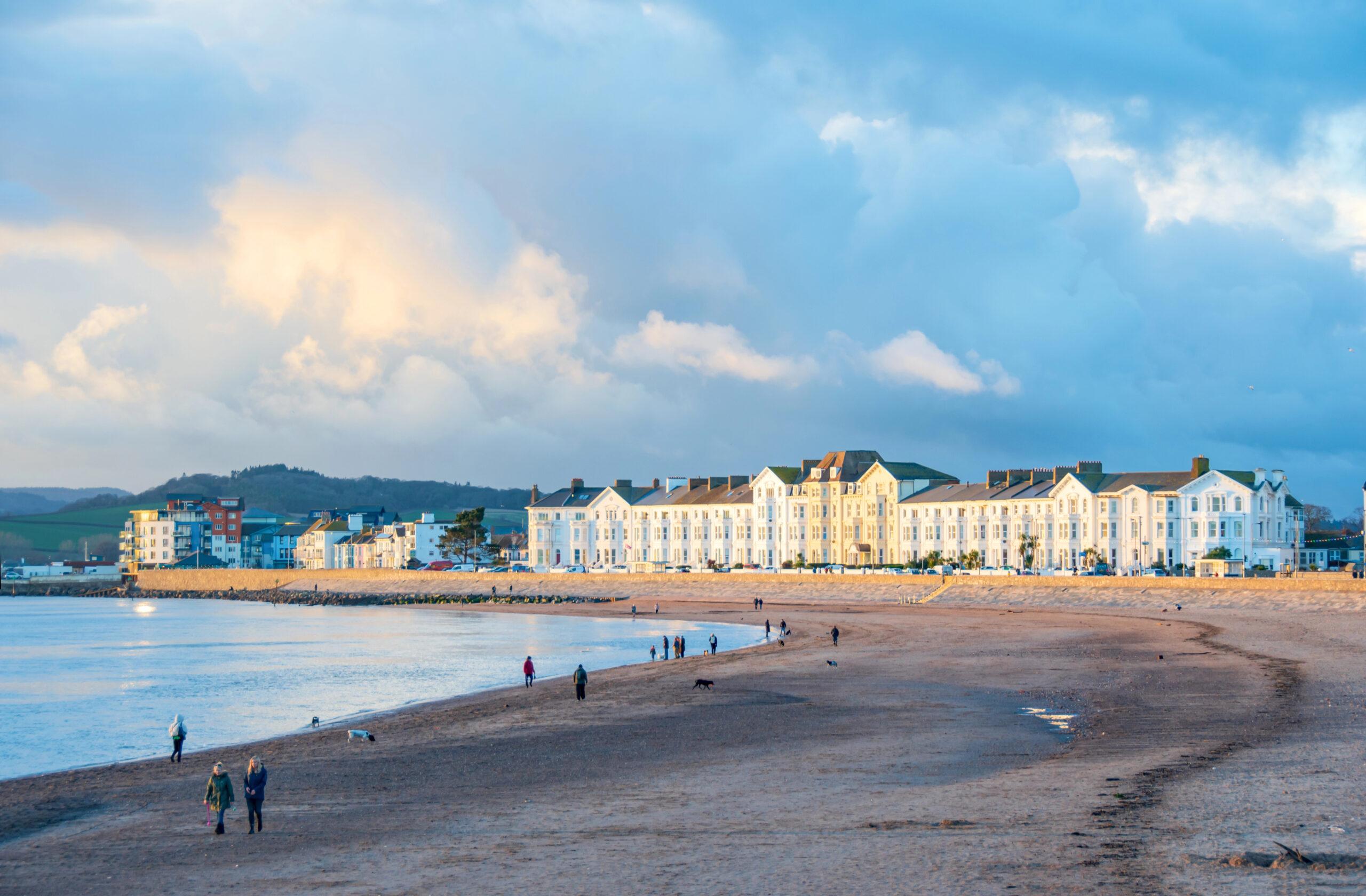
Lannacombe Beach – the hidden gem
If you want to get off the beaten track, Lannacombe is a small, wild beach tucked into the cliffs between Salcombe and Start Point. It’s not the easiest to get to – there’s a steep walk down – but that’s what keeps the crowds away. The scenery is spectacular, and at low tide there’s a lovely stretch of sand.
Top tip: Check tide times before you go. The beach is much smaller at high tide, and you don’t want to get caught out.
Planning your family beach day in Devon
A few things worth knowing before you head out:
Tides matter. Many of Devon’s best beaches – particularly Bantham, Mill Bay and Lannacombe – change dramatically between high and low tide. Low tide reveals rock pools, extra sand and shallow paddling areas, so check the tide timetable before you set off. The BBC Weather website has free tide tables for all Devon beaches.
Pack layers. Even in summer, a sea breeze can make the coast feel cooler than inland. A windbreak is worth its weight in gold on the bigger beaches like Woolacombe and Saunton Sands.
Arrive early in peak season. Car parking at popular beaches fills up fast during school holidays, especially at Woolacombe and Croyde. Getting there before 10am in July and August makes all the difference.
Bring cash. Some of the smaller beach car parks and cafés are still cash-only, though this is improving.
Devon beaches FAQs
What are the best beaches in Devon for toddlers?
Mill Bay near Salcombe and Bigbury-on-Sea both have calm, shallow waters that are ideal for young children. Woolacombe’s gentle slope also works well for paddling with little ones.
Are there good surf beaches for families in Devon?
Croyde Bay and Woolacombe are the top spots, with several surf schools offering lessons for children and beginners. Bantham also has manageable waves for older kids.
Which Devon beaches have the best rock pools?
Mill Bay at low tide has excellent rock pooling. Croyde Bay near Baggy Point is another favourite, and the east Devon coast around Beer and Branscombe is brilliant for finding marine life.
Are Devon beaches dog-friendly?
Many Devon beaches welcome dogs, particularly outside the summer months. Saunton Sands and Slapton Sands allow dogs year-round. Most popular beaches have seasonal restrictions (typically May to September) – check locally before you visit.
Is there a best time to visit Devon’s beaches?
The summer months (June to September) are warmest, but Devon’s beaches are lovely year-round. Spring and early autumn are quieter, and you’ll often find clear waters and good weather without the peak season crowds.
Comments are closed.