The first time we spotted the sprawling russet stone complex of Alhambra framed by the magnificent Sierra Nevada mountains, I was blown away by the sheer scale of this Moorish palace. Granada’s shining beacon was stunning to admire from a distance, but it wasn’t to be for our first visit to this Spanish city.
Alhambra seemed to constantly poke fun at us. Every turn we made, we’d be reminded of its beauty perched high on Sabika Hill, but we weren’t able to enter. The gates were firmly shut. Why? I was unable to book tickets.
It was not a mistake I was going to make a second time around.

Knowing that we would be returning to Granada, I made sure to book official Alhambra tickets nearly a year in advance. And in doing so, I was able to gather a significant amount of tips and tricks to make sure we got to explore this incredible UNESCO World Heritage Site on our own terms and on our own time.
Was it worth the wait? It sure was. Was it worth the hype? Yes and yes. Will I go back again? Absolutely. It would be impossible to explore every nook and cranny, every garden fountain and admire every view from this impossibly beautiful palace complex in just one visit.
If you’re planning to visit Granada, the Alhambra is an absolute must. Here’s everything you need to know to make your visit perfect.

Is Alhambra worth visiting?
Yes, without question. The Alhambra is Spain’s most visited monument, attracting 2.72 million visitors in 2024 and operating at 98% capacity year-round. This UNESCO World Heritage Site showcases the finest example of Moorish architecture in Europe, with intricate stucco work, geometric tile patterns, and water features that have survived since the 13th century.
The palace complex is the only surviving palatine city from the Islamic Golden Age and represents the artistic achievements of the Nasrid dynasty, the last Islamic kingdom in Western Europe. From the fortress walls of the Alcazaba to the ornate Nasrid palaces and the peaceful Generalife gardens, every corner tells a story.
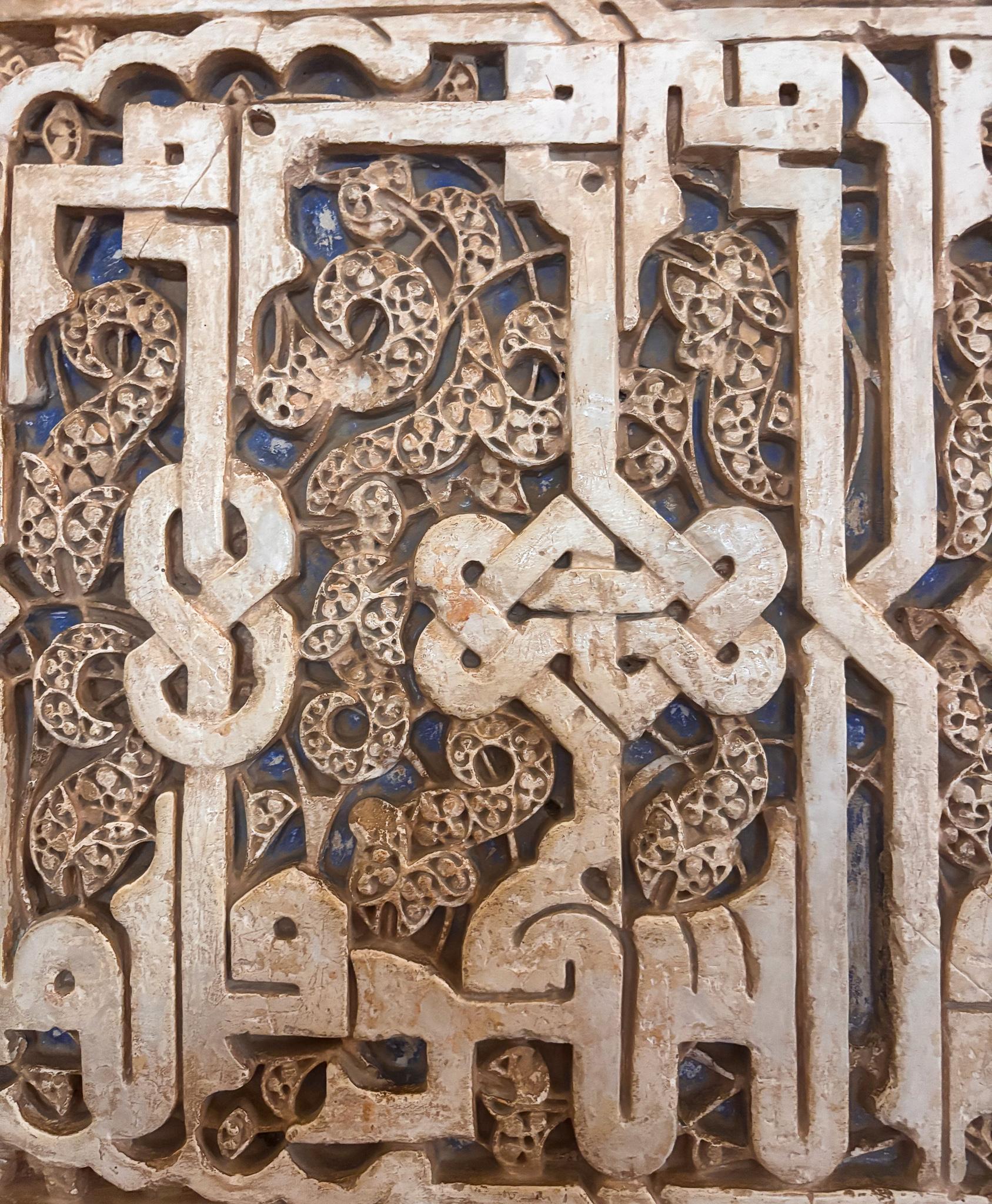
The views alone from the Torre de la Vela across Granada and towards the Sierra Nevada are worth the journey. But it’s the details – the Arabic calligraphy carved into stucco walls, the cooling water channels throughout the palace, the play of light and shadow through carved screens – that make Alhambra truly special.
If you’re wondering whether Granada itself is worth visiting, check out our full guide on Granada where we explore everything this Andalusian city has to offer beyond its famous palace.

Essential tips for visiting Alhambra
Book Alhambra tickets well in advance – this is essential
This is the single most important tip I can give you: book your Alhambra tickets as far in advance as possible. Ideally, book them the moment you know your travel dates.
The Alhambra is Spain’s most popular tourist attraction, welcoming over 2.7 million visitors annually. With daily capacity limited to just 6,600 visitors, and the Nasrid palaces restricted to only 300 people per 30-minute time slot, tickets sell out months in advance, especially during peak season.
You can book Alhambra tickets up to one year in advance on the official website. I booked ours nearly a year ahead, and it meant we had our preferred time slot and didn’t have to worry about availability.
Where to book tickets
While you can book tickets through companies like Get Your Guide, I strongly recommend booking through the official Alhambra website at tickets.alhambra-patronato.es.
The official site allows you to:
- Book up to a year in advance
- Choose your exact time slot for the Nasrid palaces
- Pay the lowest price (general day visit is €16 for adults)
- Avoid third-party booking fees
When you book online in advance, there’s a small booking fee added to the ticket price, but you’ll guarantee your entry and preferred time.
What if tickets are sold out?
If tickets are sold out for your preferred dates, don’t panic. Here are some alternatives:
- Check for cancellations 1-2 weeks before your visit – people do cancel and tickets become available
- Evening time slots often have more availability when daytime slots are full
- Night visits to the Nasrid palaces or Generalife gardens are separate tickets and may be available
- Same-day tickets (around 400 daily) are sold at the Access Pavilion, but these sell out very quickly and aren’t reliable
Types of Alhambra tickets
The general day visit ticket is what most visitors need. This includes:
- Nasrid palaces (with timed entry)
- Alcazaba fortress
- Generalife palace and gardens
- Palace of Charles V
- Partal gardens
Price: €16 for adults, free for children under 12 (though children still need tickets)
Other ticket options include gardens-only tickets, night visits, and combination tickets with other Andalusian monuments, but the general day visit gives you the complete Alhambra experience.
Understanding the Alhambra complex: it’s bigger than you think
One thing that surprised me during our visit was just how vast the Alhambra complex actually is. We’re talking about a palatine city that covers nearly 26 acres, with more than a mile of defensive walls and 30 towers. You cannot underestimate how big Alhambra is.
The complex consists of several distinct areas:
Nasrid palaces
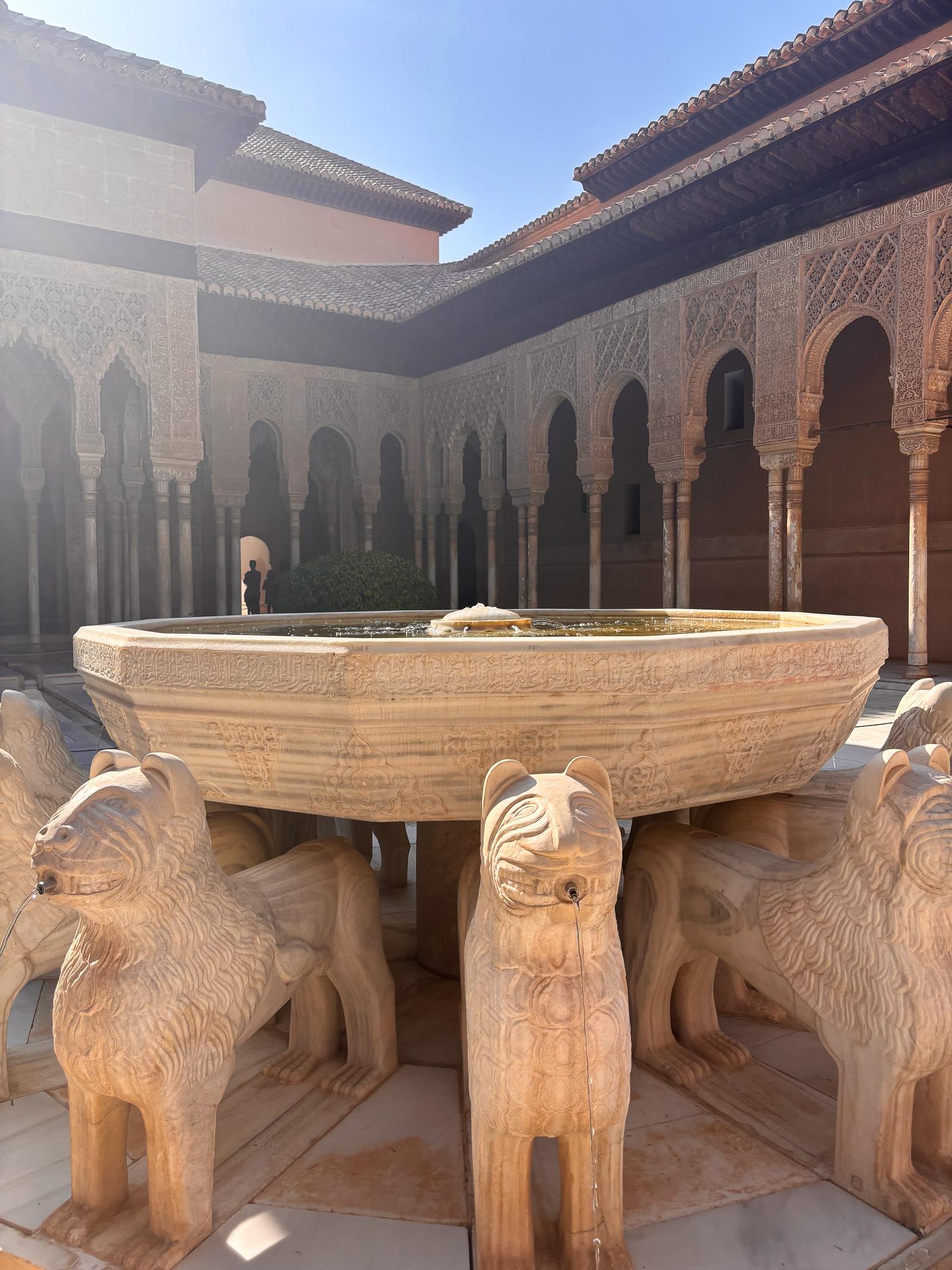
The crown jewel of Alhambra. These are the ornate palaces where the Nasrid sultans lived and ruled from the 13th to 15th centuries. You’ll see the famous Court of the Lions with its central fountain supported by twelve marble lions, the Hall of Ambassadors, and the intricate stucco work and Arabic calligraphy that covers nearly every surface.

Entry to the Nasrid palaces is strictly controlled with timed slots. You must enter during the specific 30-minute window printed on your ticket. If you’re late, you may still be let in (we saw several people admitted a few minutes after their slot), but don’t count on it. Plan to arrive with time to spare.
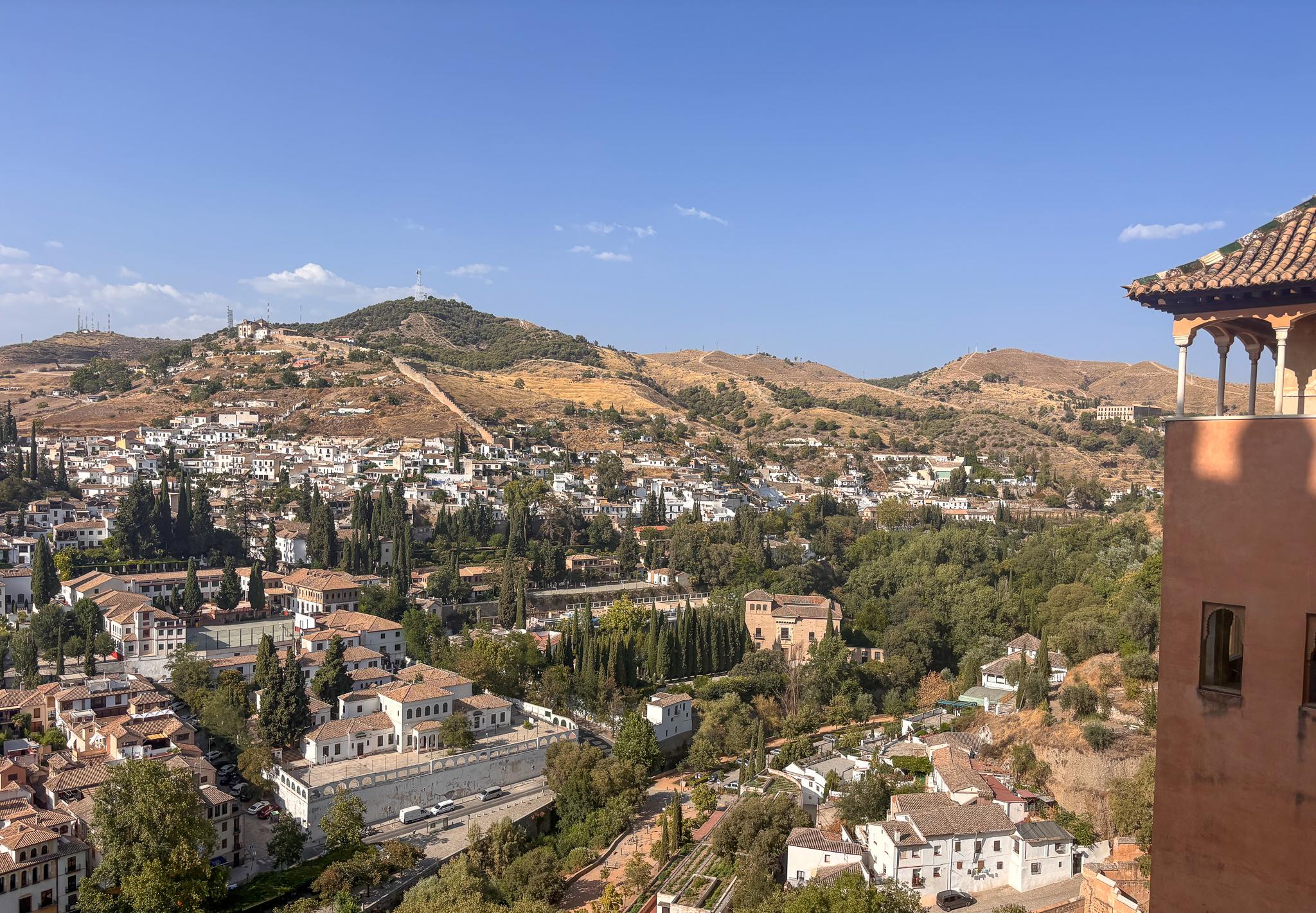
The oldest part of the Alhambra, this is the fortress section with thick defensive walls and watchtowers. Climb to the top of the Torre de la Vela for panoramic views across Granada, the Albaicín quarter, and the Sierra Nevada mountains.
Generalife
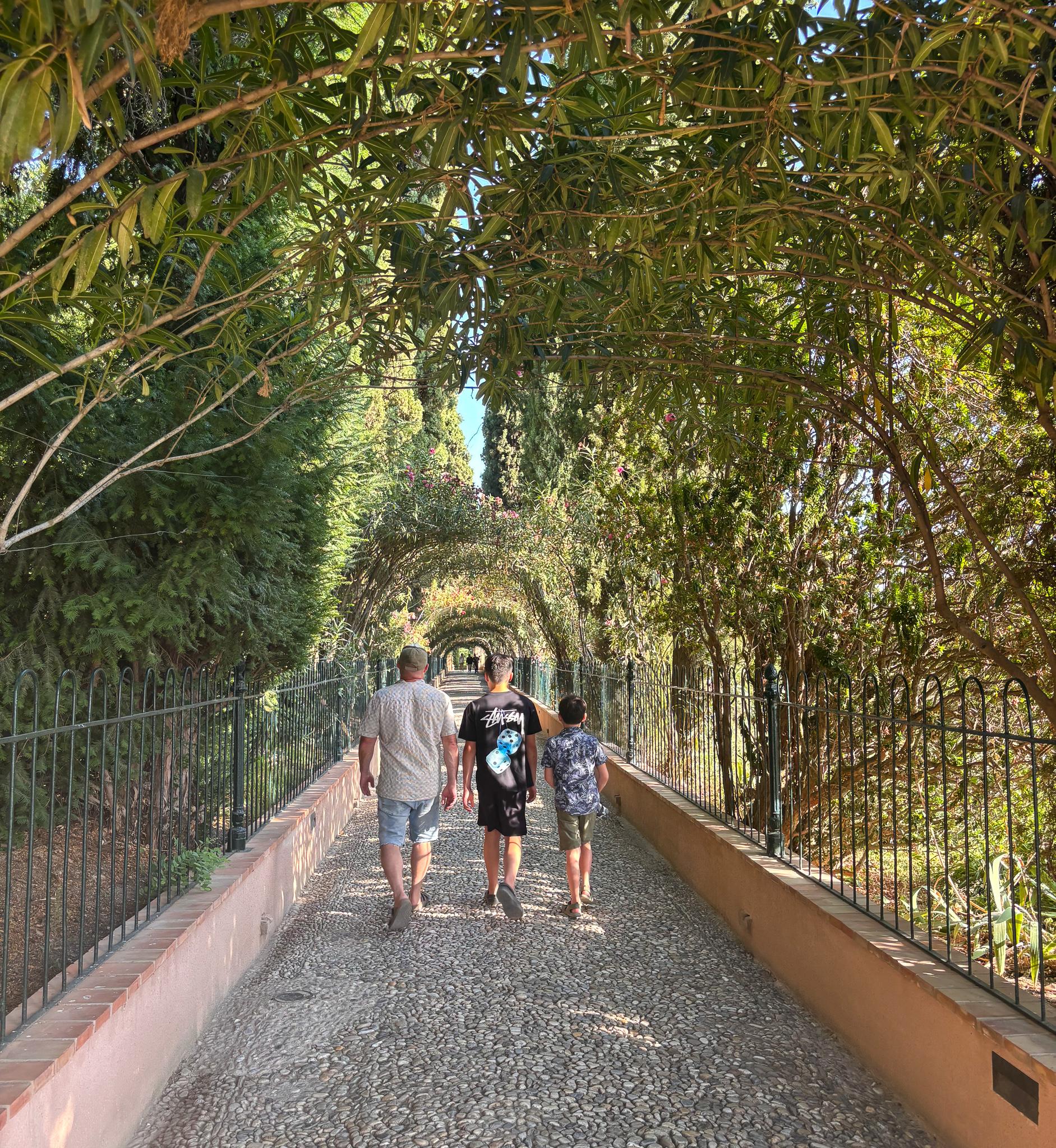
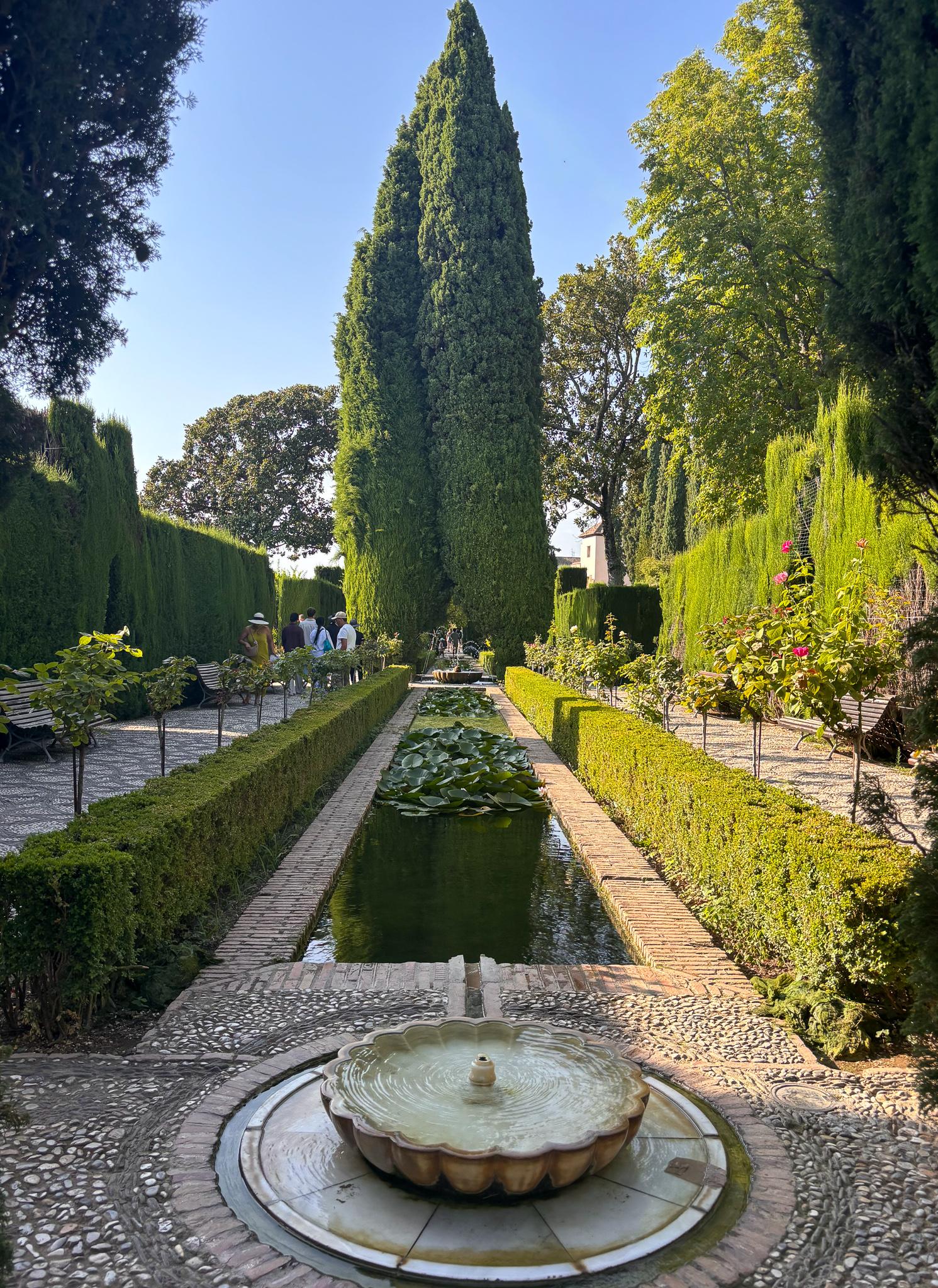
The summer palace and country estate of the Nasrid sultans was built in the early 14th century. The Generalife features beautiful terraced gardens, the Court of the Main Canal with its long water channel, and peaceful walking paths lined with cypress trees.
My favourite memory from our visit is watching our boys playing tag, weaving between the towering cypress trees, and spotting frogs and insects on the lily ponds. The Generalife gardens are genuinely magical, especially in the late afternoon light.

Palace of Charles V
This Renaissance-style palace was built in 1526 by Charles V and houses the Museum of the Alhambra. Entry to the palace and museum is free and doesn’t require timed entry.
Allow at least 3-4 hours for a complete visit of the main areas. If you have the last time slot of the day for the Nasrid palaces, make sure to visit the Generalife and Alcazaba first, as you’ll want plenty of time to explore the palaces without rushing.
Best time to visit Alhambra
Time of day
Early evening visits are genuinely wonderful, especially during summer. We chose an evening slot, and by the time we arrived around 6pm, the temperature had mercifully dropped by 6°C. It was still hot, but without the scorching rays of the midday sun, it was much more pleasant.
The light in late afternoon is also beautiful for photography, and we spent a good while resting our tired feet and watching the sun set across the whole complex, turning the sky into a fiery burnt orange. It was magical, and a memory that will stay with me forever.
Early morning visits (the complex opens at 8:30am) mean cooler temperatures, fewer crowds, and softer light. However, you won’t get the sunset experience.
Avoid the middle of the day during summer months (July-August) when temperatures regularly exceed 35°C and the sun is at its most intense.
Time of year
April to June and September to October offer the best balance of pleasant weather and manageable crowds. The Generalife gardens are in full bloom during spring and early summer.
July and August are scorching hot with temperatures often reaching 40°C+, though evening visits help mitigate this.
November to March can be quite cold, especially in the mornings and evenings, but you’ll encounter far fewer visitors. The Alhambra is beautiful in winter under blue Andalusian skies.
Avoid Saturdays and public holidays if possible, as these are the busiest days regardless of season.

Do you need a guided tour of Alhambra?
This is a question many visitors ask: can you visit Alhambra without a guide?
The answer is absolutely yes. We chose to explore Alhambra without a guided tour this time because we wanted to get lost in the palace’s pull without constraints. We really enjoyed setting our own pace, stopping and admiring when we wanted, or moving quickly through bottlenecks of people.
Benefits of visiting without a guide
- Explore at your own pace – spend longer in areas that captivate you
- No rushing through spaces on a schedule
- Take breaks when needed – especially important with children
- More flexibility with your Nasrid palaces time slot
While we didn’t have a guided tour, we made use of looking up specific facts ourselves about the history and architecture. There are also audio guides available for rent at the entrance if you want more context.
When a guided tour might be worth it
That said, guided tours do have their place:
- First-time visitors who want comprehensive historical context
- History enthusiasts who want deeper insights into Nasrid culture and Islamic art
- Those who prefer structured experiences
Tours must be booked in advance as they include tickets, and official guides can point out details and provide stories you might otherwise miss. Just know it’s absolutely not essential – the Alhambra is compelling enough on its own.
What to bring to Alhambra
Essential items
Passport or ID card – This is absolutely essential. As an overseas visitor, you must bring your passport. Entry requires you to present the same identification document used when booking tickets. No exceptions. I recommend packing your passport in your bag the night before to avoid leaving it behind in the hotel safe.
Water bottle – There are water fountains throughout the complex where you can refill, so bring a small refillable bottle. It’s essential to stay hydrated, especially during warmer months.
Comfortable walking shoes – You’ll be walking for hours on uneven surfaces, cobblestones, stairs, and pathways. Shoes with good grip are crucial, as some surfaces can be slippery. Skip the heels or unsupportive sandals.
Sun protection – Hat, sunglasses, and sunscreen are essential for spring, summer, and autumn visits. The Andalusian sun is strong, and you’ll be exposed in gardens and open courtyards.
What to wear
There’s no official dress code at the Alhambra, but aim for comfortable and modest casual wear. Think breathable fabrics like cotton or linen in summer, and layers in winter as mornings can be chilly.
Light, loose clothing works best in summer heat. In cooler months, bring a jacket or cardigan as temperatures can drop significantly in the shade and during wind.
Most importantly, wear clothes you feel good in – you’ll be taking countless photos.
What not to bring
Large backpacks – These must be left at the free coatroom near the Palace of Charles V, and in the Nasrid palaces, you’ll be asked to wear even small backpacks on the front, which is uncomfortable and gets in the way of photos. A crossbody bag is a better choice.
Strollers or prams – These are not permitted inside the Nasrid palaces. There’s a free service where you can swap your stroller for a baby carrier backpack at the kiosk by the Puerta del Vino gate.
Tripods, flash photography equipment, selfie sticks – These are prohibited throughout the complex.
Tips for visiting Alhambra with kids
While I’ll admit that the boys weren’t exactly brimming with enthusiasm to wander this huge Moorish complex initially, their interest was piqued by the fact that we had seen Alhambra so many times from afar around Granada.
Making it engaging for children
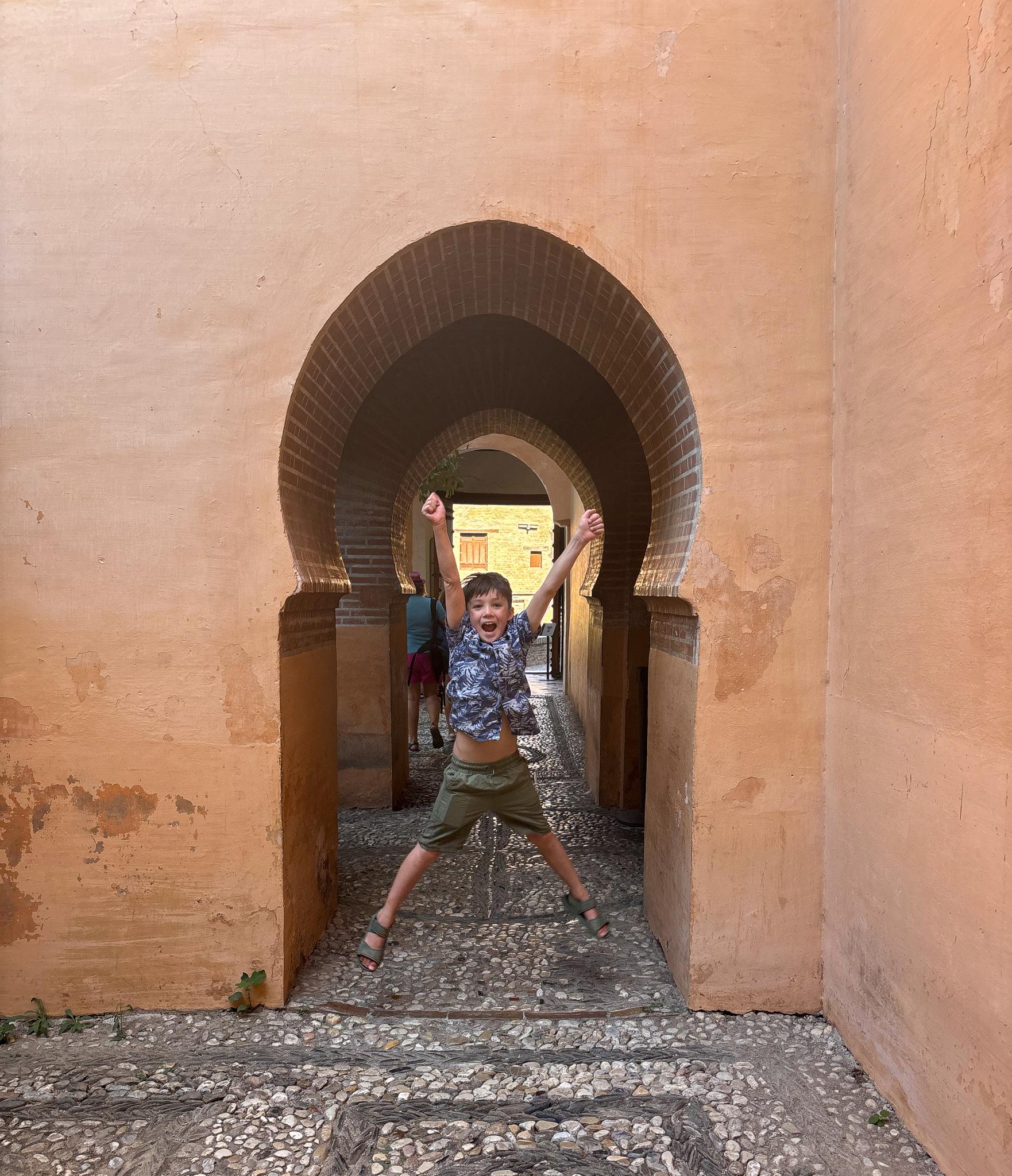
The Generalife gardens are genuinely brilliant for kids. The open spaces, fountains, and wildlife kept our sons entertained. They played tag weaving between cypress trees, spotted frogs on lily ponds, and were fascinated by the water channels that run throughout.
The Alcazaba fortress appeals to children’s imaginations – climbing the towers and walking the ramparts feels like exploring a real castle.

Wildlife spotting – Look out for the Alhambra’s resident cats (particularly around the Puerta del Vino), as well as frogs, fish in pools, and various birds in the gardens.
Practical tips for families
Go early or late in the day when temperatures are cooler and children have more energy. We chose late afternoon which worked perfectly.
Bring snacks and drinks – While there are vending machines near the Palace of Charles V and a small kiosk bar, it’s wise to have your own supplies for hungry children.
Take breaks – There are benches and shaded areas throughout. Don’t rush. We spent quite a while just sitting and watching the sunset, which gave everyone’s feet a rest.
Use the toilets before entering the Nasrid palaces – There are limited toilet facilities within the complex, with the main ones located between the Alcazaba and Nasrid palaces.
Pack patience – Children under 8 should hold hands for safety reasons according to Alhambra regulations. The complex is busy and has steep drops in some areas.
Tell them stories beforehand about the Nasrid sultans, princesses, and the legends of Alhambra. It helps fuel their imagination when they see the real thing.
Practical visiting tips
Be careful around the water channels
The intricate cooling water channels that flow throughout the palace complex are a design of pure ingenuity – and they’re everywhere. Be careful where you step, especially in the Court of the Lions.
We all laughed (including strangers) when my husband didn’t see one of them and stepped into a water channel rather ungracefully, splashing water everywhere. While a little embarrassed, at least he got to cool himself down in the Granada heat!
Queue etiquette for photos
Wait in line for photographs at significant spots like the Court of the Lions. All the people we came across were very accommodating and even offered to take family photos of us. The Alhambra attracts visitors from around the world, and there’s a lovely spirit of mutual respect.
Be patient, wait your turn, and you’ll get your photo opportunity.
Timed entry for the Nasrid palaces
The timed entry is strict, but there’s some flexibility. While you must enter during your allocated 30-minute slot, if you’re a few minutes late, don’t panic. We saw a lot of people let through a few minutes after their time.
That said, don’t rely on this – plan to arrive at the Nasrid palaces entrance at least 15-20 minutes before your slot. Once inside, you can stay as long as you like until closing time.
Getting to Alhambra
From Granada city centre, you can:
Walk up – It’s about a 20-30 minute uphill walk from Plaza Nueva through pleasant streets. This is free and gives you lovely views, but it is steep.
Take the C30 or C32 bus – These small buses run frequently from the city centre to the Alhambra. They’re often packed during peak season.
Taxi or Uber – The most convenient option, especially in hot weather or with children.
Tourist train – More expensive but fun for children.
If you’re driving, the Alhambra has a large car park, but arrive early during peak season as it fills quickly.
Two entrances to know about
Main entrance (Generalife) – If you enter here, explore the Generalife gardens first, then move to the Nasrid palaces and Alcazaba.
Puerta de la Justicia (Gate of Justice) – If you already have tickets, this entrance is closer to the Nasrid palaces and Alcazaba. From here, visit in the opposite order: Alcazaba, Nasrid palaces, then Generalife.
Choose your route based on your Nasrid palaces time slot. If you have an early slot, enter through the Gate of Justice. If you have a later slot, start at the Generalife.
Free attractions within the complex
The Museum of the Alhambra inside the Palace of Charles V is free and showcases artefacts and information about the Nasrid period.
The Palace of Charles V itself is also free to explore.
Understanding Alhambra’s historical significance
The Alhambra name comes from the Arabic “al-qal’a al-hamra” meaning “the red fortress,” likely referring to the reddish colour of the rammed earth walls.
Construction began in 1238 when Muhammad I, founder of the Nasrid dynasty, established his residence on Sabika hill. Over the next century, successive Nasrid rulers transformed the fortress into a palatine city, creating the palaces, gardens, and infrastructure we see today.
The artistic and architectural achievements reached their peak under sultans Yusuf I (1333-1354) and Muhammad V (1354-1391), who were responsible for much of the ornate decoration in the Nasrid palaces, including the Court of the Lions.
The Nasrid dynasty was the last Islamic kingdom in Western Europe. In 1492, Catholic monarchs Ferdinand and Isabella conquered Granada, ending Muslim rule in Spain. They established their court within the Alhambra and made some alterations, but crucially, they preserved the Islamic elements.
In 1984, the Alhambra was designated a UNESCO World Heritage Site along with the Generalife and the Albaicín quarter, recognised for its exceptional cultural value and as the finest surviving example of Moorish architecture in Europe.

Final tips for visiting Alhambra
Download offline maps – Phone signal can be patchy in parts of the complex.
Start with less crowded areas – If entering via the Generalife during peak season, the gardens are usually quieter early in your visit.
Respect the rules – Don’t touch the stucco walls or decorations, don’t lean on columns, and keep voices low in the palaces.
Stay until closing if possible – The late afternoon light is beautiful, and the complex becomes more peaceful as day visitors leave.
Combine with the Albaicín – After your Alhambra visit, explore the Albaicín quarter and catch sunset views of the Alhambra from Mirador de San Nicolás.
FAQs about visiting Alhambra
How long does an Alhambra visit take? Allow 3-4 hours minimum for the main areas. You could easily spend 5-6 hours exploring thoroughly.
Can I visit Alhambra without booking in advance? Around 400 same-day tickets are sold at the Access Pavilion each morning, but these sell out extremely quickly and aren’t reliable. Always book in advance.
What happens if I miss my Nasrid palaces time slot? You may be admitted if only a few minutes late, but this isn’t guaranteed. If you miss it entirely, you lose access to the Nasrid palaces, though you can still visit other areas.
Is the Alhambra accessible for wheelchairs? Parts of the complex are accessible, but the Nasrid palaces and some garden areas have steps and aren’t fully wheelchair accessible. Contact the Alhambra in advance for specific accessibility information.
Can I bring food and drinks? You can bring water (essential) and snacks, though eating is prohibited inside the palaces. Consume food in designated outdoor areas.
Are there lockers for bags? Yes, there’s a free coatroom service near the Palace of Charles V where you can leave large items.
Is there a dress code? No official dress code, but dress comfortably and modestly. You’ll be walking for hours in various weather conditions.
Can I re-enter the Alhambra? No, tickets are for a single entry only.
The Alhambra lives up to every bit of hype it receives. Yes, it requires advance planning and booking. Yes, it can be crowded. But standing in the Court of the Lions, watching sunlight filter through carved screens, or gazing across Granada as the sun sets over the Sierra Nevada – these are moments that justify the effort entirely.
So follow my top tips for visiting Alhambra. Book those tickets early, bring your passport, wear comfortable shoes, and prepare to be amazed by one of Europe’s most beautiful historical monuments.