I knew Madrid had me when I found myself eating lunch at 3pm on a Tuesday, nowhere to be, wine glass in hand, watching the city go about its business from a pavement terrace. That unhurried, unapologetic enjoyment of everyday life is Madrid’s greatest quality – and it’s something you can’t fully understand until you’re in it.
Yet somehow, Madrid doesn’t always get the credit it deserves. Travellers fixate on Barcelona’s beaches, Seville’s flamenco, or San Sebastián’s food scene – and Spain’s capital gets overlooked. Four visits in, I’m still finding new reasons to go back. So let me answer the question directly: Yes, Madrid is absolutely worth visiting. Here’s my case for why.

Quick answer: Is Madrid worth visiting?
Yes. Madrid is one of Europe’s most rewarding city break destinations. It has three world-class museums, some of the best tapas bars in Spain, grand Belle Époque architecture, beautiful green spaces, and an energy that is genuinely unlike anywhere else. The city has easy access from most European cities, is straightforward to get around, and offers excellent value compared to Paris or London. If you enjoy art, amazing food, history and late nights in great company, you’ll love it.
What makes Madrid worth visiting
1. The world-class museums alone justify the trip
Madrid has one of the greatest concentrations of art in the world, and for art lovers, the three museums that make up the Golden Triangle of Art along the Paseo del Prado are good reason enough to book flights.
The Museo Nacional del Prado is the crown jewel of Spanish cities and one of the greatest art museums in any of Europe’s major cities. It holds over 8,000 paintings – Velázquez, Goya, El Greco, Rubens, Titian – and spending even two or three hours here will stay with you. Velázquez’s Las Meninas in Room 12, Goya’s dark and disturbing Saturn Devouring His Son, Bosch’s extraordinary triptych The Garden of Earthly Delights – these are works you simply cannot see like this anywhere else. Don’t try to see everything; the Museo del Prado recommends itineraries from one hour to three, so be realistic with your time.
The Reina Sofía Museum is where you’ll find Picasso’s Guernica, the enormous anti-war painting that needs to be seen in person to truly understand its scale and power. Works by Dalí, Miró and other international artists fill the rest of the collection, covering Spain’s most turbulent and creatively fertile period.

The Thyssen-Bornemisza Museum began as a private collection – one of the most significant ever assembled – and fills the gaps by taking you from medieval art all the way through to contemporary. It’s surprisingly accessible and rarely as crowded as the Prado.
The Paseo del Arte Card (€32.80) gives you entry to all three museums at a discount. If art is your priority, it’s a good idea to buy it.
Top tip: The Prado offers free entry Monday to Saturday between 6pm and 8pm, and Sunday from 5pm to 7pm. Arrive 30 minutes early – queues form fast.
2. The food and tapas culture is extraordinary
Madrid takes eating seriously. Not in the precious, Michelin-star-chasing way, but in the everyday, this-is-how-we-live way. And that makes it genuinely joyful to eat here.
The San Miguel Market (Mercado de San Miguel), just a short walk from Plaza Mayor, is one of the best places to start your Madrid food experience. Enclosed in iron and glass, it’s filled with over-the-counter tapas bars serving everything from jamón ibérico to fresh oysters, sweet churros to Spanish vermouth. During my last visit, I spent an entire afternoon here, moving between stalls with a glass of wine in hand. Get there by 11am if you want breathing room – by lunchtime it’s packed.

In La Latina, Madrid’s oldest neighbourhood, the tapas culture is at its most authentic. Walk the length of Calle de la Cava Baja and you’ll find bar after bar specialising in different dishes – croquetas at one, patatas bravas at the next, gambas al ajillo sizzling in garlic and olive oil further along. The ritual of moving between bars, grazing and drinking, is one of the great pleasures of Spanish cuisine – and Madrid does it better than most. You can spend hours and hours here.
The city has its own signature dishes, too. Cocido madrileño, a rich chickpea stew served in courses, is the classic cold-weather dish. The best way to try it is at La Bola (Calle de la Bola, 5), which has been serving it since 1870 – one of the capital city’s oldest restaurants. But if you want to go one further, Sobrino de Botín on Calle Cuchilleros holds the Guinness World Record as the world’s oldest restaurant, having been in continuous operation since 1725. It’s a tourist attraction in its own right, but the roast suckling pig (cochinillo asado) is genuinely worth it.

Bocadillo de calamares – fried squid in a crusty roll – is a genuine Madrid institution, sold at bars around Plaza Mayor. And if you have a sweet tooth (or a late night ahead), Chocolatería San Ginés (Pasadizo de San Ginés, 5) has been serving churros and thick hot chocolate since 1894. It’s open through the night at weekends – a perfect spot after an evening on the city streets.
And huevos rotos, fried eggs broken over crispy potatoes with jamón, is one of my favourite things to eat anywhere. Casa Lucio on Calle Cava Baja is legendary for theirs.
3. The architecture is genuinely spectacular
Madrid isn’t a medieval city like Toledo or a Gothic city like Barcelona. Its character is largely 19th and early 20th century, and the result is grand, theatrical, and beautiful.
Gran Vía is the city’s most famous boulevard – busy and commercial, yes, but the buildings lining it are extraordinary. The Edificio Metrópolis (designed 1905 by French architects, completed 1911) is particularly photogenic, capped with a gold dome – covered in 30,000 leaves of 24-carat gold – and bronze winged figures. The Telefónica building, completed in 1929, was the city’s tallest for decades. Walking down Gran Vía in the evening, when the lights come on, and the crowds build, is one of those simple urban pleasures that Madrid does exceptionally well.

Palacio de Cibeles – the city’s former post office, now a cultural centre and city hall – is another of Madrid’s great set pieces. It sits at the foot of the Paseo del Recoletos and is best seen at night when it’s illuminated. The viewing platform at the top offers some of the best panoramic views in the city for a small extra cost.
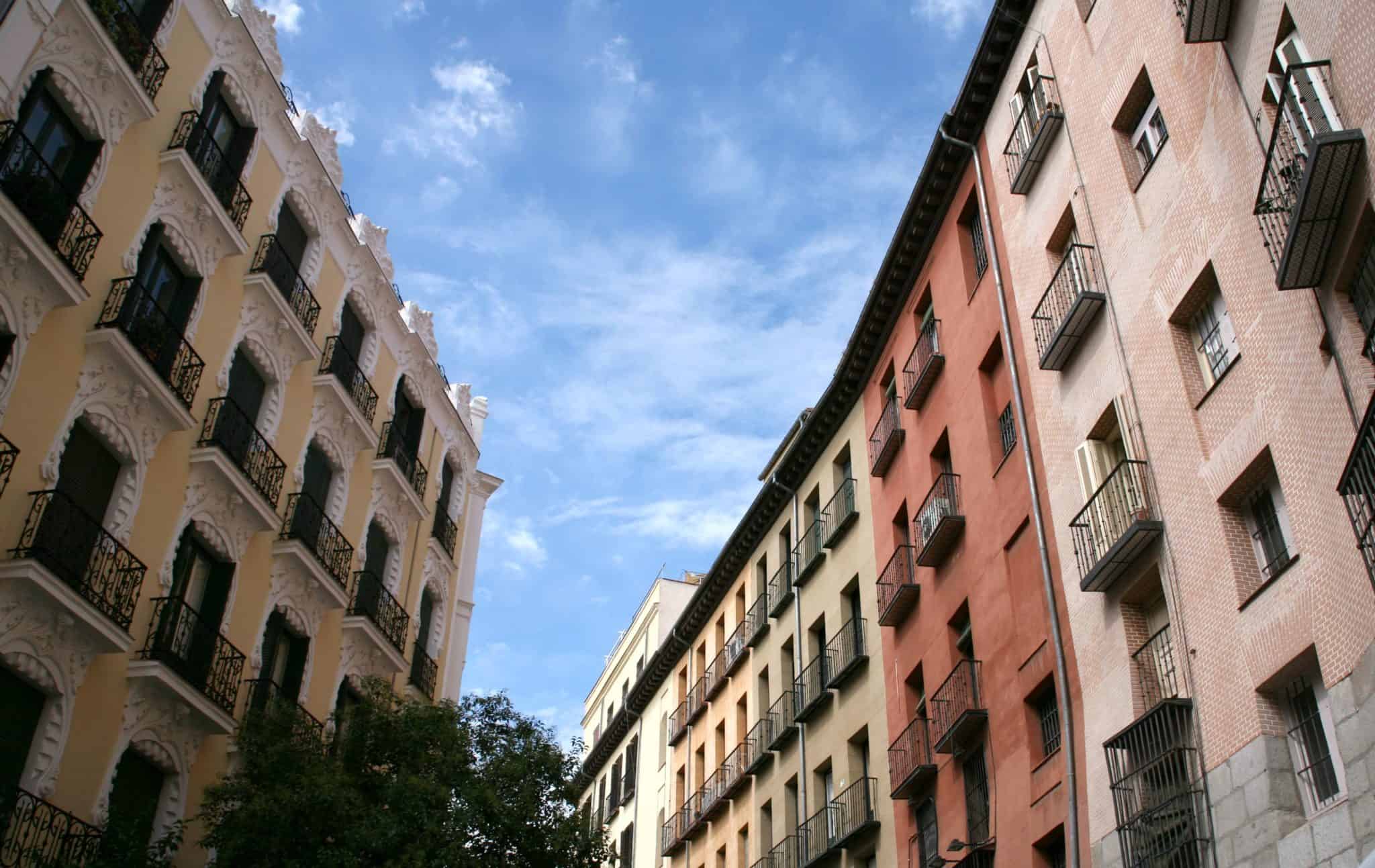
Plaza Mayor, the city’s grand central square, is surrounded by ochre apartment buildings with 237 balconies and anchored by the statue of Philip III. It was built between 1617 and 1619 and has witnessed bullfights, public executions, markets and festivals over the centuries. The Casa de la Panadería on the north side, with its painted allegorical façade, is the square’s most striking building. Several archways lead out onto winding streets – follow them and get happily lost.
Puerta del Sol is the beating heart of the city – the official centre of Spain, marked by the famous Kilometre Zero plaque from which all Spanish roads radiate. The square is always busy, always full of life, with street performers, locals rushing to work, and visitors photographing the 20-tonne bronze bear eating fruit from a strawberry tree (El Oso y El Madroño) – Madrid’s symbol.

4. El Retiro Park is one of Europe’s great urban spaces
The Parque del Buen Retiro covers 125 hectares in the heart of the city – often compared to New York’s Central Park in terms of its role in city life – and is one of the most enjoyable places to spend a few hours in Madrid. On a sunny afternoon, the park fills with locals rowing on the central lake, jogging along tree-lined paths, reading on benches, and playing live music near the Monument to Alfonso XII.
The Crystal Palace (Palacio de Cristal) is the park’s most remarkable structure – a delicate glass and iron pavilion dating from 1887, usually housing a free contemporary art installation. It’s entirely free to enter, and a perfect spot for a mid-afternoon wander.
For outdoor activities beyond Retiro, the Parque del Oeste on the western edge of the city centre is quieter and less visited, making it a great way to see Madrid as locals experience it. It’s also home to the Temple of Debod – an authentic ancient Egyptian temple, gifted to Spain in 1968, with one of the best sunset views in the city.
Retiro was designated a UNESCO World Heritage Site in 2021, along with the Paseo del Prado.

5. The energy is addictive
This is the hardest thing to quantify, but it’s real. Madrid operates on a different clock from the rest of Spain and from most other European cities. Dinner doesn’t really happen before 9pm. The tapas bars fill up around 8pm and stay busy until midnight. The city streets of Malasaña and Chueca don’t hit their stride until after 10pm.
And yet there’s nothing frantic or aggressive about it – people are out because they enjoy being out, talking, eating, drinking, watching the world go by. There’s a saying here – de Madrid al cielo, “from Madrid to heaven” – which gives you a sense of how Madrileños feel about their capital city. And after four visits, I’m starting to understand why.
The Barrio de las Letras (the literary quarter, also known as Huertas) is a perfect spot to feel this energy without the main tourist rush. Named for the Golden Age writers who once lived here – Cervantes, Lope de Vega, Quevedo – its streets are now lined with independent bars, bookshops and terraces. Plaza de Santa Ana at its heart is one of my favourite squares in the city, with a timeless elegance and a great mix of locals and visitors.
6. Day trips are some of the best in Europe
One of Madrid’s major advantages as a base is its central location. Some of Spain’s most interesting things to see are reachable in under an hour by high-speed train from Atocha or Chamartín train station.
Toledo, around 35 minutes by train from Puerta de Atocha, is a UNESCO World Heritage City that sits on a dramatic rocky hill above the Tagus River. The medieval old town – its Cathedral, synagogues, Moorish architecture and El Greco Museum compressed into winding cobbled streets – is extraordinary. It’s often called the “City of Three Cultures” for the centuries when Christians, Muslims, and Jews lived here together. It’s consistently one of Spain’s most popular destinations for good reason.
Segovia, 30 minutes by train from Chamartín, has a Roman aqueduct built around 100 AD with 167 arches that is one of the best-preserved examples in the world. The Alcázar castle sits on a narrow rock promontory above the city, with views across the surrounding plains that make it one of the most dramatic fortresses in Spain. And Segovia’s roast suckling pig (cochinillo asado) is famous across the rest of Spain.
El Escorial, about an hour by train, is the vast royal monastery-palace built for Philip II in the 16th century – austere, enormous and fascinating if you’re interested in Spanish history and royal heritage.
7. It’s good value for a European capital
Compared to other popular destinations across Europe, Madrid is notably affordable. Museum entry is reasonable (the Prado costs €15, with free hours daily). A caña – a small draft beer – costs around €2.50 in most neighbourhood bars, a glass of wine around €3. A menú del día, the set lunch menu at most local restaurants, typically runs €12 to €18 for three courses plus a drink, with no extra cost for bread or water. Taxis are metered and fair.
You can do Madrid on a tight budget or spend more freely – the city accommodates both without making the budget traveller feel like they’re missing out.
8. There’s more than just the main attractions
Beyond the obvious tourist attractions, Madrid has plenty of interesting things to discover. Football fans shouldn’t miss the Santiago Bernabéu Stadium, home of Real Madrid – tours run daily and the new stadium design is genuinely impressive even if you’re not a football devotee.
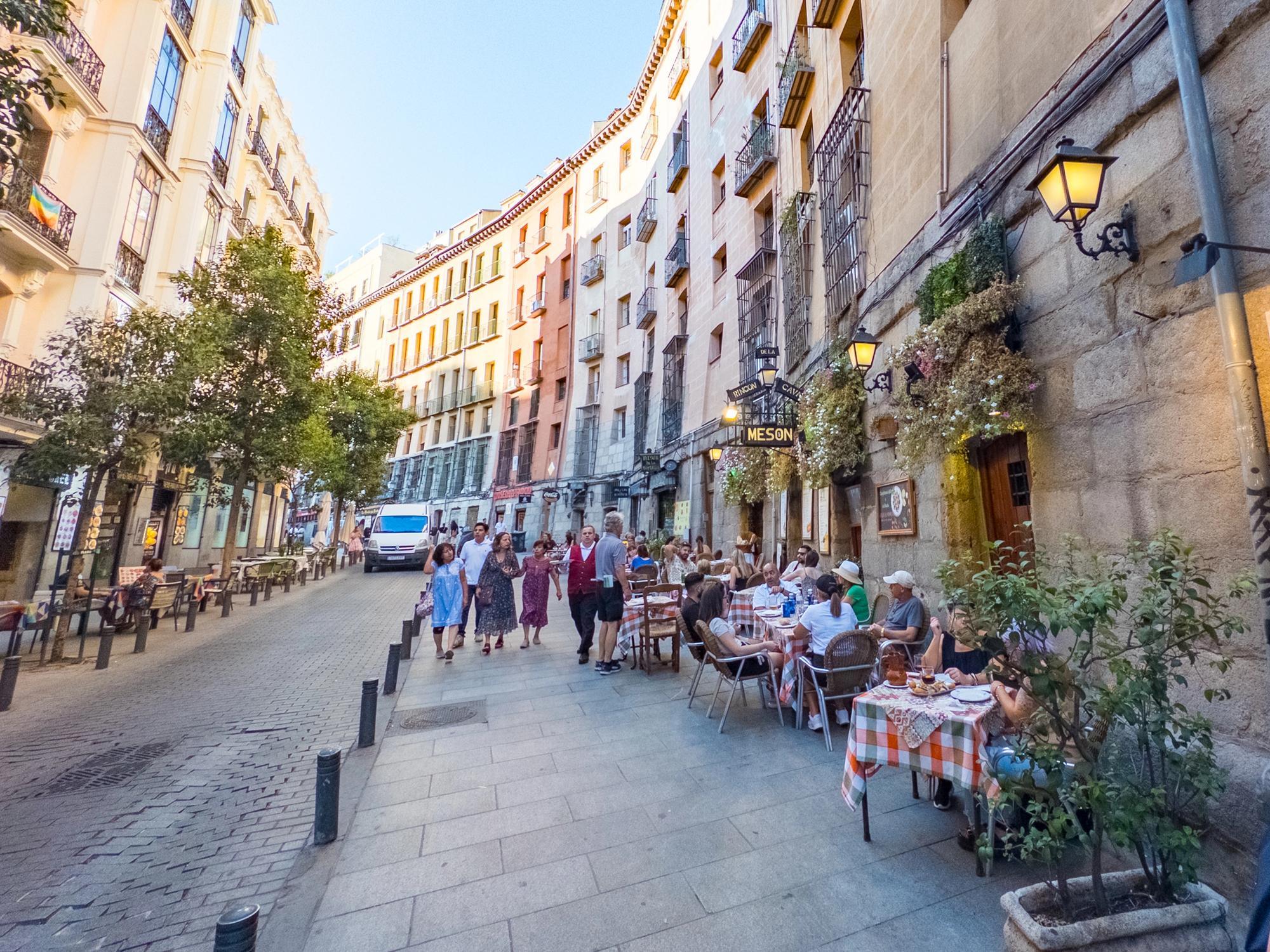
Chueca is Madrid’s famously open and welcoming neighbourhood, full of great restaurants, independent boutiques and some of the best nightlife in the city. Malasaña, right next door, is where Madrid’s creative crowd hangs out – vintage shops, record stores, excellent brunch spots and bars that fill up late. Both are a short distance from the city centre and easy to reach on the metro lines.
For a more upscale experience, Salamanca is Madrid’s elegant residential and shopping district – wide tree-lined streets, designer boutiques and some of the city’s finest restaurants.

What Madrid isn’t great for (the honest bit)
Every city has its limitations, and Madrid is no exception.
It doesn’t have beaches. If sunshine and sea are your priority, Madrid is inland and gets extremely hot in July and August (regularly above 35°C). You’d need to travel at least two to three hours to reach the coast.
Summer heat can be brutal. The summer months – July and August especially – are genuinely uncomfortable for sightseeing. The city bakes, and many locals leave for the coast. Attractions stay open but you’ll be wilting by midday. If you’re sensitive to heat, visit in spring or autumn. I remember visiting in August once, and I kept sliding off my seat at a bar, because I was sweating so much!
It’s not as compact as some European cities. The centre is manageable on foot, but the main attractions are spread out. Public transportation – specifically the metro – is excellent and affordable, and the best way to move around efficiently.
Pickpocketing is a real issue in crowded areas – Puerta del Sol, Plaza Mayor and the metro lines are the main spots to watch. Keep valuables secured and stay alert in busy spaces.
Is Madrid better than Barcelona?
I’ve visited both cities multiple times, and they’re genuinely different experiences. Barcelona has the beaches, Gaudí’s architecture, and a more immediately photogenic waterfront. Madrid has the art, the food culture, the energy, and – in my opinion – the more authentic city experience.
Barcelona can feel more touristy in its centre. Madrid’s tourist areas exist, but they’re balanced against real neighbourhoods – Malasaña, La Latina, Chueca – that feel genuinely lived-in. As a big city, Madrid is also easier to navigate and less overwhelming for a first trip.
For first-timers to Spain who want to experience Spanish food, art and city life without the beach element, I’d choose Madrid. For those who want the Mediterranean and Gaudí, Barcelona makes sense. You can also do both – they’re connected by high-speed train in just over two hours.
How long do you need in Madrid?
Two days is enough to hit the main attractions – Plaza Mayor, Puerta del Sol, the Prado, El Retiro, a tapas crawl in La Latina, and an evening on Gran Vía.
Three days gives you time to add the Royal Palace of Madrid, a second museum (Reina Sofía for Guernica, Thyssen for breadth), a morning in Malasaña, and space to simply wander without rushing.
Four or five days opens up a day trip to Toledo or Segovia, plus a more leisurely exploration of the city itself. You won’t run out of things to do – Madrid rewards a lot of time.
If this is your first time in Madrid, I’d recommend a minimum of three days. The city genuinely rewards time – it’s not a race-around-the-sights destination.
For a detailed breakdown of what to do each day, read the perfect 3-day Madrid itinerary.
The best time to visit Madrid
April, May and June are the best months overall. Temperatures sit comfortably between 18°C and 24°C, the terrace bars are open, parks are in bloom, and the city is busy but not overwhelmed.
September and October are also excellent – temperatures cool from the summer peak, the light is beautiful, and the crowds thin considerably. A great way to visit if you want more space at the best places.
The summer months (July and August) are hot (often 35°C+) and busy with tourists, while many locals leave for the coast. The museums are quieter, which is a genuine advantage, but the heat makes exploring the city streets uncomfortable. Book accommodation with air conditioning.
Winter (December to February) is mild by northern European standards – rarely below freezing – and Christmas in Madrid is atmospheric, with markets in Plaza Mayor and lights along Gran Vía. Crowds are low and prices drop.
My personal preference is late September to early November: warm enough to sit on terraces, cool enough to walk the beautiful green spaces comfortably, and the city feels properly alive.
Is Madrid safe?
Madrid is generally a very safe city and a popular tourist destination for good reason. The main concern for visitors is petty theft – pickpocketing in crowded tourist areas is common, particularly around Puerta del Sol, Plaza Mayor and the metro. Use a crossbody bag, keep your phone in your pocket and stay alert.
Violent crime against tourists is rare. The city’s nightlife areas – Malasaña, Chueca, La Latina – are busy and lively but not threatening.
Is Madrid family-friendly?
Yes, more than many people expect. Spanish culture is genuinely welcoming to children in a way that feels natural rather than performative. You’ll see local families eating out late, children running around the plazas at 10pm, and no one batting an eyelid. El Retiro Park is a perfect place for families, with open space, a boating lake, and several playgrounds. The Natural History Museum and the zoo at Casa de Campo are popular with children, too.
For more detail, read my guide to things to do in Madrid with kids.

FAQs: Is Madrid worth visiting?
Is Madrid worth visiting for a weekend? Yes. A long weekend (three nights) is enough to visit the Prado, explore Plaza Mayor and the historic centre, do a tapas crawl in La Latina, and get a real feel for the city. You won’t see everything, but you’ll see enough to want to return.
Is Madrid expensive? Compared to other major European cities, Madrid is good value. Beer and coffee are cheap by London or Paris standards, the menú del día makes lunch affordable, and free museum hours mean you can visit the Prado for no extra cost at all. Budget around €100 to €150 per day for a comfortable mid-range trip, including accommodation, food and entry fees.
Is Madrid worth visiting if you’re not into museums? Absolutely. The food culture, architecture, parks and neighbourhood life are all good reasons to visit, even if you skip every gallery. La Latina, Malasaña, Chueca and El Retiro alone would fill several days. Add a day trip to Toledo, and you have a genuinely rich first trip without entering a single museum. The Santiago Bernabéu Stadium tour is also great for football fans.
Is Madrid worth visiting in August? It can be done, but it’s hot. Temperatures regularly exceed 35°C, and some locals leave for the coast during the summer months. If you visit in August, start sightseeing early, rest during the hottest part of the afternoon, and make sure your accommodation has air conditioning.
What is Madrid best known for? The Prado Museum, the Royal Palace of Madrid, the tapas culture of La Latina, the nightlife of Malasaña and Chueca, El Retiro Park, Plaza Mayor, and Real Madrid football club. As the capital city of Spain, Madrid is the country’s cultural and political heart, and that breadth shows in what it offers visitors.
How does Madrid compare to Barcelona for first-time visitors to Spain? Both cities are worth visiting. Madrid offers richer art museums, a more local feel in its best neighbourhoods, and arguably better Spanish cuisine. Barcelona has beaches, Gaudí’s extraordinary architecture, and the Mediterranean. If you can only choose one: Madrid for city life and culture, Barcelona for architecture and coast.
What are the best day trips from Madrid? Toledo (around 35 minutes by train) is the most popular and most rewarding – a complete medieval city in remarkable condition. Segovia (30 minutes) for the Roman aqueduct and the Alcázar. El Escorial (one hour) for Spanish royal history on a grand scale. All are easy to do independently – no tour guide necessary.
Is Madrid easy to get around? Yes. The metro has multiple lines covering the whole city, with easy access to all the main attractions from any central location. A 10-journey ticket costs €7.30 (discounted rate, in place throughout 2026). Most of the historic centre is also walkable, with short distances between Plaza Mayor, the Prado, El Retiro and the Royal Palace of Madrid.
Final verdict: Is Madrid worth visiting?
Yes! Madrid is one of those cities that doesn’t immediately dazzle – it builds. The first afternoon, you’re getting your bearings. By the second day, you’re starting to feel the rhythm of the place. By the third, you’re sitting at a terrace bar at midnight, eating jamón and drinking tinto de verano, and wondering how you hadn’t come sooner.
There’s a reason Madrileños say de Madrid al cielo – from Madrid to heaven. It’s not a city that shouts about itself. It just quietly delivers, time after time.
Come for the Prado. Stay for the tapas. Go back for everything else.
Cant wait to read the rest sounds great.
Thanks Mark, just need to get going and write it up 🙂
I’ve been to Spain a handful of times, but never made it to Madrid. Sounds like you had an epic time lovely, great write-up xxx
Thanks lovely x
I love Madrid! Looking forward to seeing what you and your friends got “up to!”
It’s great isn’t it?
We went to Madrid years ago, looking forward to seeing what you got up to and hopefully planning a trip back!!
It’s a great city. I don’t think I could ever be bored of it
Spain’s big cities are still mostly languishinh on my bucket list – looking forward to discovering more about Madrid!
Loved reading this again – thanks for linking up to #citytripping
Thanks for hosting 🙂
I never made it to Madrid when I went to Spain, now I see how much I missed out on. Thank you for linking with us at #TheWeeklyPostcard
Hopefully, you’ll get a chance at some point in the future. Thanks for hosting
I only had 48 hours or so myself in Madrid. but will not get ahead of your readers:) all I will say is that I fell in love with the vibe and want to come back!
It is the vibe isn’t it? It’s quite hard to describe. I love it there, three times I’ve been now and could quite easily go back!
I also had to spend 48 hours in Madrid once when I was going to Bolivia. And this brings back so many memories. I never visited Barcelona, I have heard so many great things about it. I am happy to hear yo prefer Madrid though 😉 I like it a lot as well!
You’d love Barcelona. But there is just a difference – I can’t really explain it. Madrid is much cooler
Madrid is so cool! We’ve been there twice and only scratched the surface of the surface … but had a blast doing it. There’s so much to see and do in the city and I’ll agree that it’s full of life. Never boring, that’s for sure, and I’m looking forward to reading what you fit into your 48 hours.
Tops on our list whenever we visit: tapas and tinto de verano, a wonderful, way-better-than-sangria drink that I wish I could find at restaurants in the U.S. Have you tried it?
I’m glad you agree – it’s so large isn’t it, that’s why it’s great to go back again! Yes, tinto de verano is very nice – we had some at Micardo San Miguel. I like Clara con limon which is basically a lemon shandy!
I absolutely do agree!! The energy in Madrid is like nothing I’ve felt before, and the people are super friendly. Lovely post! 🙂
Oh thanks Lucille, great to connect btw. Glad you agree – it’s really hard to describe but it is such a vibrant city. Thanks for popping by 🙂
Looking forward reading part 2, I’ve been to Spain three times (going for the fourth tomorrow) but haven’t seen Madrid yet. Hopefully I will next time, Spain is such a beautiful country, I’m always eager to go back. 😀
Ah love Spain! Yes, new post is nearly finished!
Loved the post! I am visiting Madrid in two weeks and can’t wait ot make it to the city.
New post coming up in the next day, hope you’ll find it useful!
I spend two days in Madrid recently and barely had enough time to do all the things I wanted to do. I did go on a food tour with Madrid Food Tours and that was a lot of fun.
I have been told by many Malaysians that Barcelona is much better than Madrid. I took note of that and told myself that, one day, if I go to Spain, I will spend less time in Madrid. Boy, am so glad that you wrote this piece because it’s changing my mind! I love the arts, museums, food and wine – Madrid is the place to spend more time! Thanks 🙂
Ha ha! I suppose it’s personal choice and maybe I’ve been spoilt staying there with a friend in the past. But Madrid is cooler and seems more authentic.
The first time I visited Madrid I too had a guide to show me around (and show me how they party there) so I’m a huge fan of Madrid too. It has so much to offer – the museum, the park, the palace, the food…You’ve made me want to go back! Thanks for linking to #citytripping
I definitely want to go back. I haven’t eaten enough!