Last Updated on 13/07/2026 by Ting Dalton
Life can get busy… And sometimes all it takes is a change of scenery to sharpen the mind, to give you a fresh perspective and to de-stress. But sometimes it’s not possible to go away for a night or a long weekend. That’s why day trips are a great compromise. Perfect mini-adventures, new places to explore, and the best thing, sleeping in your own bed at the end of the day.
Living in Surrey, I have the best of both worlds – the countryside on the doorstep and London reachable in under an hour. But what I love most is how well-connected this corner of England is. In two hours or less from central London, you can be sitting on a proper sandy beach, walking through vineyards, exploring a medieval castle, or eating oysters straight from the harbour.

This guide covers the best day trips from London by train and by car – from the obvious classics to the places most day-trip lists miss entirely. I’ve kept everything to a maximum of two hours travel each way, so you actually get a full day at your destination.
Seaside and coastal day trips
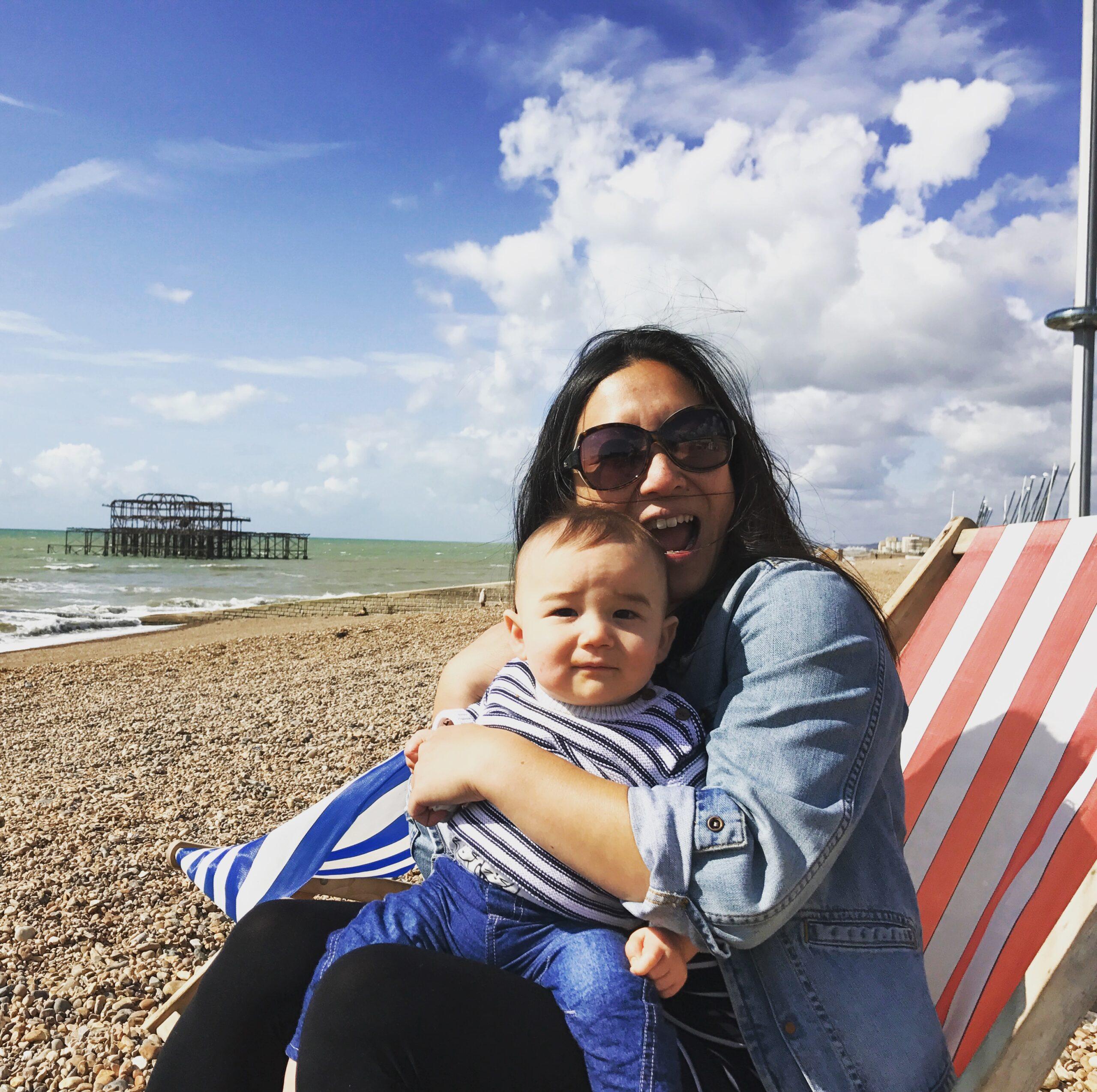
Brighton
Brighton is somewhere I’ve been countless times – whether it’s a quick trip for fish and chips down by the waterfront, meeting friends for lunch and wandering the Lanes, or just heading down to blow away the cobwebs. It earns its popularity. The seafront promenade is great for shaking off the journey, the Royal Pavilion is extraordinary up close (the Indo-Saracenic domes and minarets were commissioned by George IV in the early 19th century), and The Lanes is one of the most enjoyable shopping areas in south-east England – a maze of narrow passages filled with independent jewellers, vintage clothes, antique dealers and small cafés.

Brighton Pier works well for an hour if you’re with children. For something quieter, walk west along the coast to Hove, where the beach is less crowded, and the café scene is strong.
Train: Victoria or London Bridge, around 1 hour. Trains run every few minutes throughout the day.
Whitstable
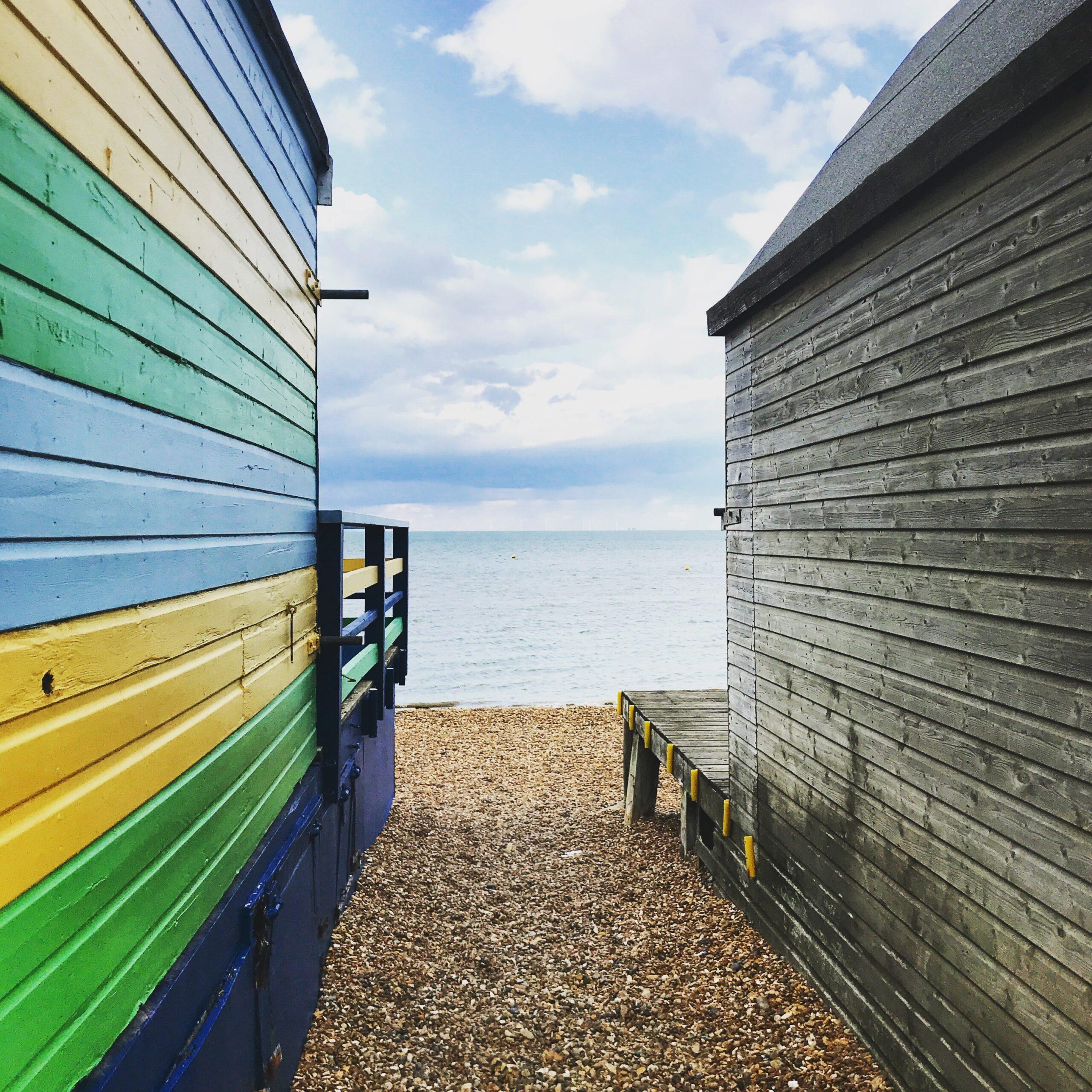
Whitstable is a place we keep coming back to – and have been for over a decade, ever since a friend first mentioned it and we made the trip on a whim. The kids drag us back every chance they get, and honestly, we don’t need much convincing. It’s one of those places that just gets under your skin.
A working fishing town on the north Kent coast, there’s no pier, no amusement arcade, no theme park. Just oysters, fish and chips, pebble beaches, crabbing lines dangling off harbour walls, and some of the best independent shops and restaurants you’ll find anywhere on the south coast. Harbour Street is the heart of it all – independent bookshops, galleries, art studios and food producers, not a chain in sight. We always pick up fish and chips from Ossie’s Fish Bar and eat them on the beach, and the Lobster Shack tucked behind the East Quay is one of our go-to spots for fresh oysters and harbour views. The street art scene is brilliant too – keep an eye out for Catman’s work dotted around town.
Train: Victoria, around 1 hour 20 minutes.
I have a full guide to the best things to do in Whitstable – everything from where to eat to the best walks, the street art, and where to stay.
Margate
I have fond memories of Margate, particularly of Dreamland – going with friends in my youth and spending the day on the rides. It’s changed a lot since then, but that’s not a bad thing. Margate has had a genuine transformation in the last decade, and it’s a real up-and-coming place.
The arrival of the Turner Contemporary gallery on the seafront – free to enter, with consistently strong exhibitions – gave the town an anchor for a more interesting visitor scene. The Old Town now has independent galleries, good cafés, and a Saturday market with decent street food. Dreamland itself is excellent with children: rides, a rollercoaster, and a nostalgic atmosphere. On a good summer day, Margate Main Sands is as broad and sandy as any beach in England.
Train: St Pancras on the high-speed service, around 1 hour 20 to 1 hour 39 minutes.
Rye
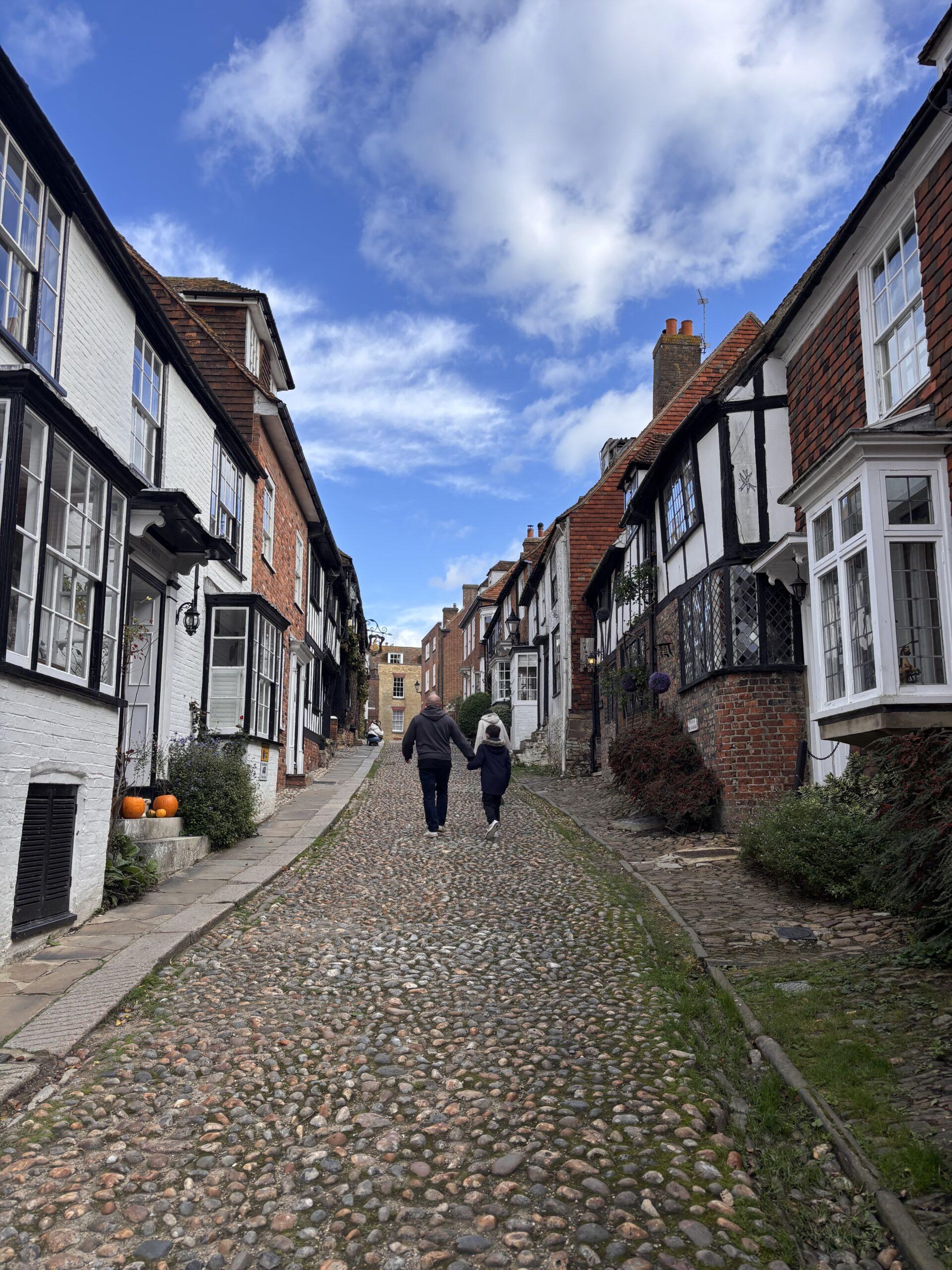
Rye has become a bit of a new obsession for me. What I love is that on the high street you can find independent shops, restaurants and cafés around every corner, plus so much history woven into the streets themselves. The medieval layout is largely intact – cobbled lanes, timber-framed buildings tilting at odd angles, and the Mermaid Inn sitting at the top of the hill. With cellars dating to 1156 and the building itself rebuilt in 1420, it’s one of England’s oldest inns, and stopping in for a drink while imagining the Hawkhurst smugglers who once held court there is part of the Rye experience. Walk the cobbled streets and wander aimlessly – you can’t go wrong.
It’s compact enough to cover on foot in half a day, which makes it ideal to pair with Camber Sands: a stretch of huge sand dunes and wide beach that’s unusual for this stretch of East Sussex coast. Get there early in summer – Camber fills up on hot weekends.
Train: Charing Cross or London Bridge, around 1 hour 25 to 1 hour 35 minutes with one change.
Read my full guide on the best things to do in Rye.
Eastbourne and the Seven Sisters
These work well together on the same day. Eastbourne has a Victorian seafront, a fine pier, and the Towner Eastbourne gallery for contemporary art. But the real reason to come is what lies just beyond the town: the Seven Sisters – seven chalk cliffs that run along the East Sussex coast between Seaford and Birling Gap, rising and falling above the English Channel.
I’ve walked it with my boys and, on a sunny day, you feel like you’re in another country, such is the sight. The walk from Birling Gap to Cuckmere Haven takes two to three hours at a comfortable pace. Standing at the top of the first cliff, looking back along the line of white chalk to the sea below, is one of those views that doesn’t photograph as well as it looks in person. Take decent shoes and check the weather.
Train: Victoria to Eastbourne, around 1 hour 25 to 1 hour 30 minutes.
I have a full guide to the Seven Sisters – worth reading before you go. It covers parking, the best walking route and where to eat.

West Wittering
West Wittering is proper bucket and spade territory – and one of the best beaches in the south-east. A Blue Flag beach with clean, shallow water and sand dunes, there’s plenty of room for everyone, but go early on sunny days because it does fill up. We love it here, and have spent many days sunbathing and playing in the calm, shallow water. It feels calmer and far less developed than Brighton or Margate – more of a proper day at the beach.
One important practical note: parking is limited, and it’s highly recommended that you pre-book through the West Wittering Estate website in summer. Don’t arrive without a booking on a warm weekend – you won’t be allowed in. By car is the most straightforward option; by train, take Victoria to Chichester (around 1 hour 30 minutes), then a 40-minute bus (Stagecoach 52 or 53).
Car: Around 1 hour 45 minutes to 2 hours from central London.
Train + bus: Victoria to Chichester (1 hr 30 min) then the 52/53 bus (40 min).
Dungeness
Dungeness is not for everyone, and that’s exactly the point. Last time we were there, it was a gloomy day – dry, but that only added to the atmosphere. We loved walking along, feeling like we were the only people there, skimming rocks and finding abandoned boats on the beach. It has a quality that’s completely unlike anywhere else in England.
A vast shingle headland on the Kent coast, it has a disused nuclear power station, a lighthouse, weathered fishing huts, and the famous shingle garden around Prospect Cottage, where Derek Jarman once lived – book a 40-minute tour inside the cottage in advance as spaces are limited. The Snack Shack does freshly-caught seafood worth stopping for.
By car, Dungeness is around 2 hours from central London. By public transport, it requires a train to Folkestone, then a bus – fine if you plan it, but a car makes the day much simpler.
Car: Around 1 hour 45 minutes to 2.5 hours from central London via the M20.

Dover and the White Cliffs
The White Cliffs of Dover are one of those landmarks that look better in reality than in photographs. Standing on the clifftop path with the English Channel stretching away below and, on a clear day, the French coastline visible some 20 miles across the Strait – it’s striking. The chalk drops almost vertically into the sea, streaked with dark flint, and the coastal path runs along the top, giving you the full perspective that you can’t get from land level.
The National Trust visitor centre at the start of the clifftop walk is the best place to begin. From there, it’s around two miles to South Foreland Lighthouse – a good two-hour round trip at an easy pace. Serious walkers can continue to St Margaret’s Bay beach if time allows.
Dover Castle is a separate but excellent half-day in itself. The largest castle in England, it has stood on the headland since the 12th century. The Secret Wartime Tunnels – where the Dunkirk evacuation was coordinated in 1940 – run guided tours every 20 to 30 minutes; book ahead online as they sell out on busy days. The Great Tower and Roman lighthouse round out the history well. Allow a full half-day for the castle alone.
Dover Castle and the cliffs together is a long day. Choose one as your focus, or plan an early start.
Castle admission: Around £28 for adults. Book online via English Heritage and pre-book tunnel tours.
Train: St Pancras on the high-speed service to Dover Priory, from 1 hour 20 minutes. A taxi from the station to the castle costs around £10.
Car: Around 1 hour 45 minutes from central London via the M20 or M2/A2.
Portsmouth
Portsmouth sits at the edge of the two-hour rule, but the fastest direct trains from Waterloo take around 1 hour 30 minutes, and the station drops you straight into the action. The big draw is Portsmouth Historic Dockyard, a five-minute walk away. HMS Victory – Nelson’s flagship at Trafalgar – is currently undergoing a major conservation project (Victory Live: The Big Repair), which lets you see parts of the ship hidden for decades. The Mary Rose Museum next door is built around the raised hull of Henry VIII’s warship, with thousands of Tudor objects recovered from the seabed. HMS Warrior, Queen Victoria’s ironclad, is worth an hour in its own right. Tickets are valid for 12 months, which takes the pressure off trying to see everything in a day.
Next to the dockyard, Gunwharf Quays has over 30 waterfront restaurants – mostly chains, but the harbour setting is great, with the Spinnaker Tower rising 170 metres above. The Old Customs House, a Fuller’s pub in an original naval building, is good for something with more character.
Dockyard admission: From around £46 for adults, £31 for children. Check historicdockyard.co.uk for current prices.
Train: Waterloo direct to Portsmouth Harbour, around 1 hour 30 minutes on the fast service (average around 1 hour 50 minutes).
Car: Around 1 hour 45 minutes to 2 hours from central London via the M3 and A3(M).

Charming villages and Surrey countryside
Shere
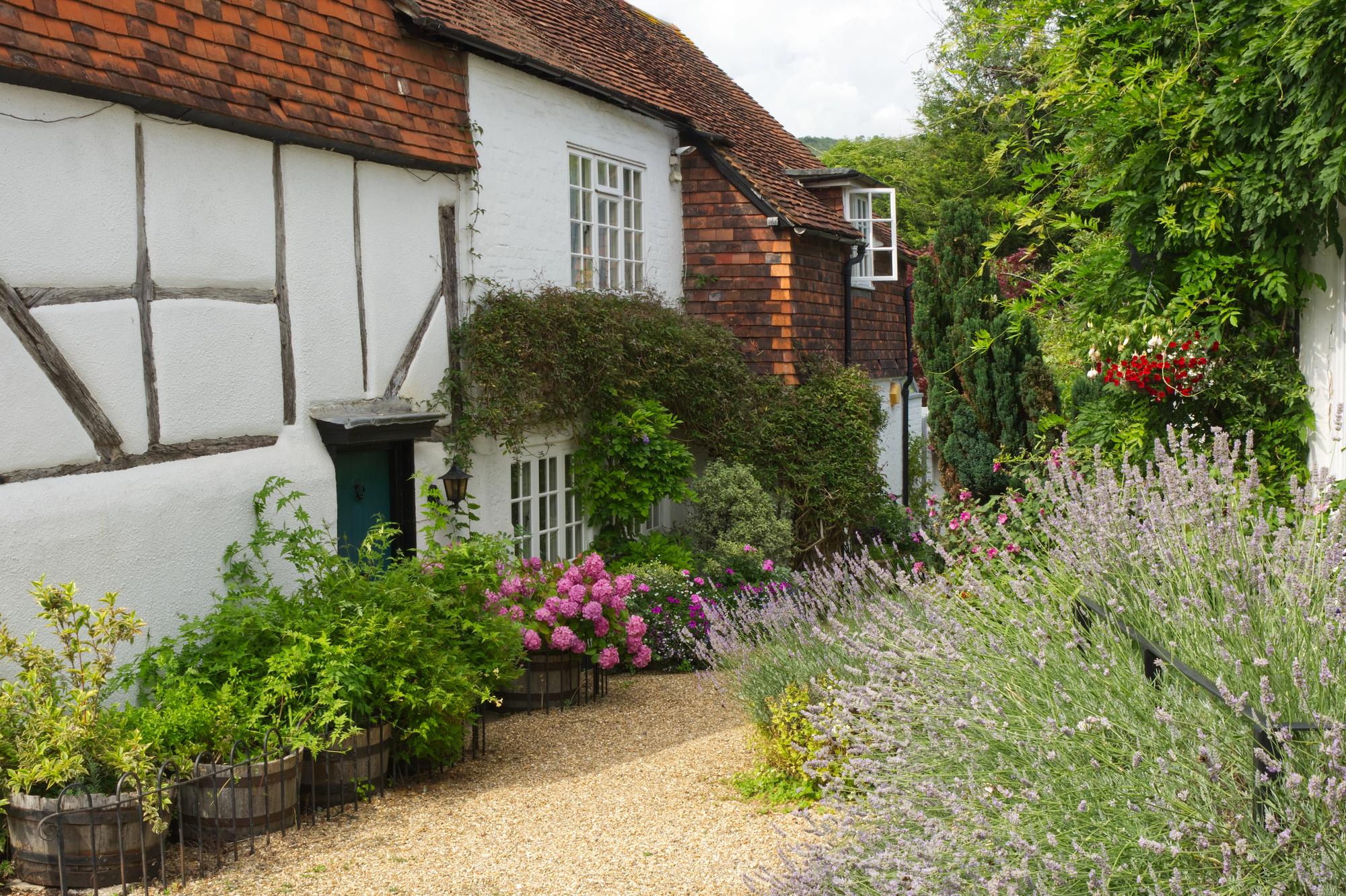
Shere is Surrey at its most photogenic – and yes, everyone agrees, but don’t let that put you off. A small village in the Surrey Hills with a stream running through the centre, a Norman church, and the kind of high street that appears in films – because it does. The Holiday (2006) used it extensively, and the village looks essentially the same as it did on screen.
It’s a short drive from the A25 between Guildford and Dorking, and pairs well with a walk in the Surrey Hills – an Area of Outstanding Natural Beauty with some of the best walking in south-east England. There are also quite a few highly rated restaurants in Shere, including Kinghams.
Car: Around 40 to 50 minutes from central London. By train, Gomshall station (Guildford line from Waterloo) is a mile’s walk away.
Frensham Ponds
There are two ponds at Frensham, near Farnham in Surrey, and they feel nothing like what you’d expect to find an hour from London. One of the loveliest things about this place is the fact that in summer, you can dip your toes in and swim – there was a no-swim order for a while, but it has been lifted, and designated swimming areas at the Great Pond are now open again. We love it here, and the shallow, sandy shoreline is perfect for paddling and a dip on a warm day.
Something I find lovely is the memorial benches dotted around the paths – each one dedicated to someone’s loved one, with inscriptions and words of love. It adds something quietly moving to a morning walk. The heathland behind the Great Pond stretches across 1,000 acres of Surrey Hills, a colourful mix of purple heather and yellow gorse.
Frensham Little Pond is managed by the National Trust and has a quieter, more contemplative feel. A circular walk takes you around the water’s edge through wooded areas and up to a ridge with good views. The café at the Little Pond is good for coffee and cake after a walk.
Practical notes: Arrive early – the Great Pond car park fills by mid-morning on warm weekends. Always check water quality before swimming, particularly in late summer when blue-green algae can be present. Parking charges apply on Saturdays, Sundays and bank holidays from Easter to the end of September (£4 per vehicle; free for National Trust members). No dogs on the beach.
Car: Around 55 minutes to 1 hour 10 minutes from central London via the A3 south, then A31 toward Farnham. Car park: Bacon Lane, Churt, GU10 2QB.
Train + bus: Waterloo to Farnham (around 55 minutes), then Stagecoach bus 19 toward Haslemere.
Read my full guide to Frensham Ponds for what to do, swimming rules, and the best walks.

Dorking and Denbies Wine Estate
Dorking is a good base for the Surrey Hills – and home to one of the best restaurants in Surrey. Sorrel on South Street is a Michelin-starred restaurant in a beautiful 300-year-old building, now led by chef-patron Alex Payne. If you’re splashing out on a special occasion, it’s worth the trip down.
Denbies Wine Estate, just outside town, is a different kind of pleasure – 265 acres of vines in the Surrey Hills producing award-winning sparkling wines. The vineyard train tours (a Land Rover towing carriages through the vines with sweeping views over the North Downs) are great fun, and the farm shop is full of lovely artisan products from local producers. The restaurant is worth booking ahead.
Train: Victoria to Dorking Deepdene, around 55 minutes – Denbies is a 15-minute walk from the station.
Car: Around 45 minutes to 1 hour from central London.
Guildford
Guildford is Surrey’s county town and one of the most underrated day trips from London. The cobbled High Street runs steeply down from the castle ruins at the top to the River Wey at the bottom. Guildford Castle is small but well-preserved, and the views from the keep are good. There are great shops here, as well as a choice of fantastic restaurants.
The River Wey is a National Trust-managed waterway – you can hire a boat and drift along the towpath in summer, or walk the Wey Navigation path for a couple of hours. The town has a strong independent restaurant and café scene.
Train: Waterloo direct, around 35 minutes. Trains run every 15 minutes.
West Horsley Place, Surrey
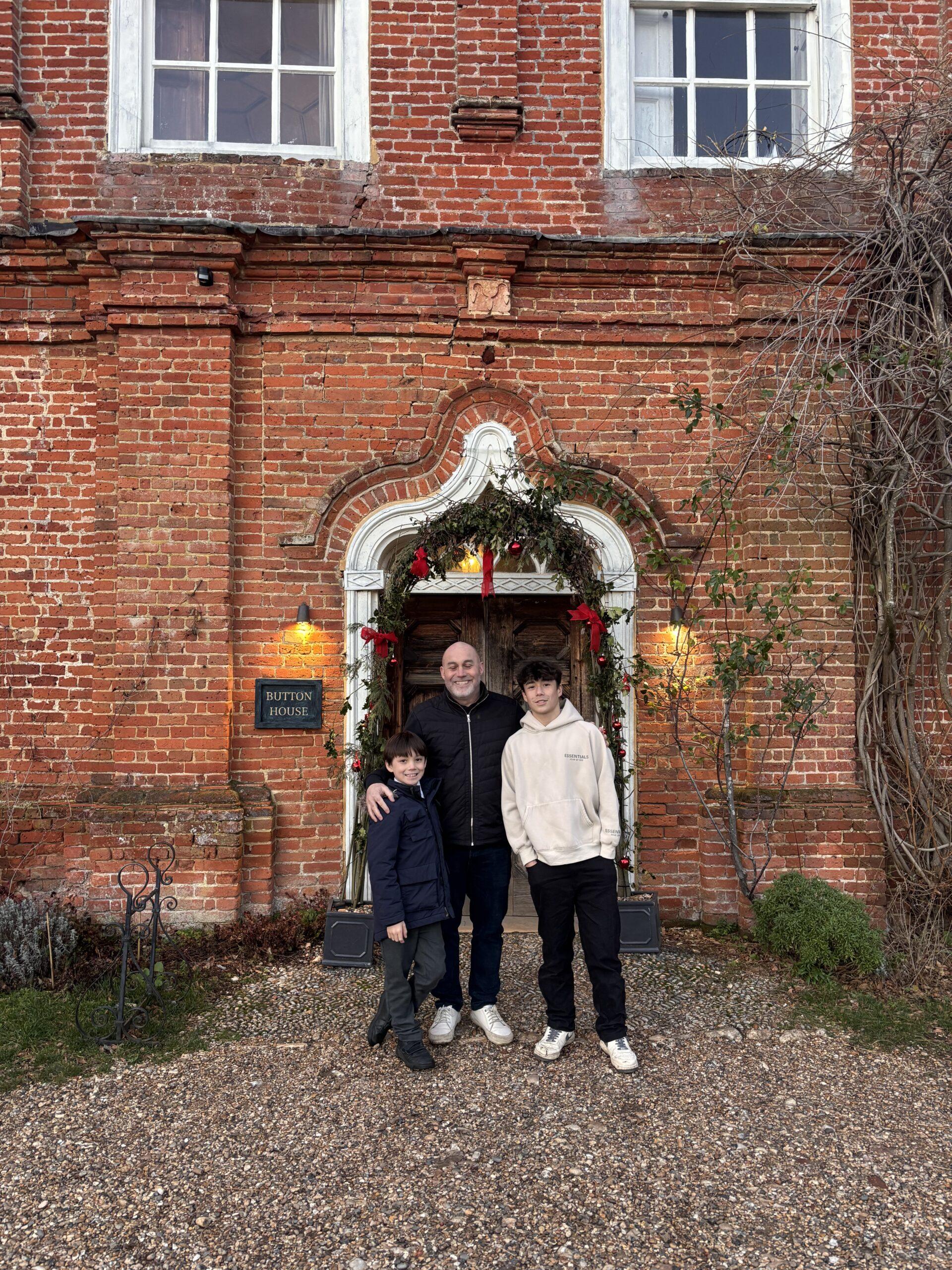
We went recently. West Horsley Place is a Grade I listed manor house just east of Guildford with over 600 years of history – Henry VIII, Elizabeth I, and quite possibly Guy Fawkes all passed through. It’s also, rather brilliantly, Button House: the filming location for the BBC comedy Ghosts. The Filming Favourites guided tour takes you through the rooms used as sets, with knowledgeable volunteer guides who are as passionate about the house’s history as they are about the show. Fans will recognise every corner.
But even if Ghosts isn’t your thing, the house itself is fascinating – full of surprises and stories, and still being gradually restored. Spend a few hours exploring the 400 acres of grounds afterwards: arable fields, ancient woodland, hedgerows and, in summer, a sunflower field. The estate’s public footpaths are free to walk on any day, and the coffee van on site does a very good flat white.
Tours must be pre-booked through the West Horsley Place website – check westhorsleyplace.org for upcoming dates as they run on a scheduled programme rather than daily. Parking is free.
Car: Around 40 to 50 minutes from central London via the A3. Address: Epsom Road, West Horsley, KT24 6AN.
Train: Waterloo to Horsley station (around 49 minutes), then a pleasant mile-and-a-half walk to the house.
Petworth
Petworth is a small West Sussex market town that punches well above its weight – primarily because of Petworth House and Park (National Trust), a 17th-century baroque mansion with one of the finest art collections in National Trust ownership. The state rooms contain major works by Turner, Van Dyck, Reynolds and Gainsborough. Outside, 700 acres of Capability Brown parkland come with a free-roaming herd of around 700 fallow deer. The park entrance is free, even if you don’t go into the house.
The town itself is excellent for antiques, and the Newlands House Gallery has brought contemporary art exhibitions to the heart of Sussex.
Car: Around 1 hour 15 minutes to 1 hour 30 minutes from central London.
Train: London Bridge to Pulborough (around 1 hour 20 minutes), then the Stagecoach no. 1 bus to Petworth (around 25 minutes).

Box Hill and the Surrey Hills
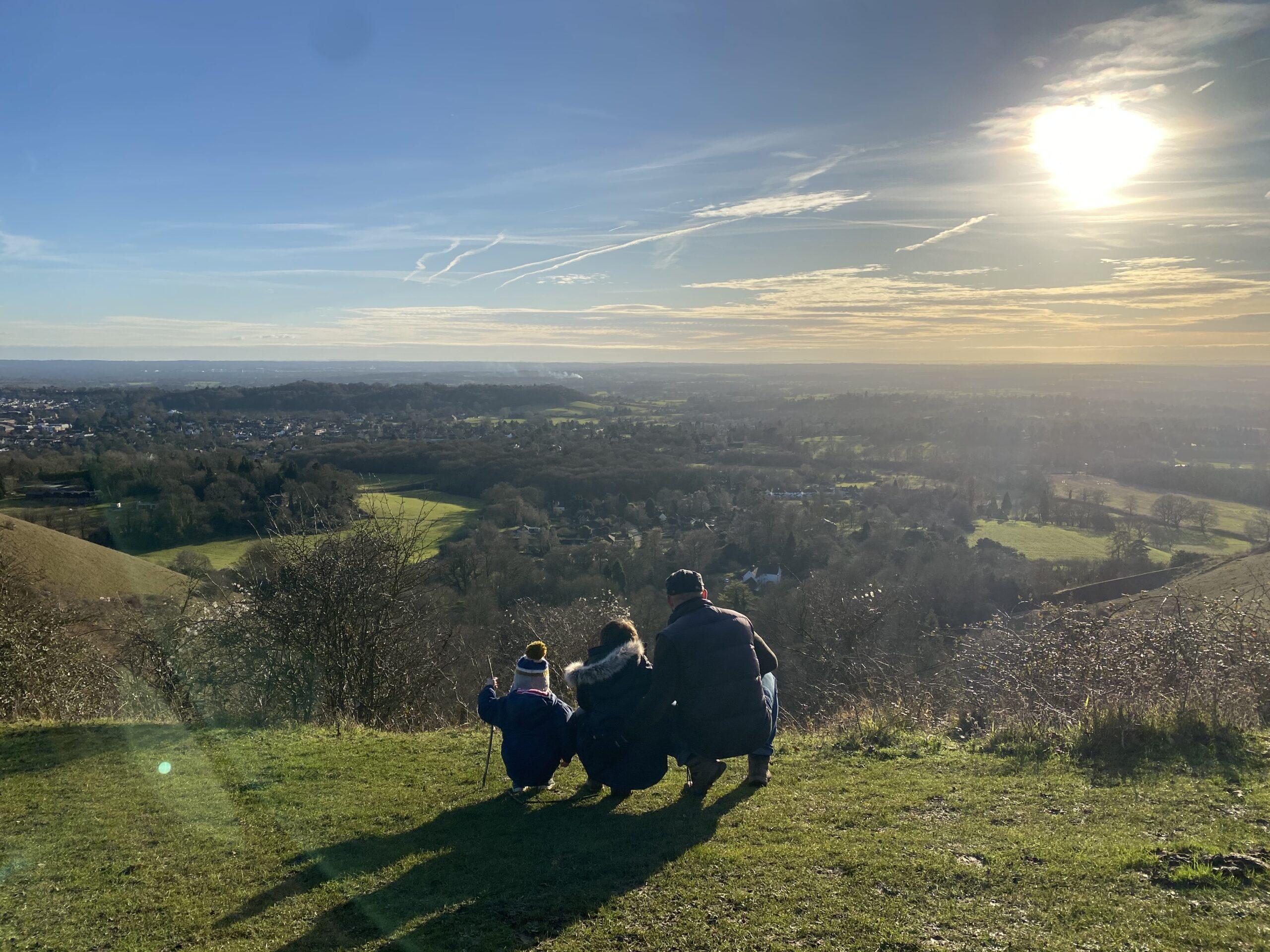
Box Hill is one we always come back to as a family. The National Trust site gives you some of the best accessible downland walking in the south-east, and it feels like a world away from anywhere – like kids hiding out in the woods. The stepping stones across the River Mole are great fun, and the rope swing in summer gets well used. I’ve done the full walk, and it’s a real workout – very hilly. The views from the top, looking out over the Mole Valley, are excellent on a clear day.
The café at the summit is good for coffee and cake after the climb. And if you’re in the car – highly recommend stopping at Smith & Western for American-inspired food and a real-life jail cell!
Train: Victoria or Waterloo to Box Hill & Westhumble, around 45 minutes.
RHS Garden Wisley, Surrey
Wisley is a family favourite of ours, and one we come back to throughout the year. The RHS’s flagship garden covers 240 acres, and it shifts completely with the seasons – carpets of crocus in spring, the rose garden in full colour by summer, and rich autumn tones across Battleston Hill. We particularly love the rock garden, which tumbles down a hillside with pools and streams running through alpine plantings, and the Glasshouse – a huge glass structure divided into tropical, temperate and desert zones. RHS Hilltop, opened in 2021, is worth a look for its exhibition space and landscaped gardens. In winter, RHS Glow transforms the garden with an illuminated light trail – book well ahead as it sells out.
If you haven’t driven here for a while, note that the access route changed with the M25 junction 10 upgrade – you now come off at Ockham Park roundabout and cross a new bridge over the A3. Car-free visitors get a 30% discount on entry.
Admission: RHS members free. Non-member prices vary by season – check rhs.org.uk for current prices. Open daily except Christmas Day.
Train: Waterloo to Woking (around 23 minutes), then the RHS shuttle bus to the garden (around 25 minutes, £2 each way).
Car: Around 40 to 50 minutes from central London via the A3. Free parking. Address: Wisley Lane, GU23 6QB.

The Cotswolds
The Cotswolds is a region rather than a single place, and the best approach is to pick one or two villages and give them proper time. We’ve been many times, and one of my best memories is rolling up our trousers and wading across the shallow river in Bourton-on-the-Water when it was really hot. The honey-coloured limestone villages along the Windrush valley are what draw people here – places like Burford (excellent high street), Chipping Campden (quieter and arguably the most beautiful), and Stow-on-the-Wold (good antiques shops, nice church).
By car you can move between villages at your own pace, which is the ideal way to do it. By train, Moreton-in-Marsh (from Paddington) is the most useful station for the northern Cotswolds.
Train: Paddington to Moreton-in-Marsh, around 1 hour 35 minutes.
Car: Around 1 hour 30 to 2 hours, depending on which part of the Cotswolds you’re heading to.
Read my full Cotswolds guide for village-by-village recommendations.
Castles, estates and National Trust
Windsor Castle
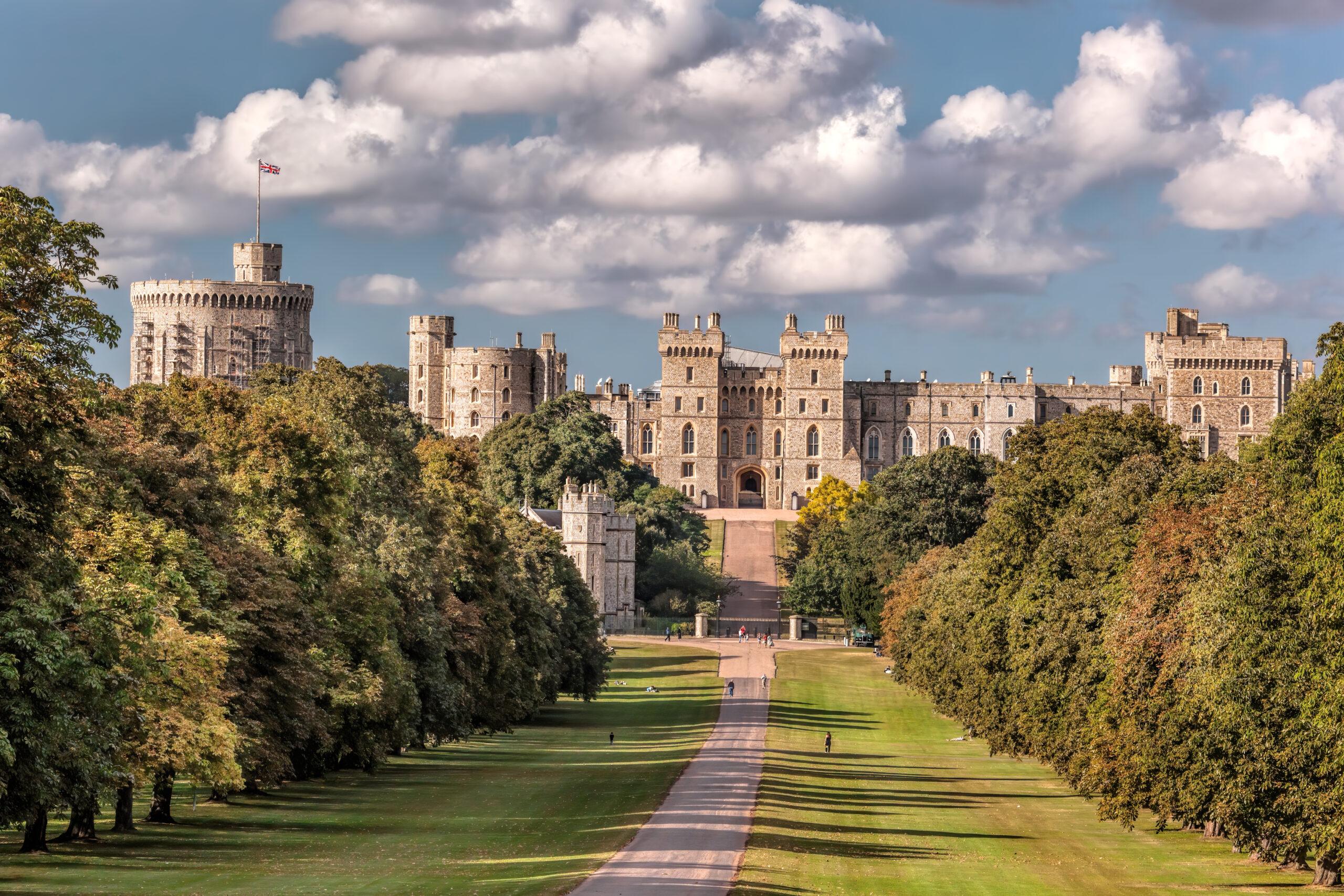
Windsor is the most visited day trip from London for good reason. Windsor Castle is the oldest and largest occupied castle in the world, and you can walk through the State Apartments, visit St George’s Chapel (burial place of 11 monarchs, including Henry VIII and George VI), and watch the Changing of the Guard on the castle grounds. An included audio guide covers each room in detail – worth using properly rather than rushing through.
Allow at least two to three hours inside the castle. The Long Walk – a three-mile avenue from the castle gates into Windsor Great Park – is a straightforward afternoon walk.
Admission: Around £32 for adults, £16 for children (5-17). Check the Royal Collection Trust website for current prices and to confirm that the State Apartments are open.
Train: Waterloo direct to Windsor & Eton Riverside, around 55 minutes.
Car: Around 45 minutes to 1 hour from central London.
Hampton Court Palace
Hampton Court is one we’ve been to many times, and it never disappoints. The Thames, the formal gardens, and the Tudor architecture create something that takes a proper half-day to explore. Henry VIII’s Great Hall and the Tudor Kitchens are the highlights of the interior. If you’re visiting with children, the Magic Garden is a must – a Tudor-themed adventure playground with a fire-breathing dragon, battlements to climb and water cannons. Ours have loved it every time. The maze in the grounds is genuinely challenging (around 800 metres of hedgerow), and the Privy Garden, restored to its 1702 appearance, is formal and beautiful.
Admission: Around £28 for adults. Check Historic Royal Palaces for current prices.
Train: Waterloo direct, around 35 minutes. In summer, you can arrive by river boat from Westminster Pier (around 3.5 hours upstream – a lovely option if you want to make a day of the journey).
Car: Around 30 to 45 minutes from central London.
Leeds Castle, Kent
Leeds Castle is in Kent, not Yorkshire – a common confusion – and the setting is exceptional. The medieval castle sits on two islands in a moat, surrounded by 500 acres of parkland. Particularly striking in autumn. The maze, dog collar museum (a serious collection spanning 500 years, which sounds unusual and actually is fascinating), and the falconry centre with daily demonstrations are all in the grounds.
Admission: Around £32 for adults. Check leedscastle.com for current prices.
Train: Victoria to Bearsted, around 1 hour to 1 hour 15 minutes, then a 5-minute taxi to the castle.
Car: Around 1 hour from central London via M20.
Hever Castle, Kent
Hever Castle is where Anne Boleyn grew up, and the moated medieval castle is breathtaking – smaller and quieter than Leeds Castle, which makes it more intimate. The Italian Garden is excellent in spring and summer, and the 35 acres of grounds take a couple of hours to walk properly.
Admission: Around £26 for adults. Check hevercastle.co.uk for current prices.
Train: London Bridge to Hever, around 1 hour with one change.
Car: Around 45 minutes to 1 hour from central London.
Chartwell, Kent (National Trust)
We’ve been National Trust members for years – it’s one of the best investments for a family who loves getting outdoors, and there’s almost always a cream tea at the end of it. Chartwell is the one I’d recommend above all others near London. Churchill’s country home for more than forty years, it still feels genuinely lived-in rather than museum-like – family photographs, personal effects, and his well-stocked cigar cabinet. The painting studio in the garden, where he produced hundreds of canvases, is particularly worth spending time in. The grounds look out over the Weald of Kent.
Admission: National Trust members free. Non-members cost around £17 for adults. Check nationaltrust.org.uk for current prices.
Train: Charing Cross or London Bridge to Edenbridge Town or Sevenoaks, then a taxi (around 15 to 20 minutes).
Car: Around 45 minutes to 1 hour from central London.

Knole, Kent (National Trust)
One of the largest private houses in England, it’s set in a 1,000-acre deer park just outside Sevenoaks, that’s free to walk in year-round. Virginia Woolf visited and based Orlando here. The house contains one of the finest collections of 17th-century furniture and textiles in the country.
Admission: National Trust members free. Non-members cost around £17 for adults.
Train: Charing Cross or London Bridge to Sevenoaks, around 30 minutes. The park is a 20-minute walk from the station.
Scotney Castle, Kent (National Trust)
Less visited than Hever or Leeds Castle, Scotney is one of the most romantic National Trust properties in the south-east. The 14th-century moated castle is largely a ruin, but it’s a beautiful ruin – reflected in the moat, surrounded by landscaped gardens that are particularly good in spring (rhododendrons, azaleas) and autumn. We really love it here – and it’s as pretty a painting, particularly in spring.
Admission: National Trust members free. Non-members cost around £15 for adults.
Train: Charing Cross to Wadhurst, around 1 hour. Then, a taxi (around 15 minutes) or a 3-mile walk.
Car: Around 1 hour to 1 hour 15 minutes from central London.
Blenheim Palace, Oxfordshire
Blenheim is Churchill’s birthplace and one of the grandest Baroque palaces in England. When I first went, I was so blown away by the sheer scale of the gardens that I declared I wanted to get married there. I didn’t, but that was what struck me – the Capability Brown grounds, the Great Cascade, the Grand Bridge reflected in the lake. The Kitchen Garden is particularly good, and the house is impressive on any measure.
It pairs well with Oxford if you want to fill a full day: the two are around 8 miles apart.
Admission: Around £33 for adults. Check blenheimpalace.com for current prices.
Train: Paddington to Oxford Parkway, around 55 minutes, then Bus 7 to Blenheim (around 20 minutes).
Car: Around 1 hour 30 minutes from central London.
Cities and university towns
Oxford
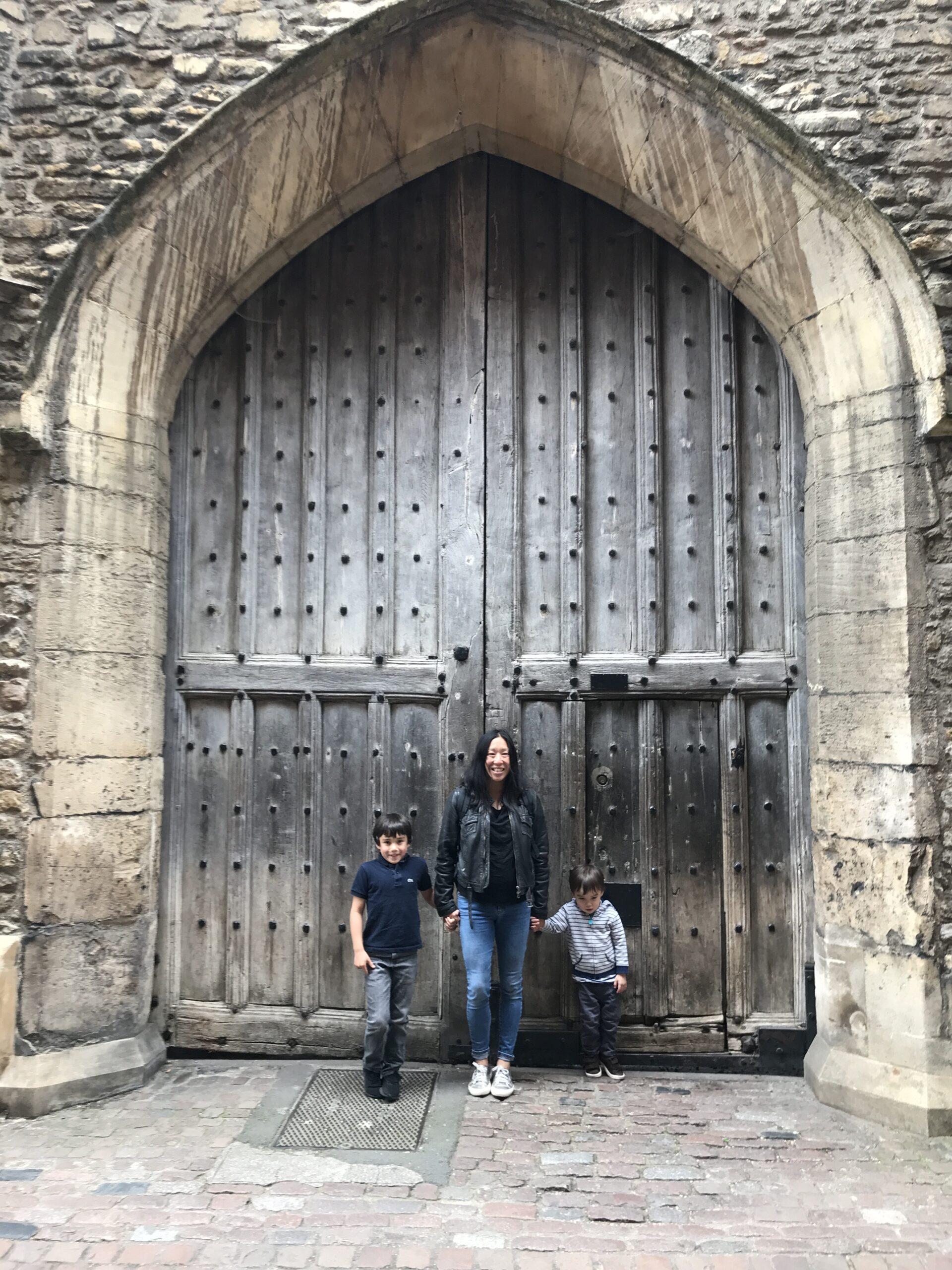
Oxford takes under an hour from Paddington on the fast service. The colleges are the reason to come – though you need a plan, as most charge a small entry fee and some close during exam season (May and June).
Christ Church is the grandest, with the dining hall that inspired Hogwarts’ Great Hall. The Bodleian Library runs tours of the Divinity School – the filming location for the Hogwarts hospital wing. The Ashmolean Museum is free and has one of the best antiquities collections outside London. A punt on the Cherwell in good weather rounds off the day.
Train: Paddington, around 55 minutes on the fast service. Or Marylebone – around 1 hour 15 minutes, often cheaper, with a stop at Bicester Village on the way back if you want a shopping detour.
Car: Around 1 hour to 1 hour 15 minutes from central London.
Cambridge
Cambridge is compact, walkable, and works extremely well as a day trip. King’s College Chapel is the standout – the fan-vaulted ceiling is one of the most impressive interiors in England. Trinity College has Newton’s apple tree and the Wren Library. The Fitzwilliam Museum is free and has a strong collection.
Cambridge is also a lovely place to get lost on purpose – the streets behind the colleges, the Backs, the riverside – you can wander without any agenda and still have a wonderful day. A punt on the River Cam is the classic Cambridge activity and is worth doing. Or you can watch others take part.
Train: King’s Cross, around 50 minutes on the fast service.

Canterbury
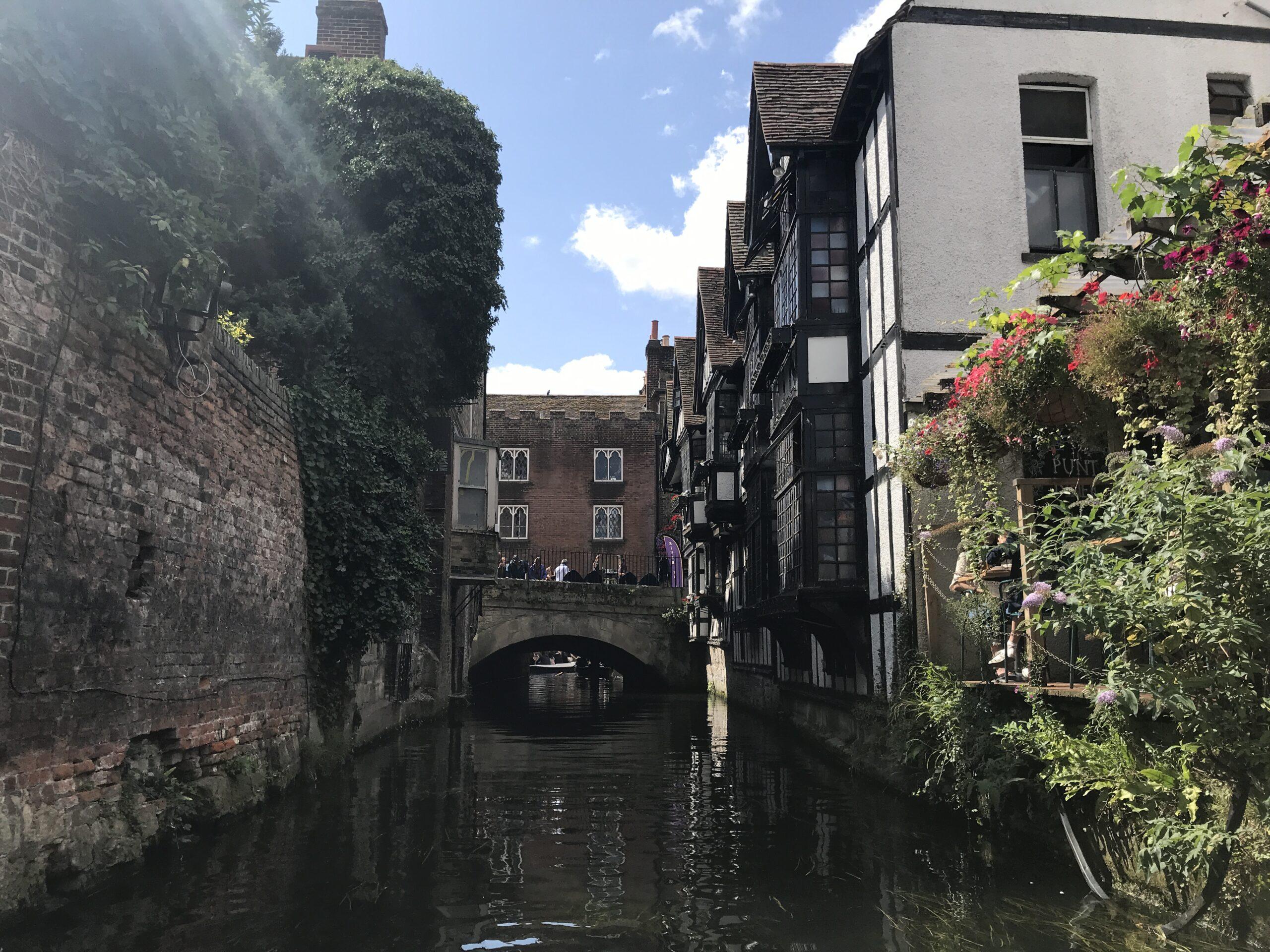
Canterbury has been drawing visitors since the 12th century. Canterbury Cathedral – where Thomas Becket was murdered in 1170 – is one of the most impressive medieval interiors in England. Beyond the cathedral, the medieval street plan is largely intact, and the ruins of St Augustine’s Abbey are within easy walking distance.
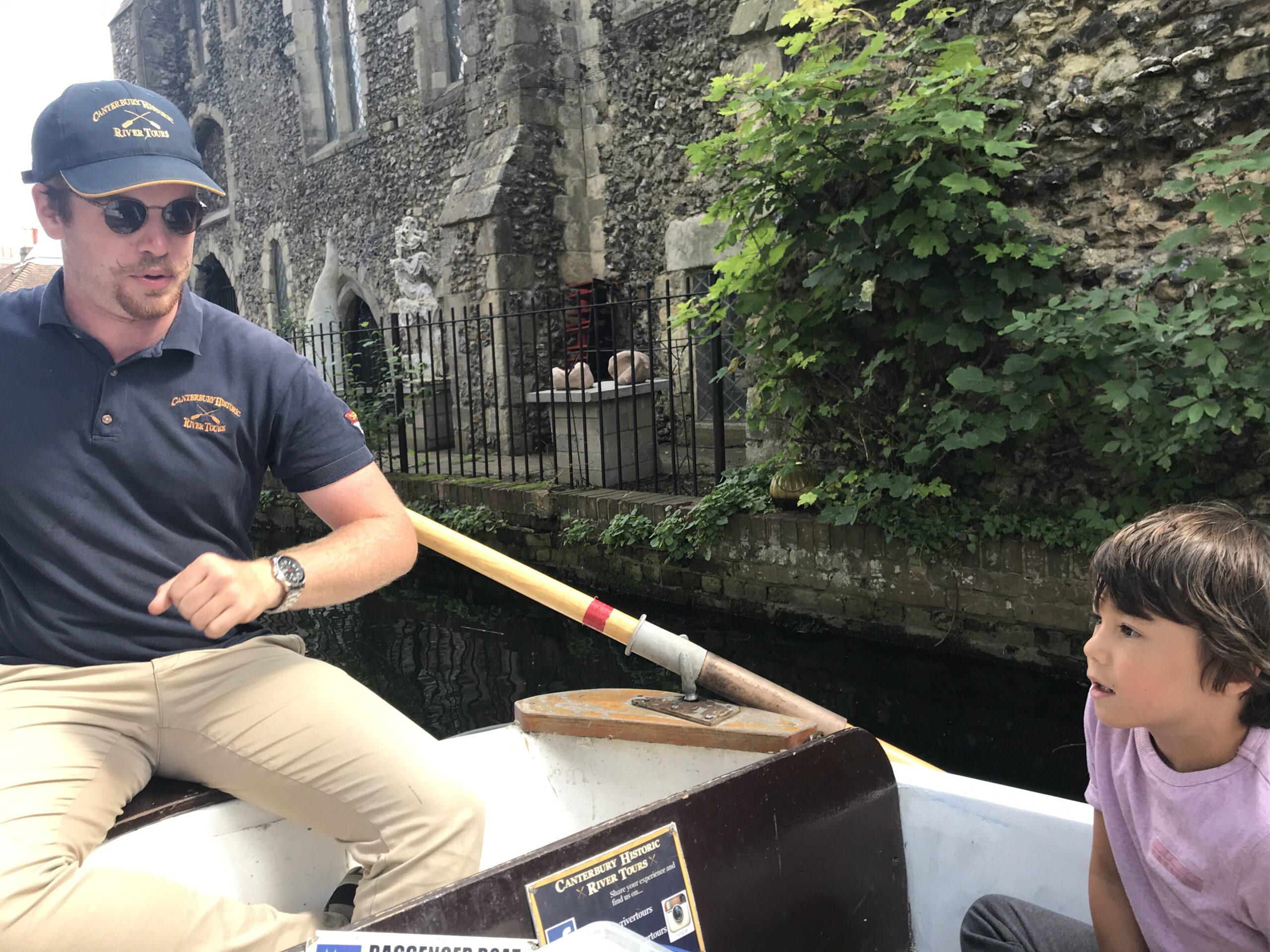
Take a little river boat trip through the city – it’s one of the most enjoyable ways to see Canterbury, and lovely to see it from the water. Trips run regularly from the Westgate Gardens.
Cathedral admission: Around £18 for adults. Check canterbury-cathedral.org for current prices.
Train: St Pancras on the high-speed service, around 55 minutes.
Winchester
Winchester is like something out of a storybook, and it’s even prettier at Christmas when the markets are out and the twinkly lights are up along the high street. England’s ancient capital, before London, history is layered through every street.
Winchester Cathedral is one of the longest medieval cathedrals in Europe – Jane Austen is buried inside, which surprises most visitors. The Winchester Bible (a 12th-century illuminated manuscript) is one of the greatest surviving medieval books. The Great Hall contains the legendary Round Table. The walk from the city centre to St Cross Hospital through the water meadows is one of the most peaceful short walks in southern England.
Train: Waterloo direct, around 1 hour. Trains run twice an hour.
Bath
Bath is under an hour and a half from Paddington, which makes it one of the most rewarding full-day trips on this list. The city is essentially a living museum of Georgian architecture – the Royal Crescent, the Circus, and the terraces above the River Avon were all built from the same honey-coloured Bath stone in the 18th century and have barely changed since.
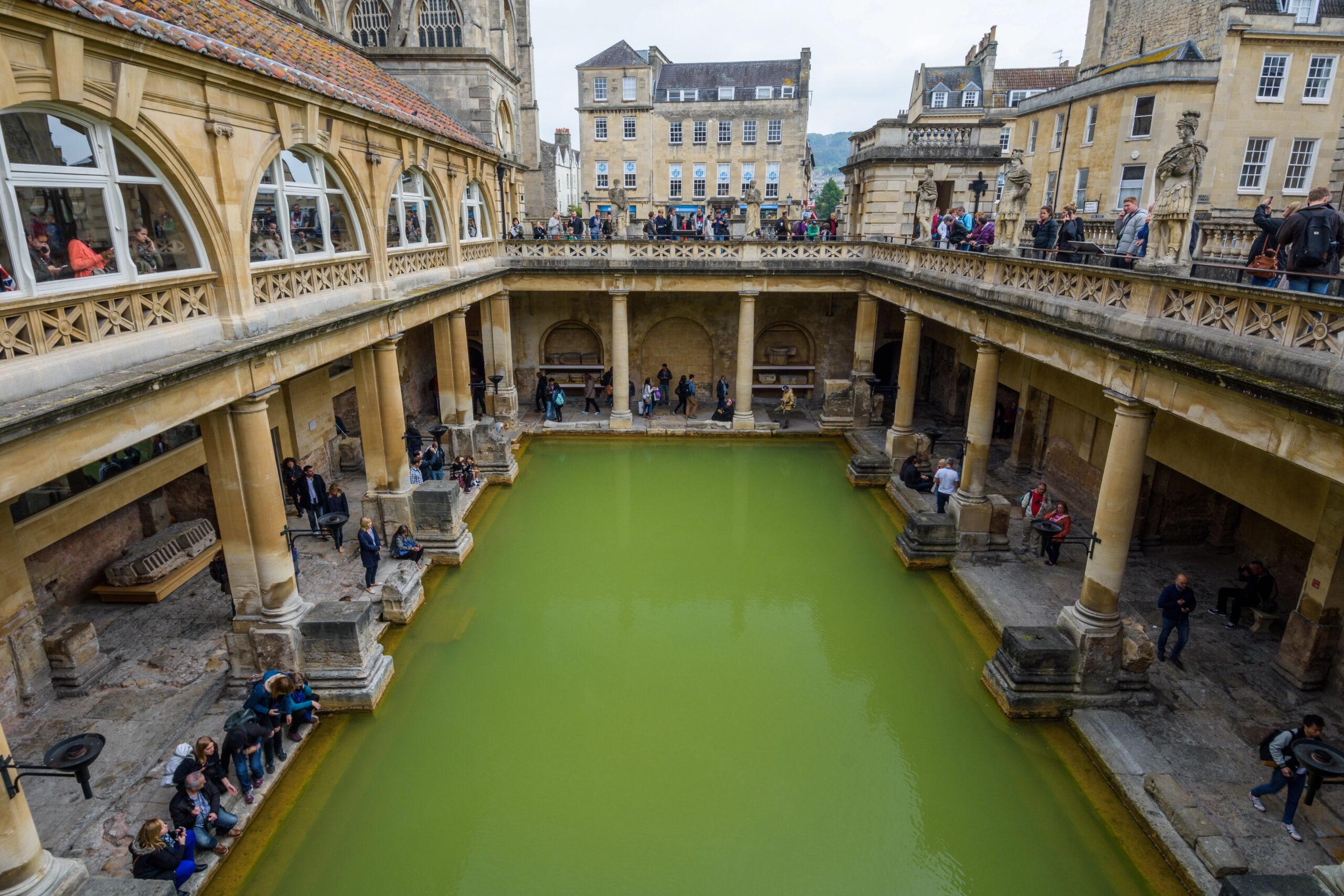
The Roman Baths are the main event. The main pool is one of the best-preserved Roman sites in northern Europe – you can walk the surrounding galleries, see the original lead-lined Great Bath, and follow the story of the sacred spring with an included audio guide. The water is a greenish, slightly otherworldly colour. It’s busy year-round, so book tickets in advance.
A 15-minute walk away, the Jane Austen Centre on Gay Street covers her time living in Bath – small but enjoyable if you’re a fan. The Holburne Museum (free entry, strong collection of Old Masters and decorative arts) sits at the end of Great Pulteney Street and is often overlooked.
For afternoon tea, Bath has some of the best options in England. The Pump Room inside the Roman Baths complex is the classic choice – an elegant Georgian room serving tea while a string trio plays. Book ahead.
The city is also exceptionally pretty at Christmas, with one of the better Christmas markets in England (usually late November to mid-December) spread through the streets around the Abbey.
Roman Baths admission: Around £22 for adults. Check romanbaths.co.uk for current prices and to book in advance.
Train: Paddington direct, around 1 hour 20 to 1 hour 30 minutes.
Car: Around 2 hours from central London – park and ride is strongly recommended as the city centre is congested.
Stratford-upon-Avon
Stratford is almost exactly two hours from Marylebone, which pushes the limits slightly – but Shakespeare’s birthplace is worth it for a special visit. The Shakespeare’s Birthplace Trust runs five connected historic sites within walking distance. The Royal Shakespeare Company usually has something on if you want to make a full day of it.
Train: Marylebone, around 2 hours (just at the edge of the two-hour rule, but direct and straightforward).
North of London
St Albans
St Albans is the quickest interesting day trip from London – just 20 minutes on the Thameslink from St Pancras. Once the Roman city of Verulamium, the third-largest in Roman Britain, the town still has visible Roman walls, a theatre, and one of the best Roman mosaic collections in England at the Verulamium Museum.
St Albans Cathedral dates back to 1077, is free to enter, and has the longest nave in England. The Saturday market is a good addition if you’re visiting at the weekend. The town also has Ye Olde Fighting Cocks, one of England’s oldest pubs – worth a stop for a pint before the train home.
Train: St Pancras (Thameslink), around 20 minutes.
Ely
Ely is one of those small cathedral cities that don’t appear on enough day-trip lists. Ely Cathedral is remarkable – visible from miles away across the flat Fenland, it’s been called the ‘Ship of the Fens.’ The Octagon Tower is a unique medieval engineering achievement, and the Lady Chapel is exceptional. The city is tiny and walkable in an hour, but the cathedral alone is worth the trip.
Train: King’s Cross, around 1 hour 10 minutes.
Seasonal highlights
Mayfield Lavender, Surrey
We’re lucky to live close enough to make this an easy summer tradition. When the fields are at their peak in July, the colour is extraordinary – swathes of purple stretching out in rows, and on a bright day, the photo opportunities are genuinely special. If you want the best Instagram shots without half of Surrey in the background, go early. It makes a real difference.
Mayfield Lavender Farm in Banstead is a 25-acre certified organic lavender farm that opens to the public from mid-June to late August (exact dates vary by year depending on the weather). You can walk the rows, take the tractor ride around the farm, have lavender cream tea at the café, and pick up lavender products in the shop. Weekdays are considerably quieter than weekends.
A second location – Mayfield Lavender and Glasshouse Cafe near Epsom offers fantastic food and drink, with a lovely gift shop, as well as plants.
Admission: Around £6.50 for adults, children under 5 free. Check mayfieldlavender.com for current season dates and prices.
Train: Victoria to Sutton, then the S1 bus to Banstead. Around 45 minutes to 1 hour.
Car: Around 30 minutes from central London. Free parking on site.

Surrey Hills vineyards
Surrey has a cluster of award-winning vineyards within striking distance of London, most of them in the North Downs around Guildford and Dorking. Denbies Wine Estate near Dorking is the most accessible (a 15-minute walk from the station) and the largest. Beyond Denbies, Albury Organic Vineyard near Guildford, Greyfriars Vineyard near the Hog’s Back, and Chilworth Manor Vineyard all offer tastings and tours.
English sparkling wine from this area regularly wins international awards – the same chalk geology that underpins Champagne runs through the North Downs.
Car: Most vineyards are easiest by car, with Denbies the exception.
Practical tips and train advice
Booking train tickets: Book in advance through National Rail, Trainline, or directly with train operators. Advance tickets for specific trains can be significantly cheaper than on-the-day fares.
Railcards: A 16-25 Railcard, 26-30 Railcard, or Family & Friends Railcard saves a third on most rail fares and pays for itself quickly. Children under 5 travel free; 5-15 year-olds travel at half price.
Off-peak travel: Avoid the peak-hour surcharge by travelling after 9.30am on weekdays.
National Trust membership: Includes free entry and parking at all NT properties on this list – Petworth, Knole, Scotney, Chartwell, Box Hill, Frensham Little Pond, and hundreds more. If you’re visiting two or more properties in a year, it pays for itself.
Driving times from central London: Most Surrey and Kent destinations are 45 minutes to 1 hour 30 minutes, depending on traffic. The M25 is the main artery and can add time on weekday mornings and Friday afternoons – leaving before 8am or after 10am makes a meaningful difference. The A3 serves Surrey and West Sussex; the M20 and M2 cover Kent; the M3 is the route for Winchester and the New Forest. For the Cotswolds, Bath and Stratford, take the M40 or M4, depending on your destination.
London train stations and which to use:
– Victoria: Brighton, Whitstable, Canterbury (slower), Eastbourne, Rye, West Wittering (Chichester)
– Waterloo: Windsor (direct), Winchester, Guildford, Box Hill, Dorking, New Forest (Brockenhurst)
– St Pancras: Canterbury (fast), Dover (fast), Cambridge, St Albans, Margate
– Paddington: Oxford, Cotswolds (Moreton-in-Marsh), Bath, Blenheim (Oxford Parkway)
– Marylebone: Oxford (slower), Stratford-upon-Avon, Bicester Village
– Charing Cross / London Bridge: Rye, Sevenoaks (Knole), Hever, Chartwell area

FAQs for the best day trips from London
What is the best day trip from London by train?
Brighton (1 hour from Victoria), Windsor (55 minutes from Waterloo), Canterbury (under an hour from St Pancras), and Bath (1 hour 30 minutes from Paddington) are among the most popular. For something more unusual, Whitstable or Rye are excellent.
What is the quickest day trip from London?
St Albans takes just 20 minutes from St Pancras on the Thameslink – Roman ruins, a cathedral, good pubs, and you’re back in London before the afternoon is over.
Which day trips from London are best for families with children?
Windsor Castle, Hampton Court, Leeds Castle, Brighton (for the pier and beach), Margate (Dreamland), Mayfield Lavender Farm, West Wittering (for a proper sandy beach), and Box Hill for walks and the stepping stones all work well with children of different ages.
What are the best National Trust day trips from London?
Chartwell (Churchill’s home), Knole (Sevenoaks), Petworth House, Scotney Castle, Box Hill, Frensham Ponds, and Hampton Court are all within two hours. National Trust membership is well worth it if you’re planning to visit more than one.
Can I do Stonehenge as a day trip from London?
Yes. Train from Waterloo to Salisbury (around 1 hour 30 minutes), then the Stonehenge Tour Bus from the station (around 30 minutes). Combine with a walk around Salisbury Cathedral and the city centre.
What are the best day trips from London in summer?
Mayfield Lavender Farm (June to August), West Wittering beach, the Seven Sisters walk, the Surrey Hills vineyards, and the coastal towns of Whitstable, Rye and Margate all come into their own in summer.
What are the best winter day trips from London?
Windsor Castle and Hampton Court work year-round. Canterbury, Winchester and Oxford are atmospheric in winter and far less crowded than in summer. Bath has one of England’s best Christmas markets, usually running from late November to mid-December. Dungeness is particularly striking in low winter light.
What are the best day trips from London for Harry Potter fans?
The Warner Bros. Studio Tour at Watford is 20 minutes from Euston. Oxford has multiple filming locations, including Christ Church and the Bodleian Library.