On my return from a long weekend in Tunisia, I had to allow myself a few days to digest all that I encountered. The fusion of sights, colour, sound as well as all the inspiring people we met, the hidden corners we explored, and the amazing traditional foods of Tunisia we ate – it was overwhelming. But in a good way.
For some, food is just sustenance, fuel to keep the body going. Not for me. Growing up, food was and still is an important part of my life, and it’s often the only time when everyone, family and friends, can congregate together. Catching up over a home-cooked meal is always an enjoyable event. I’m the type of person who plans everything around food – and when I travel, discovering the different types of dishes is just a natural part of my travelling psyche. Travel and food have a symbiotic relationship. Discover the food, you’ll then discover the beating heart behind a destination’s traditions, culture and heritage.

Quick guide to Tunisian food
Tunisian cuisine is a blend of Berber, Arab, Ottoman, Italian and French influences – and it’s far spicier than you might expect. Harissa, the fiery chilli paste, is a staple in Tunisia, and was recognised by UNESCO as Intangible Cultural Heritage in 2022. Couscous, the national dish, received the same UNESCO status in 2020. You’ll find five ingredients cropping up everywhere: tuna, black olives, boiled egg, potatoes and harissa.
Street food is cheap (most snacks cost 1-3 TND / 30p-£1), portions are generous, and mealtimes are communal. Tunisians eat to share – expect large platters, colourful ceramics and more food than you could possibly finish.
Here’s my guide to the traditional foods of Tunisia you need to try.
Harissa
You can’t talk about the traditional foods of Tunisia without starting here. Harissa is the country’s signature condiment – a thick, brick-red paste made from sun-dried chillies, garlic, coriander, caraway and olive oil. It appears on practically every table, stirred into stews, slathered on sandwiches and served as a side dish in its own right.
Every family has their own recipe, and the heat varies wildly from region to region. Some versions are mild and smoky, others will make your eyes water. In 2022, UNESCO added harissa to its list of Intangible Cultural Heritage, recognising it as a defining element of Tunisian identity. You’ll quickly understand why – it ties the entire cuisine together.

Bambalouni
If it looks like a doughnut, then the chances are it is a doughnut! Bambalouni (the name comes from the Italian bomboloni) are Tunisian ring doughnuts, deep-fried until golden and sprinkled with sugar or drizzled with honey. They’re soft, fluffy and best eaten hot from the fryer.
Bambalouni stalls are everywhere, but they’re especially famous in the clifftop village of Sidi Bou Said – some say you haven’t visited until you’ve had one there. The smell as they’re being freshly prepared is impossible to walk past. A single bambalouni costs around 1 TND (about 30p).
Brik
Brik is a staple of Tunisian cuisine – a savoury fried pastry parcel made from paper-thin malsouka dough, folded into a triangle and deep-fried until crisp. The most traditional filling is tuna, egg, capers and parsley, though you’ll also find seasoned meat and potato versions. I even saw a carbonara brik on offer.
Great as a snack or served as a starter in restaurants. They’re really moreish – and the trick is eating them without breaking the runny egg inside.

Bsissa
I tried bsissa mixed with stewed fruits as a dessert, and it was such an interesting combination of flavours. Bsissa reminded me a lot of peanut butter, but much better. It’s based on a flour of roasted wheat and barley combined with a variety of spices and mixed with olive oil into a paste. This is then typically eaten with dates or figs for a quick meal which is energy-rich and filling.
Bsissa is a traditional fast food of sorts – Tunisians have relied on it for centuries as a portable, high-energy snack that needs no cooking.
Chorba
A traditional North African dish, chorba is a staple – a hearty, filling soup made with lamb or mutton, spiced with garlic, paprika, cayenne and tomato. I had a bowl of steaming hot chorba served from a tureen, and the lamb was melt-in-the-mouth tender and tasty.
It’s particularly popular during Ramadan as the meal to break the fast, but you’ll find it year-round in restaurants and homes across the country.

Couscous
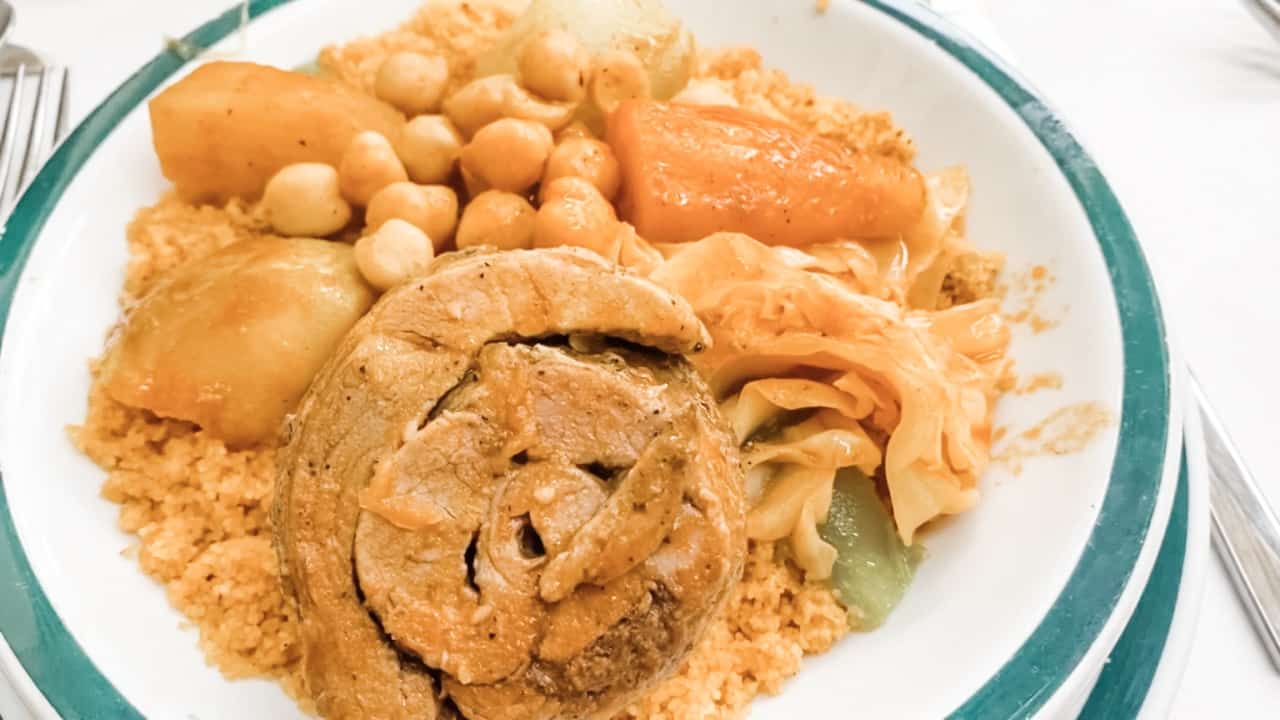
If there’s one dish that tops the list of traditional foods of Tunisia, it’s couscous. This is Tunisia’s national dish, and in 2020 it was jointly nominated by Tunisia, Algeria, Morocco and Mauritania for UNESCO Intangible Cultural Heritage status.
Known locally as kosksi, it was on every menu and widely available, so impossible not to have at least a few times. Tunisian couscous is steamed in a double-decker pot called a couscoussière, with the meat and vegetable broth below and the fine semolina grains above, absorbing all the flavour. It’s served with potatoes, chickpeas and either lamb, chicken or fish, depending on the region. Coastal areas like Djerba are known for their fish couscous.
The dish is so versatile, and every family has their own variation – it’s traditionally prepared on Fridays when whole families sit down together.
Fricassé
Fricassé is a Tunisian street food snack that is not only seriously cheap but simple and tasty. It’s a savoury doughnut much like a small bread roll, deep-fried, then split open and filled with tuna, olives, potatoes, boiled egg and harissa. Fast food, but filling.
You’ll find fricassé vendors on street corners across the country. A single one costs around 1-2 TND (about 30-50p), making it one of the cheapest and most satisfying snacks you’ll have in Tunisia.
Kabkabou
This long-established Tunisian plate is a popular fish dish. It can be made from a variety of fish, but traditionally with white fish or tuna. There are different variations, but the fish is cooked in a rich tomato sauce with onions, capers, harissa and olives.
I ate this Tunisian recipe with the whole fish cooked in the sauce, so if you’re not into fish bones and the head – avoid! The sauce is incredibly flavourful though, perfect for mopping up with bread.
Lablabi
One of the great Tunisian comfort foods, lablabi is a warming chickpea stew that dates back to the 16th century. It started as a cheap, filling meal and has since become a winter staple across the country.
To eat lablabi, you’re given a bowl and a stale baguette. You tear the bread into pieces, then the steaming stew – chickpeas, broth, harissa, cumin, garlic and olive oil – is ladled over the top. You mix it all together (two spoons, one in each hand) and top with a poached egg, tuna, olives and capers. It’s hearty, nourishing and the definition of comfort food.
Makroudh
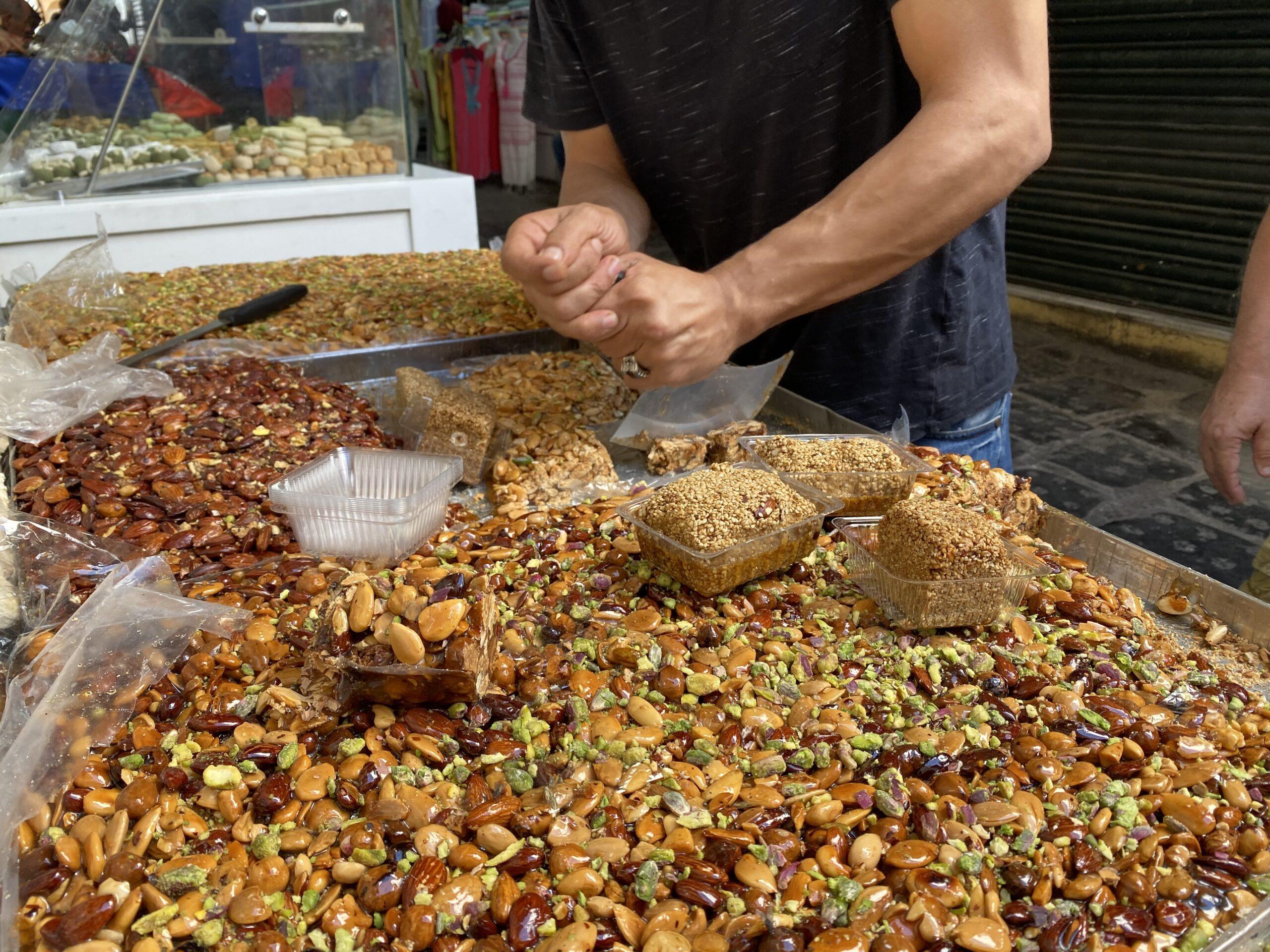
Eaten as a sweet treat in Tunisia, we saw makroudh being served up at lots of different vendors in the Medina and the food market. These are traditional semolina pastries filled with dates and nuts or almond paste, shaped into distinctive diamond forms and either deep-fried or baked before being dipped in honey syrup. They’re scrumptious.

Mlawi flatbread
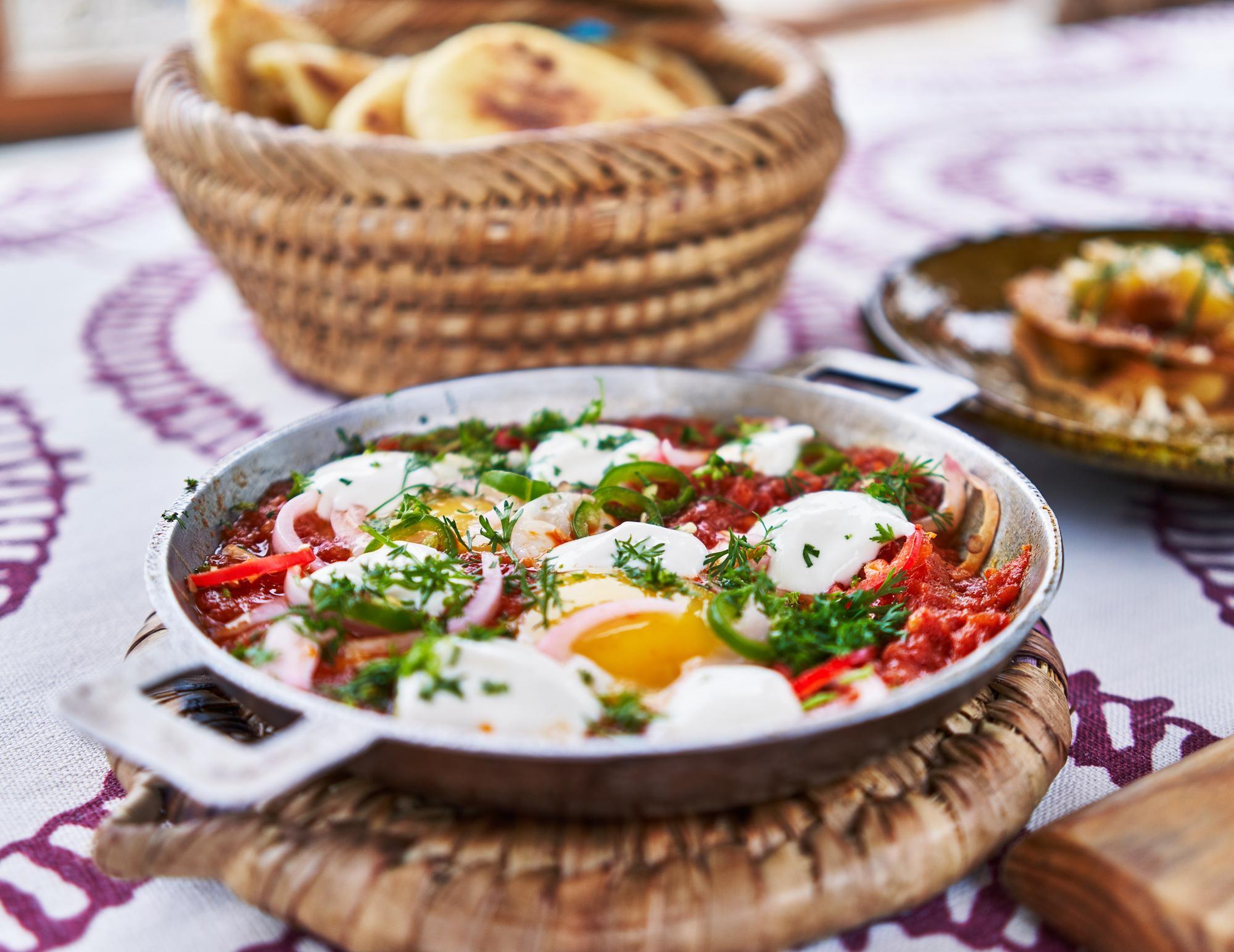
Bread is a staple across the world in every cuisine, and in Tunisia, the mlawi flatbread is served up at every meal – to accompany savoury dishes, including stews, or just with honey. I had it for breakfast with eggs and shakshuka (see below), but could have quite happily munched on it by itself. A pancake-like bread made from semolina, salt and butter, it’s a must-try.
Slata mechouia
Mechouia means ‘grilled’ in Arabic, and this smoky, charred salad is served as a starter with almost every sit-down meal. Tomatoes, peppers, onions and sometimes garlic are grilled over an open flame until blistered and soft, then chopped and dressed with olive oil, lemon juice and spices.
It’s often topped with flaked tuna, boiled egg, olives and capers. The smoky flavour is addictive, and you’ll find yourself ordering it with every meal.

Tagine
Tagine in Tunisia is a departure from the Moroccan stew that is cooked in the vessel of the same name. In Tunisia, a tagine is more like a frittata – a gorgeous mixture of meat, potato, spices and onions stirred into beaten egg and cheese, then baked until set. It’s cut into slices and served warm or at room temperature. What’s not to love?
Shakshuka
Shakshuka – the name means ‘mixed’ in Maghrebi Arabic – is a North African dish with roots that likely stretch back centuries, though its exact origins are debated. It’s widely found across North Africa and the Middle East. The reason it’s made the list is that I devoured a shakshuka at breakfast over two days and couldn’t get enough of it. Poached eggs in a spiced tomato and pepper sauce – it’s so good, especially accompanied by Tunisian flatbread. It makes for a great brunch or lunch dish, too.
Practical tips for eating in Tunisia
Budget: Street food snacks like fricassé and bambalouni cost 1-2 TND (30-50p). A sit-down meal at a local restaurant is around 10-20 TND (£3-6). Even nicer restaurants rarely top 45-60 TND (£14-19) for a main.
Spice warning: Tunisian food is spicier than most visitors expect. If you prefer milder food, ask for sans piquant (without spice) – though you’ll miss out on a big part of the experience.
Tipping: Rounding up the bill or leaving 10% at restaurants is standard practice.
Ramadan: During Ramadan, many restaurants close during daylight hours, though tourist areas usually have options available. The evening iftar meals are a wonderful experience if you get the chance.
Frequently asked questions about Tunisian food
What is the national dish of Tunisia?
Couscous is Tunisia’s national dish. Known locally as kosksi, it’s made with fine semolina steamed over a meat and vegetable broth, and was recognised as UNESCO Intangible Cultural Heritage in 2020.
Is Tunisian food spicy?
Yes – Tunisian cuisine is one of the spiciest in North Africa. Harissa, a fiery chilli paste, appears on practically every table and in most dishes. You can ask for food without harissa (sans piquant), but it’s worth trying at least once.
What is harissa?
Harissa is Tunisia’s best-known condiment – a paste made from sun-dried chillies, garlic, spices and olive oil. It’s used as a condiment, an ingredient and even a dish in its own right. UNESCO recognised it as Intangible Cultural Heritage in 2022.
What is the difference between Tunisian tagine and Moroccan tagine?
They’re quite different dishes. Moroccan tagine is a slow-cooked stew prepared in a cone-shaped clay pot. Tunisian tagine is more like an Italian frittata – a baked egg dish with meat, vegetables and cheese, sliced and served warm or at room temperature.

How cheap is street food in Tunisia?
Very cheap. A fricassé costs 1-2 TND (30-50p), a bambalouni doughnut is about 1 TND (30p), and a full plate at a local eatery runs 8-15 TND (£2.50-5).
What should I try first in Tunisia?
Start with a fricassé from a street vendor – it’s cheap, delicious and gives you a taste of all the key ingredients in the traditional foods of Tunisia (tuna, olives, egg, potato and harissa) in one bite.
For more posts on Tunisia, do check out these wonderful articles:
5 of The Best Things To Drink in Tunisia – The Family Adventure Project
10 of The Best Souvenirs To Buy in Tunisia – Globalmouse Travels
48 Hours in Tunis – Mummy Travels
10 Things to Do in Northern Tunisia With Kids – Mums Do Travel
*Disclaimer: This post was written in collaboration with the Tunisian Tourist Board as part of a paid campaign. As always, my opinions are my own.
There certainly are some delicious Tunisian dishes to try. I think my favourites were the bambalouni and the flatbread.
We did have some fantastic food – I love couscous but it was wonderful to find more to try in Tunisia, especially the street food like fricasse and bambalouni plus that spectacular breakfast.
These all look so tasty…I loved the bamboulini and couscous but now need to try the makroudh, they look so yummy.