Last Updated on 31/07/2026 by Ting Dalton
Standing on the banks of the Thu Bon River in Hoi An, watching hundreds of glowing lanterns float downstream while my children made wishes, I knew Vietnam had won us over. Two weeks earlier, we’d landed in Hanoi with nervous excitement – would this Southeast Asia adventure work for our family?
It absolutely did. Vietnam offers the perfect blend of cultural immersion, natural wonders, and genuine warmth, making every day feel like a discovery. From navigating Hanoi’s busy streets to kayaking through emerald waters in Ha Long Bay, cycling through rural villages, and exploring underground tunnels that shaped modern history.
Your 2-week Vietnam itinerary at a glance
- Days 1–4: Hanoi – Old Quarter, street food, temples and cultural highlights
- Days 5–6: Bai Tu Long Bay – cruise, kayaking and floating villages
- Days 7–8: Ninh Binh – Tam Coc boat trips and limestone scenery
- Days 9–12: Hoi An – ancient town, lantern making, beaches and My Son Sanctuary
- Days 13–14: Ho Chi Minh City – Cu Chi tunnels, markets and street food
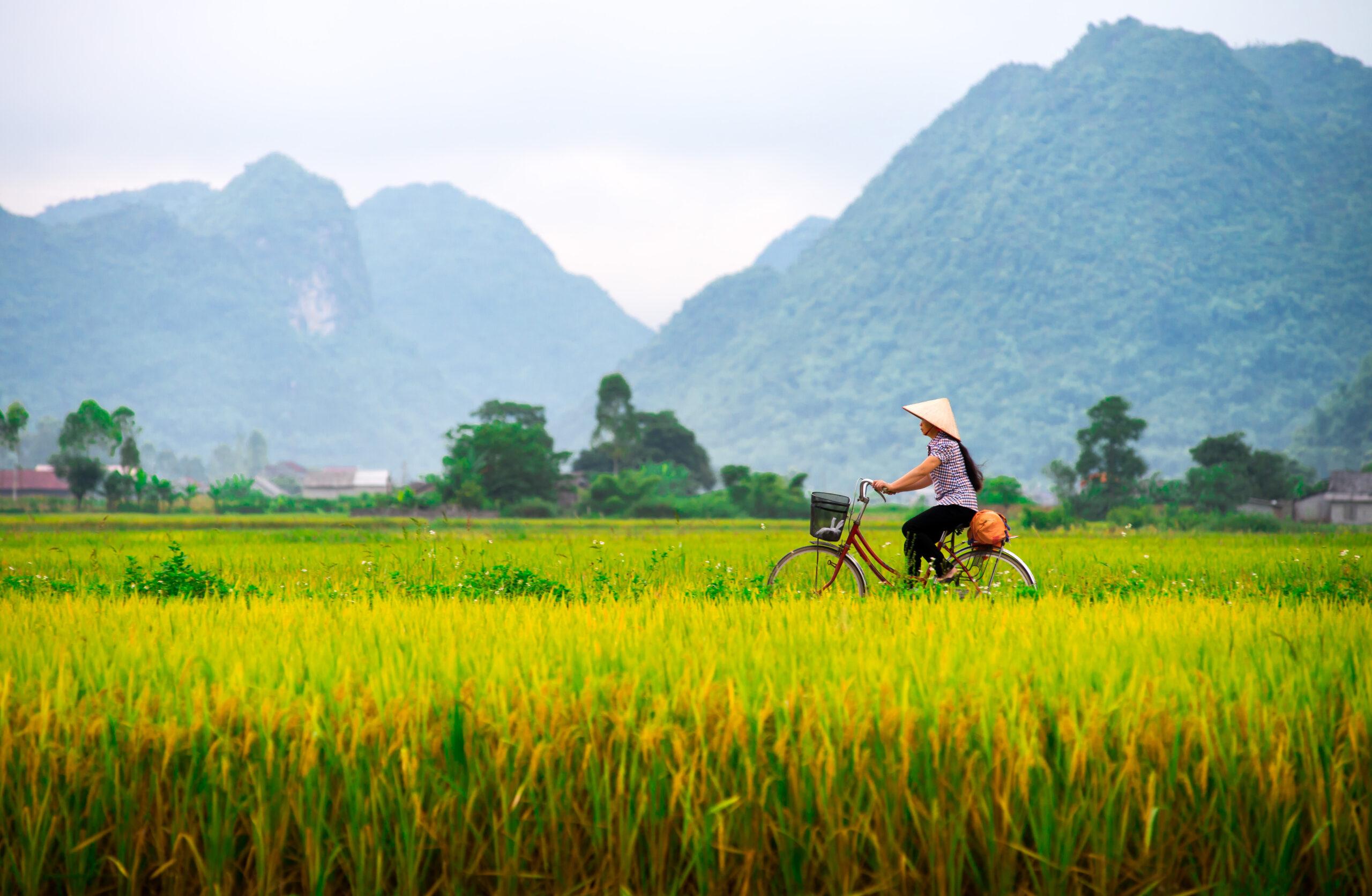
After covering the length of this extraordinary country, slurping pho and watching our kids bargain in local markets, I can confirm that Vietnam exceeded every expectation. Here’s exactly how to spend your 2-week Vietnam itinerary to experience the very best this captivating destination offers.
Why this 2-week Vietnam itinerary works
Allow two weeks minimum – Vietnam is deceptively large, and rushing between destinations will be exhausting. This itinerary covers the best places while giving you enough time to truly experience each destination.
Perfect for all ages – while younger children might struggle with humidity and busy streets, kids aged 5+ will love the cultural adventures. Our children were eight and 13, perfect ages to appreciate Vietnamese culture while handling the travel.
Smart transport choices – reasonably priced internal flights connect major cities efficiently, while overnight trains add adventure. We’ll show you the easiest way to get around this vast country.
And whether you’re travelling to Vietnam as a family, as a couple or a group of friends – this 2-week Vietnam itinerary works for all types of travellers.

The ultimate 2-week Vietnam itinerary
Days 1-4: Hanoi and northern Vietnam
First day in Hanoi: Old Quarter adventures
Start your Vietnam adventure in the capital’s beating heart. Hanoi’s Old Quarter is a maze of narrow streets where mopeds weave in and out of traffic and you’ll learn pretty quickly how to cross the road! Spend your first day focusing on getting your bearings and experiencing authentic local life.
Begin with Vietnamese egg coffee (cà phê trứng) at Cafe Giang – arrive early at 7am to beat crowds at this birthplace of the famous drink. It tastes just like tiramisu in a glass. Rich, creamy and surprisingly moreish, this will set you up perfectly for a day of exploration.
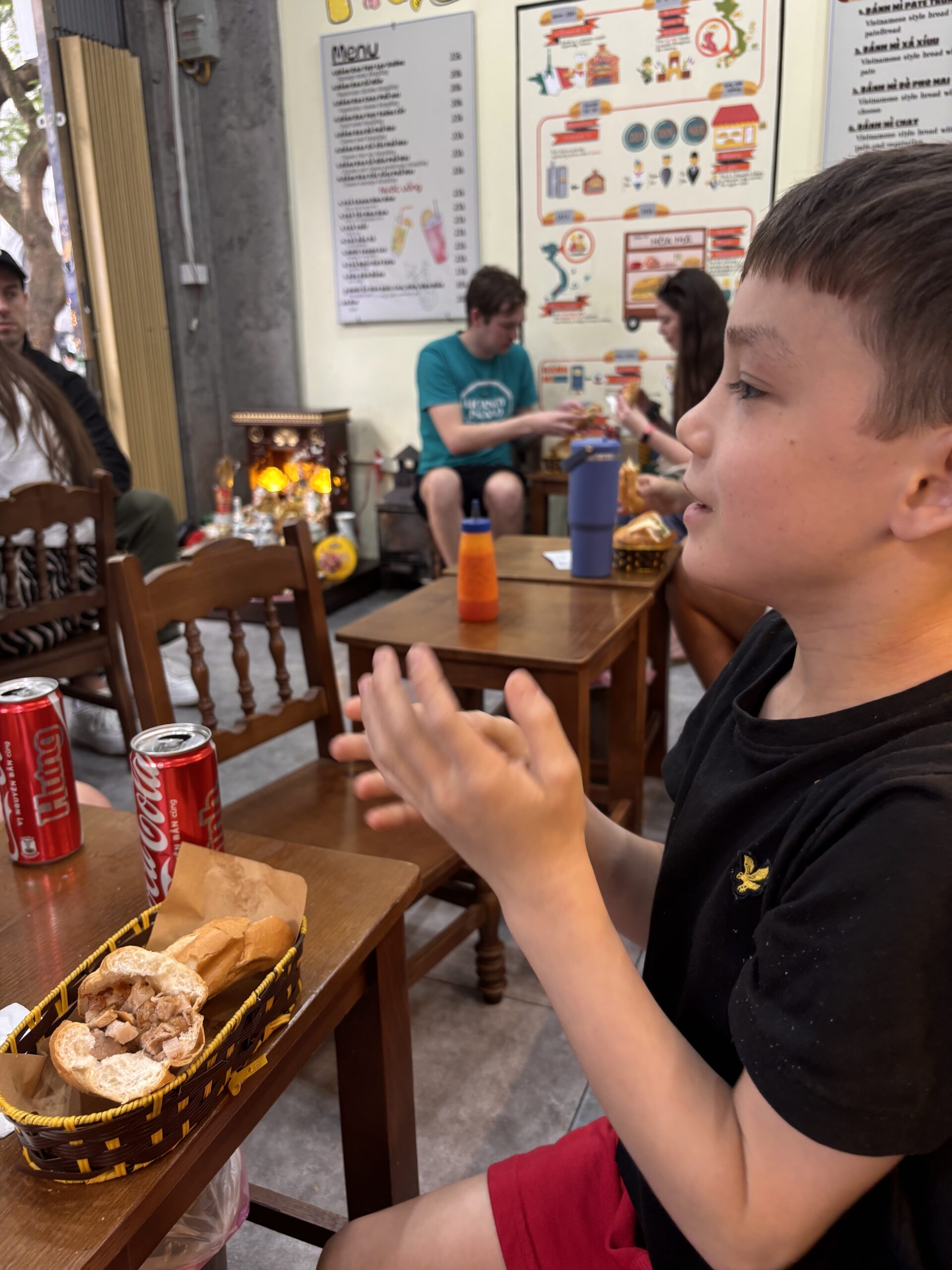
Wander the Old Quarter’s narrow streets, each traditionally dedicated to specific trades. From silver shops to silk vendors, it’s chaotic but endlessly fascinating. Stop for really tasty banh mi at Bánh mì Mama near St Joseph’s Cathedral – expect queues (we only waited for 15 minutes), but it’s worth it.

End your first day at Hoan Kiem Lake, where you can take a stroll and find Ngoc Son Temple and its ornate bridge, as well as the lake’s Turtle Tower. At the weekend, the surrounding roads transform into pedestrian markets – and come alive with vendors selling all manner of items, while smells coming from sizzling food carts will make your mouth water.
Day 2: Cultural heritage and street food
Explore Vietnam’s cultural heritage at the Temple of Literature, the country’s first university, founded in 1070. The peaceful courtyards offer respite from Hanoi’s bustling streets, and kids love spotting ancient stone tablets listing past graduates.
Visit Ho Chi Minh’s Mausoleum for a sobering experience – complete silence is required as you file past the preserved leader. It’s a unique glimpse into modern history but not one for younger kids.

The absolute highlight? An evening street food tour through the Old Quarter. Our guide led us to hidden eateries serving crispy spring rolls and steaming bowls of bun cha. We combined ours with the infamous Train Street, where trains barrel past you as you sit pressed against the wall – touristy but absolutely thrilling. And one of our favourite moments in Vietnam.
End with a traditional water puppet show at Thang Long Theatre. This thousand-year-old art form features dragons, ducks and farmers splashing about. Shows last 45 minutes, entirely in Vietnamese, but language doesn’t matter when wooden puppets are this entertaining.
For a full Hanoi itinerary guide, head to this post.
Days 5-6: Ha Long Bay alternative – Bai Tu Long Bay
Why skip crowded Ha Long Bay?
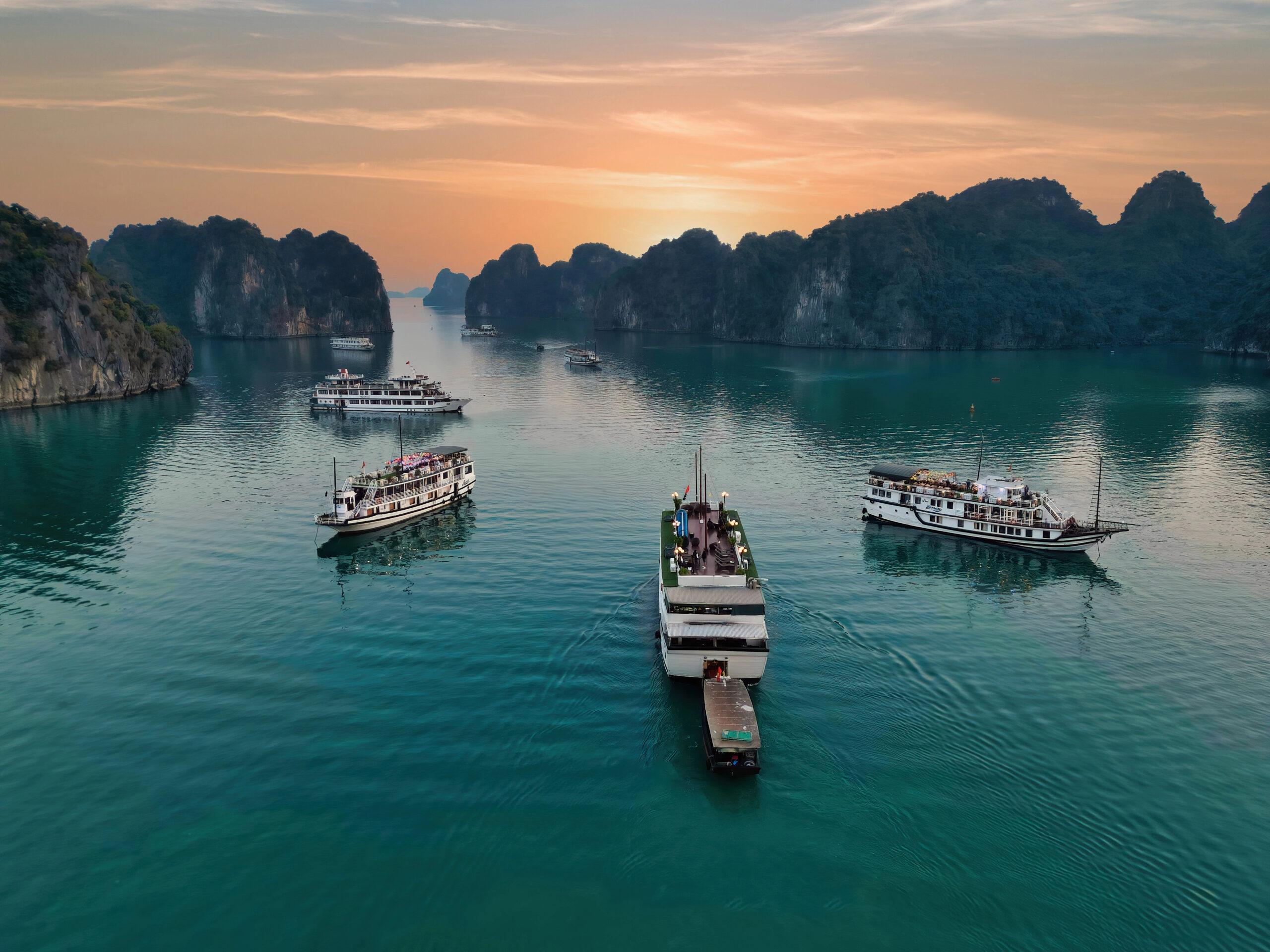
While Ha Long Bay is stunning, this UNESCO World Heritage Site attracts over 2.5 million visitors yearly. Instead, sail to Bai Tu Long Bay, just 30km east. You’ll see the same jaw-dropping limestone cliffs and emerald waters, but with far fewer boats – often you’ll be the only vessel in sight. We took a 2-night, 3-day cruise with Indochina Junk – read about it here.
Day 5: Cruise departure and floating villages
Most cruises include luxury transfers from your Hanoi hotel. The 2.5-hour journey to Ha Long Bay’s departure point passes quickly in comfortable vans with wifi and refreshments.
Once aboard, settle into interconnecting family cabins before exploring. Our first afternoon included kayaking through Cong Do Nature Reserve – paddling emerald waters between towering limestone karsts in complete silence was surreal.
Visit Vung Vieng fishing village, one of the four remaining floating villages in Quang Ninh province. Learn about pearl farming while surrounded by spectacular limestone scenery. Yes, they’ll try selling pearls, but glimpsing traditional fishing life is fascinating.

Day 6: Caves and beach BBQ
Wake to breathtaking views of limestone islands emerging from morning mist. Today brings cave exploration at Thien Canh Son, where expert guides reveal geological wonders formed over millennia.
The highlight is a private beach BBQ prepared by the ship’s talented chefs. They transport everything from the main vessel, grilling tender chicken wings and pork ribs on pristine sands. Swimming in crystal-clear waters while lunch cooks nearby feels incredibly special.
Evening brings optional squid fishing under starlit skies – a great activity for all on board to see who can catch the most!
Days 7-8: Ninh Binh – The Ha Long Bay on land
Day 7: Tam Coc boat trip
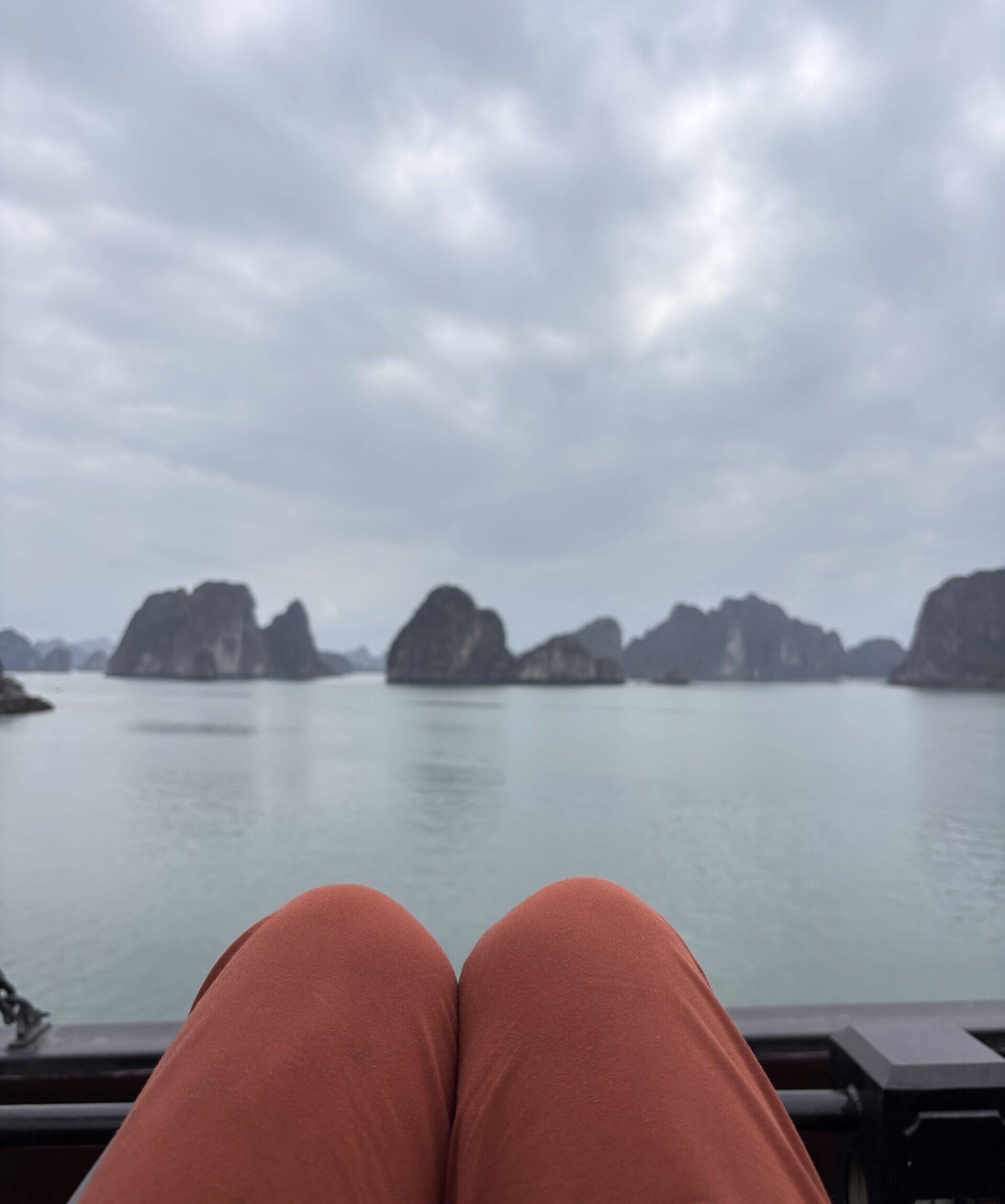
Take domestic flights or the overnight train south to Ninh Binh, often called ‘Ha Long Bay on land’ for its dramatic limestone cliffs rising from rice fields. This UNESCO World Heritage site offers stunning scenery without the crowds.
Your first must-do experience is a Tam Coc boat trip. Local rowers – often elderly women who paddle with their feet – navigate narrow rivers through limestone caves and endless rice paddies. The peaceful journey reveals rural Vietnamese life unchanged for centuries.
Climb Mua Cave viewpoint for panoramic views across the region. The 30-minute hike up stone steps is manageable for families, and the reward is breathtaking vistas over ancient limestone landscapes and winding rivers.

Day 8: Trang An and Bich Dong Pagoda
Trang An offers boat rides through an intricate cave system – you’ll glide through multiple caves connected by underground rivers. The journey reveals both natural wonders and ancient temples built into cliff faces.
Visit Bich Dong Pagoda, a stunning three-level temple complex built into limestone cliffs. The hike to the upper pagoda is steep but short, offering incredible views over rice fields below.
This great place showcases northern Vietnam’s natural beauty while remaining relatively uncrowded – making it perfect for families seeking authentic experiences.
Days 9-12: Hoi An – Ancient town magic
Day 9: Travel day and first impressions
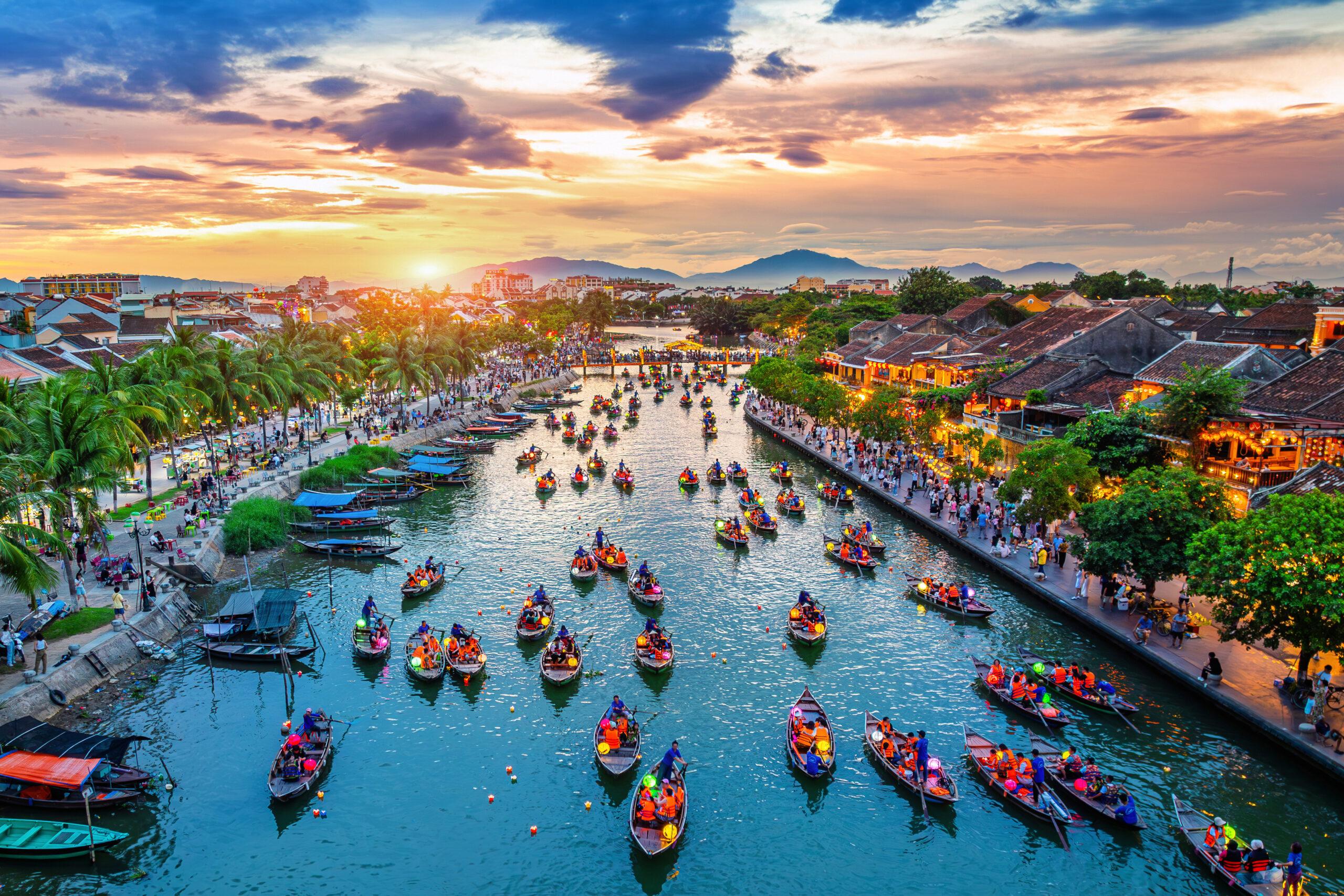
Take the overnight train or internal flights south to Da Nang, then transfer 45 minutes to Hoi An. This ancient town captivated our whole family with candy-coloured buildings, ornate Japanese bridges, and thousands of silk lanterns swaying above narrow streets.
Check into accommodation near the Ancient Town – staying in the Old Town puts you walking distance from major attractions. Many hotels offer free bikes, perfect for exploring rice paddies and nearby beaches.

Spend your first evening wandering Hoi An’s traffic-free streets, admiring centuries-old architecture and ducking into hidden courtyards. The absence of motorbikes makes this the most relaxed destination in your 2-week Vietnam itinerary.
Day 10: Cultural workshops and river life
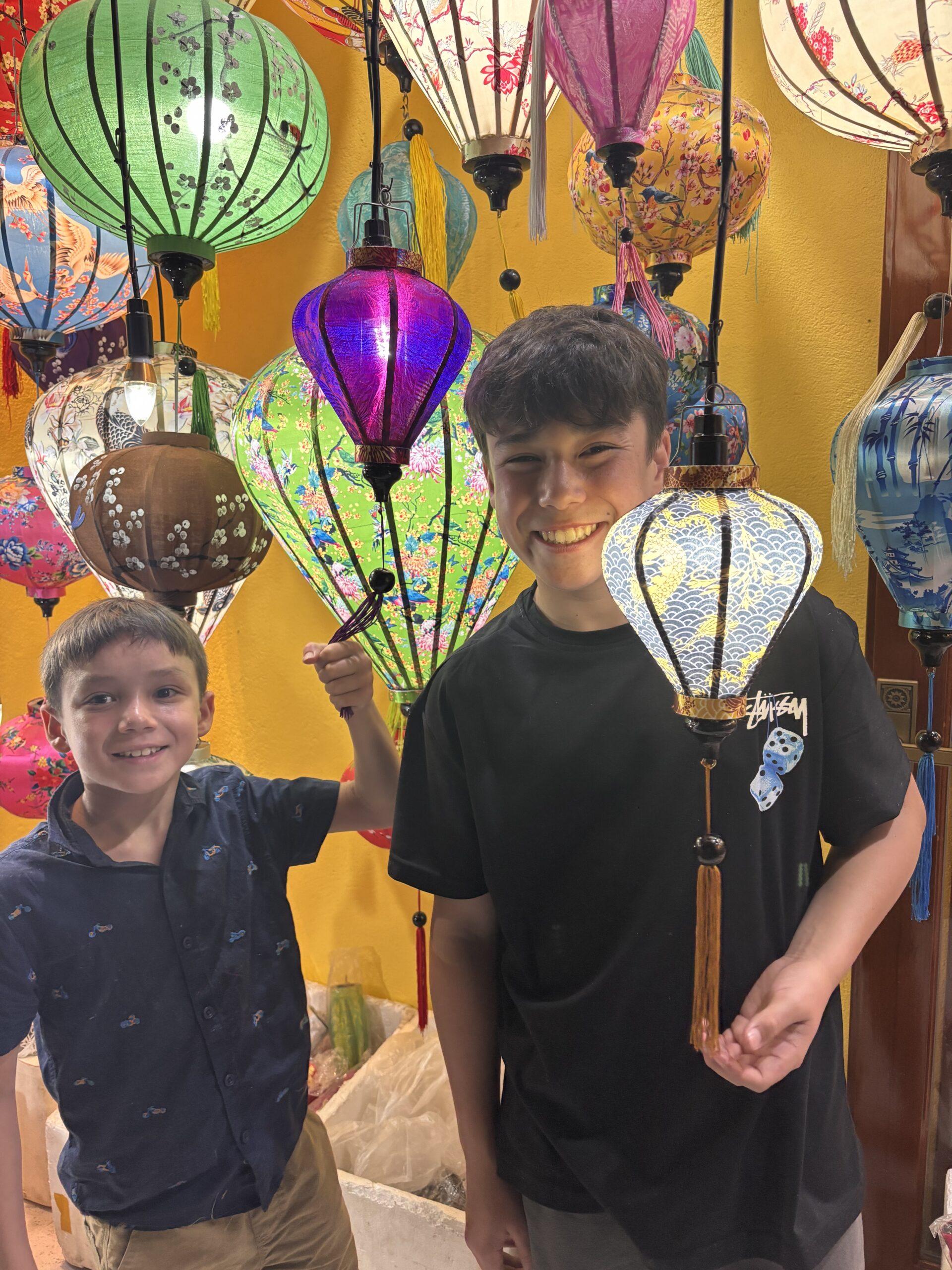
The kids’ absolute highlight was making silk lanterns with local ladies. You’ll choose colours and patterns before learning traditional techniques – and take your creations home as perfect souvenirs. If you’re up for something a little more adventurous, then you can take a coconut boat ride through Bay Mau coconut forest. We got spun around with our fantastic guides, and also did a little crabbing.
One of my favourite mornings was spent biking through local villages on Cam Kim Island. Cycle through endless rice fields, meet local farmers, and learn traditional crafts like mat weaving. The flat terrain suits all abilities, and glimpsing rural life beyond tourist areas feels special.

Take a sampan boat ride along Thu Bon River. These wooden boats navigate narrow channels where you’ll spot fishing nets, floating gardens, and riverside villages. Evening trips offer the most atmospheric lighting.
Day 11: My Son Sanctuary day trip
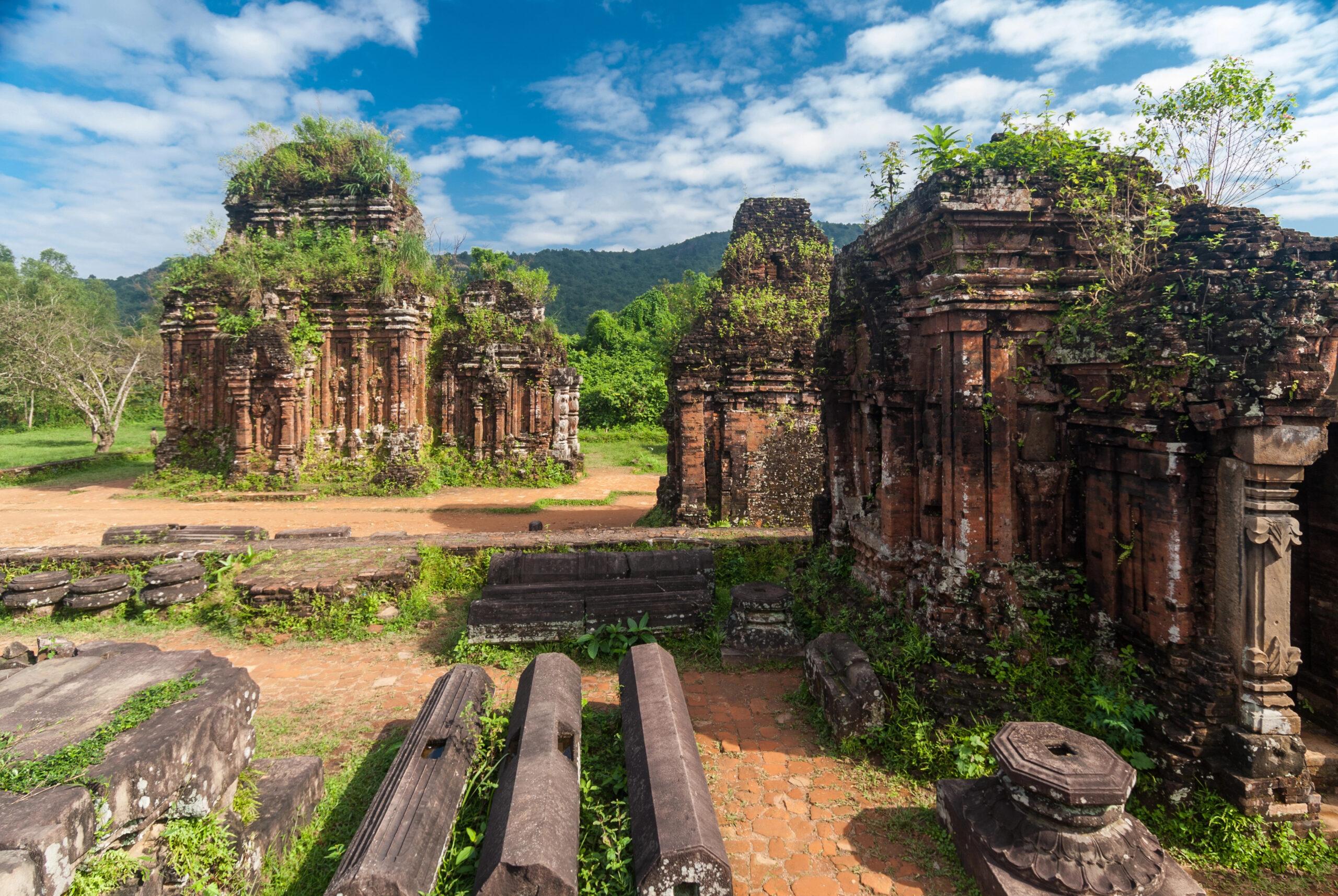
This UNESCO World Heritage site features ancient temples from the Cham civilisation, set in a jungle valley just one hour from Hoi An. The crumbling brick towers dedicated to Hindu deities showcase Vietnam’s diverse cultural heritage.
Visit early morning when the mist clings to the ruins and temperatures are cooler. Many tours combine this historical site with other central Vietnam attractions, making efficient use of your time.
Return to Hoi An for an afternoon exploration of Chinese assembly halls and ancient temples scattered throughout the old quarter. The Fujian Assembly Hall features intricate carvings and coiled incense spirals that create magical lighting.
Day 12: Beach time and night markets
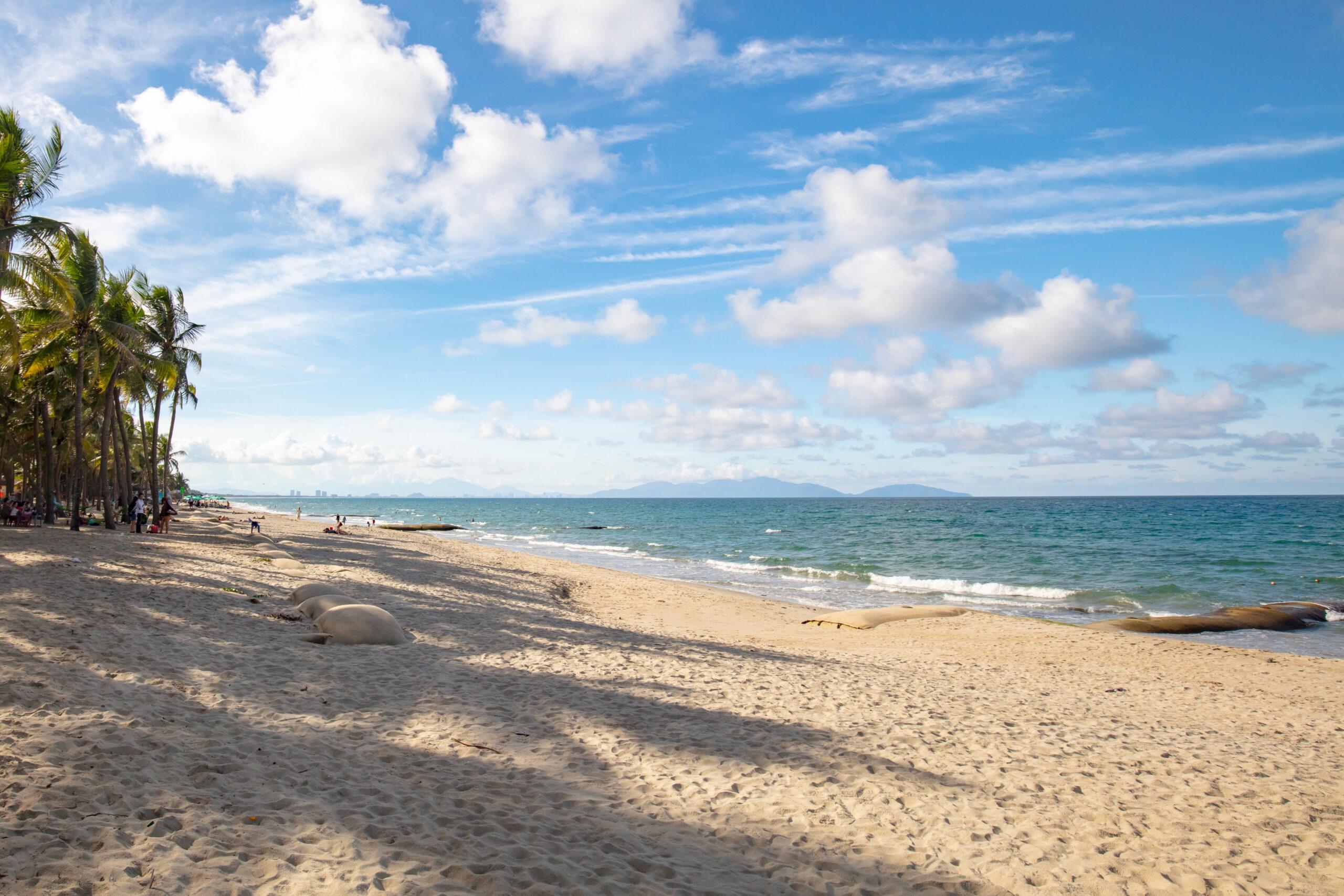
Cycle to An Bang Beach, just 4km from the Ancient Town. This beautiful beach offers pristine white sand and gentle waves, plus beachfront restaurants serving exceptional seafood. It’s the perfect balance after days of cultural exploration.
Evening brings Hoi An’s famous night market. Browse stalls selling handmade lanterns, silk scarves and local artwork while sampling street snacks. The riverside location creates a magical atmosphere when lanterns reflect in the water.
Try releasing floating lanterns on Thu Bon River – a tradition particularly special during monthly Full Moon Festivals. Making wishes and watching glowing orbs drift downstream creates unforgettable family memories.
Read here for the full article on best things to do in Hoi An
Days 13-14: Ho Chi Minh City and southern Vietnam
Day 13: Cu Chi tunnels and war history
Fly or take the overnight sleeper train south to Ho Chi Minh City (still called Saigon by locals). This modern metropolis offers a different energy from Hanoi – wider streets and a contemporary feel while maintaining Vietnamese charm.
Your essential day trip takes you to Cu Chi tunnels, an hour’s drive from the city centre. Crawling through these Vietnam War tunnels provides educational and sobering experiences. Kids over seven manage the confined spaces better, and the shooting range remains optional.
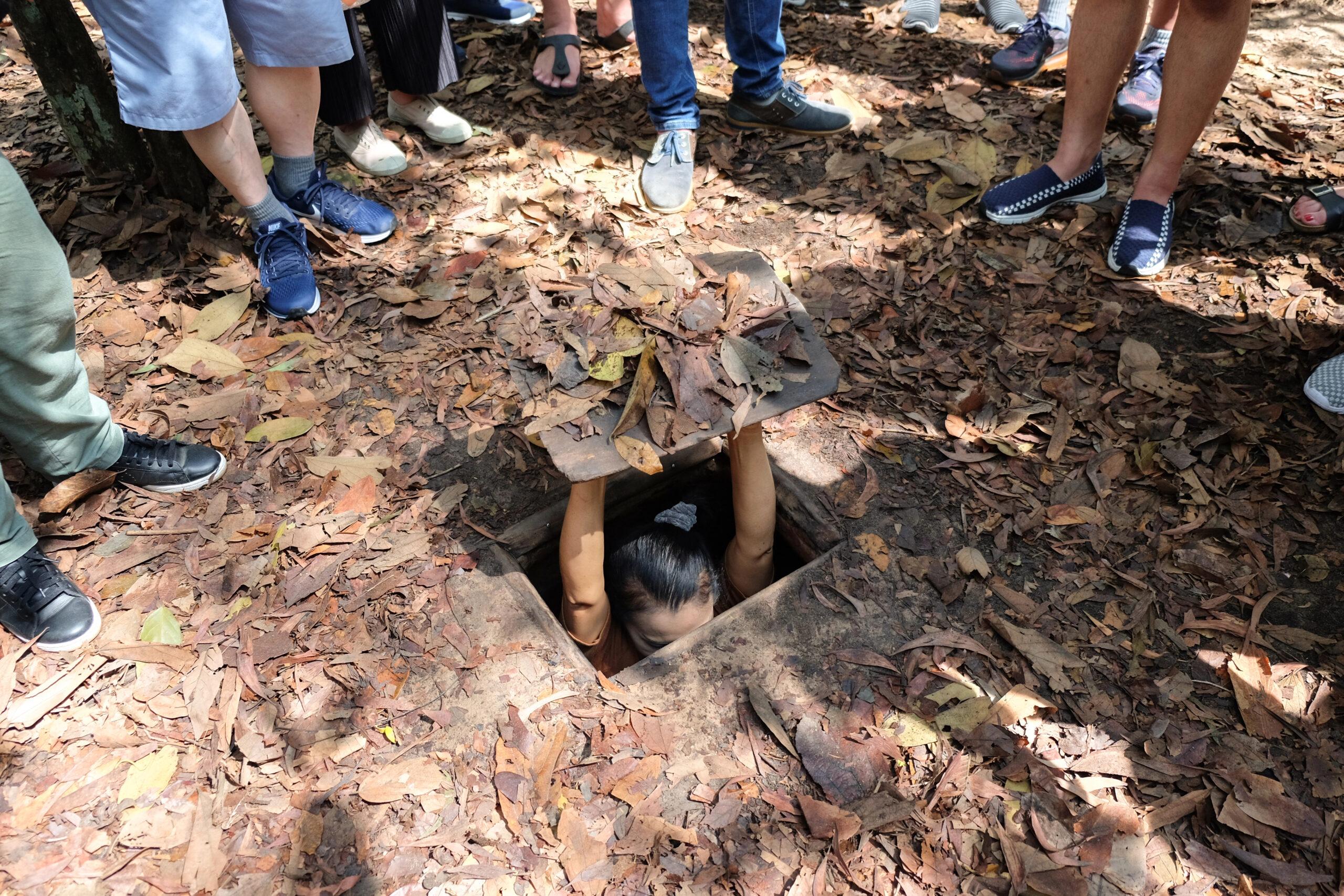
Visit the War Remnants Museum for powerful yet heavy content, which is better suited for teenagers who can process the historical context. The exhibits reveal modern history through Vietnamese perspectives, offering important cultural understanding.
Day 14: Markets and final experiences
Explore Ben Thanh Market, the covered market selling everything imaginable. Let kids practise bargaining skills on small souvenirs while you hunt for coffee, spices, and final gifts. The central post office nearby showcases beautiful colonial architecture.
Stroll through the city centre, admiring French colonial buildings including Notre-Dame Cathedral and the Central Post Office – perfect examples of Southeast Asia’s colonial heritage.

For your final evening, consider a Mekong Delta day trip if you have extra time, or simply enjoy street food tours around local markets. Ho Chi Minh City’s food scene rivals Hanoi’s, with excellent pho, fresh spring rolls, and innovative fusion restaurants.
Best time to visit Vietnam
We travelled in early April, and the timing proved perfect. The monsoon rains had cleared from central Vietnam, temperatures hovered in the late-20s, and we rarely encountered tour bus crowds.
The sweet spot for family travel runs from October through April. You’ll avoid the intense summer heat that makes temple exploration exhausting and beach days unbearable. We watched other families wilting in the midday sun during our Ha Long Bay cruise, grateful we’d timed it right.
Northern Vietnam surprised us with cool evenings in November – pack a light jacket for Hanoi’s winter months. Meanwhile, southern Vietnam maintains its tropical warmth year-round. Ho Chi Minh City felt balmy even in late autumn.
Central Vietnam’s monsoon season runs May to September, bringing heavy rains that can disrupt beach plans and cruise schedules. We’d originally considered a summer trip but changed our minds after reading about cancelled Ha Long Bay departures. The northern and southern regions remain accessible during these months if you’re flexible with your itinerary.
The shoulder seasons of March-April and October-November offer the best of everything – comfortable weather, reasonable hotel rates, and attractions that aren’t packed with tour groups. We particularly appreciated having Hoi An’s ancient streets relatively to ourselves during evening strolls.
Getting around: Transport tips for families
Flights saved us days of travel time
Looking at Vietnam on a map, we hadn’t grasped just how vast the country stretches from north to south. Flying from Hanoi to Ho Chi Minh City takes two hours; the same journey overland would consume 30+ hours of precious holiday time.
We booked directly with Vietnam Airlines and VietJet, paying around £40 per person for internal flights. The savings versus European budget airlines amazed us. Both airlines proved reliable, with on-time departures and comfortable cabins. Just remember to book luggage allowances in advance – the add-on fees at the airport sting.

The overnight train became a highlight
The Hanoi to Da Nang overnight train turned into one of our children’s favourite memories. We’d debated whether an 18-hour train journey with kids would work, but waking to rice paddies glowing green in morning light, with the coastline stretching endlessly beside us, created pure magic.
We splurged on a more upmarket cabin via Lotus Trains – with proper bedding, and most importantly, toilets that could only be used by our carriage only. Worth every extra pound for comfort and privacy. Pack snacks and entertainment.
Grab taxis solved the urban transport puzzle
Download the Grab app before you arrive – it’s Southeast Asia’s answer to Uber and works brilliantly. No haggling with taxi drivers, no confusion about destinations, just reliable, cheap transport with fares appearing upfront. We used it dozens of times across every city, never paying more than a few pounds for cross-town journeys.
That said, all of Vietnam’s cities and old towns reward walking. The narrow streets reveal hidden cafes, artisan workshops, and atmospheric courtyards you’d miss from a car. Let your feet do the exploring when you can.
Essential travel tips we learned
Get a SIM card the moment you land at the airport. Or you can pay for an e-SIM before even leaving your home country. We paid about £10 for unlimited data for two weeks, and it proved invaluable for navigation, translation apps, and calling ahead to restaurants. International roaming would have cost us hundreds for the same connectivity.
Cash still rules in Vietnam, despite what your contactless-payment-everywhere experience at home suggests. While major hotels accept cards, street food vendors and market stall holders work in Vietnamese dong only. ATMs are everywhere in tourist areas – we withdrew small amounts regularly rather than carrying large sums. Watch for the warning about foreign transaction fees from your home bank; we’d sorted a fee-free travel card before leaving.
Choosing accommodation wisely made a huge difference to our enjoyment. Family rooms are common, but we prioritised hotels with pools above almost everything else. After sweaty days exploring temples and navigating crowded markets, those afternoon pool sessions kept everyone happy. Hanoi’s rooftop pools offered stunning views of the Old Quarter, while Hoi An’s beachside resorts provided direct access to the sand.
Vietnam on a plate: Food for families
Vietnamese food became one of our trip’s greatest pleasures. I’d worried about whether the kids would adapt to unfamiliar flavours, but within days they were ordering pho confidently and debating which banh mi vendor made the best sandwiches.

The dishes that defined our mornings
Pho became our breakfast ritual, that fragrant noodle soup appearing at street-side stalls from dawn onwards. The combination of aromatic broth, silky rice noodles, and mountains of fresh herbs creates something both comforting and exotic. I preferred chicken (pho ga) while our son committed to beef (pho bo) throughout the trip. Watch the locals – they add lime, chilli, and handfuls of Thai basil and saw-tooth coriander to customise their bowls. We learned to follow their lead.
Banh mi became a staple. These exceptional sandwiches cost pennies from street vendors – we’re talking 50p-£1 for a generously filled baguette. The crispy bread, still warm from the oven, paired with pate, grilled pork, pickled carrots, cucumber, and fresh coriander, created the perfect on-the-go lunch. Our kids devoured these daily, and I’m not ashamed to admit we ate them twice in one day, more than once.

The regional specialities worth seeking
Bun cha in Hanoi became our favourite lunch discovery. This northern speciality features grilled pork patties and slices swimming in a sweet-sour broth, served alongside rice noodles and mountains of fresh herbs. You dip everything together in this messy, delicious, utterly addictive way.
Hoi An delivers cao lau, a dish you literally cannot find anywhere else. Authentic versions use water from a specific local well, creating thick rice noodles with a unique texture. They arrive topped with pork, crispy crackers, and greens. Every restaurant in Hoi An serves its version – we tried four different ones during our stay, each subtly different.
Moving south to Ho Chi Minh City, com tam (broken rice) appeared on every menu. This simple dish features fractured rice grains topped with grilled pork chop, shredded pork skin, and a fried egg. It costs next to nothing and delivers exactly what exhausted kids need – something familiar and satisfying without challenging flavours.

Spring rolls conquered even the fussy eaters
Vietnamese spring rolls come in two glorious forms. Fresh rolls (gỏi cuốn) wrap translucent rice paper around vermicelli noodles, herbs, and prawns or pork, served with peanut dipping sauce. They’re light, refreshing, and healthy. Fried versions (chả giò) deliver that satisfying crunch kids crave. Most restaurants happily made plain versions for our occasionally fussy son, proving that Vietnamese hospitality extends to accommodating young palates.
Coffee became a daily treat
Vietnamese coffee deserves its reputation. Whether iced (cà phê sữa đá) or hot, it delivers intense flavour from robusta beans slowly dripped through individual metal filters into condensed milk. The sweetness means older kids enjoy it as much as adults. But egg coffee (cà phê trứng) in Hanoi – that tastes like liquid tiramisu and absolutely must be experienced.
When allergies and preferences matter
We’d worried about communicating dietary requirements as my youngest has nut allergies, but Vietnamese cuisine proved remarkably accommodating. Using Google Translate, we could communicate with restaurant staff who took us seriously. We never had an issue.
Vegetarian and vegan options appear everywhere thanks to Buddhist traditions. Look for “chay” restaurants near pagodas – they serve plant-based versions of popular dishes that taste surprisingly close to originals. Tofu substitutes work brilliantly in Vietnamese cooking.
Practical planning for your 2-week Vietnam itinerary
What it actually costs
Accommodation ranges from budget guesthouses at £15-30/night to luxury resorts at £100+/night. We chose to stay in higher-end family hotels with excellent pools and facilities, typically spending £80-120 per night. After long days navigating busy streets and cultural sites, those resort-style pools and comfortable rooms were worth every penny for keeping everyone happy and rested.
We particularly splurged on our Ha Long Bay cruise and a beach resort hotel near Hoi An. Even at the luxury end, Vietnam offers exceptional value compared to similar standard accommodation in Europe or the UK.
Food costs will shock you coming from UK prices. Street food feeds a family for £10-15, often less. Restaurant meals in tourist areas rarely topped £20-30 for four of us, including drinks. We ate like kings while spending less than we would on a mediocre pub meal at home.
Activities and tours proved the variable expense. Boat trips cost £25-45 per person, while entrance fees to attractions averaged £3-8 for adults, usually with children’s discounts. We spent more on our three-day Bai Tu Long Bay cruise than on everything else combined, but considered it the trip’s centrepiece, worth investing in.

Staying healthy and safe
Vietnam felt remarkably safe for family travel. Our biggest concerns proved to be traffic in cities – those motorbikes appear from everywhere – and the occasional stomach upset from street food. Hold hands religiously when crossing roads, commit to your direction, and keep walking. Don’t stop mid-crossing or hesitate; the flow of motorbikes navigates around you if you’re predictable.
Street food gave us minor digestive issues on day three – nothing serious, just enough to teach us to build tolerance gradually. Start with cooked food from busy stalls with high turnover. Trust your instincts about cleanliness. We avoided ice in drinks initially, but relaxed as the trip progressed.
Travel insurance is essential, covering medical emergencies and trip cancellation. Many policies exclude motorbike accidents, which influenced our decision to stick with Grab taxis rather than rent scooters. The freedom of motorbikes tempted us, but insurance limitations and child safety concerns won out.
Vaccinations aren’t mandatory for Vietnam, but travel clinics typically recommend hepatitis A and B plus typhoid. Consult a travel clinic 6-8 weeks before departure to allow time for any vaccine series requiring multiple doses.
Extra days: Extending your Vietnam adventure
Two weeks flew past faster than we’d imagined. Looking back, we’d have loved extra time for these destinations that didn’t fit our itinerary. Here are some suggestions if you wanted to extend your Vietnam trip.
Northern Vietnam’s mountain magic
Sapa’s spectacular rice terraces haunt our ‘next time’ list. This mountainous region requires 2-3 extra days minimum, reached via overnight train from Hanoi. Trekking through traditional hill tribe villages, photographing terraced landscapes, and experiencing homestays with local families all call for unhurried exploration.
Cat Ba Island in Lan Ha Bay offers excellent rock climbing and kayaking with fewer crowds than Ha Long Bay. Several families we met raved about their time there, particularly active teenagers who tackled the climbing routes. It’s perfect for families seeking adventure beyond standard tourist routes.

Southern Vietnam’s coastal escapes
Phu Quoc Island is a popular extension for families wanting beach time. Domestic flights from Ho Chi Minh City take just one hour, delivering beautiful beaches and relaxed island life. Perfect for unwinding after intensive cultural exploration.
Mui Ne offers sand dunes and kitesurfing, while Nha Trang features excellent beaches and water sports. Both require 3-4 hour drives from Ho Chi Minh City but reward with different coastal experiences.
Central Vietnam’s hidden depths
Phong Nha National Park showcases Vietnam’s most impressive caves, including the world’s largest cave passage. Several families with older children (12+) told us the adventure tours were trip highlights. The combination of trekking, swimming through underground rivers, and camping inside caves sounded extraordinary.
Da Nang also deserves more than a quick transfer stop. The city makes a great base for exploring the Hai Van Pass – that spectacular mountain and ocean road that Top Gear featured. Ba Na Hills’ French colonial architecture and cable car journey intrigue us for next time.

Making the most of two weeks in Vietnam
This 2-week Vietnam itinerary balances must-see destinations with authentic cultural experiences. From northern Vietnam’s dramatic landscapes to southern Vietnam’s bustling cities, every day brought new adventures that exceeded our expectations.
The easiest way to experience Vietnam’s diversity is by accepting the chaos. Traffic, crowds, and constant activity initially overwhelm – I’ll admit to near-panic during our first road crossing in Hanoi. But within days, that chaos becomes part of the charm, the rhythm you move to, the energy that makes Vietnam feel so vibrantly alive.
Vietnam exceeded every expectation. Two weeks wasn’t nearly enough to explore this captivating destination where ancient traditions meet modern energy, where kids are welcomed everywhere with genuine warmth, and where every day brings discoveries that create lifelong memories.
Whether you’re seeking cultural immersion, natural wonders, or family adventures, Vietnam delivers all three in spades. This Southeast Asia gem proves that the best experiences often happen when you step outside your comfort zone – just like that first terrifying but exhilarating road crossing in Hanoi that now makes us laugh.
Frequently asked questions
Is 2 weeks enough for Vietnam?
Two weeks covers Vietnam’s highlights comfortably – Hanoi, Ha Long Bay, Ninh Binh, Hoi An and Ho Chi Minh City – without feeling rushed. If you want to add Sapa, Phu Quoc or Phong Nha, allow three weeks.
How much does 2 weeks in Vietnam cost?
A family of four can expect to spend £3,000-£5,000 for two weeks, depending on accommodation choices. Street food keeps meal costs low (£10–15 per family meal), internal flights run around £40 per person, and attraction entry fees average £3–8 per adult.
Is Vietnam safe for families?
Vietnam is very safe for family travel. The main challenges are busy traffic in cities and occasional stomach upsets from street food. Use the Grab app for reliable transport and build up to street food gradually.
What’s the best time to visit Vietnam?
October to April offers the most comfortable weather across the whole country. The shoulder months of March–April and October–November are ideal – fewer crowds, reasonable prices and pleasant temperatures in the late 20s°C.
Do I need a visa for Vietnam?
UK passport holders don’t need a visa for stays up to 45 days, so a two-week trip is fully covered. Other nationalities should check the latest entry requirements on the official Vietnamese immigration portal before booking.
What vaccinations do I need for Vietnam?
No vaccinations are mandatory, but travel clinics typically recommend hepatitis A and B plus typhoid. Book a consultation 6–8 weeks before your trip to allow time for any multi-dose courses.