Lanzarote’s beaches caught me off guard. I’d pictured black volcanic sand and not much else, and while there is plenty of that, this Canary Island also has soft golden coves, turquoise water you’d swear was the Caribbean, and shallow lagoons. The volcanic backdrop is what makes them, ochre cliffs and lava fields meeting the clear Atlantic Ocean.
We spent our week working our way around the coast, so here’s my rundown of the best beaches in Lanzarote: the famous ones, the wild ones, the family-friendly ones, and what each is actually like when you get there.
For where to base yourself near them, see my guide to where to stay in Lanzarote, and for the volcanoes and the rest of the island, my things to do in Lanzarote for families.
The best beaches in Lanzarote at a glance
- Best for turquoise water: Playa de Papagayo and its neighbouring coves, in the protected Los Ajaches.
- Best for families: Playa Dorada and Playa Flamingo in Playa Blanca, calm and shallow with full facilities.
- Best for surfers: Famara, a wild 6km sweep beneath the cliffs.
- Best natural pool: Caletón Blanco near Órzola, a shallow lagoon framed by black lava.
- Best for a beach day on the strip: Playa Grande and Playa de los Pocillos in Puerto del Carmen.
- Best wild escape: Playa de las Conchas on La Graciosa, a ferry-and-walk away.
The Papagayo beaches
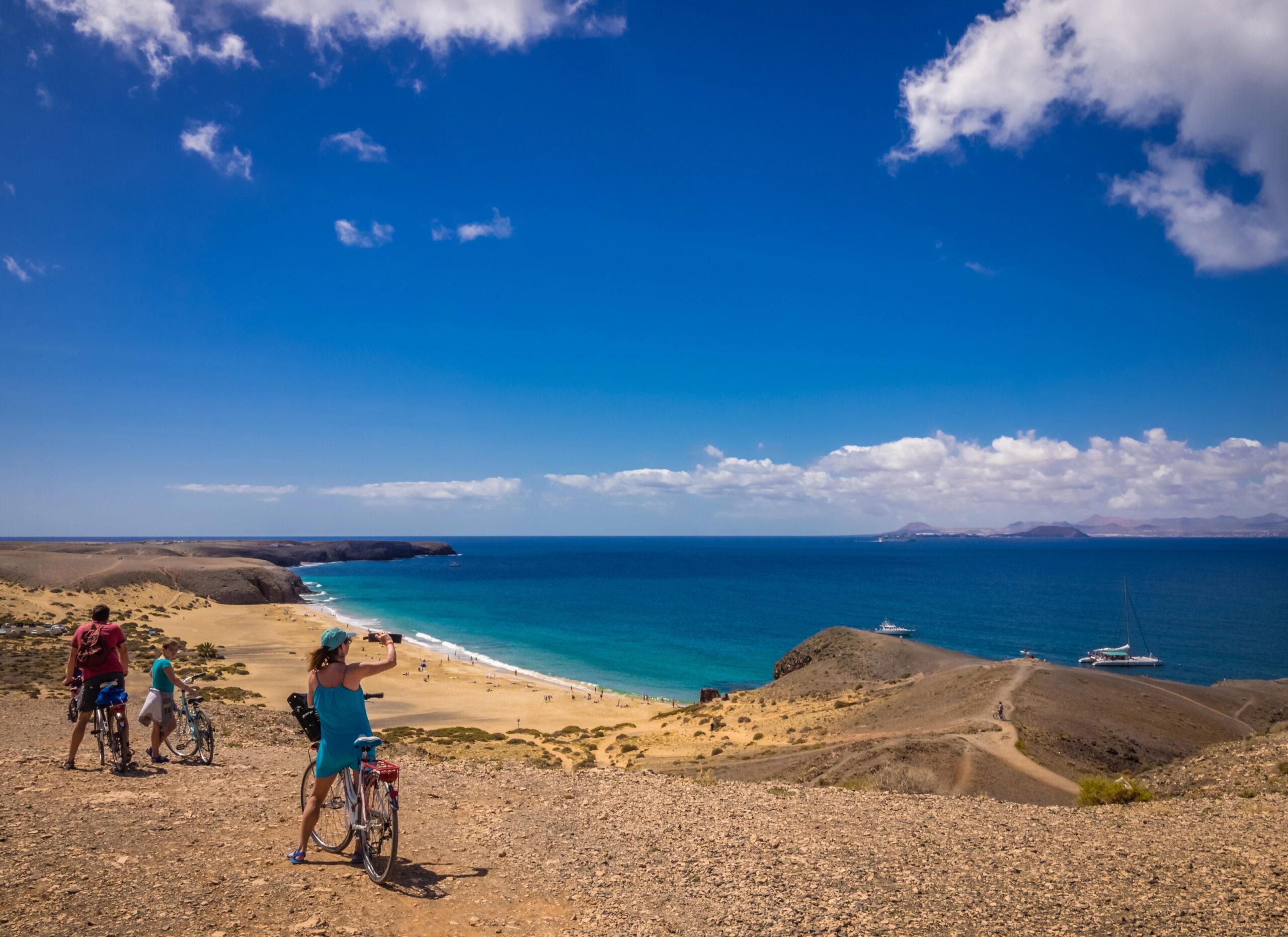
If you see one set of beaches in Lanzarote, make it these. The Papagayo beaches are a string of golden coves tucked into the Los Ajaches Natural Monument at the island’s southern tip, and they’re the reason people rave about Lanzarote’s coast. There are several in the cluster, including Playa Mujeres, Playa del Pozo, Playa de la Cera, Playa de Papagayo itself, Caleta del Congrio and Puerto Muelas.
The water is the draw: clear, calm and a deep turquoise, sheltered by the cliffs so the swell stays gentle. It’s some of the best snorkelling on the island, with good visibility and fish over the rocky edges. Across the Bocaina Strait, you can see Fuerteventura and the little island of Lobos.
Getting to Papagayo
This is the part to plan for. The beaches sit at the end of an unpaved dirt track that branches off past Playa Blanca, and it’s a slow, bumpy 15-minute crawl. Take it gently, and almost any hire car will manage it. Because it’s a protected area, there’s a toll booth a few minutes onto the track charging €3 per car (card only), mainly collected over the busy summer months.
There’s parking above Playa de Papagayo and another car park by Playa Mujeres, the first and easiest cove to reach. Bring everything you need for the day: water, snacks, and a sun cover. There’s no shade to speak of, and beyond a couple of small bar-restaurants on the cliff above Papagayo, no facilities or shops. Take your rubbish home with you.
Which Papagayo cove to pick
- Playa Mujeres is the first you reach, wide and open, with parking right by the sand. Easiest if you’d rather not drive the full track.
- Playa de Papagayo is the famous one, a small horseshoe cove below the headland. The prettiest, and the busiest, with the bars just above it.
- Caleta del Congrio is the furthest out and the quietest, with a long stretch of sand. Be aware it’s popular with naturists, as are several of these coves.
A tip: go early morning or late afternoon. The coves fill up fast in summer, and the light is better at either end of the day.
Famara
Famara is the other side of Lanzarote, literally. Where Papagayo is calm and sheltered, this is wild and exposed, a vast 6km sweep of golden sand on the north-west coast, with the towering Risco de Famara cliffs rising straight up behind it. It was reportedly a favourite spot of César Manrique, the Lanzarote-born artist and architect whose work shaped how the island looks today, and standing on the sand looking up at those cliffs, you can see why.
This is the island’s surf capital. The waves are powerful and consistent, and the bay draws surfers, windsurfers and kitesurfers, plus a string of surf schools in the village of Caleta de Famara. The whole place has a barefoot, camper-van feel to it.
One important thing: it’s not a swimming beach for most people. The currents are strong, and the red flag flies often, so it isn’t suited to young children in the water. Come instead for the walk, the space and the sunset, when the cliffs glow, and La Graciosa sits dark on the horizon. There are a few tapas spots in the village for afterwards. It’s about 30 minutes by car from the airport, and you’ll need a car to get here.
Caletón Blanco
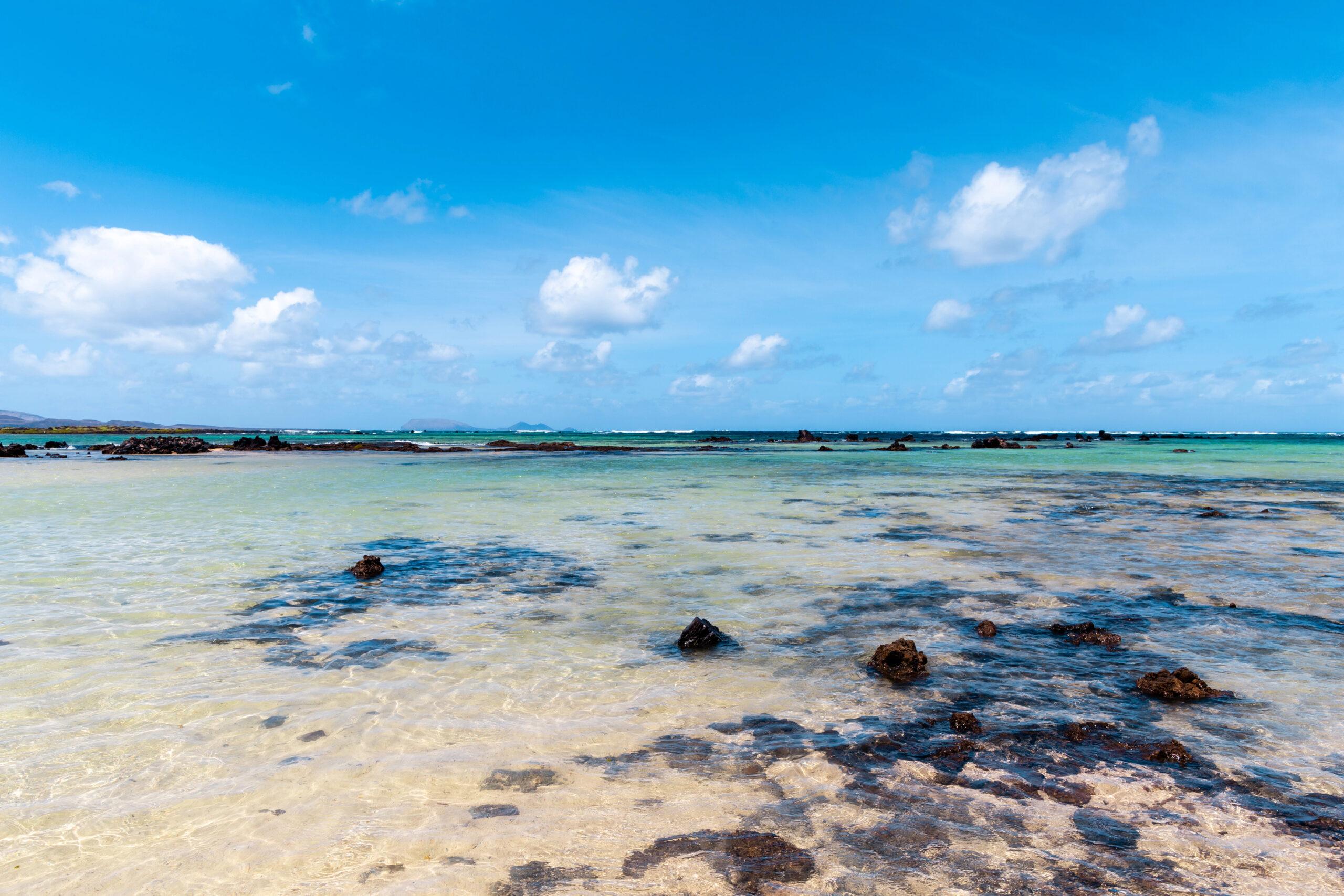
This was a surprise favourite. Up on the north coast near the fishing village of Órzola, Caletón Blanco is where pale sand meets black lava, and the contrast is striking. Fingers of volcanic rock trap pools of shallow, clear water, forming a natural lagoon that’s calm and warm enough for small children to splash about in.
It’s gentler and quieter than the big-name beaches, and there’s free parking right beside it. The lagoon works at both tides: deeper for a proper dip at high tide, with little rock pools exposed for children to explore at low tide. Water shoes are worth packing, as there are stones dotted through the sand and shallows.
There are no facilities here, no bar, no loos, so bring what you need. The car park is small, so a handful of cars can make it feel full. Come late morning for the best of the light on those blue pools. Plenty more little coves line the road towards Órzola if this one’s busy.
Playa Blanca’s beaches
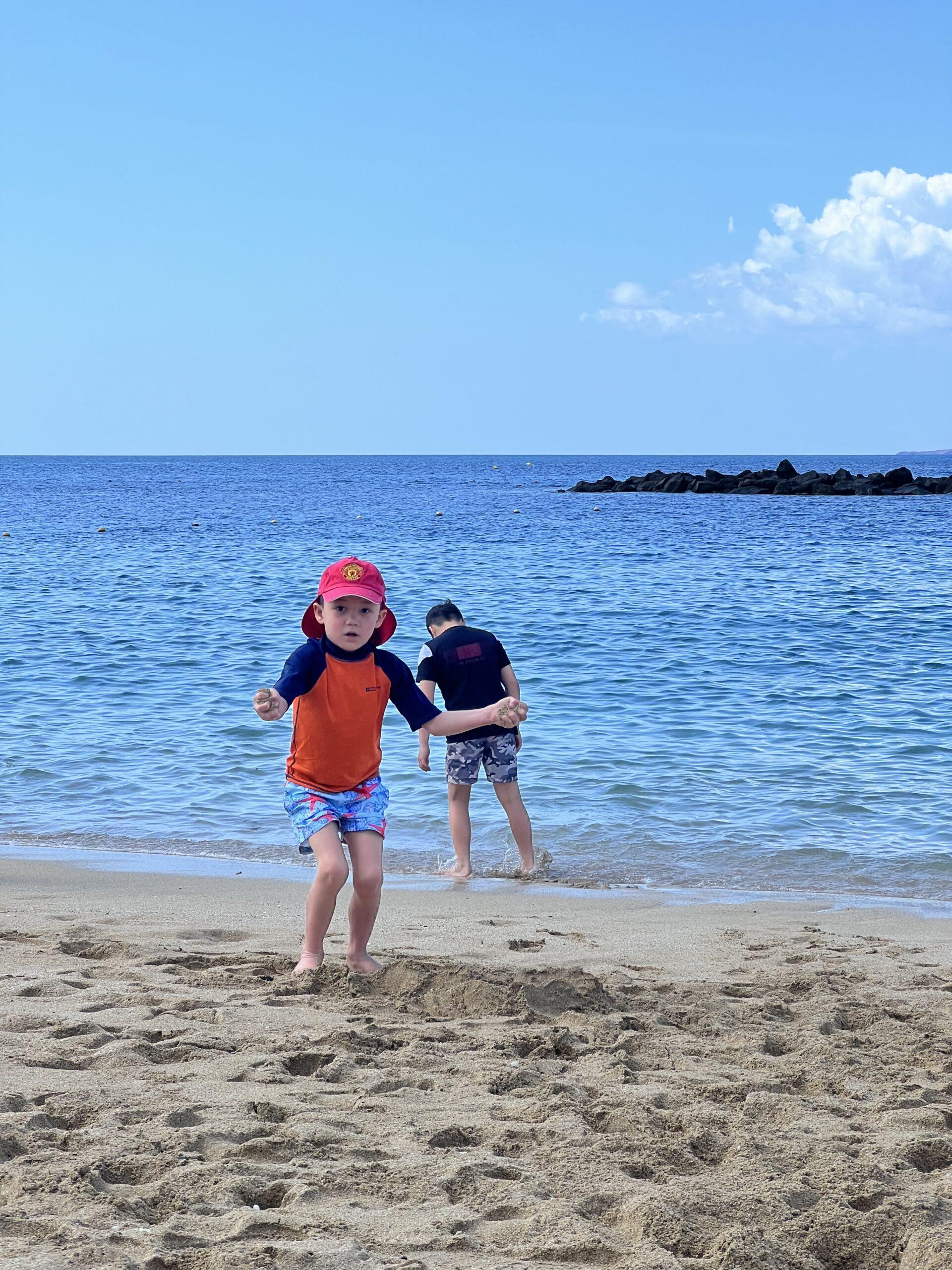
If you want clear water without the dirt-track adventure, the town beaches at Playa Blanca are the easy answer. They share the same fine golden sand and calm, shallow water, and they come with the showers, sunbeds and beach bars that the wild beaches don’t.
- Playa Dorada is the best known and largest, sitting below the Princesa Yaiza hotel. White sand, calm water, full facilities and parking nearby, a reliable family beach.
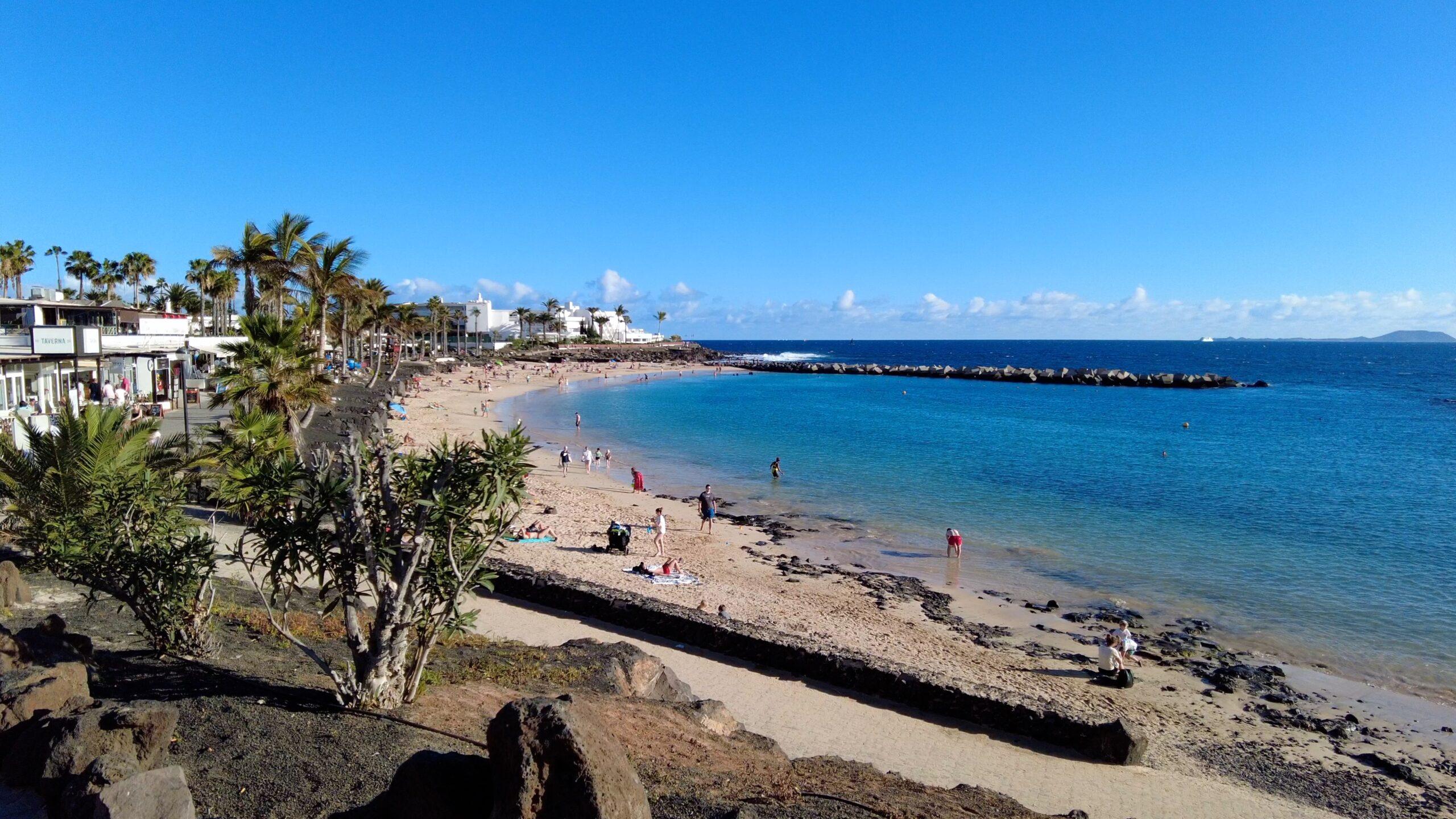
- Playa Flamingo is a small, sheltered beach in the centre of town, with a Blue Flag, gentle water and a man-made breakwater that keeps it calm. Spot-on for toddlers.
- Playa Blanca beach itself sits by the harbour, handy for a swim between lunch and a wander.
From here you’re also perfectly placed to reach Papagayo, or to catch the ferry across to Fuerteventura.
Puerto del Carmen’s beaches
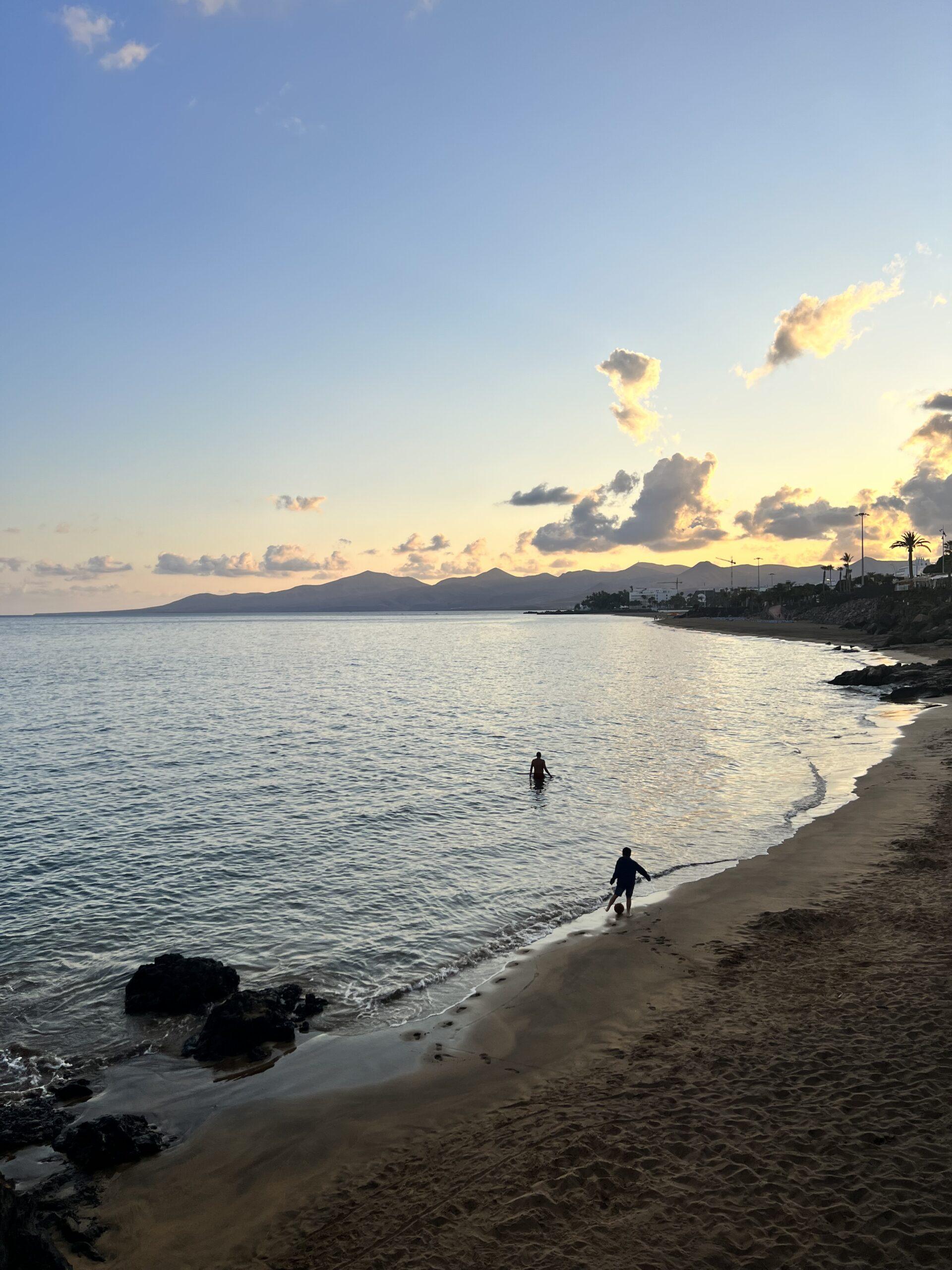
Puerto del Carmen has more than 4km of golden sand running along the resort, so there’s plenty of room to spread out, with restaurants and shops right across the road.
- Playa Grande is the main beach, a calm, golden stretch over a kilometre long backed by palm trees, with sunbeds, showers, lifeguards and good accessibility, including beach wheelchairs and ramps.
- Playa de los Pocillos is the longest in the resort, wide and sweeping towards Matagorda, with more space and a calmer feel. Showers, sunbeds and parking.
- Playa Chica is a small cove by the Old Town, sheltered and popular for snorkelling and scuba diving, with a little kiosk for cold drinks.
Costa Teguise’s beaches
Costa Teguise’s main beach, Playa de las Cucharas, is the island’s windsurfing hub, thanks to the steady breeze that funnels across the bay. The water’s calm enough near the shore for paddling, and there are sunbeds, showers and plenty of bars and restaurants around the edge. It’s a good base for water sports of all kinds, from windsurfing lessons to jet skis.
Nearby, the smaller Playa del Jablillo is more sheltered, with a man-made reef calming the water, which makes it a gentler choice for families with young children.
Playa del Reducto
Often overlooked because it’s in the capital, Playa del Reducto is Arrecife’s town beach, a golden curve of soft sand below the Gran Hotel. The water is calm and shallow, there’s a palm-lined promenade behind it, and you’ve got the whole of Arrecife for food and drink a few steps away. Handy if you’re staying in the city or don’t have a car, with parking and a garage nearby.
Playa de las Conchas (La Graciosa)
For the wildest beach of all, you have to leave Lanzarote. Playa de las Conchas sits on the little island of La Graciosa, reached by a short ferry from Órzola in the north. It’s a broad stretch of golden sand and dunes, with the islet of Montaña Clara rising offshore and barely a soul around.
It’s beautiful but undeveloped, with no facilities at all, and you reach it on foot or by bike from the main village of Caleta de Sebo. The currents here are strong, so it isn’t one for swimming, but for sheer wild scenery and quiet, it’s hard to beat. Bring everything with you and treat it as a day’s adventure rather than a quick dip.
Four beaches for the more adventurous
If you’ve ticked off the big names and want to get off the beaten track, these four are worth the effort.
Playa del Risco
Tucked at the foot of the cliffs below the Mirador del Río in the north of Lanzarote, Playa del Risco is golden sand, clear water and barely another soul, with La Graciosa filling the view across the water. The catch is the access: a steep, rocky path called the Camino de los Gracioseros zigzags down from near the viewpoint, around 3km and roughly an hour each way, with a tougher climb back up. Wear proper shoes, take plenty of water and treat it as a half-day hike. You can also reach it by water taxi from Órzola if the trail isn’t for you. No facilities, so bring everything.
Playa Quemada
A quiet black-sand cove on the south-east coast, near the village of the same name just along from Puerto Calero. Playa Quemada sits in a sheltered bay protected from the currents, so the water is calm and gently sloping, and the dark sand and volcanic rocks give it a wild, low-key feel. There are a couple of small fish restaurants in the village, but no beach facilities, so pack what you need. It’s the spot for a slow afternoon away from the resort crowds.
Playa de la Cantería
Right up on the northern tip beyond the fishing village of Órzola, Playa de la Cantería is a dramatic black-sand beach backed by cliffs. It’s striking to look at, but the currents and waves are strong, which makes it a surfers’ beach rather than a swimming one. Come for the scenery, the wild Atlantic mood and a walk, not a paddle with the kids.
El Golfo
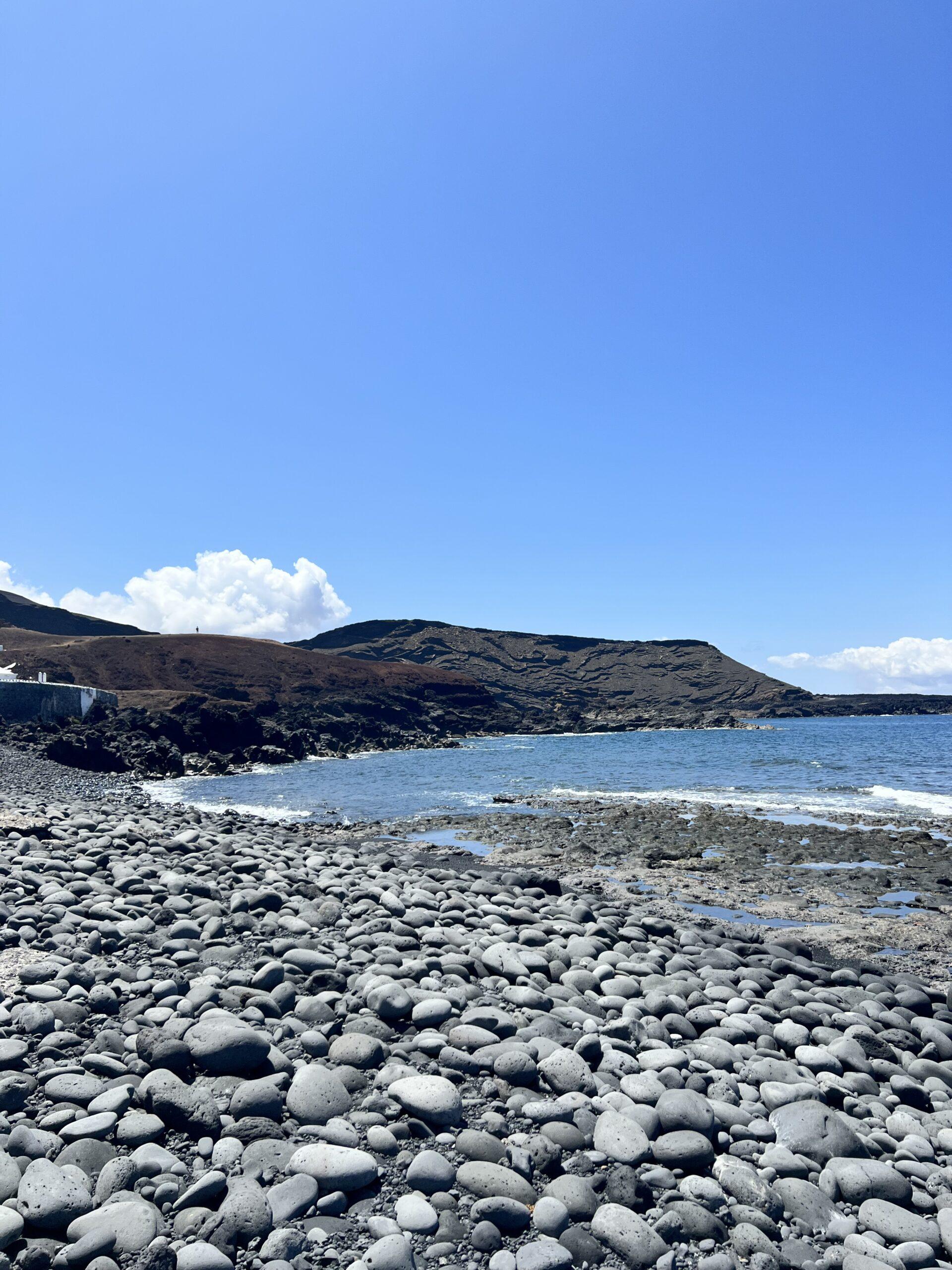
El Golfo was one of our favourite afternoons on the island. The little fishing village sits on the south-west coast, and it’s famous for the Charco de los Clicos, a startling green lagoon that fills a half-collapsed volcanic crater right by the sea. The colour comes from algae in the water, and against the black sand and the red-streaked crater walls it looks almost unreal. It’s roped off and protected, so you view it from a short path above rather than walking up to it, and you can’t swim. Park in the car park as you enter the village and follow the path to the viewpoint.
The beach itself is black volcanic sand and pebbles, only around 125m long, with rough waves and a strong wind, so it’s one for a walk rather than a swim. Scoop up a handful of sand, and you’ll spot tiny green flecks of olivine in it. We timed it for late afternoon and stayed for dinner, which is the thing to do here: the village has a row of fish restaurants along the seafront, and watching the sun drop into the Atlantic over a plate of fresh fish and papas con mojo was a real holiday highlight. Bring a light layer, as it cools quickly once the sun goes.
A few things worth knowing about Lanzarote’s beaches
- The sand comes in two colours. The golden beaches are in the south and the resorts; black volcanic sand turns up elsewhere, like El Golfo beach below the green lagoon, often at beaches better for looking than swimming.
- The wind is strong. The south coast is the most sheltered; the north and Costa Teguise catch more breeze. Lovely for surfing, worth knowing if you want a still day.
- The wild beaches have no shade or services. Papagayo, Caletón Blanco and Las Conchas need a picnic, water and a parasol.
- Several wild beaches are naturist-friendly, particularly the further Papagayo coves and parts of Famara.
- The sun is stronger than it feels. That coastal breeze masks the heat, so cover up and reapply, even on cloudy days.
FAQs: best beaches in Lanzarote
What is the best beach in Lanzarote?
Playa de Papagayo is widely considered the best, a sheltered golden cove with clear turquoise water inside the protected Los Ajaches park. For surfers, Famara takes the title instead, with its dramatic cliffs and consistent waves.
Which beaches in Lanzarote are best for families?
Playa Dorada and Playa Flamingo in Playa Blanca are calm, shallow and have full facilities. Caletón Blanco near Órzola is a gentle natural lagoon that’s good for small children, and Playa Grande in Puerto del Carmen has showers, lifeguards and easy access.
Do you have to pay to get into Papagayo beach?
Yes, there’s a €3 per car entry fee to drive into the Los Ajaches park, payable by card at a toll booth on the dirt track, mainly charged over the summer. It’s free if you walk in from Playa Blanca.
Can you swim at Famara beach?
Not usually. Famara has strong currents and a frequent red flag, so it isn’t safe for swimming for most people, and it isn’t suited to young children in the water. It’s a superb beach for surfing, walking and sunsets, though.
Does Lanzarote have white sand beaches?
Lanzarote’s best beaches have golden sand rather than pure white, particularly the Papagayo coves and the Playa Blanca beaches. The island also has black volcanic sand beaches, though many of those are better for the scenery than swimming.
Which is the best beach in Lanzarote for snorkelling?
The Papagayo coves have clear, calm water and rocky edges that are good for snorkelling. Playa Chica in Puerto del Carmen is another popular spot, sheltered and used by snorkellers and divers.