Last Updated on 08/02/2026 by Ting Dalton
I was never particularly sciencey at school. Chemistry, physics and biology alongside maths were my weakest subjects. So you would think I would be averse to a visit to the Science Museum in London’s South Kensington. After all, what could hold my interest and that of a five-year-old?
As it turns out, quite a lot. The Science Museum is one of the best free days out in London with kids, and we’ve been back several times since that first visit. With multiple floors of interactive exhibits and over 15,000 objects to explore, it’s impossible to see everything in one go – so don’t even try. Cherry-pick the galleries that suit your children’s ages and interests, and save the rest for next time.

Here’s everything you need to know about visiting the London Science Museum with kids, including what’s new, and how to make the most of your day.
Do you need tickets for the London Science Museum?
Entry to the Science Museum is free, but you do need to pre-book a free timed admission ticket online before you visit. This is essential – you can’t just turn up without one.
Book your free tickets at sciencemuseum.org.uk. Tickets are currently available to book up to several weeks in advance, and during school holidays, early time slots from 09.00 are available.
Some galleries and experiences inside the museum cost extra (more on those below), but the main museum and many of its best galleries are completely free.
London Science Museum prices for paid attractions (2026):
- Wonderlab: £17 on the day (save up to £3 per ticket by booking 14+ days ahead; additional savings on later afternoon time slots). Annual pass: £24
- Power Up (gaming gallery): £14 on the day (save up to £3 by booking ahead). Annual pass: £21
- IMAX: The Ronson Theatre: £14 on the day (save up to £3 by booking ahead)
- Family discount: Book as a group of 3–5 people (max 2 adults) and save £3 per Wonderlab ticket or £2 per Power Up/IMAX ticket
Top tip: If you book an IMAX documentary screening alongside Wonderlab or Power Up, you get 50% off your IMAX tickets. And booking later afternoon time slots (from 15.15pm onwards) saves an extra £1-£2 per ticket. These savings add up fast for families.
What to see at the Science Museum with kids
The new Space gallery (free)
The Science Museum opened a brand-new Space gallery in September 2025, replacing the old Exploring Space gallery that had been there for nearly 40 years. It’s now located in the West Hall at the back of the museum, and it’s well worth the walk.
When we first visited, my son was transfixed by the full-sized replica of Eagle – the lander that took Armstrong and Aldrin to the Moon in 1969. That replica is no longer on display, but the new gallery more than makes up for it. For the first time, you can see the Apollo 10 command module and Tim Peake’s Soyuz TMA-19M descent module displayed right next to each other – complete with the scorch marks from re-entry and its enormous 25-metre parachute suspended dramatically above.
You can still see a real piece of the Moon (collected on Apollo 15), plus the space suit worn by Helen Sharman, Britain’s first astronaut, during her 1991 mission. The centrepiece is Science on a Sphere – a large globe where projectors display data and imagery from across the solar system, narrated by Sharman herself.
It’s free to enter and genuinely fascinating for kids of all ages.

Making the Modern World (free)
I particularly enjoyed Making the Modern World on our first visit, and it remains one of the museum’s standout galleries. It displays objects showcasing cultural and technological history from 1750 to the present day. What I loved was seeing products from my own childhood and trying to explain to my son how, at the time, they were considered technologically advanced – such as an Atari games console. Remember those?
He couldn’t get enough of the motor cars and historical modes of transport. The Apollo 10 command module has now moved to the new Space gallery, but you’ll still find Stephenson’s Rocket, Crick and Watson’s DNA model, and one of the first Apple computers among the highlights here.
Wonderlab: The Equinor Gallery (ticketed)
The Wonderlab is where the Science Museum really comes alive for kids. Located on the third floor, it’s a huge space packed with over 50 interactive scientific experiences.
On our first visit, my son had an absolute blast – testing friction on the giant slides, building bridges, launching paper planes and watching lightning strike right in front of us. The live demonstrations are brilliant, and the Explainers (staff in bright red t-shirts) are infectiously enthusiastic about guiding children through each experiment.
Wonderlab is recommended for ages 7–14, which feels about right. Younger children can still enjoy plenty, particularly the Maths Zone with its logic puzzles, but the sweet spot is definitely primary school age and above.
Once you buy a ticket, you’re free to come back as many times as you like throughout the day. The guide time suggests an hour, but we were there for much longer. Book well ahead during school holidays, as it does sell out.
Wonderlab tickets: £17 on the day / from £14 booking 14+ days ahead. Family discount applies. Under 3s free.

Power Up (ticketed)
This is one of the newer additions and a massive hit with kids (and, let’s be honest, nostalgic parents). Power Up is a hands-on gaming gallery featuring the best video games and consoles from the past 50 years. We’re talking everything from Pong and Pac-Man to Minecraft and Mario Kart – all playable.
There’s a VR gaming section, 16-player Halo matches, rhythm action games, and banks of retro consoles that had me reaching for a Mega Drive controller while my son raced ahead to the Nintendo Switch. They’ve recently added games from the new Nintendo Switch 2 as well. Allow at least 90 minutes, though you can stay all day.
Power Up tickets: £14 on the day / from £11 booking 14+ days ahead. Family discount applies. Under 3s free.
The Garden (free – ages 3–6)
If you’re visiting the London Science Museum with younger kids, head down to the basement for The Garden — a multi-sensory play zone designed for children aged 3–6. It’s tucked away and can be tricky to find. From the main entrance, walk past the shop and café on the ground floor and look for Lift D – take it down to the basement. Grab a map at the entrance, as not all lifts go to Level -1.
Children can explore water play, light and shadow exhibits, building blocks and sound. It’s beautifully designed for little hands and curious minds. When we visited, I could see it was a touch young for my five-year-old after about 10 minutes, and more suited to toddlers – but if you have younger children, it’s a lovely spot.
Important: The museum doesn’t provide waterproof aprons for the water play area, so bring your own if your little one is likely to get stuck in. You’ll need to book a free timed ticket in advance. Pushchairs must be parked in the Spare Room opposite The Garden (coin-return locks requiring a £1 coin).
Pattern Pod (free – under 9s)
Just near the IMAX theatre, the Pattern Pod is another free multi-sensory area where children can explore patterns through interactive exhibits – think water ripples, symmetrical shapes on touch screens, dancing in a psychedelic light room, and following robot trails. It’s a great pit stop for younger ones while older siblings are off exploring.

IMAX: The Ronson Theatre (ticketed)
With a screen the height of four double-decker buses and both a next-generation IMAX Laser 4K projector and a 70mm film projector, this is one of only two screens in Europe that can show the best of both digital and analogue IMAX. The sound system is properly immersive – you feel it through your seat.
Current 3D documentaries include films about the T.rex, Antarctica, ocean exploration and life on the International Space Station. There are also occasional blockbuster screenings — Christopher Nolan’s The Odyssey is set for IMAX 70mm screenings from July 2026.
IMAX tickets: £14 on the day / from £11 booking 14+ days ahead. Family discount applies. Under 3s free.
More free galleries worth exploring
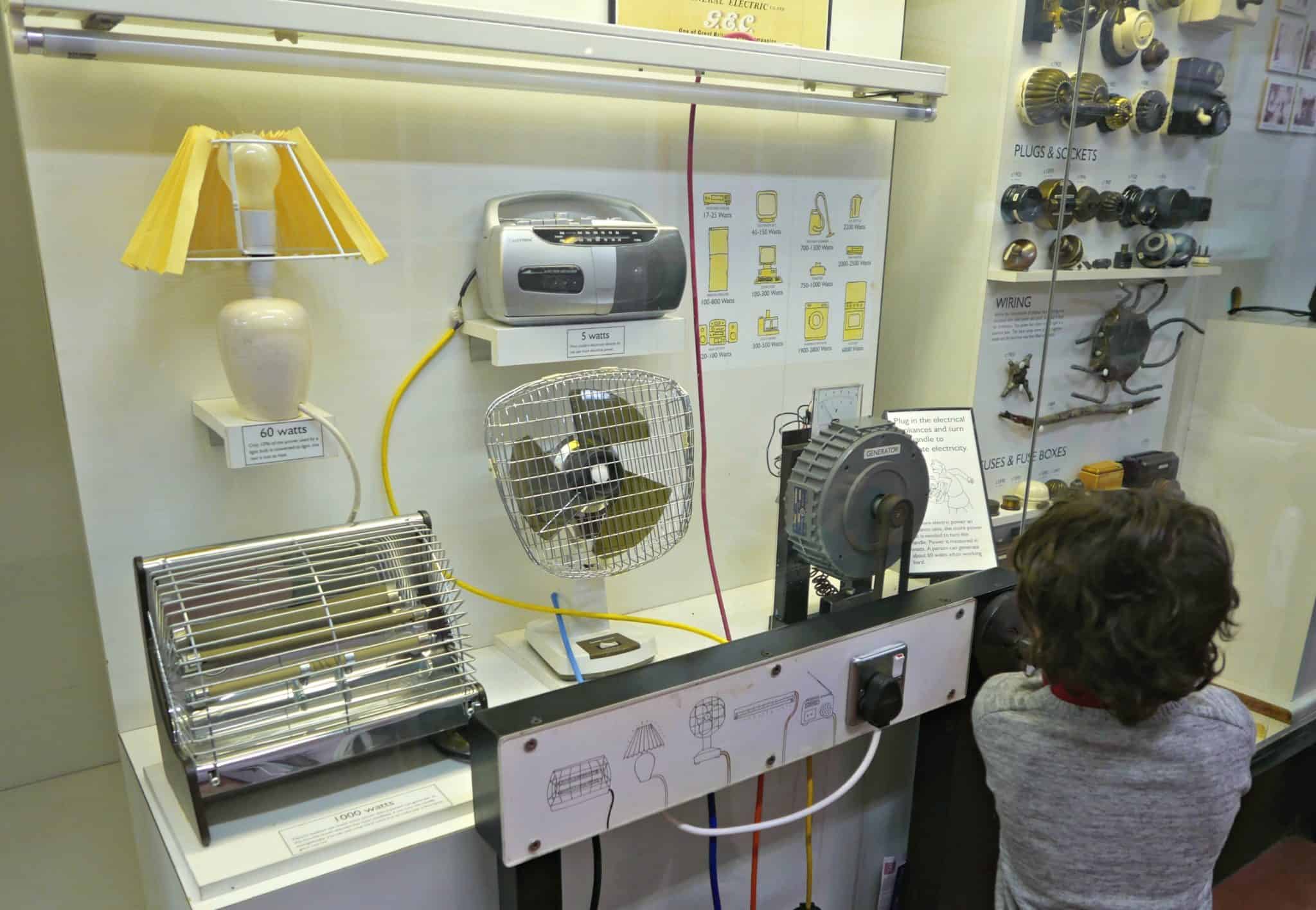
The Energy Hall (ground floor) – Our first stop on that original visit. My son spotted the huge red Mill Engine built in 1903 straight away. Learning about the power of steam, we enjoyed looking at models built by James Watt – whose name is more commonly known as a unit of measurement of electrical power. “Like a lightbulb?” he asked. “Yes!” I exclaimed with a congratulatory high five.
Flight (third floor) – A cross-section of a Boeing 747, Amy Johnson’s Gipsy Moth, and a history of aviation that captivates kids who love planes.

Engineers (ground floor) — Opened in 2023, this gallery explores how engineers shape the world through innovations, with objects like the first digital camera and a surgical robot arm.
Technicians: The David Sainsbury Gallery (free) — An interactive gallery aimed at 11–16-year-olds exploring STEM careers. Great for older kids and teenagers.
Medicine: The Wellcome Galleries (first floor) — The largest medical galleries in the world. Fascinating for older children and adults, though very young kids may find it less engaging.

Planning your visit to the London Science Museum
Address: Exhibition Road, South Kensington, London SW7 2DD
Opening hours: Daily 10.00–18.00 (last entry 17.15). Galleries start closing 30 minutes before the museum shuts. Closed 24–26 December.
Getting there: The nearest tube station is South Kensington (Circle, District and Piccadilly lines). Follow the tunnel from the station — it leads almost directly to the museum entrance. The museum is a couple of minutes’ walk from the Natural History Museum and V&A, so you could easily combine visits.
Buses: 14, 49, 70, 74, 345, 360, 414, 430 and C1. Santander Cycle docking stations are available on Exhibition Road.
How long to spend: We’ve found 3–4 hours works well with children. That’s enough to properly explore a few galleries without anyone hitting a wall. After checking my Fitbit on that first visit, I realised we’d walked the equivalent of three miles around the museum — and my son was only five!
Tips for visiting the Science Museum with kids
Book everything online in advance. Free admission tickets, Wonderlab, Power Up, IMAX, The Garden and Pattern Pod all require pre-booking. During school holidays, popular slots sell out fast – particularly Wonderlab. Booking at least 14 days ahead also saves you money on paid attractions.
Grab a map from the entrance. The Science Museum is huge and spread across multiple floors. It’s easy to lose your way, particularly when trying to find The Garden in the basement. You can also download maps from the website, including sensory maps.
Bring your own food. There are several cafés in the museum, but they can be pricey and busy during peak times. You’re welcome to bring a packed lunch – there are designated picnic areas, including one next to The Garden in the basement and another outside Wonderlab on the third floor.
Check age requirements. Some exhibits have minimum age recommendations. Wonderlab suits ages 7–14 best, The Garden is for ages 3–6, Pattern Pod is for under 9s, and Technicians is aimed at 11–16-year-olds.
Visit in the afternoon for better value. Later time slots (from 15.15pm) for Wonderlab, Power Up and IMAX offer extra discounts of £1–£2 per ticket, and the museum tends to be quieter.
Children under 12 must be accompanied by an adult.
Nearby attractions
The Science Museum sits on Exhibition Road alongside two other world-class museums, both free to enter:
- Natural History Museum — right next door, with its famous dinosaur galleries and newly transformed outdoor gardens (reopened 2024)
- Victoria and Albert Museum — a short walk away, brilliant for design-loving older children
- Hyde Park and Kensington Gardens — a 10-minute walk for a run around after a museum morning

Frequently asked questions
Is the London Science Museum free?
Yes, general admission is free. You need to pre-book a free timed ticket online. Some attractions inside — Wonderlab, Power Up and IMAX – charge separately.
How much are London Science Museum tickets for Wonderlab?
Wonderlab tickets are £17 on the day, but booking 14+ days ahead can bring the price down to £14. Family groups of 3–5 (max 2 adults) save an additional £3 per ticket. Under 3s go free.
Is the Science Museum good for toddlers?
Yes! The Garden (ages 3–6) and Pattern Pod (under 8s) are both free interactive spaces designed for younger children. The wider museum has plenty of things for little ones to look at too, particularly the space and transport galleries.
How long do you need at the Science Museum?
Plan for at least 3–4 hours with children. If you’re adding Wonderlab and Power Up, you could easily fill a full day.
Can you eat at the Science Museum?
There are several cafés and a shake bar. You can also bring your own food – picnic areas are in the basement near The Garden and on the third floor near Wonderlab.
What is the best age for the Science Museum?
There’s something for every age, but the sweet spot for the most interactive experiences is roughly 5–14 years old. Under 5s will love The Garden and Pattern Pod, while Wonderlab and Power Up are best for ages 7+. The Technicians gallery is designed for ages 11–16.
Prices verified February 2026. Pre-book your free admission tickets at sciencemuseum.org.uk
Comments are closed.