Burgundy was not what I’d imagined. We’d driven down from Calais, expecting a quiet corner of eastern France – somewhere to fill a half-term week between the more famous southern regions. What we found instead were rolling vineyards disappearing into the mist, medieval castles hidden down back roads, and wine cellars built by Templar monks. We visited as a family during a (very) rainy May in 2017 and still came home completely won over.
We first explored Burgundy in 2017, and this guide has been updated for 2026 with current prices, opening hours and practical details. The places, the food and the wine are just as good.
From Chablis in the north to Beaune in the south, the Burgundy region packs in far more than wine – though the wine is very good indeed. This is the heart of French wine country, but it’s also home to three UNESCO World Heritage Sites, some of the most beautiful villages in France, and food that makes you want to move here. Here are the best things to do in Burgundy, based on our own road trip through the region.
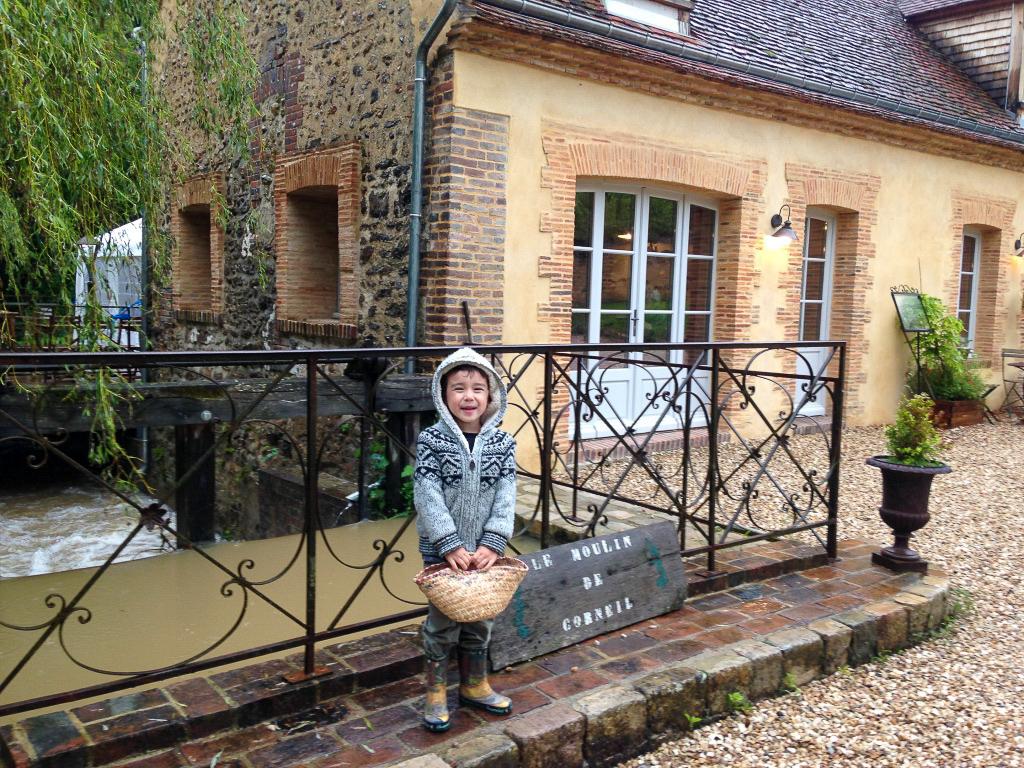
Best things to do in Burgundy at a glance
Wine: Chablis vineyard tours, tastings along the Côte de Nuits and Côte de Beaune, cellar visits at Domaine Bersan in Saint-Bris-le-Vineux
History: Guédelon Castle, Château de Saint-Fargeau, Château de Ratilly, Hospices de Beaune
UNESCO sites: Vézelay and the Basilica of Sainte-Madeleine, Fontenay Abbey, the Burgundy climat vineyards
Cities and villages: Dijon, Beaune, Auxerre, Noyers-sur-Serein, Flavigny-sur-Ozerain, Semur-en-Auxois
Food: Boeuf bourguignon, Époisses cheese, Dijon mustard, garlic snails, Burgundy gougères
Outdoors: Boat trips on the Canal de Bourgogne, cycling the wine routes, walking in the Morvan National Park
Taste wine in the Chablis vineyards
Driving from Auxerre to Chablis hits you all at once. Even through the squeaky windscreen wipers, the views of rolling vineyards stretching in every direction were something else. Once we reached the heart of Chablis, our son excitedly pointed out the huge statue of a hand holding grapes. We’d definitely hit wine country.
Chablis itself is a lovely town to explore – even in the rain. We wandered the streets and found a traditional wine press monument, walked across the River Serein along a small towpath, and peeked into the churches of Saint-Pierre and Saint-Martin. The rain had driven everyone indoors, and we had the town almost entirely to ourselves.
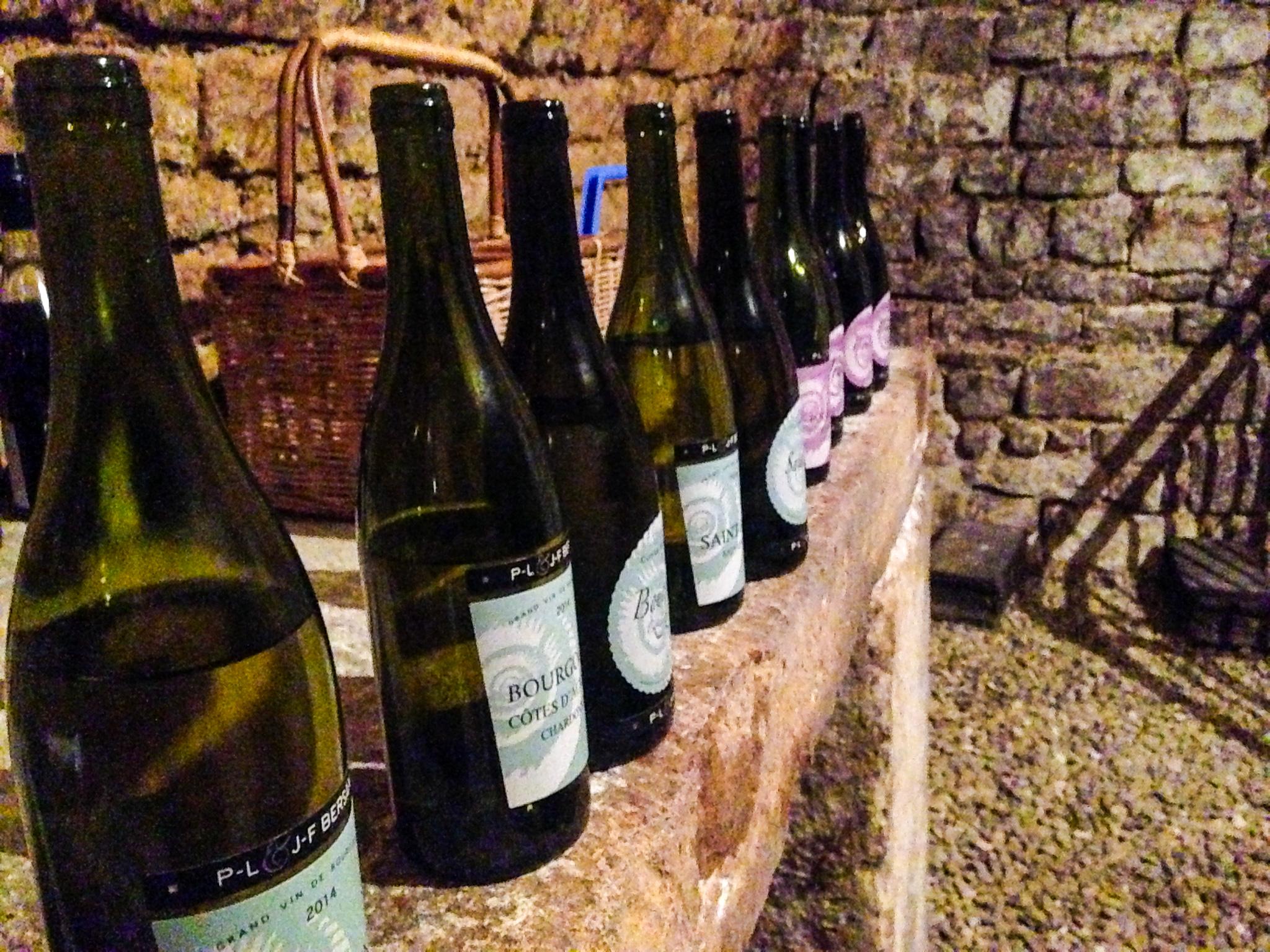
The highlight came a few hours later. We met oenologist Eric Szablowski, who pulled up in a classic Citroën 2CV and drove us through the vineyards on a private wine tour we’ll never forget. Eric showed us vines destroyed by hailstones the previous week – winemakers were still assessing the damage, the worst since 1865. A sobering reminder of how fragile this landscape can be.
Eric then took us to the cellars of Domaine Bersan at Saint-Bris-le-Vineux, where we climbed underground into vaults that Eric told us were built by villagers and monks of the Templar order. Our son loved exploring the dark, twisted tunnels. Meanwhile, we were in the tasting room working our way through different varieties – from crisp Petit Chablis to the more complex Premier Cru wines.
Chablis sits about two hours south of Paris and around 30 minutes from Auxerre. The wines here are mineral-driven Chardonnays – unoaked, crisp, and nothing like the buttery Chardonnays you might expect. Several domaines welcome visitors for tastings, though booking ahead is wise. The Chablis tourist office can point you towards the best wine cellars open that day.
The Côte de Nuits and Côte de Beaune
South of Dijon, the Route des Grands Crus runs through the most celebrated vineyards in Burgundy. The Côte de Nuits is home to legendary Pinot Noir appellations, including Gevrey-Chambertin and Romanée-Conti, while the Côte de Beaune is known for its whites: Meursault, Puligny-Montrachet and Corton-Charlemagne.
The vineyards here hold UNESCO World Heritage status for their unique climat system – the centuries-old patchwork of named plots producing wines with distinct character, from Grand Cru vineyards down to regional appellations. Many wine cellars in the small villages offer tastings of their Premier Cru and Grand Cru wines.
Watch a medieval castle being built at Guédelon
On paper, a half-built castle in an old quarry doesn’t sound like a day out. But Guédelon has to be seen to be believed.
Tucked into woodland near Treigny, Guédelon is an experimental archaeology project running since 1997. A team of around 70 workers – stonecutters, blacksmiths, carpenters, rope-makers – are constructing a 13th-century fortress using only the tools, techniques and materials available in the Middle Ages. Everything from the ropes to the roof tiles is made on site using local produce and materials. Staff work in full period costume, horses and carts transport the quarried stone, and the constant clanging of iron on stone follows you around the site.
We spent an entire day here in the pouring rain and were reluctant to leave. Our wonderful guide Hein was the reason – his passion was infectious. He told us how, early in the build, a leading historian told the team their stonework was too neat for the period. So they started again. If you look closely at the base of the walls, you can spot the difference.
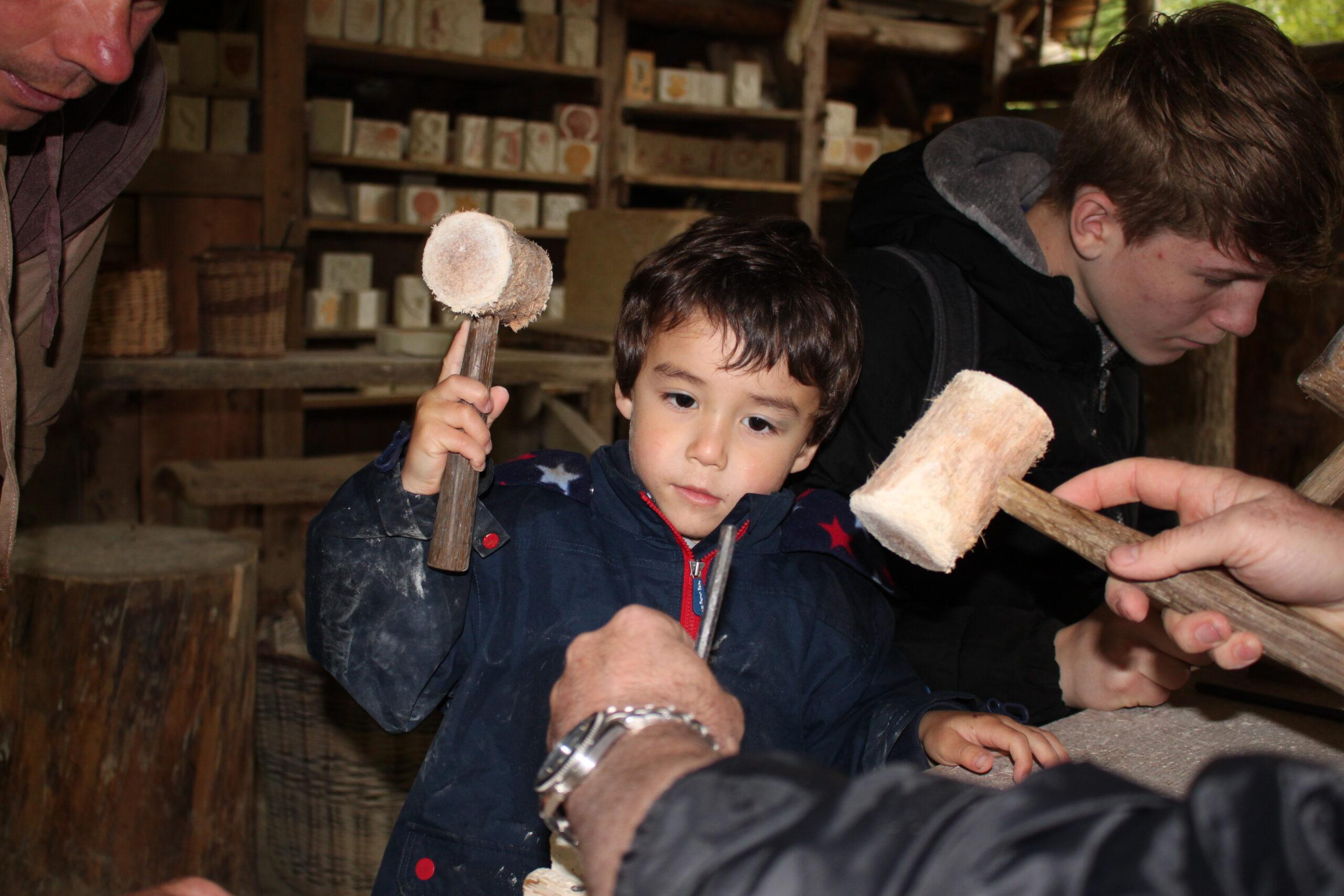
Our son took part in a stone carving workshop, and while he was a little young for the finer details, he loved every minute. Techniques developed at Guédelon were later used in the reconstruction of Notre-Dame Cathedral in Paris after the 2019 fire – craftsmen trained here helped rebuild the medieval timber roof known as La Forêt. This project has a real-world impact far beyond the forest.
For 2026, workers are continuing the gatehouse between the two towers, and visitors can see the portcullis room for the first time.
Read more about our visit to Guédelon in this post.
Open: 2 April – 1 November 2026. Daily in summer (9.30am – 6.30pm); closed some Tuesdays and Wednesdays outside summer. Admission: approximately €19 adults, €13 children (5-17). Check guedelon.fr for exact hours. On the D955 near Treigny, about 40 minutes from Auxerre. Book a guided tour if you can – and there’s an on-site restaurant serving medieval-inspired food.
Discover the castles of the Puisaye
Burgundy’s Puisaye area feels off the beaten track – a pocket of northern Burgundy where you can visit three very different castles within a short drive.
Château de Saint-Fargeau
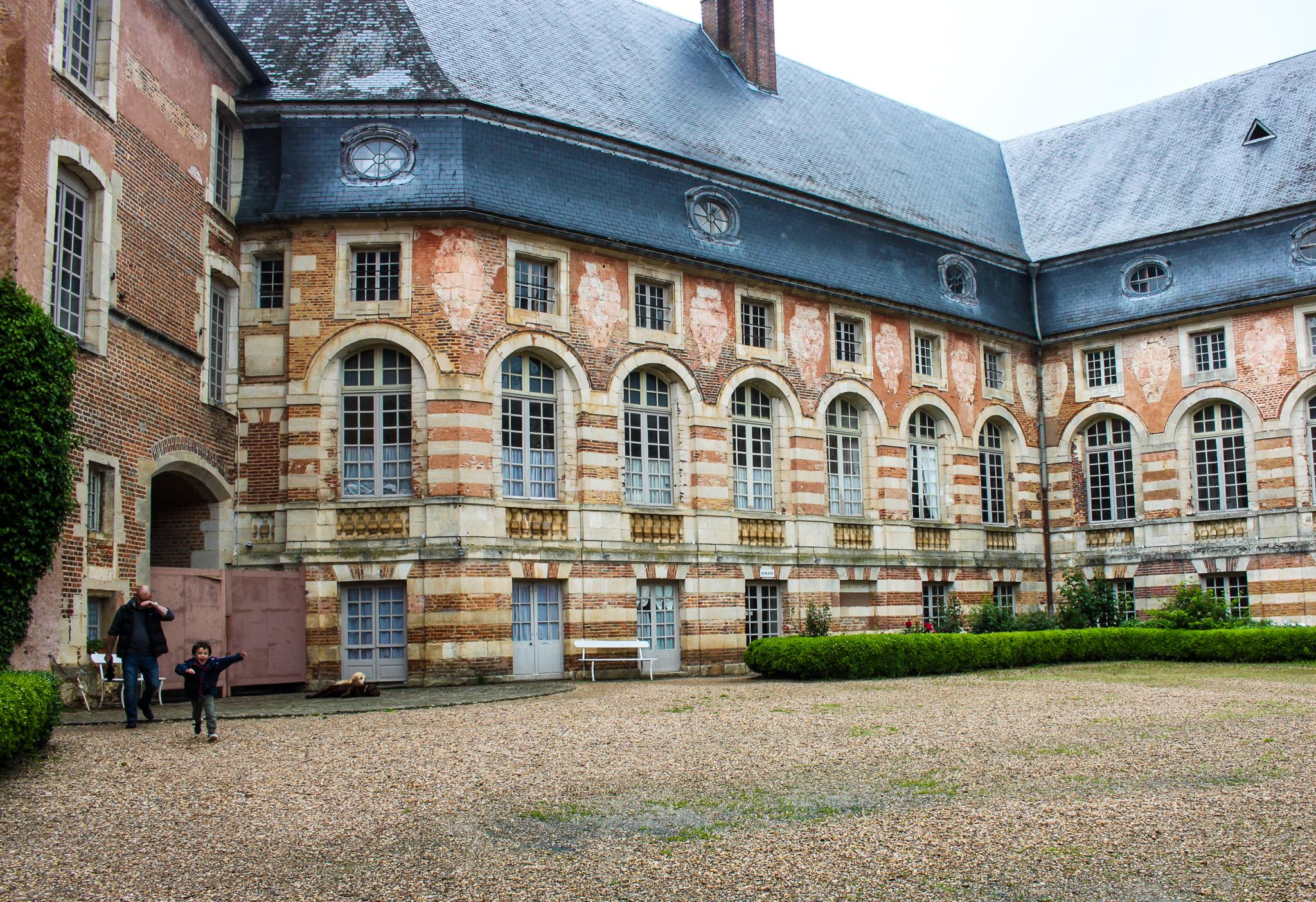
A short stroll from our guest house, this 1,000-year-old castle is owned by Michel Guyot – the man behind Guédelon. The façade is deceptive from the front; it’s only once you reach the imposing courtyard that you get a sense of scale.
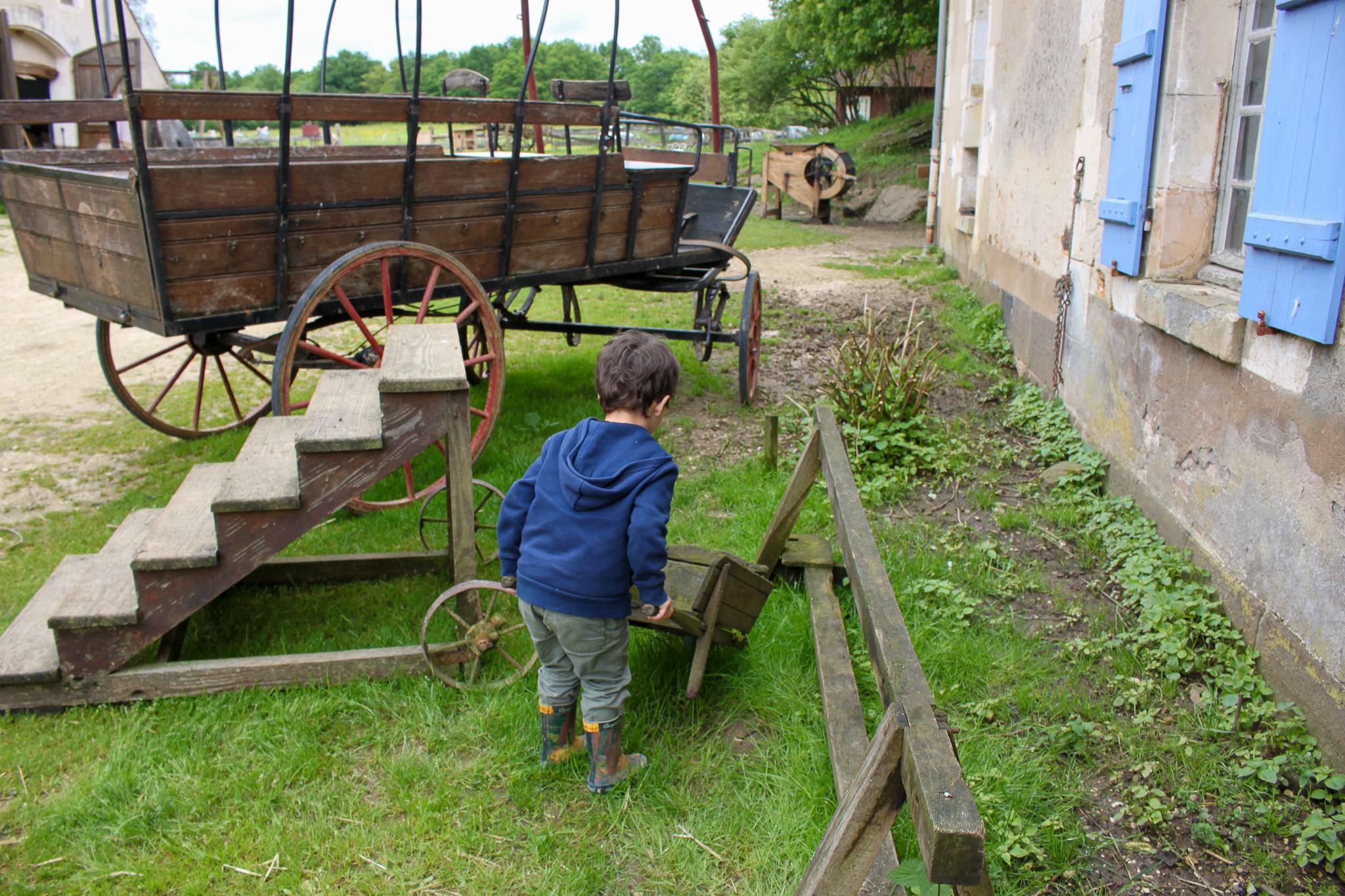
Saint-Fargeau has had some extraordinary owners – from a 10th-century bishop who built it as a hunting lodge, to Jacques Coeur (Charles VII’s silversmith), to Anne-Marie Louise d’Orléans, first cousin of Louis XIV. The grounds behind the château, with their ponds and parkland, left us standing and staring. Our son was more interested in the horses and the old steam engines. Fair enough.
Open: March – November. Admission: approximately €10 adults, €6 children. Also hosts candlelit evening visits. Check chateau-de-st-fargeau.com.
Château de Ratilly
If Saint-Fargeau feels grand, Ratilly feels like a secret. We drove up a sweeping, hidden driveway and found a 13th-century medieval castle straight out of a storybook with nobody else there.
Claire, whose parents bought the château in 1951, showed us around – including a dovecote with over 1,000 nesting holes and its original ladders, which our son naturally tried to swing on. An owl had found its way in, Claire told us, and scared the doves away. Her sister Nathalie runs pottery workshops and sells her work on site.
The lunch we had earlier at Le Cafe Du Bal in nearby Treigny was a trip highlight – we all braved garlic snails (which were delicious!), and the friendly service and chilled wine set us up for the afternoon.
Open: March – November (closed Fridays outside summer). Admission: approximately €6. Check chateauderatilly.fr.
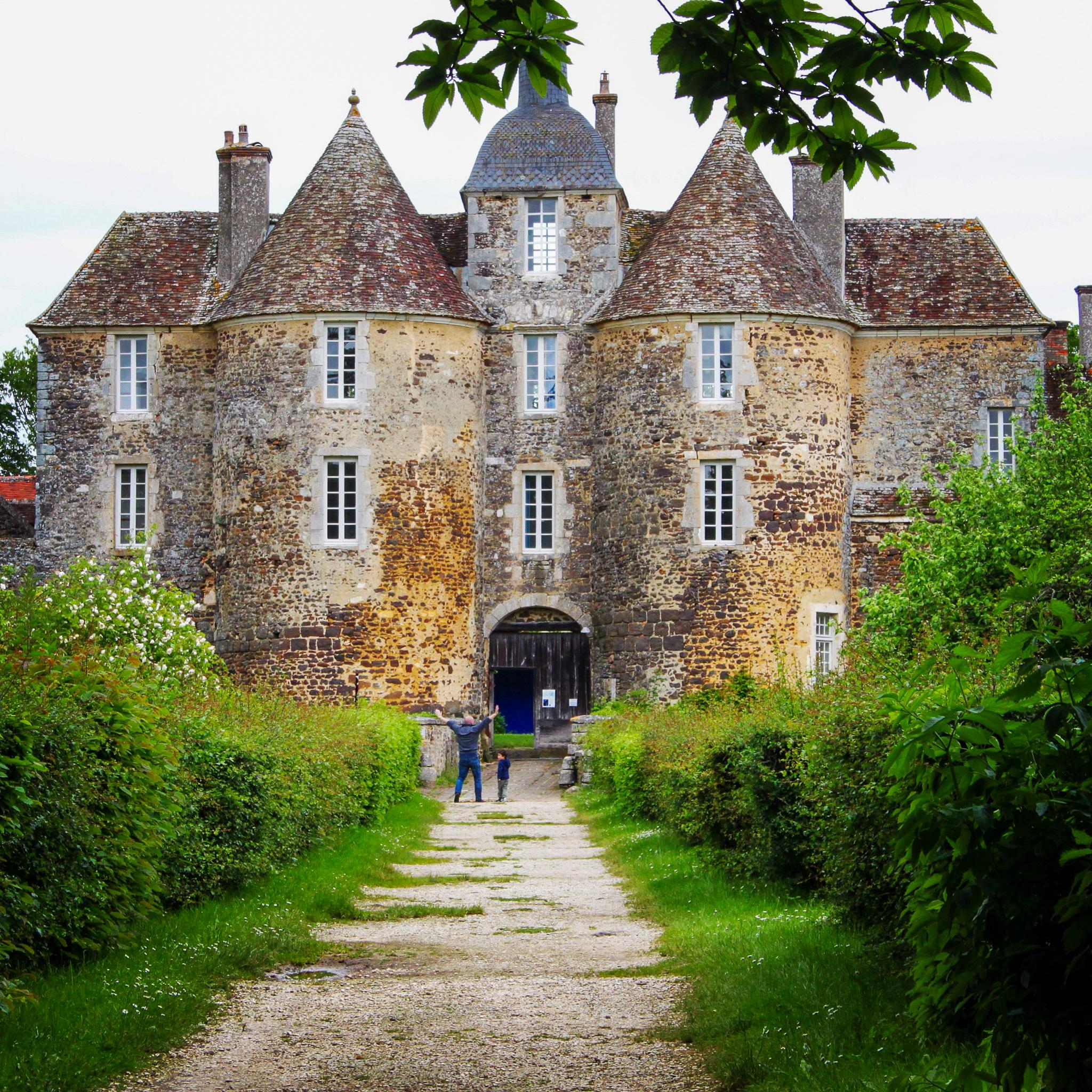
Climb the eternal hill at Vézelay
Vézelay is one of those places that earns every superlative. We spent some time here wandering this hilltop village, classified among the Most Beautiful Villages of France, crowned by the 12th-century Basilica of Sainte-Madeleine – a UNESCO World Heritage Site and masterpiece of Burgundian Romanesque art.
The sculpted capitals inside are among the finest examples of Romanesque carving you’ll find anywhere. It was eerily quiet inside, as if the building demanded serenity and calm.
This is where Bernard of Clairvaux preached the Second Crusade in 1146, and where Richard the Lionheart and Philip II Augustus met before the Third Crusade. It’s also one of the starting points for the Santiago de Compostela pilgrimage. Don’t skip the gardens behind the basilica – the views across the rolling hills of Burgundy and the Morvan countryside stretch for miles.
Open daily, 7am – 8pm. Entry is free. About 50 minutes from Auxerre by car.
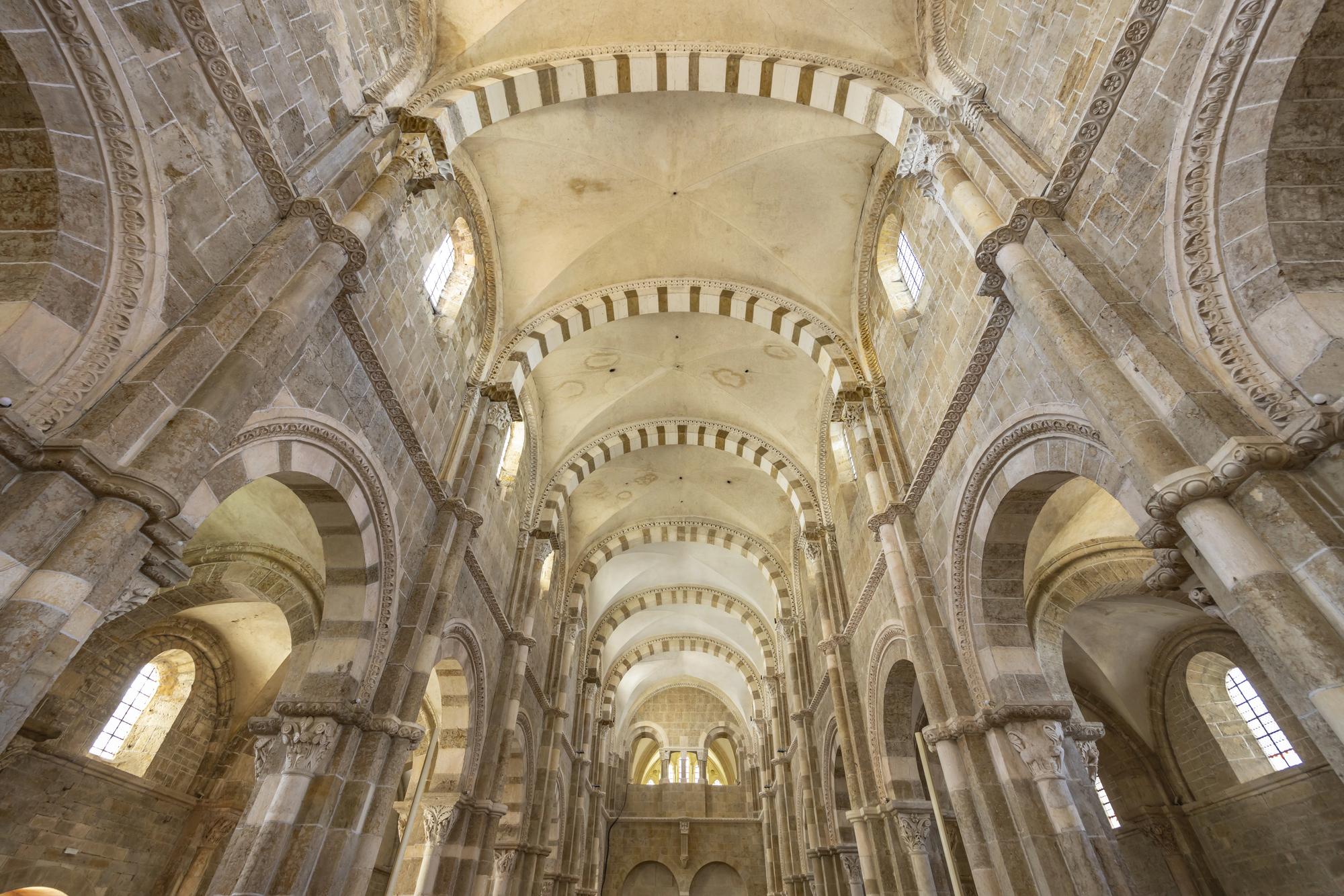
Visit Fontenay Abbey
Hidden in the hollow of a completely unspoilt valley, Fontenay Abbey is the oldest preserved Cistercian abbey in the world. Founded in 1118 by Saint Bernard of Clairvaux, it was one of the first French sites added to the UNESCO World Heritage List in 1981.
The Romanesque architecture has survived more than 900 years virtually intact – you can explore the abbey church, cloister, monks’ dormitory, chapter house, scriptorium and a medieval forge. Still privately owned by the same family since 1820, Fontenay has a calm that busier Burgundy attractions can’t match.
The surrounding valley – 1,200 hectares of protected woodland – has walking trails through beech and ash forest.
Open daily year-round. April – November: 10am – 6pm. Rest of year: 10am – 12pm and 2pm – 5pm. Guided tours run regularly in season. Check abbayedefontenay.com. About 6km from Montbard (which has a TGV station).
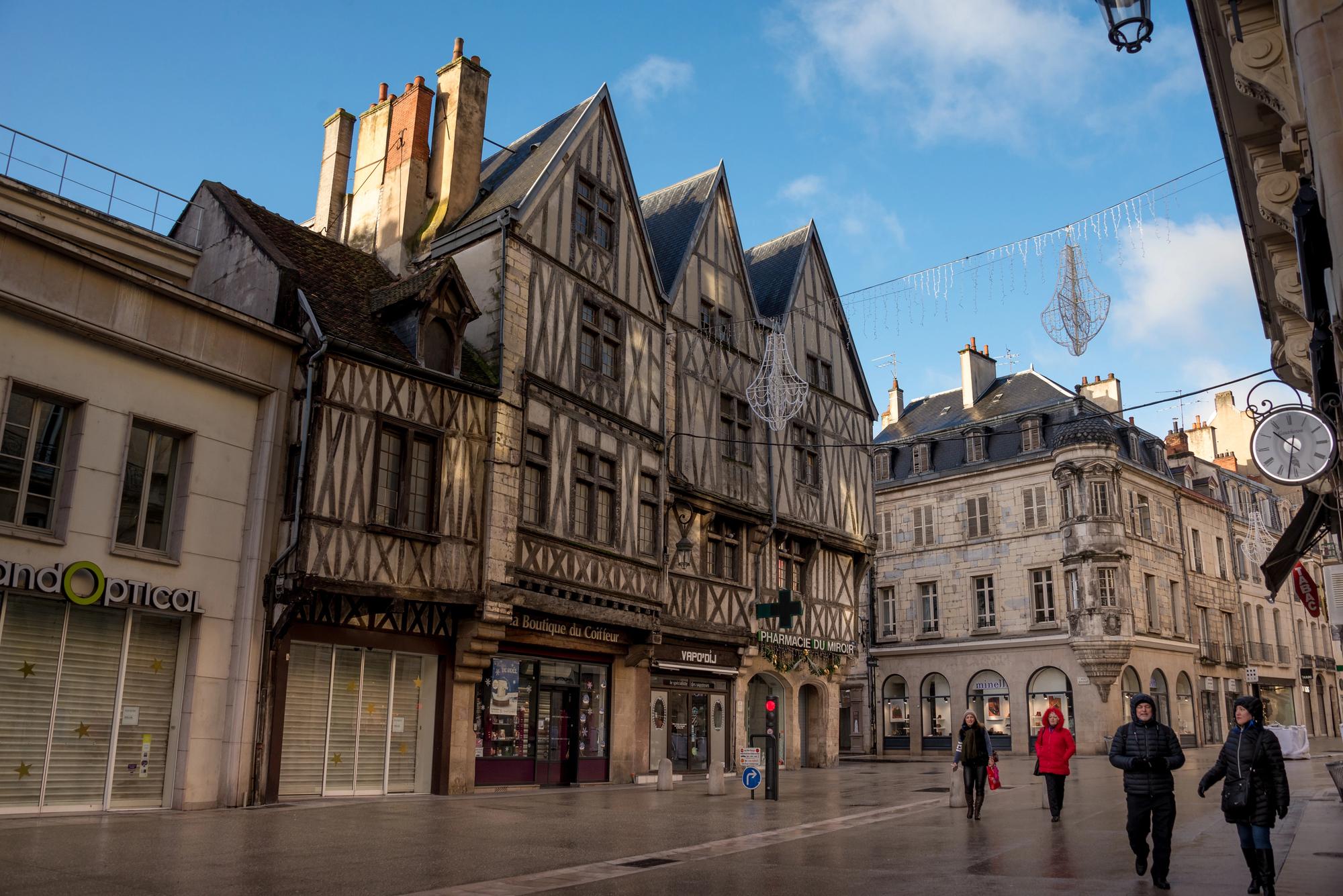
Explore Dijon and the Palace of the Dukes
Burgundy’s capital was built on ducal wealth. In the Middle Ages, the Dukes of Burgundy were powerful enough to rival the king of France, and their Palace (Palais des Ducs et des États de Bourgogne) still dominates the heart of Dijon. It now holds the Musée des Beaux-Arts – one of the oldest art museums in France, and completely free.
The highlight is the Salle des Gardes, where the ornate tombs of Dukes Philip the Bold and John the Fearless sit surrounded by individually sculpted mourning figures.
Climb the 316 steps of the Tour Philippe le Bon for the best view of Dijon, then follow the Parcours de la Chouette (Owl Trail) through the old town past half-timbered buildings and 17th-century private mansions. Dijon is also home to the Fallot Mustard Mill – the last artisan maker of famous Dijon mustard – and a growing number of Michelin-starred restaurants alongside excellent traditional regional restaurants.
Museum closed Tuesdays. About 1 hour 40 minutes from Paris by high-speed train.
Visit the Hospices de Beaune
The town of Beaune is the wine capital of Burgundy – but the must-see is the Hospices de Beaune (Hôtel-Dieu). Founded in 1443 by Nicolas Rolin, Chancellor to the Duke of Burgundy, its polychrome glazed-tile roofs – geometric patterns in red, brown, green and yellow – are among the most photographed in France.
Inside, the Hall of the Poor is preserved with its original beamed ceiling and red-curtained beds, and Rogier van der Weyden’s altarpiece, The Last Judgement, is displayed in a dedicated room at the end of the tour.
Every November, the Hospices hosts one of the world’s oldest charity wine auctions. Outside the auction, Beaune itself is a great place for wine cellars, good restaurants, and cobbled streets inside the old walls.
Open daily. April – 15 November: 9am – 7.30pm. Rest of year: 9am – 12.30pm and 2pm – 6.30pm. Admission: €12.50 adults, €6.25 ages 6-17. Audio guide included. 40 minutes south of Dijon.

Step back to the Middle Ages at Cluny
In southern Burgundy, the Abbey of Cluny was once the most powerful monastic centre in Western Europe. Its abbey church was the largest in Christendom for nearly 500 years – until St Peter’s Basilica in Rome overtook it. Only a fraction of the original structure still stands, but a 3D film inside recreates the building at its peak, and the town itself has one of the highest concentrations of Romanesque-era buildings in Europe.
Climb the Tour des Fromages for panoramic views across the town and surrounding countryside.
Admission: €11 adults. Free for under-18s and EU citizens aged 18-25. About 25km northwest of Mâcon.
Wander the quiet streets of Auxerre
Auxerre is the fourth largest city in Burgundy – although you wouldn’t know it. We arrived on a Sunday and walked into the centre to find nobody. Even the cobbled backstreets around the Cathédrale Saint-Étienne were deserted.
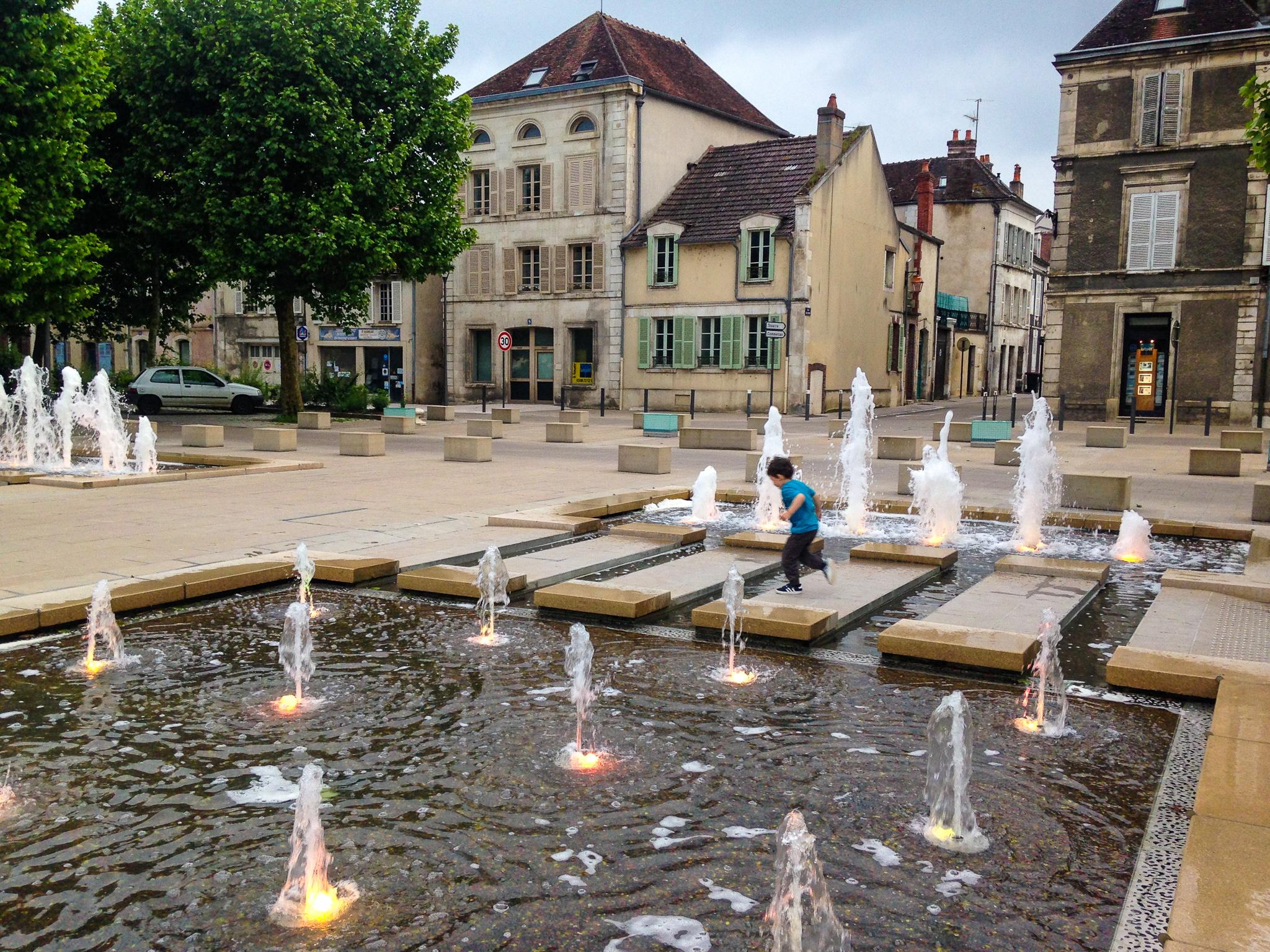
Our favourite part was the river bank along the River Yonne and the views across the water. Our son adored the fountains – and spent a good while jumping across them, getting increasingly cocky until he fell in, banged his face, and gave himself a shiner for the rest of the trip. Our evening on the town came to an abrupt end.
Auxerre makes a practical first stop if you’re driving from Calais – roughly five hours south – and works well as a base for Chablis, Guédelon and Vézelay.
Explore Burgundy’s most beautiful villages
Some of the best places in Burgundy are the small villages you stumble across between the headline attractions.
Noyers-sur-Serein is a tiny medieval village on the River Serein, classified among the Most Beautiful Villages of France – half-timbered buildings, a 15th-century church, and barely any tourists.
Flavigny-sur-Ozerain is a hilltop village known for its anise sweets (made in a former Benedictine abbey using a recipe dating back to 1591) and as the filming location for Chocolat.
Semur-en-Auxois is a handsome historic town perched above a river gorge with medieval ramparts and good restaurants – a great lunch stop on the way to Fontenay Abbey.
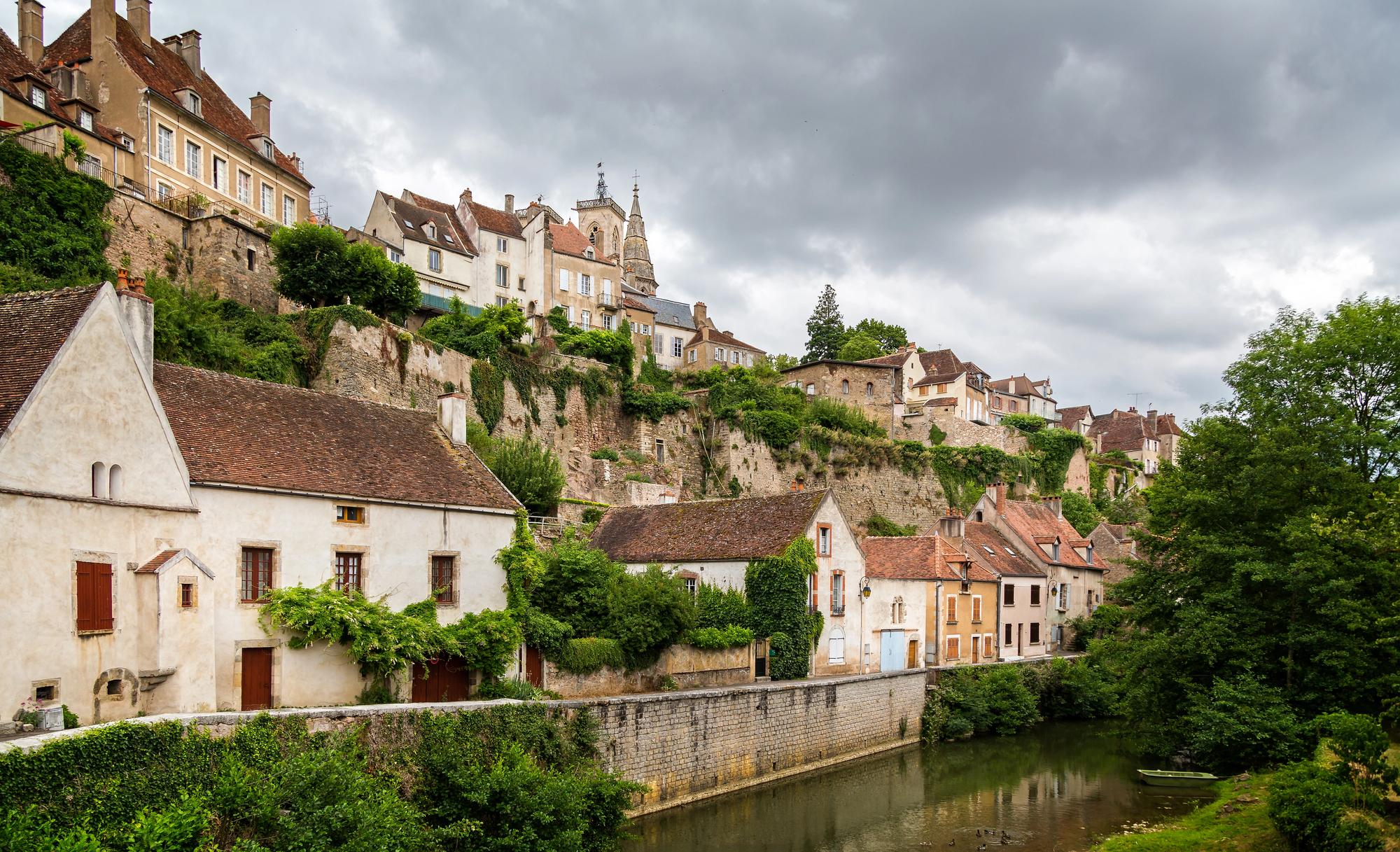
Part of the joy of a Burgundy road trip is getting lost down back roads between these villages. Take the scenic routes, not the motorway, and you’ll drive through countryside with vineyards on one side and mustard fields on the other.
Cruise the Canal de Bourgogne
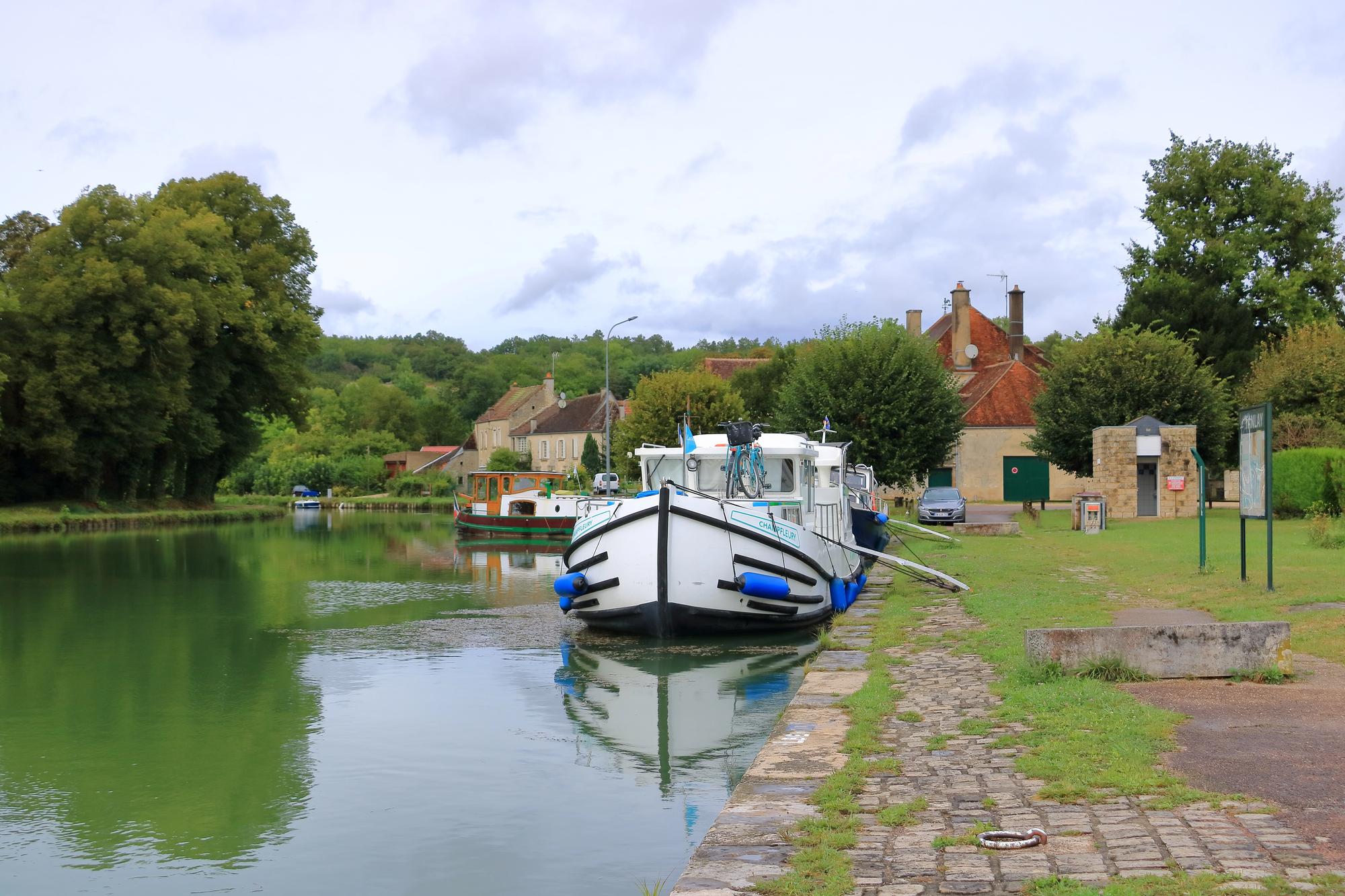
The Canal de Bourgogne stretches 242km from Migennes near Auxerre to Saint-Jean-de-Losne on the River Saône, passing through Dijon along the way. It crosses 189 locks and some of Burgundy’s most appealing small towns.
Short boat trips and day hires are available from several points along the canal, and the flat towpaths make for excellent cycling – one of the best outdoor activities in the region. Operators in Tonnerre, Montbard and Pouilly-en-Auxois offer half-day and full-day hires. For families, a canal boat trip is a brilliant way to slow the pace down.
Eat (and drink) your way through the region
Burgundy is one of those places where even a simple lunch at a village restaurant exceeds expectations. The region gave France boeuf bourguignon (beef slow-cooked in red wine), coq au vin, and escargots de Bourgogne – the garlic snails our son bravely tried in Treigny.
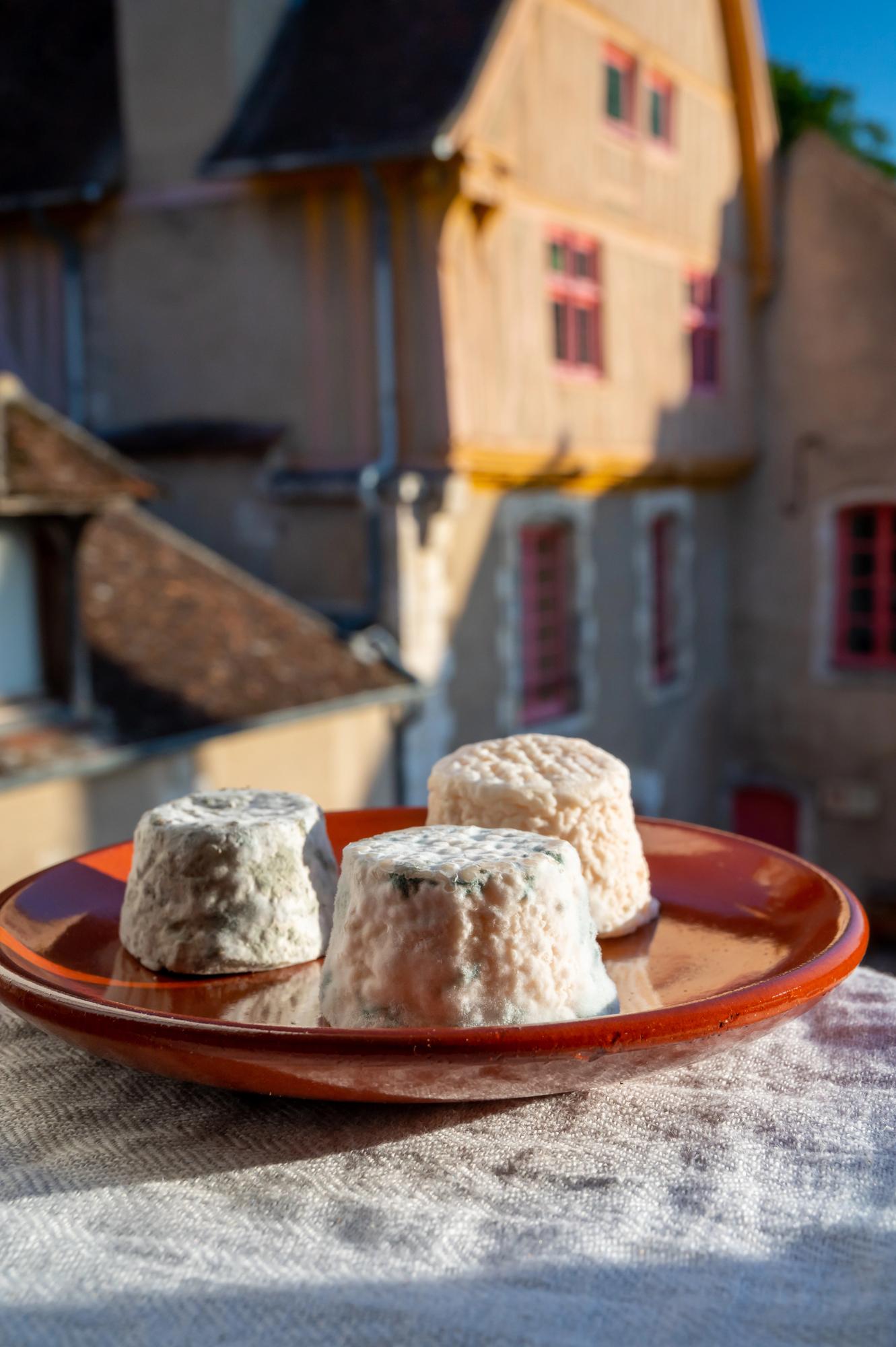
Look out for Époisses, a pungent washed-rind cheese best enjoyed outdoors; gougères, warm choux pastry puffs filled with Gruyère; and famous Dijon mustard, which tastes nothing like the bright yellow stuff at home.
Beaune and Dijon are the best places for fine dining, with Michelin-starred options alongside traditional regional restaurants serving classics like oeufs en meurette and jambon persillé. But some of our best meals were at family-run places in small towns – handwritten menus, local wine, no fuss.
If you’re self-catering, the weekly markets are excellent for local produce – particularly in Beaune (Saturday) and Dijon (Tuesday, Friday, Saturday).
For wine, you’re spoilt. Chablis for crisp whites, the Côte de Nuits for Pinot Noir, the Côte de Beaune for elegant Chardonnays, and the region’s finest wines from famous vineyards like Romanée-Conti and Meursault. Most wine-producing villages have at least one domaine with a tasting room open to visitors.
Burgundy with kids
My husband and I are huge wine and food lovers, and Burgundy is the kind of place that could easily feel like a grown-up’s trip. Don’t let that put you off bringing children. We were welcomed at every restaurant we went to, and while we didn’t do fine dining – not that we needed to, because the food was so good everywhere – there was never a moment when we felt our son wasn’t welcome.
Wine tours aren’t really built for kids, but there’s enough to keep them interested – our son loved running around the vineyards, exploring underground cellars, and he was completely unfazed by the tasting stops. That said, I wouldn’t do back-to-back wine tours without breaking up the day. Plenty of snack stops and ice cream always work a treat.
If you’re wondering about the best things to do in Burgundy with kids, our highlights were Guédelon Castle (stone carving workshops, watching horses pull carts, squelching in mud all day), the Canal de Bourgogne (boat trips and cycling), and simply letting our son loose in the courtyards and grounds of the Puisaye castles. Fontenay Abbey’s woodland trails are good for burning off energy, and the 3D film at Cluny keeps younger visitors engaged. Burgundy moves at a slower pace than Paris or the Riviera – and for families, that’s a good thing.

Where to stay in Burgundy
Auxerre or Chablis – Ideal for northern Burgundy. Close to Guédelon, Vézelay and the Chablis vineyards. During our trip, we stayed in Saint-Fargeau at a guest house where fresh bread and croissants arrived each morning, homemade cookies appeared after our day’s exploring, and the owner cycled back in the evening to stoke the wood burner when the weather turned cold.
Beaune – The best base for wine lovers. Central to the Côte de Nuits and Côte de Beaune wine regions, with restaurants, wine bars and hotels in the medieval centre.
Dijon – Best for culture and city life. Good train connections to Paris, and a base for day trips to Beaune and the vineyards.
How to get to Burgundy
By car: Roughly five hours from Calais to Auxerre. The best way to see the Burgundy region is by road – avoid routing through Paris. We broke our return journey with a night in Reims. A European car kit is a legal requirement (headlamp converters, warning triangle, hi-vis vest, spare bulbs), and shops are closed on Sundays.
By train: High-speed train from Paris to Dijon takes about 1 hour 40 minutes. Local trains connect Dijon to Beaune (20 minutes), Auxerre and Montbard (for Fontenay Abbey).
Best time to visit: April – October. May and September are ideal – warm, fewer crowds. Wine harvest runs September – October, and the Hospices de Beaune wine auction falls on the third Sunday of November.
Frequently asked questions
What are the best things to do in Burgundy?
Wine tasting in Chablis and along the Côte de Nuits, watching a medieval castle being built at Guédelon, visiting the Hospices de Beaune, exploring Fontenay Abbey and Vézelay, eating your way through Dijon and Beaune, and getting lost down back roads between beautiful villages. Burgundy is best explored by car over three to five days.
How many days do you need in Burgundy?
Three to five days cover the highlights. Two days in northern Burgundy (Chablis, Guédelon, Vézelay) and two to three around Dijon, Beaune and the wine route. A week lets you add Fontenay, Cluny and the Canal de Bourgogne.
What is Burgundy best known for?
Wine (Pinot Noir and Chardonnay from some of the world’s most famous vineyards), medieval history (three UNESCO World Heritage Sites), and food (boeuf bourguignon, escargots, Époisses cheese). The wine regions here produce everything from affordable regional bottles to some of the most expensive red and white wines in the world.
Can you do Burgundy as a day trip from Paris?
You can reach Dijon by TGV in under two hours, and organised wine tours from Paris to Chablis run regularly. But Burgundy rewards slower exploration – an overnight stay gives you much more.
Do you need a car in Burgundy?
For the wine regions, castles and countryside, yes. Dijon and Beaune are walkable with train stations, but the best of Burgundy is found on the back roads between villages and small towns.