Somewhere between Catania airport and Taormina, our taxi driver Antonio took a hairpin bend at what felt like twice the speed limit, and the entire Ionian coastline opened up below us. Etna’s snow-capped peak filled the windscreen. The boys went quiet in the back seat, which never happens. That hour-long drive along Sicily’s east coast, climbing higher and higher with the sea dropping away beneath you, is the kind of arrival that makes you sit up and pay attention.
Sicily is a place where thousands of years of history sit right on the surface. Greeks, Romans, Arabs, Normans and Spanish all left their mark, and you see it everywhere – in the architecture, the food, the language, the traditions. In Taormina, the layers are visible within a few hundred metres. A 3rd-century BC Greek theatre, medieval palazzos, baroque churches, and a main street where the scent of jasmine and citrus drifts from every side alley.

It’s small enough to explore on foot but packed with enough to fill several days – an ancient theatre with views you won’t forget, a cable car down to a tiny island nature reserve, boat trips along the coast, volcano tours, and some of the best food I’ve eaten in Italy. Here’s everything worth doing.
Best things to do in Taormina at a glance
- Explore the ancient Greek theatre – 3rd-century BC theatre with extraordinary coastal and volcano views
- Walk the Corso Umberto – Taormina’s buzzing main street from Porta Messina to Porta Catania
- Take the cable car to Isola Bella – €10 return, three-minute ride down to the beach and nature reserve
- Book a boat trip – See caves, Isola Bella and the coastline from the water
- Do a Mt Etna tour – Europe’s largest active volcano, an hour’s drive from town. Half-day or full-day options
- Visit Castelmola – Tiny hilltop village above Taormina, reachable by bus or on foot
- Walk up to Madonna della Rocca – Stone steps, shrines and the best panoramic views in town
- Wander the Villa Comunale gardens – Free public gardens with sea views and a playground

Explore the ancient Greek theatre
The Teatro Antico di Taormina is the one thing everyone comes to see, and it lives up to everything you’ve heard. Built by the Greeks in the 3rd century BC and later expanded by the Romans, it sits high on the hillside with the Ionian Sea on one side and Mt Etna on the other. Even the boys loved scrambling up the stone steps and stands, working out where the audience would have sat thousands of years ago.
We spent about an hour wandering around on a self-guided visit, which felt like the right amount of time. What surprised us was the little cafe tucked away inside, perched on what must be one of the best viewpoints in Sicily. It sells everything from cannoli and arancini to paninis and salads. We’d already eaten, so we missed out, but if you time it right, it’s a seriously special spot for lunch – and you don’t need to spend a fortune to enjoy those views.
Entry: around €10-12. Open daily from 9am, closing time varies by season (typically one hour before sunset, later in summer). Free entry on the first Sunday of the month. An audioguide costs €5. Go early in the morning to avoid the biggest crowds.

The theatre also hosts a full summer programme of concerts, opera and performances from June through September. Robert Plant played here in 2023. Bryan Adams is performing his Bare Bones acoustic tour on 30 June 2026 – his only Italian date. Imagine watching live music in a 2,300-year-old theatre with Mt Etna as the backdrop. A friend of mine saw a jazz concert here and said it was unforgettable. If I were to go back to Taormina, it would be to see a show at this theatre. Check taormina.it for the current programme and book early – popular performances sell out fast.

Walk the Corso Umberto
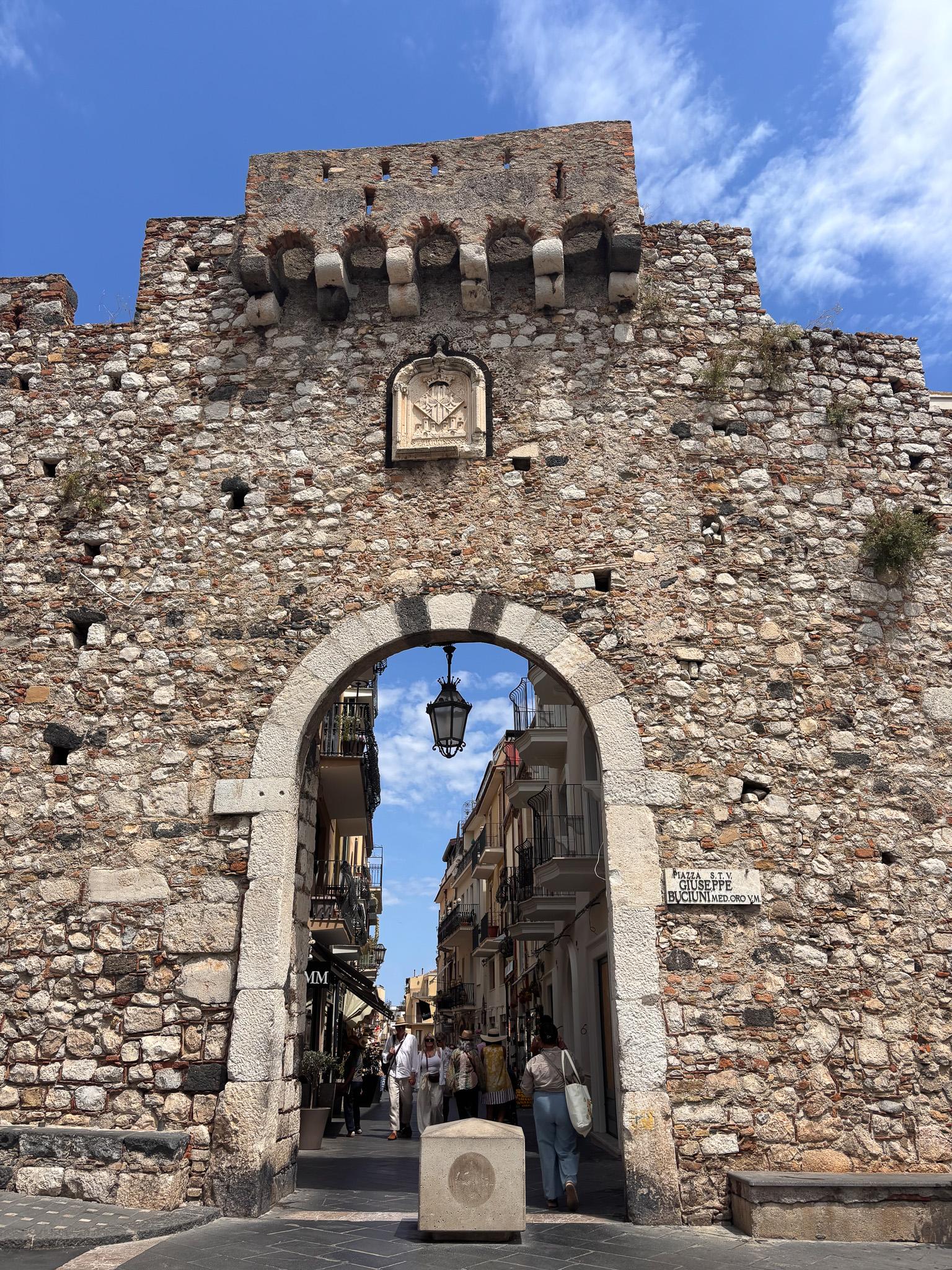
The Corso Umberto is the spine of Taormina. This pedestrianised main street runs from Porta Messina at one end to Porta Catania at the other, and it’s where everything happens. High-end shops sit alongside ceramics stalls, gelato counters and cafes spilling tables out onto the street.
Look either side, and you’ll find narrow alleys winding up steep steps towards the mountains or down towards the sea, where bars and restaurants spring up around the slopes – some making use of the incline with scattered cushions on the terraces. Just off the main drag, you’ll spot the entrance to the San Domenico Palace, the Four Seasons hotel made famous by The White Lotus. Try to wander off the Corso whenever something catches your eye.
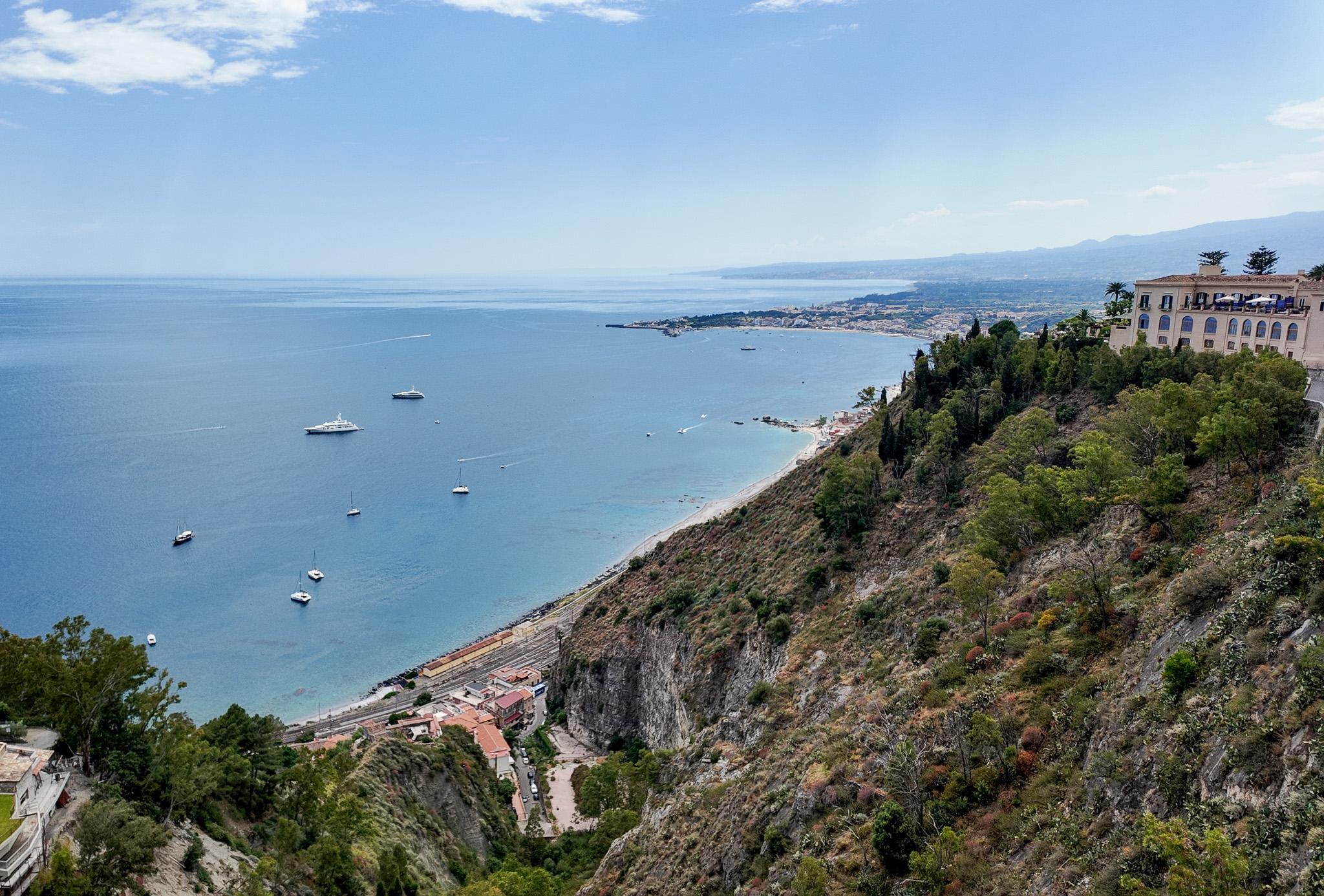
During the day, especially around Porta Messina, it’s busy with day trippers and cruise ship visitors. But at night, the whole atmosphere shifts. It’s calmer, more relaxed – no jostling for space – and the evening passeggiata is in full swing. Pick up a gelato and just go with the flow. Stop at Piazza IX Aprile for the views, and wander through to Piazza del Duomo, where the baroque fountain sits in front of the cathedral. Near Porta Messina, Palazzo Corvaja is worth a look – a medieval palace with Arab, Norman and Gothic layers, now home to the tourist information office.
Two things you’ll notice everywhere: the teste di Moro – ceramic Moor heads – peering at you from restaurant tables, shop windows and balconies, and the brightly coloured pigna, the Sicilian pine cone, which is an ancient symbol of luck, prosperity and fertility. The Moor heads come with a legend of love and revenge set during the Arab rule of Sicily in the 11th century.
A young Sicilian woman discovered her Moorish lover had a wife and children waiting at home, so she beheaded him in the night and used his head as a pot to grow basil. My youngest was slightly freaked out when I told him that story. But we loved discovering the deep Sicilian heritage behind the things we kept seeing – every ornament, every symbol has centuries of history behind it.

If you fancy a drink with a view, Taormina’s bar scene has gone decidedly luxurious. Le Bar Louis Vuitton sits on the rooftop terrace above the LV store on the Corso – it’s the brand’s first sky bar anywhere in the world, and the cocktails come with Etna views and lava stone tables. On Piazza IX Aprile, Mocambo Bar was taken over by Dolce & Gabbana in 2024, reimagined with their trademark Sicilian maximalism and Sicilian cart-inspired decor. Neither is cheap, but as an experience, they’re something else.

Take the cable car down to Isola Bella
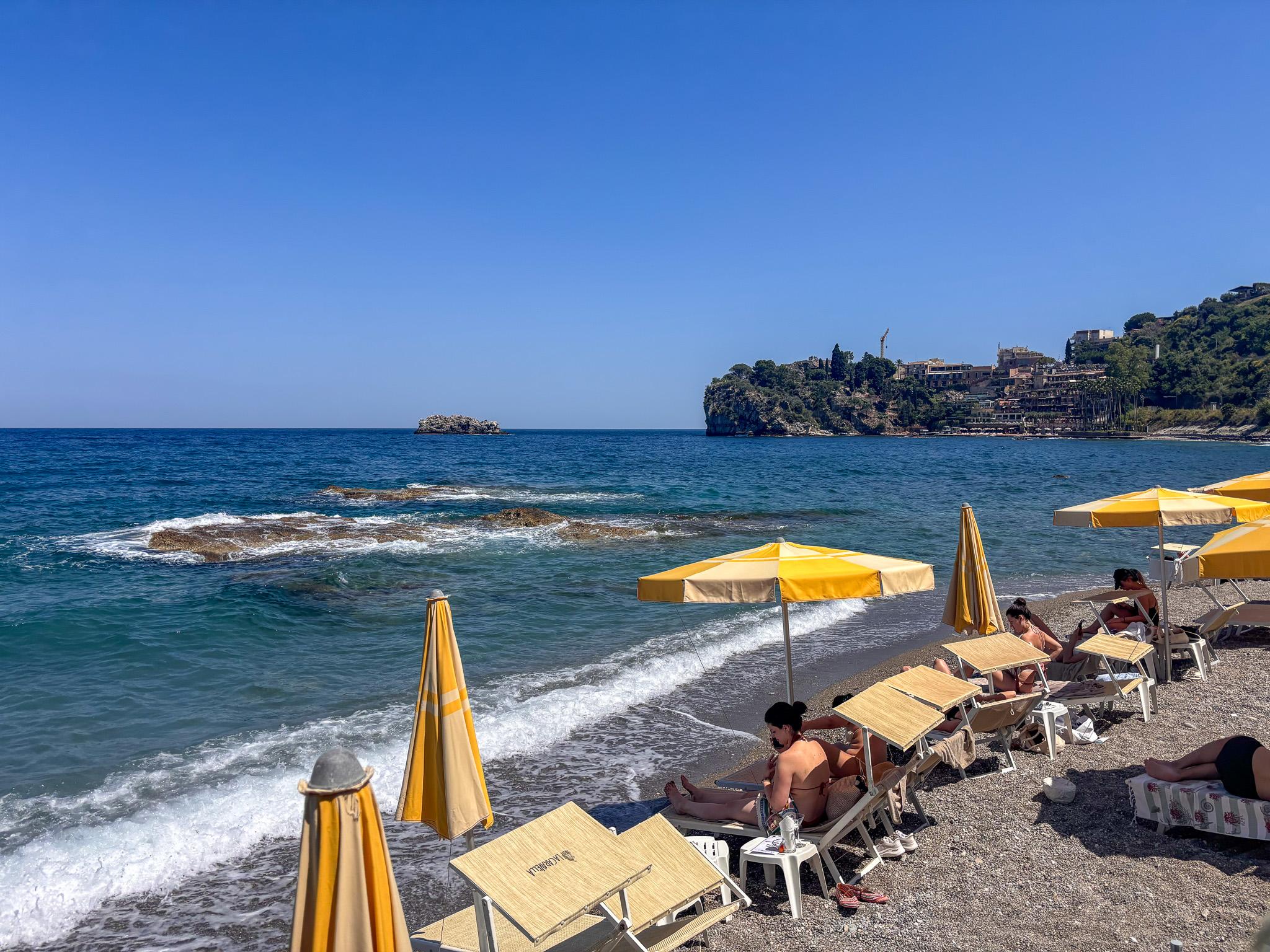
The cable car from Taormina Centro down to Mazzarò beach is the easiest way to reach the sea. It takes about three minutes, runs every 15 minutes, and drops you within a short walk of Isola Bella – a small limestone island connected to the mainland by a narrow strip of sand and pebbles at low tide. The name means “Beautiful Island” and it’s been a nature reserve since 1998.
The island has a curious history. It was gifted to the mayor of Taormina by King Ferdinand I of Bourbon in 1806, then purchased in 1890 by Lady Florence Trevelyan – the same English noblewoman who designed the Villa Comunale gardens up in town. Trevelyan had reportedly been exiled to Sicily by Queen Victoria after an alleged affair with the future King Edward VII. She built a small cottage on the island, planted exotic gardens, and made it her retreat. The island changed hands several times before the Sicilian government bought it in 1990 and turned it into a protected reserve. Entry to the nature reserve costs around €4.
The cable car is fun for kids too. Far better than attempting the roughly 300 stone steps that connect the two levels (though that’s an option if you want the exercise).
Cable car: €6 one way, €10 return. An all-day pass is €20. Runs daily from 8am (9am on Mondays), until 8pm in winter and up to midnight or 1am in summer. The upper station is on Via Luigi Pirandello, about 200 metres from Porta Messina. Peak queues build between 10am and midday – go early or late.
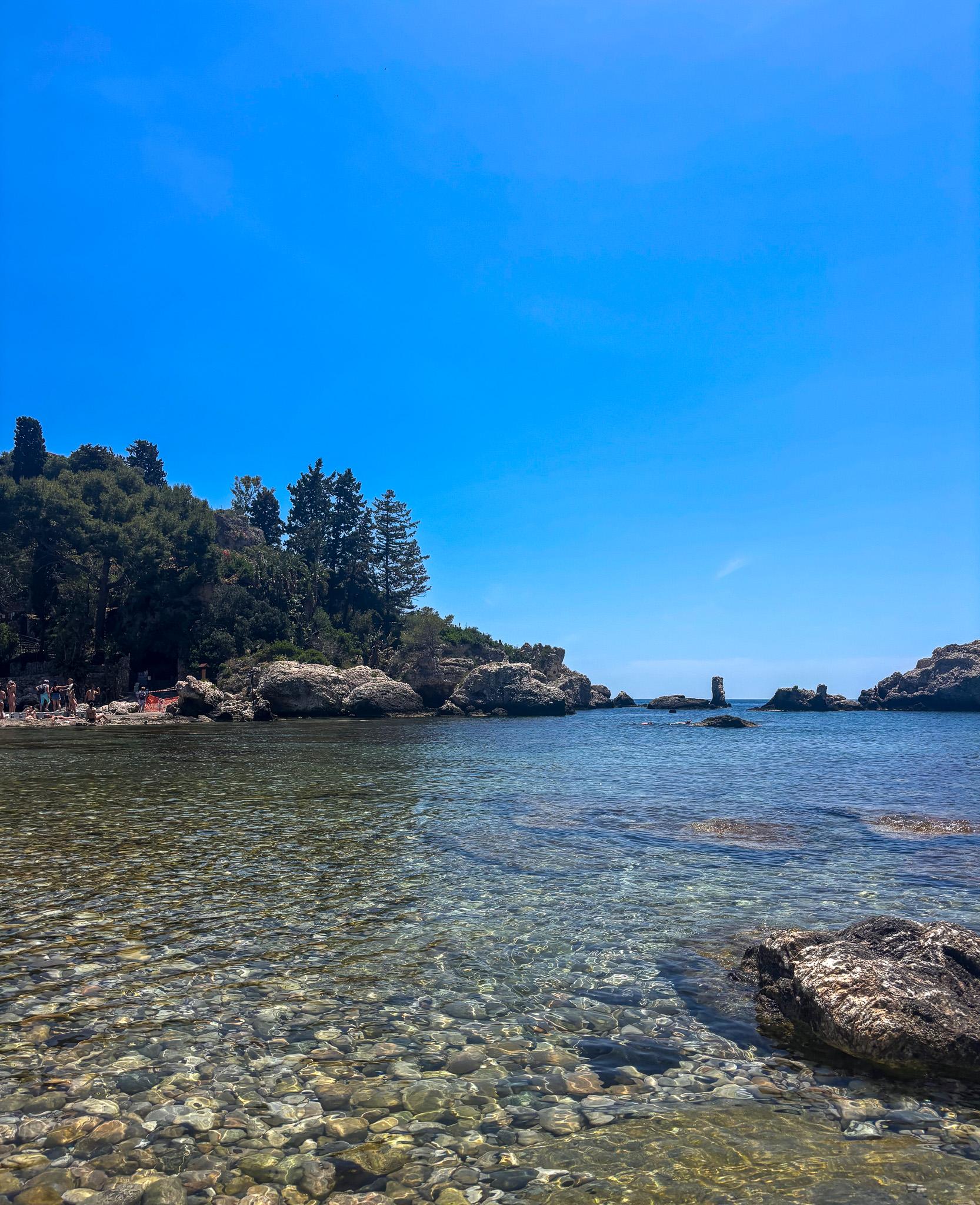
A word on the beaches. They’re pebbly, not sandy, and not great on bare feet – you’ll want beach shoes, particularly around Isola Bella where the pebbles are large. The water is clear but cold, even in May. If you want to sunbathe, you’ll need to hire sunbeds and umbrellas at one of the beach clubs – we went to La Caravella for lunch one day, which wasn’t the cheapest option, but the setting is lovely. For families with young children, the cold water and rocky shoreline mean it’s not ideal for long splashing sessions.
We skipped the sunbathing altogether and instead found a beachside table at the Mendolia Beach Hotel restaurant, right by Isola Bella. We dipped our toes in the sea, ordered a board of meats and cheeses, and I discovered my new favourite drink – the Hugo Spritz. I know everyone reaches for an Aperol, but a Hugo (elderflower, prosecco, mint and soda) with the Ionian Sea in front of you is hard to beat. It became a bit of a theme for the rest of the trip.

Take a boat trip along the coast
We booked our boat trip through GetYourGuide, departing from the port at Giardini Naxos, and it was well worth doing. You get a completely different perspective of Taormina from the water. We could spot where we were staying, sailed past several caves including the Blue Cave, and circled around Isola Bella – seeing the beach from the sea, when the day before I’d been sweating along the beachfront trying to find a bar to cool down in.
Our captain, Francesco, made light work of navigating the waves, which created a lot of laughter in our group of 12. At one point, he let our youngest take the wheel, which was the highlight of the trip as far as he was concerned. The only thing worth knowing is that you’re not alone out there – there are plenty of other boats, particularly in peak season. I didn’t jump in for a swim. The water was freezing.
Prior to our trip, the sea had always looked like a millpond. Typically, the day we chose to sail the Ionian Sea, it was rather windy and choppy. But that added to the fun.
Tip: Boat trips typically run from spring to autumn and last 2-3 hours. Book through GetYourGuide or Viator for easy cancellation policies, or arrange directly at the port in Giardini Naxos.
Visit Castelmola
Castelmola is the tiny hilltop village perched above Taormina, officially listed as one of the most beautiful small towns in Italy. It sits about 500 metres above sea level, and the remains of a Norman castle crown the very top – the same fortification that once formed part of Sicily’s medieval defence chain stretching from Milazzo to Francavilla. The views from the castle ruins are some of the widest on this part of the coast.
The village is famous for its almond wine, a sweet amber-coloured drink made using an ancient Greek infusion technique with bitter almonds, citrus and zibibbo wine. The tradition was revived in 1907 by Don Vincenzo Blandano, who started serving it to visitors at the Antico Caffè San Giorgio on Piazza Sant’Antonio – one of the oldest cafes in Castelmola and still the best place to try the original recipe. Sit on the terrace overlooking the coastline, order a glass and some almond biscuits, and take your time. The cafe keeps a collection of visitors’ albums dating back to 1907, signed by everyone who’s passed through.
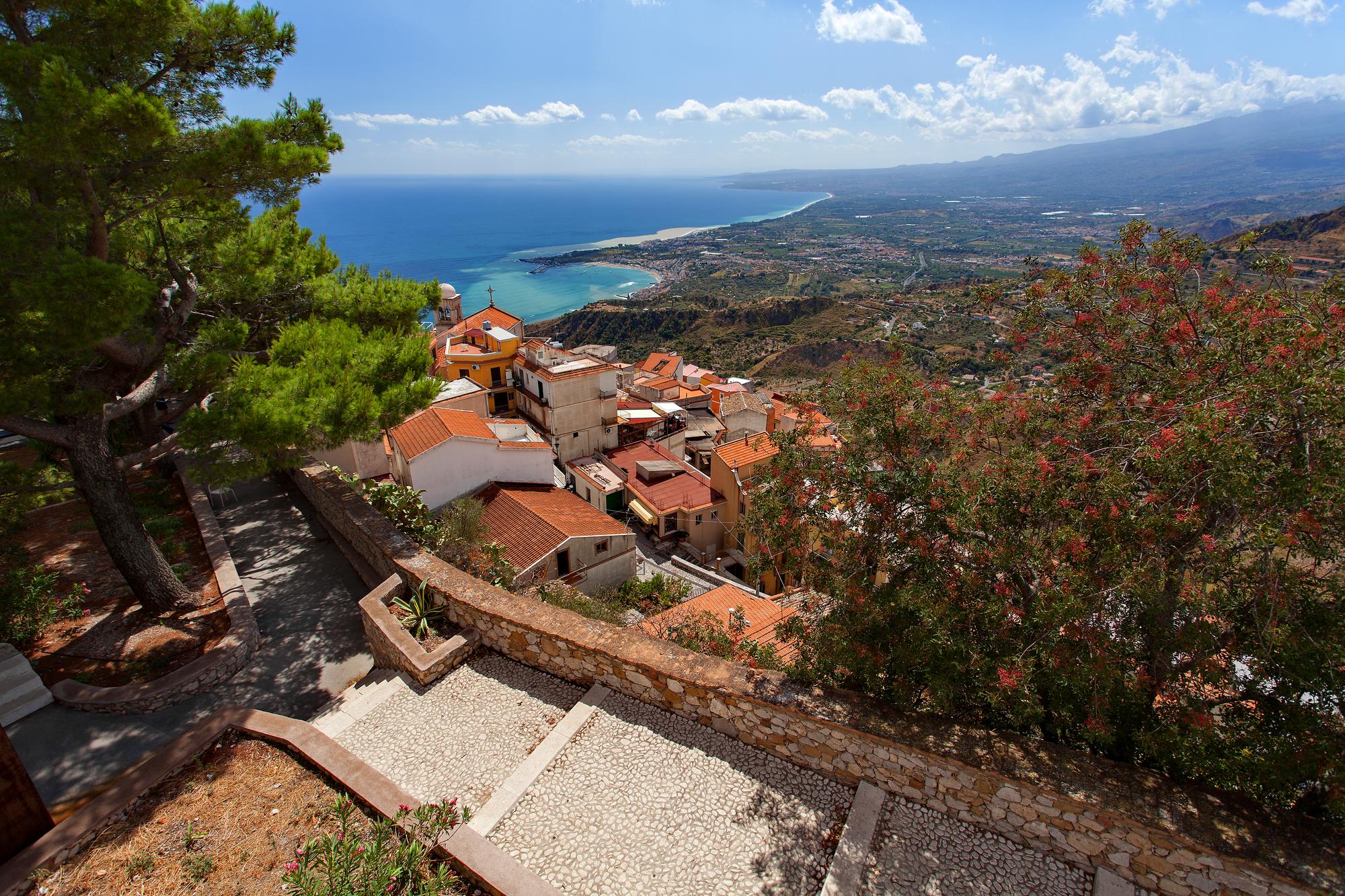
The other famous stop is Bar Turrisi, which has become world-famous for its, let’s say, distinctive decor – everything inside is themed around the phallic cult of Priapus, the Greek god of fertility. It has four floors, each with balconies overlooking Piazza San Nicola, and the almond wine here is served in glasses shaped accordingly. It’s eccentric, funny, and worth the visit whether you drink or not.
We caught the bus via Interbus, which was a cheap and fun option – around €2 each way per person, with frequent departures from the bus terminal near Porta Messina. The ride takes about 15 minutes, and the views on the way up are worth it alone.
You can also walk up. The Sentiero dei Saraceni is an old path connecting Taormina and Castelmola via stone steps, with views of Mt Etna along the way. It takes about an hour uphill, or 30-40 minutes coming down. The route passes through the Madonna della Rocca sanctuary (more on that below) and past ancient shrines and the old Saracen gate. We actually walked this path in the dark after dinner at a restaurant up in Castelmola, using our iPhone torches – not the recommended approach, but it made for a memorable evening. Not one for little legs, though. The steps are steep.
Tip: Take the bus up and walk down. You get the views without the uphill slog in the heat.
Walk up to Madonna della Rocca
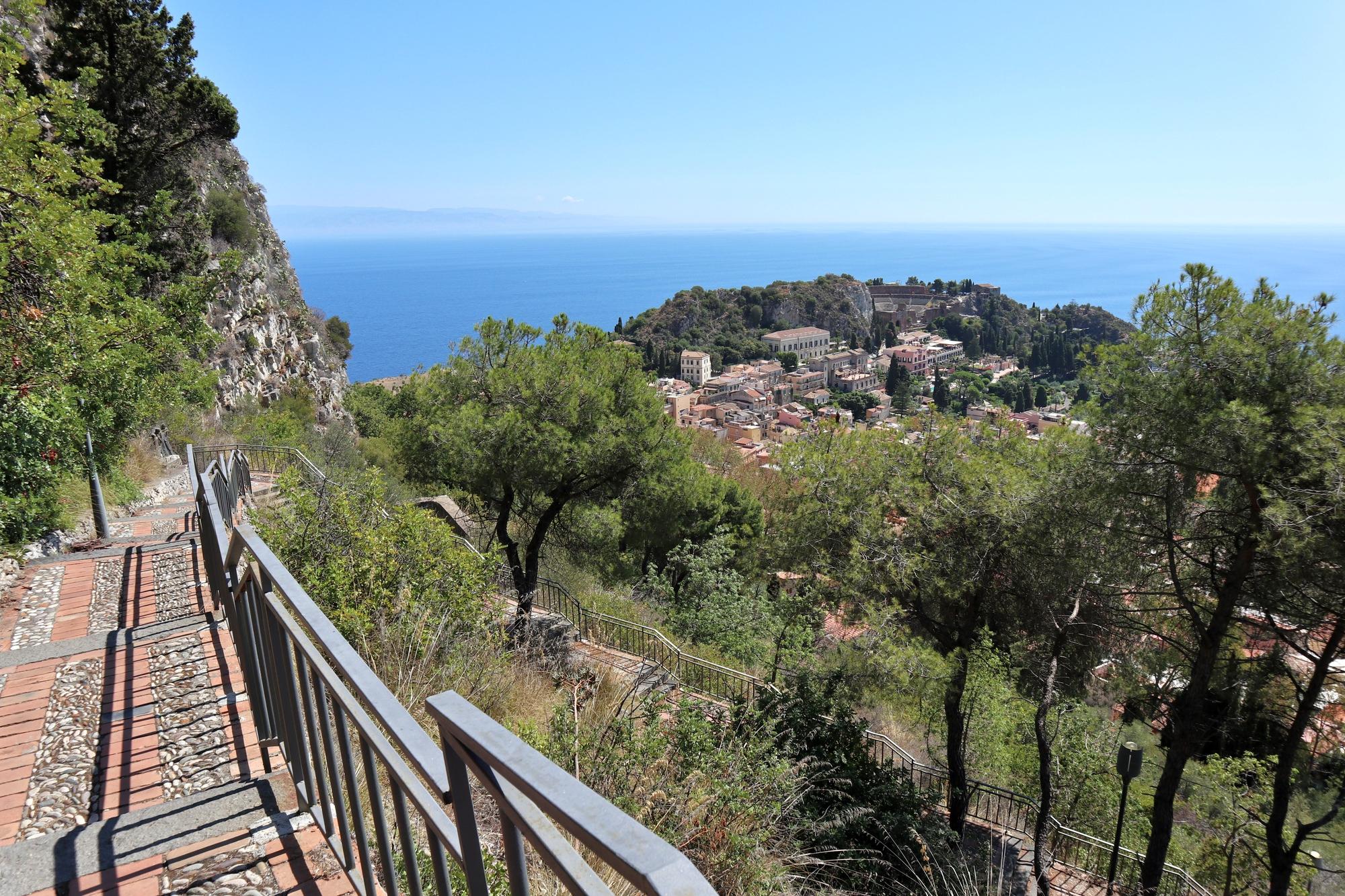
If you only do one walk in Taormina, make it this one. The path starts from Via Circonvallazione and follows the Via Crucis – a series of stone steps past traditional Stations of the Cross – up to the small sanctuary of Madonna della Rocca, a chapel carved into the rock face. The views from up here are extraordinary. You can see the Greek theatre below, the rooftops of Taormina, the coastline, Isola Bella, and Mt Etna all in one sweep.
It’s a moderately steep climb that takes around 30-40 minutes each way, and it’s one of the best ways to escape the crowds on the Corso Umberto. From the sanctuary, you can continue upwards to Castelmola if you have the energy.
Tip: Bring water and go in the morning or late afternoon. There’s little shade, and it can get intensely hot in summer. Comfortable shoes are essential – it’s uneven stone steps most of the way.

Do a Mt Etna tour
Perhaps our favourite activity while we were in Taormina. We did a half-day tour with Go Etna, a well-established local company that’s been running since 2009, and our guide, Salvo, was brilliant.
Mount Etna is Europe’s largest active volcano, a UNESCO World Heritage Site since 2013, and it’s ever-present from Taormina – a constant reminder of the natural forces shaping the landscape below. The drive takes about an hour, climbing through vineyard terraces that stretch out towards the sea, past pink and yellow broom trees, and into the volcanic landscape higher up. Many tours start from Rifugio Sapienza at around 1,900 metres, where there’s a cable car and crater viewpoints.
Salvo told us the Sicilians call Etna “mamma.” The soil around the volcano is incredibly fertile – lemons, pistachios, cherries, oranges, and some of Sicily’s best wine varieties. In winter, there are mushrooms and chestnuts. At the time of our visit, she was smoking. The last major eruption was in 2002, which buried the ski resorts. More recently, snow had returned after 20 years, and the ski resort was able to reopen – some people were lucky enough to ski down alongside the lava flow.
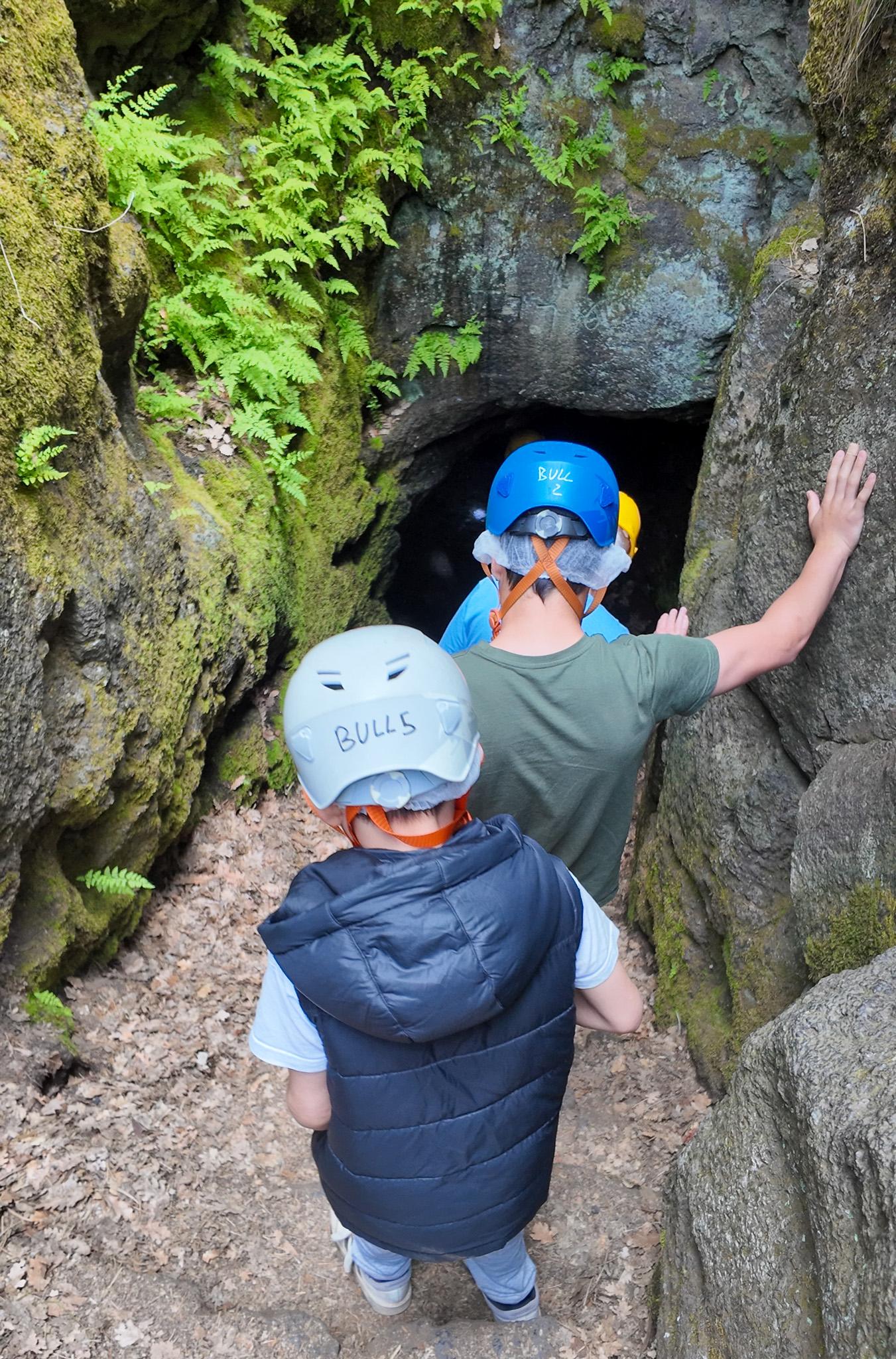
The half-day format worked well with kids in tow. You get picked up from your accommodation, driven to the mountain, and guided on a trek through craters and lava fields. The highlight for all of us was donning helmets and heading into a lava tube – an underground tunnel formed by flowing lava – carrying our own torches into the darkness. It was excellent, and even the boys talked about it for days. Many people opt for a full-day tour instead, which typically adds a winery lunch, wine tasting or a visit to the Alcantara Gorges. If you have the time, it’s worth considering.
Go Etna: go-etna.com. Rated 4.9/5 on TripAdvisor with over 1,000 reviews. Half-day tours depart from Taormina and Catania. Multilingual guides. Book ahead in peak season – they fill up fast.
Wander the Villa Comunale gardens
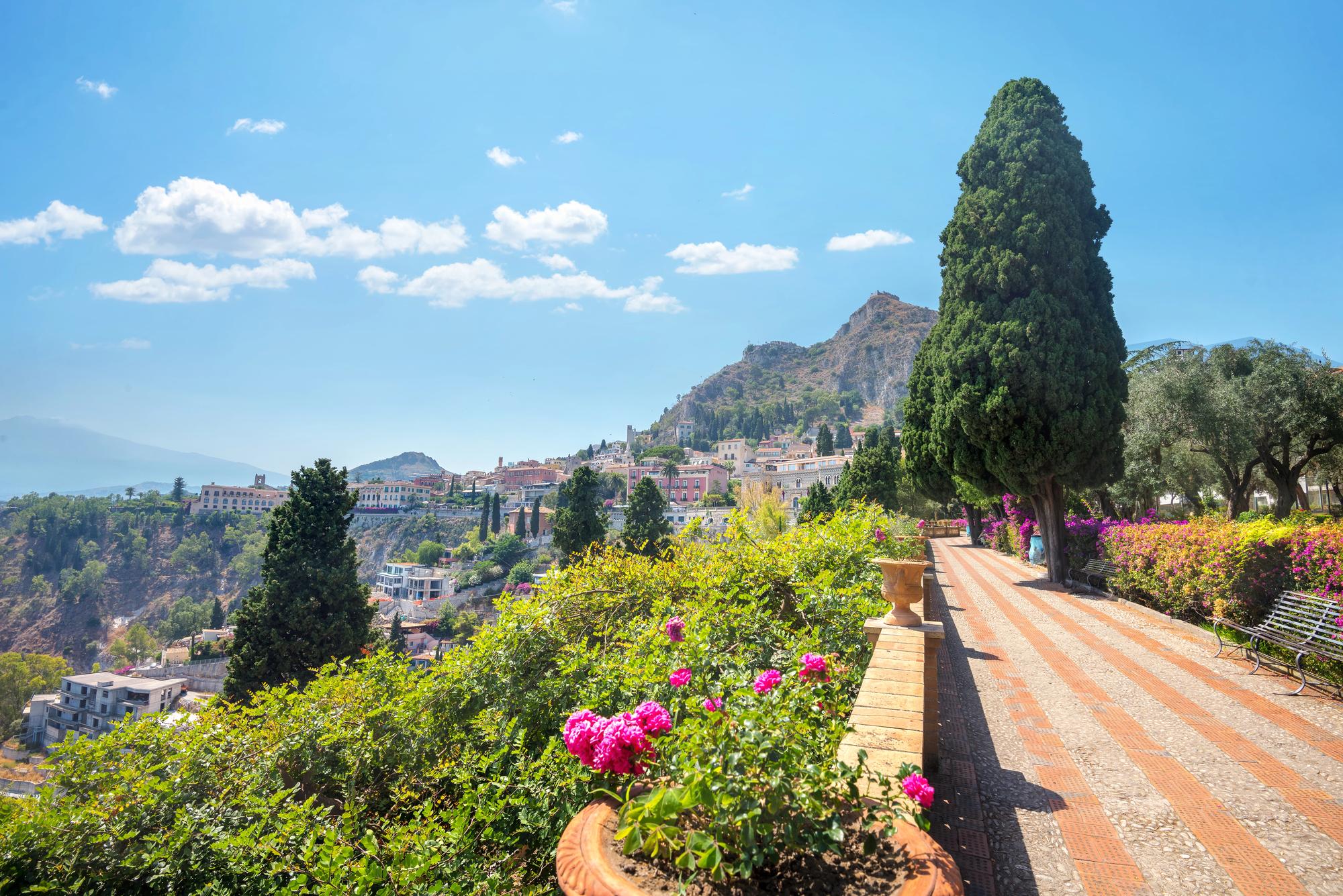
The Villa Comunale is Taormina’s public garden, and it’s a lovely, quiet escape from the bustle of the Corso Umberto. Originally designed by the British Lady Florence Trevelyan in the 19th century, the gardens have a mix of Mediterranean and exotic plants, quirky Victorian follies (small ornamental towers), and sweeping views out over the Ionian Sea and along the coast towards Etna.
There’s a playground for children, plenty of benches in the shade, and a small cafe. Entry is free. It’s the perfect place where you can sit for half an hour, regroup, and let the kids burn off some energy before heading back out into town.
Open daily from 9am until sunset (later in summer, sometimes until midnight). Free entry. Located just off Corso Umberto, near the Greek theatre.
Eat your way through Taormina
Check out my full guide to where to eat and the best restaurants in Taormina.
Sicilian cuisine is reason enough to visit. The classics to try include pasta alla norma (pasta with aubergine, tomato, ricotta salata and basil – Catania’s signature dish), arancini (fried rice balls), cannoli (the real thing, filled to order), and granita with brioche for breakfast. Bam Bar on Via di Giovanni is the most famous granita spot in Taormina – it’s Instagrammable, it featured in The White Lotus, and the queues reflect that. The granita is good, but it’s the hype and the setting that draw the crowds. You can find excellent granita at plenty of other spots in town without the wait.

If you want to go deeper into the food scene, several operators run Sicilian cooking classes in and around Taormina – typically a market visit followed by hands-on pasta and sauce-making. It’s a great rainy-day option or an alternative to another morning at the beach.
Our apartment host was a font of knowledge and pointed us to La Pignolata Guinness, a cannoli bar that holds the Guinness World Record for the largest cannoli ever made – it fed 3,000 people and was gone in about 30 minutes. The owner’s dad was behind it. The cannoli here were freshly made, decadent, and the best I’ve ever eaten. If you only eat one cannoli in Sicily, make it this one.
And then there was Pizza Mania. Our apartment host recommended it on the first night when we flew in late and needed feeding fast. It was perhaps one of the finest takeaway pizzas we’d ever had, and the boys were thrilled to know this would be the kind of food they’d be eating for the rest of the week. We went back a second time, and they’d have happily gone every night. Nothing like the cheese-laden pizzas you get in the UK – these were thin, crispy and enormous. A large margherita will set you back only €12. The man behind the counter kept asking if we realised how big they were. We kept laughing and saying we’re a greedy family. It was always busy, which tells you everything.
Taormina with kids
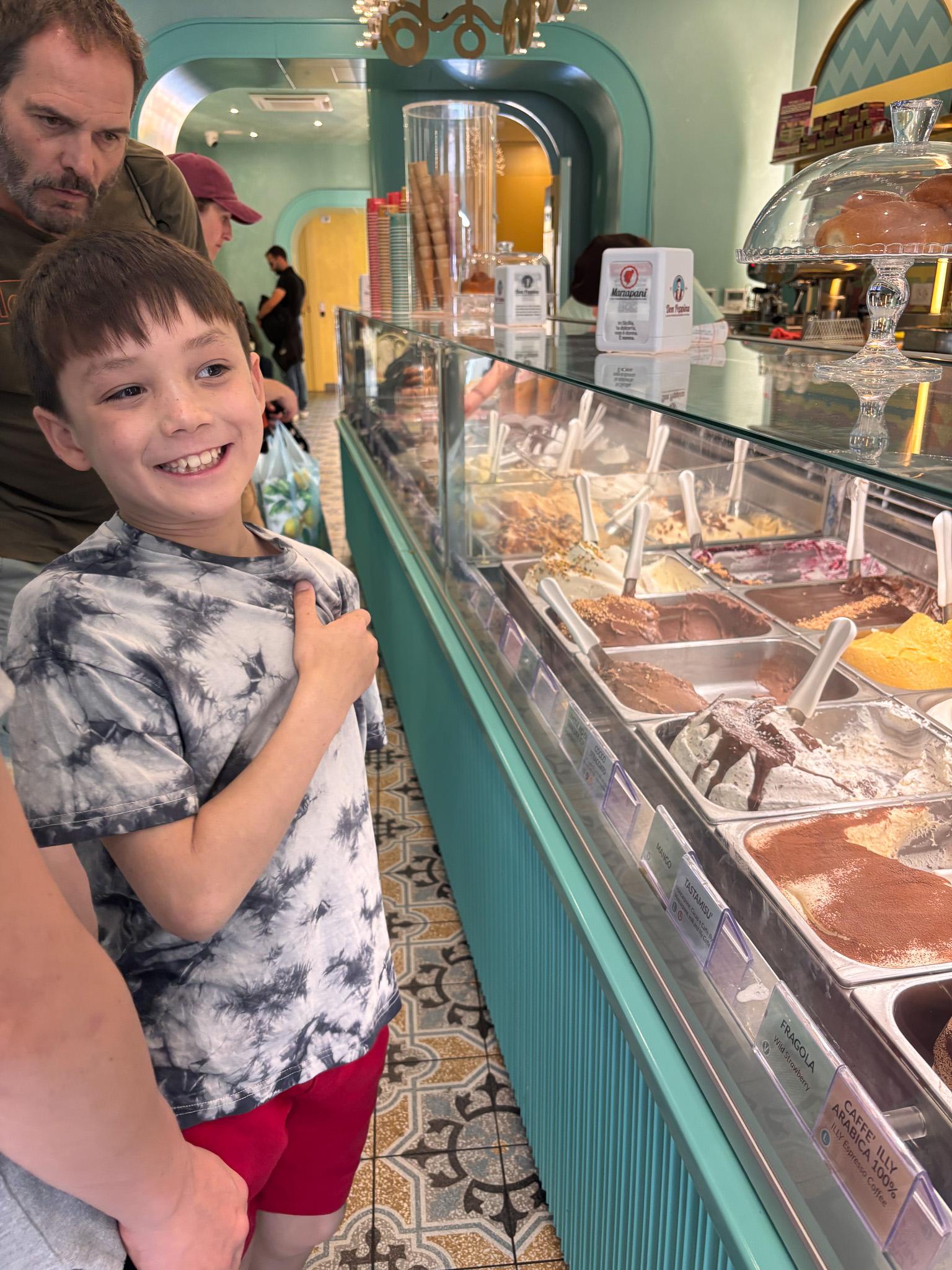
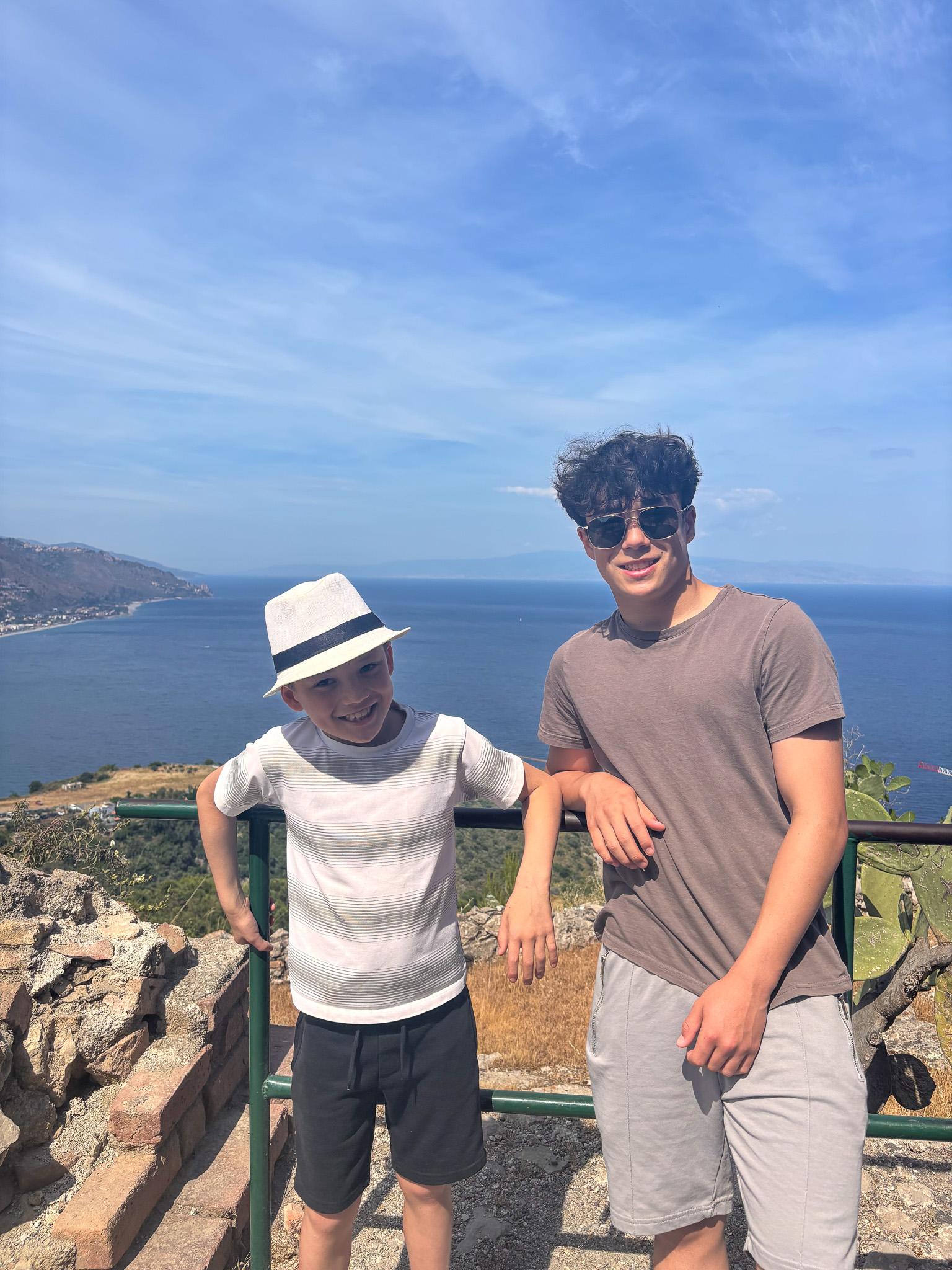
We travelled to Taormina as a family with two young boys, and we loved our time together. Let’s be honest, they were in heaven. The sheer volume of gelato and pizza they stuffed into their faces over the course of a week was something to behold. It’s definitely a destination that works for families, as long as you know what to expect and plan around a few things.
Most of the main sights are manageable with children. The cable car down to Isola Bella is a hit with kids, and far better than attempting 300 stone steps with tired legs. The Greek theatre kept ours busy for ages – they loved scrambling up the ancient steps and stands. Go Etna’s half-day Mt Etna tour worked well with the boys, and the guides are engaging enough to keep young attention spans going. The Villa Comunale gardens were a lifesaver – free, shaded, with a playground for when everyone needed a break. And the bus to Castelmola was quick, cheap and fun, though I’d skip the walk up with small children as the steps are steep.
Food was easy. Pizza Mania was a favourite with the boys – we went twice, and they’d have happily gone every night. Shopping at the local Coop for fresh bread, cured meats, fruit and breakfast supplies kept costs down and meant we weren’t relying on restaurant breakfasts at €40+ for four.
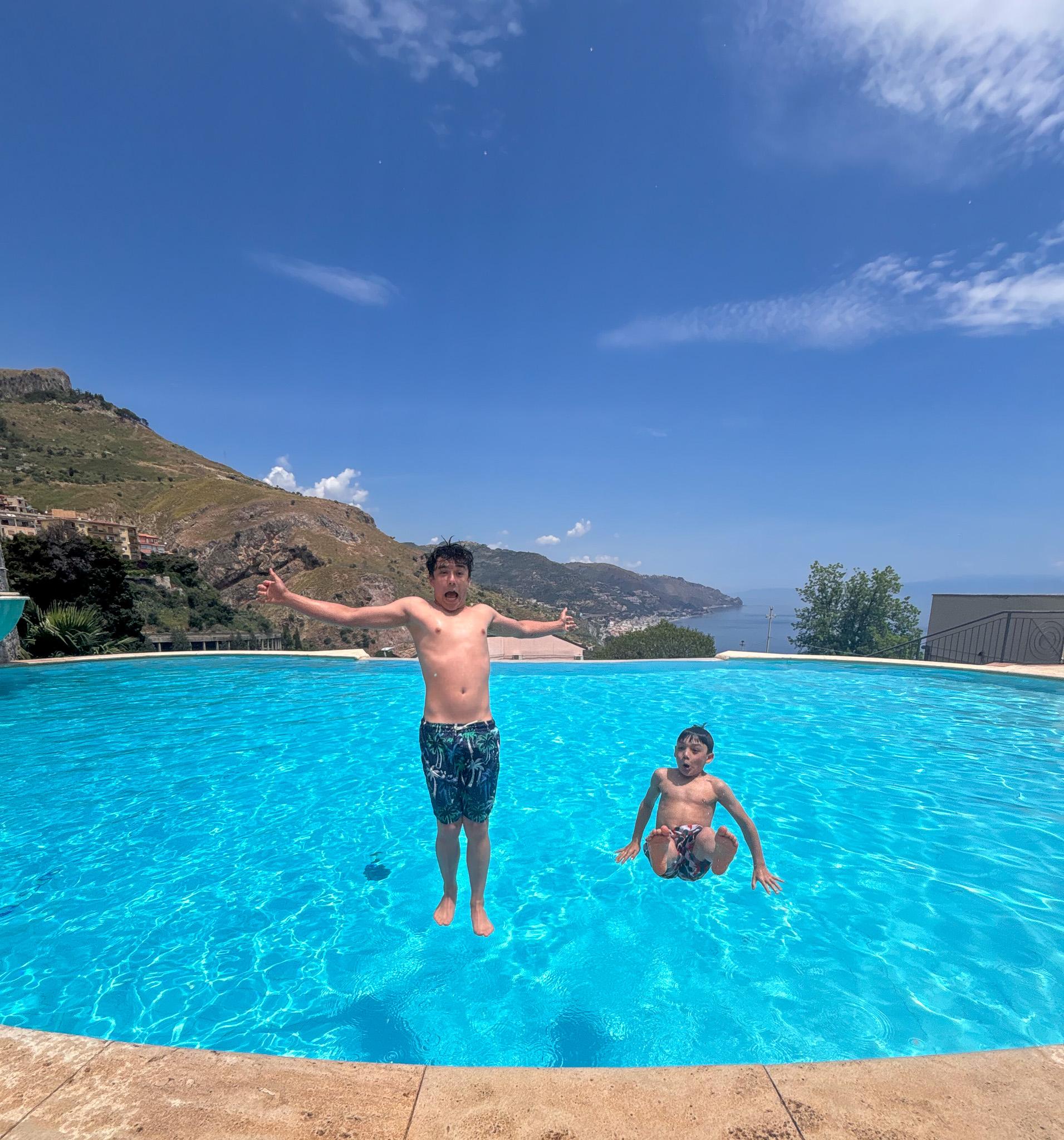
A few things to be aware of, though. The beaches are pebbly and not great on bare feet, so pack beach shoes, especially around Isola Bella, where the pebbles are large. The sea is cold – even in late May, the water was freezing, which isn’t ideal for little ones who want to splash around. If you want to sunbathe, you’ll need to pay for sunbeds and umbrellas at a beach club, which adds up. Taormina is also built on a slope, so if you have a buggy, be prepared for steep streets and steps everywhere. And taxis are expensive – even a 10-minute ride can cost €40 one way, so the bus or walking is almost always the better option.
I know my instinct is always to try and see as much of a country as possible, but when you only have a week and the whole family, it’s a balance of doing enough while having enough downtime. We decided that, being only a three-hour flight from the UK, we could always come back to explore Palermo or Syracuse. Schlepping two kids across the island would not have been in anyone’s best interest. So we got to enjoy Taormina at our own slow pace. Lazy lunches and dinners. Time by the pool. A boat trip here, a volcano trip there. It was the perfect introduction to Sicily for us.
Practical information
How to get to Taormina
The closest airport is Catania Fontanarossa (CTA), about an hour’s drive south. Pre-book a transfer rather than winging it on arrival. We used Taxi Taormina (info@taxitaormina.net) for both airport runs – pre-bookable, reliable, and great service. Our driver even pointed out the enormous compound near the airport where imprisoned Sicilian mafia dons are held. Not your typical airport transfer chat.
You can also reach Taormina by train. The Taormina-Giardini Naxos station is on the coastal rail line, connected to the town centre by local bus or taxi.
Getting around
Taormina’s historic centre is pedestrianised and small enough to walk everywhere. The cable car connects the town to Mazzarò beach. Interbus runs frequent local buses to Castelmola, Giardini Naxos and other nearby destinations from the terminal on Via Luigi Pirandello.
A word of warning about taxis. They are not cheap. While Uber does operate in Taormina, it connects with local taxis or private cars rather than the ride-hailing service you might be used to. Even a short journey can cost €30-40. Walking, the cable car, or the bus will save you a fortune.
Day trips from Taormina
Beyond Mt Etna and Castelmola, two other day trips are worth knowing about. The Alcantara Gorges (Gole dell’Alcantara) are a dramatic river canyon about 20 minutes’ drive inland, where you can wade through the basalt gorge in summer – bring a swimming costume and water shoes. The Aeolian Islands, a volcanic archipelago off Sicily’s northeast coast, are reachable by boat from Giardini Naxos. Day trips typically visit Lipari and Vulcano, though you’ll be on the water for a full day.

Best time to visit Taormina
April to June and September to October are the best windows. You get warm weather, manageable crowds, and lower hotel prices than in peak summer. We visited in late May, just as peak season was beginning to build – warm enough for eating outside every evening, but not so packed that we felt overwhelmed.
Our guide Salvo told us Taormina can reach 46°C in the height of summer. He described it as another level of intensity. Schools are off, the streets are rammed, and the heat makes sightseeing difficult. Would I go in the summer? No. No, I really wouldn’t.
How many days do you need?
Three to four nights is about right. One night is not enough – at night the whole character of the town changes, and you’d miss it entirely. Two nights are workable if you’re efficient. Three to four days give you time to see the main sights, do a day trip to Etna, take a boat trip, and still have an afternoon by the pool or on the beach.

Frequently asked questions
Is Taormina worth visiting?
Yes, it really is – though it helps to know what to expect. I’ve written a full guide on whether Taormina is worth visiting, covering the honest pros and cons, costs, and who it’s best for.
Can you do Taormina as a day trip?
You can, but I wouldn’t recommend it. A day trip covers the Greek theatre and a walk along the Corso Umberto, but you’ll miss the evening atmosphere, which is when Taormina is at its best. If you’re based nearby in Catania or Giardini Naxos, at least stay for dinner.
Is Taormina expensive?
It can be. Restaurant prices are higher than elsewhere in Sicily, and taxis are eye-wateringly expensive. But you can keep costs down by shopping at the local supermarket, eating at takeaway spots like Pizza Mania, and using buses and the cable car instead of taxis.
What is the closest airport to Taormina?
Catania Fontanarossa airport (CTA), approximately one hour’s drive south. Pre-book a transfer or taxi for the smoothest arrival.
Can you swim at Isola Bella?
You can, but the beaches are pebbly, and the water is cold – even in late spring. Beach shoes are essential around Isola Bella, where the pebbles are large. There are beach clubs with sunbed hire if you want a more comfortable setup.
Can you walk over to Isola Bella?
Yes, at low tide. A narrow strip of sand and pebbles emerges connecting the island to the mainland, and you can walk straight across. At high tide, the strip is submerged, and the island is cut off. It’s worth timing your visit around the tide if you want to walk over – check conditions when you arrive at the beach. The nature reserve on the island itself costs around €4 to enter, and the paths through the gardens that Lady Trevelyan planted in the 1890s are well worth exploring.
Is Taormina suitable for families?
It is, with some planning. The Greek theatre, cable car, Mt Etna tours and Villa Comunale gardens are all family-friendly. Beaches are pebbly, and the sea is cold for young children, so a hotel or apartment with a pool is a good choice. See the full Taormina with kids section above.
What food should I try in Taormina?
Pasta alla norma, arancini, cannoli (filled to order), granita with brioche, and Sicilian pizza. A full restaurant guide can be found here.