Last Updated on 23/06/2026 by Ting Dalton
If you’re looking for an experience that takes your breath away, have you ever thought about walking with African elephants? Yes, really. Walking alongside these animals with no barriers, no restraints, out in a natural setting.
Walking with elephants: Our Knysna Elephant Park review
When I first started looking into what we could do on our two-week trip to South Africa, this was one of the first things that caught my eye. I was keen to find a reputable company that puts the welfare of its animals first. I’d heard the horror stories of how elephants are mistreated in some parts of the world, and I did a lot of research before booking the family onto such an experience. So here’s our full Kyysna Elephant Park review below.
Why we chose Knysna Elephant Park
What drew me to Knysna Elephant Park was the fact that the park has dedicated more than 30 years to elephants and is recognised internationally as one of the best captive elephant facilities in the world. Since opening in 1994, it has rescued, raised or relocated more than 40 elephants, and it has helped shape the regulations and guidelines for captive elephants across South Africa.
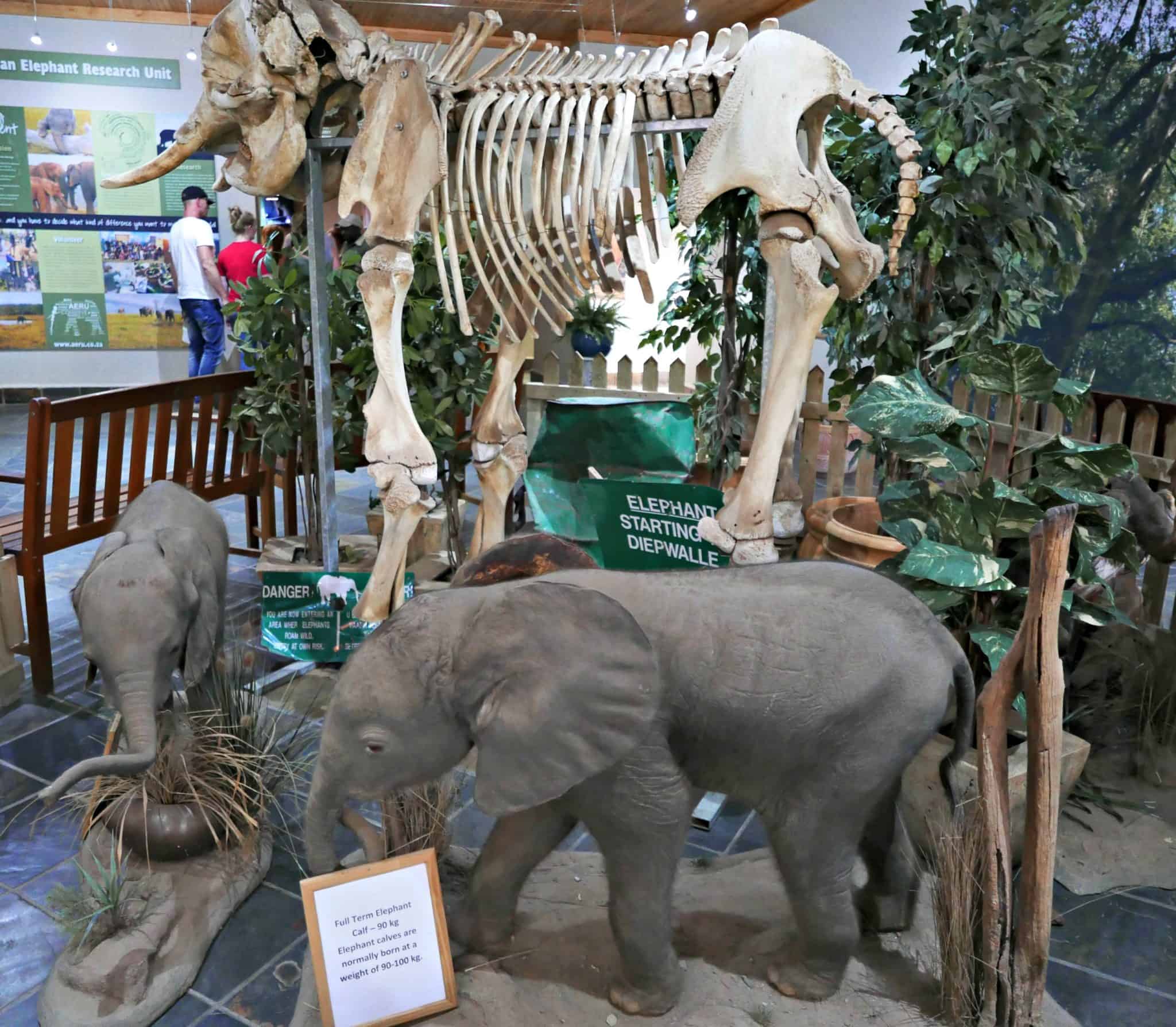
It runs a controlled, free-range environment, giving the elephants as much freedom as possible within the park’s borders. The walking experience is limited to a set number of people twice a day, so the animals aren’t overwhelmed.
When we arrived for the early evening session and checked in at reception, we were each handed a small bucket filled to the brim with apples, carrots and other vegetables. We’d come prepared in comfortable walking shoes, and the baby was in a sling. Before our visit, I’d checked and triple-checked it would be fine to bring Peanut, and each time we were reassured that a crying baby wouldn’t bother the elephants one bit.
We watched a short introductory video about how the park came into being, and met the resident herd on screen before meeting them in the flesh. The herd is led by matriarch Sally, the first elephant to arrive back in 1994.
Feeding the elephants
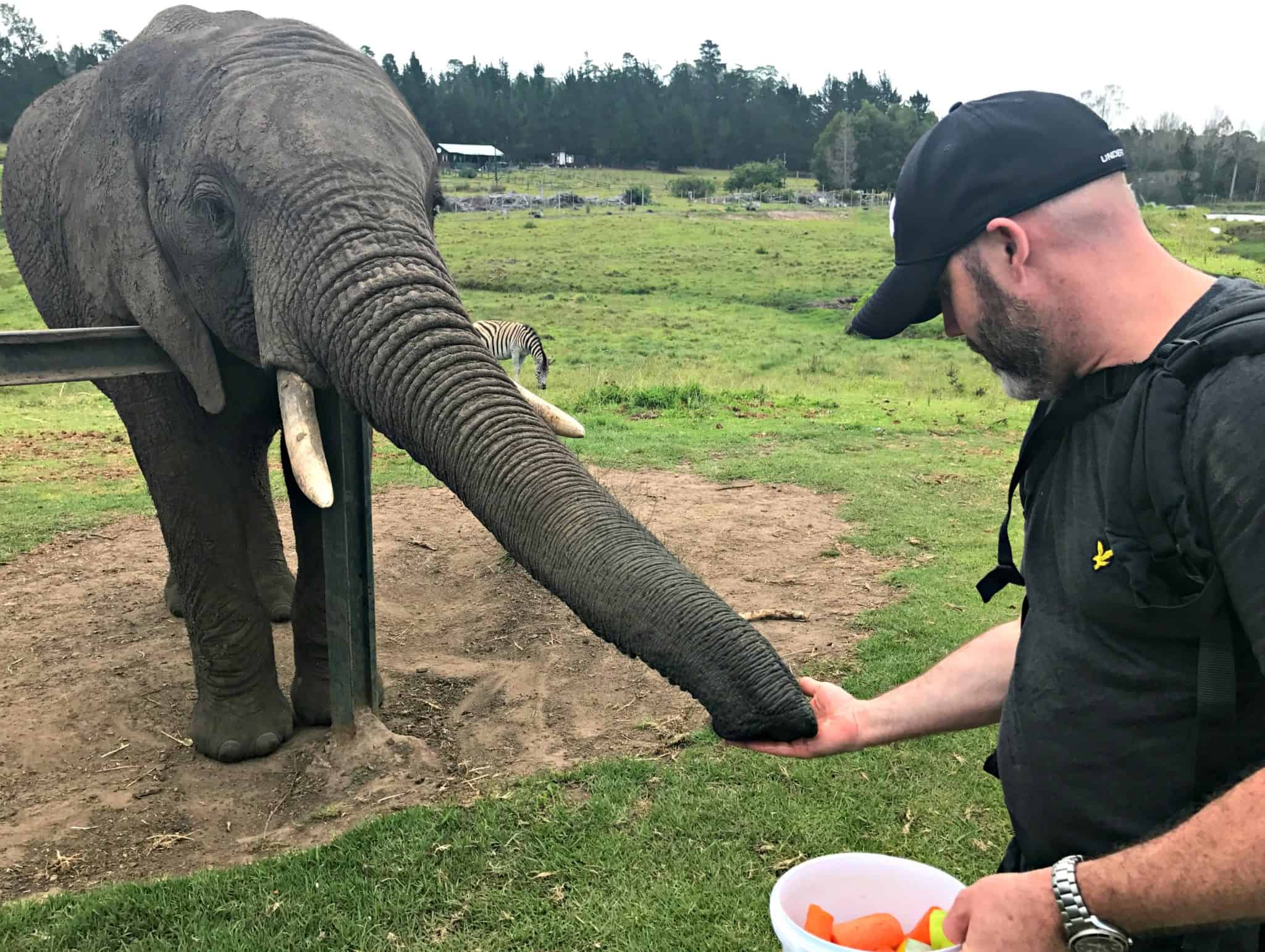
We were led outside by one of the park rangers, who drove our group of around 20 a short distance to the feeding area. And there they all were, waiting for their treats.
It was a lot to take in. The rangers explained that we only had to lay the food flat on our palms, and the elephants would do the rest. They warned us to be quick too, or the elephants would snaffle the lot and take the bucket with it. Feeling an elephant’s trunk and the sheer force with which it hoovers the food from your hand is hard to put into words. There was only one small metal rail between us, but we never felt unsafe.
Monkey was unsure at first and too scared to feed them himself. Who can blame him when these are the largest land mammals in the world and stand up to four metres tall. He was more than happy to stand by our side instead.
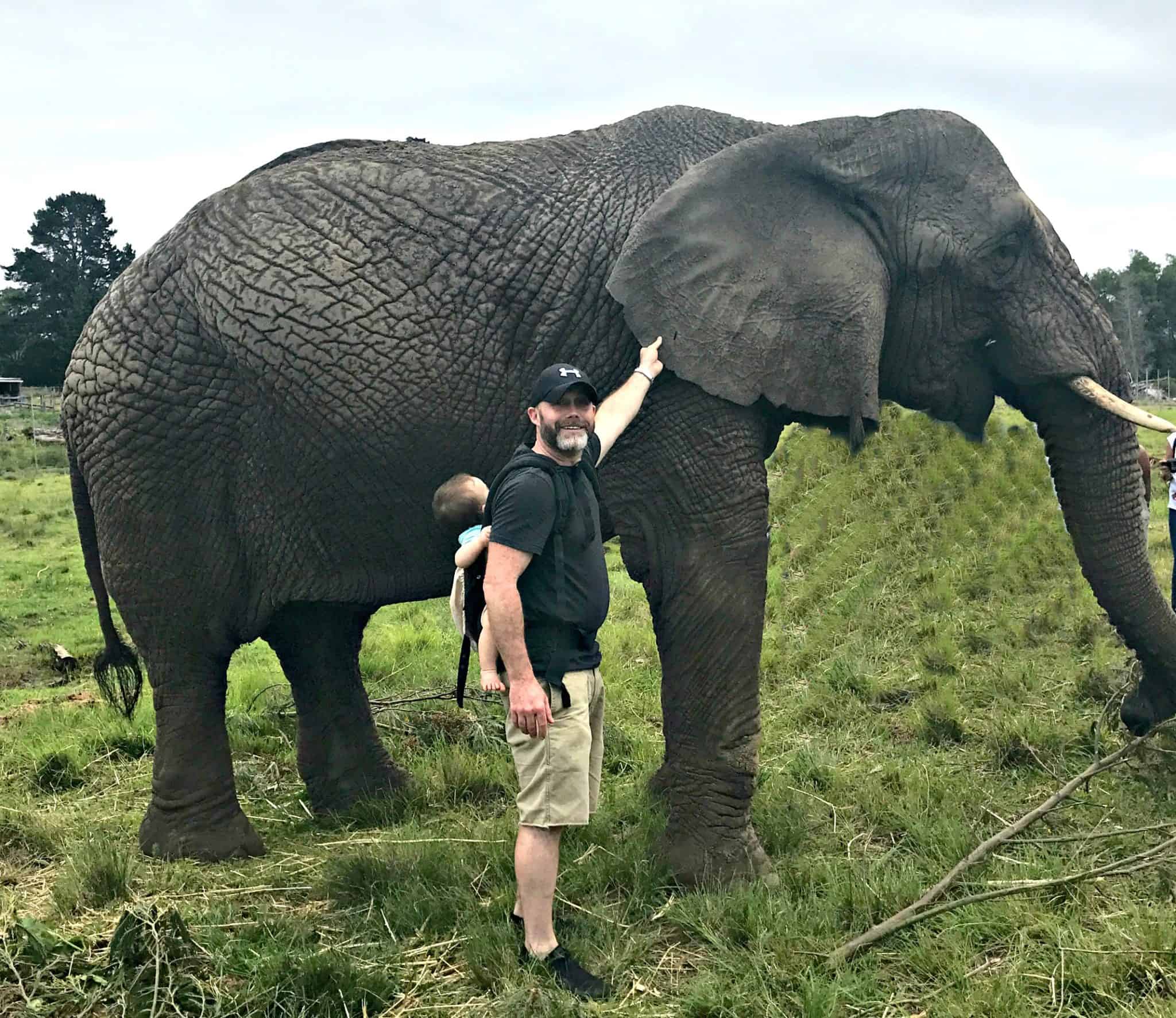
Once the food was gone, we were split into smaller groups, each assigned one ranger and one elephant, and this was when we got to touch them. The skin on its sides felt cool and rough, like fine sandpaper, while its ears were smoother and far more delicate.
From here, we could watch closely and follow as the elephant moved around. What was extraordinary was being surrounded by several of them, sometimes having to step out of the way as they sauntered past, with the rangers always close by, keeping everyone safe.
A welcome update on elephant rides
When we visited, some guests had chosen to ride the elephants, something I’m not at all comfortable with, and at the time I was glad to hear the park planned to stop it. I’m pleased to say that on this front things have moved in the right direction. Knysna Elephant Park no longer offers elephant-back rides, and now focuses on feeding, touching and walking alongside the herd. If avoiding elephant riding matters to you, as it does to me, that’s reassuring to know before you go.
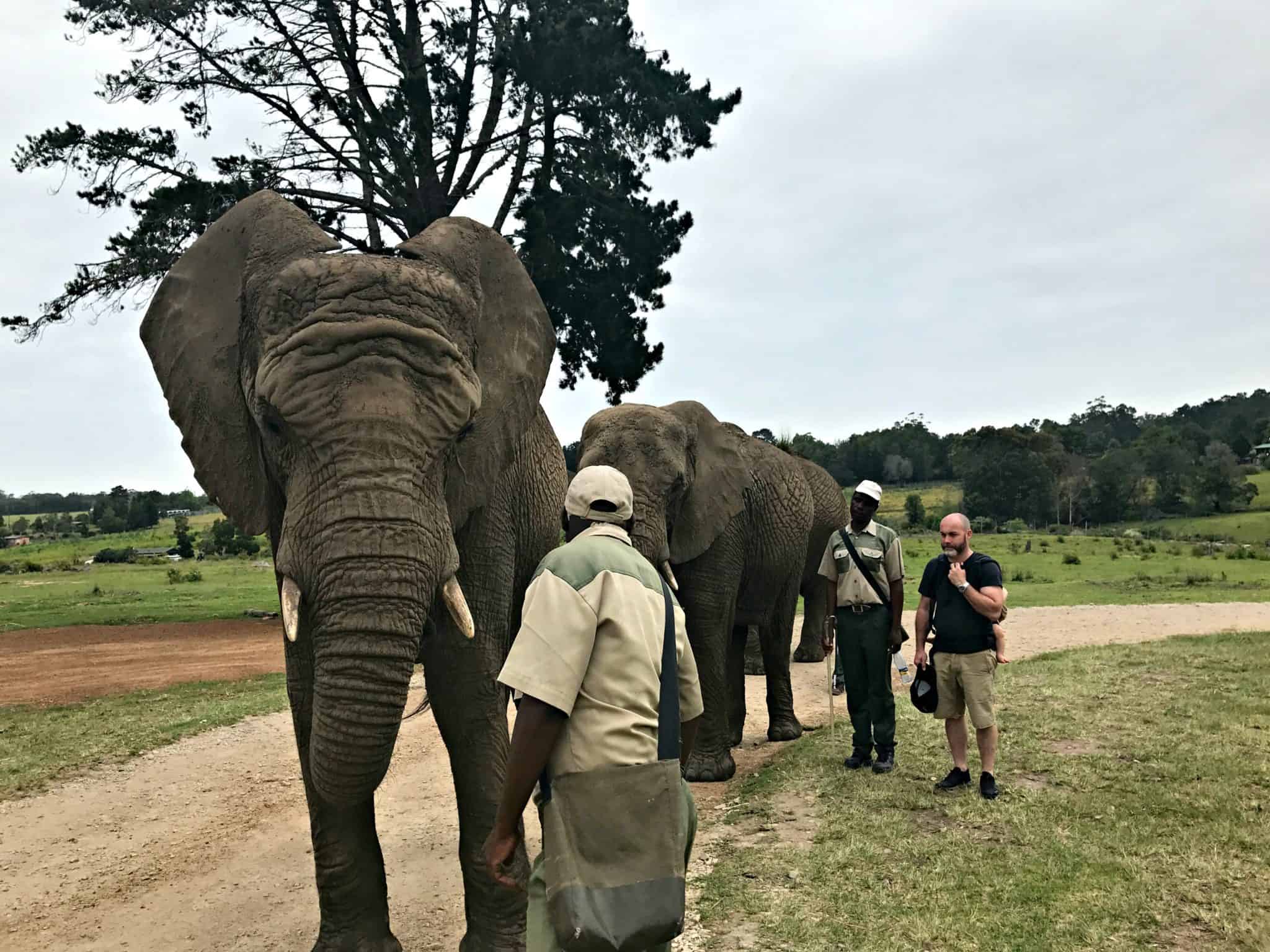
We were split into groups again, with the riders going one way and walkers like us going another. Monkey and I were paired with Sally, the matriarch, while my husband and the baby walked behind us with a younger elephant born in the park. In a gentle procession we walked for around 30 minutes on a scenic route alongside them. Being so close was the wonder of it, all the more so against the backdrop of the Outeniqua mountains and the Knysna forest. Best of all was Monkey’s curiosity. Having found his confidence around these gentle giants, he fired off question after question to the ranger, and I was charmed by his thirst to know more.
Our verdict on Knysna Elephant Park
Before I knew it, our walk was over, and to say I was in awe and lost for words is an understatement. Such was the power of being so close to these animals. Even the baby seemed to enjoy it.
Walking with elephants is something the whole family will treasure for years, and knowing we’d contributed to a project that keeps protecting these animals made it all the more worthwhile. If I could do it again, I would in a heartbeat, and so would the rest of the family. We still talk about it now.
Planning your visit to Knysna Elephant Park
Where it is: just off the N2 between Knysna and Plettenberg Bay, an easy stop on a Garden Route road trip.
Opening hours: open daily, with the longer walking experiences run by reservation at set times in the morning and afternoon. Booking ahead is essential, as only a limited number of walks run each day.
What it costs: prices depend on the experience, from the shorter feed-and-meet tour up to the longer walks and overnight stays. Rates change, so check the current price when you book. (Verified June 2026.)
If the walk is full: you can still turn up for a daily tour, which gives you the feeding and touching experience among the herd.
Facilities: there’s a café on site serving teas, cakes, sandwiches and hot meals, plus a curio shop and a playground for little ones.
Stay over: you can sleep at the park’s Elephant Lodge, where rooms look onto the area the elephants settle into at night. Watching them from your window is something the kids won’t forget.
Is Knysna Elephant Park worth visiting?
If you’re driving the Garden Route with children, this is one of the easiest and most rewarding wildlife stops you can make. It’s welfare-led, it’s calm, and it gets you closer to elephants than you’d ever expect, without the long haul of a full safari. For us it was a highlight of two weeks in South Africa, and the one the kids still bring up.
Knysna Elephant Park FAQs
Does Knysna Elephant Park offer elephant rides?
No. The park no longer offers elephant-back rides and now focuses on feeding, touching and walking alongside the herd in a welfare-led setting.
Can you visit with young children and babies?
Yes. Children are welcome, and we brought a baby in a sling along with our older son. Staff reassured us beforehand that a crying baby wouldn’t unsettle the elephants.
Do you need to book?
Yes, the walking experiences run a limited number of times each day, and booking ahead is essential. If they’re full, you can still join a daily feeding tour.
How long is the elephant walk?
The walking experience runs roughly 45 minutes, though our own walk alongside the herd was around half an hour on a scenic route through the park.
Where is Knysna Elephant Park?
Just off the N2 between Knysna and Plettenberg Bay, making it an easy Garden Route stop.
Comments are closed.